Key Takeaways
Always ask for the vehicle's maintenance records, not just the Carfax. A seller who has a folder of oil change receipts and service invoices is telling you something meaningful about how they cared for the car.
Paper service records reveal patterns a history report misses — like whether the owner addressed recalls, changed fluids on schedule, or deferred maintenance repeatedly.
When evaluating a used vehicle's asking price, check what dealers are retailing comparable units for — not just private party values. That dealer retail number is your ceiling; the private party value is your floor. Your fair offer lives somewhere between the two.
Most buyers only check one value source and negotiate blind. Framing the range explicitly gives you defensible ground during negotiation.
Test drive the vehicle cold — meaning before the engine has been warmed up. Cold starts reveal problems that disappear once the engine reaches operating temperature, including unusual smoke, rough idle, and difficulty starting.
Sellers often warm up a vehicle before a test drive to mask cold-start issues. Arriving early or asking to see the car before it's been started closes this loophole.
If you're buying from a private party, meet at the DMV or a bank — not the seller's home. Running a title check on-site before the transaction closes is the cleanest way to confirm there are no liens or issues with the title.
Lien releases and title discrepancies are among the most common complications in private party sales. Resolving them before money changes hands prevents a legal headache.
Don't tell a dealer what your monthly payment target is until after you've agreed on the out-the-door price. Once they know your payment ceiling, they can work backwards to maximize their profit through loan terms and add-ons.
Payment-focused negotiation is one of the most common ways dealerships extract additional margin from buyers who don't realize the total price is still negotiable.
Why Used Cars Deserve a Different Playbook
Buying a used car isn't a simplified version of buying a new one — it's a fundamentally different transaction with its own risks, rewards, and rules. Every used vehicle comes with a history you didn't create, and your job as a buyer is to uncover as much of that history as possible before handing over money.
On the upside, the used market delivers something new cars cannot: dramatic depreciation savings. A three-year-old vehicle with 30,000 miles can cost 30–40% less than its new equivalent, and in many cases it still has years of reliable service ahead of it. The trick is knowing which vehicles those are.
The used car market also gives you more variety. You can find discontinued models, rare trim levels, and vehicles that are simply no longer manufactured. That flexibility comes with tradeoffs — no factory warranty, no standardized condition, and a pricing landscape that requires real research to navigate.
If you've bought new before and want to understand how the two experiences compare, our guide on the new car purchase process walks through those differences. This guide focuses entirely on the used side — from setting your number to driving away with a car you feel good about.
Setting a Realistic Budget
Most buyers anchor on the sticker price and forget about everything else. Don't. Your total cost of ownership in the first year typically runs well above the purchase price once you factor in all the line items that follow it.
Build Your Full-Cost Budget
- Purchase price: What you pay the seller.
- Sales tax and title/registration fees: Typically 5–10% of the purchase price depending on your state.
- Auto insurance: Get quotes before you commit to a specific vehicle — rates vary significantly by make, model, and your driving record.
- Immediate maintenance: Budget $300–$600 for basic service items on any used vehicle (tires, brakes, fluids, filters) unless the seller can document recent work.
- Emergency repair reserve: Set aside $1,000–$2,000. Used vehicles break. A buffer prevents a minor repair from becoming a financial crisis.
Always ask for the vehicle's maintenance records, not just the Carfax. A seller who has a folder of oil change receipts and service invoices is telling you something meaningful about how they cared for the car.
Paper service records reveal patterns a history report misses — like whether the owner addressed recalls, changed fluids on schedule, or deferred maintenance repeatedly.
When evaluating a used vehicle's asking price, check what dealers are retailing comparable units for — not just private party values. That dealer retail number is your ceiling; the private party value is your floor. Your fair offer lives somewhere between the two.
Most buyers only check one value source and negotiate blind. Framing the range explicitly gives you defensible ground during negotiation.
Test drive the vehicle cold — meaning before the engine has been warmed up. Cold starts reveal problems that disappear once the engine reaches operating temperature, including unusual smoke, rough idle, and difficulty starting.
Sellers often warm up a vehicle before a test drive to mask cold-start issues. Arriving early or asking to see the car before it's been started closes this loophole.
If you're buying from a private party, meet at the DMV or a bank — not the seller's home. Running a title check on-site before the transaction closes is the cleanest way to confirm there are no liens or issues with the title.
Lien releases and title discrepancies are among the most common complications in private party sales. Resolving them before money changes hands prevents a legal headache.
Don't tell a dealer what your monthly payment target is until after you've agreed on the out-the-door price. Once they know your payment ceiling, they can work backwards to maximize their profit through loan terms and add-ons.
Payment-focused negotiation is one of the most common ways dealerships extract additional margin from buyers who don't realize the total price is still negotiable.
The 20% Rule for Monthly Payments
If you're financing, your total monthly car expenses — payment, insurance, and fuel — should stay under 20% of your monthly take-home pay. For most buyers this is a useful sanity check that prevents overextension, especially when financing rates for used vehicles run higher than for new ones.
The 20% Monthly Car Expense Rule
Add up your estimated monthly car payment, insurance premium, and fuel costs. If that total exceeds 20% of your monthly take-home pay, you're stretching your budget into risky territory. Trim your purchase price target until the math works — not the other way around.
Get Pre-Approved Before You Step Foot on a Lot
A pre-approval letter from your bank or credit union gives you a concrete rate to compare against dealer financing — and signals to the seller that you're a serious, ready buyer. Apply to 2–3 lenders within a 14-day window so multiple inquiries count as one on your credit report.
Once you have a realistic total number, work backward: subtract taxes and fees to determine the maximum purchase price you can actually afford. This is the number you bring into every conversation with a seller.
Choosing the Right Vehicle
Narrowing the field before you search saves weeks of wasted effort. Start with your actual use case, not a wish list built from commercials.
Define What You Actually Need
- Seating and cargo: How many people regularly ride with you? Do you haul equipment, gear, or supplies?
- Commute and fuel costs: Calculate your annual miles. At today's fuel prices, a 10 MPG difference between two vehicles can add up to $1,000+ per year.
- Climate and terrain: AWD or 4WD adds cost and complexity. In flat, mild climates, it's often unnecessary.
- Reliability track record: Consult J.D. Power, Consumer Reports, and owner forums for the specific model years you're considering. Reliability varies dramatically between model years of the same nameplate.
Sweet Spot for Used Car Value
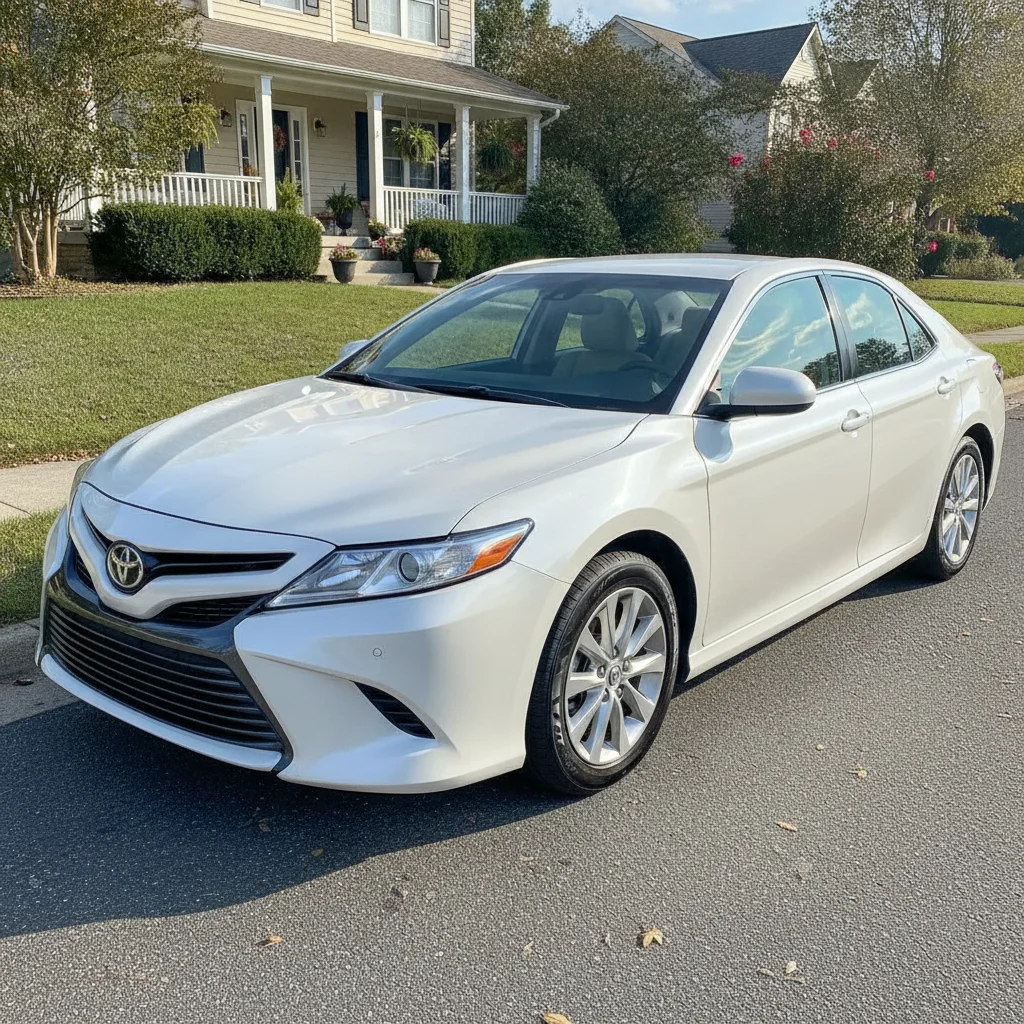
The best value zone in the used market is typically 3–5 years old with 30,000–60,000 miles. At this age, initial depreciation has already hit hard (meaning you pay less), but the vehicle usually has significant service life remaining and may still carry some factory powertrain warranty coverage. Going older saves more money upfront but increases the likelihood of needing repairs sooner.
If you want the extra assurance of an inspection-backed vehicle, our guide to buying a certified pre-owned car covers CPO programs in detail — a middle ground between used and new that some buyers find worth the premium.
CPO vs. Standard Used: Know the Difference
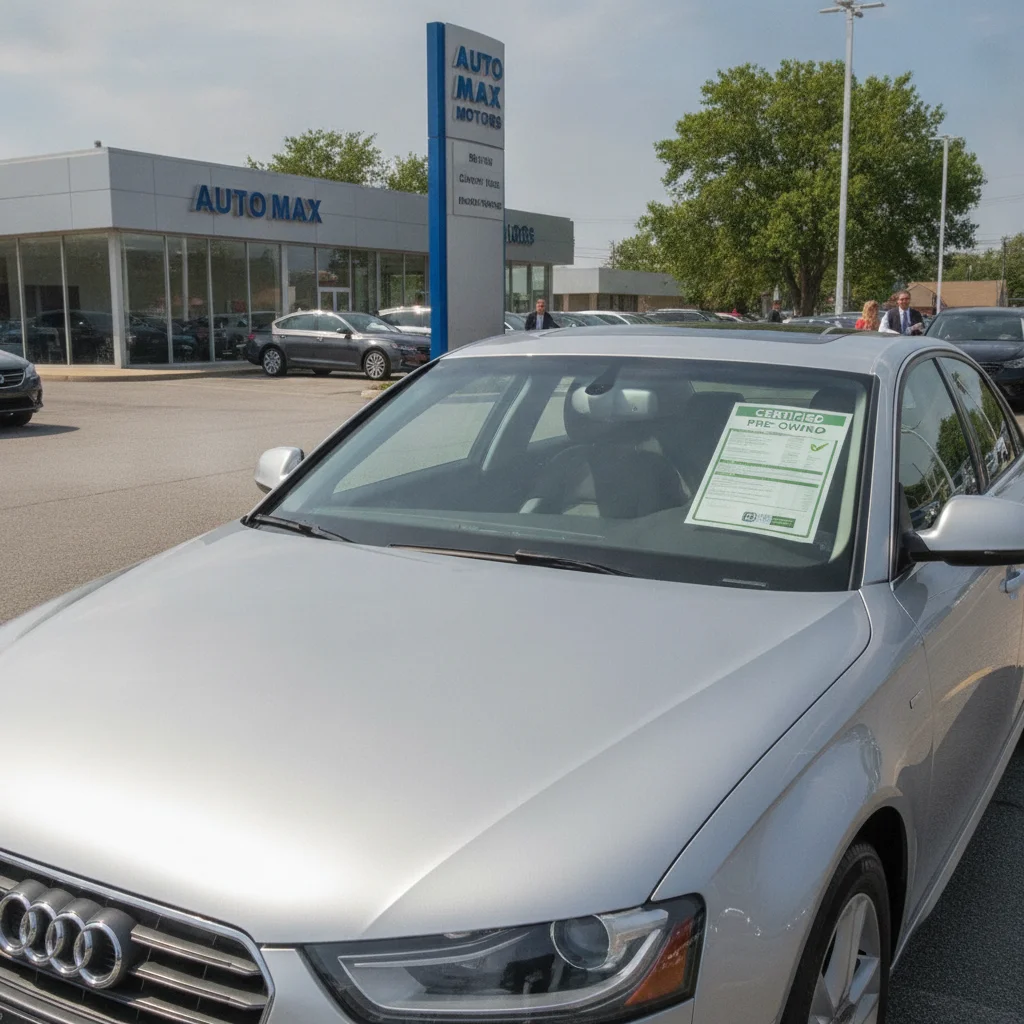
Certified Pre-Owned vehicles go through manufacturer-backed inspections and come with extended warranty coverage — but they command a premium over standard used pricing. If a CPO vehicle is within your budget and the warranty terms are meaningful for your situation, it can be worth the extra cost. If not, a well-researched standard used purchase with an independent inspection gets you most of the way there for less money.
Where to Find Used Cars
The source of a used car shapes the entire transaction — price, risk, recourse, and paperwork all differ depending on who's selling.
Franchise Dealerships
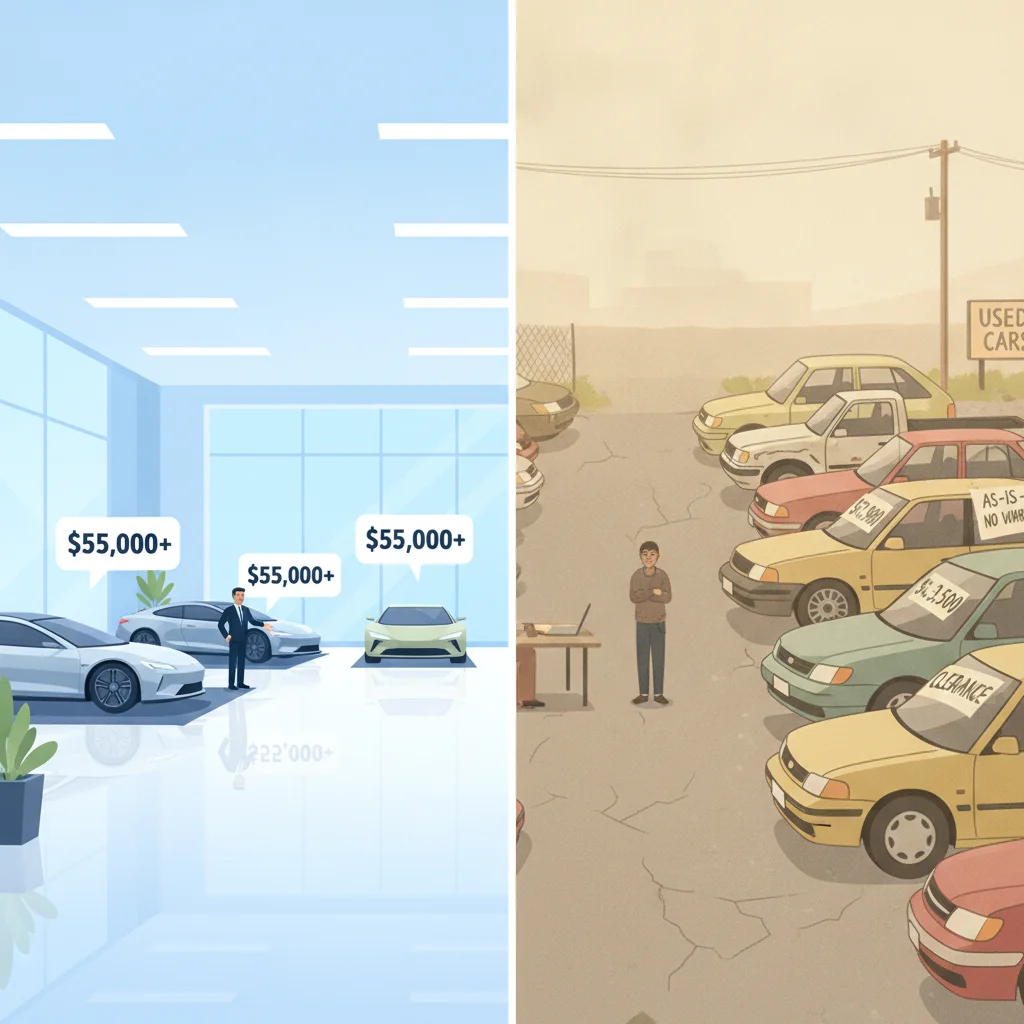
New-car dealers sell used inventory alongside their new vehicles, often from trade-ins. They typically charge more than private sellers but offer financing, certified pre-owned programs, and some degree of accountability. If something goes wrong, you have a business to contact.
Independent Used Car Dealers
These lots vary enormously in quality. Some specialize in well-maintained off-lease vehicles; others are moving high-mileage units as fast as possible. Research the dealer's reputation on Google and the Better Business Bureau before visiting. Ask specifically whether they have a service department — it's a reasonable quality signal.
Private Party Sales
Buying directly from the owner is typically the lowest-price option. You're also buying with no warranty and limited recourse. Private sales work best when you know what to look for, have a trusted mechanic, and are comfortable handling the paperwork yourself. Platforms like Craigslist, Facebook Marketplace, and Cars.com list thousands of private listings daily.
Online Retailers
Carvana, Vroom, CarMax, and similar platforms offer no-haggle pricing and home delivery. Prices are often higher than private party, but the experience is streamlined and most offer short return windows. Our online car buying hub covers the full process if you prefer to shop digitally.
30–40%
Typical depreciation savings vs. new
A vehicle 3 years old with average mileage typically costs 30–40% less than its new equivalent, according to Edmunds depreciation data.
$100–$200
Cost of a pre-purchase inspection
A professional pre-purchase inspection typically costs between $100 and $200 at an independent mechanic — a fraction of what it can save in avoided repairs.
1–3%
Higher interest rates on used car loans
Used car loan rates are typically 1–3 percentage points above new car rates for the same credit score, according to Experian's State of the Automotive Finance Market report.
3–5 years
Optimal age range for used car value
Industry analysts and consumer advisors consistently identify 3-to-5-year-old vehicles as the best balance between depreciation savings and remaining useful life.
40M+
Used cars sold annually in the U.S.
The U.S. used car market consistently moves over 40 million units per year, making it roughly three times larger than new car sales by volume.
Auctions
Public and dealer auctions can surface bargains, but they come with severe restrictions: most allow no test drives, limited inspection time, and zero recourse after purchase. Reserve auctions for buyers with strong mechanical knowledge or a mechanic present on site.
Researching a Specific Vehicle
Once a specific vehicle catches your attention, slow down. This is where buyers who rush pay for it later — sometimes literally, in repair bills.
Step 1: Check the Market Value
Pull the vehicle's value from at least two sources: Kelley Blue Book (KBB) and Edmunds. Enter the exact year, make, model, trim, mileage, and condition. Compare the seller's asking price against both the private party value and dealer retail value. If the seller is priced more than 10–15% above market without a documented reason (recent service, low miles, rare options), that's a negotiating point or a warning sign.
Step 2: Run a Vehicle History Report
Use Carfax or AutoCheck to pull the vehicle's history using the VIN. Look for:
- Reported accidents or structural damage
- Odometer discrepancies (rollback is fraud)
- Number of previous owners
- Whether it was a rental, fleet, or commercial vehicle
- Title issues: salvage, rebuilt, flood, or lemon law buyback designations
- Service record entries
A Clean Title Is Non-Negotiable
Never purchase a vehicle with a salvage, rebuilt, or flood-branded title unless you fully understand what that means and have priced it accordingly. These titles permanently reduce resale value, can make the vehicle uninsurable for comprehensive coverage, and may indicate structural damage that no amount of cosmetic repair can fix. If a seller discloses a branded title mid-transaction, treat it as a new negotiation — not a continuation of the old one.
Read Every Document Before You Sign
The paperwork phase is when costs quietly multiply. Fees for documentation, dealer prep, and add-on products are frequently inserted into contracts without explicit verbal disclosure. Read every line on the retail installment contract and bill of sale before signing. If you don't understand a fee, ask for it to be explained and itemized in writing. You have the right to walk away from any deal at any point before you sign.
Step 3: Confirm the VIN
Before you spend time on a test drive, verify that the VIN on the history report matches the VIN physically stamped on the vehicle — visible through the windshield on the dashboard, and on the driver's door jamb sticker. A mismatch is a serious red flag that warrants walking away immediately.
“The used car market rewards preparation and punishes impulse. The buyers who get the best deals are the ones who walked away from at least one vehicle before finding the right one.”
— Jack Gillis, Author of The Car Book and longtime consumer automotive advocate
The Test Drive and Pre-Purchase Inspection
No amount of online research replaces hands-on evaluation. The test drive and independent inspection are your last lines of defense before money changes hands.
How to Test Drive a Used Car
Don't just circle the block. Drive the vehicle for at least 20–30 minutes across varied conditions: city stop-and-go, highway speeds (60–70 mph), and ideally an on-ramp to test full-throttle acceleration. Pay attention to:
- Vibrations at speed (wheel balance or alignment issues)
- Brake feel: mushy, pulling to one side, or pulsating rotor
- Transmission shift quality: smooth, delayed, harsh, or slipping
- Steering: straight-ahead tracking, play in the wheel, unusual noises while turning
- Dashboard warning lights: any that appear during drive, especially check engine, ABS, or airbag
- HVAC system: heat, A/C, and defrost all functional
The Independent Mechanic Inspection
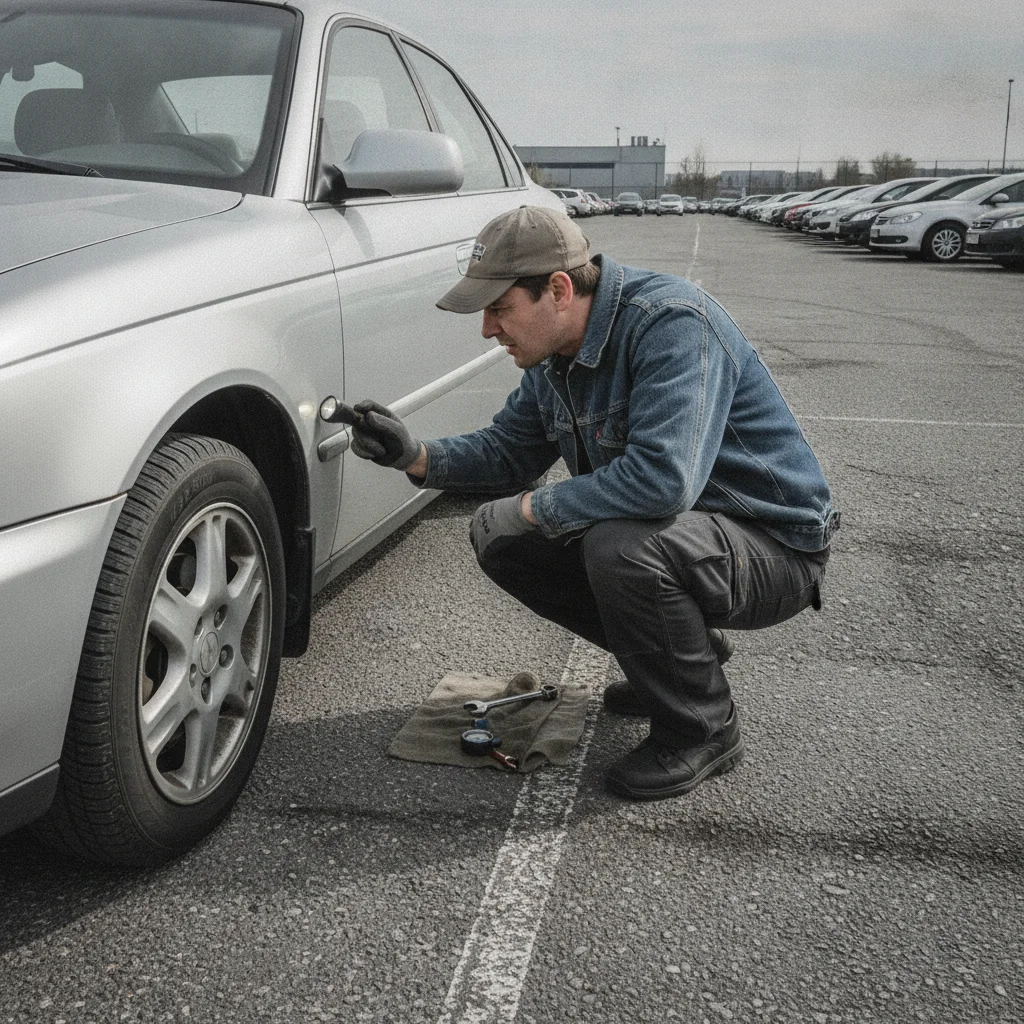
If you leave with one takeaway from this guide, make it this: pay a mechanic you trust — not the seller's shop — to put the vehicle on a lift and inspect it. A typical pre-purchase inspection (PPI) costs $100–$200 and can identify hidden problems worth thousands. Any legitimate seller will allow this. A seller who refuses is telling you something important.
Our pre-purchase vehicle inspection checklist gives you a point-by-point framework covering exterior, interior, engine bay, and undercarriage — bring it with you or share it with your mechanic.
Never Skip the Independent Inspection
A seller who pressures you to skip the pre-purchase inspection — or only offers their own mechanic — is a seller you should walk away from. Legitimate sellers have nothing to hide. The $100–$200 you spend on an independent inspection is the best insurance you can buy in a used car transaction.
Watch for Payment Manipulation at the Dealer
If a dealer pivots to monthly payments before agreeing on the purchase price, redirect the conversation: 'Let's settle on the out-the-door price first, then work out payments.' Mixing the two gives the F&I office room to obscure the true cost of the vehicle through loan term extension and add-on products.
Always ask for the vehicle's maintenance records, not just the Carfax. A seller who has a folder of oil change receipts and service invoices is telling you something meaningful about how they cared for the car.
Paper service records reveal patterns a history report misses — like whether the owner addressed recalls, changed fluids on schedule, or deferred maintenance repeatedly.
When evaluating a used vehicle's asking price, check what dealers are retailing comparable units for — not just private party values. That dealer retail number is your ceiling; the private party value is your floor. Your fair offer lives somewhere between the two.
Most buyers only check one value source and negotiate blind. Framing the range explicitly gives you defensible ground during negotiation.
Test drive the vehicle cold — meaning before the engine has been warmed up. Cold starts reveal problems that disappear once the engine reaches operating temperature, including unusual smoke, rough idle, and difficulty starting.
Sellers often warm up a vehicle before a test drive to mask cold-start issues. Arriving early or asking to see the car before it's been started closes this loophole.
If you're buying from a private party, meet at the DMV or a bank — not the seller's home. Running a title check on-site before the transaction closes is the cleanest way to confirm there are no liens or issues with the title.
Lien releases and title discrepancies are among the most common complications in private party sales. Resolving them before money changes hands prevents a legal headache.
Don't tell a dealer what your monthly payment target is until after you've agreed on the out-the-door price. Once they know your payment ceiling, they can work backwards to maximize their profit through loan terms and add-ons.
Payment-focused negotiation is one of the most common ways dealerships extract additional margin from buyers who don't realize the total price is still negotiable.
Negotiating the Price
Used car negotiation is straightforward when you walk in with real data. Your leverage comes from knowing the market value, the vehicle's history, and your willingness to walk away.
Establish Your Maximum Before You Sit Down
Decide on your walk-away number before you're sitting across from a seller. Once you're in the room, emotion and sunk cost bias work against you. Know your ceiling and stick to it.
Use Specific Data Points
Don't say "your price seems high." Say: "KBB private party value for this mileage and condition is $X. Comparable listings in this area are averaging $Y. Based on that, I'd like to start at $Z." Sellers respect buyers who've done their homework. It also signals that you're a serious buyer who won't be bounced around.
Factor in Inspection Findings
If your mechanic found $800 in needed repairs, use that as a negotiating lever: ask for a $600–$1,000 reduction in the asking price, or ask the seller to address the repairs before sale. Either outcome protects your interests.
Negotiate the Total Price, Not the Monthly Payment
When financing, sellers and dealers may steer the conversation toward monthly payments. This allows them to extend loan terms or add fees while keeping the monthly number comfortable. Always negotiate the out-the-door price first, then work out financing.
Never Skip the Independent Inspection
A seller who pressures you to skip the pre-purchase inspection — or only offers their own mechanic — is a seller you should walk away from. Legitimate sellers have nothing to hide. The $100–$200 you spend on an independent inspection is the best insurance you can buy in a used car transaction.
Watch for Payment Manipulation at the Dealer
If a dealer pivots to monthly payments before agreeing on the purchase price, redirect the conversation: 'Let's settle on the out-the-door price first, then work out payments.' Mixing the two gives the F&I office room to obscure the true cost of the vehicle through loan term extension and add-on products.
When to Walk Away
If a seller won't budge from an above-market price, won't permit a PPI, adds surprise fees at signing, or pressures you with artificial urgency ("I have two other people interested"), walk away. There are always other vehicles.
Financing a Used Car
If you're not paying cash, how you finance the vehicle affects the total cost of the transaction as much as the sticker price does.
Get Pre-Approved Before You Shop
Apply for financing through your bank or credit union before you contact any sellers. Pre-approval gives you a concrete rate and loan amount to compare against dealer financing. Credit unions in particular frequently offer rates 1–2 percentage points below dealer financing on used vehicles — that difference is meaningful over a 48- or 60-month term.
30–40%
Typical depreciation savings vs. new
A vehicle 3 years old with average mileage typically costs 30–40% less than its new equivalent, according to Edmunds depreciation data.
$100–$200
Cost of a pre-purchase inspection
A professional pre-purchase inspection typically costs between $100 and $200 at an independent mechanic — a fraction of what it can save in avoided repairs.
1–3%
Higher interest rates on used car loans
Used car loan rates are typically 1–3 percentage points above new car rates for the same credit score, according to Experian's State of the Automotive Finance Market report.
3–5 years
Optimal age range for used car value
Industry analysts and consumer advisors consistently identify 3-to-5-year-old vehicles as the best balance between depreciation savings and remaining useful life.
40M+
Used cars sold annually in the U.S.
The U.S. used car market consistently moves over 40 million units per year, making it roughly three times larger than new car sales by volume.
Understand Used Car Loan Terms
Lenders apply more scrutiny to used car loans than new ones because used vehicles carry higher default and depreciation risk. Expect:
- Higher interest rates than new car loans (often 1–3% higher for the same credit score)
- Restrictions on vehicle age: many lenders won't finance vehicles older than 8–10 years or with more than 100,000–125,000 miles
- Shorter maximum loan terms for older vehicles
Avoid Extending the Loan to Lower Your Payment
A 72- or 84-month loan on a used vehicle is a trap. You'll likely be underwater (owing more than the car is worth) for most of the loan term, and the vehicle may need major repairs before it's paid off. Target 48 months or fewer for used vehicles older than three years.
The 20% Monthly Car Expense Rule
Add up your estimated monthly car payment, insurance premium, and fuel costs. If that total exceeds 20% of your monthly take-home pay, you're stretching your budget into risky territory. Trim your purchase price target until the math works — not the other way around.
Get Pre-Approved Before You Step Foot on a Lot
A pre-approval letter from your bank or credit union gives you a concrete rate to compare against dealer financing — and signals to the seller that you're a serious, ready buyer. Apply to 2–3 lenders within a 14-day window so multiple inquiries count as one on your credit report.
Skip the Dealer Add-Ons
Extended warranties, gap insurance, paint protection, and other F&I products may have genuine value in specific situations, but they're almost always overpriced at the dealership. If you want an extended warranty, shop third-party providers after purchase. If you're putting less than 20% down, gap insurance through your auto insurer costs a fraction of what dealers charge.
Closing the Deal and Handling Paperwork
The paperwork phase is where deals go sideways for buyers who aren't paying attention. Read everything before you sign anything.
Key Documents to Review
- Title: The most important document in a used car transaction. Confirm the seller's name matches the name on the title. Check the title type — it should say "clean." Salvage, rebuilt, or flood titles carry permanent designations that affect value, insurability, and resale.
- Bill of sale: Records the agreed purchase price, VIN, date, and both parties' information. Required in most states for private sales.
- Odometer disclosure statement: Required by federal law for vehicles under 10 years old. Confirms the mileage at sale.
- As-is disclosure: Most used vehicle sales — especially private party — are "as-is," meaning you accept the vehicle in its current condition with no implied warranty. Understand what you're signing.
Our paperwork and contracts hub breaks down every document type you'll encounter in detail, including what to look for and common problem clauses.
A Clean Title Is Non-Negotiable
Never purchase a vehicle with a salvage, rebuilt, or flood-branded title unless you fully understand what that means and have priced it accordingly. These titles permanently reduce resale value, can make the vehicle uninsurable for comprehensive coverage, and may indicate structural damage that no amount of cosmetic repair can fix. If a seller discloses a branded title mid-transaction, treat it as a new negotiation — not a continuation of the old one.
Read Every Document Before You Sign
The paperwork phase is when costs quietly multiply. Fees for documentation, dealer prep, and add-on products are frequently inserted into contracts without explicit verbal disclosure. Read every line on the retail installment contract and bill of sale before signing. If you don't understand a fee, ask for it to be explained and itemized in writing. You have the right to walk away from any deal at any point before you sign.
Private Party Transactions: Title Transfer
In a private sale, you and the seller handle the title transfer yourselves. The process varies by state but generally involves the seller signing the back of the title (releasing interest) and you submitting it to the DMV along with proof of insurance and payment of fees. Don't pay in full until you have the signed title in hand — never take possession of a vehicle without it.
Dealer Transactions
At a dealership, the F&I (finance and insurance) office handles the paperwork. Go in knowing your agreed price, your pre-approved rate, and your add-on budget (ideally $0). Review the itemized breakdown on the retail installment contract line by line before signing — fees can be added without explicit discussion.
After the Purchase: First Steps as the New Owner
The transaction is done. Now make sure the vehicle is actually road-ready and legally yours.
Insurance First — Always
Before you drive the vehicle away, you need insurance in place. If you already have a policy, call your insurer and add the vehicle. If you're a new customer, bind coverage before leaving. Driving without insurance is illegal in virtually every state and exposes you to significant financial liability.
Register the Vehicle
In most states, you have 30 days to register a newly purchased vehicle and transfer the title into your name. Miss this window and you may face penalties. Check your state's specific deadline — some are shorter.
Schedule Immediate Maintenance
Even if the seller provided service records, complete the following within the first month:
- Oil and filter change (unless you watched it done recently)
- Tire pressure and tread depth check
- Brake inspection
- Air filter check
- Coolant, brake fluid, and transmission fluid inspection
Always ask for the vehicle's maintenance records, not just the Carfax. A seller who has a folder of oil change receipts and service invoices is telling you something meaningful about how they cared for the car.
Paper service records reveal patterns a history report misses — like whether the owner addressed recalls, changed fluids on schedule, or deferred maintenance repeatedly.
When evaluating a used vehicle's asking price, check what dealers are retailing comparable units for — not just private party values. That dealer retail number is your ceiling; the private party value is your floor. Your fair offer lives somewhere between the two.
Most buyers only check one value source and negotiate blind. Framing the range explicitly gives you defensible ground during negotiation.
Test drive the vehicle cold — meaning before the engine has been warmed up. Cold starts reveal problems that disappear once the engine reaches operating temperature, including unusual smoke, rough idle, and difficulty starting.
Sellers often warm up a vehicle before a test drive to mask cold-start issues. Arriving early or asking to see the car before it's been started closes this loophole.
If you're buying from a private party, meet at the DMV or a bank — not the seller's home. Running a title check on-site before the transaction closes is the cleanest way to confirm there are no liens or issues with the title.
Lien releases and title discrepancies are among the most common complications in private party sales. Resolving them before money changes hands prevents a legal headache.
Don't tell a dealer what your monthly payment target is until after you've agreed on the out-the-door price. Once they know your payment ceiling, they can work backwards to maximize their profit through loan terms and add-ons.
Payment-focused negotiation is one of the most common ways dealerships extract additional margin from buyers who don't realize the total price is still negotiable.
Build a Maintenance Calendar
Pull the owner's manual and note every scheduled service interval — oil changes, transmission service, timing belt or chain (if applicable), coolant flush, spark plugs. Create reminders in your phone or calendar. Staying ahead of scheduled maintenance is the single most effective way to extend the life of any used vehicle and protect the money you just invested.
If this is your first time going through the used car process, our first-time used car buyer's guide covers the fundamentals with extra context for buyers who are brand new to pre-owned purchases.
Kelley Blue Book (KBB)
Enter the exact year, make, model, trim, mileage, and condition to get a reliable private party and dealer retail value estimate before negotiating.
Carfax Vehicle History Report
Pull a full history on any vehicle using its VIN to check for accidents, title issues, odometer discrepancies, and previous ownership records.
Pre-Purchase Inspection Checklist
A point-by-point framework covering exterior, interior, engine, and undercarriage — share it with your mechanic or use it during your own walk-around.
Edmunds True Market Value
Cross-reference KBB with Edmunds' TMV tool to get a second data point on fair market pricing before you make an offer.
NHTSA Recall Database
Enter a VIN or vehicle details to check for open safety recalls — a step many buyers overlook that can reveal unresolved manufacturer defects.
Consumer Reports Used Car Reliability Ratings
Access model-year-specific reliability data and owner satisfaction surveys to identify which vehicles have a track record of low repair costs.

All claims are backed by peer-reviewed research. Sources on request.