
Key Takeaways
Why Online Car Buying Rewards Discipline More Than Enthusiasm
Online car shopping removes friction — and that's a double-edged sword. The same convenience that lets you browse 500 listings in an afternoon also makes it dangerously easy to click Reserve Now before you've done half the homework you should. Dealers and marketplace platforms alike are engineered to reduce the time between your interest and your commitment. Smart buyers know this and slow down on purpose.
What separates a buyer who walks away satisfied from one who discovers three months later they overpaid by $4,000 and financed a car with hidden damage? It's not luck, and it's not industry expertise. It's a repeatable set of habits that any buyer can build before their next search. The buyers who consistently win online deals are methodical, skeptical of urgency, and armed with outside data before they ever engage a seller.
This article lays out those habits in plain terms. Whether you're shopping for a used sedan on a private marketplace or configuring a new EV on a manufacturer's site, these principles apply equally. If you're just getting started, also check out the myths that keep buyers stuck at the dealership — clearing those misconceptions early sets the right foundation.
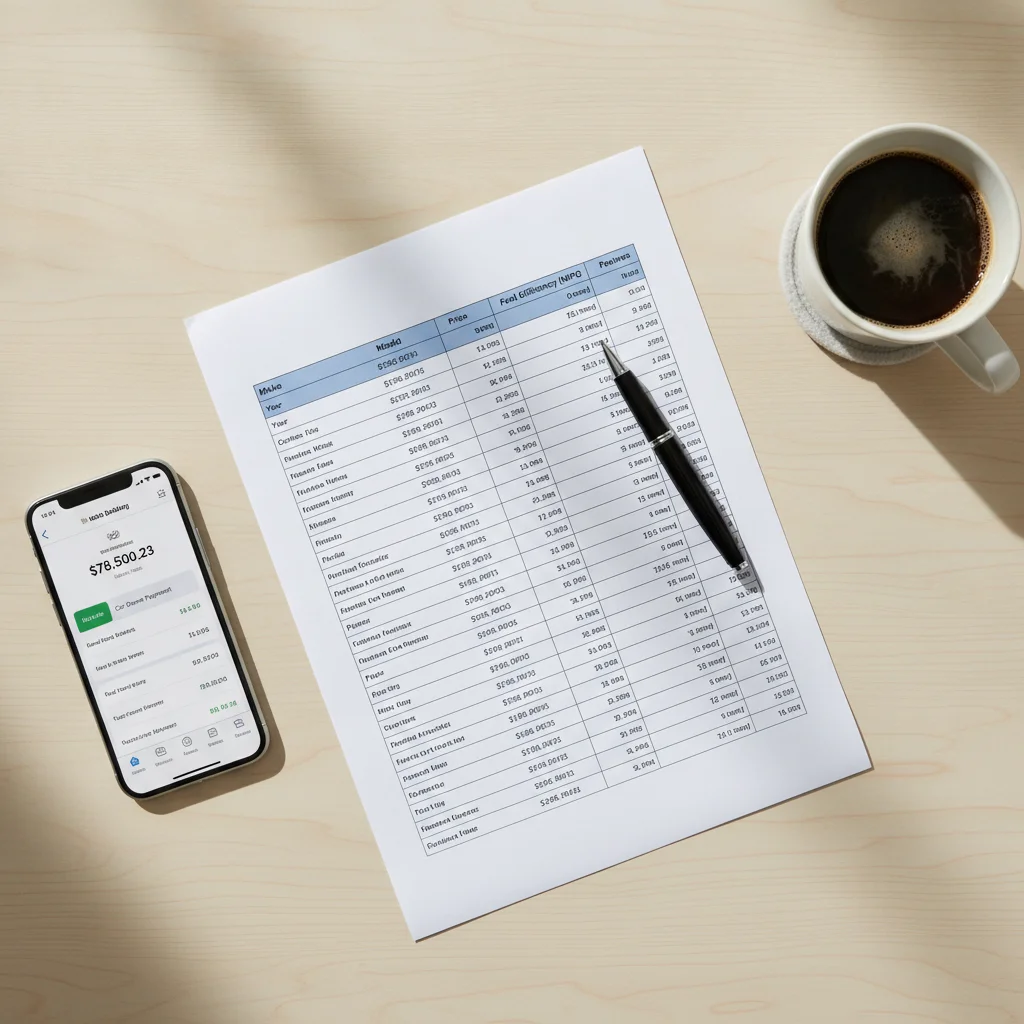
Build Your Budget Around Total Cost, Not Monthly Payments
This is where most online car buyers lose before they even start. They type a monthly payment number into a filter and let the algorithm define what they can afford. That's exactly how dealers want you thinking, because the monthly payment obscures the variables that determine how much you actually spend: interest rate, loan term, down payment, fees, and the out-the-door price.
A $450/month payment looks identical whether you're financing $22,000 over 48 months at 5% or $28,000 over 72 months at 9%. The second deal costs you thousands more in interest and leaves you underwater on the vehicle for years. Smart buyers work the math backward: decide the maximum total amount you're willing to spend, then calculate the payment that total produces at a realistic interest rate over a term you're comfortable with.
Pre-Approval Is Not a Commitment to That Lender
Many buyers hesitate to get pre-approved because they think it locks them into a loan. It doesn't. A pre-approval is an offer — you can decline it if the dealer beats the rate. It also typically involves a soft credit pull during the initial quote phase, though the formal application will generate a hard inquiry. Multiple hard inquiries for auto loans within a 14–45 day window are generally treated as a single inquiry by scoring models under FICO 8 and later versions.
Certified Pre-Owned Doesn't Mean Independently Inspected
CPO programs are administered by the certifying dealership, not an independent third party. The inspection checklist is manufacturer-defined and reviewed by dealership employees who have an interest in certifying the vehicle. This doesn't make CPO worthless — it typically extends warranty coverage meaningfully — but it's not a substitute for a pre-purchase inspection by a mechanic who works for you.
Before you engage any dealer or click any listing, get pre-approved for a loan from your bank or credit union. That approval letter gives you a real interest rate benchmark and confirms your actual budget ceiling. Dealers can beat it, but now they're competing against a number — not inventing one for you.
The pre-approval also signals to dealerships that you're a serious, informed buyer. That changes the conversation from "what can you afford monthly" to "here's the vehicle price we're discussing." It's one of the single highest-impact moves in the entire process. See how this fits into the broader picture in our guide on the real tradeoffs of buying a car online.
Set a firm out-the-door budget ceiling before opening any listing.
Monthly payment filters are dealer-friendly tools that obscure total loan cost, interest paid, and hidden fees. Buyers who anchor to a total price rather than a payment retain control over all the variables dealers use to extract margin. This single habit prevents more overpayment than any negotiation tactic.
Obtain pre-approval from your own financial institution before contacting any dealer.
Dealer financing is a profit center, not a service. When you arrive without pre-approval, the dealer controls the interest rate, the term, and often the total financed amount. A pre-approval letter from your bank or credit union establishes a real benchmark that dealer financing must beat to earn your business.
Run a VIN history report through at least two services before committing to any used vehicle.
No single vehicle history service captures every incident. Accidents reported to one insurer may not appear in another database. Title brands, odometer discrepancies, and lemon law buyback status can slip through single-source reports. Cross-referencing adds a critical layer of verification that costs almost nothing.
Commission a third-party pre-purchase inspection on any used vehicle before signing.
Seller disclosures and certification programs have significant gaps. A certified pre-owned badge does not guarantee a mechanical inspection by an independent technician — it guarantees the vehicle passed the certifying dealer's internal checklist. An independent mechanic working for you has no incentive to minimize findings.
Compare at least three competing listings on identical terms before engaging any seller.
Anchoring to a single listing turns the seller's framing into your reference point. Buyers who evaluate three or more comparable vehicles develop an independent sense of fair market value that no individual dealer can distort. This comparison also identifies outliers — both overpriced listings and deals worth pursuing faster.
Define your walk-away price before you contact a seller — and hold it.
Negotiation pressure is most effective against buyers who haven't pre-committed to a limit. Once you're emotionally invested in a specific car, walking away feels expensive. Buyers who set a walk-away number before engagement can honor it without emotional override because the decision was made before the pressure began.
Read every e-document line by line and flag any number that differs from verbal or written quotes.
Discrepancies between quoted prices and final documents are not always accidental. Items like documentation fees, dealer-installed accessories, and bundled warranties can appear in contracts without having been clearly disclosed during negotiation. Catching them before signing is the only moment you have leverage to remove them.
Research the Car Independently Before Trusting the Listing
Online listings are marketing materials. Even the ones from reputable dealers. A professional photo shoot, a few bullet points about features, and a Carfax badge do not tell you what the car is actually worth, what its maintenance history looks like, or whether the mileage is accurate for its condition. Smart buyers treat the listing as a starting point, not a source of truth.
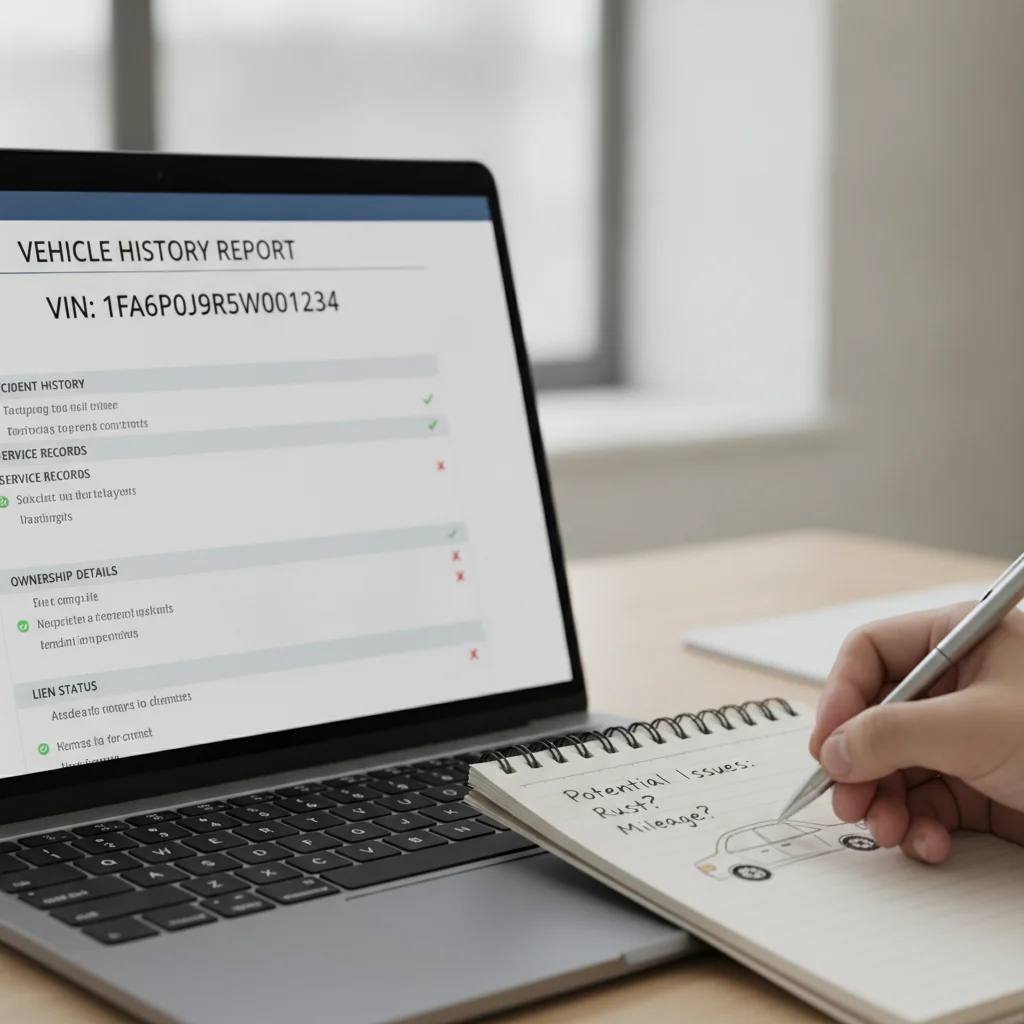
Here's the minimum verification stack for any used vehicle you're seriously considering:
- VIN lookup — Run it through at least two services (NMVTIS-based tools, not just Carfax). Look for title brands: salvage, flood, lemon law buyback, and odometer rollback flags.
- Market value check — Pull the same year/make/model/trim/mileage combination on Edmunds, KBB, and a live marketplace like CarGurus or AutoTrader. Note the range, not just one number.
- Days on market — Listings that have sat for 30+ days often have negotiable prices. Listings that appeared yesterday may be priced aggressively on purpose to create FOMO.
- Third-party pre-purchase inspection (PPI) — For any used vehicle, pay $100–$200 to have an independent mechanic inspect the car before you sign. This is non-negotiable even on certified pre-owned vehicles. The certification process has more gaps than most buyers realize.
For new vehicles, the research focus shifts to manufacturer incentives, regional dealer markups above MSRP, and the true invoice price — which is not the same as MSRP. Use dealer-preferred strategies you should know to understand how invoice pricing and holdback affect your negotiating position.
64%
Buyers who regret not negotiating harder
According to a 2023 Cox Automotive Car Buyer Journey study, nearly two-thirds of car buyers wish they had pushed back more on price or financing terms.
$1,000+
Average dealer financing markup over buy rate
Industry estimates from Consumer Financial Protection Bureau research indicate dealers routinely mark up the interest rate they receive from lenders by one to two percentage points, costing buyers hundreds to thousands over the loan term.
43%
Used car listings with undisclosed prior damage
A 2022 analysis by iSeeCars found that a significant portion of used vehicle listings did not disclose accident history that appeared in VIN-based history reports.
Compare Multiple Listings Before Committing to One
One of the most reliable cognitive traps in car shopping is anchoring — once you've engaged with a specific listing, it becomes your mental baseline. Everything else gets compared to it, even if it was overpriced or strategically framed to make average deals look great. Smart buyers break anchoring by deliberately comparing at least three competing options before they contact a single seller.
The comparison isn't just about price. Build a side-by-side that includes:
- Out-the-door price (not just the asking price — add estimated taxes, registration, and dealer fees)
- Mileage relative to year (rough benchmark: 12,000–15,000 miles per year is average)
- Trim level and included features (identical model names can hide significant option differences)
- Warranty coverage remaining (factory vs. extended vs. none)
- Seller type (franchise dealer, independent lot, private party, or certified online retailer)
- Return policy and inspection guarantee — especially critical for remote purchases
If narrowing down feels overwhelming, our guide on comparing online car listings without getting overwhelmed walks through a practical system for this exact problem.
Control the Timeline — Don't Let Urgency Control You
"We have two other people looking at this car" is one of the oldest scripts in automotive sales — and it has migrated online with perfect efficiency. Countdown timers on listing pages, "high demand" badges, and limited-time delivery offers are all engineered to make you decide before you're ready. Impulsive buyers respond to these signals. Smart buyers recognize them as tactics, not facts.
“The most dangerous moment in a car deal is when the buyer starts liking the car more than they dislike the price. That's when urgency tactics work — not because the car is going anywhere, but because the buyer's resolve is.”
— Desmond Kimathi, Former dealership finance manager and consumer auto advocate
The concrete defense is simple: set your own decision timeline before you start shopping, and do not compress it based on seller pressure. If a car is worth buying on Friday, it's almost certainly still worth buying on Monday. The rare cases where a specific vehicle genuinely sells overnight are real — but the losses from an impulsive purchase outweigh the losses from occasionally missing a deal.
This is also where timing your purchase strategically gives you leverage. End-of-month and end-of-quarter periods are when dealers are most motivated to move inventory — meaning the urgency works in your favor if you've planned for it rather than reacting to artificial pressure from a specific listing.
Use End-of-Month Timing as Your Urgency, Not Theirs
Dealer sales quotas reset monthly. In the final three to five business days of any month, sales managers have real motivation to close deals that weren't worth approving two weeks earlier. If you're ready to buy and you've done your research, this is the window to push for your number. The urgency is real — it just runs in your direction, not the dealer's.
Understand What You're Signing Before You Sign It
Online car purchases increasingly allow you to complete the entire transaction remotely — including e-signing a stack of finance and legal documents. This is convenient, and it's also where buyers leave the most money on the table. Dealers know that electronic documents are easier to gloss over than paper ones sitting across a desk.
Before you e-sign anything, pull every document and read it with specific questions in mind:
- Is the final purchase price what was quoted? Check for document fees, dealer prep charges, and any add-ons you didn't request.
- Is the interest rate on the contract your pre-approved rate? Or did it mysteriously change?
- Is the loan term what you agreed to? Stretched terms lower payments but increase total cost.
- Are there any voluntary products bundled in? GAP insurance, paint protection, extended warranties — these are negotiable and often overpriced.
- What is the return policy? Online retailers like Carvana and Vroom have clearly defined windows. Franchise dealers vary widely. Get it in writing.

For a deeper walkthrough of payment security and documentation in remote transactions, see how to protect yourself when paying for a car online. And before you reach the signing stage, use this pre-purchase checklist to make sure you haven't skipped any critical verification steps.
Put the Principles Together: A Smarter Shopping Sequence
Smart online car buying isn't about knowing secrets — it's about sequencing your actions so that each step builds leverage for the next. Here's how the principles above translate into a practical order of operations:
- Set your total budget ceiling — before opening a single listing page.
- Get pre-approved — from your bank or credit union, not the dealer.
- Research market value — for the specific make, model, trim, and mileage range you're targeting.
- Build a comparison shortlist — at least three vehicles, evaluated on out-the-door terms.
- Verify each vehicle independently — VIN history, third-party inspection, and seller reputation.
- Engage sellers on your timeline — with pre-approval in hand and a clear walk-away price defined.
- Read every document before signing — and flag anything that doesn't match what was quoted.
This sequence works whether you're buying from a certified online retailer, a franchise dealer's website, or a private seller on a marketplace. The discipline stays the same. The specific tactics flex based on context.
Online car buying has genuine advantages — broader selection, transparent pricing tools, and the ability to negotiate from a position of research rather than showroom pressure. But those advantages only compound when you bring the habits to match. Impulsive buyers fund the margins that disciplined buyers avoid. Which one you are is entirely a function of process.

All claims are backed by peer-reviewed research. Sources on request.