Key Takeaways
Why Used Car Buyers Start at a Disadvantage
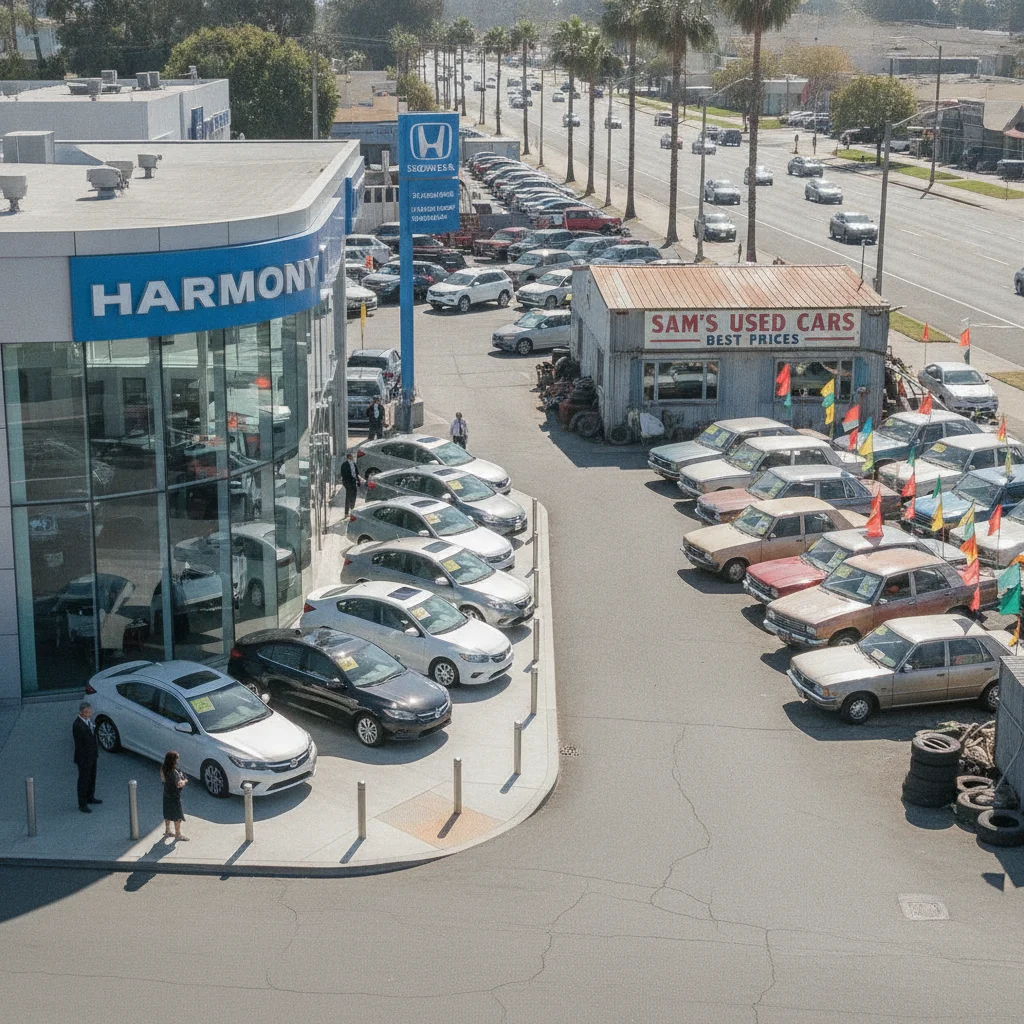
The used car market is structurally tilted toward sellers. Dealers do this every day. You do it once every few years. They know acquisition costs, reconditioning expenses, and holdback structures. You know your budget and what you like the look of. That information gap is where dealer profit lives.
But the gap is closable. The tactics in this article aren't secret — they're just underused. Dealers prefer buyers who are emotionally invested, rushed, uninformed about financing, and willing to bundle every variable into a single monthly payment conversation. All of those preferences work against you. The strategies below address each one directly.
Franchise dealers and independent lots operate differently, but the core negotiation principles apply to both. Start by understanding what you're walking into.
Do Your Price Research Before You Talk to Anyone
Walking into a dealership without knowing market value is like playing poker without looking at your cards. You need at least three data points before any conversation begins:
- Retail asking prices for comparable vehicles (same year, make, model, trim, mileage range, and region) from listings on CarGurus, Cars.com, and AutoTrader
- Private party value from Kelley Blue Book and Edmunds — this tells you the floor the dealer almost certainly paid less than
- Dealer cost estimates — for certified pre-owned units especially, Edmunds True Market Value gives you a realistic transaction benchmark
When you find a vehicle listed at $22,500 and comparable units in your region are clustering around $19,800–$21,000, you have a defensible opening position. You're not guessing — you're citing market data. That changes the tone of the entire negotiation.
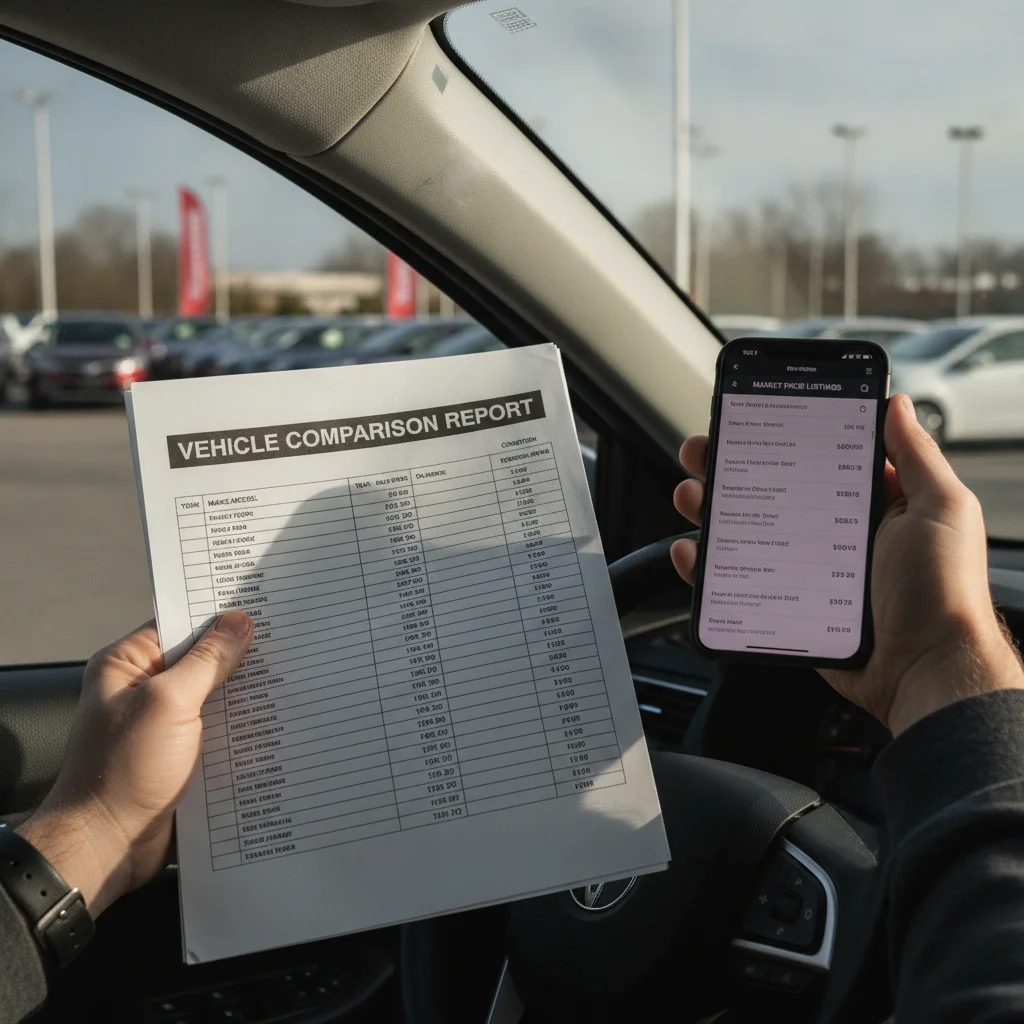
Negotiating a used car price effectively means arriving with comps, not just confidence. Print them or pull them up on your phone. Showing a dealer a live listing for a nearly identical car at $1,800 less is far more persuasive than simply saying the price is too high.
$1,000–$1,500
Average dealer profit on used car financing markup
According to Consumer Financial Protection Bureau data, dealer interest rate markups on auto loans cost buyers an average of $1,000 or more over the loan term.
46%
Used car buyers who skip the independent inspection
A 2022 CarGurus survey found that fewer than half of used car buyers arrange an independent pre-purchase inspection before finalizing a purchase.
$3,000+
Median dealer gross profit on used vehicles
NADA Data reports used vehicle gross profit per unit typically exceeds $3,000 at franchise dealerships when financing and F&I products are included.
Separate Every Variable — Especially the Trade-In
This is the most valuable tactical move available to used car buyers, and the one dealers work hardest to prevent. When you allow a dealer to quote you a single blended number that covers the purchase price, your trade-in value, financing rate, and add-ons simultaneously, you lose the ability to evaluate any one of those elements clearly.
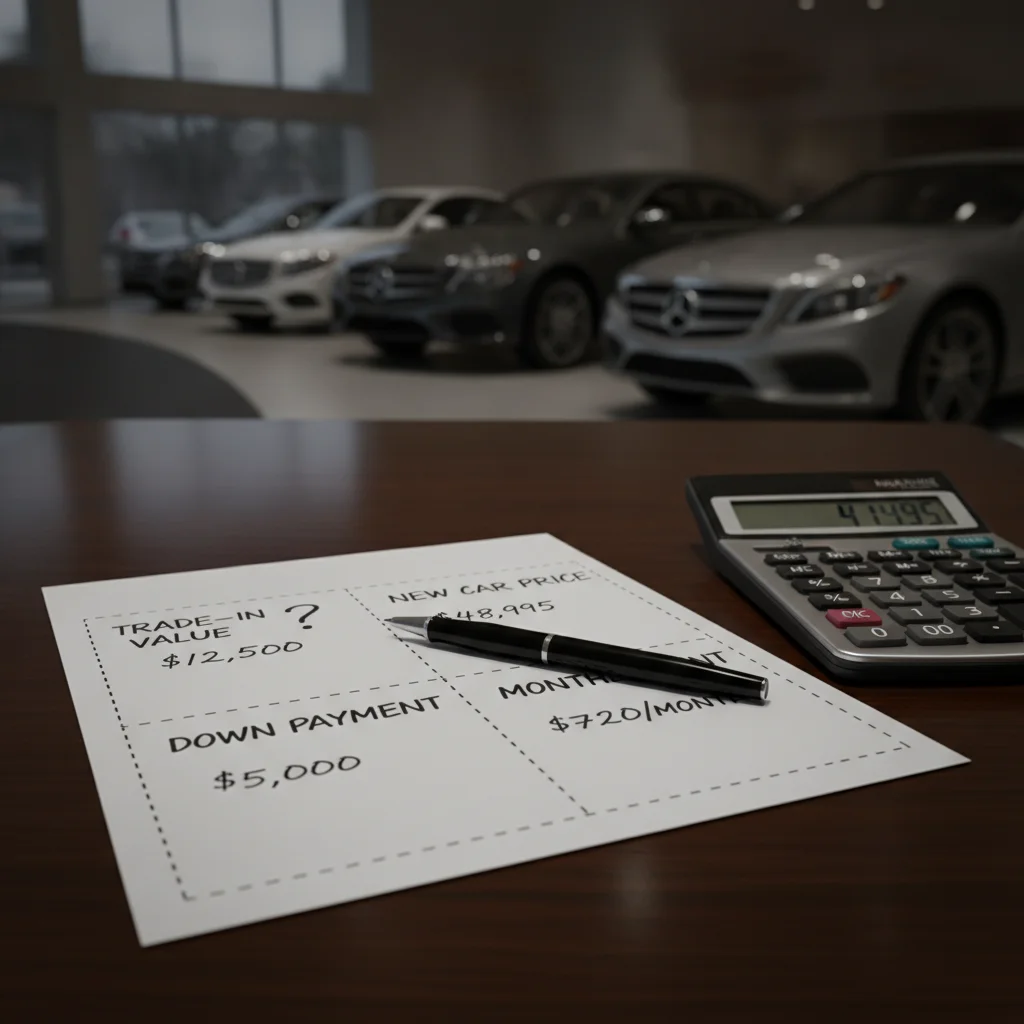
The four-square method — a classic dealership worksheet — is specifically designed to exploit this confusion. Understanding how the four-square worksheet works is essential before you sit down across from a finance manager.
Here's the sequence that protects you:
- Agree on the out-the-door price of the vehicle first, in writing, before trade-in or financing enters the conversation
- Then negotiate the trade-in as a completely separate transaction
- Then discuss financing — after you already have a pre-approved rate from your bank or credit union
Separating your trade-in from the deal removes one of the dealer's most effective levers. They can no longer give you $800 extra on your trade to offset a $1,200 concession they didn't actually make on the car price.
For trade-in value specifically, walk in with competing written offers. Using competing offers to negotiate a better trade-in gives you a real number the dealer has to beat — not a theoretical KBB estimate they can dismiss.
“The single most important thing a car buyer can do is separate every transaction element and negotiate each one independently. The moment you let the dealer blend price, trade-in, and financing into a single monthly payment, you've handed them the advantage.”
— Philip Reed, Former Senior Consumer Advice Editor, Edmunds
Time Your Visit Strategically
Timing matters more than most buyers realize, but not in the ways most people assume. The old advice to "shop at the end of the month when salespeople need to hit quotas" has some truth to it for new cars — used car margin structures are different, but end-of-month pressure still exists.
What reliably helps on the used car side:
- End-of-month visits — dealers are more willing to close deals to improve monthly inventory turn metrics
- Weekday mornings — less floor traffic means the salesperson has more time to work with you and more incentive to close rather than wait for weekend browsers
- High-inventory periods — when lots are full, dealers are carrying financing costs on every vehicle; that creates urgency to move units
Weekday vs. weekend dealership visits breaks down the evidence carefully — the effect is real but modest. Don't rearrange your life for it, but if you have flexibility, a Tuesday morning in the last week of the month is about as favorable a timing window as you'll find.
What dealer inventory levels signal is an equally useful read before you visit — lot supply conditions tell you whether you're negotiating from strength or weakness before you even arrive.
The Best Practices Used Car Buyers Should Follow
The strategies below aren't tips — they're proven practices that consistently produce better outcomes. Follow them sequentially and you'll enter every transaction better prepared than the vast majority of buyers the dealership will see that week.
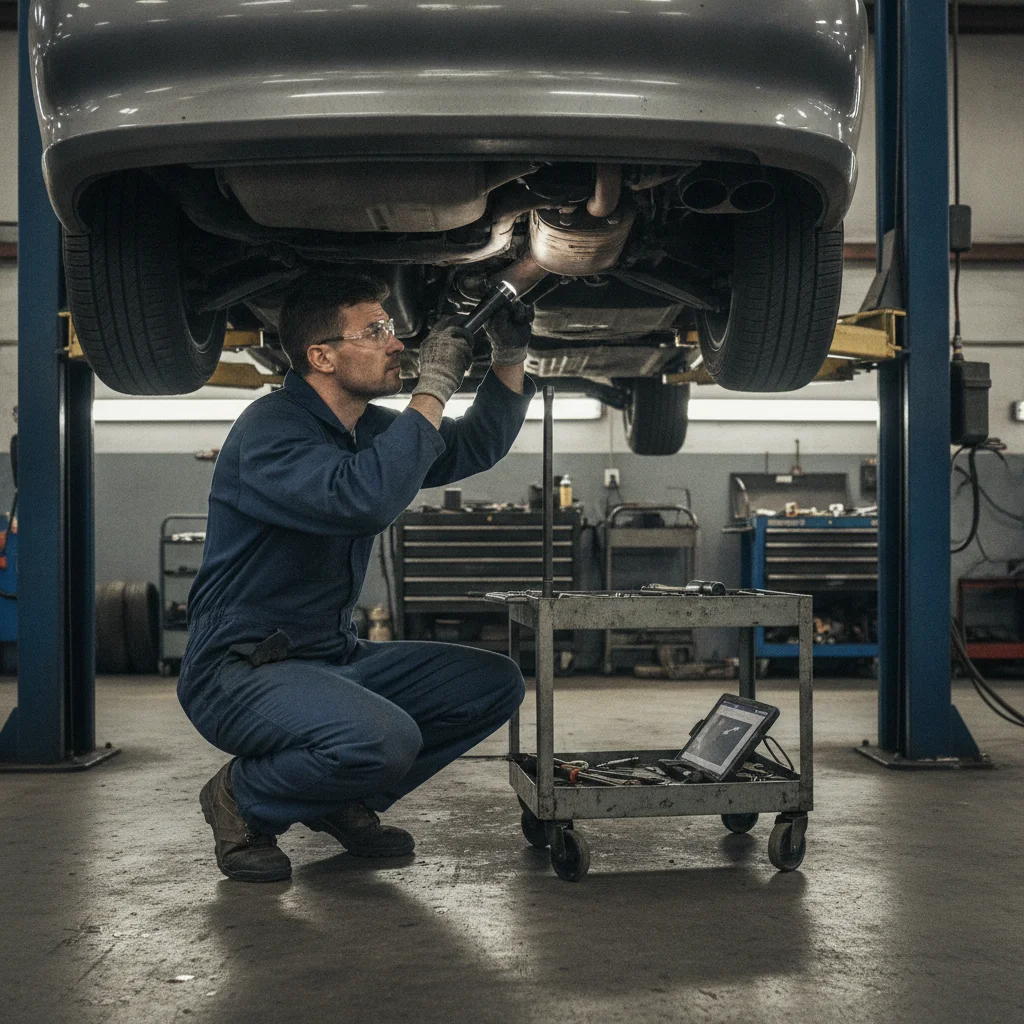
Get a pre-purchase inspection from an independent mechanic before signing anything.
A dealer's reconditioning process fixes what's visible and ignores what's expensive. An independent mechanic working for you has no financial stake in the sale and will tell you what's actually wrong. A $150 inspection can surface a $2,500 transmission problem or $900 in deferred maintenance that you can negotiate off the price — or use as grounds to walk away.
Pull a vehicle history report and read it critically, not just for accidents.
Buyers treat a clean Carfax as a green light. Dealers know this, and they know what Carfax doesn't capture — accidents repaired without an insurance claim, fleet and rental use that shows as normal ownership, and odometer irregularities that require cross-referencing multiple data points. A vehicle history report is a starting point, not a verdict.
Research the specific trim level and options — not just the model — before setting your price target.
A 2020 Honda CR-V LX and a 2020 Honda CR-V EX-L can differ by $5,000 or more in market value. Dealers sometimes list vehicles with vague trim descriptions to blur these distinctions. Knowing the exact trim, standard features, and common optional packages on any vehicle you're considering prevents you from paying EX-L money for an LX.
Counter every offer in writing and ask for out-the-door price in writing before negotiating any other variable.
Verbal agreements in car dealerships evaporate. "We can do that" in conversation often becomes a different number on the contract. Getting every agreed price point in writing, specifically the out-the-door figure including taxes, fees, and any dealer add-ons, prevents the price from shifting during the finance office visit.
Decline all finance office add-ons in the first pass, then evaluate only what genuinely applies to you.
The finance office is the dealership's highest-margin room. Extended warranties, GAP insurance, paint protection, key replacement plans, and tire-and-wheel coverage are presented as a package, often quickly and with implied urgency. Almost all of them are either overpriced relative to standalone alternatives or redundant with coverage you already have. The default answer is no — then reconsider with a clear head.
Contact the dealer by email or text before visiting to establish preliminary numbers.
Phone and in-person conversations favor dealers — they control the pace and the environment. Written communication forces clarity and creates a record. Reaching out with a specific vehicle stock number, your market research, and a specific offer gives you an opening position before you've spent four hours on the lot.
One practice that often gets skipped: asking about the vehicle's acquisition history. Many used cars on dealer lots came through wholesale auctions, and that pipeline carries specific risks. What dealers know about auction-bought cars explains what questions to ask and what the answers should tell you.
Quick Moves You Can Make Right Now
If you're mid-search or walking into a dealership soon, these are the highest-impact actions to take immediately — before anything else.
Even one or two of these steps shifts the information balance meaningfully in your favor. Dealers rely on buyers arriving unprepared. The more homework you've done, the fewer angles they have to work with.
Document Everything in Writing
After every conversation with a salesperson, send a quick email summarizing what was agreed to — price, included items, any promised repairs. This creates a paper trail that's hard to walk back. It also signals to the dealer that you're a methodical buyer, which often changes how they treat you.
Check Inventory Timing Before You Visit
<a href="/buying-a-car/negotiating-and-deals/trade-in-strategies/how-dealer-inventory-gaps-create-better-trade-in-moments">Dealer inventory gaps</a> create leverage windows for both buyers and sellers. When a lot has heavy inventory of the type of vehicle you're buying, that's a buyer's market moment. Monitor days-on-lot data on CarGurus listings — vehicles sitting 45 days or more are almost always negotiable.
What Dealers Know About Financing That You Should Too
Dealer financing is a separate profit center. When you accept a dealer's financing offer, the dealer typically earns a reserve — a percentage of the spread between the rate the lender charges and the rate the dealer quotes you. On a $20,000 loan over 60 months, a 2-point markup on the interest rate can cost you $1,000 or more over the life of the loan.
The fix is straightforward: get pre-approved by your own bank or credit union before you visit any dealership. This does three things:
- Gives you a concrete rate benchmark the dealer has to beat to earn your business
- Removes the "let me check what you qualify for" uncertainty that dealers use to control the financing conversation
- Reveals whether the dealer's financing offer is actually competitive or just convenient
Dealers can sometimes beat your pre-approval — they have relationships with multiple lenders and may have access to manufacturer subvented rates on certified pre-owned inventory. That's fine. Let them try to beat your rate. But walk in with a number in hand.
Dealer Financing Isn't Always the Worse Option
On certified pre-owned vehicles, manufacturers sometimes offer subvented financing rates through the dealer — 1.9% or 2.9% APR promotions that your bank simply can't match. Always check whether a CPO program is in effect for the vehicle you're buying. Even then, your pre-approval gives you a baseline to verify whether the promotional rate is genuinely better.
GAP Insurance: Don't Double-Pay
If you're financing and your down payment is under 20%, GAP coverage makes sense — it covers the difference between what you owe and what the car is worth if it's totaled. But many buyers already have it through their auto insurer at a fraction of the dealer's price. Check your policy before accepting GAP from the finance office.
The dealer tactics that eat into your trade-in value covers the financing angle in the trade-in context specifically — worth reading alongside this section if you're bringing a vehicle to trade.
Walking Away Is a Strategy, Not a Failure
The single most powerful position you can put yourself in is genuine willingness to leave. Not as a bluff — as a real option. When you've done your research, gotten pre-approved, identified multiple comparable vehicles, and know your walk-away number, leaving an unsatisfactory deal costs you nothing except time.
Dealers know this. They also know most buyers won't do it. They've invested hours in test drives, paperwork, and rapport-building specifically because leaving becomes harder the longer you've been there. That's not accidental — it's designed.
Why walking away is often the most powerful move explains what typically happens after you leave — including the follow-up calls that often arrive within 24 to 48 hours with improved offers.
Set your number before you go in. When the deal doesn't reach it, stand up and thank them for their time. You're not being rude — you're being a rational buyer. Those are the buyers dealers remember, and sometimes call back.
For online shopping contexts, principles that separate smart online car shoppers from impulsive ones applies the same logic to the digital environment — don't let convenience substitute for diligence.


All claims are backed by peer-reviewed research. Sources on request.