
Key Takeaways
Summary
32 items · 45–90 minutes
Why Online Car Buying Demands a Different Checklist
Buying a car online removes the one thing that kept dealers moderately honest in the showroom: your physical presence. You can't squeeze the brake lines, smell for mildew, or catch the finance manager slipping a $900 "dealer prep fee" into the contract while you're distracted by the test drive. What you lose in tactile inspection, you need to make up for in systematic verification.
The good news is that online car buying — done right — can actually put you at an advantage. You have time on your side, no high-pressure sales floor, and access to more inventory than any single dealership lot. But that advantage evaporates fast if you click through listings casually, accept the platform's financing without shopping alternatives, or skip reading a return policy that sounds generous until you're actually trying to use it.
This checklist is built around the four stages where online buyers get burned: vehicle verification, financing terms, return and dispute policies, and delivery logistics. Work through each group before you authorize any payment. If you're also evaluating whether to buy new or used remotely, see our hubs on buying new cars and buying used cars for the broader context.
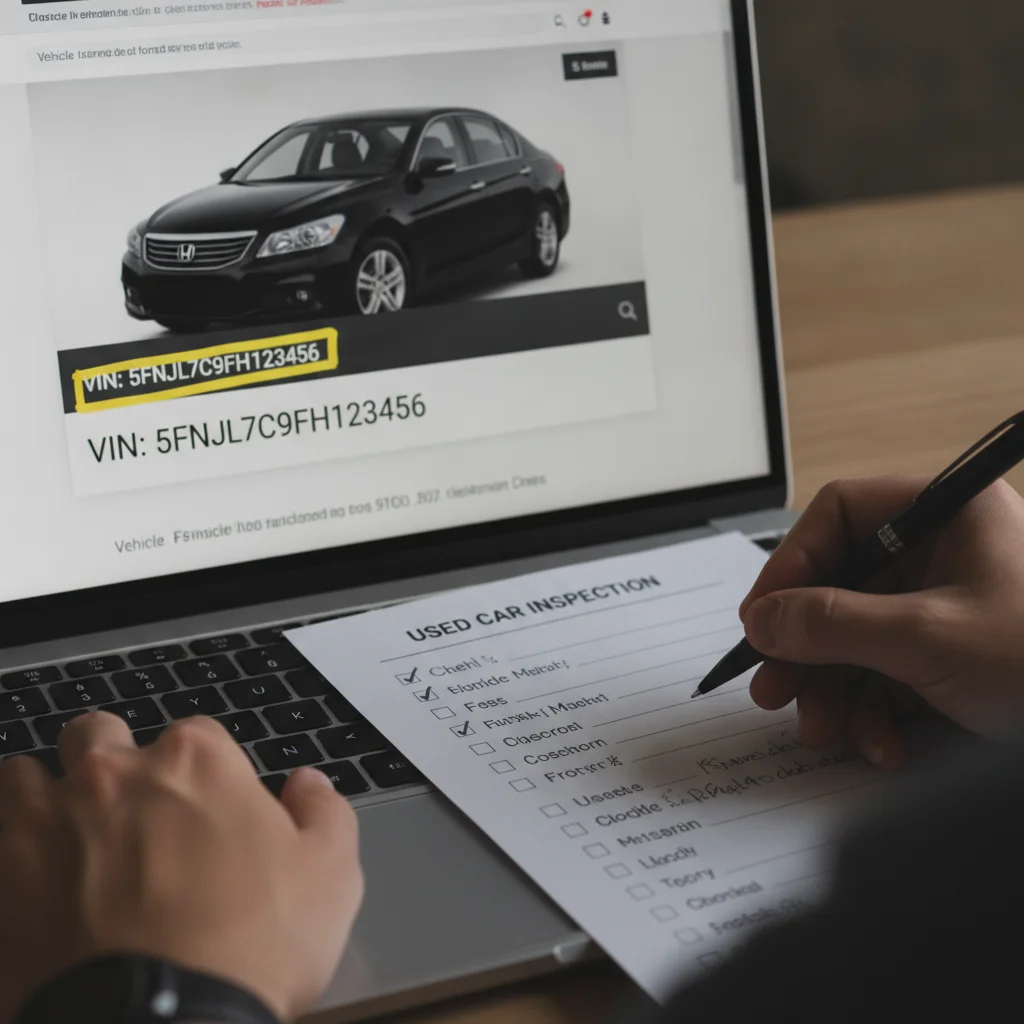
What You'll Need Before You Start
Before running through the checklist, gather the following resources. Having them ready will prevent you from hitting a wall mid-process and either rushing or abandoning the verification steps entirely.
Carfax or AutoCheck
Pull a full vehicle history report using the VIN to check title status, accident history, ownership count, and odometer readings.
NHTSA VIN Lookup (nhtsa.gov)
Check for open safety recalls on the specific vehicle you're purchasing using its 17-digit VIN.
Bank or credit union preapproval
Secure an outside financing offer before engaging with platform financing so you have a benchmark APR to compare against.
Third-party inspection service (e.g., Lemon Squad, CARCHEX, or local mechanic)
Arrange an independent mechanical inspection at the vehicle's current location before you authorize payment.
Edmunds or Kelley Blue Book
Verify the listed price is fair market value for the year, make, model, trim, mileage, and condition before negotiating.
State DMV fee estimator
Calculate your specific state's registration and title fees so out-the-door price surprises are minimized.
PDF or screenshot tool
Save a copy of the return policy, full listing details, and any written commitments from the platform at the time of purchase.
One tool not listed above but worth emphasizing: your own financing preapproval. Walk into any online car purchase with a rate in hand from your bank or credit union. Online platforms will offer their own financing — sometimes legitimately competitive, often not — and having an outside number gives you instant leverage and a clear benchmark. Without it, you're comparing the platform's offer to nothing.
The Pre-Purchase Checklist
Work through these groups in order. The vehicle verification steps come first because there's no point reviewing financing terms on a car with a salvage title or an open recall you can't clear. Each item is marked by priority so you know what's non-negotiable and what's situational.
Vehicle Verification
Pricing and Financing
Return Policy and Dispute Process
Delivery and Condition Documentation
Never Skip the VIN Check on a Private Seller Listing
Online marketplaces like Facebook Marketplace and Craigslist host a significant volume of title-washed and cloned-VIN vehicles. A clean-looking listing with professional photos is not a substitute for a verified history report. Run the VIN through Carfax or AutoCheck before you have any financial conversation with a private seller. If the seller resists or says it's "not necessary," walk away.
Financing Terms Can Change Between Approval and Delivery
Some online platforms issue conditional financing approvals that are subject to change before the vehicle ships. If your credit is re-pulled, your income isn't verified to their standard, or the vehicle appraises differently than expected, the rate or terms can shift. Get everything in writing and ask specifically whether the quoted rate is locked or subject to final verification. A rate that changes at delivery is not the deal you agreed to.
For used vehicles specifically, a checklist like this is necessary but not sufficient on its own. A third-party mechanical inspection is the one step that catches what paperwork can't — deferred maintenance, hidden collision repair, and wear that photos are staged to obscure. See our guide on getting a pre-purchase inspection on a remote vehicle for exactly how to arrange one without being physically present.
Never Pay in Full Before Delivery Confirmation
Authorizing full payment before the vehicle leaves the seller's location removes most of your leverage if something goes wrong in transit or at delivery. Use a credit card for any deposit if the platform allows it — credit cards carry dispute protections that wire transfers and ACH payments do not. Confirm the platform's payment structure and understand exactly when funds are released before you authorize anything.
The Contract Reflects the Real Deal — Not the Listing
Every commitment a platform makes in a chat window, email, or phone call is superseded by what's in the purchase contract. I've seen buyers handed contracts with fees and add-ons that were verbally promised not to be there. Review every line of the final purchase agreement carefully — do not assume it matches what was discussed. Our <a href="/buying-a-car/car-buying-process/paperwork-and-contracts/before-you-sign-a-pre-signing-checklist-for-car-purchase-contracts">pre-signing contract checklist</a> gives you exactly what to look for.
Reading the Return Policy Before You Trust It
Every major online car platform advertises a money-back guarantee. Carvana says seven days. Vroom had a seven-day policy before scaling it back under complaints. CarMax offers 30 days up to 1,500 miles. The headline number is never the whole story.
The fine print routinely includes mileage caps that make the window nearly useless if you commute, restocking fees that eat into your refund, geographic restrictions on which vehicles qualify, and exclusions for vehicles purchased with certain financing structures. Some platforms require you to return the car in the same condition you received it — with no clear standard for what "same condition" means when your inspector found a cracked CV boot on arrival.
Read the return policy as a contract, not a marketing promise. Our in-depth breakdown of how return policies work on online car purchases walks through what to look for clause by clause. And if the deal starts to unravel before delivery — which happens more than platforms advertise — our piece on why some online car deals fall apart at the last minute will tell you exactly what causes it and how to protect yourself.
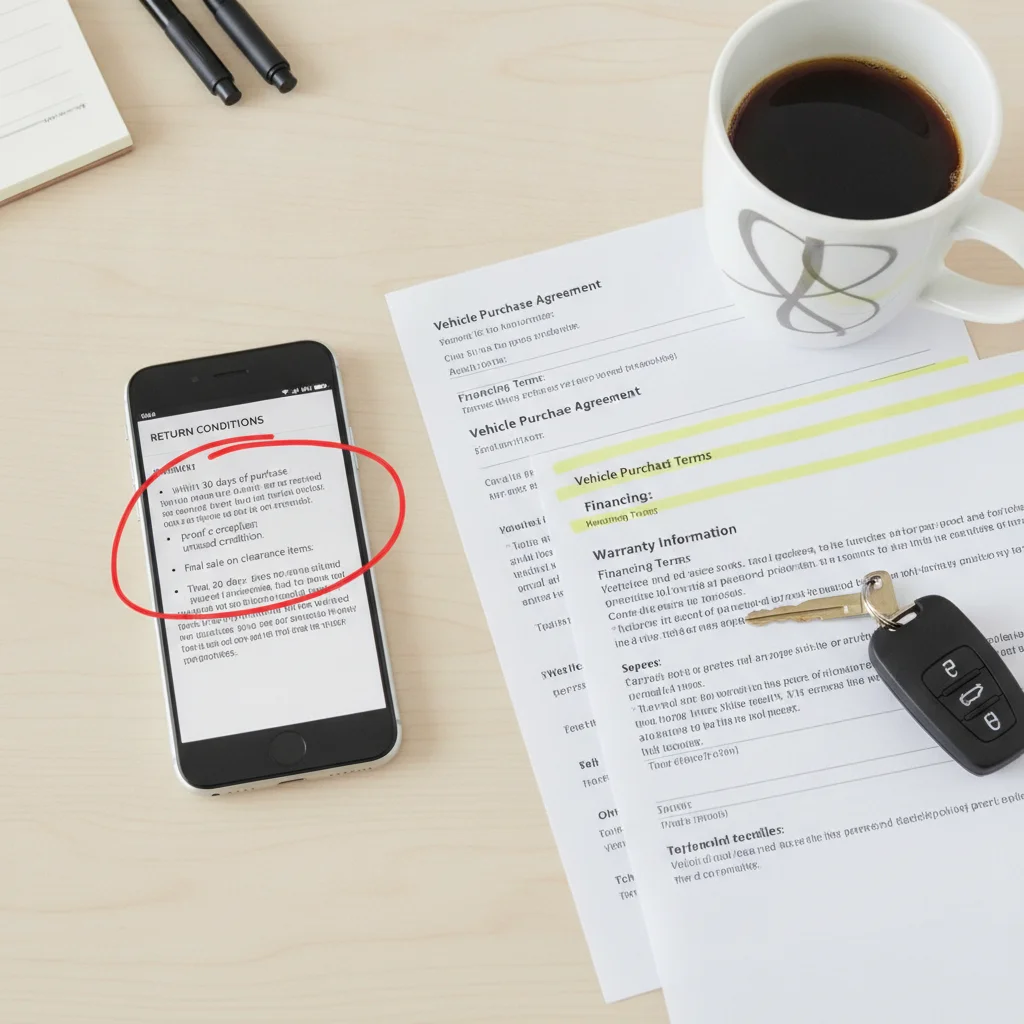
Locking Down the Financing Before You Sign Anything
Online car platforms have built slick financing flows designed to feel frictionless. You enter your income, choose a term, and get a monthly payment before you've had time to think. That frictionlessness is a feature for them, not for you. The monthly payment number is engineered to feel manageable while the interest rate, term length, and add-on products buried in the contract quietly cost you thousands.
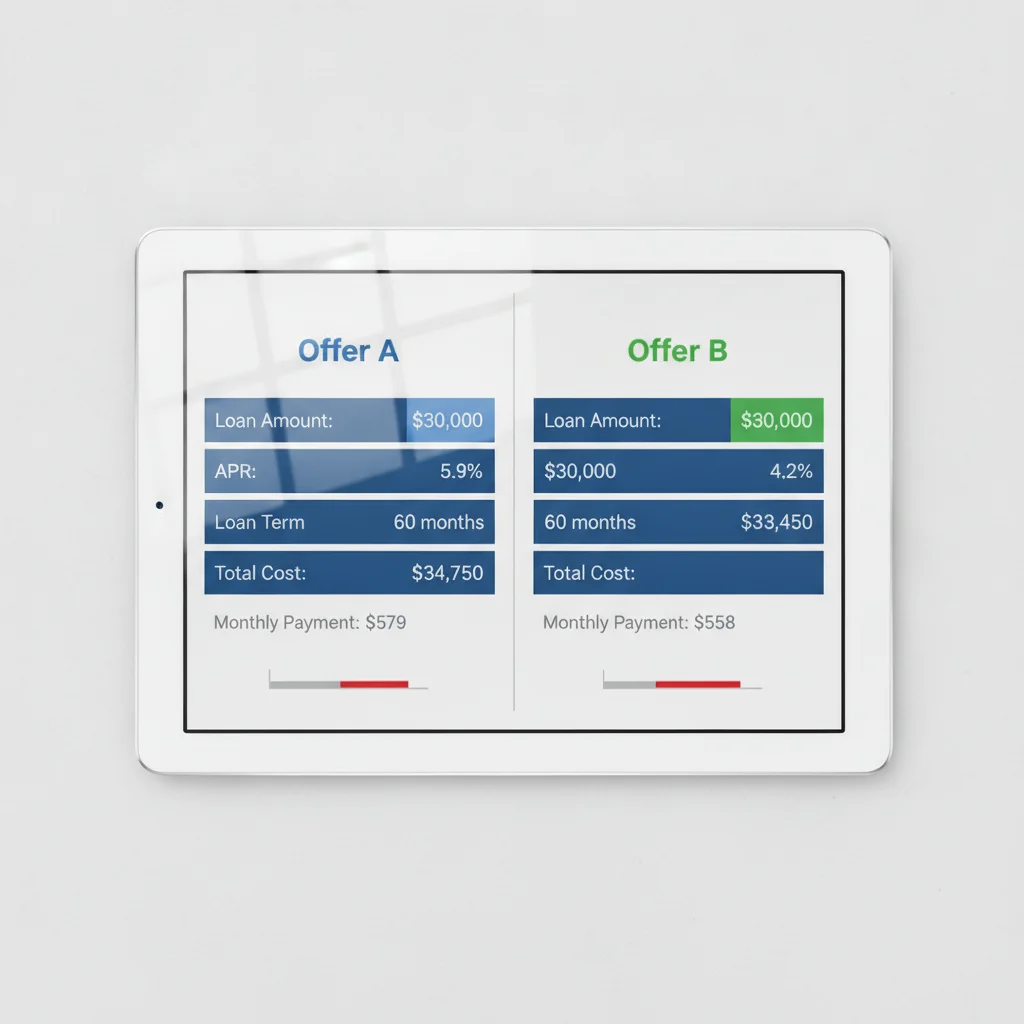
Here's what I saw working in dealership finance: most buyers focus on the monthly payment and ignore the total cost of the loan. A 72-month term at 9% APR on a $28,000 vehicle costs you nearly $8,700 in interest. A 48-month term on the same vehicle at 6% costs $3,500. Same car, dramatically different financial outcomes — and both can produce a "comfortable" monthly payment depending on down payment.
Before you accept any financing offer from an online platform, get your own preapproval from a bank or credit union. Compare the APR directly, not the monthly payment. Check whether the platform's offer requires you to finance through them as a condition of the listed price — some platforms price the car lower but embed that margin in required financing. That's a legal practice and a common one.
When you're reviewing the final contract, run through every line item using our pre-signing checklist for car purchase contracts. Online purchases generate the same paperwork as in-person deals — you just review it digitally, which makes it easier to miss things. Slow down at the contract stage.
You should also review any optional add-ons being bundled in at this stage. Extended warranties, GAP insurance, and paint protection packages are frequently presented as pre-checked items or "recommended" additions. Use our add-ons evaluation checklist to decide which, if any, make sense for your situation before you hit confirm.
Delivery Day: What to Do When the Car Arrives
The checklist doesn't end when the platform sends a confirmation email. Delivery is the moment of truth — and it's also your last clear opportunity to document the vehicle's condition before you own the risk.
Online platforms ship cars on open or enclosed transport depending on distance and price tier. Transit damage happens. In most cases, if you sign the delivery paperwork without noting damage, you've accepted the car in that condition and waived your ability to claim it happened in transit. That's a standard clause in nearly every delivery agreement.
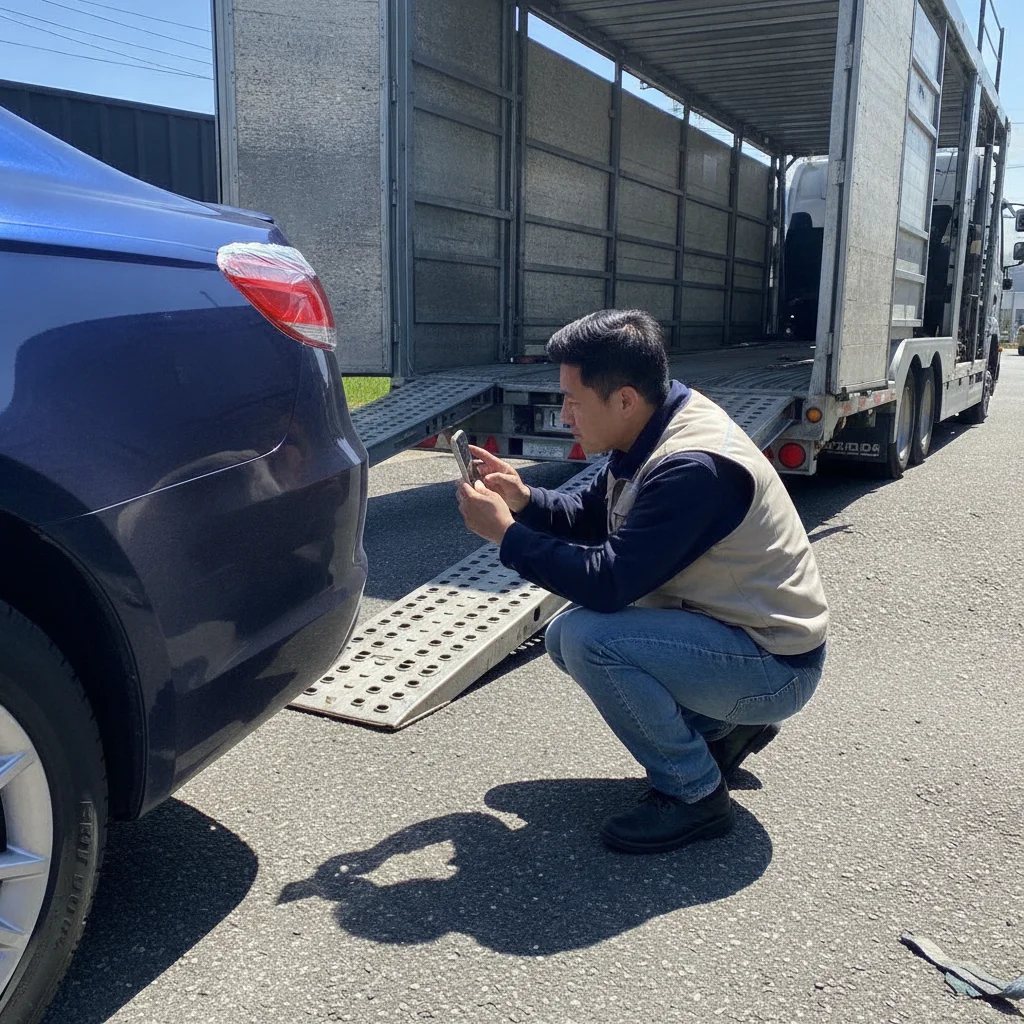
When the carrier arrives, do not let them rush you. Walk the entire exterior in daylight — all four panels, the roof, the hood, the trunk lid. Open every door and check the jambs. Look at the windshield at an angle for chips. Check the wheels for curb rash. Take time-stamped photos of everything, including the odometer reading. If the mileage is meaningfully higher than what was listed at purchase, note it immediately and contact the platform before signing.
If you find damage, note it specifically on the delivery document before you sign. Vague notes like "possible damage" won't hold up. Write exactly what you see: "3-inch scratch on driver's rear door, paint through to primer." Get the delivery driver's name and carrier information.
For a comprehensive mechanical inspection of what to examine once the car is in your hands — especially relevant for used vehicles — the complete pre-purchase vehicle inspection checklist gives you a point-by-point framework. And if you arranged a third-party inspection before purchase, compare its findings against the car's actual condition on arrival.

All claims are backed by peer-reviewed research. Sources on request.