Key Takeaways
Rounding Up Your Car Payment
Rounding up your car payment means voluntarily paying slightly more than your required monthly minimum — typically to the nearest $25, $50, or $100 increment. For example, if your payment is $312, you pay $325 or $350 instead. That small overage goes directly toward your principal balance, which reduces the amount of interest that accrues each subsequent month.
Because auto loans are simple-interest loans calculated on the outstanding principal, any reduction in principal — even a modest one — lowers the daily interest accrual rate for the remainder of the loan term.
Why a Few Extra Dollars Actually Matter
Most borrowers treat their car payment as a fixed, immovable number. The dealership hands you a contract, you set up autopay for exactly that amount, and you move on. But that required monthly payment is a floor, not a ceiling — and the difference between paying the minimum and paying a rounded-up number is where real savings hide.
The reason rounding up works comes down to how auto loans charge interest. Almost every retail auto loan in the United States is a simple-interest loan, meaning interest is calculated daily on whatever principal balance remains. When you send in $38 more than required, that $38 chips away at principal immediately. Starting the very next day, the lender is calculating your daily interest charge against a slightly smaller number. It's a small reduction, but it repeats every single day for the rest of the loan.
Over a 60- or 72-month loan, those compounding daily savings accumulate into something meaningful — often several hundred dollars and multiple months shaved off the term. See how interest rates and APR affect your total loan cost to understand the mechanics behind this process.
The psychological advantage is just as real. Rounding up requires almost no behavioral change. You don't need to open a savings account, negotiate with your lender, or restructure your budget. You simply decide that $312 becomes $350, and you set autopay for that amount. The habit is invisible — until you notice your loan payoff date moving closer.
The Math: What Rounding Up Really Saves
Let's use a concrete example so the numbers aren't abstract. Suppose you financed $22,000 at 7.5% APR over 60 months. Your required monthly payment works out to approximately $441.
Here's how three rounding scenarios compare against paying only the minimum:
| Monthly Payment | Extra Per Month | Months Saved | Interest Saved |
|---|---|---|---|
| $441 (minimum) | $0 | 0 | $0 |
| $450 | $9 | ~0.5 | ~$45 |
| $475 | $34 | ~2 | ~$175 |
| $500 | $59 | ~3.5 | ~$310 |
Now raise the rate. At 10% APR on the same loan, rounding up to $500 instead of the minimum $468 saves you closer to $420 in interest and cuts roughly four months off the loan. The higher your interest rate, the more aggressively rounding up pays off.
$1,000+
Potential interest saved over a 72-month loan
Rounding up by $50–$75/month on a $25,000 loan at 9% APR can save over $1,000 in total interest according to standard amortization modeling.
4–6 months
Loan term reduction from consistent rounding up
Borrowers who round up by $50+ per month on a 60-month auto loan typically shed four to six months off their payoff date, depending on rate and balance.
84%
New car buyers who finance through a lender
According to Experian's 2023 State of the Automotive Finance Market report, the vast majority of new car purchases involve financing — making payment optimization strategies broadly applicable.
7.1%
Average new car loan interest rate (2024)
Experian data from Q1 2024 shows average new car loan rates near 7.1%, making early principal reduction meaningfully valuable for most borrowers.
For a deeper look at the underlying arithmetic, the math behind paying extra on your car loan walks through the numbers with multiple scenarios, including high-rate and long-term loans.
Overpayment Doesn't Skip Future Payments
Rounding up your payment does not give you permission to skip a future payment. Even if your overpayments have built up a credit with your lender, you are still contractually obligated to make every scheduled minimum payment on time. Missing a payment — regardless of your extra payment history — can trigger a late fee and harm your credit score.
Front-Loaded Interest Is by Design
Auto loan amortization schedules are structured so that lenders collect more interest in the early months. This is standard practice, not a trick — it reflects the fact that you're borrowing the most money at the very start of the loan. Understanding this structure helps explain why starting your rounding-up habit early is so much more valuable than starting late.
How to Actually Round Up Correctly
The mechanics are simple, but a few details can trip you up if you skip them.
Step 1: Check for Prepayment Penalties
Most auto loans don't carry prepayment penalties, but some older dealer-arranged loans — particularly from subprime lenders — may include them. Read your contract's payoff section before sending extra money. If a penalty exists, calculate whether your interest savings outpace the fee. Usually they do, but verify first.
Step 2: Designate the Extra Amount as Principal
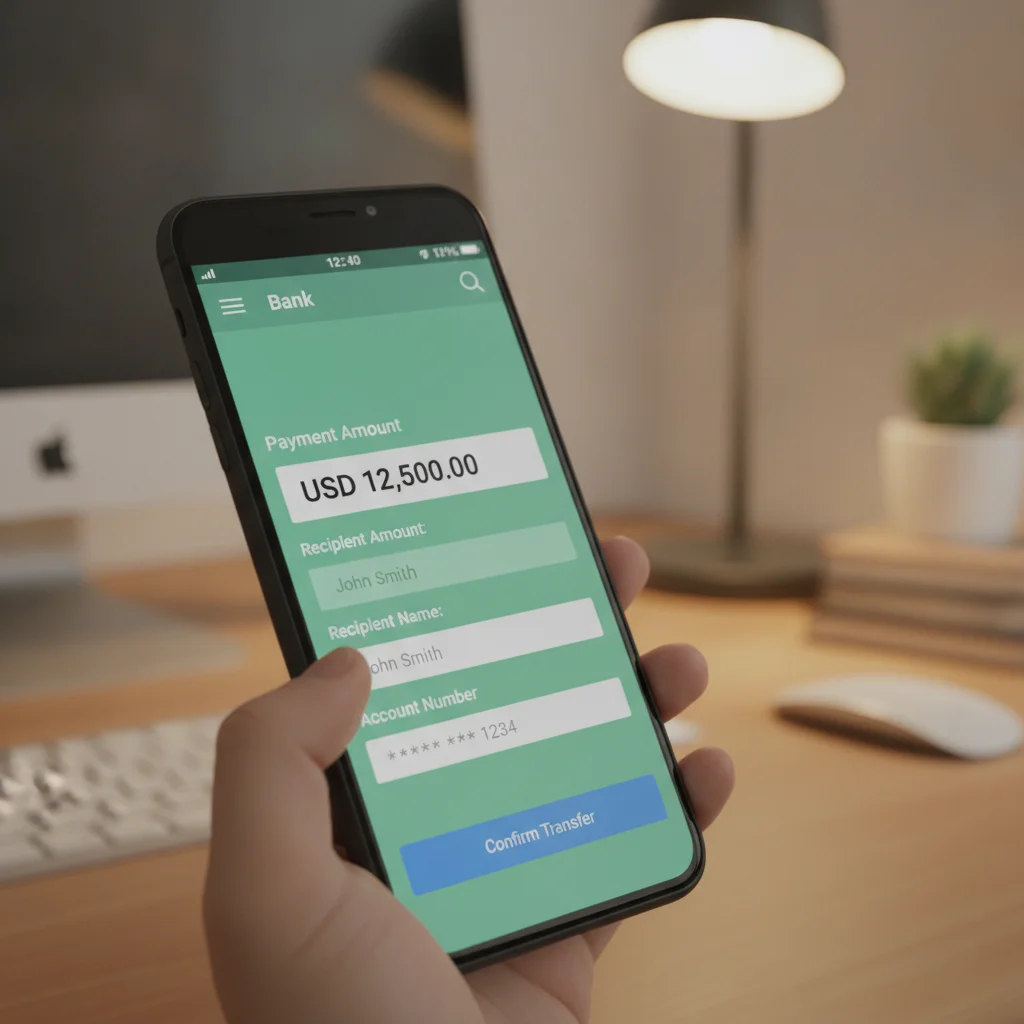
This is the most important step. When you pay more than required, lenders may apply the overage to next month's payment rather than your current principal — which means your payoff date doesn't move at all. You need to explicitly direct excess funds to principal. You can do this by:
- Noting "apply to principal" in your payment memo or online payment notes field
- Calling or messaging your lender to update your payment preferences on file
- Submitting the extra amount as a separate second payment designated for principal
Confirm with your lender how they handle overpayments before assuming it's working correctly. Log into your account after your first rounded-up payment and verify the principal balance dropped by more than it normally would.
Step 3: Automate the New Amount
Update your autopay setting to the rounded-up figure immediately. Automating removes the temptation to skip the extra during a tight month. Even if you need to pause once or twice, the default should be the higher number.
Always Confirm Principal Application
After your first rounded-up payment posts, log into your lender's online portal and verify that your principal balance decreased by more than the standard scheduled amount. If it didn't, contact your lender immediately to clarify how extra funds are being applied. Some lenders default to crediting overpayments toward the next scheduled installment rather than current principal.
Start With a Number You Won't Notice
If you're unsure whether you can sustain extra payments, start with the smallest meaningful round number — even $10 or $15 above your minimum. It's easier to build the habit at a comfortable level and increase it later than to commit to an ambitious amount and revert to the minimum when money gets tight.
Making extra payments on a car loan covers the structural details of what changes — and what doesn't — when you consistently pay above the minimum. It's worth reading alongside this strategy to make sure your lender is applying payments correctly.
When Rounding Up Beats Other Payoff Strategies
Rounding up isn't the only way to pay off your car loan early, but it has specific advantages over more aggressive tactics.
Versus Lump-Sum Payments
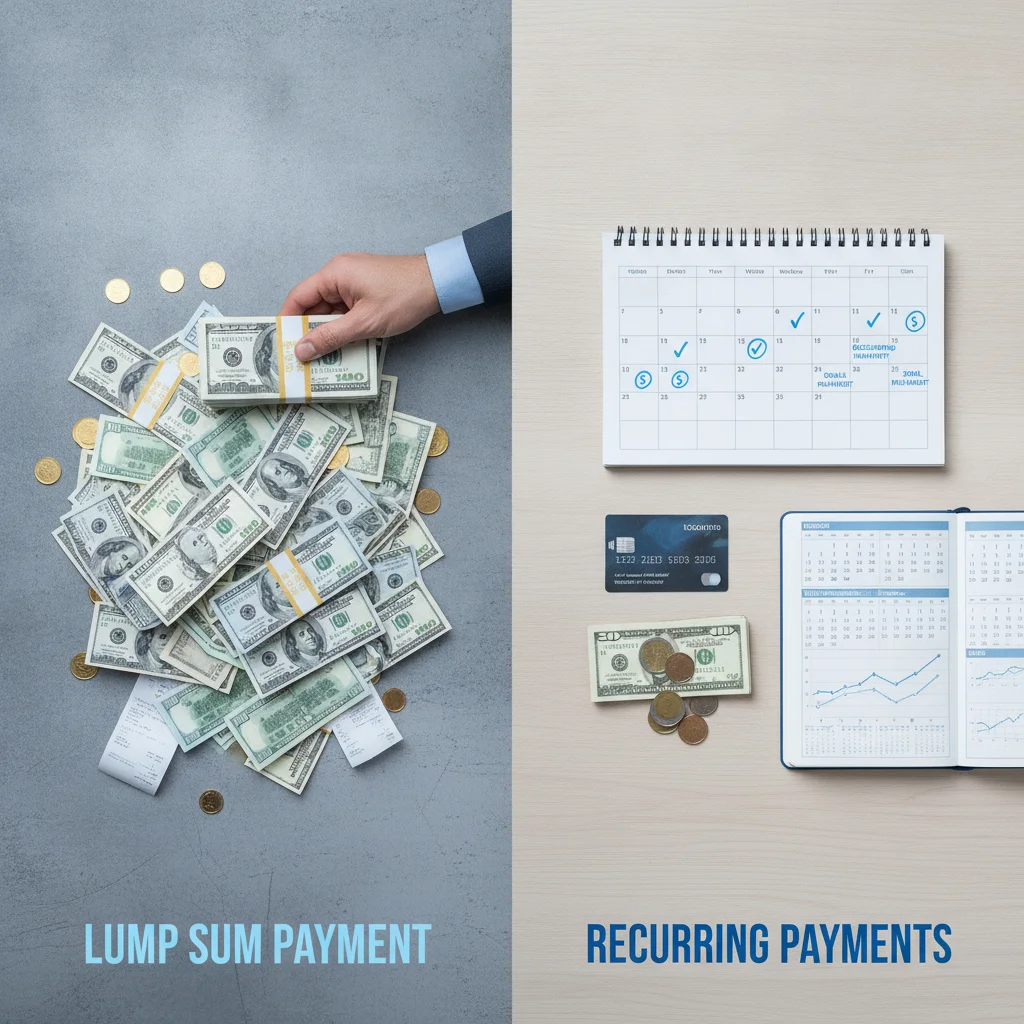
A lump-sum principal payment — say, using a tax refund to pay down $2,000 at once — produces a bigger immediate impact than rounding up monthly. But lump sums require capital you may not consistently have. Rounding up works every month, steadily, without requiring windfalls. If you can do both, you should — but rounding up works when lump sums don't. Lump-sum payoff vs. extra monthly payments compares these two approaches directly if you want to choose between them.
Versus Biweekly Payments
Switching to biweekly payments results in one extra full payment per year, which meaningfully shortens the loan term. But biweekly payment plans require lender approval, sometimes involve a setup fee, and can complicate your cash flow if your paycheck timing doesn't align. Rounding up monthly is simpler for most borrowers. Biweekly vs. monthly auto loan payments breaks down exactly how the two strategies compare on interest saved.
Versus Refinancing
Refinancing to a lower rate can dramatically reduce your total interest burden — especially if rates have dropped since you financed. But refinancing involves a hard credit inquiry, paperwork, and potential fees. Rounding up requires none of that. If you can't qualify for a better rate, rounding up is a powerful alternative tool that's available to every borrower right now.
“The most powerful loan payoff strategies aren't dramatic — they're consistent. A borrower who rounds up $40 a month from day one will almost always outperform someone who makes one large extra payment two years in.”
— Greg McBride, Chief Financial Analyst, Bankrate
Finding the Extra Money to Round Up
The most common reason borrowers don't round up is the same reason they don't do most budget optimizations: they don't know where the extra dollars will come from. Here are concrete places to look.
Subscription Audit
The average American household pays for three to four streaming services at any given time, often forgetting which ones are actively used. A 30-minute subscription audit frequently surfaces $15–$40/month that can be redirected immediately to your loan payment.
Rounding from Spending
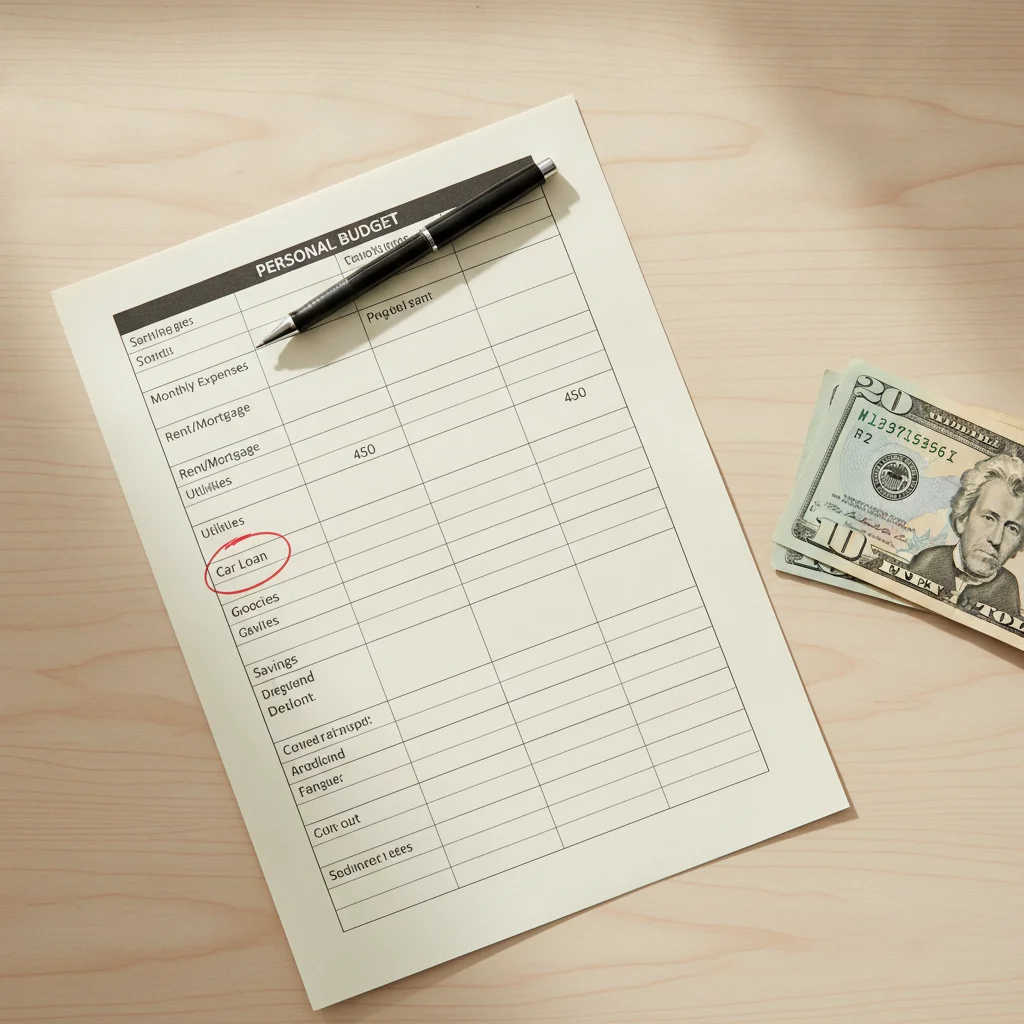
If your monthly discretionary spending comes in under budget — even by $20 — apply that leftover directly to your payment before it disappears into miscellaneous spending. Treat the car payment as a variable bill with a floor, not a ceiling.
Side Income Allocation
Any irregular income — overtime pay, a side gig, a small freelance project — can be split between savings and your car loan. Even applying $50 from a one-time source two or three times a year accelerates your payoff noticeably.
Freeing up cash to pay off your car loan faster offers a more comprehensive playbook for finding extra money in your budget, from spending category analysis to income-side strategies.

Always Confirm Principal Application
After your first rounded-up payment posts, log into your lender's online portal and verify that your principal balance decreased by more than the standard scheduled amount. If it didn't, contact your lender immediately to clarify how extra funds are being applied. Some lenders default to crediting overpayments toward the next scheduled installment rather than current principal.
Start With a Number You Won't Notice
If you're unsure whether you can sustain extra payments, start with the smallest meaningful round number — even $10 or $15 above your minimum. It's easier to build the habit at a comfortable level and increase it later than to commit to an ambitious amount and revert to the minimum when money gets tight.
The Timing Factor: Start Early for Maximum Impact
Auto loans are front-loaded with interest. In the early months of a standard loan, a larger portion of each payment covers interest and a smaller portion reduces principal. As the loan matures, that ratio slowly flips. This means that rounding up in month 3 is far more valuable than rounding up in month 45.
To illustrate: on a $20,000 loan at 8% APR over 60 months, approximately 38% of your first payment goes to interest. By month 48, only about 10% does. Every extra dollar you put toward principal in the first 18 months works harder — because it avoids more future interest — than the same dollar applied in the final stretch.
This doesn't mean rounding up late is useless. It still helps. But if you're reading this article near the start of your loan, act now. If you're halfway through, start today rather than waiting for a better moment that won't come.
The down payment you made at purchase also shaped how much interest you're carrying. Why down payment size matters and how it shapes your loan structure explains this connection — useful context if you're planning your next vehicle purchase and want to minimize total borrowing cost from the start.
Overpayment Doesn't Skip Future Payments
Rounding up your payment does not give you permission to skip a future payment. Even if your overpayments have built up a credit with your lender, you are still contractually obligated to make every scheduled minimum payment on time. Missing a payment — regardless of your extra payment history — can trigger a late fee and harm your credit score.
Front-Loaded Interest Is by Design
Auto loan amortization schedules are structured so that lenders collect more interest in the early months. This is standard practice, not a trick — it reflects the fact that you're borrowing the most money at the very start of the loan. Understanding this structure helps explain why starting your rounding-up habit early is so much more valuable than starting late.
Tracking Your Progress and Staying Consistent
One underrated motivator for rounding up is watching the principal balance drop faster than you expected. Set a calendar reminder every three months to log into your loan account and note the current balance. Compare it to what the amortization schedule said it would be. When you see you're $400 ahead of schedule, it reinforces the habit.
You can also use a free online amortization calculator to model your specific loan. Enter your current balance, rate, and remaining term, then add your extra monthly amount. The output will show your revised payoff date and estimated interest saved — in real numbers specific to your loan, not a generalized example.
If your financial situation improves — a raise, a paid-off credit card, lower monthly expenses — revisit your rounded-up amount. What started as a $38 overpayment can become $75 without much strain, and the incremental effect is significant.
The core message is straightforward: you don't need a perfect budget, a windfall, or a lender negotiation to pay less interest on your car loan. You need a slightly higher number in your autopay field and the knowledge that every extra dollar is working for you from the moment it posts.

All claims are backed by peer-reviewed research. Sources on request.