
Key Takeaways
Why Freeing Up Cash Is the Real Trick
Most people who want to pay off their car loan early already know the goal: make extra payments, reduce principal faster, and save on interest. The harder question is always where does the extra money come from? Budgets are tight, and "just spend less" isn't actionable advice.
The strategies below are designed to answer that question specifically — not with vague suggestions, but with concrete places to look and concrete ways to redirect what you find. Some will put $30 extra in your pocket each month. Others could surface several hundred dollars at once. Together, they give you a practical toolkit for building the payment momentum that actually shortens a loan.
Before you dive in, one important reminder: confirm with your lender that any additional money you send will be applied to your principal balance — not to future scheduled payments. This distinction matters enormously. Making extra payments on a car loan the right way requires that principal instruction, and some lenders don't apply it automatically.

10 Ways to Free Up Cash for Faster Auto Loan Payoff
Audit your subscriptions ruthlessly
The average American household pays for 4–6 streaming and digital subscription services at any given time, often without using all of them regularly. Add in fitness apps, news paywalls, cloud storage tiers, meal kit auto-renewals, and software tools, and you may be spending $80–$180 per month on services you've half-forgotten.
Pull up your last two months of bank and credit card statements. Highlight every recurring charge. Then ask yourself honestly: did I use this in the last 30 days? If the answer is no, cancel it immediately — not "soon," right now. Set a calendar reminder to revisit in 90 days if you think you might want it back.
Even freeing up $60/month and redirecting it to your car loan can shorten a 60-month loan by several months and save a meaningful amount in interest, depending on your rate. It's one of the highest-return, lowest-effort places to start.
Canceling forgotten subscriptions is the fastest, lowest-effort way to find recurring extra cash.
Sell what you're not using
Most households have several hundred to several thousand dollars worth of unused goods sitting in closets, garages, and storage units. Electronics, sporting equipment, clothing, furniture, tools, collectibles — all of it can be converted to cash relatively quickly through platforms like Facebook Marketplace, eBay, Craigslist, or Poshmark.
The key is treating this as a one-time targeted effort rather than a vague intention. Block out a weekend, go through your home room by room, and photograph everything that hasn't been used in the past year. Price it to sell, not to maximize — you want cash in hand this month, not an item sitting in a listing for six months.
Apply whatever you raise directly to your loan principal as a lump sum. Even a single $300–$500 haul can take months off your loan when applied early, because it reduces the balance on which interest accrues going forward. See how applying lump sums to your auto loan works for maximum impact.
A single weekend cleanout can generate $300–$500 in lump-sum principal reduction.
Redirect your tax refund before you spend it
The average federal tax refund in the United States hovers around $3,000. That's a significant sum — and the moment it hits your bank account, it becomes psychologically tempting to spend it on things that feel earned but don't build financial strength.
If you have an auto loan, a tax refund is one of the best natural opportunities to make a meaningful principal dent. Applying even half of a $3,000 refund to your loan balance at year two of a five-year loan can cut the remaining term significantly.
The decision deserves some thought, though. Using your tax refund to pay down your car loan involves weighing your interest rate, whether you have higher-rate debt elsewhere, and whether you have adequate emergency savings first. If those boxes are checked, the refund goes to the loan.
A $3,000 tax refund applied to principal can cut months off a mid-term auto loan.
Pick up a targeted side income stream
A side income doesn't have to mean a second job or a major commitment. Focused, short-term gig work — delivery driving, ridesharing, freelance writing, tutoring, pet sitting, handyman work — can generate $200–$500 a month with a realistic 8–12 hours of effort per week.
The critical discipline here is earmarking. Dedicate 100% of the after-expense side income to your auto loan. Don't let it blend into your general checking account where it evaporates. Consider keeping it in a separate account and making one manual extra payment to your lender each month from that account — the separation creates the habit.
At $300 per month in extra principal payments on a $20,000 loan at 7%, you could cut a 60-month loan down to approximately 42–44 months and save over $1,000 in interest. The compounding effect of consistent extra income applied to principal is substantial. The math behind extra payments breaks down these numbers clearly.
[in_content_images:2]Earmarking even $200/month from side income exclusively for your loan creates powerful payoff momentum.
Trim your grocery and dining budget strategically
Food spending is one of the most variable line items in any budget — and one of the most controllable. The average American household spends a significant portion of take-home pay on groceries and restaurants combined. Modest reductions in dining out, food delivery fees, and impulse grocery purchases can realistically free up $75–$150 a month without making meals feel miserable.
Specific tactics that work: meal planning Sunday through Thursday to reduce weeknight delivery temptation, shopping with a list and a rough budget per trip, using store-brand staples for items where quality doesn't meaningfully differ, and reducing food delivery orders from weekly to twice a month.
The goal isn't deprivation — it's intentionality. You're not giving up food; you're redirecting the margin between what you were spending and what you actually needed to spend. Set that savings amount as an automatic transfer to your car payment the day after payday so it never sits idle.
Strategic meal planning can redirect $75–$150 per month toward your loan with minimal sacrifice.
Apply workplace bonuses and raises immediately
When you receive a raise, the natural tendency is lifestyle creep — your spending expands to absorb the new income. The same dynamic applies to annual bonuses. You get a bit more money, and within a few months, you can't quite remember where it went.
Break that pattern by treating any income increase as already committed. When a raise takes effect, calculate the after-tax monthly difference and set up an automatic additional car payment for exactly that amount before you ever see it in your checking balance. When a bonus arrives, allocate a specific percentage — say, 50% — to the loan before you spend a dollar of it.
This approach requires zero sacrifice from your current lifestyle because you're capturing money you never built spending habits around. It's one of the most painless ways to accelerate payoff. Applying bonuses and windfalls strategically to your loan rather than spending them can meaningfully reshape your payoff timeline.
Committing a raise or bonus before lifestyle creep sets in is the most painless acceleration strategy.
Negotiate lower rates on existing bills
Most people assume the bill they receive is fixed. In reality, many recurring expenses — internet service, cell phone plans, car insurance, gym memberships — are negotiable, especially if you've been a customer for a year or more and have a competing offer in hand.
Call your internet provider and ask for a loyalty discount or match a competitor's advertised rate. Shop your car insurance annually — rate differences between carriers for the same coverage can be $200–$600 per year. Review your cell phone plan for features you're paying for but not using.
Small bill reductions compound. Saving $25 on internet, $30 on insurance, and $15 on your phone plan yields $70 a month — $840 a year — that didn't exist before. Funnel every dollar of those savings directly into an extra car payment. It costs you nothing in quality of life; it just requires the phone calls most people avoid.
Negotiating existing bills can yield $50–$100 per month with no lifestyle change at all.
Use cash windfalls — gifts, settlements, inheritances — with intention
Unexpected money feels different from earned income. Gifts at the holidays, cash received for birthdays, small legal settlements, rebates, or even winning a workplace raffle — these are psychologically treated as "free money" and often spent impulsively.
A windfall of any size is an opportunity to make an asymmetric impact on your loan balance. Because auto loan interest is calculated on the outstanding principal, reducing that balance even by a few hundred dollars early in the loan has a multiplied effect — every future payment requires less of its total to cover interest.
The discipline is to apply windfall cash within 48 hours of receiving it, before it blends into your spending. Have your lender's payment portal bookmarked and ready. Log in, make the payment, and designate it explicitly as a principal payment. The strategy for applying windfalls to your auto loan walks through timing and designation in detail.
Apply windfall cash within 48 hours — before it blends into everyday spending.
Pause or reduce retirement contributions temporarily — with caution
This one requires careful judgment and is not right for everyone — but it's worth understanding. If your auto loan carries a high interest rate (say, 8% or above) and you're contributing to a retirement account beyond any employer match, temporarily reducing contributions and redirecting the difference to your loan can make mathematical sense.
The logic: you're paying a guaranteed 8% on your loan balance. If you redirect money from an investment account earning an uncertain return to eliminate that guaranteed cost, you come out ahead on a risk-adjusted basis — at least in the short term.
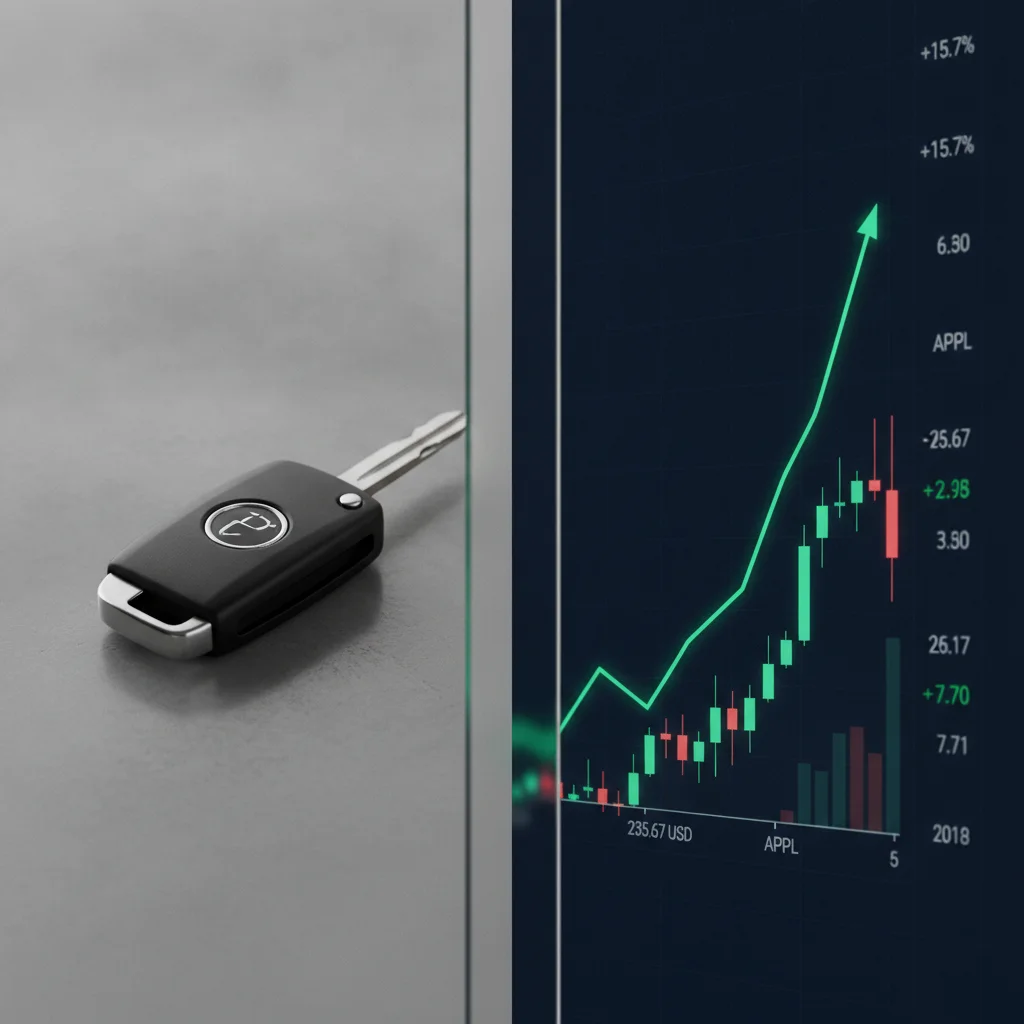
The critical limits: never reduce contributions below the employer match threshold — that's leaving free money on the table. And set a firm end date tied to the loan payoff, not an open-ended reduction that quietly becomes permanent. This is a temporary acceleration tactic, not a long-term strategy. See the full comparison at paying off your car early vs. investing.
Temporarily redirecting above-match retirement contributions can make sense when your loan rate is high.
Round up your payment every single month
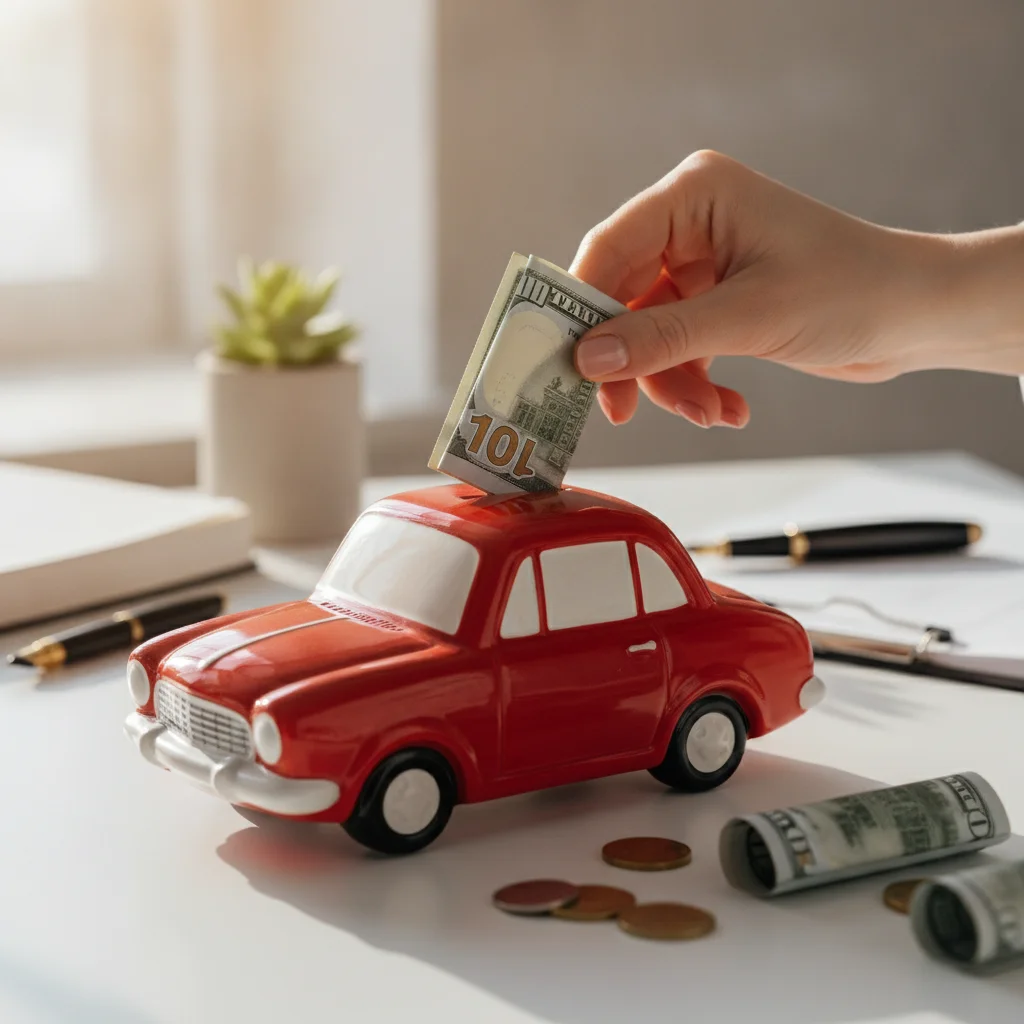
If none of the above strategies feel immediately actionable, start here: round up your car payment to the nearest $50 or $100 each month. If your payment is $312, pay $350. If it's $447, pay $500. The difference feels negligible in the moment, but over 48 months it adds up to hundreds of dollars in extra principal — and measurably less interest.
Rounding up works because it doesn't require finding money you don't have — it requires spending slightly less elsewhere, almost invisibly. It also builds the habit and mindset of consistently paying more than the minimum, which primes you to layer in bigger strategies as you identify them.
The detailed case for this approach is laid out in rounding up your car payment. Even a $30–$50 monthly addition consistently applied over the life of a loan reduces your total interest paid in a way that's completely disproportionate to the effort it takes.
Rounding up your payment is the lowest-friction tactic available — and it genuinely compounds.
Set up a dedicated extra-payment account
Open a separate savings account and label it "Car Payoff." Deposit any found cash — from canceled subscriptions, side income, or bill savings — into it the moment you identify it. Once the balance hits a round number (e.g., $100 or $200), send it to your lender as a designated principal payment. The separation prevents the money from getting spent on something else before it reaches your loan.
Always specify 'apply to principal' in writing
When you make an extra payment online or over the phone, explicitly designate it as a principal payment — not a future monthly payment. Some lenders default to applying extra funds toward your next scheduled payment, which doesn't reduce your principal balance any faster. Check your loan statement after each extra payment to confirm it was applied correctly.
Check for prepayment penalties first
Before aggressively paying down your auto loan, review your loan agreement for prepayment penalty clauses. Most modern auto loans don't carry them, but some — particularly loans from smaller finance companies or buy-here-pay-here dealers — do. A prepayment penalty could offset some or all of your interest savings if triggered. If you're unsure, call your lender and ask directly before sending extra payments.
Refinancing may be worth comparing first
If your credit score has improved significantly since you took out your loan, refinancing to a lower rate might save more money than accelerating payments on your current rate. <a href="/auto-loans/refinancing-and-payoff/early-payoff-tips/accelerated-payoff-vs-refinancing-two-paths-to-a-cheaper-auto-loan">Comparing accelerated payoff vs. refinancing</a> can help you determine which path produces greater savings given your specific loan balance and remaining term. You might also do both — refinance first, then accelerate payments on the new, lower-rate loan.
Putting Your Found Money to Work
Finding cash is only half the equation. The other half is making sure every extra dollar you redirect actually accelerates your payoff in the most efficient way possible.
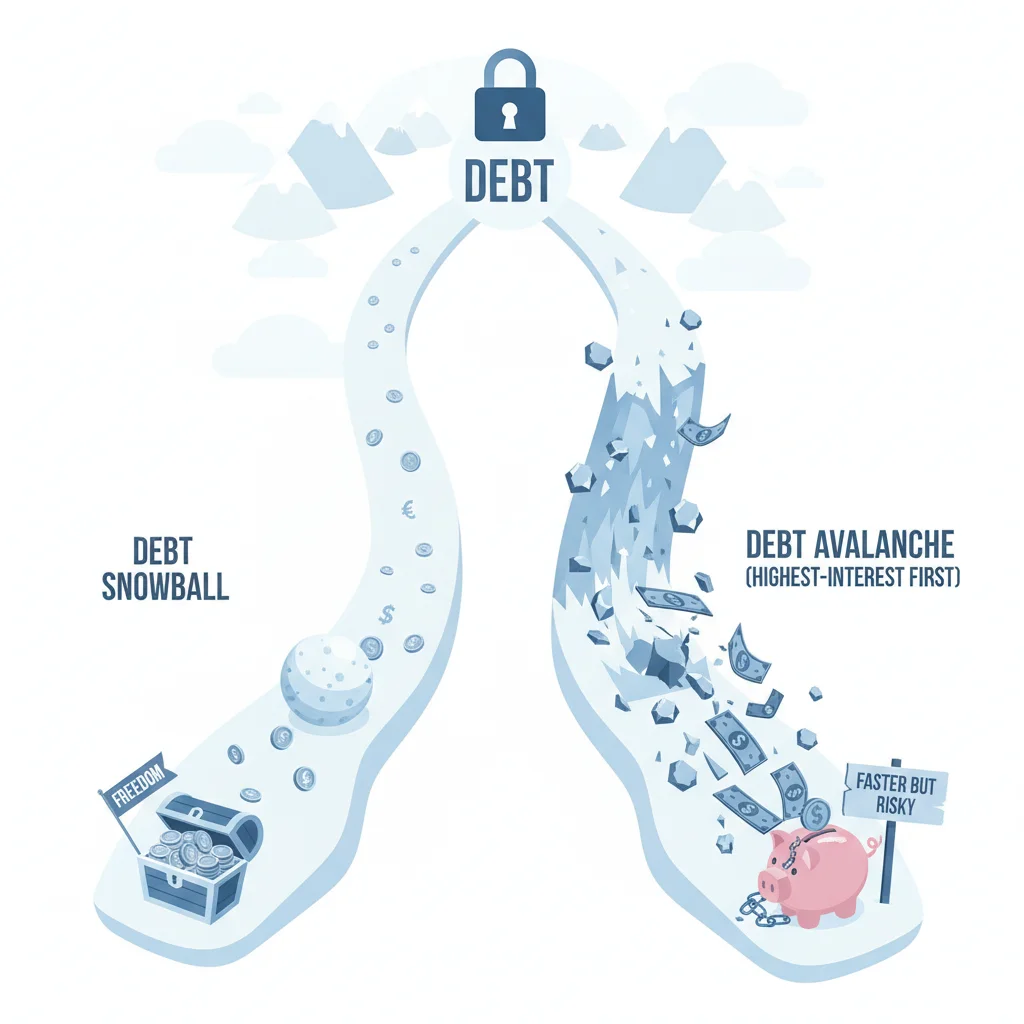
If you have multiple debts, knowing which one to attack first matters. The debt snowball vs. avalanche debate comes down to your interest rates and your need for psychological momentum. If your auto loan carries the highest rate, it's the mathematically correct target.
It's also worth doing a quick comparison: is paying off your loan early actually better than investing that money? Paying off your car early vs. investing is a legitimate question — and the answer depends on your loan's interest rate versus your expected investment return. For most auto loans above 5–6%, early payoff wins on a risk-adjusted basis.
Finally, don't underestimate the compounding effect of consistency. Rounding up your car payment each month might seem trivial, but it adds up to a meaningful reduction in total interest over a 48- or 60-month loan. Small habits, applied consistently, change outcomes.

For a full walkthrough from first extra payment to final payoff call, see the complete roadmap to early auto loan payoff. It covers lender communication, payoff quotes, and what to do with your title when the loan is gone.
Start Small, Stay Consistent
You don't need a windfall to make meaningful progress on your auto loan. You need a system — a reliable way to surface extra dollars and direct them immediately toward your principal before they get absorbed by everyday spending.
Start with one item from this list. Cancel one subscription, list one unused item for sale, or commit to rounding up your next three payments. Track the result. Then layer in a second strategy. This incremental approach is far more sustainable than attempting a total budget overhaul that collapses after two weeks.
The math behind early payoff is genuinely motivating once you see it clearly. The math behind paying extra on your car loan shows exactly how small additions compound into real savings — often hundreds of dollars in interest across the life of the loan.
Every dollar you free up and apply to principal is a dollar that stops generating interest. That's not abstract — it's your money staying in your pocket instead of your lender's.

All claims are backed by peer-reviewed research. Sources on request.