Key Takeaways
Extra Car Loan Payment
An extra car loan payment is any amount you pay beyond your required monthly installment. It can be a single lump sum, a recurring add-on to your regular payment, or an occasional overpayment when you have spare cash. The goal is to reduce the outstanding principal faster, which in turn lowers the total interest you owe over the life of the loan.
Whether an extra payment reduces your principal immediately or simply advances your next due date depends entirely on how your lender processes overpayments — a distinction that has significant consequences for interest savings.
Why Extra Payments Matter — and Why They Don't Always Work as Expected
Most borrowers assume that sending more money to their lender each month automatically shrinks their loan faster. That assumption is mostly correct — but the devil is in the details of how your lender actually processes that extra money.
When an extra payment is applied to your principal balance, the outstanding amount you owe drops immediately. Because interest on a simple-interest auto loan accrues daily based on that remaining balance, a lower principal means less interest building up every single day going forward. Over months and years, that compounding effect can save you hundreds or even thousands of dollars.
But here's the catch: not every lender treats extra payments the same way. Some will credit the overpayment as a "payment ahead" — meaning they mark your next scheduled due date as already paid. Your balance technically doesn't drop any faster. Interest continues to accumulate on the same high balance, and you've essentially just bought yourself a month off from making a payment. That is almost never what borrowers intend.
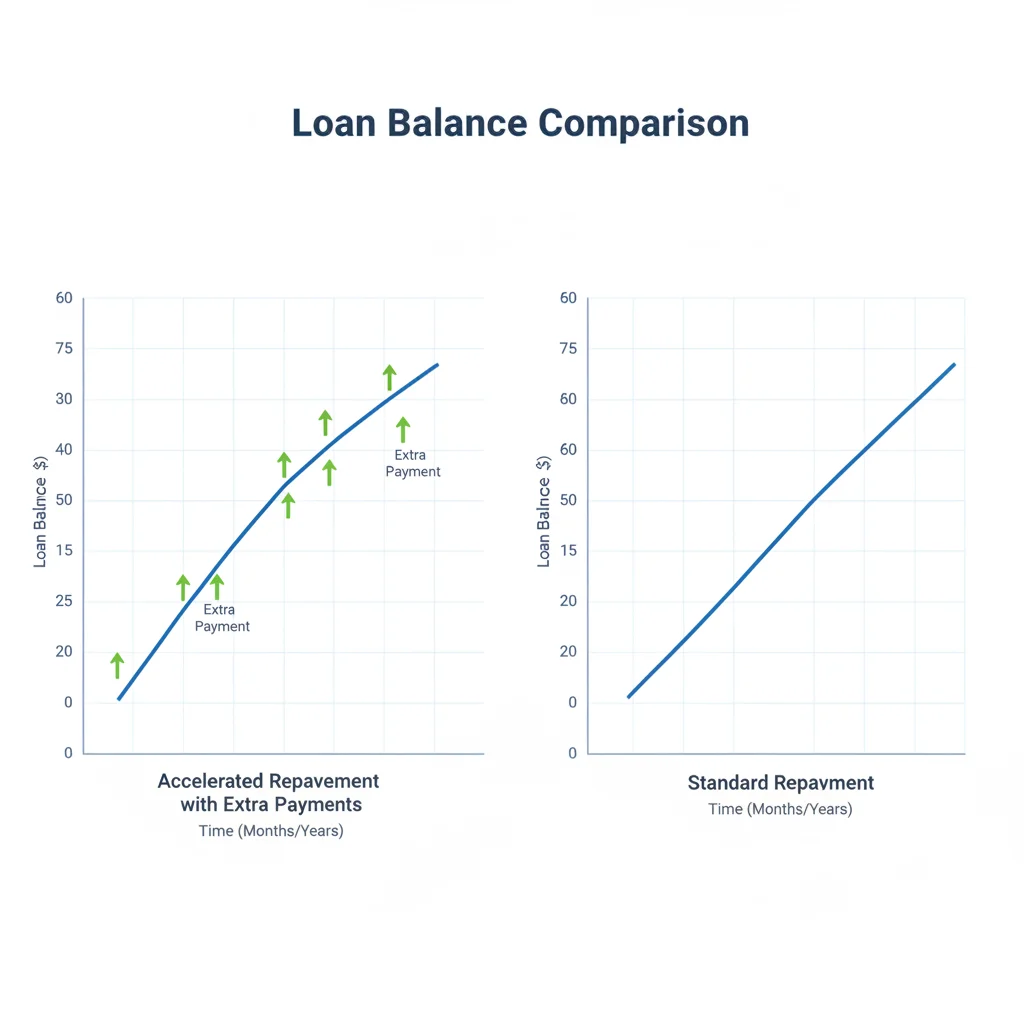
Understanding the difference between these two outcomes is the first step to making extra payments actually work in your favor. The reasons your extra payment might not reduce your principal are worth knowing before you send a single dollar more than required.
Your Monthly Payment Won't Drop
A common misconception is that making extra payments will lower your required monthly payment. On a standard auto loan, it won't. Your contractual monthly installment remains fixed. What changes is your payoff date and total interest paid — not the amount due each month. If reducing your monthly obligation is the goal, refinancing to a new loan structure is the mechanism for that, not extra payments.
Check Your Amortization Schedule
Your lender is required to provide an amortization schedule showing how each payment is split between principal and interest over the loan's life. Reviewing this document helps you understand exactly how much of each early payment goes to interest versus balance reduction — and helps you spot whether extra payments are being applied as intended.
How Loan Structure Determines the Impact
Not all auto loans are built the same, and the structure of your specific loan directly shapes how much benefit you get from extra payments.
Simple-Interest Loans
The vast majority of auto loans use a simple-interest structure, where interest is calculated daily on your current principal balance. This is the borrower-friendly structure when it comes to extra payments — every dollar that reduces your principal immediately starts saving you money. Send $200 extra this month, your balance drops by $200 tonight, and tomorrow's interest accrual is calculated on a balance that's $200 smaller.
Pre-Computed (Add-On) Loans
Some lenders — particularly certain buy-here-pay-here dealerships and smaller finance companies — use a pre-computed interest model, sometimes called an add-on loan. In these agreements, the total interest charge for the entire loan term is calculated upfront and added to the principal before your payment schedule is even created. Your monthly payments are fixed, and the full interest bill is baked in from day one. Making extra payments on a pre-computed loan often does not reduce your interest, because that interest was already locked in when you signed. Always read the contract or ask your lender directly which structure your loan uses.
43%
Auto loans with terms of 72+ months
According to Experian's State of the Automotive Finance Market report, nearly 43% of new vehicle loans originated in recent years have terms of 72 months or longer.
$1,000+
Potential interest saved with consistent extra payments
On a typical 60-month, $25,000 loan at 7% APR, adding $100/month to principal payments can save over $1,000 in interest and shorten the term by nearly a year.
1 in 4
Borrowers underwater on their auto loan
Data from Cox Automotive indicates roughly one in four auto loan borrowers carries negative equity, a problem that longer terms and low down payments accelerate.
Loan Term Length and Its Interaction with Extra Payments
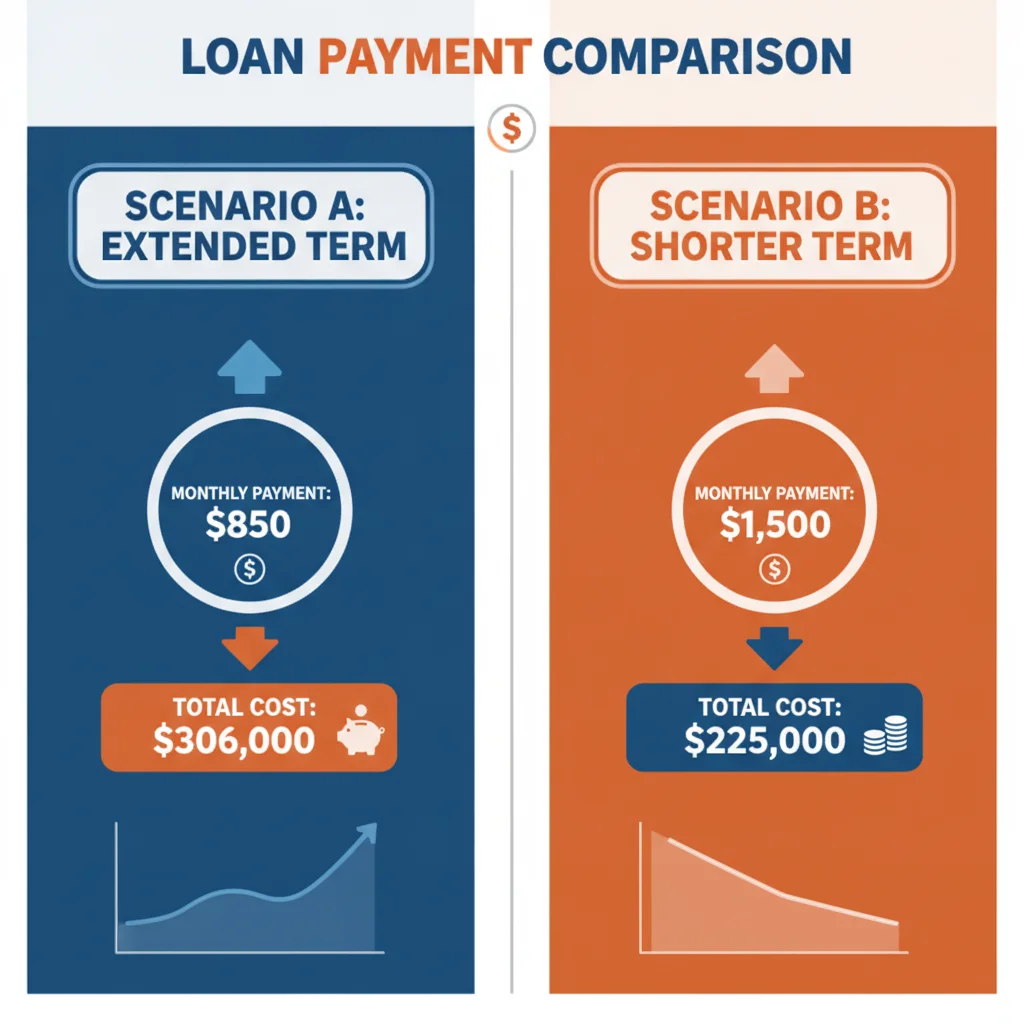
Loan term length is one of the most underappreciated factors in this equation. A longer loan term — say, 72 or 84 months — means more months for interest to accumulate, a slower rate of principal reduction in early payments, and a bigger gap between what you owe and what your car is worth (negative equity). Extra payments can help close that gap, but they're working against a steeper curve. As explained in why a lower monthly payment can cost you more in the end, choosing a longer term to get a manageable monthly bill often inflates your total cost significantly.
On a shorter-term loan — 36 or 48 months — each payment already carries a higher principal component, so extra payments amplify an already efficient paydown. The total interest savings from extra payments are smaller in absolute dollars, but the loan is already structured to minimize cost.
“The single most common mistake auto loan borrowers make is assuming their extra payment automatically goes to principal. It often doesn't — and that misunderstanding can cost them real money over the life of the loan.”
— Greg McBride, Chief Financial Analyst, Bankrate
What Specifically Changes When You Pay Extra
Let's get concrete. Here are the four things that can — and sometimes can't — change when you make an extra payment.
1. Your Principal Balance (If Applied Correctly)
This is the big one. A lower principal means every future interest calculation is working on a smaller number. On a $25,000 loan at 7% APR, cutting your balance by even $500 early on can save you tens of dollars in interest per month — modest in isolation, but meaningful when compounded over years.
2. Your Loan Payoff Date
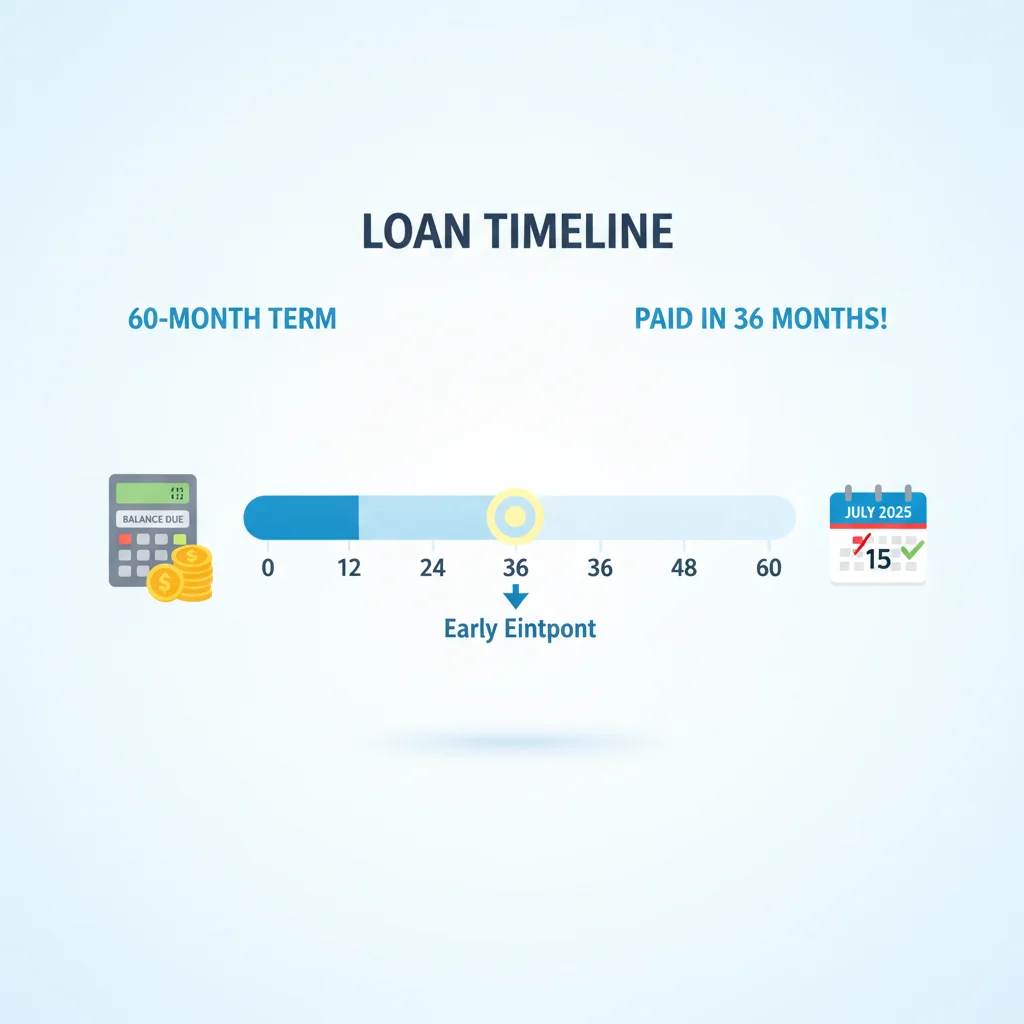
With consistent extra payments properly applied to principal, you will reach a $0 balance before your original term ends. How much earlier depends on the size and frequency of the extra payments. The math behind paying extra on your car loan shows exactly how even modest additional amounts can shave months off your term.
3. Your Monthly Payment Amount
Here's something many borrowers don't realize: on a standard auto loan, your required monthly payment does not automatically decrease when you make extra payments. Your lender set a fixed monthly installment at origination, and that amount stays the same throughout the term. What changes is how quickly you reach a $0 balance — you'll simply arrive at the finish line sooner than scheduled.
4. Your Total Interest Paid
This is the real prize. Every month you shave off the loan's life is a month of interest charges you never pay. On a 60-month loan at 8% APR with a $20,000 balance, paying an extra $100 per month from the start could eliminate several months of payments and save you several hundred dollars in interest — sometimes more depending on timing. See what happens to your interest when you pay off a car loan early for a detailed breakdown of the interest math.
Principal-Only Payments: The Most Effective Approach
If you want extra payments to do maximum work, the most effective method is designating them as principal-only payments. This instructs the lender to apply 100% of that extra amount directly to your outstanding balance, with none of it going toward future interest or advancing your next payment date.
The problem is that lenders don't always make this easy. Some online portals don't have a "principal only" checkbox. Some require a written letter accompanying a check. Others require a phone call with a customer service representative who can annotate the payment in their system.
Making a principal-only payment on your auto loan walks through the exact steps to ensure your extra payment reaches your balance and not your lender's next due date calculation.
Always Confirm in Writing
When designating a payment as principal-only, send a brief written note — via secure message, email, or certified mail — stating explicitly that the extra amount should be applied to principal only, not to future payments. Keep a copy for your records. If a dispute arises later about how a payment was applied, written documentation is your strongest evidence.
Automate Extra Payments for Consistency
If your budget allows a fixed extra amount each month, automate it as a separate scheduled transfer distinct from your regular payment. Behavioral research consistently shows that automated savings and debt payments are far more likely to happen than manual ones. Set it, label it clearly, and let the balance drop on its own.
One practical approach: make your regular scheduled payment on its normal due date, then send a separate transaction — clearly labeled as principal-only — either the same day or within the same billing cycle. Keeping the transactions separate makes it easier for the lender's system to categorize them correctly and gives you a cleaner paper trail if you ever need to dispute how a payment was applied.
What to Check Before Making Extra Payments
Before you start sending extra money to your lender, three things deserve a close look.
Prepayment Penalties
Some auto loan agreements — particularly older ones or loans from certain lenders — include a prepayment penalty clause. This is a fee charged if you pay off the loan before a specified date or reduce the principal below a certain threshold ahead of schedule. Prepayment penalties are less common than they once were, but they still exist. If your loan has one, the penalty could wipe out much of the interest you'd save by paying early. Check your original loan contract under sections labeled "prepayment," "early payoff," or "payoff penalty" before proceeding.
How Your Lender Processes Overpayments
Call or message your lender and ask directly: "If I send more than my scheduled monthly payment, how is the excess applied?" Get the answer in writing if possible. This single question can save you months of frustrated payments that didn't accomplish what you intended.
Your Broader Financial Picture
Extra loan payments are a sound financial move — but only when your higher-interest debts are under control. Credit card balances at 20%+ APR cost you far more than a car loan at 6–8% APR. If you're carrying revolving credit card debt, direct extra cash there first. Similarly, if your employer offers a 401(k) match you're not capturing, that's an instant 50–100% return on investment that almost always outperforms interest savings on a car loan. Before you send an extra car payment, check these things first covers all the pre-payment verification steps in detail.

Practical Strategies for Paying Extra Effectively
Once you've confirmed your loan allows early payoff without penalty and you understand how your lender applies extra payments, here are the most practical ways to put extra money to work.
Bi-Weekly Payment Schedule
Instead of one payment per month, pay half your monthly amount every two weeks. Because there are 52 weeks in a year, this results in 26 half-payments — the equivalent of 13 full monthly payments instead of 12. That one extra payment per year can meaningfully shorten a 60-month loan. Verify with your lender that bi-weekly payments are accepted without fees.
Annual Lump-Sum Payment
Tax refunds, bonuses, or year-end windfalls are natural candidates for a one-time lump-sum principal payment. Even a single $1,000–$2,000 payment early in the loan's life — when the principal is highest — produces disproportionately large interest savings because it removes a significant chunk of balance that would have accrued interest for years.
Rounding Up Monthly Payments
If your monthly payment is $387, round up to $400 or $425. The extra $13–$38 per month feels negligible in your monthly budget but accumulates meaningfully over a 48- or 60-month loan. This is the lowest-friction strategy for borrowers who want to pay extra without overhauling their budget.
Always Confirm in Writing
When designating a payment as principal-only, send a brief written note — via secure message, email, or certified mail — stating explicitly that the extra amount should be applied to principal only, not to future payments. Keep a copy for your records. If a dispute arises later about how a payment was applied, written documentation is your strongest evidence.
Automate Extra Payments for Consistency
If your budget allows a fixed extra amount each month, automate it as a separate scheduled transfer distinct from your regular payment. Behavioral research consistently shows that automated savings and debt payments are far more likely to happen than manual ones. Set it, label it clearly, and let the balance drop on its own.
Whatever strategy you choose, track your loan balance carefully each month. Compare your actual balance to the amortization schedule provided at origination. If the numbers aren't dropping as fast as expected, contact your lender to investigate how recent payments were applied. Staying on top of this protects your interest savings and catches any processing errors before they compound.
For more strategies tailored to accelerating your payoff, the Early Payoff Tips hub is a practical resource covering methods from refinancing to lump-sum payments.
The Bottom Line: Extra Payments Work — When Set Up Correctly
Making extra payments on a car loan is one of the simplest ways to save money on a purchase you've already committed to. The mechanics are straightforward: reduce your principal faster, shrink the balance interest is calculated on, pay less over time, and finish the loan sooner. Done right, it works exactly that way.
The qualifying phrase is "done right." Confirm your loan uses simple interest. Verify there are no prepayment penalties. Contact your lender to understand how overpayments are processed. When possible, send extra money as a clearly designated principal-only payment and keep a record of every transaction.
None of this requires financial sophistication — just a few minutes of upfront verification and a consistent habit of sending a bit more than required. The interest clock on your loan is running every day. Every dollar you remove from the principal balance today is a dollar that stops generating interest charges tomorrow.
If you're also considering the role your down payment played in shaping your starting balance, the Down Payments hub explains how front-end decisions echo through the life of your loan.

All claims are backed by peer-reviewed research. Sources on request.