Key Takeaways
Understanding Negative Equity Before You Make a Move
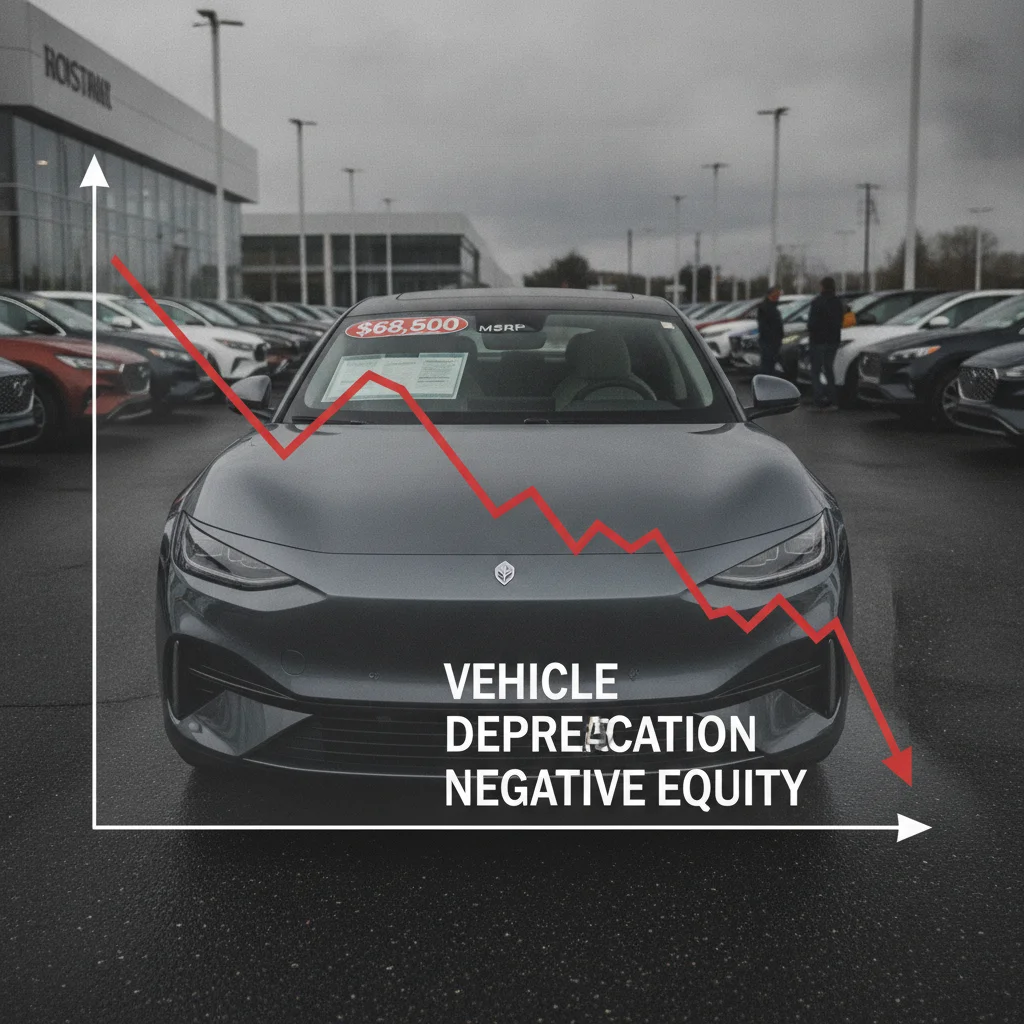
Negative equity — also called being underwater or upside down on your loan — happens when your remaining loan balance is higher than what your car is currently worth on the open market. For example, if you owe $22,000 but your car would sell for $17,000 today, you have $5,000 in negative equity.
This situation is more common than most borrowers expect. Depreciation makes this surprisingly easy to slide into, especially on new vehicles that lose 15–25% of their value in the first year alone. Long loan terms — 72 or 84 months — make the problem worse because your principal balance shrinks slowly while the car's value drops quickly.
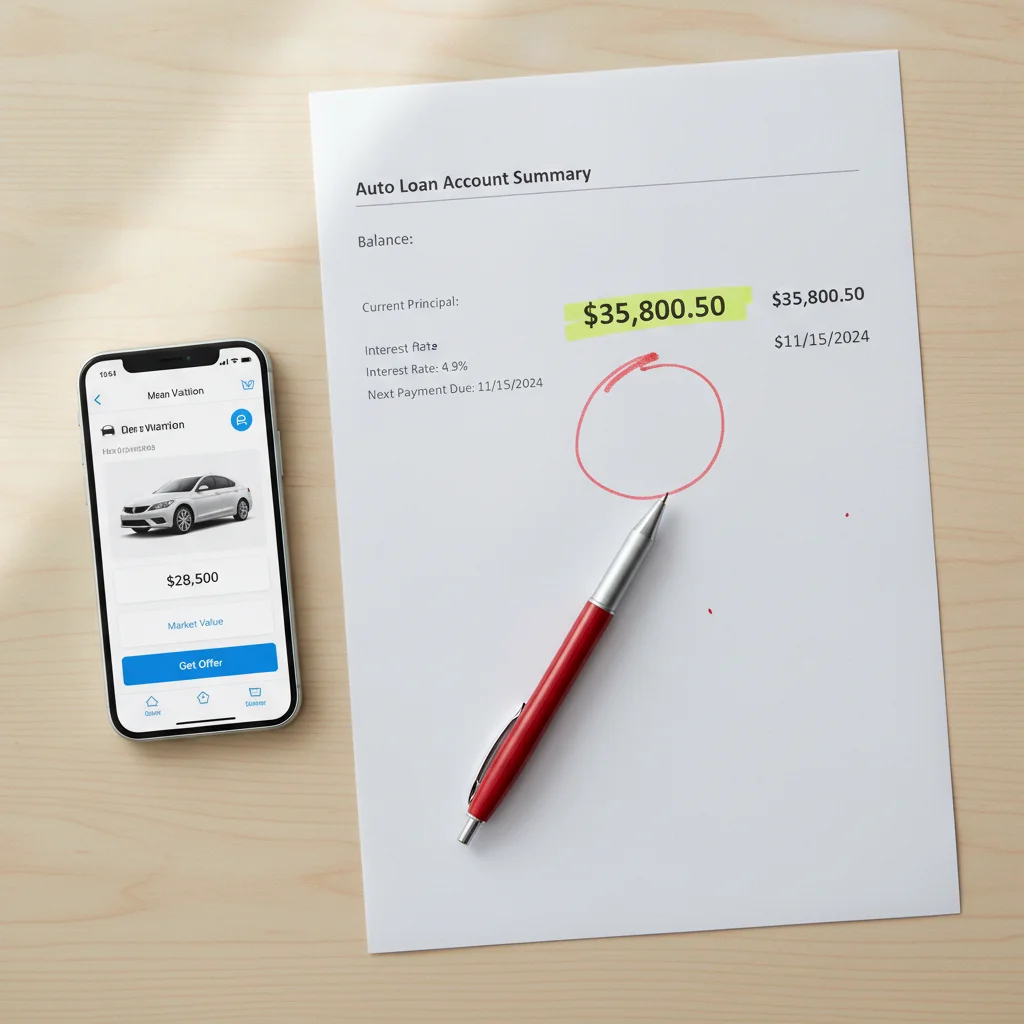
Here's the central tension of early payoff when you're underwater: lenders don't care what your car is worth. When you call your lender for a payoff quote, they'll give you the exact dollar amount needed to close the loan — and that number reflects your remaining principal plus any interest accrued through the payoff date. Your car's trade-in value or private-party sale price is irrelevant to that calculation.
This means that paying off the loan early does not erase negative equity — it just removes the debt. If you owe $22,000 and pay it off today, you own a car worth $17,000 outright. The $5,000 gap doesn't disappear; it simply stops accruing interest. For many borrowers, that's still the right call. But you need to go in with clear eyes about what "early payoff" actually accomplishes in this situation.
Before choosing a path, it helps to know exactly how deep underwater you are. Pull your 10-day payoff quote from your lender (not just your current balance — payoff quotes include interest through the payoff date) and compare it to your car's current market value using a tool like Edmunds or Kelley Blue Book. The difference is your negative equity position. That number is your starting point for every decision that follows.
Why the Strategies Are Different When You're Underwater
When borrowers with positive equity pay off a car loan early, their options are relatively straightforward: make a lump sum payment, sell the car and pocket the difference, or refinance for a shorter term. What early payoff actually means on an auto loan is worth reviewing if you haven't already, because lenders define it differently — and the mechanics matter before you commit funds.
When you're underwater, two of those three routes close off or become far more complicated:
- Selling the car requires you to cover the gap between the sale price and your payoff amount out of pocket. If you sell privately for $17,000 but owe $22,000, you'll need to bring $5,000 to the table to clear the loan and transfer the title cleanly.
- Refinancing is harder because most lenders won't refinance a loan where the balance significantly exceeds the vehicle's value — they don't want to take on that risk. Some lenders do allow it under certain conditions, but you'll face stricter credit requirements and may not get a meaningfully lower rate.
- Trading in to a dealership is an option many borrowers reach for, but trading in a car with negative equity carries real risk. Dealers routinely roll the outstanding balance into a new loan — which means you start your next loan already underwater, sometimes by thousands of dollars.

The strategy that remains available to almost everyone, regardless of equity position, is making extra principal payments. This approach doesn't require selling the car, qualifying for a new loan, or bridging the full gap with cash. It systematically chips away at negative equity over time while reducing the total interest you pay. It's slower than a lump-sum payoff, but it's the most accessible route for most borrowers in this situation.
Precomputed Interest Loans Change Everything
On a precomputed interest loan, your total interest cost is locked in at origination and front-loaded into the payment schedule. Making extra payments reduces your remaining balance but may not reduce the total interest you pay — depending on the lender's rebate formula. If your loan contract includes language about a 'Rule of 78s' rebate or 'precomputed finance charge,' call your lender before making any extra payments and explicitly ask whether doing so will save you money.
Dealership Rollovers Compound Your Negative Equity
When a dealer offers to 'take care of' your existing loan balance in a trade-in deal, they are almost always adding that balance to your new loan — not absorbing it. You could leave the lot owing $8,000 more than your new car is worth before you've driven a mile. Read the finance contract in full before signing any trade-in deal, and ask the F&I manager to show you exactly how the negative equity is being handled.
Review your loan contract before making extra payments. Some loans include prepayment penalties or use precomputed interest methods that reduce or eliminate the benefit of paying ahead of schedule. Know your loan structure before you act.
Step-by-Step: How to Pay Down an Underwater Car Loan Early
The steps below walk you through the most practical and widely available strategies for reducing negative equity and shortening your loan — even when you owe more than the car is worth. Work through them in order: the earlier steps lay the groundwork for the decisions that follow.
What you will need
Get Your Exact Payoff Quote and Current Market Value
Call your lender or log into your account portal and request a 10-day payoff quote. This is different from your current balance — it includes interest that will accrue through the expected payoff date, giving you the true amount needed to close the loan.
At the same time, check your car's current market value using two or three sources: Kelley Blue Book, Edmunds, and CarGurus all offer real-time estimates based on your ZIP code, mileage, condition, and trim level. Use the private party or trade-in value depending on how you plan to exit, and take an average across sources for a realistic number.
Subtract the market value from the payoff quote. The result is your negative equity amount — the gap you're working to close.
Check Your Loan Contract for Prepayment Terms
Before sending a single extra dollar, review your loan agreement for two things: prepayment penalties and interest calculation method.
A prepayment penalty charges you a fee for paying off the loan ahead of schedule — this can be a flat fee or a percentage of the remaining balance. Federal law limits these on some loan types, but auto loans are not always covered. If your contract includes one, calculate whether the interest savings from early payoff outweigh the penalty cost.
The interest calculation method matters too. Most auto loans use simple interest, meaning interest accrues daily on your outstanding balance — so extra payments reduce what you owe interest on going forward. Some older or dealer-originated loans use precomputed interest, where the total interest is calculated upfront and built into the payment schedule. On precomputed loans, extra payments may not reduce your interest cost at all; they simply advance your payoff date. Understand how your loan calculates interest before you commit extra funds.
Calculate How Much Extra You Can Realistically Apply Each Month
Making extra principal payments is the most practical path out of negative equity for most borrowers. The key word is principal: extra funds must be directed to principal reduction, not applied to future scheduled payments (which some lenders do automatically, resulting in no interest savings).
Review your monthly budget and identify a consistent amount you can add to each payment — even $50 or $100 per month makes a measurable difference over time. Use a loan amortization calculator (available free at bankrate.com or through your lender's portal) to model different extra payment amounts. Input your current balance, remaining term, and interest rate, then add an extra monthly payment figure. The calculator will show you your new payoff date and total interest saved.
Run two or three scenarios: a conservative extra payment you're confident you can maintain, a moderate stretch amount, and an aggressive amount for months when you have surplus funds. You don't need to commit to the highest number every month — consistency at a lower amount beats occasional large payments you can't sustain.
Set Up Extra Payments and Confirm They're Applied to Principal
Contact your lender before making your first extra payment and ask specifically: "How do I ensure extra funds are applied to the principal balance rather than to future scheduled payments?"
Lenders handle this differently. Some require a written instruction with each payment. Others have an online option to designate principal-only payments. Some apply extra funds to future payments by default — which does not reduce your interest cost, because the scheduled payment dates remain the same.
Once you confirm the process, set it up consistently. If you pay online, create a separate principal-only payment transaction for your extra amount rather than simply increasing your regular payment amount. Keep a record of each extra payment and verify on your next statement that your principal balance dropped by the expected amount.
Evaluate Whether a Lump-Sum Payoff or Refinance Makes Sense
If you have access to savings, a low-interest personal loan, or funds from a side source, a lump-sum payoff eliminates the loan in one move and stops interest accumulation immediately. Compare the interest rate on any money you'd use against your car loan rate — if your savings account earns 4.5% and your car loan costs 9%, deploying those savings to pay off the loan is effectively a 9% guaranteed return.
Refinancing is worth exploring even when you're underwater, with caveats. Some credit unions and online lenders will refinance loans where the balance moderately exceeds the vehicle's value — typically up to 125% of the car's worth. If your credit score has improved since you took the original loan, you may qualify for a meaningfully lower rate. A lower rate on the same remaining term reduces your monthly payment and total interest; a lower rate on a shorter term gets you to equity faster. Ask potential refinance lenders directly what their loan-to-value limits are before applying, to avoid unnecessary hard credit inquiries.
Track Your Equity Position Until You Break Even
Being underwater isn't a static condition — it changes every month as you make payments and as the car's market value shifts (usually downward, but sometimes stabilizing for older used vehicles). Once a quarter, run the same calculation you did in Step 1: pull a fresh payoff quote and a fresh market value estimate, and compare them.
Your goal is to reach the break-even point — the moment when your payoff amount equals or falls below your car's market value. At that point, you've eliminated negative equity. Options that were previously closed off (like selling the car and breaking even, or trading it in without rolling debt) reopen at break-even. Mark this milestone in your tracking, because it changes your strategic options significantly.
If you're making consistent extra principal payments, your break-even point will arrive earlier than your original loan schedule projected. Knowing when you're likely to reach equity helps you make smarter decisions about whether to sell, keep, or trade — rather than acting on urgency or impulse.
Small Extra Payments Add Up Faster Than You Think
An extra $100 per month on a $20,000 loan at 8% interest with 48 months remaining cuts more than 8 months off the loan and saves roughly $700 in interest. The math compounds — early principal reductions have a larger effect than later ones because they eliminate more future interest accrual. Even modest consistent extra payments meaningfully accelerate your path to positive equity.
Biweekly Payments Are a Low-Effort Strategy
Instead of making one monthly payment, split it in half and pay every two weeks. Because there are 52 weeks in a year, this results in 26 half-payments — the equivalent of 13 full monthly payments instead of 12. That one extra payment per year goes entirely to principal, shaving months off your loan without requiring you to find extra cash in your budget. Confirm with your lender that they accept biweekly payments before setting this up.
Check for Rate Improvements If Your Credit Has Improved
If your credit score has risen 40 or more points since you took out your original loan, it's worth calling two or three lenders — particularly credit unions — to ask about refinance rates. Even a 1.5–2 percentage point reduction on a large balance can save hundreds of dollars in interest and help you build equity faster. The inquiry won't hurt your credit significantly if you rate-shop within a 14-day window.
Payoff Amount ≠ Current Balance
Many borrowers confuse their current loan balance (shown on monthly statements) with their actual payoff amount. The payoff quote includes interest accrued since your last statement, and it's valid only through a specific date. If you send a payment based on your statement balance instead of the official payoff quote, you'll likely underpay by dozens or even hundreds of dollars — and the loan won't close. Always request a current payoff quote directly from your lender before sending a final payment.
Directing Extra Payments Correctly Is Non-Negotiable
If your lender applies extra funds to future scheduled payments rather than to your principal balance, you gain no interest savings whatsoever — the loan simply continues on its original timeline, just pre-funded. Contact your lender before your first extra payment and get written or documented confirmation of exactly how to designate additional funds as principal-only. Then verify on your next statement that the balance dropped as expected.
What to Avoid When You're Underwater and Eager to Exit
The urgency borrowers feel when they're upside down can push them toward decisions that make things worse. Here are the pitfalls that most commonly compound negative equity rather than resolving it.
Rolling Negative Equity Into a New Loan
This is the single most common mistake. When you trade in an underwater car at a dealership, the dealer adds your remaining balance to the new vehicle's loan. It feels like a clean exit, but you're now paying interest on debt from two cars — the old one and the new one — with only one vehicle to show for it. If that new car also depreciates quickly, you'll be underwater again within months, this time by a wider margin. When you owe more than your car is worth, a trade-in can still work — but only with a clear-eyed plan that doesn't involve rolling the debt forward.
Making Only Minimum Payments and Waiting
Doing nothing is a valid strategy only if your car depreciates more slowly than your loan balance shrinks — and only if you're not paying excessive interest in the meantime. On a high-rate loan, minimum payments can mean you're paying hundreds of dollars in interest each month with your balance barely moving. Run the numbers: multiply your interest rate by your current balance and divide by 12. That's roughly how much of each payment goes to interest rather than principal.
Voluntarily Surrendering the Vehicle
Voluntary repossession — giving the car back to the lender because you can't keep up with payments — does not erase the loan. You'll still owe the deficiency balance (the difference between the car's auction price and your remaining loan), and the repossession will damage your credit significantly. This is a last resort, not a strategy.
Ignoring GAP Coverage
If your car is totaled or stolen while you're underwater and you don't have GAP insurance or a GAP waiver, your standard auto insurance payout will only cover the car's actual cash value — leaving you on the hook for the difference. GAP coverage doesn't help you pay off the loan faster, but it protects you from a sudden catastrophic loss while you're in a vulnerable equity position. If you don't have it, check whether your lender or insurer offers it.
After You Pay Off the Loan: What Changes
Once you've cleared the loan balance — whether through a lump sum, extra payments over time, or a combination — a few things happen that are worth planning for.
The Title Transfer
Your lender holds the title (or a lien on the title) while the loan is active. After payoff, the lender releases the lien, and you'll receive either a clean title or a lien release document depending on your state. Some lenders process this within a few days; others take several weeks. Follow up if you don't receive confirmation within 30 days. You'll need the clean title if you plan to sell or trade the car later.
Insurance Adjustments
While your loan was active, your lender likely required comprehensive and collision coverage to protect their collateral. Once the loan is paid off, you have more flexibility. Lowering your coverage after paying off a car loan is worth reviewing carefully — the right call depends on your car's current value, your savings cushion, and your risk tolerance. Don't drop coverage impulsively; run the numbers first.
Your Equity Position Going Forward
If you paid off the loan while the car was still underwater, you now own a car outright that's worth less than what you paid off. That gap is gone from a debt perspective — you no longer owe it — but it represents money you've already spent. If you plan to buy another vehicle soon, account for this: you won't have a trade-in surplus to use as a down payment. A strong down payment strategy on your next purchase is the best way to avoid starting underwater again. And getting preapproved for your next loan before you shop gives you a rate benchmark and keeps dealership financing pressure in check.

All claims are backed by peer-reviewed research. Sources on request.