Key Takeaways
Upside-Down Car Loan
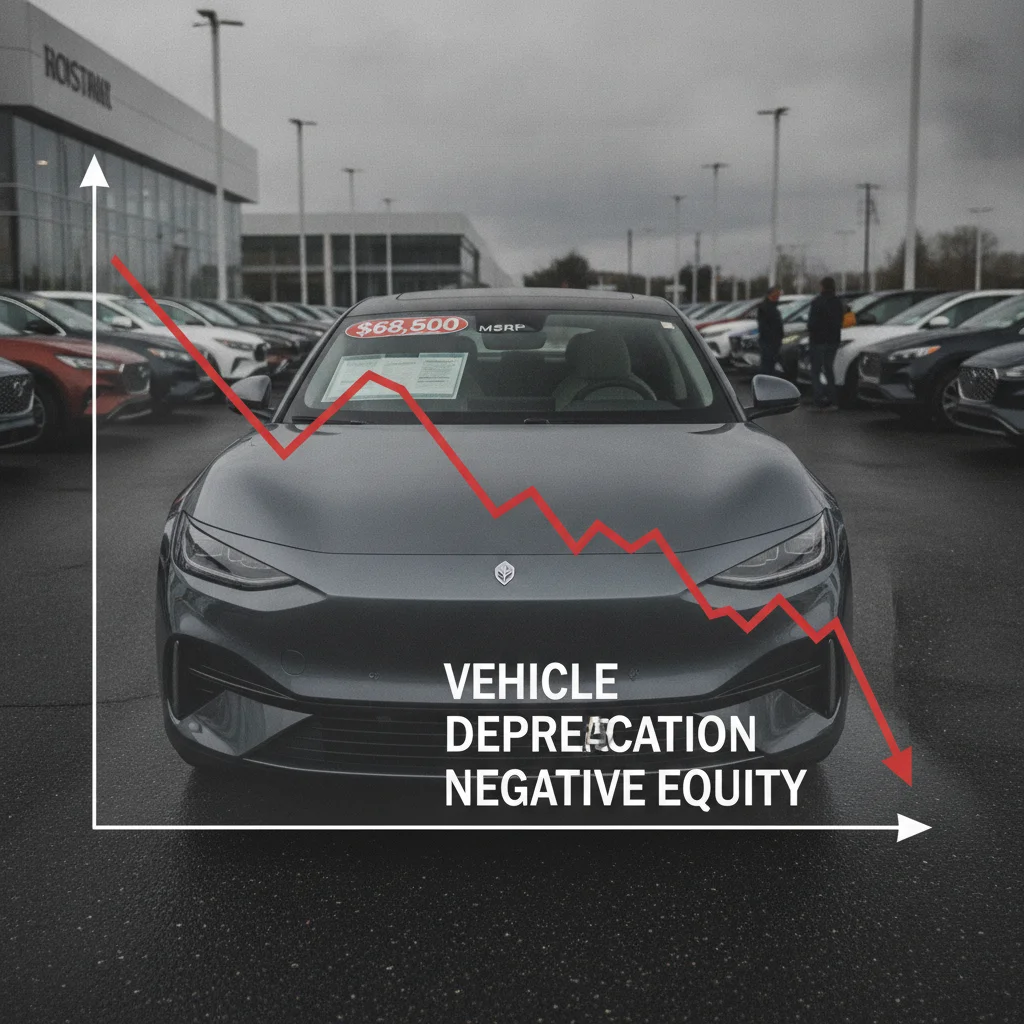
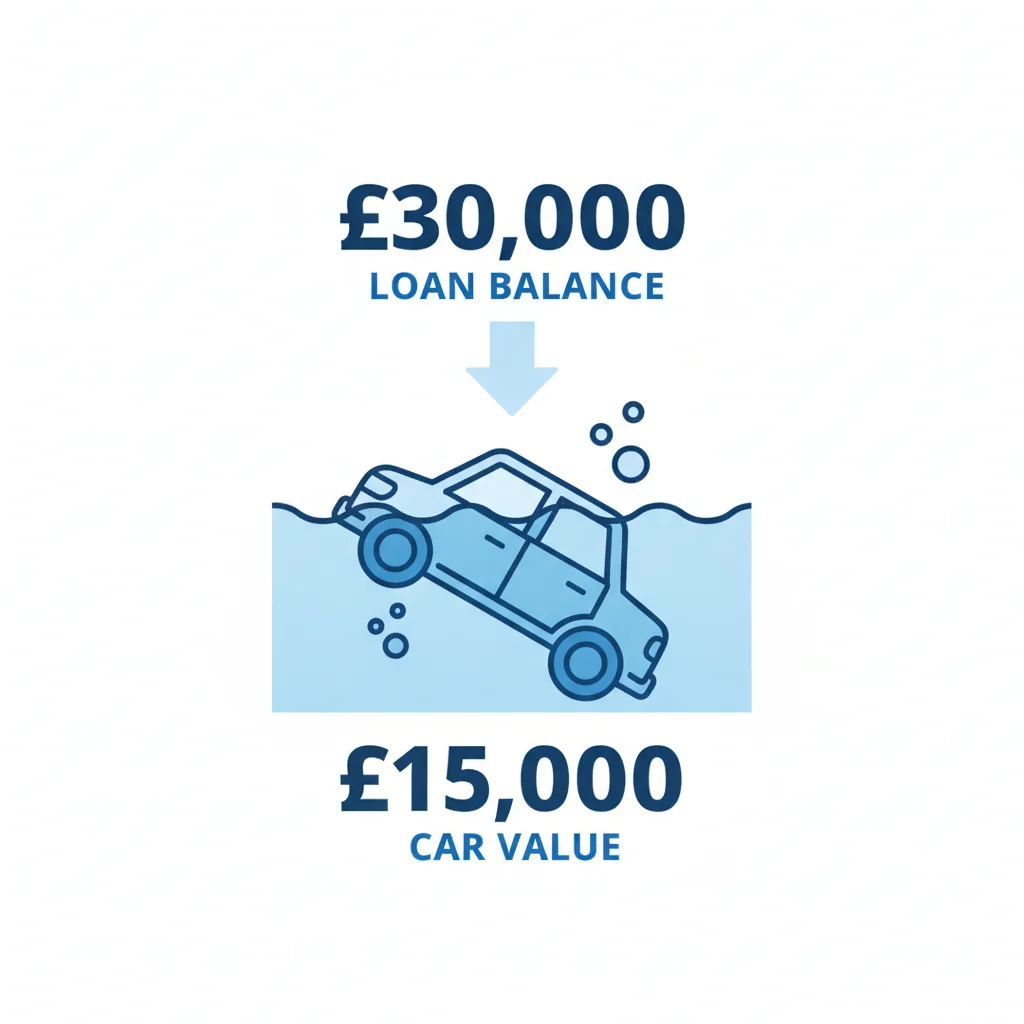
Being 'upside-down' on a car loan — also called negative equity — means you owe more on your loan than your car is currently worth on the market. For example, if your car would sell for $15,000 today but your remaining loan balance is $19,000, you're $4,000 upside-down. This situation is extremely common, especially in the first few years of a new car loan, because vehicles depreciate faster than most people pay down their principal.
Negative equity is calculated as loan payoff amount minus current market value (e.g., Kelley Blue Book or NADA trade-in value). Lenders express this as a loan-to-value (LTV) ratio greater than 100%.
What It Means to Be Upside-Down and Why It Happens
If you've recently checked your loan balance against your car's current market value and felt a sinking feeling, you're not alone. Negative equity is one of the most common financial situations car owners face, and it happens for straightforward, predictable reasons.
New vehicles lose roughly 20% of their value in the first year and up to 50% within three years, according to industry depreciation data. Most standard auto loans — especially those structured with low down payments or long terms — front-load interest, meaning your early payments go primarily toward interest, not principal. The result: your loan balance drops slowly while your car's value drops quickly.
To understand how deep the hole is, you need two numbers:
- Your payoff amount: Call your lender or check your account portal for the exact balance needed to close the loan today.
- Your car's current market value: Use Kelley Blue Book, Edmunds, or NADA — look at the private party or trade-in value depending on your situation.
The difference is your negative equity. If your payoff is $21,000 and your car is worth $17,000, you're $4,000 upside-down. Expressed as a loan-to-value (LTV) ratio, that's 123.5% — meaning you're borrowing against an asset that doesn't fully cover the debt.
Depreciation is the primary driver of why being underwater is more normal than most buyers expect. Understanding that isn't about making you feel better — it's about framing your options realistically.
Negative Equity Is Not the Same as Default Risk
Being upside-down on a loan doesn't mean you're in financial trouble — it simply describes the relationship between your balance and your car's value. Millions of borrowers are underwater on their loans at any given moment and continue making payments normally. Lenders understand this, which is why payment history often matters more than LTV alone when underwriting a refinance.
Rate Shopping Won't Significantly Hurt Your Credit
Many borrowers avoid shopping around for refinancing because they're worried about multiple hard inquiries damaging their score. In practice, credit scoring models treat multiple auto loan inquiries made within a 14–45 day window as a single inquiry. Apply to several lenders within that window to compare real offers without compounding the credit impact.
Check Your Loan Agreement Before You Start
Before applying anywhere, pull out your original loan agreement and confirm whether it contains a prepayment penalty clause. Some dealer-originated loans include these fees, which can offset refinancing savings significantly. Your lender's customer service line can confirm the exact payoff amount and any penalties that would apply.
Can You Actually Refinance When You're Upside-Down?
The short answer is yes — but with important qualifications. Refinancing an underwater car loan is harder than refinancing one with positive equity, and the math doesn't always work in your favor. Here's what actually determines whether you can do it.
Lender LTV Limits
Most traditional banks, credit unions, and online auto lenders set a maximum LTV for refinancing — commonly 125%. That means if your car is worth $18,000, they'll loan up to $22,500 on it. Anything above that threshold and you'll need to either bring cash to closing to cover the gap or find a specialty lender willing to take on more risk (usually at a higher rate).
Your Credit Score
When there's negative equity involved, lenders rely more heavily on your creditworthiness to offset the collateral gap. A borrower with a 720+ credit score seeking a moderate 115% LTV refinance has a reasonable shot with mainstream lenders. A borrower with a 580 score seeking 130% LTV will face a much narrower field of options. If your credit has improved since you took out your original loan, that improvement is one of the strongest arguments for refinancing — even while upside-down. See our guide on refinancing out of a high-rate subprime loan to understand how credit score gains translate to rate savings.
Payment History on the Existing Loan
Lenders will pull your payment history on your current auto loan. A clean record — no late payments, no deferrals — signals lower default risk and makes approval more likely. Even a single 30-day late payment in the past twelve months can push a borderline application into denial territory.
~25%
Car owners with negative equity at trade-in
Edmunds reported that roughly one in four trade-in transactions involved negative equity in recent years, highlighting how common the condition is.
20%
Average first-year vehicle depreciation
Industry data consistently shows new vehicles lose approximately 20% of their value within the first 12 months of ownership.
$6,000+
Average negative equity rolled into new loans
According to Edmunds market analysis, when buyers with negative equity trade in, the average rolled-over balance exceeds $6,000.
125%
Typical maximum LTV for refinancing
Most traditional lenders and credit unions cap auto loan refinancing at 125% loan-to-value, limiting options for deeply underwater borrowers.
48–72 months
Common refinance term lengths offered
Lenders typically offer refinancing terms ranging from 48 to 72 months, with longer terms producing lower payments but greater total interest costs.
Run a Breakeven Calculation First
Before applying for refinancing, divide your estimated closing costs (origination fees, title transfer fees) by your projected monthly savings. The result is the number of months you need to keep the new loan to break even. If you plan to sell or trade within that window, refinancing will cost you more than it saves.
Target a 125% LTV or Lower Before Applying
Use your car's trade-in value from Kelley Blue Book or Edmunds along with your current payoff balance to calculate your LTV. If you're above 125%, consider making one or more extra principal payments before applying. Even getting from 132% to 124% LTV can open up a wider pool of lenders and better rates.
Ask Lenders About Their LTV Cap Upfront
Rather than applying blind and collecting hard inquiries, call or chat with lenders before submitting a full application. Ask specifically: 'What is your maximum LTV for auto refinancing?' This screens out lenders who won't approve your situation before a hard inquiry hits your credit report.
The Real Numbers: When Refinancing Helps and When It Doesn't
The goal of refinancing is to improve your financial position — either through lower monthly payments, a lower total cost, or both. When you're upside-down, you need to run the numbers carefully because the benefit isn't always obvious.
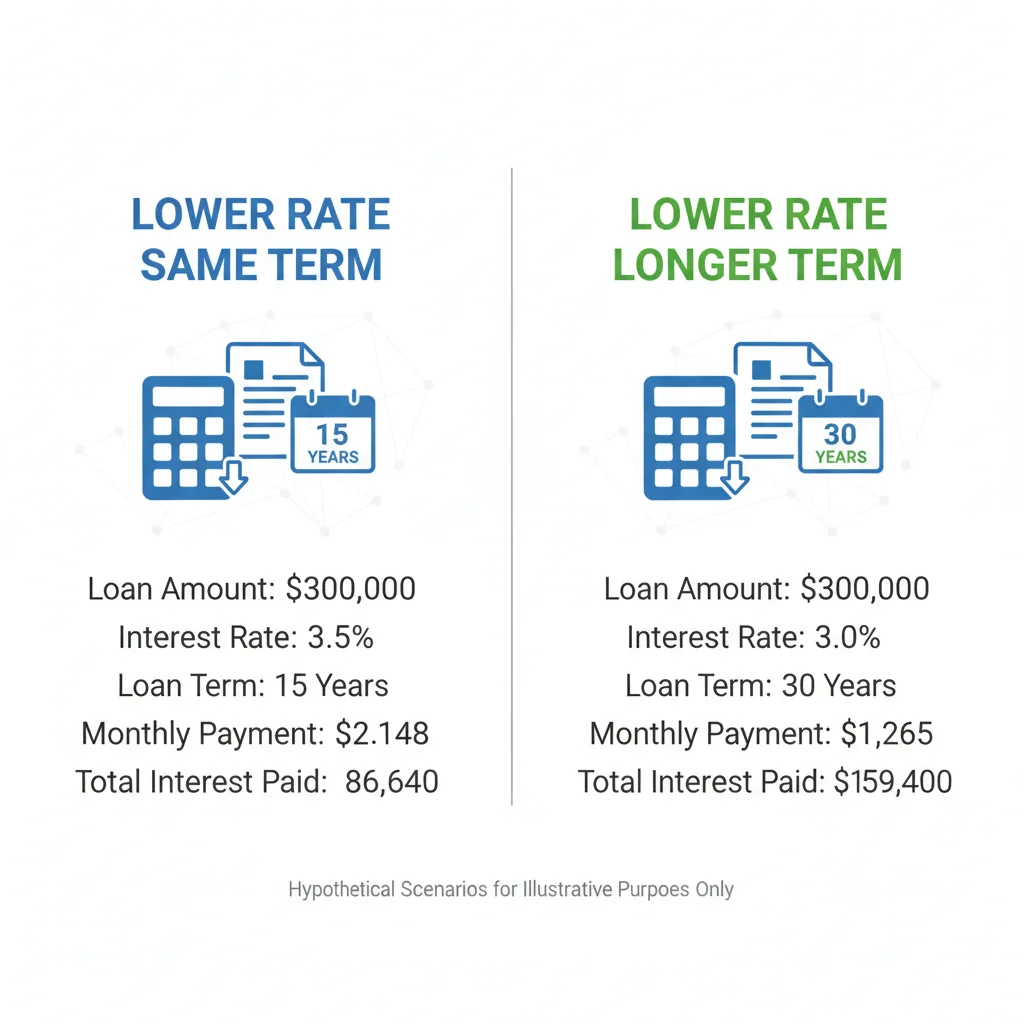
Scenario 1: Lower Rate, Same Term
Suppose you have $19,000 remaining on a 60-month loan at 9.5% APR, and you've paid for 12 months. You find a lender willing to refinance the $19,000 balance at 6.8% APR for 48 months. Your monthly payment drops slightly and your total interest paid over the remaining life of the loan decreases. This is the cleanest outcome — you save money without extending your exposure to depreciation.
Scenario 2: Lower Rate, Extended Term
Same situation, but the lender offers 6.8% APR stretched over 60 months instead of 48. Your monthly payment drops more noticeably, which helps cash flow. But you've added twelve months to your loan, paid interest on the balance longer, and your car continues depreciating — meaning the period of being upside-down extends. Run the total interest calculation before signing. The monthly payment reduction may feel like a win while costing you more overall.
Scenario 3: High LTV, Minimal Rate Improvement
If you're 135% LTV and your credit score hasn't improved much, the only lenders who'll touch the application may offer a rate that's barely lower — or even higher — than your current loan. In this case, refinancing offers little benefit and may reset your loan term in a way that extends negative equity for years.
The breakeven calculation matters here. Divide any refinancing fees (origination costs, prepayment penalties on the old loan) by your monthly savings to determine how many months it takes to recoup the cost. If you're planning to sell or trade in before that breakeven point, refinancing doesn't make financial sense.
“The decision to refinance an underwater auto loan shouldn't be driven by the monthly payment alone. Borrowers need to look at the total cost of the loan over its remaining life — that's where the real win or loss happens.”
— Greg McBride, Chief Financial Analyst, Bankrate
How to Strengthen Your Application Before You Apply
Applying for refinancing with negative equity and a weak application is a fast path to denial. A little preparation can meaningfully shift the outcome — and the rate you're offered.
Build Your Credit Score First
Even a 20–40 point credit score improvement can move you from subprime rates to near-prime territory. Pay down revolving credit balances, dispute any errors on your credit report, and avoid opening new credit accounts in the 60–90 days before applying. If your score needs significant work, give yourself six months before applying — the rate difference may be worth the wait.
Reduce the LTV Before Applying
If you have savings or a tax refund available, consider making a lump sum payment toward principal before applying. Even a $1,000–$2,000 payment can shift your LTV ratio enough to qualify for better terms. Using a tax refund to pay down your car loan is a strategy worth considering specifically for this purpose.
Get Preapproved Before Committing
Shopping for refinancing with multiple lenders — especially if you do it within a short window — lets you compare real offers without a permanent credit hit. Loan preapproval gives you a concrete rate and term offer to compare against your existing loan, so you're making a data-driven decision rather than guessing whether refinancing will help.
Consider Credit Unions
Credit unions often have more flexible LTV limits and more human underwriting processes than large banks. If you're a member of a credit union or eligible to join one through your employer or community, their refinancing options may be more accessible when you're upside-down.
Run a Breakeven Calculation First
Before applying for refinancing, divide your estimated closing costs (origination fees, title transfer fees) by your projected monthly savings. The result is the number of months you need to keep the new loan to break even. If you plan to sell or trade within that window, refinancing will cost you more than it saves.
Target a 125% LTV or Lower Before Applying
Use your car's trade-in value from Kelley Blue Book or Edmunds along with your current payoff balance to calculate your LTV. If you're above 125%, consider making one or more extra principal payments before applying. Even getting from 132% to 124% LTV can open up a wider pool of lenders and better rates.
Ask Lenders About Their LTV Cap Upfront
Rather than applying blind and collecting hard inquiries, call or chat with lenders before submitting a full application. Ask specifically: 'What is your maximum LTV for auto refinancing?' This screens out lenders who won't approve your situation before a hard inquiry hits your credit report.
Alternatives If Refinancing Isn't Available or Worthwhile
Refinancing isn't the only path forward. Depending on how deep your negative equity is and what your priorities are, one of these strategies may serve you better.
Accelerate Principal Payments
The most straightforward approach: pay more toward principal each month, or make periodic lump sum payments. This shrinks the gap between your balance and your car's value without involving a new lender. Once you reach positive equity territory — or at least a more manageable LTV — refinancing becomes easier and more rewarding. Even an extra $50–$100 per month applied to principal can make a meaningful difference over a year.
Early Payoff
If you're in a position to pay off the loan entirely, you eliminate both the debt and the interest burden. This is the cleanest exit from negative equity, though it requires available cash or a personal loan at a lower rate. Early payoff strategies for underwater loans explores whether this path makes sense for your situation.
Trading In the Vehicle
Some buyers choose to trade in and roll the negative equity into a new loan. This doesn't make the debt disappear — it just moves it. And it's risky: you can end up even further upside-down on the new vehicle almost immediately. Trading in a car with negative equity covers the mechanics and the risks in detail before you decide to go this route.
Waiting It Out
Sometimes the right move is patience. If your car is newer, your loan rate is already competitive, or your negative equity is narrowing month by month, staying put and continuing payments may be the lowest-cost path. Reassess your LTV every six months and revisit refinancing when the numbers improve.
What to Watch Out For When Refinancing Upside-Down
Even when refinancing is genuinely available and mathematically helpful, there are pitfalls that can erode the benefit or create new problems down the line.
Extended Loan Terms That Deepen Negative Equity
A lender offering a 72- or 84-month refinance on an upside-down loan is extending your repayment timeline well beyond your car's useful depreciation curve. You may still be paying on a car worth $5,000 when your balance is $10,000. Think twice before stretching the term to lower monthly payments.
Prepayment Penalties on Your Current Loan
Some auto loans — particularly those originated through dealerships — include prepayment penalties that can cost hundreds of dollars if you pay off the loan early. Read your current loan agreement carefully or call your lender to confirm before triggering a payoff through refinancing.
Teaser Rates That Adjust
Most auto refinancing uses fixed rates, but verify this before signing. A variable-rate refinance may look attractive initially and then expose you to rate increases that worsen your situation.
Skipping Payments During the Transition
When you refinance, there's often a gap period before your first payment on the new loan is due. Do not skip a payment on your old loan during this transition window without explicit written confirmation that the payoff has been processed. A missed payment shows up on your credit report regardless of the reason.
Negative Equity Is Not the Same as Default Risk
Being upside-down on a loan doesn't mean you're in financial trouble — it simply describes the relationship between your balance and your car's value. Millions of borrowers are underwater on their loans at any given moment and continue making payments normally. Lenders understand this, which is why payment history often matters more than LTV alone when underwriting a refinance.
Rate Shopping Won't Significantly Hurt Your Credit
Many borrowers avoid shopping around for refinancing because they're worried about multiple hard inquiries damaging their score. In practice, credit scoring models treat multiple auto loan inquiries made within a 14–45 day window as a single inquiry. Apply to several lenders within that window to compare real offers without compounding the credit impact.
Check Your Loan Agreement Before You Start
Before applying anywhere, pull out your original loan agreement and confirm whether it contains a prepayment penalty clause. Some dealer-originated loans include these fees, which can offset refinancing savings significantly. Your lender's customer service line can confirm the exact payoff amount and any penalties that would apply.
Refinancing while upside-down is a real option — it's just a more complex calculation than standard refinancing. The key is understanding exactly what you're gaining, what you're giving up, and whether the numbers support the move for your specific situation. For borrowers with bad credit exploring their loan options, refinancing while underwater requires extra care but isn't necessarily off the table.

All claims are backed by peer-reviewed research. Sources on request.