
Key Takeaways
Early Payoff (Auto Loan)
Early payoff means paying off your auto loan balance before the scheduled end date in your loan contract. This reduces the total amount of interest you pay because interest accrues over time — the sooner you eliminate the principal, the less interest the lender collects. Early payoff can happen all at once with a lump sum, or gradually through extra payments that chip away at principal.
On a simple-interest auto loan, early payoff savings are direct and proportional to how much principal you eliminate and how early you do it. Precomputed-interest loans handle this differently, using a rebate method (commonly Rule of 78s) that front-loads interest charges and may reduce your early payoff benefit.
The Basics: What Early Payoff Really Means
When lenders talk about an auto loan's term — say, 60 months or 72 months — that's the schedule they've built for you to repay the money you borrowed, plus interest. Early payoff is simply choosing to finish before that schedule ends.
But the phrase "paying off your loan early" can mean a few different things in practice:
- Lump-sum payoff: You contact your lender, request a payoff quote, and send a single payment that retires the entire remaining balance at once.
- Accelerated extra payments: You add extra money to your regular monthly payment, month after month, reducing your principal faster than scheduled and effectively shortening the loan's life.
- Hybrid approach: You make occasional larger payments when you have extra cash — a tax refund, a bonus, an inheritance — while still making regular monthly payments in between.
All three approaches count as early payoff, but they produce different outcomes in terms of how much interest you save and how quickly the loan closes. The one that's right for you depends on your cash flow and how aggressively you want to retire the debt.
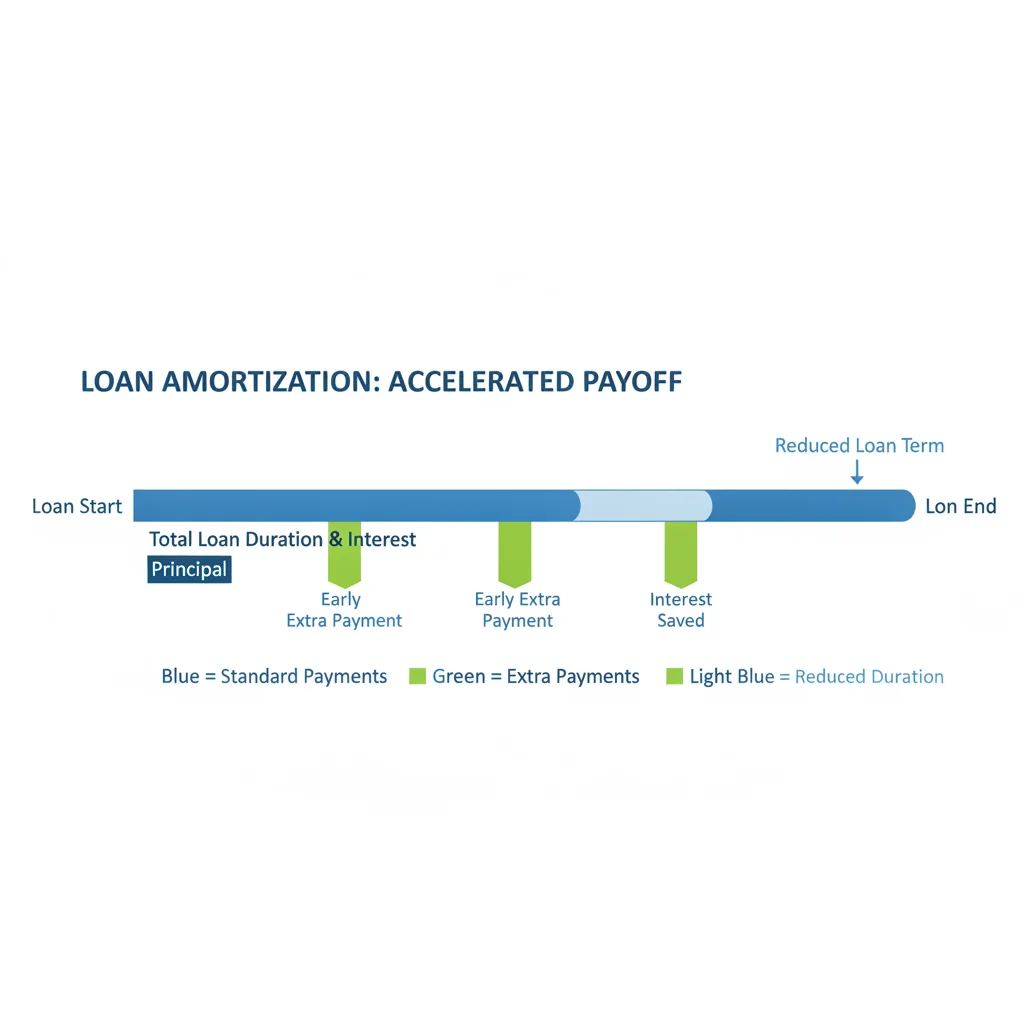
To understand why early payoff saves money, you need to understand one thing: interest on most auto loans is calculated on your remaining principal balance. The bigger the balance, the more interest you owe each month. Every dollar you send toward principal shrinks the balance — and every dollar that shrinks the balance reduces future interest charges. Time and balance are the two levers.
For a deeper look at the vocabulary surrounding this process, see our early payoff terms glossary — it covers principal, amortization, payoff quotes, and more in plain language.
How Interest Structure Changes Everything
Before you celebrate the idea of saving interest by paying early, you need to know what kind of loan you're dealing with. Not all auto loans reward early payoff the same way.
“The borrowers who benefit most from early payoff are the ones who understand that they're not just paying off a balance — they're buying back time. Time is where interest lives.”
— Greg McBride, Chief Financial Analyst, Bankrate
Simple-Interest Loans
The majority of auto loans issued today use simple interest. This means your interest charge each month is based on your current principal balance multiplied by your daily interest rate multiplied by the number of days since your last payment. Pay more than the minimum, and you reduce principal faster. Reduce principal faster, and every future month costs less in interest. The savings are direct and tangible.
With a simple-interest loan, the earlier in the loan term you make extra payments, the more you save — because you're cutting interest that would have compounded over years, not months.
Precomputed-Interest Loans
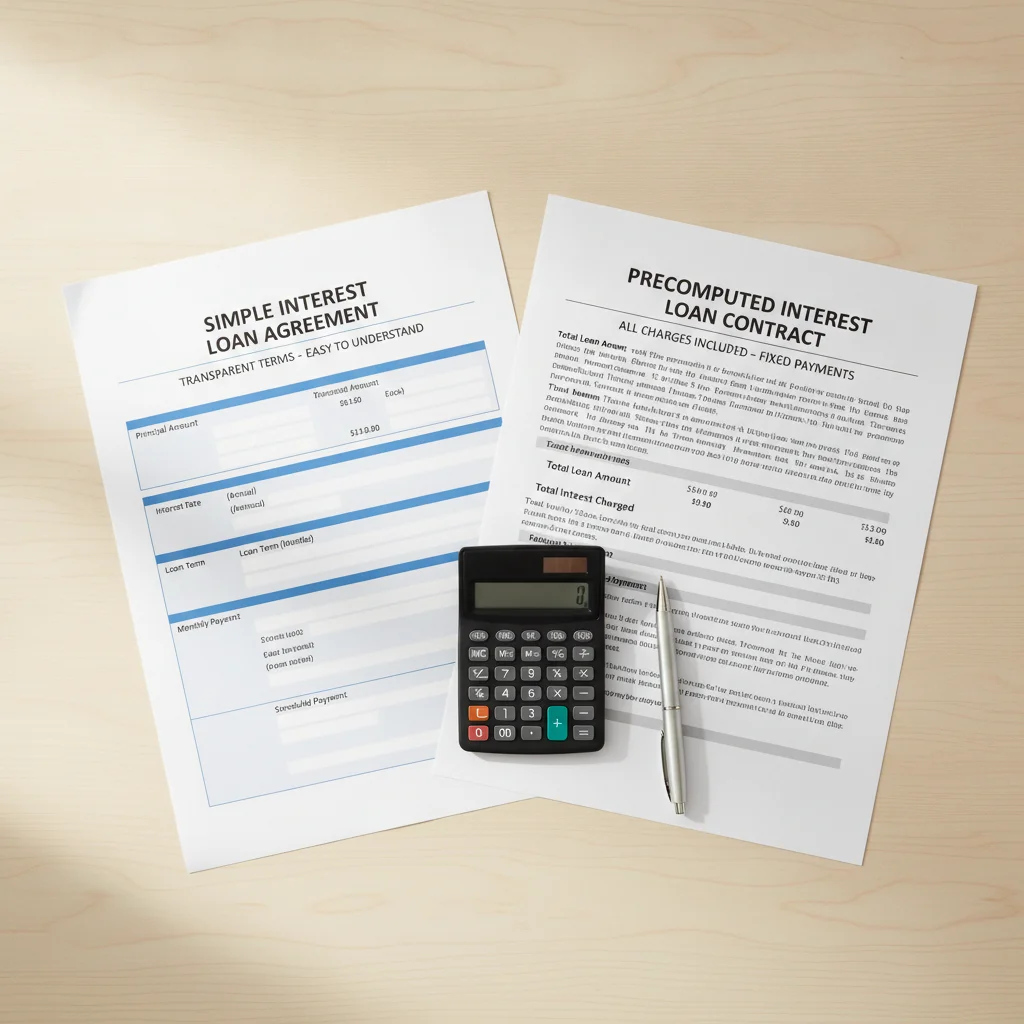
Precomputed-interest loans work differently. The lender calculates your entire interest obligation upfront at origination and adds it to the loan balance before you ever make a payment. Your monthly payments are fixed amounts that repay this pre-determined total.
If you pay off a precomputed loan early, you're entitled to a refund of unearned interest — but lenders typically use a formula called the Rule of 78s to calculate how much interest you've "used." This formula is front-loaded: it treats you as having consumed a larger share of total interest in the early months, even though you haven't had the money that long. The result is that your refund is smaller than you'd expect, and your early payoff benefit is diminished.
This distinction matters enormously. Our article on precomputed vs. simple interest auto loans walks through exactly how each structure affects your total cost.
Simple Interest vs. Precomputed: Why It Matters
Federal law (the Truth in Lending Act) requires lenders to disclose the total finance charge and APR on your loan, but it does not require them to prominently label whether your loan uses simple or precomputed interest. You often have to look at how interest is described in the loan's fine print. If you're unsure, ask your lender directly — it's a question every borrower has the right to ask.
Title Processing Delays Are Common
Even after your lender confirms your loan is paid in full, title release can take longer than expected due to state DMV processing backlogs or lender administrative timelines. If you're selling the vehicle soon after payoff, plan for this delay and factor it into your sale timeline. In some states, you can expedite the process for a small fee through your DMV.
If you're uncertain which type of loan you have, look at your original contract. A simple-interest loan will typically show an interest rate and state that interest accrues daily on the unpaid balance. A precomputed loan will show a finance charge as a fixed dollar amount added to the amount financed.
Prepayment Penalties: The Clause That Can Cost You
Here's the part of the early payoff conversation that catches many borrowers off guard: some auto loans include a prepayment penalty — a fee the lender charges if you pay off the loan ahead of schedule.
Why would a lender penalize you for paying them back? Because they made a business decision based on earning a specific amount of interest income over the loan's life. If you pay early, you deprive them of future interest payments. A prepayment penalty compensates them for that lost revenue.
~43%
Auto loan borrowers unaware of prepayment penalty
A 2022 Consumer Financial Protection Bureau review found a significant share of auto loan borrowers had not reviewed their prepayment clause before signing.
$1,000+
Typical interest saved by paying off 60-mo. loan 12 months early
Based on a $25,000 loan at 7% APR over 60 months, paying off one year ahead of schedule saves approximately $1,050 in interest.
72+ months
Most common new car loan term as of 2024
Experian's State of the Automotive Finance Market report showed the average new vehicle loan term extended beyond 69 months in 2024, increasing early payoff savings potential.
2–6 weeks
Typical lien release processing time after payoff
State laws and lender processing speeds vary, but most lenders release the vehicle title lien within 2 to 6 weeks of receiving a final payment.
Prepayment penalties are less common on auto loans than they once were, but they still appear — particularly on:
- Dealer-arranged financing where the dealership's financing arm sets the terms
- Loans from smaller or specialized lenders
- Subprime auto loans designed for borrowers with damaged credit
- Older loan contracts originated before consumer protections tightened
Penalty structures vary. Some lenders charge a flat fee. Others charge a percentage of the remaining balance. Still others charge an amount equal to a set number of months' interest. Before you plan any early payoff strategy, read the prepayment clause in your loan agreement carefully.
For a comprehensive look at loan structures that may reduce early payoff benefits, see our article on signs your auto loan terms make early payoff less worthwhile.
Check Your Contract Before Making Extra Payments
Before sending any extra money to your lender, pull out your original loan agreement and locate the prepayment clause. If you have a precomputed-interest loan or a loan with a prepayment penalty, your savings calculation changes significantly. Knowing your loan type upfront prevents surprises when you request your final payoff quote.
Specify 'Apply to Principal' in Writing
When making extra payments, always designate in writing that the additional amount should be applied directly to your principal balance — not to your next scheduled payment. Use your lender's online portal payment notes field, or include a separate written instruction with a mailed payment. Without this direction, many lenders default to applying the overpayment to future scheduled installments, which delays your payoff date.
The Payoff Quote: Your Exact Number to Retire the Loan
If you decide to pay off your loan in full — all at once — you can't just send in what your statement says you owe. You need a payoff quote.
A payoff quote is the precise dollar amount your lender requires to close the loan completely on a specific date. It includes:
- Your current principal balance
- The original loan amount minus everything you've already paid toward principal.
- Interest accrued to the payoff date
- On a simple-interest loan, interest continues to accrue every day. Your payoff quote projects forward to a specific date — often 10 to 15 days from the request — and includes the interest you'll owe through that date.
- Any applicable fees
- Some lenders include a small processing or document fee in the payoff amount.

Payoff quotes have an expiration date. If you don't send your payment before that date, the quote is no longer valid because additional interest has accrued. Your lender will issue a new quote with a slightly higher number. This is not a penalty — it's just the daily math catching up.
To request a payoff quote, call your lender's customer service line or log into your account portal. Specify the date by which you plan to send payment. Get the quote in writing (email or download from the portal) so you have documentation of the exact amount requested.
After your payoff is received and processed, follow up to confirm the loan is closed and request written confirmation. Then watch for your title — either mailed to you as a paper document or released electronically to your state's DMV, depending on how your state handles liens.
Extra Payments vs. Lump-Sum Payoff: Which Strategy Works Better?
Both strategies reduce your loan faster than the original schedule — but they work differently and suit different financial situations.
Making Extra Monthly Payments
If you consistently pay more than your required monthly amount and direct that extra money toward principal, you'll shorten your loan term and reduce total interest paid. This approach works well for borrowers who can reliably budget a specific extra amount each month but don't have a large lump sum available.
One critical point: you must instruct your lender to apply the extra amount to principal. If you don't, many lenders will credit the overpayment toward your next scheduled payment rather than reducing the balance. Check your lender's portal — most allow you to specify payment allocation online. If yours doesn't, include a note with your payment or call to confirm the application.
Lump-Sum Payoff
A lump-sum payoff eliminates the loan entirely in one transaction. This is most common when a borrower receives a windfall — a large tax refund, an insurance settlement, an inheritance — or when they refinance with another lender who pays off the original loan.
The advantage is simplicity and certainty: you know the exact date the loan closes, and you know exactly how much interest you're avoiding. The downside is that it requires having the full payoff amount available at once.
The Math Advantage of Acting Early
Whichever strategy you choose, the key principle is the same: every dollar of extra principal payment saves the most when it happens early in the loan term. In the first months of a loan, a larger share of your payment goes toward interest. Reducing principal early flips the ratio sooner, letting more of each payment go toward the balance.
Understanding how loan terms affect total cost — including why longer loans generate more total interest even at the same rate — gives you important context for this math.
Check Your Contract Before Making Extra Payments
Before sending any extra money to your lender, pull out your original loan agreement and locate the prepayment clause. If you have a precomputed-interest loan or a loan with a prepayment penalty, your savings calculation changes significantly. Knowing your loan type upfront prevents surprises when you request your final payoff quote.
Specify 'Apply to Principal' in Writing
When making extra payments, always designate in writing that the additional amount should be applied directly to your principal balance — not to your next scheduled payment. Use your lender's online portal payment notes field, or include a separate written instruction with a mailed payment. Without this direction, many lenders default to applying the overpayment to future scheduled installments, which delays your payoff date.
After You Pay Off: What Comes Next
Paying off your auto loan isn't over when you send the final payment. There are several steps to take to make sure everything is properly closed and documented.
1. Confirm the Loan Is Closed
Contact your lender to confirm that the payment was received, processed, and that the account is marked paid in full. Request a written payoff confirmation letter or a statement showing a zero balance. Keep this document permanently — it's your proof that the debt was satisfied.
2. Get Your Title
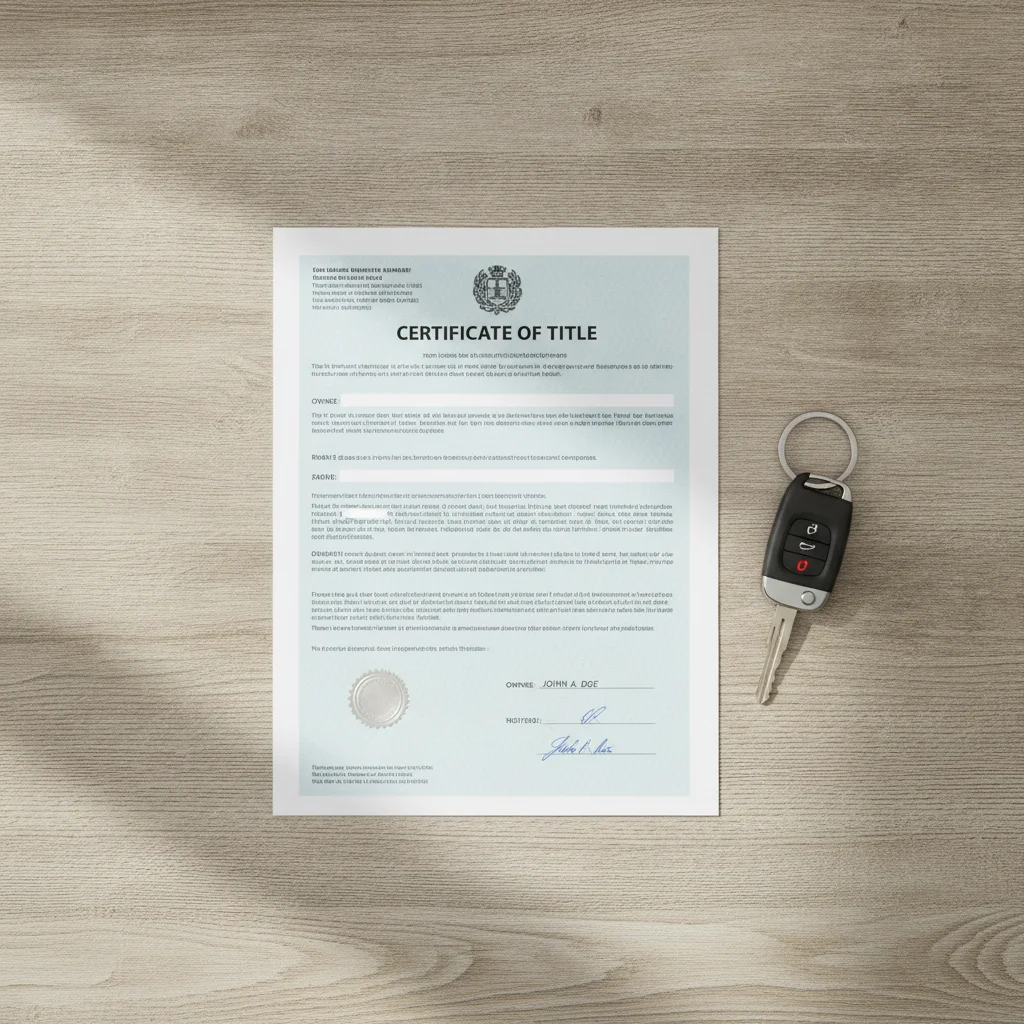
As long as your lender holds a lien on your vehicle, you don't fully own it in the eyes of the law. Once the loan is paid, the lender is required to release that lien. Depending on your state:
- You may receive a physical title in the mail with the lien release stamp or the lender's name removed.
- In states with electronic titles, the lender files a lien release directly with the DMV and the title updates in state records.
Processing typically takes 2 to 6 weeks. If you haven't received confirmation after 6 weeks, follow up with your lender and your state's DMV.
3. Monitor Your Credit Report
Your lender should report the loan as paid and closed to the major credit bureaus. Check your credit report 30 to 60 days after payoff to confirm the account reflects a zero balance and paid-in-full status. If you see an error, dispute it with the bureau directly and provide your payoff confirmation letter as documentation.
Once your title is in hand and your credit report is updated, you've completed the process. To keep your early payoff strategy on track before you reach that point, our article on tracking your progress toward an early auto loan payoff explains how to monitor your balance, projected savings, and payoff timeline as you go.
Simple Interest vs. Precomputed: Why It Matters
Federal law (the Truth in Lending Act) requires lenders to disclose the total finance charge and APR on your loan, but it does not require them to prominently label whether your loan uses simple or precomputed interest. You often have to look at how interest is described in the loan's fine print. If you're unsure, ask your lender directly — it's a question every borrower has the right to ask.
Title Processing Delays Are Common
Even after your lender confirms your loan is paid in full, title release can take longer than expected due to state DMV processing backlogs or lender administrative timelines. If you're selling the vehicle soon after payoff, plan for this delay and factor it into your sale timeline. In some states, you can expedite the process for a small fee through your DMV.

All claims are backed by peer-reviewed research. Sources on request.