Key Takeaways
Being Underwater on a Car Loan
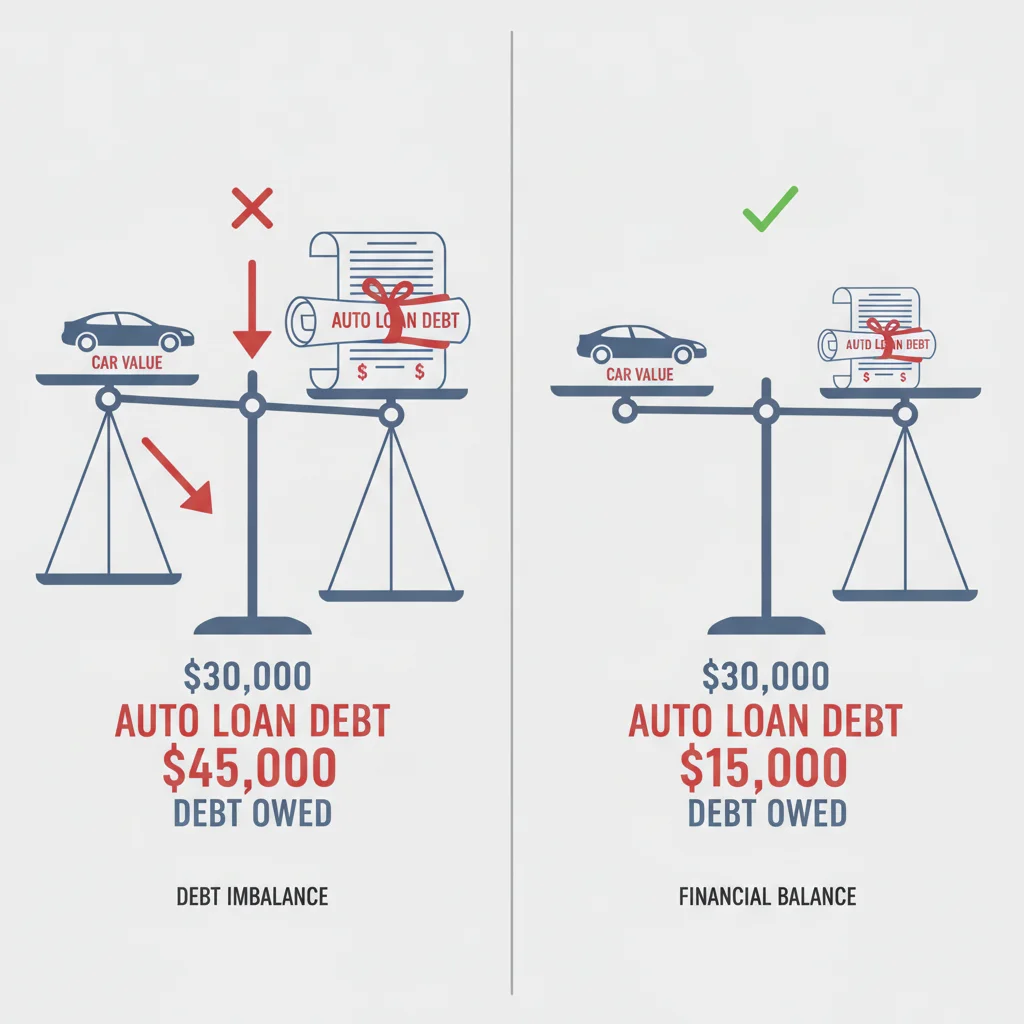
Being underwater — also called being upside down or having negative equity — means you owe more on your auto loan than your car is currently worth. For example, if your loan balance is $22,000 but the car's market value is only $16,000, you're $6,000 underwater. It's a surprisingly common situation, and depreciation is almost always the main cause.
Negative equity is calculated as: Loan Balance − Current Market Value = Equity Position. A negative result indicates you are upside down on the loan.
The Moment You Drive Off the Lot, the Math Changes
You sign the paperwork, hand over the keys for a moment, then get them back. At that exact instant — before you've even reached the highway — your car is worth less than you paid for it. That's not a complaint, it's just how depreciation works on new vehicles.
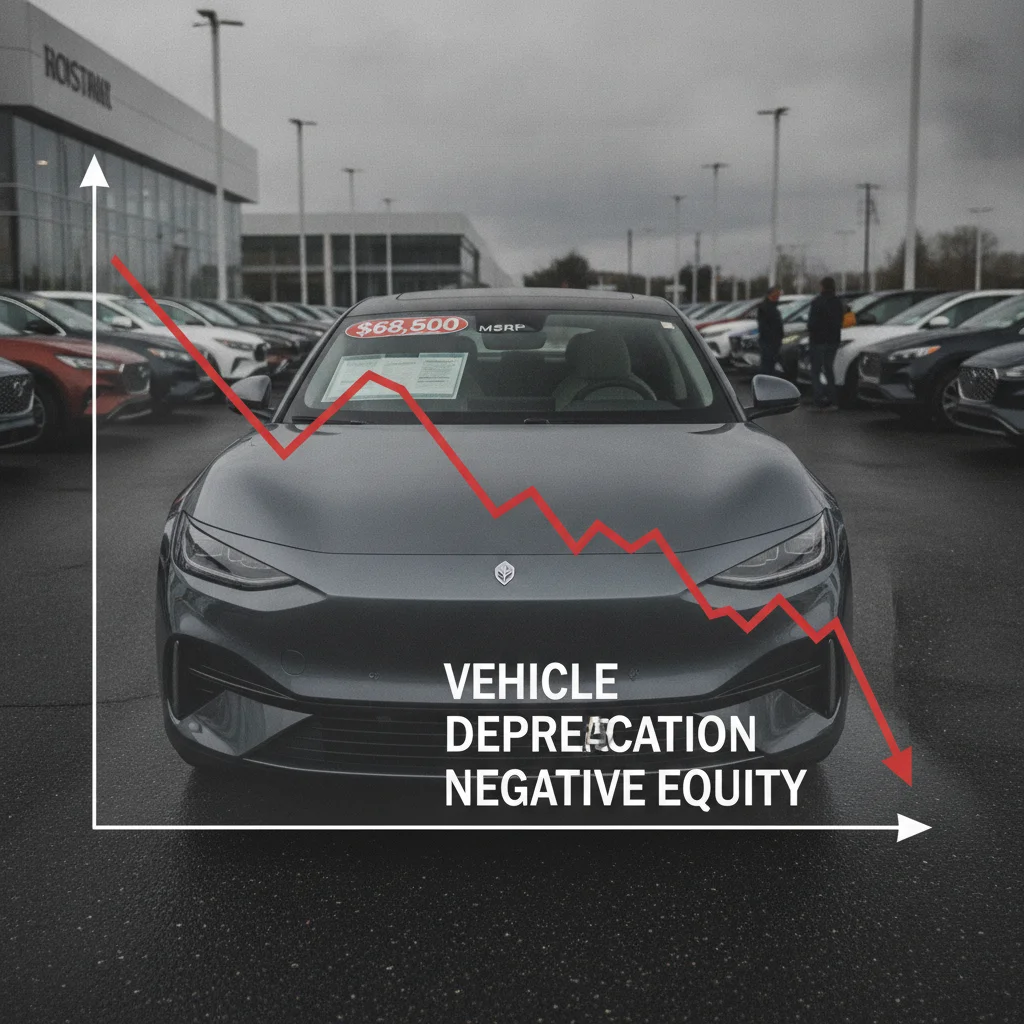
A brand-new car typically loses somewhere between 10% and 15% of its value the moment it's titled in your name and driven off the lot. That's because it's no longer "new" in the market sense — it's now a used car, competing with every other used car out there. By the end of the first year, the average new vehicle has shed 20–25% of its original purchase price.
Now layer a loan on top of that. If you bought a $38,000 truck with nothing down and financed the whole thing, you owe $38,000 plus interest from day one. After 12 months of standard payments on a 72-month loan, you might have paid off $5,000–$6,000 in principal — but the truck's market value has already dropped $8,000–$9,000. You're underwater before the first year is even up, and you haven't done anything wrong. That's just how the math works out when depreciation moves faster than loan paydown.
Understanding this isn't meant to scare you away from buying a car. It's meant to help you make choices that keep the gap manageable — or close it sooner.
How the Depreciation Curve Actually Works
Depreciation isn't a flat line. It's steep at first, then it gradually flattens out. That curve matters a lot when you're also managing a loan balance.
Here's a rough breakdown of how a typical new vehicle loses value over time:
| Year | Approx. Cumulative Value Lost |
|---|---|
| End of Year 1 | 20–25% |
| End of Year 2 | 30–35% |
| End of Year 3 | 40–46% |
| End of Year 5 | 50–60% |
The first three years are where you take the hardest hits. After that, the curve flattens — a six-year-old car doesn't drop in value as fast as a one-year-old car does. This is actually useful information if you're buying used: a vehicle that's already absorbed the steepest depreciation years is a much safer equity position than a brand-new one with a large loan attached.
20–25%
New car value lost in year one
Industry data consistently shows new vehicles lose roughly a fifth to a quarter of their value within the first 12 months of ownership.
~33%
U.S. car owners with negative equity
According to Edmunds data, roughly one in three vehicle trade-ins in recent years involved a loan balance exceeding the vehicle's value.
$6,054
Average negative equity amount at trade-in
Edmunds reported that among underwater trade-ins, the average deficit exceeded $6,000 — a number that typically gets rolled into the next loan.
72+ months
Loan terms most likely to cause negative equity
Consumer Financial Protection Bureau data shows loans of 72 months or longer have significantly higher rates of negative equity throughout the repayment period.
For a deeper look at what drives these numbers — age, mileage, condition, and brand — the Depreciation Basics hub covers all the key factors in detail.
Depreciation Varies by Vehicle Type
Not all cars depreciate at the same rate. Luxury vehicles and EVs have historically depreciated faster than mainstream trucks and compact SUVs. Market conditions — like fuel prices, supply chain disruptions, or high used-car demand — can also temporarily slow or even reverse depreciation on certain models. Always check current resale value data for the specific vehicle you're considering, not just averages.
Rolling Over Negative Equity Compounds the Problem
When dealers advertise "we'll pay off your trade no matter what you owe," they're not absorbing the negative equity — they're adding it to your new loan. Starting a new 60- or 72-month loan already $4,000 or $5,000 underwater means you'll be deeply negative for the first several years of ownership. Always ask specifically how a dealer is handling your trade payoff before signing anything on a new purchase.
Why Long Loan Terms Are a Depreciation Trap
The auto industry has gradually normalized longer and longer loan terms. Six-year (72-month) loans are now common, and 84-month loans aren't rare. Lenders offer them because they lower the monthly payment, which makes an expensive vehicle feel affordable. But they come with a serious hidden cost: they dramatically extend the period where you're likely to be underwater.
Here's why. When you take out a long loan, the early payments are heavily weighted toward interest — not principal. On a $35,000 loan at 7% interest over 84 months, you might pay off less than $4,000 in principal in the first year, while the car sheds $6,000–$8,000 in market value. The gap between what you owe and what the car is worth stays stubbornly wide for years.
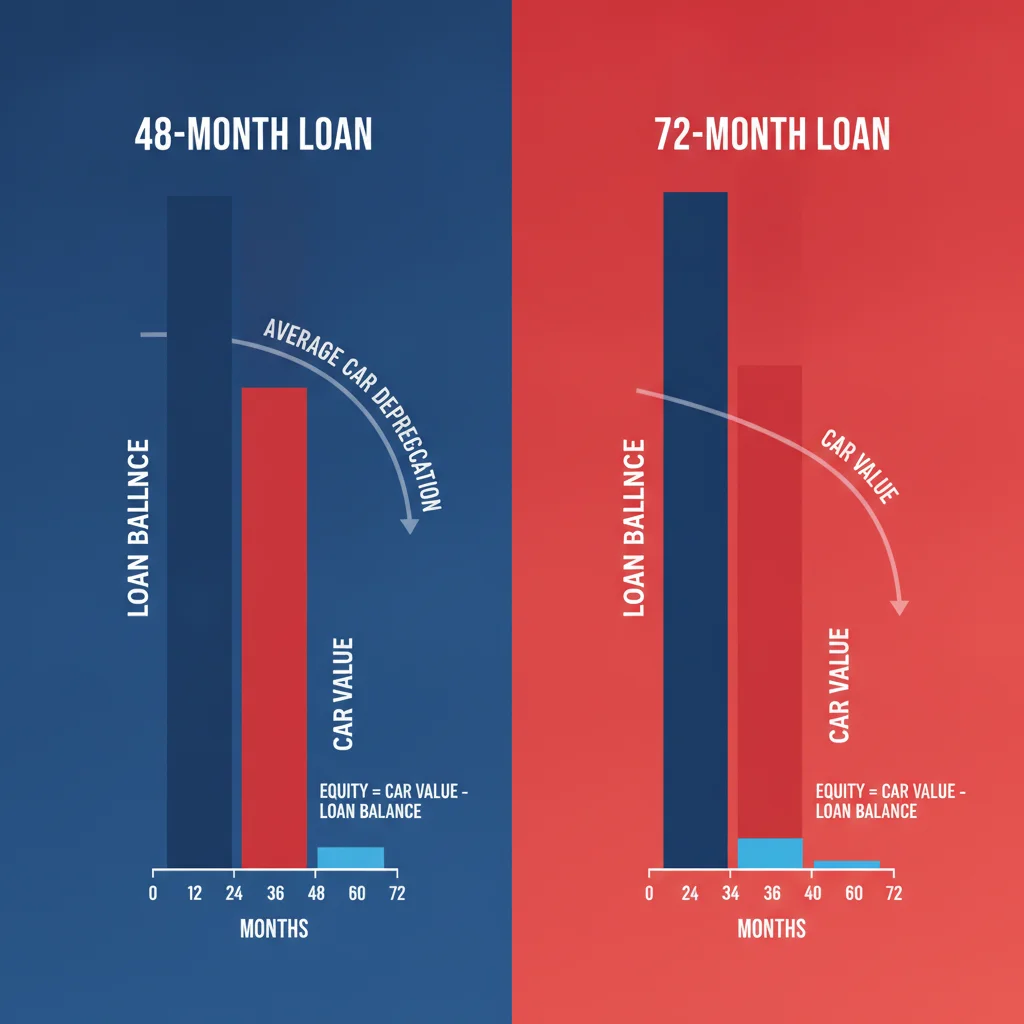
Compare that to a 48-month loan on the same vehicle. Your monthly payment is higher, but you're paying down principal much faster. By year two, you may have already crossed into positive equity territory — meaning the car is worth more than you owe.
The decision about loan term is one of the most underrated factors in whether you end up trapped or flexible. If you're considering a longer term just to hit a monthly payment target, that's worth a hard second look. The upside-down loan problem explained connects this directly to how loan structure choices interact with depreciation curves.
Use the 20/4/10 Rule as a Starting Point
A common guideline for avoiding negative equity: put at least 20% down, keep your loan term to 4 years or fewer, and make sure your total monthly car costs (payment + insurance) don't exceed 10% of gross monthly income. It's not a perfect formula for everyone, but it builds in the margin you need to stay above water through the steepest depreciation years.
Check Resale Value Before You Fall in Love
Before you commit to any vehicle, look up its projected resale value at three and five years using tools like Kelley Blue Book or Edmunds. Vehicles that retain 50–60% of their value at five years are meaningfully safer from a negative equity standpoint than those retaining only 35–40%. That research takes 10 minutes and can save you years of being stuck underwater.
The Down Payment Connection
A down payment does something simple but powerful: it reduces the amount you have to finance, which means your starting loan balance is already lower than the car's purchase price. That built-in cushion gives you a head start against depreciation.
If you put 20% down on that $38,000 truck, you're financing $30,400 instead of $38,000. The truck still loses 20% of its value in year one — but now your loan balance is a lot closer to (or even below) what the truck is worth. You might never go underwater at all.
“The down payment is the single most effective tool buyers have to protect their equity position. Financing 100% of a depreciating asset is one of the riskiest things you can do in personal finance.”
— Ivan Drury, Director of Insights, Edmunds
Zero-down purchases are the riskiest from an equity standpoint, especially on new vehicles. With nothing down, you're starting at 100% of the car's purchase price in loan balance — and you're immediately behind the depreciation curve. This is how people end up owing $28,000 on a car that's worth $20,000 just two years later.
The Down Payments hub breaks down exactly how down payment size shapes your loan structure and equity position from the start. If you're in the planning stage of a purchase, that's worth reading before you finalize any numbers.
Real-World Scenarios Where Going Underwater Sneaks Up on You
Being upside down doesn't always happen because someone made a bad decision. Sometimes life just puts you in a tough spot.
The common thread in most of these situations is that the car lost value faster than the loan was paid down — which is the normal pattern for new vehicles on long loan terms with low down payments. Being underwater on a car loan is more common than most owners realize, and it doesn't necessarily mean you made a mistake — it means the math caught up with you.
What Being Underwater Actually Means for Your Options
Here's the practical reality: if you're underwater on your loan, you're not stuck — but your options are more limited than they would be with positive equity.
- Selling privately: If you sell the car for less than your loan balance, you have to pay the difference out of pocket to clear the title. Some people have the cash to do this; many don't.
- Trading in: Dealers will usually take the trade, but the negative equity gets rolled into your new loan. Now you're starting your next car loan already in the hole. It's not a solution — it's a deferral. If you're considering this route, trading in a car with negative equity lays out the real risks and what to watch for.
- Keeping the car: Sometimes the smartest move is just staying put. Keep making payments, reduce the principal, and wait until you're in positive equity territory before making a move. Especially on a vehicle that's reliable and paid-for in terms of maintenance, this isn't a bad outcome.
- Refinancing: If interest rates have dropped or your credit has improved, refinancing can reduce your monthly payment and potentially your total interest — but it doesn't fix negative equity directly. It just makes the paydown period more manageable.

None of these are fun choices when you're in a pinch. That's why it's worth understanding the depreciation curve before you sign on the dotted line — not after.
Depreciation Varies by Vehicle Type
Not all cars depreciate at the same rate. Luxury vehicles and EVs have historically depreciated faster than mainstream trucks and compact SUVs. Market conditions — like fuel prices, supply chain disruptions, or high used-car demand — can also temporarily slow or even reverse depreciation on certain models. Always check current resale value data for the specific vehicle you're considering, not just averages.
Rolling Over Negative Equity Compounds the Problem
When dealers advertise "we'll pay off your trade no matter what you owe," they're not absorbing the negative equity — they're adding it to your new loan. Starting a new 60- or 72-month loan already $4,000 or $5,000 underwater means you'll be deeply negative for the first several years of ownership. Always ask specifically how a dealer is handling your trade payoff before signing anything on a new purchase.
How to Protect Yourself Going Forward
You can't stop depreciation. Every car loses value over time — that's just the cost of using something. But you can make financing decisions that keep you from being badly exposed.
Buy used instead of new
A vehicle that's two or three years old has already taken the steepest depreciation hit. You're buying in at a lower price, and the remaining depreciation curve is flatter. Your loan amount is smaller and your equity position is safer from day one.
Put at least 10–20% down
I know that's not always possible, but even 10% down makes a real difference. It shrinks your loan, and it builds in a buffer against that first-year value drop.
Keep loan terms short
Forty-eight or sixty months is the sweet spot for most buyers. Yes, the payment is higher. But you pay down principal faster, you pay less total interest, and you're likely to be in positive equity within a year or two rather than four or five.
Choose vehicles with strong resale value
Trucks, SUVs, and reliable compact cars from brands with strong reputations tend to depreciate more slowly. Luxury vehicles and trendy models often drop faster. Check depreciation rankings before you fall in love with a specific car.
Get GAP insurance if you're buying new
If you do buy new with a low down payment, GAP insurance is cheap protection. It covers the difference between your loan payoff and the car's actual cash value if the car is totaled. It won't help you sell or trade, but it keeps you from a financial disaster in an accident scenario.
Use the 20/4/10 Rule as a Starting Point
A common guideline for avoiding negative equity: put at least 20% down, keep your loan term to 4 years or fewer, and make sure your total monthly car costs (payment + insurance) don't exceed 10% of gross monthly income. It's not a perfect formula for everyone, but it builds in the margin you need to stay above water through the steepest depreciation years.
Check Resale Value Before You Fall in Love
Before you commit to any vehicle, look up its projected resale value at three and five years using tools like Kelley Blue Book or Edmunds. Vehicles that retain 50–60% of their value at five years are meaningfully safer from a negative equity standpoint than those retaining only 35–40%. That research takes 10 minutes and can save you years of being stuck underwater.
The bottom line: being underwater is easy to avoid if you plan for depreciation the same way you plan for the monthly payment. Most buyers focus entirely on "can I afford this payment?" without asking "will I be stuck if I need to get out of this loan in two years?" Ask both questions, and you'll make a much smarter deal.

All claims are backed by peer-reviewed research. Sources on request.