
Key Takeaways
When Paying Early Doesn't Pay Off the Way You'd Expect
Most borrowers assume that paying off a car loan ahead of schedule is always a smart financial move. Pay less interest, close the debt faster, and free up cash — what's not to like? In most straightforward cases, that logic holds. But not every auto loan is structured the same way, and certain contract terms can significantly blunt, or even completely erase, the financial benefit of early payoff.
The key is understanding how your specific loan calculates interest, what clauses govern early repayment, and what ancillary costs are tied to the loan's lifespan. Before you redirect extra income toward your car loan, it's worth confirming that your contract actually rewards that decision. Our guide to loan terms is a solid place to start if you want to understand what loan length, payment structure, and total cost actually mean in practice.
Below are the most common signs that your loan terms make early payoff less worthwhile — not impossible, but more complicated than it first appears.

Loan Structures and Clauses That Reduce Early Payoff Benefits
Each of the following conditions represents a real loan feature you may already have in your contract. Read through them carefully and cross-reference with your loan documents. If you're unsure where to look, ask your lender for a complete copy of your loan agreement and a current amortization schedule.
Your Loan Uses Pre-Computed Interest
With a simple interest loan — the most common type for auto financing — interest accrues daily on your outstanding principal. Every time you make an extra payment, it directly reduces the balance that interest is calculated on, which means every subsequent day costs you a little less. That's the core engine behind early payoff savings.
A pre-computed interest loan works differently. The lender calculates the total interest for the entire loan term upfront and adds that fixed amount to the principal at origination. Your monthly payment is then set to repay that combined total. The key problem: the interest is already baked in. Paying extra doesn't reduce the total interest the way it does on a simple interest loan — because the lender has already accounted for it.
Some pre-computed loans do offer a refund (called an "unearned interest rebate") if you pay off early, but how that rebate is calculated determines whether it's meaningful. If it's calculated using the Rule of 78s (see item 2), the rebate may be far smaller than you'd expect, especially in the back half of the loan term.
To find out which type you have, look at your original loan agreement. If you see language like "finance charge" added to the principal, or if your contract references a "sum of the digits" repayment method, you likely have a pre-computed loan. You can also simply call your lender and ask. Understanding what happens to interest when you pay early will give you a clearer picture of how loan structure shapes the math.
Pre-computed loans lock in your interest upfront — extra payments don't reduce it the way simple interest loans do.
Your Contract Uses the Rule of 78s
The Rule of 78s is a rebate calculation method that lenders use on pre-computed loans to determine how much unearned interest to refund when a borrower pays off early. It's named after the sum of the digits 1 through 12 (which equals 78), the months in a one-year loan.
Here's what makes it lopsided: the Rule of 78s front-loads the interest allocation, assigning more interest to the early months of the loan and less to later months. So even though you've been making payments faithfully and your balance has dropped, the formula considers most of your early payments to have been "interest-heavy." When you try to pay off in month 30 of a 60-month loan, the refund you receive for the remaining months' interest is calculated using this compressed formula — and it's almost always smaller than you'd calculate intuitively.
The practical result: the savings from early payoff diminish the further into the loan you are. If you're past the halfway point on a Rule of 78s loan, the benefit of paying off early can shrink to almost nothing.
Is this legal? Federal law prohibits the Rule of 78s on loans longer than 61 months, and some states ban it entirely on auto loans. But if your loan is from an older contract or from a lender in a state with looser regulations, it can still appear. Search your contract for "Rule of 78s," "sum of the digits," or "actuarial method" — the latter is the fairer alternative that most modern loans use. Our article on prepayment penalties and how they apply covers how to spot these structures in your paperwork.
The Rule of 78s front-loads interest allocation, making late-term early payoffs yield near-zero rebates.
Your Loan Includes a Prepayment Penalty Clause
A prepayment penalty is a fee the lender charges if you pay off the loan — in full or sometimes in part — before a specified date. Lenders include these clauses to recoup the interest income they lose when a loan ends early. From the lender's perspective, it's a hedge. From your perspective, it's a direct tax on your discipline.
Prepayment penalties on auto loans typically take one of three forms:
- Flat fee: A fixed dollar amount, often $150–$500, charged at payoff regardless of how much early you finish.
- Percentage of remaining balance: Calculated as 1–2% of the outstanding principal at the time of payoff.
- Sliding scale: A penalty that decreases the further into the term you are — often highest in the first year and phased out after year three or four.
The danger is that many borrowers don't look for this clause until they're ready to make a lump-sum payment. At that point, the penalty can consume a significant portion — or all — of the interest savings they expected to capture.
Before signing any loan, scan the contract for terms like "prepayment charge," "early termination fee," or "prepayment premium." If you already have a loan and aren't sure, ask your lender directly. They're required to disclose this information. You'll also want to read about how prepayment penalties can kill refinancing savings — because this clause affects not just payoff, but your ability to refinance into a better rate.
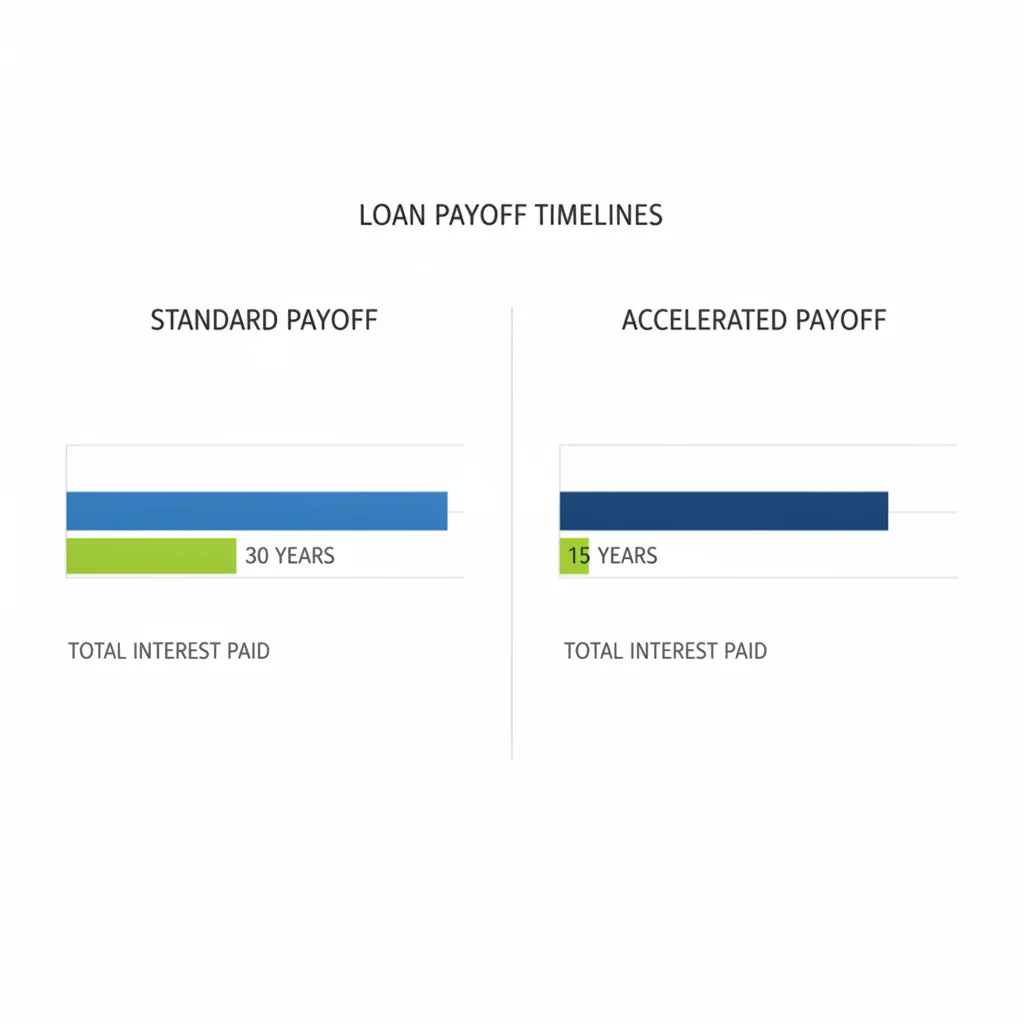
[in_content_images:2]A prepayment penalty clause can wipe out every dollar you'd save by paying ahead of schedule.
You're Deep into a Long-Loan Term and Most Interest Is Already Paid
Auto loans amortize — meaning each payment is a blend of principal and interest, and the blend shifts over time. In the early months of your loan, a disproportionate share of each payment goes to interest. By the final months, almost all of each payment is pure principal repayment. This is how amortization works by design, and it's why early payments matter most in the amortization cycle.
The implication for late-stage payoff: if you're in month 52 of a 60-month loan, the vast majority of your interest has already been collected by the lender through your regular payments. There are only eight payments left — and on a fully amortizing simple interest loan, most of those payments are principal anyway. Paying off those final eight months early might save you a modest amount of interest, but it won't be dramatic.
This is especially true for longer-term loans — 72 or 84 months — that have become common in recent years as vehicle prices have climbed. Borrowers who have been in a 84-month loan for five or six years may find that accelerating the final 12–18 months yields only marginal savings. The time to attack an amortizing loan aggressively is in the first half of the term, not the second.
Check your amortization schedule (your lender should provide one on request) to see exactly how much interest remains in your upcoming payments versus how much is already "spent." That number is the ceiling on what early payoff can save you from this point forward.
After the midpoint of an amortizing loan, most of your interest is already paid — early payoff saves less than you think.
Your Loan Is Bundled with Non-Refundable Add-On Products
When you financed your vehicle, the dealership's finance office may have added ancillary products to the loan — things like an extended warranty, GAP insurance, credit life insurance, or a paint protection plan. These products are often financed into the loan balance, which means you're paying interest on them along with the vehicle price.
Here's the early payoff issue: some of these products carry non-refundable or partially refundable terms. If you pay off the loan early, you may lose access to coverage you've already paid for, or receive only a prorated refund that doesn't cover the full unused period. In the worst cases, a product you financed for $1,500 over 72 months might refund you only $200 when you pay off at month 36 — or nothing at all.
GAP insurance is the most nuanced case. GAP coverage protects you when your car is totaled and your insurance payout is less than your remaining loan balance. If you pay off the loan early, you no longer need GAP — but whether you get a refund for the unused months depends entirely on whether it was a refundable policy and what your state law requires. Dealer-sold GAP policies vary widely.
Before paying off, contact the provider of each add-on product directly (not just the lender) and ask for the exact refund calculation. Factor those refunds — or the absence of them — into your total cost-benefit analysis. Sometimes the smart move is to let a non-refundable product run its course before making your payoff push, particularly if the loan has no prepayment penalty and carries a low interest rate.
Non-refundable add-on products financed into your loan can make early payoff more expensive than staying the course.
Your Interest Rate Is Low Enough That the Math Barely Favors Early Payoff
Not all interest rates create equal urgency. On a high-APR loan — say, 14% or above — every extra month of loan life costs you real money, and the case for aggressive early payoff is straightforward. The strategies for high-interest auto loan payoff make the most sense precisely because the interest clock is running fast.
But what about a loan at 2.9% or 3.5%? On a modest balance with a short remaining term, the total interest savings from paying off early might be $80 or $120. That's not nothing — but it's also not the transformative financial move it would be at a higher rate.
Meanwhile, that same extra cash could be earning you more than 4% in a high-yield savings account, or reducing higher-cost debt elsewhere. If your auto loan rate is below the current yield on low-risk savings instruments, the opportunity cost of directing money to auto loan payoff is real. You might be better served leaving the loan on its schedule and deploying extra cash where it earns — or saves — more.
Run the numbers honestly. Calculate the remaining interest on your loan, subtract any applicable prepayment penalty, and compare that figure to what the same money could generate elsewhere. If the margin is thin, early payoff becomes a personal preference — not an obvious financial win. See the lump-sum vs. extra monthly payment comparison to model both scenarios side by side.
When your loan rate is below 4%, the interest savings from early payoff may be smaller than what the cash earns elsewhere.
Your Lender Applies Extra Payments to Future Installments, Not Principal
This is one of the most underappreciated traps in auto loan repayment. When you send an extra payment — say, $300 above your normal monthly amount — you almost certainly intend it to reduce your principal balance. Less principal means less interest accrues each day, and your loan shortens. That's the mechanism behind every early payoff strategy.
But some lenders, by default, apply overpayments differently. Rather than reducing your outstanding principal, they record the extra amount as satisfying your next scheduled installment. Your balance doesn't change. Your interest doesn't decrease. Your payoff date doesn't move. What you've effectively done is pre-paid a future month, not eliminated principal.
This practice is documented and is among the most common traps that slow down auto loan payoff. It's not always deliberate — some loan servicing systems are simply configured this way by default. But the result is the same: your extra payments don't accomplish what you intend.
The fix is to contact your lender before making any extra payment and explicitly request that the overage be applied to principal only. Get that instruction confirmed in writing — via email or a confirmation message through their portal. Then verify on your next statement that the balance dropped by the full amount of your extra payment. If it didn't, follow up immediately.
If extra payments fund future installments instead of reducing principal, your early payoff effort generates zero interest savings.
Always Get a Payoff Quote Before Acting
Before sending any extra or lump-sum payment, call your lender and request a written payoff quote valid through a specific date. This quote reflects your actual payoff cost — including accrued interest and any applicable fees — not just the balance shown in your online account. Comparing this quote to your total remaining scheduled payments gives you the real savings figure you're working with.
Check Loan Type Before Building a Payoff Strategy
Your payoff strategy should start with knowing whether your loan uses simple or pre-computed interest. If you're not sure, ask your lender directly — they're required to explain how interest is calculated on your account. Getting <a href="/auto-loans/credit-and-approval/loan-preapproval">preapproved before your next loan</a> also gives you leverage to negotiate loan structure terms before signing.
What to Do Before Making an Extra Payment
If you've read through the signs above and identified one or more that apply to your loan, you're not necessarily stuck — but you do need a plan. Here's a practical sequence to follow before sending any extra money to your lender:
- Request a written payoff quote. Contact your lender and ask for a formal payoff amount valid for a specific date. This figure includes all outstanding principal, accrued interest, and any applicable fees. Don't rely on your loan balance displayed in an app — that number rarely reflects the true payoff cost.
- Calculate your actual savings. Subtract the payoff amount from the total remaining scheduled payments. If the difference is small — especially after accounting for any prepayment penalty — the benefit may be marginal.
- Review your contract for prepayment clauses. Look for language referencing "prepayment penalty," "Rule of 78s," "precomputed interest," or "rebate of finance charge." Each of these signals a loan structure that may limit your savings.
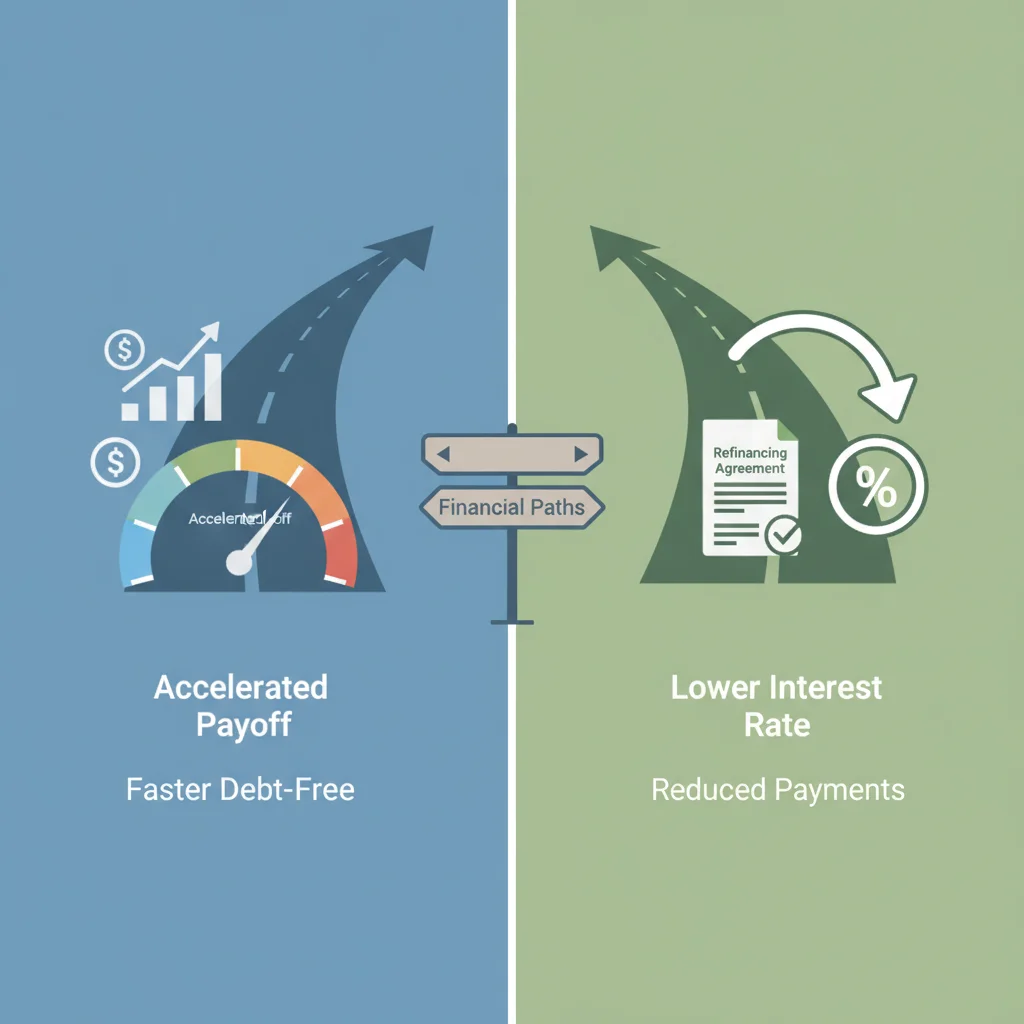
- Weigh alternatives. If your rate is high but your loan carries a stiff prepayment penalty, refinancing to a lower rate might deliver more savings overall — provided you also factor in whether the new loan has its own penalty clauses. See our comparison of accelerated payoff vs. refinancing for a side-by-side breakdown.
- Confirm how extra payments are applied. Call your lender and ask explicitly: if I send an extra payment, will it reduce my principal balance or simply advance my next due date? The answer matters enormously for how much interest you actually save.
Early Payoff and Your Credit Score
Paying off a car loan early doesn't always help your credit score — and in some cases, it can cause a temporary dip. Closing an installment account reduces your credit mix and eliminates the positive payment history that account was generating. Before making a final payoff, read about <a href="/auto-loans/refinancing-and-payoff/early-payoff-tips/what-happens-to-your-credit-score-when-you-pay-off-a-car-loan-early">what happens to your credit score when you pay off a car loan early</a> so you can plan the timing strategically.
Underwater Loans Need a Different Approach
If you owe more on your car than it's currently worth — a condition called negative equity — early payoff strategy becomes more complex. Eliminating the loan faster is still often the right move, but the sequencing and available options differ. See the guide on <a href="/auto-loans/refinancing-and-payoff/early-payoff-tips/early-payoff-when-youre-underwater-on-your-car-loan">early payoff when you're underwater on your car loan</a> before proceeding.
If none of the warning signs in this article apply to your loan, early payoff remains one of the most reliable ways to reduce your total borrowing cost. The complete early payoff roadmap walks you through every step, from your first extra payment to your final lender call.
Read the Contract First, Then Decide
Early payoff is a powerful strategy, but it's only powerful when your loan is set up to reward it. Pre-computed interest, prepayment penalties, Rule of 78s rebate formulas, and tightly bundled add-on products can each chip away at the advantage you're trying to create. And the frustrating reality is that many borrowers don't discover these clauses until they've already sent an extra payment and seen little change in their balance.
The solution isn't to avoid extra payments — it's to read your contract before you make them. Know whether your interest is simple or pre-computed. Know whether a payoff fee exists and how it's calculated. Know whether your extended warranty refund is pro-rated. These aren't obscure details; they're the terms that determine how much your early payoff effort is actually worth.
If you want to go deeper on how loan structure affects your interest savings, the article on how loan amortization explains why early payments matter most is essential reading. And if you're already making progress on payoff, use the early payoff progress tracker to monitor whether your extra payments are actually reducing your principal the way they should.
Understanding the contract is the first act of financial self-defense. Everything after that is execution.

All claims are backed by peer-reviewed research. Sources on request.