
Key Takeaways
Why These Myths Are So Persistent — And So Costly
Auto loan payoff advice circulates freely — in dealership finance offices, on personal finance forums, and across family dinner tables. The problem is that much of it is oversimplified, outdated, or just plain wrong. Acting on these myths doesn't just lead to missed opportunities; it can actively cost you money.
The mechanics of auto loans are governed by amortization schedules, lender-specific payment application rules, and contract clauses that most borrowers never read carefully. When you don't know how the system actually works, well-intentioned moves — like sending in an extra payment or paying off your loan ahead of schedule — can have unexpected outcomes.
If you want a solid foundation before diving into the myths, the early payoff terms glossary covers the essential vocabulary: principal, amortization, prepayment penalties, and payoff quotes. Understanding those terms makes the myths below much easier to recognize — and avoid.
Below, we'll walk through eight of the most damaging myths about auto loan payoff, explain the accurate reality behind each one, and tell you exactly what to do instead.

The Myths, Corrected
These misconceptions are ordered roughly from most common to most financially damaging. Some may surprise you even if you consider yourself a savvy borrower.
Myth
If I send an extra payment, it will automatically go toward my principal and reduce what I owe faster.
Fact
Lenders often apply extra payments as a credit toward your next scheduled payment, not as a direct reduction of principal — unless you specifically designate them otherwise.
This is the most widespread and costly misconception in auto loan payoff. Here's how amortization actually works: every scheduled payment you make is split between interest (calculated on your outstanding principal) and principal reduction. When you send in extra money without instructions, many lenders interpret it as paying ahead — meaning you've essentially prepaid your next month's bill, not shrunk your loan balance.
The result? Your loan's end date may stay exactly the same, and you've saved almost no interest because the principal didn't drop. To actually cut into what you owe, you need to make what's called a principal-only payment — a separate, designated transaction that goes entirely to your balance without touching your scheduled payment.
How to do this varies by lender. Some allow you to specify "principal only" in an online payment memo. Others require a written request or a phone call. A few require you to mail a check with a note. The process matters — and the details are worth learning. See the full guide on making a principal-only payment on your auto loan to handle this correctly.
Myth
Paying off my auto loan early will always save me money.
Fact
Early payoff saves interest only when your loan doesn't carry a prepayment penalty or use a precomputed interest structure that front-loads all the interest charges.
Simple interest loans — the most common type — do reward early payoff. Interest accrues daily on your remaining principal, so the faster you reduce that balance, the less interest you accumulate. On a simple interest loan, paying off early virtually always saves money (assuming no penalty).
But two contract structures can change that math dramatically:
- Prepayment penalties: Some lenders charge a fee if you pay off the loan before a specified date. This fee can be a flat amount, a percentage of the remaining balance, or a calculation of interest the lender expected to earn. If the penalty exceeds the interest you'd save, early payoff costs you more than finishing the loan.
- Precomputed interest loans: In this structure, all interest is calculated upfront and added to your total loan amount from day one. Paying off early doesn't reduce how much interest you owe — you've already committed to paying all of it. These loans are less common but still exist, particularly through some buy-here-pay-here dealerships and older finance contracts.
Always read the fine print of your loan agreement before assuming early payoff is free. And remember: even on a simple interest loan with no penalty, if your extra cash could pay off higher-rate debt (like a credit card at 22% APR versus an auto loan at 6%), the smarter financial move might be to pay the other debt first.
[important_callout]Myth
My loan balance shown in my account is what I need to pay to close out the loan.
Fact
Your displayed balance is a snapshot of principal owed — it does not include accrued daily interest, pending fees, or the per diem rate. You need a formal payoff quote to get the actual number.
This distinction trips up even financially sophisticated borrowers. Auto loans accrue interest daily between payments. When you log into your account and see a balance, that figure reflects the principal you owe — it does not include the interest that has accumulated since your last payment date.
If you send in that amount thinking you're paying off the loan, you'll come up short. The lender will apply your payment and you'll still owe a remaining balance (even if it's just a few dollars). That balance will continue accruing interest, and you may not realize you still have an open loan until you receive a statement or notice.
The right move is to contact your lender and request a payoff quote. This is an official document stating the exact amount needed to satisfy your loan as of a specific date — including all accrued interest and fees — along with a per diem showing how much more you'll owe for each day past that date. Learn the full process for how to request an auto loan payoff quote from your lender so you close out the loan cleanly.
Myth
Paying off my car loan early will improve my credit score.
Fact
Paying off an installment loan early can actually cause a temporary dip in your credit score, not an immediate boost.
This surprises most people. The intuition seems sound: you paid off a debt — shouldn't that help your credit? Not necessarily, and here's why.
Credit scoring models like FICO and VantageScore reward having a healthy mix of active credit accounts. An auto loan is an installment account — a type of credit different from revolving accounts like credit cards. When you close an installment account (by paying it off), you may reduce the diversity of your active credit mix, which can shave points off your score.
Additionally, closing any account reduces your overall credit history depth. If the auto loan was your oldest active account or your only installment account, the impact can be more pronounced.
The score dip is typically small and temporary — often 10 to 30 points — and your score usually recovers within a few months, especially if you have other active, well-managed accounts. But if you're planning to apply for a mortgage or another major loan soon, the timing matters. Don't pay off your car loan in the month before you need your credit score to look its best.
The financial benefit of saving interest may well outweigh a temporary credit dip — but go in with accurate expectations, not the myth that early payoff always boosts your score.
Myth
Rounding up my monthly payment is essentially the same as making a principal-only payment.
Fact
Rounding up your payment increases the amount you pay, but how that extra amount is applied depends entirely on your lender — it is not automatically directed to principal.
Say your monthly payment is $387. You decide to pay $400 each month, reasoning that the extra $13 will chip away at your principal. That's a reasonable instinct — but whether it actually works that way depends on your lender's payment application rules.
Many lenders apply any payment amount up to the scheduled amount toward interest and principal per the amortization schedule, then credit any excess toward your next scheduled payment. Under this approach, your $13 extra might simply mean your next payment's due date gets pushed out slightly — not that your principal dropped by $13.
To ensure extra money actually reduces your balance, you generally need to make a separate, explicitly designated principal-only payment in addition to your regular scheduled payment — not just pad the scheduled payment amount. Before you send any extra car payment, verify how your lender will apply it.
Myth
Refinancing my loan will automatically help me pay it off faster and save money.
Fact
Refinancing only shortens your payoff timeline and saves interest if you choose a shorter loan term and secure a lower or comparable interest rate — many borrowers do the opposite.
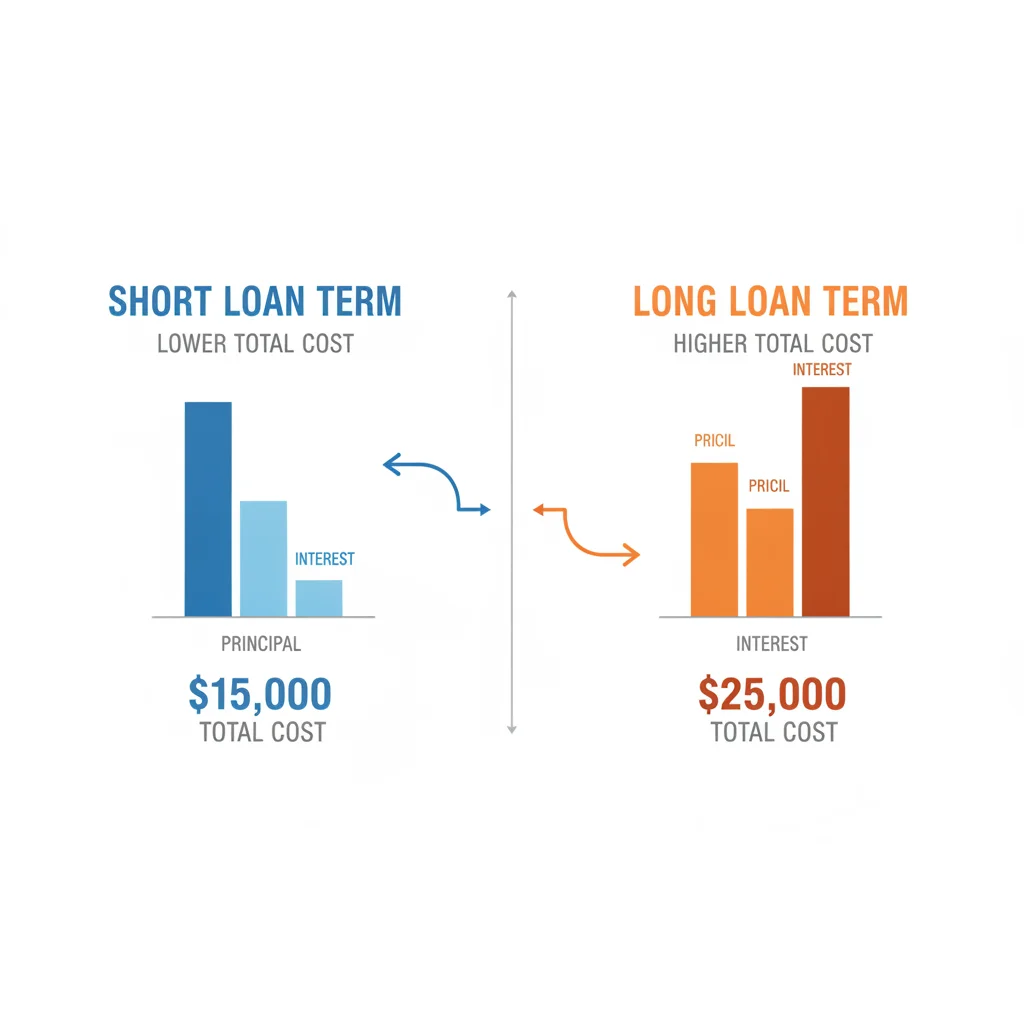
Refinancing is a powerful tool, but it's frequently misused. The most common reason borrowers refinance an auto loan is to lower their monthly payment — and lenders often accomplish that by extending the loan term. A 48-month loan gets stretched to 60 or 72 months. The monthly payment drops, the borrower feels financial relief, and the total interest paid over the life of the loan quietly balloons.
If your goal is to pay off the loan faster and save money on interest, refinancing only helps when:
- You qualify for a meaningfully lower interest rate (typically 1.5 percentage points or more), and
- You choose a loan term that is equal to or shorter than your remaining original term.
Refinancing from a 6% rate to a 4.5% rate but extending from 36 remaining months to 48 months may lower your payment while increasing your total cost. Always run the total interest calculation — not just the monthly payment comparison — before signing a refinance agreement.
If your concern is that you got a poor rate initially, the auto loan APR myths article explains how rate decisions compound over time — and where borrowers tend to leave money on the table.
Myth
Once I'm approved for an auto loan, the interest rate and terms are fixed and non-negotiable.
Fact
Loan terms from dealerships are frequently marked up from the lender's actual rate, and even bank or credit union offers can often be negotiated or shopped against each other.
Many borrowers treat their loan approval as a take-it-or-leave-it proposition — especially when they're in the finance office of a dealership, eager to drive home. In reality, the rate you're offered is almost never the only rate you could receive.
Dealership financing works through a system called dealer reserve: the lender gives the dealer a buy rate (the lowest rate the lender will accept), and the dealer is often permitted to mark that rate up and keep the difference as profit. You may qualify for a 5.9% loan, but the dealer presents you with 7.4%. That gap — paid monthly over 60 months — adds up to real money.
The antidote is preapproval. When you arrive at a dealership with a preapproved offer from a bank or credit union, you have a concrete benchmark. The dealer must either beat that rate or match it — or you walk. The loan preapproval hub explains how to get preapproved and why it changes your negotiating position significantly.
Even after signing, you're not necessarily locked in forever. Most auto loans can be refinanced within the first year if your credit improves or if you find a better rate through another lender.
Myth
Taking a lender's offer to 'skip a payment' is a free benefit with no long-term cost.
Fact
Skip-a-payment offers suspend your due date but interest continues accruing — meaning you pay more over the life of the loan, and your payoff timeline extends.
Lenders occasionally offer "payment deferral" or "skip a payment" promotions, especially around the holidays. The pitch is simple: skip this month's payment and get a little breathing room. What they don't emphasize is what happens underneath the surface.
On a simple interest loan, interest accrues every day on your remaining principal. When you skip a payment, that month's interest doesn't disappear — it gets added back to your principal balance (a process called negative amortization or capitalized interest). Now you're paying interest on a slightly higher balance for the remainder of the loan. The promotional "free" month ends up costing you money in the form of extra interest, and your loan end date pushes out.
This doesn't mean you should never use a deferral — if you're facing a genuine financial hardship, it may be the right short-term decision. But treat it as a financial tradeoff with a real cost, not a free gift from your lender. If you're actively working to pay off your loan faster, a skip-a-payment offer is working directly against that goal.
For more lender practices that quietly slow your payoff progress, see common traps that slow down auto loan payoff.
43%
Borrowers unaware of prepayment penalties
A Consumer Financial Protection Bureau study found that nearly half of auto loan borrowers did not know whether their loan included a prepayment penalty at the time of signing.
$1,000+
Average dealer interest rate markup
Research by the Center for Responsible Lending found that dealer rate markups on auto loans cost the average borrower more than $1,000 in additional interest over the life of the loan.
72 months
Most common new car loan term in 2024
According to Experian's State of the Automotive Finance Market report, 72-month loans remain the single most common term for new vehicle financing in the United States.
Daily
Frequency of interest accrual on most auto loans
The majority of U.S. auto loans use simple interest calculated on a daily basis, meaning every day you carry a balance, you owe more — making early principal paydown especially valuable.
31%
Borrowers who extended loan terms when refinancing
Data from LendingTree found that nearly one in three auto loan borrowers who refinanced chose a longer repayment term, often increasing their total interest cost despite lowering monthly payments.
How to Actually Shorten Your Loan and Save on Interest
Once you understand the myths, the path forward becomes much clearer. Saving money on an auto loan isn't about grand gestures — it's about understanding a handful of mechanical realities and acting on them precisely.
Step 1: Confirm how your lender applies extra payments
Call your lender or check your online account portal before sending any extra money. Ask directly: "If I send an additional payment this month, how will it be applied?" Get the answer in writing if possible. Many lenders default to crediting extra funds as a prepaid next payment rather than reducing principal. If that's the case, you'll need to take additional steps — typically designating the funds explicitly as a principal-only payment.
For a detailed walkthrough of the process, see how to make a principal-only payment on your auto loan.
Step 2: Request a formal payoff quote before making any large payment
Your loan balance shown in your account dashboard is not the same as your payoff amount. The payoff amount includes any interest accrued since your last payment, potential fees, and a per diem rate showing how much the balance grows each day. Always get a formal payoff quote directly from your lender before sending a lump sum. Learn exactly how to request a payoff quote so you know the real number.
Step 3: Review your loan contract for prepayment penalties
Pull out your loan agreement and search for language around "prepayment," "early termination," or "rebate of finance charges." If you financed through a dealership, the retail installment contract is where this language appears. If you're unsure what you're reading, contact your lender's customer service team and ask point-blank: "Does this loan carry any prepayment penalty?"
Skipped Payments Are Not Free — Read the Fine Print
Lender promotions offering to let you 'skip' a monthly payment are not a benefit — they are a deferred cost. Interest continues accruing during the skipped month and is typically added to your remaining principal. If you are actively working to pay off your loan ahead of schedule, accepting a skip-a-payment offer will extend your loan and increase the total interest you pay. Only consider deferral options during genuine financial hardship, and understand the full cost before agreeing.
Refinancing Can Cost You More If You're Not Careful
Extending your loan term when refinancing — even at a lower interest rate — can result in paying significantly more interest over the full loan life. Before refinancing, calculate the total interest cost under the new terms, not just the new monthly payment. If a lender is advertising a dramatically lower payment without mentioning a longer term, ask directly how many months the new loan adds to your repayment timeline.
Don't Assume Extra Payments Are Applied Correctly
Payment application errors are more common than borrowers expect. After sending any extra or principal-only payment, log into your account within 3–5 business days and verify that your principal balance dropped by the expected amount. If the balance didn't change — or if your next due date moved instead — contact your lender immediately and request a correction. Document every communication in writing.
Step 4: Run the numbers before committing to a payoff strategy
Use a loan amortization calculator to see exactly how much interest you'll save by paying off your loan in 12 months versus 24 versus your original term. The difference is often surprising — and motivating. Then compare that savings to any fees or penalties. Only proceed if the math works in your favor.
Also check whether your extra cash might work harder elsewhere. High-interest credit card debt almost always carries a higher rate than an auto loan. Paying that off first may save you more total money, even if it feels less satisfying than eliminating a car payment.
Step 5: Set up a system to avoid common pitfalls
Even borrowers who understand the rules fall into traps through inattention. Auto-pay rounding, skipped-payment offers, and payment application errors can all quietly slow your progress. The article common traps that slow down auto loan payoff walks through the most frequent issues and how to catch them early.
Before you make any additional payments, it's also worth doing a final verification checklist. Check these things first before sending extra money toward your auto loan.
The Bottom Line: Knowledge Is Your Best Payoff Strategy
The auto lending industry isn't designed to be transparent. Loan contracts are dense, payment portals are often opaque, and common wisdom about payoff is riddled with inaccuracies. But once you understand how amortization actually works, how lenders apply payments, and what your contract actually says, you have real power to reduce what you pay.
The myths debunked in this article — from the extra-payment misconception to the credit score assumption — are all correctable with a few targeted steps. Read your contract. Ask your lender specific questions. Request a formal payoff quote. Designate principal-only payments in writing. Run the numbers before acting.
These aren't complicated moves. They just require a little more deliberate attention than most borrowers give to a loan they're eager to put behind them.
If you're still evaluating your loan's overall structure, the loan terms explained hub is a good place to revisit the basics — and the article on auto loan term myths is a useful companion to what you've just read. Similarly, if you're questioning whether your interest rate is working against you, auto loan APR myths covers the pricing side of the equation.
Know the rules. Then use them to your advantage.
Check for Prepayment Penalties Before Sending Extra Money
Before making any lump-sum payment or committing to an aggressive payoff strategy, locate your original loan contract and search for prepayment or early termination language. Some loans — particularly older contracts and those originated through certain dealership finance arms — include penalties that can negate all the interest savings you intended to capture. If you can't find your contract, call your lender directly and ask: 'Does this loan have a prepayment penalty, and if so, how is it calculated?' Get that answer in writing.
Displayed Balance ≠ Payoff Amount — Always Get the Official Quote
Never send a large lump-sum payment based on the balance shown in your online account. That figure does not include accrued daily interest, and short-paying a payoff — even by a few dollars — can leave your loan technically open and continuing to accrue charges. Always request a formal payoff quote from your lender, confirm the per diem rate, and send your payment within the valid window specified on the quote document.

All claims are backed by peer-reviewed research. Sources on request.