
Key Takeaways
Why Principal-Only Payments Are Worth the Extra Effort
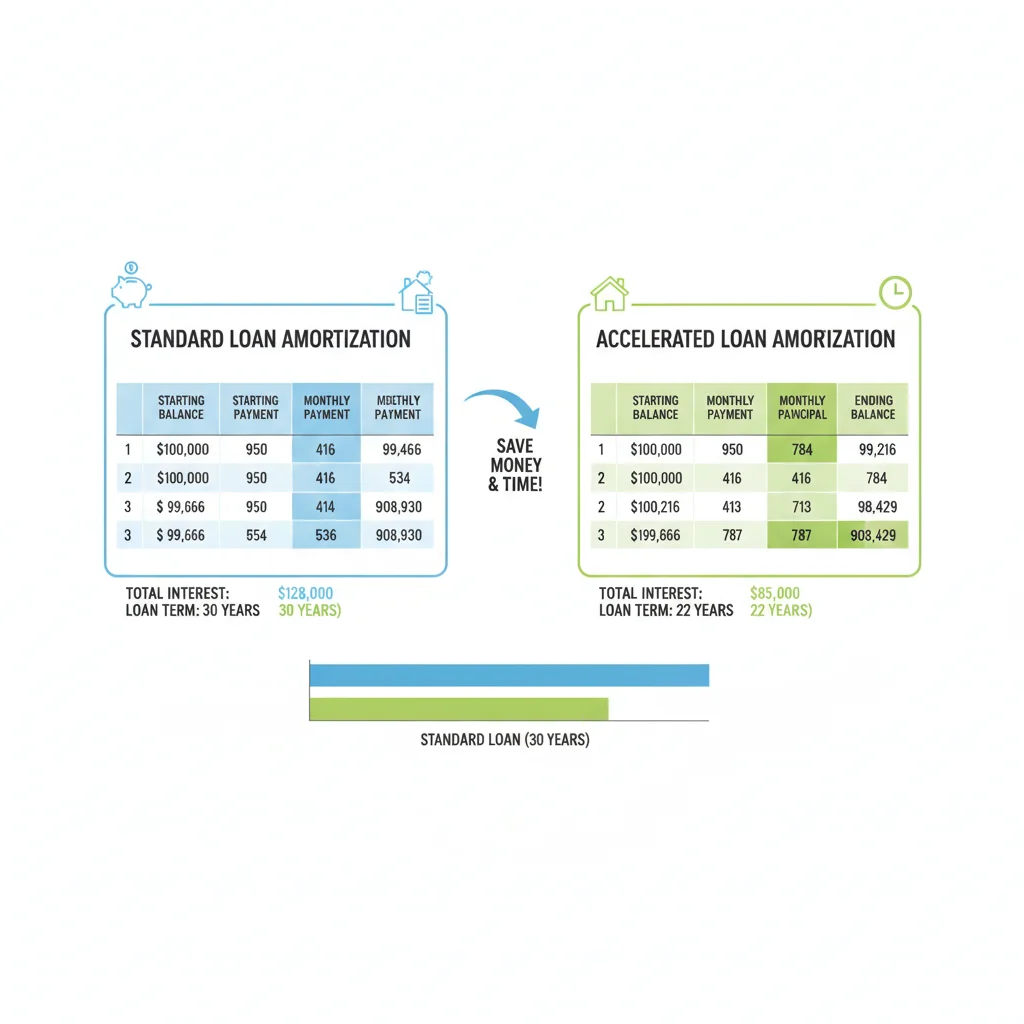
When you make your regular monthly car payment, that money doesn't go entirely toward what you owe on the car. A portion goes to interest — the cost of borrowing — and the remainder reduces your loan balance, or principal. In the early months of a loan, interest claims a larger share of each payment. That's how amortization works: interest is front-loaded.
Understanding how amortization works on an auto loan helps clarify why the order of your payments matters so much. Because interest is calculated on the remaining balance, any reduction you make to that balance today reduces every future interest charge. A principal-only payment accelerates this process by bypassing interest entirely and attacking the balance head-on.
The practical result: your loan ends sooner, and you pay less in total interest over the life of the loan. On a $25,000 loan at 7% over 60 months, making a single $500 principal-only payment in month six can save you more than $120 in future interest and shave weeks off your payoff date — a meaningful return for a targeted action.
The catch is that lenders don't always make this easy. Some hold extra payments until the next due date. Others apply overpayments to future installments rather than your balance. And a few charge prepayment fees. That's why the how matters as much as the intent.
What You Need Before You Start
Before sending a single extra dollar, gather the information and tools below. Skipping this prep step is the most common reason principal-only payments get misapplied — and a misapplied payment doesn't save you anything.
What you will need
Lender's Online Payment Portal
Used to designate a payment as principal-only — most modern servicers offer this option within the payment screen.
Current Loan Statement
Documents your principal balance before the payment so you can verify the reduction afterward.
Auto Loan Amortization Calculator
Lets you model how a principal-only payment changes your payoff date and total interest before you send money.
Personal Tracking Spreadsheet
Records each principal-only payment, balance before and after, and cumulative interest saved for your own records.
Certified Mail Receipt (for check payments)
Provides proof of delivery and timestamp if you mail a check with a principal-only designation.
Also review your loan contract for any prepayment penalty clause. This language is less common than it once was, but it still appears in some subprime and dealer-arranged loans. If a penalty applies, calculate whether your interest savings actually exceed the fee before proceeding.
Check for Prepayment Penalties First
Some auto loan contracts — particularly those originated through buy-here-pay-here dealerships or certain subprime lenders — include a prepayment penalty clause. This fee can offset or eliminate the interest savings you expected. Read section by section through your loan agreement or ask your servicer directly before making any principal-only payments.
Extra Payments Do Not Replace Regular Installments
A principal-only payment is an addition to your regular monthly payment, not a replacement for it. If you send a principal-only payment in week one of the month and then skip your regular due payment later, you will be reported as delinquent. Your credit score and loan standing depend on regular installments arriving on time, regardless of any additional payments you've made.
If your loan was arranged through a dealership and later sold to a third-party servicer — which is very common — the servicer's rules govern how extra payments are handled, not the original dealer. Confirm all policies with whoever currently services your loan.
How to Make a Principal-Only Payment: Step by Step
Follow these steps in order. Each one exists to prevent a specific, documented failure point where extra payments end up doing nothing for your balance.
Confirm Your Lender's Policy on Principal-Only Payments
Call your lender's customer service line or log into your account portal and search for guidance on principal-only or principal reduction payments. Ask specifically:
- Does the lender accept principal-only payments?
- What method must you use — online portal, check, phone, or in writing?
- Is there a minimum or maximum amount per transaction?
- How must the payment be designated to avoid being applied to your next installment?
Get the answer in writing if at all possible — a confirmation email or a reference number from the phone call. Policies vary significantly between lenders, and what works for one institution may fail at another.
Make Sure Your Regular Payment Is Current
Your regular monthly payment must be fully paid and current before a principal-only payment can work as intended. Most lenders will not apply extra funds to principal if there is any outstanding balance due — they'll apply the money to overdue interest or fees first.
Log into your account and confirm your next payment due date and current amount owed. If you're within a few days of your due date, pay your regular installment first, wait for it to post, then send your principal-only payment as a separate transaction.
Save Your Current Amortization Schedule
Before you send any extra money, download or screenshot your current loan statement and amortization schedule from your lender's portal. You need a baseline record showing:
- Current outstanding principal balance
- Remaining number of payments
- Projected payoff date
- Total interest remaining
This document becomes your proof of where the balance stood before your payment. If the lender misapplies your payment, you'll need this to dispute it.
Send the Principal-Only Payment With Explicit Designation
The designation step is where most borrowers make a critical error. Use whichever method your lender's policy requires:
- Online portal: Look for a payment option labeled "Apply to Principal" or a dropdown for payment type. Select it explicitly — do not leave it on the default setting.
- Check by mail: Write "Principal Only" clearly in the memo line. Include a separate cover letter stating the payment is to be applied exclusively to principal reduction, not to a future installment. Keep a copy of both.
- Phone payment: Verbally instruct the agent to designate the payment as principal-only. Ask for a confirmation number and note the agent's name.
The amount you send is flexible — most lenders accept any amount above a small minimum. Even $100 applied correctly to principal will save interest.
Confirm the Payment Posted Correctly
Wait three to five business days after the payment shows as posted, then log in and check your outstanding principal balance. Compare it to the baseline you saved in Step 3. It should have dropped by exactly the amount of your principal-only payment.
If the drop is less than expected — or zero — contact your lender immediately. Reference your payment confirmation number and the policy language you documented in Step 1. Ask for a supervisor if the first agent cannot resolve the discrepancy on the spot.
How to Verify the Payment Was Applied Correctly
Sending the payment is only half the job. Verifying that it landed correctly is just as important — and most borrowers skip this part entirely.
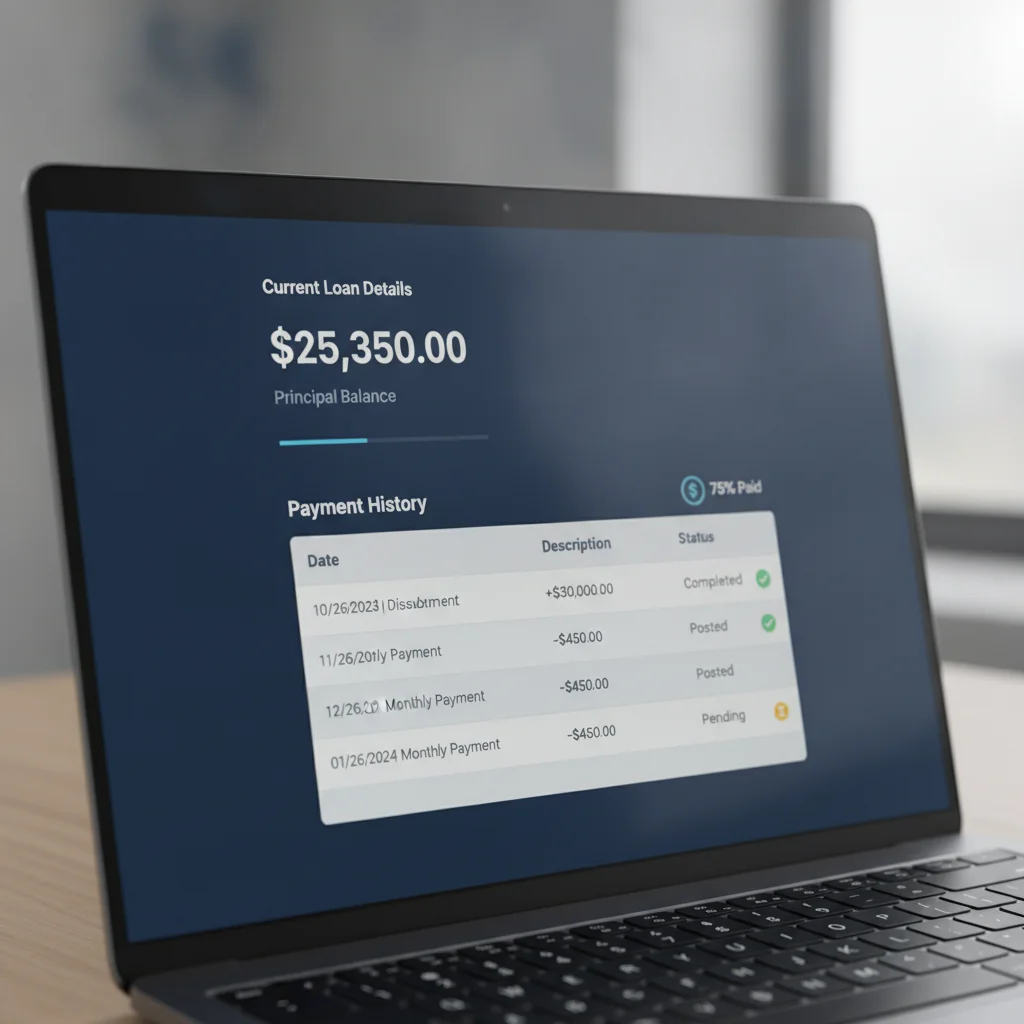
Within three to five business days of your payment posting, log into your lender's online portal and check your outstanding principal balance. If you made a $500 principal-only payment, that balance should have dropped by $500 — not by the net of interest and $500, and not by nothing. If the number didn't change as expected, contact your lender immediately.
Request a fresh amortization schedule — your lender is required to provide one if you ask. This schedule shows every future payment, the interest portion, the principal portion, and the projected payoff date. Compare your new schedule to the one you saved before making the payment. The payoff date should be earlier, and total interest should be lower. Tracking your progress toward an early auto loan payoff systematically ensures you can catch errors and stay motivated as your balance falls.
Set a Calendar Reminder After Each Payment
After sending a principal-only payment, set a five-day reminder to log in and verify the balance dropped. This simple habit catches misapplications before they become multi-month problems. The longer a misapplied payment sits, the harder it can be to reverse.
Keep a Running Log of Savings
Each time you verify a principal-only payment posted correctly, note the interest you've saved on a simple spreadsheet or note app. Watching that number grow — even slowly — is one of the most effective ways to stay consistent. Small, repeated actions compound significantly over a 48- or 60-month loan.
Document every principal-only payment in a simple spreadsheet: the date, amount sent, method of designation, balance before, and balance after. If a dispute ever arises with your lender, this record is your evidence.
Common Mistakes and How to Avoid Them
Even well-intentioned borrowers run into problems. Here are the most frequent errors and what to do instead.
- Paying extra without a designation
- If you simply send more than your regular payment without any instruction, most lenders will apply the excess to your next scheduled payment — effectively advancing your due date but not reducing your balance. Always designate the extra amount explicitly as principal-only. Making extra payments on a car loan: what actually changes explains this distinction in detail.
- Assuming online bill pay works automatically
- Third-party bill pay services — through your bank, for example — send a generic check to your lender with no designation. The lender may apply it however their policy dictates. Use your lender's own portal whenever possible.
- Skipping verification
- Without checking your balance afterward, you won't know if the payment was applied correctly. Check within a week of it posting.
- Treating principal-only payments as a substitute for regular payments
- A principal-only payment does not satisfy your monthly installment obligation. You still owe your regular payment on its due date. Missing that payment triggers late fees and credit reporting consequences regardless of any extra money you sent.
- Ignoring prepayment penalties
- Some loans assess a fee when you pay off early or reduce principal ahead of schedule. Auto loan payoff myths that cost borrowers money covers why 'early payoff always saves money' is not universally true — penalties are one reason.
Misapplied Payments Are More Common Than You Think
Industry data and consumer complaints consistently show that extra loan payments are misapplied at a notable rate — often credited as advance installment payments rather than principal reductions. This is not always intentional, but the effect is the same: your balance doesn't drop, and you save nothing in interest. The only way to catch this is to verify your balance after every extra payment and dispute discrepancies in writing immediately.
Choosing the Right Timing and Amount
Principal-only payments have the most impact early in your loan when your balance is highest and the most future interest is still at stake. A $300 extra payment in month three saves more interest than the same $300 in month 50 — simply because there's more remaining balance for interest to compound against over time.
That said, consistency beats timing. Making modest principal-only payments every month — even $50 or $100 — compounds into significant savings over a multi-year loan. Waiting until you have a large lump sum to send often means waiting so long that the moment passes.
Think about where this payment fits in the context of your overall loan structure. Down payment size directly shapes your starting principal — the lower your original balance, the faster a series of principal-only payments can eliminate it. Borrowers who put more down at purchase have a head start. If you financed with little or nothing down, principal-only payments become an even more important tool for correcting that imbalance over time.
Before committing to a payment schedule, confirm that your emergency fund is in place. Aggressively paying down your auto loan while carrying high-interest credit card debt is also usually the wrong priority order — higher-rate debt costs more per dollar of balance. Apply the same discipline that drives principal-only payments toward the highest-cost debt you carry first.

Once your plan is in place, revisit your progress quarterly. Pull your amortization schedule, compare your actual balance to the original schedule, and calculate your updated interest savings. That habit keeps the strategy accountable — and keeps the motivation alive when the payoff date still feels far away.

All claims are backed by peer-reviewed research. Sources on request.