Key Takeaways
Equity in a Car Loan
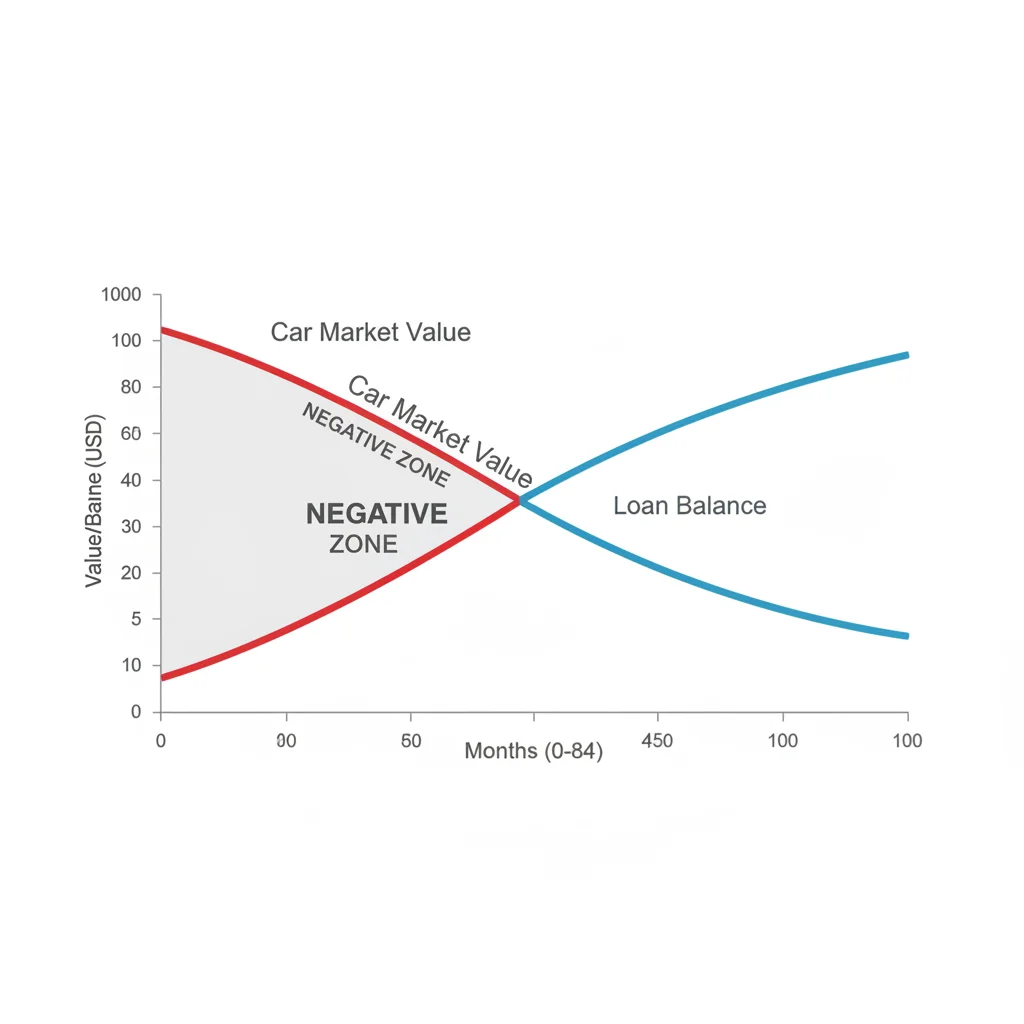
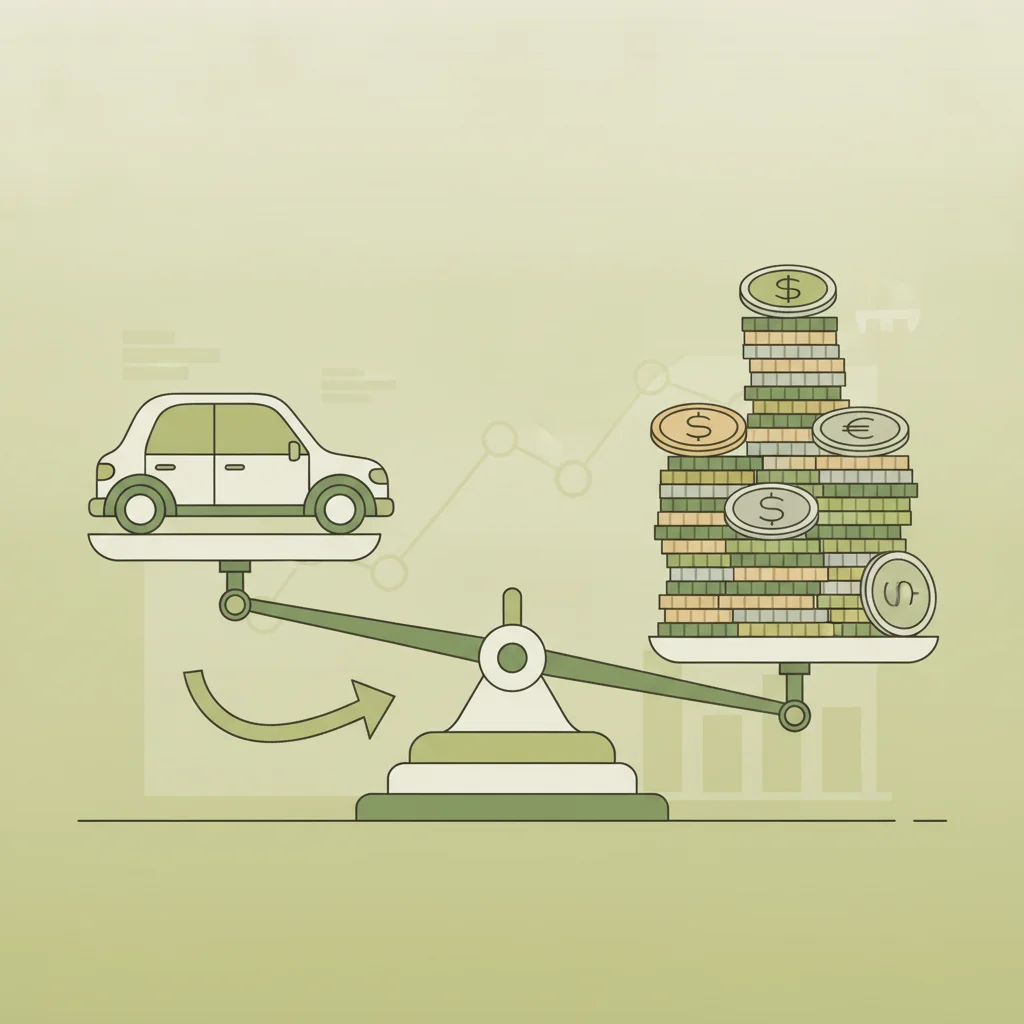
Equity is the difference between what your car is currently worth and what you still owe on your loan. Positive equity means the car is worth more than your remaining balance — you own more than you owe. Negative equity, sometimes called being "underwater," means you owe more than the car is worth.
Equity is calculated as: Current Market Value − Outstanding Loan Balance. Because cars depreciate on a curve (fastest in the first two years), equity buildup is highly sensitive to loan term length and front-loaded interest payments.
Why Equity Matters From Day One
Most car buyers think about monthly payments first and total cost second. Equity rarely enters the conversation — until it becomes a problem. But understanding how equity builds (or doesn't) is one of the most important things you can do before signing a loan agreement.
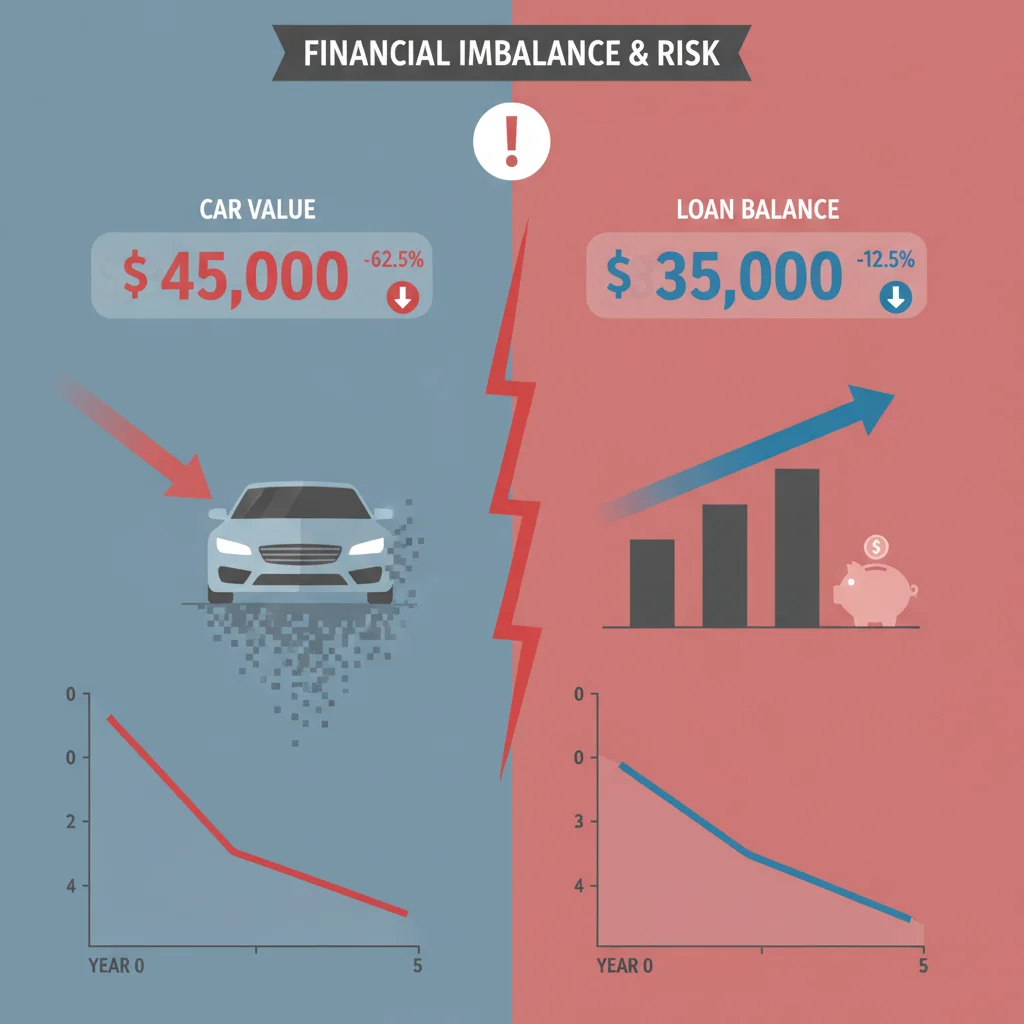
Here's the core dynamic: the moment you drive a new car off the lot, it loses value. That loss accelerates sharply in the first year, then moderates over time. Meanwhile, your loan balance doesn't shrink at the same rate. In fact, in the early months of a loan, most of your payment covers interest — not principal. The result is a gap between what the car is worth and what you owe. That gap is negative equity.
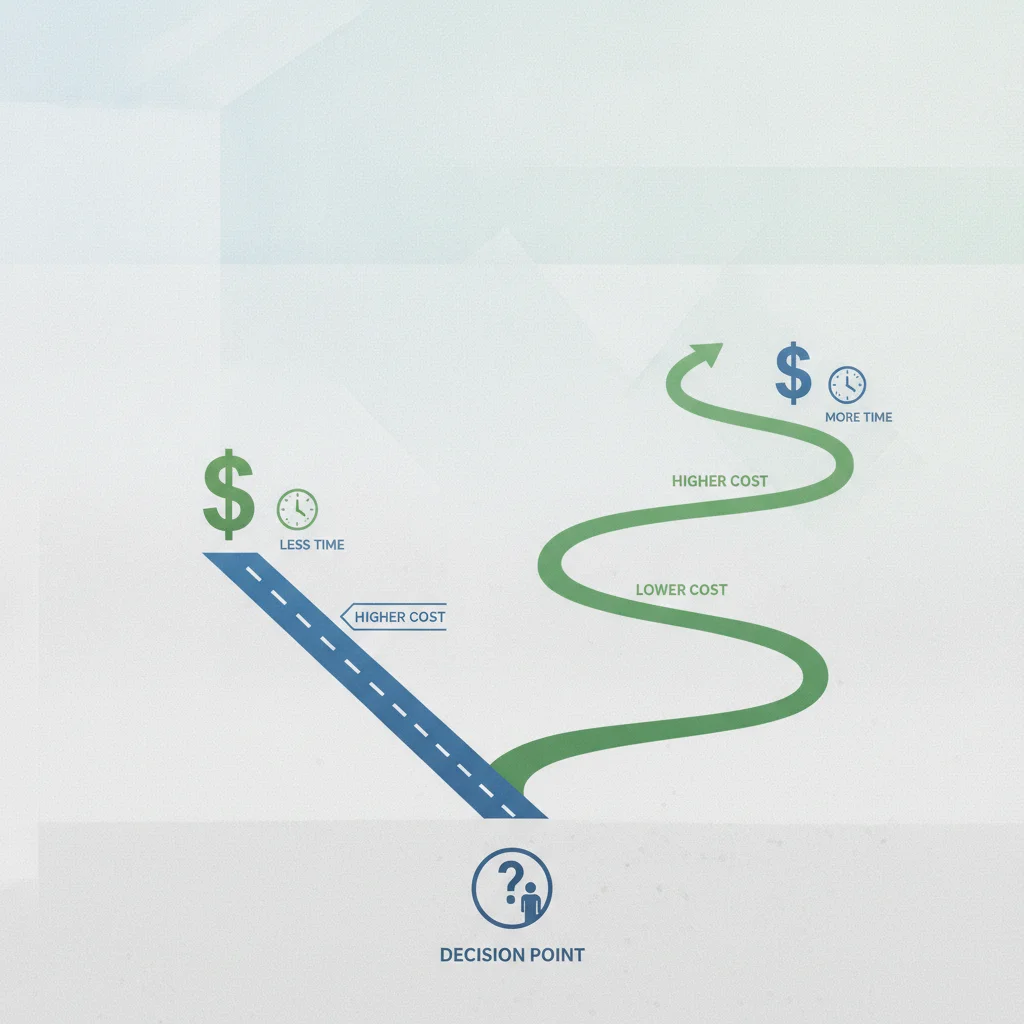
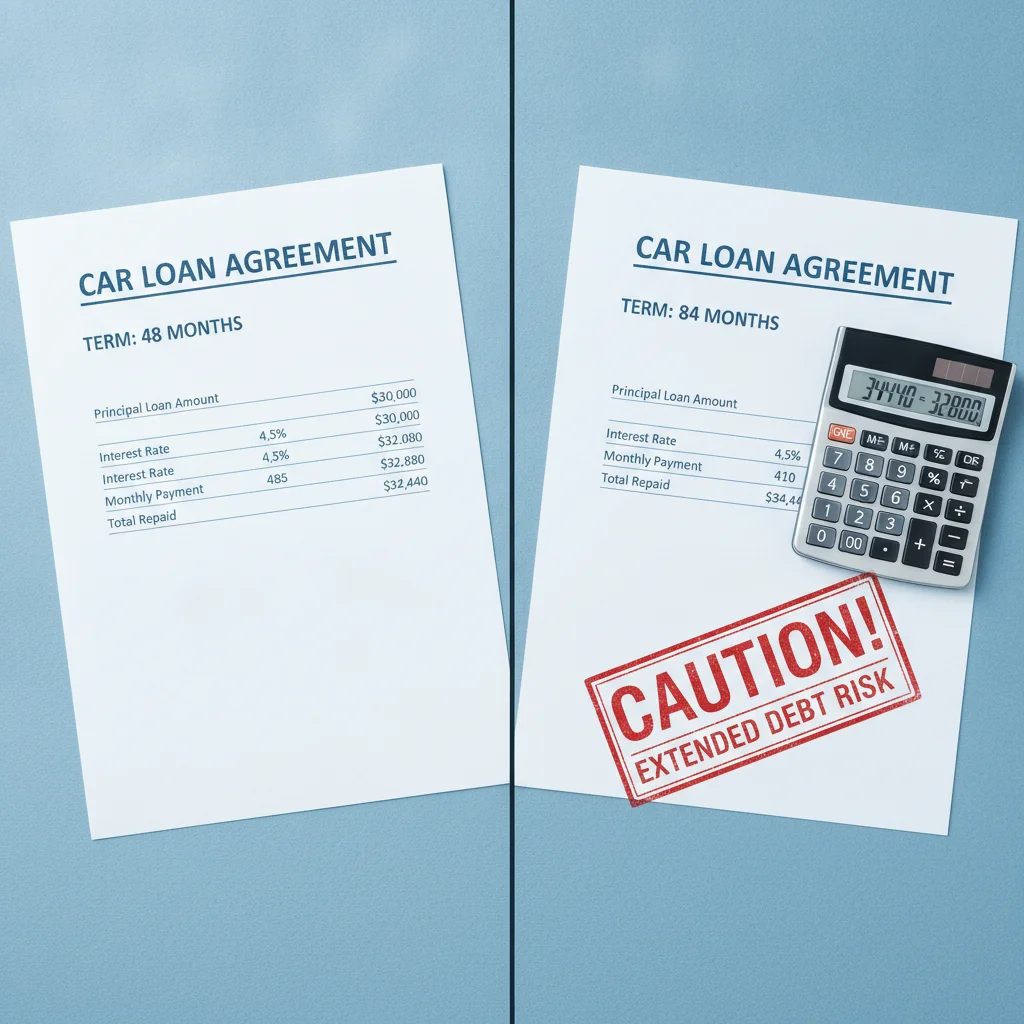
The length of your loan term determines how long that gap persists — and how deep it gets. A 36-month loan closes the gap quickly. An 84-month loan can leave you underwater for years. That's not a reason to panic, but it is a reason to pay attention.
For a broader look at how term length shapes the overall cost of your loan, see Short vs. Long Auto Loan Terms.
How Depreciation and Amortization Work Against You
Two financial forces are working simultaneously the moment you sign your loan: depreciation (the car losing value) and amortization (your loan balance shrinking as you make payments). The problem is they don't move at the same speed — especially with longer loan terms.
The Depreciation Curve
A new car typically loses around 15–25% of its value in the first year alone. By year three, cumulative depreciation often reaches 40–50%. After that, the rate of value loss slows considerably. This front-loaded depreciation is critical context for understanding equity risk.
20%
Average first-year depreciation for new cars
According to Edmunds and industry data, most new vehicles lose approximately 15–25% of their value within the first 12 months of ownership.
38%
New car buyers who chose 72+ month loans (2023)
Experian's State of the Automotive Finance Market report (Q4 2023) found that over a third of new vehicle loans were originated with terms of 72 months or longer.
$6,000+
Average negative equity rolled into new loans
Edmunds research found that among trade-in transactions involving negative equity, the average amount rolled into the next loan exceeded $6,000.
30 months
Estimated time underwater on an 84-month loan
On a typical vehicle with no down payment financed over 84 months, borrowers may remain in negative equity territory for 24–36 months depending on depreciation and interest rate.
50%
Cumulative depreciation by year three
Data from vehicle valuation sources including Kelley Blue Book suggests many mainstream vehicles retain only 50–60% of their original value after three years of average use.
How Amortization Front-Loads Interest
Auto loans are structured so that each payment consists of both interest and principal, but the proportion shifts over time. Early payments are weighted heavily toward interest. On a 72-month, $35,000 loan at 7% APR, for example, roughly 80% of your first payment goes to interest and only 20% to principal. That ratio improves slowly over the life of the loan.
This means that in months 1–18, your loan balance barely moves — while your car's value is falling the fastest. The two curves (depreciation and remaining balance) cross at different points depending entirely on your loan term.
Amortization Works the Same Way on All Auto Loans
Whether your loan is 36 months or 84 months, interest is calculated the same way: as a percentage of your remaining balance. Because you start with a large balance, the first months are always interest-heavy. The difference is that shorter loans force the balance down faster, which means interest charges shrink more quickly — creating a compounding benefit for equity.
DTI Isn't the Whole Picture
A lower monthly payment from a longer loan term can technically improve your debt-to-income ratio, making it easier to qualify for a mortgage or other credit. But lenders who look at the full picture will also consider your total outstanding debt and the asset value behind it. A lower DTI built on a long-term loan against a depreciating asset isn't as strong as it appears on paper.
To understand how your APR interacts with term length to affect total interest paid, see Loan Term Length and APR: The Trade-Off Most Buyers Underestimate.
The Equity Timeline: 36, 48, 60, 72, and 84 Months Compared
Let's make this concrete. Imagine you finance a $32,000 vehicle with no down payment at 6.5% APR. The car depreciates at a typical average rate for a mainstream sedan. Here's roughly when you'd reach positive equity under different term lengths:
| Loan Term | Monthly Payment | Est. Months to Positive Equity | Total Interest Paid |
|---|---|---|---|
| 36 months | ~$979 | 3–6 months | ~$2,240 |
| 48 months | ~$757 | 8–12 months | ~$3,040 |
| 60 months | ~$623 | 12–18 months | ~$5,380 |
| 72 months | ~$534 | 18–30 months | ~$6,430 |
| 84 months | ~$470 | 24–36 months | ~$7,480 |
Estimates based on typical depreciation for a mainstream sedan. Actual results vary by vehicle make, model, and market conditions.
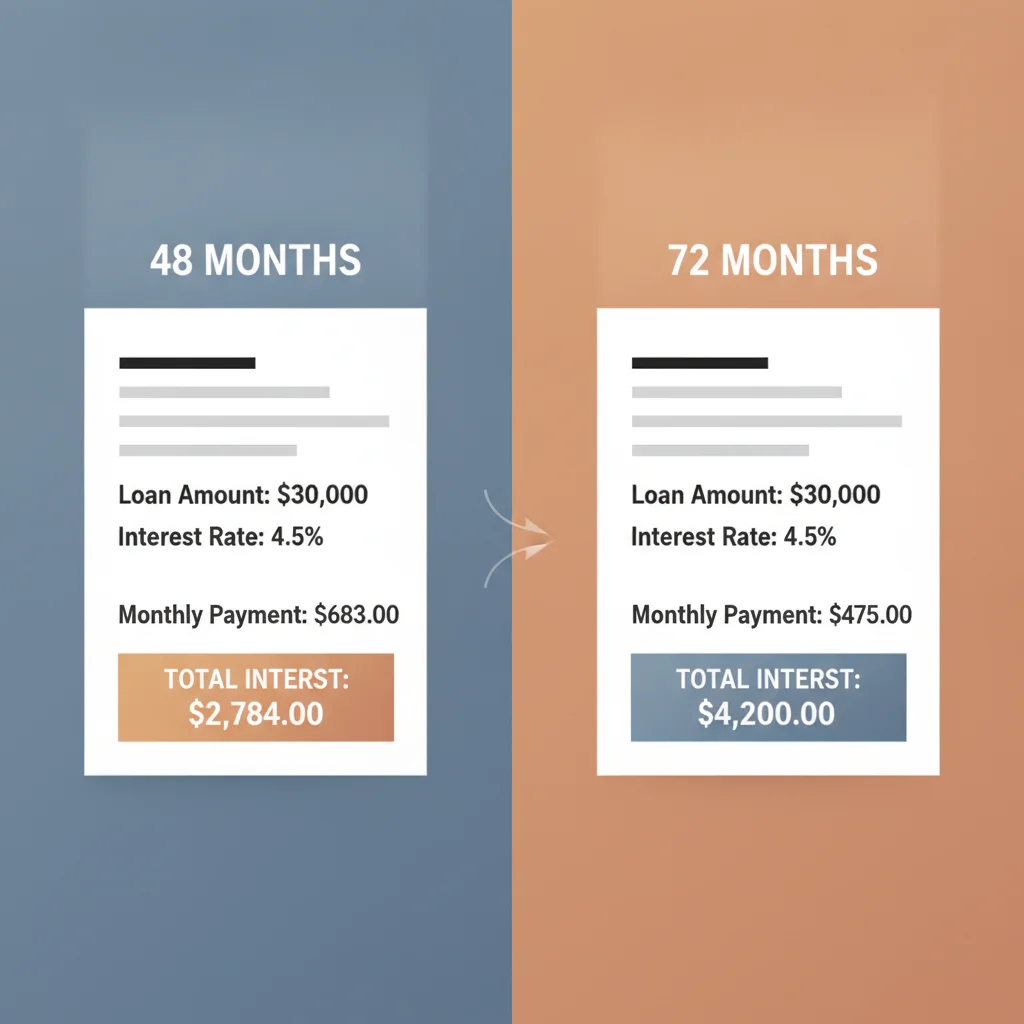
Notice the trade-off clearly: a lower monthly payment means a much longer period underwater and significantly more interest paid over the life of the loan. The $509 monthly difference between a 36-month and 84-month loan costs an extra $5,240 in interest — and keeps you at financial risk for up to three years longer.
The Depreciation Basics hub covers how age, mileage, and condition drive down a vehicle's value — useful reading if you want to model your specific vehicle's equity trajectory.
What Negative Equity Actually Costs You
Being underwater on a car loan isn't just an abstract number on a spreadsheet — it limits your real-world options in concrete, sometimes painful ways.
Selling or Trading In
If you need to sell your car before the loan is paid off and you owe more than it's worth, you have a problem. A private-party buyer won't pay more than market value. A dealer offering a trade-in won't either. You'll either have to make up the difference out of pocket (cutting a check to close the gap) or roll the negative equity into your next loan — which starts the cycle all over again.
If Your Car Is Totaled or Stolen
Your insurance company pays out the actual cash value of the vehicle — not what you owe. If you owe $28,000 on a car that's valued at $22,000, your insurer pays $22,000. You're still on the hook for the remaining $6,000. This is where GAP insurance becomes essential for longer-term borrowers.
Consider GAP Insurance on Long-Term Loans
If you're financing with a 60-month or longer term and less than 20% down, GAP insurance is worth the relatively modest cost. It covers the difference between your car's actual cash value and your remaining loan balance if the car is totaled or stolen. Many lenders and dealers offer it — but you can often get a better price from your auto insurer.
Look Up Your Car's Depreciation Before You Buy
Sites like Kelley Blue Book and Edmunds show historical and projected resale values by make, model, and trim. Before signing a loan, look up what your target vehicle is likely to be worth in years one through four. This gives you a real sense of how your equity will build — or erode — over time.
Refinancing Becomes Harder
Lenders typically won't refinance a loan where you're significantly underwater. If interest rates drop and you'd like to refinance to a better rate, negative equity can block that option entirely.
“The monthly payment is the least informative number in a car deal. What matters is the total cost of the loan, the depreciation rate of the asset, and whether you'll have flexibility when life changes — because it always does.”
— Melinda Zabritski, Senior Director of Automotive Financial Solutions, Experian
For buyers with credit challenges who are tempted by longer terms, Loan Term Length and Bad Credit: Why Longer Isn't Always Safer explains why stretching to 72 or 84 months may compound financial risk.
How to Protect Your Equity (or Build It Faster)
You don't have to resign yourself to years of negative equity just because you need manageable payments. Several strategies can improve your equity position from the start.
Make a Meaningful Down Payment
A down payment of 10–20% immediately reduces your loan balance below the purchase price. This gives you a head start on equity before depreciation even begins. On a $32,000 vehicle, a $6,400 down payment (20%) means you're financing $25,600 — and you're already ahead of the curve on day one. The Down Payments hub walks through why down payment size matters and how it structures your entire loan.
Choose the Shortest Term You Can Afford
Every month you shorten your loan term accelerates principal paydown. Yes, your monthly payment increases — but your equity position improves faster, your total interest drops, and your financial flexibility stays intact. See Picking a Loan Term That Matches Your Financial Situation to work through this trade-off with your own numbers.
Make Extra Principal Payments When You Can
Even occasional additional payments directly to principal can meaningfully shorten the time you spend underwater. Check your loan terms — most auto loans allow this without penalty. Even one extra payment per year can shift your equity timeline by several months.
Choose a Vehicle With Strong Resale Value
Some vehicles hold their value significantly better than others. Trucks, certain SUVs, and models from brands known for reliability tend to depreciate more slowly. If you're choosing between two similar vehicles, the one with better resale value will put you in positive equity faster — and keep you there.
Consider GAP Insurance on Long-Term Loans
If you're financing with a 60-month or longer term and less than 20% down, GAP insurance is worth the relatively modest cost. It covers the difference between your car's actual cash value and your remaining loan balance if the car is totaled or stolen. Many lenders and dealers offer it — but you can often get a better price from your auto insurer.
Look Up Your Car's Depreciation Before You Buy
Sites like Kelley Blue Book and Edmunds show historical and projected resale values by make, model, and trim. Before signing a loan, look up what your target vehicle is likely to be worth in years one through four. This gives you a real sense of how your equity will build — or erode — over time.
The Debt-to-Income Connection
There's another dimension to the longer-loan-term decision that buyers often miss: how term length affects your debt-to-income ratio (DTI) and overall financial health.
A longer loan term lowers your monthly car payment, which can make your DTI look healthier on paper. This might help you qualify for other credit — or it might simply mask the fact that you've taken on a large, slow-burning debt obligation. Lenders who look closely will see the total loan size and the extended repayment period, and some will factor that into their risk assessment.
More importantly, if your monthly budget is stretched thin even with the lower payment, a major life change — job loss, medical expense, new household cost — puts you at serious risk of missed payments on an already-underwater asset. How Loan Term Length Affects Your Debt-to-Income Ratio explores this connection in detail.
Amortization Works the Same Way on All Auto Loans
Whether your loan is 36 months or 84 months, interest is calculated the same way: as a percentage of your remaining balance. Because you start with a large balance, the first months are always interest-heavy. The difference is that shorter loans force the balance down faster, which means interest charges shrink more quickly — creating a compounding benefit for equity.
DTI Isn't the Whole Picture
A lower monthly payment from a longer loan term can technically improve your debt-to-income ratio, making it easier to qualify for a mortgage or other credit. But lenders who look at the full picture will also consider your total outstanding debt and the asset value behind it. A lower DTI built on a long-term loan against a depreciating asset isn't as strong as it appears on paper.
The goal isn't to avoid longer loan terms at all costs — it's to go in with eyes open about what they actually cost you in equity, flexibility, and total interest.
Making the Right Call for Your Situation
There's no universal right answer on loan term length. But there is a right framework for making the decision.
- Start with the total cost, not the monthly payment. Calculate total interest paid for each term option. The difference is often thousands of dollars.
- Estimate your equity timeline. Use your vehicle's expected depreciation and your amortization schedule to roughly model when you'll hit positive equity under each term.
- Factor in your risk tolerance. If you drive a lot of miles, are in a volatile job situation, or tend to want a new car every three years, longer terms create meaningful risk.
- Consider GAP insurance if you go long. If you do choose a 60-, 72-, or 84-month term without a large down payment, GAP coverage is a sensible safety net.
- Don't let the dealer anchor you to the monthly payment. Dealers know that buyers focus on what they can afford per month. Negotiate on total price and interest rate first — then determine the term.
Equity isn't just a number — it's a measure of financial control. The more equity you have, the more options you have. Protect it by treating your loan term as a strategic decision, not just a payment convenience.

All claims are backed by peer-reviewed research. Sources on request.