Key Takeaways
The Problem Nobody Warns You About
You've done everything right. You set a budget, financed your car responsibly, and now you're sending in extra money each month to pay it down faster. You expect your principal balance to shrink — and your interest costs along with it. Then you check your statement and nothing looks different from what you'd expect on the regular schedule. What happened?
The uncomfortable truth is that an extra payment on an auto loan doesn't automatically go toward your principal. Whether it does depends entirely on how your lender processes overpayments — and most lenders don't go out of their way to explain this. The result is that millions of borrowers send in additional money every year believing they're cutting their loan balance, when in reality their lender is simply crediting them for next month's payment.
This isn't a scam. It's a contractual default — and it's perfectly legal. But it means your extra dollars earn you extra time before your next bill is due, not a faster payoff or less interest owed. Understanding exactly why this happens, and what you need to do differently, can save you a meaningful amount of money over the life of your loan.
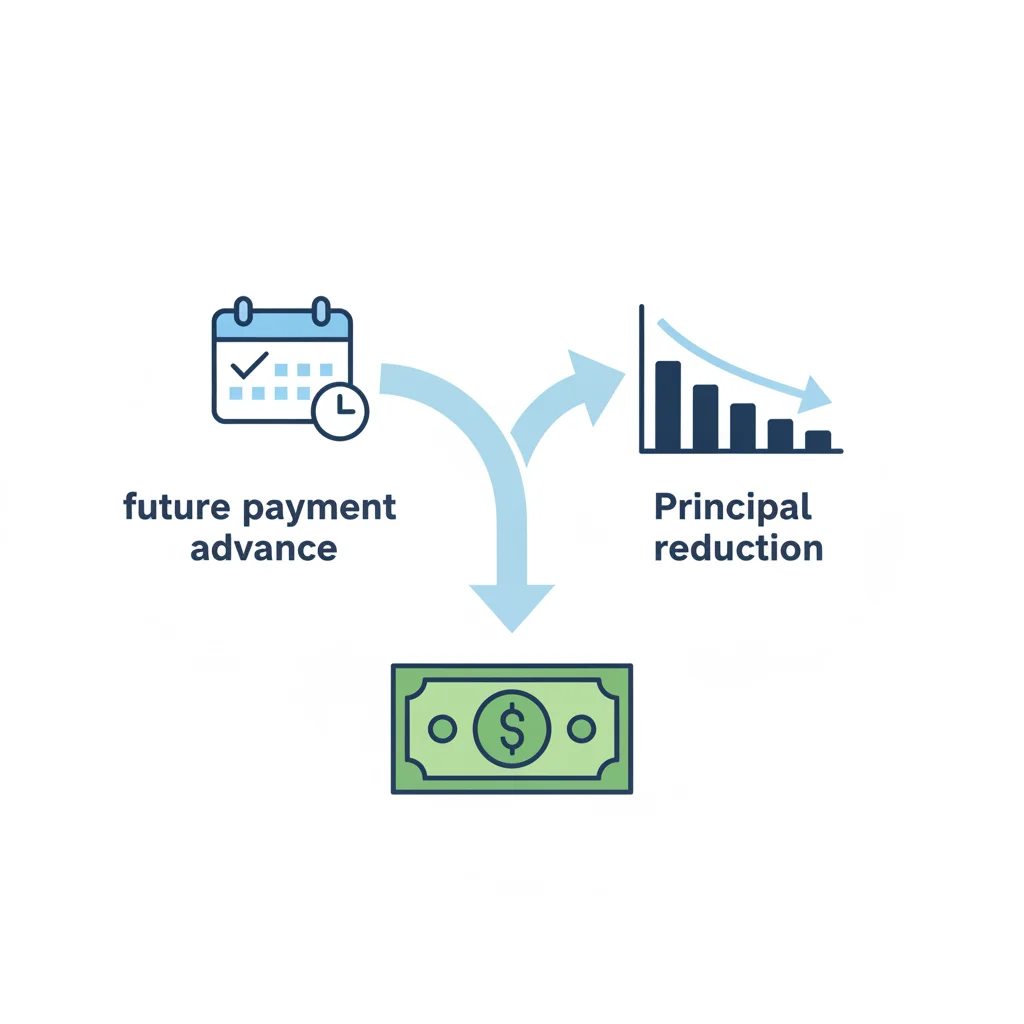
To understand the mechanics, it helps to know how auto loan interest is calculated. Most car loans use simple interest, meaning interest accrues daily on the outstanding principal balance. Every payment you make first covers the interest that has built up since your last payment, then the remainder goes to principal. When lenders receive an extra payment without specific instructions, they often treat it as an advance on your next scheduled installment — which means the same split between interest and principal as any regular payment, just moved forward in time. See how loan terms shape your payments for more on how this structure works from the start.
Common Mistakes That Undermine Your Extra Payments
The borrowers who get hurt most by this issue aren't careless — they're motivated. They want to pay down their car loan faster and save on interest. The mistakes they make are subtle, rooted in reasonable but incorrect assumptions about how lenders handle their money. Here are the most frequent errors, why they happen, and exactly how to correct them.
Sending extra money without specifying how it should be applied.
Why it happens: Most borrowers assume lenders will automatically route extra money to the principal balance, the way they imagine a mortgage works. In reality, auto lenders default to advancing your next due date rather than reducing what you owe.
Assuming the online payment portal handles extra amounts correctly without verification.
Why it happens: Payment portals look modern and intuitive, so borrowers trust that entering a larger number automatically triggers the right outcome. But many portals have a default setting that treats any overage as a future-payment advance unless a separate option is selected.
Not reading the loan contract's payment application clause before making extra payments.
Why it happens: Loan agreements are long and written in dense legal language, so most borrowers skip them after signing. The payment application clause — which specifies the order in which overpayments are processed — is rarely highlighted during the dealership finance process.
Ignoring prepayment penalty clauses that can offset the savings from paying early.
Why it happens: Prepayment penalties are more common on older or dealer-arranged loans and aren't always disclosed prominently. Borrowers who don't review their full contract may not realize that paying off early — or even paying down faster — triggers an additional charge.
Letting the lender advance the due date and treating that as a success.
Why it happens: When lenders push the next payment due date forward — for example, from February to March — it can feel like you've bought yourself breathing room. Borrowers sometimes interpret this as a positive outcome rather than recognizing that the principal balance hasn't actually changed.
Making one large annual extra payment instead of consistent smaller monthly additions.
Why it happens: Borrowers often think a bigger, less-frequent payment will make a dramatic difference. They also wait until they have a lump sum — like a tax refund — rather than building the habit of regular overpayments.
~44%
Borrowers unaware of payment application defaults
A 2023 J.D. Power auto finance study found that fewer than half of borrowers could correctly describe how their lender applied overpayments to their loan balance.
$1,200+
Average avoidable interest on a 72-month auto loan
Consumer Financial Protection Bureau analysis indicates borrowers on 72-month loans who never make principal-designated extra payments pay over $1,200 more in interest than those who do, on average.
72 months
Average new car loan term in the U.S.
Experian's State of the Automotive Finance Market report (Q4 2023) found six-year loans are now the most common term for new vehicle financing.
How Lenders Actually Process Your Money
To fix the problem, you need to understand the default workflow at most auto lenders. When a payment comes in — whether it's your regular amount or something larger — the lender's system checks whether you're current on your account. If you are, and there's no special instruction attached to the payment, the system treats the overage as a payment advance: your next due date gets pushed out, and the extra amount sits in a suspense or unapplied funds account until that future date arrives.
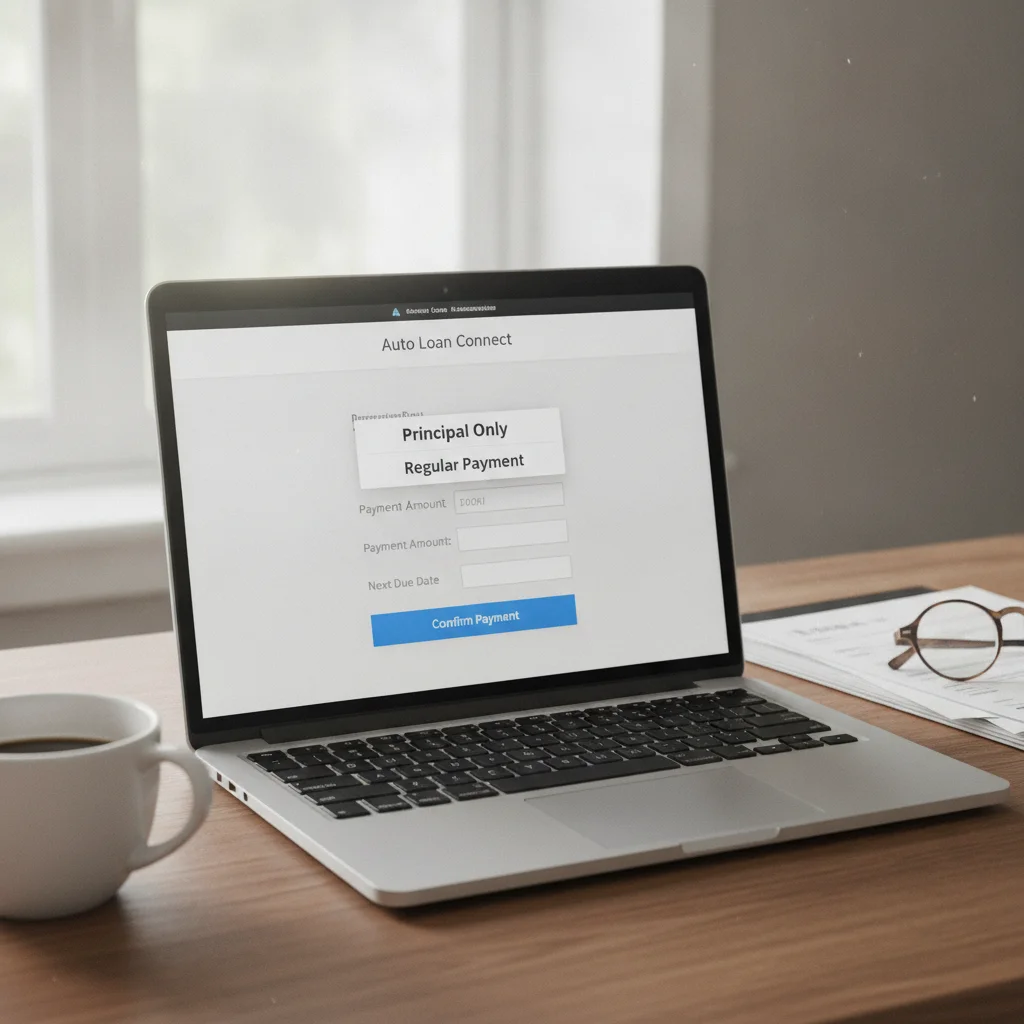
Some lenders require a written or online directive that says something like "apply overage to principal only" before they will route extra money directly to the balance. Others have a checkbox or dropdown in their online payment portal specifically for this purpose. A smaller number of lenders will automatically apply overpayments to principal — but you cannot assume yours does this without verifying.
The safest approach is to treat every extra payment as if the lender will do the wrong thing by default, and take explicit corrective action every time. Check these things before you send an extra car payment to build that verification habit into your routine.
Advancing Your Due Date Isn't the Same as Paying Down Principal
Many lenders will tell you that your extra payment was 'applied' — and they're telling the truth, just not the whole truth. Applied to a future installment is not the same as applied to your outstanding balance. If your next statement shows a later due date but the same principal balance you'd expect on the regular schedule, your lender treated the extra amount as an advance. This is the most common complaint borrowers have after trying to pay down faster, and it's easily avoided by explicitly designating principal-only before — not after — the payment posts.
Some Loans Penalize Early Payoff — Verify Before You Pay Extra
Not every auto loan rewards you for paying faster. Certain dealer-arranged loans and older financing contracts include prepayment penalties — fees charged if you pay off the loan before a specified date or threshold. These penalties can range from a flat fee to a percentage of the remaining balance. Always check your original loan agreement for prepayment language before making significant extra payments. If a penalty applies, run the math: the interest savings must exceed the penalty for early payoff to make financial sense.
It's also worth understanding the difference between sending one large extra payment per year versus adding a small amount each month. Both strategies can work, but they interact differently with lender processing systems and prepayment clauses. The math behind paying extra on your car loan breaks down which approach saves more in real dollar terms.
Principal-Only Payments: The Right Designation
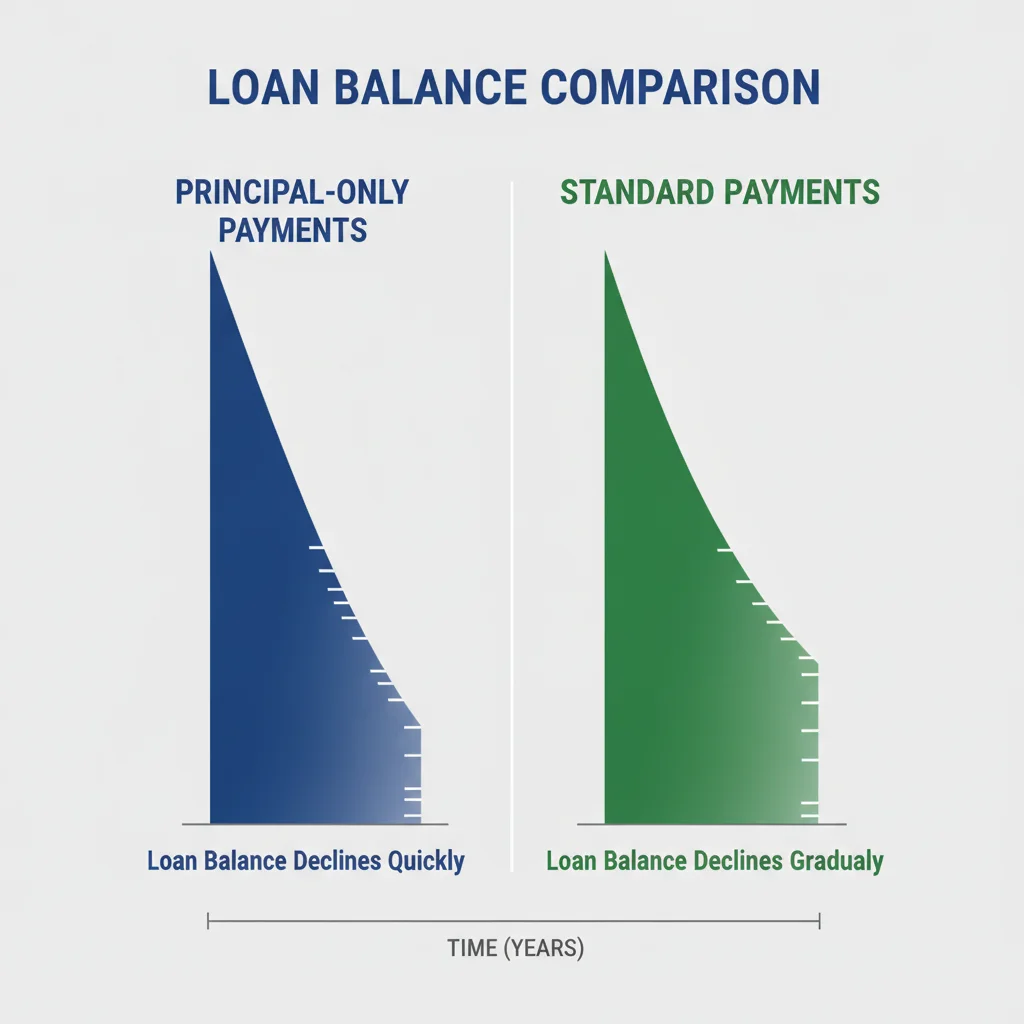
The most powerful tool available to borrowers who want to pay down faster is the principal-only payment. Unlike a standard extra payment — which can get absorbed into your payment schedule — a principal-only payment goes directly to the loan balance with no portion allocated to interest or future installments.
Because interest on a simple-interest loan accrues on the remaining balance, reducing that balance immediately means less interest accumulates tomorrow. Every dollar that hits principal today is a dollar that stops generating interest charges from this point forward. That compounding effect is why getting the designation right matters so much.
Here's how to make a principal-only payment correctly:
- Call your lender first. Ask them specifically: "How do I designate a payment as principal only?" Get the answer in writing or in an email confirmation if possible.
- Use the correct channel. Some lenders only accept principal-only designations through a specific payment method — a portal dropdown, a separate payment address, or a notation on a mailed check.
- Confirm on your statement. After the payment posts, check that your principal balance dropped by the full extra amount and your next payment due date did not change.
- Keep records. Screenshot or save confirmation of how you designated the payment. If there's a dispute later, documentation protects you.
For a complete walkthrough of this process, see how to make a principal-only payment on your auto loan. Lenders aren't always forthcoming about this option, but it's one of the most effective levers available to borrowers.
Always Confirm the Principal Balance Dropped
The only reliable way to verify that an extra payment reduced your principal is to check your account statement after it posts — not the confirmation screen, not the due date, but the outstanding balance line. Your principal balance should decrease by the full extra amount. If it doesn't, call your lender the same day. Most lenders will reapply a recent payment with the correct designation if you act quickly, but the window to do this without complications is typically 30 days or less.
What to Check Before Your Next Extra Payment
Before you send another dollar above your minimum payment, take fifteen minutes to audit your loan terms and your lender's payment processing rules. This isn't excessive caution — it's the difference between actually shortening your loan and just moving money around without benefit.
Step 1: Read Your Loan Agreement
Pull out your original loan contract and look for language about prepayment, early payoff, or payment application order. Some contracts specify that overpayments are applied to future installments first. Others give you the right to designate extra payments as principal only but require written notice. A few — particularly older or dealer-arranged loans — include prepayment penalties that can make early payoff more expensive than you'd expect. If you see any of this language, call your lender to clarify exactly what applies to your account today.
Step 2: Log Into Your Lender's Payment Portal
Most major auto lenders — banks, credit unions, and captive finance arms of manufacturers — have online portals that show payment history, current balance, and payment options. Look for a dropdown or checkbox labeled "principal only" or "apply to balance." If you don't see one, that's important information: it means you may need to designate your intent another way, such as by phone or mail.
Step 3: Verify the Impact After Posting
After every extra payment, log in and confirm two things: (1) your outstanding principal balance decreased by the full extra amount, and (2) your next payment due date did not move. If the due date shifted forward, your payment was treated as an advance, not a principal reduction. Contact your lender immediately to correct it — most will reverse and reapply the payment with the right designation if you catch it quickly.
Understanding your loan terms from the beginning makes all of this much easier to navigate. Borrowers who understand amortization and simple interest tend to catch these issues faster and push back more effectively.
Making Your Extra Payments Actually Work
Paying ahead on your car loan is genuinely worth doing — but only when it's done correctly. The interest savings from reducing principal early can be substantial. What actually changes when you make extra car payments is worth reading alongside this article, because it walks through the real outcomes — reduced total interest, shorter loan term, and improved equity position — that you're trying to achieve.

A few final principles to keep in mind:
- Consistency beats size. Adding a modest fixed amount each month — say, an extra $50 or $75 — and designating it principal-only consistently outperforms one large extra payment made without proper designation.
- Timing matters on simple-interest loans. Because interest accrues daily, sending a payment even a few days early can reduce the interest portion of that payment. Sending it late, by contrast, increases the interest portion.
- Don't let the lender advance your due date. If your lender is applying extra payments as payment advances, you lose the interest-reduction benefit entirely. Push back every time this happens.
- Consider refinancing if your terms are unfavorable. If your loan contract has restrictive prepayment language or your lender is unresponsive to principal-only requests, refinancing to a lender with cleaner terms may be worth exploring.
The bottom line: extra car payments are a smart financial move, but only when you control how they're applied. Don't assume your lender will do the right thing by default. Designate every extra payment explicitly, confirm it posted correctly, and keep records. That combination turns good intentions into real savings. You can also read auto loan payoff myths that cost borrowers money to make sure you're not falling for other common misconceptions that quietly add to your total cost.

All claims are backed by peer-reviewed research. Sources on request.