Key Takeaways
Loan-to-Value Ratio (LTV)
Loan-to-value ratio (LTV) is a percentage that compares how much you're borrowing to how much the vehicle is actually worth. You calculate it by dividing the loan amount by the car's value and multiplying by 100. A lower LTV means you're borrowing less relative to the car's worth, which lenders treat as lower risk. A higher LTV means you owe more than — or close to — what the car is worth, which makes lenders nervous.
Lenders typically use the NADA Guide or Kelley Blue Book wholesale/trade-in value — not the sticker price — as the denominator in the LTV calculation, which can produce a higher ratio than buyers expect.
How LTV Is Calculated — and Why the Number Surprises Buyers
The formula for loan-to-value ratio is straightforward on paper:
LTV = (Loan Amount ÷ Vehicle Value) × 100
If you're borrowing $24,000 to buy a car appraised at $30,000, your LTV is 80%. But here's where buyers get surprised: the vehicle value the lender uses is rarely the price you agreed to pay at the dealership. Lenders almost always reference an independent valuation source — typically the NADA Guide or Kelley Blue Book — and they often use the wholesale or trade-in value rather than the retail price.
That gap matters. If you negotiate a purchase price of $30,000 but the lender's book value for that vehicle is $27,500, your loan of $24,000 now produces an LTV of roughly 87% in the lender's eyes — not the 80% you calculated from the sticker. Roll in taxes, title fees, and a dealer add-on or two, and your loan amount climbs while the vehicle value stays fixed. That's how buyers end up with LTVs above 100% before they've even driven off the lot.
Understanding how LTV is calculated and what controls it gives you a critical edge before you negotiate the purchase price or choose how much to put down.
The practical takeaway: always ask the lender which valuation source they use, and look up that value yourself before you finalize your loan amount. A $2,000 difference in book value can shift your rate tier entirely.
How LTV Directly Shapes Your Interest Rate and Loan Terms
Lenders think about LTV as a measure of collateral coverage. If you default on a $24,000 loan and the lender repossesses a car worth $30,000, they can recover their money relatively easily. If you default on a $32,000 loan for the same car, they're taking a loss before they even cover repo fees and auction costs. That difference in risk shows up in your interest rate.
~20–30%
Typical first-year vehicle depreciation rate
According to Carfax and Edmunds data, new vehicles lose between 20% and 30% of their value within the first 12 months — the steepest LTV risk period for long-term borrowers.
44%
Borrowers underwater at trade-in
Edmunds reported in 2023 that 44% of trade-ins used toward new vehicle purchases carried negative equity, up from 33% in 2021, reflecting the impact of longer loan terms and high purchase prices.
Up to 1.5%
Rate difference across LTV tiers
Lenders commonly price auto loans across LTV brackets, with borrowers at or below 80% LTV qualifying for rates up to 1.5 percentage points lower than borrowers above 100% LTV, per industry lending guidelines.
84 months
Longest common auto loan term available
Seven-year loan terms are now offered by many banks and credit unions, but most cap this option at 100% LTV or below due to the extended negative-equity risk such terms create.
$1,000
Average GAP insurance claim paid
NADA data suggests the average GAP insurance claim — covering the difference between insurance payout and loan balance — ranges from $1,000 to $4,000, with the gap widening on longer-term loans.
Most lenders organize their auto loan pricing around LTV tiers. A borrower at 80% LTV may qualify for a rate a full percentage point lower than a borrower at 110% LTV — even with identical credit scores. Some lenders impose hard caps: they simply won't originate loans above a certain LTV threshold regardless of your credit profile.
LTV also affects the loan terms available to you. Lenders offering 72- or 84-month terms often restrict those options to loans at or below 100% LTV. The logic is straightforward: a long term combined with a high LTV creates a prolonged window during which you could owe significantly more than the car is worth — a risk lenders prefer to avoid or price aggressively.
Every factor that shapes your auto loan rate — from credit score to vehicle age to lender type — interacts with your LTV in ways that compound quickly. LTV is rarely the only variable, but it's one of the few you can directly control before you apply.
Ask the Lender Which Book Value They Use
Before finalizing your loan, ask directly whether they're using NADA, KBB, Black Book, or another source — and whether they reference retail, trade-in, or wholesale value. Look up all three valuations yourself so you know the range. If your lender uses a more conservative figure than the purchase price, your LTV will be higher than expected, and you may need a larger down payment to land in a favorable rate tier.
Match Your Loan Term to Your Equity Timeline
If you're financing a vehicle you plan to keep for only three to four years, a longer term is a trap — you'll likely be underwater when you try to exit. Choose the shortest term you can comfortably afford, or build in extra monthly principal payments from the start. The goal is to outrun depreciation, not race it to zero.
The Relationship Between Loan Term Length and LTV Over Time
Your LTV at the moment you sign the loan is just the starting point. What happens to that number over the next 48, 60, or 84 months depends heavily on two things: how fast you pay down principal, and how fast the car depreciates.
Cars depreciate fastest in the first two years of ownership — typically losing 20% to 30% of their value. If your loan term is long and your payments are heavily weighted toward interest in the early months (which is how amortization works), your principal balance drops slowly while the car's value drops quickly. The result: you stay underwater longer.
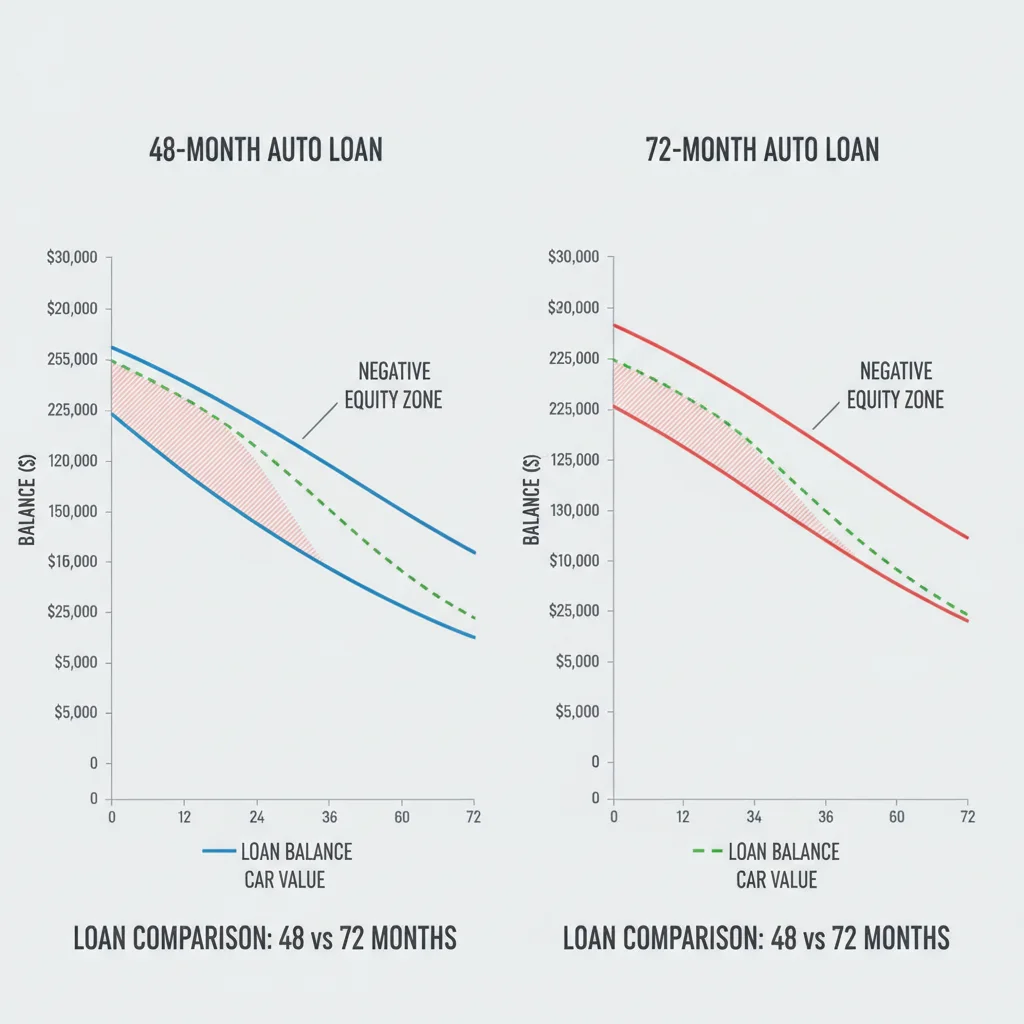
Consider two borrowers who each finance a $35,000 car with a $5,000 down payment and a 6% interest rate:
- 48-month term: Monthly payment of roughly $703. By month 18, remaining balance is approximately $20,800. The car may be worth $22,000. LTV: ~95%.
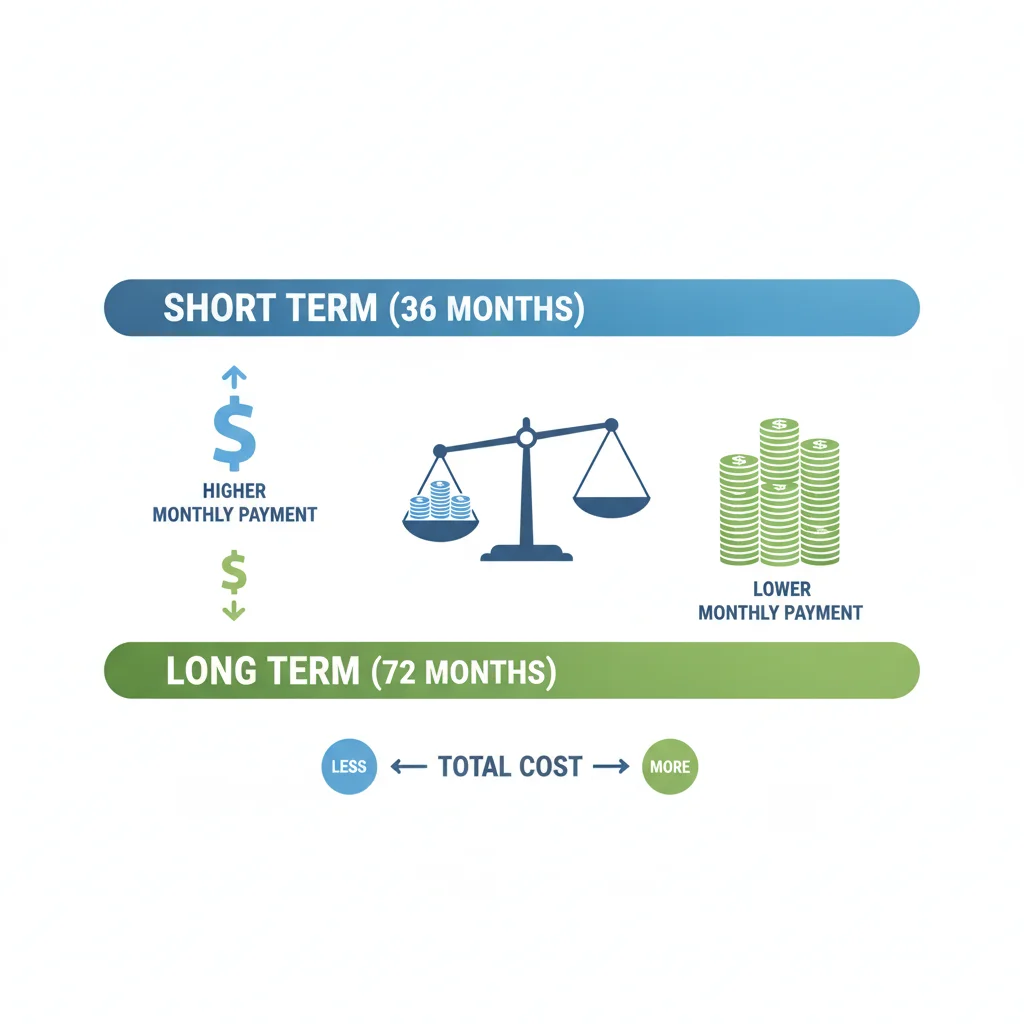
- 72-month term: Monthly payment of roughly $483. By month 18, remaining balance is approximately $27,200. The same car may be worth $22,000. LTV: ~124% — deeply underwater.
The longer-term borrower is paying $220 less per month but carrying nearly $6,400 more in remaining debt against the same depreciating asset. That gap has real consequences if the car is totaled, stolen, or traded in. How loan term length affects your debt-to-income ratio explores the monthly payment side of this equation in depth — but the LTV dimension is equally important to understand before choosing a term.
GAP Insurance Exists for High-LTV Loans
Guaranteed Asset Protection (GAP) insurance covers the difference between your remaining loan balance and what your auto insurance pays out if the car is totaled or stolen. It's most valuable when your LTV is above 100% — particularly in the first 24 months of a long-term loan. Some lenders include it; others offer it as an add-on. Compare prices through your own insurer before accepting a dealer's quote, which is often significantly higher.
New vs. Used: Lenders Set Different LTV Limits
Lenders generally allow higher LTVs on new vehicles — sometimes up to 115% to cover taxes and fees — because new car values are more predictable and supported by manufacturer incentives. For used vehicles, maximum LTVs are often capped at 80% to 90%, and lenders may apply a haircut to older or higher-mileage vehicles. If you're buying used, this tighter cap means your down payment needs to work harder.
Down Payment: The Most Powerful Lever You Control
Nothing changes your starting LTV more immediately than the size of your down payment. Every dollar you put down reduces the loan amount while the vehicle value stays constant, pulling LTV down before the lender even runs the numbers.
A 10% down payment on a $30,000 vehicle means you're financing $27,000 — an LTV of 90%. A 20% down payment drops the loan to $24,000 and the LTV to 80%. That 10-percentage-point difference can mean a materially lower interest rate, access to longer term options at better pricing, and — critically — a buffer against depreciation in the first year.
Why down payment size matters and how it shapes your loan structure is worth reviewing before you finalize your purchase budget. The amount you put down isn't just about reducing your monthly payment — it's about negotiating from a position of lower risk in the lender's eyes.
If you can't put 20% down, a trade-in with positive equity can serve the same function. The equity from your trade-in is applied as a credit against the new loan, reducing the amount you need to borrow and lowering your LTV accordingly. Just confirm the trade-in value independently — dealers sometimes low-ball trade offers while appearing generous on the new car price.
“The single most powerful move a car buyer can make before visiting a dealership is knowing the book value of the vehicle they want — not the sticker price, the actual lender-recognized value. That one number determines everything about what the loan will cost.”
— Jack Nerad, Automotive industry analyst and former executive editor, Kelley Blue Book
When LTV Gets Worse: Negative Equity and Being Underwater
Being "underwater" on a car loan means your LTV has climbed above 100% — you owe more than the car is worth. This can happen at the start of a loan (if you rolled in fees, add-ons, or negative equity from a trade-in) or over time as depreciation outruns your principal paydown.
The consequences of negative equity are concrete and significant:
- Total loss events: If your car is totaled or stolen, your insurance company pays the vehicle's actual cash value — not your remaining loan balance. If you owe $28,000 and the car is worth $22,000, you're responsible for the $6,000 gap unless you have GAP insurance.
- Trade-in complications: Dealers will offer you trade-in value, not loan payoff. Negative equity is either paid out of pocket or rolled into the new loan — which creates a new high-LTV problem and compounds the cycle.
- Refinancing difficulty: Lenders are reluctant to refinance loans above 100% LTV. Even if your credit improves significantly, an underwater loan may not qualify for a rate reduction. What lenders look at before approving an auto refinance outlines exactly how LTV factors into refinance decisions.
For borrowers with lower credit scores, this risk is even more acute. LTV matters more when credit is low — lenders compensate for credit risk partly by tightening LTV requirements, which means subprime borrowers have less room to absorb depreciation before problems emerge.
GAP Insurance Exists for High-LTV Loans
Guaranteed Asset Protection (GAP) insurance covers the difference between your remaining loan balance and what your auto insurance pays out if the car is totaled or stolen. It's most valuable when your LTV is above 100% — particularly in the first 24 months of a long-term loan. Some lenders include it; others offer it as an add-on. Compare prices through your own insurer before accepting a dealer's quote, which is often significantly higher.
New vs. Used: Lenders Set Different LTV Limits
Lenders generally allow higher LTVs on new vehicles — sometimes up to 115% to cover taxes and fees — because new car values are more predictable and supported by manufacturer incentives. For used vehicles, maximum LTVs are often capped at 80% to 90%, and lenders may apply a haircut to older or higher-mileage vehicles. If you're buying used, this tighter cap means your down payment needs to work harder.
How to Improve Your LTV Before Applying — and After
Whether you're applying for a new loan or looking to refinance, there are concrete steps you can take to bring your LTV into a better range.
Before You Apply
- Increase your down payment. Even adding $1,000 to $2,000 upfront can move you across a pricing tier. If cash is tight, consider delaying the purchase by a few months to save more.
- Negotiate the purchase price down. A lower purchase price means a lower loan amount, which directly reduces LTV. Dealers and private sellers both have room to negotiate — do your research using NADA or KBB before you enter any conversation.
- Avoid rolling in extras. Every add-on — extended warranty, paint protection, GAP insurance, dealer accessories — that gets financed increases your loan amount without increasing the car's value. LTV rises accordingly. Pay for add-ons in cash or skip them.
- Choose a car with strong residual value. Vehicles known for holding value (certain Japanese and German brands, popular truck lines) depreciate more slowly, which keeps your LTV from climbing as fast in year one and two.
After Your Loan Starts
- Make extra principal payments. Even one extra payment per year materially accelerates your equity build-up and brings your LTV down faster than the standard amortization schedule.
- Avoid payment deferrals. Many lenders offer hardship deferrals that skip a payment or two. These extensions add interest and slow principal paydown, pushing your LTV back up at precisely the period when the car is depreciating fastest.
- Monitor the market value of your car. In unusual market conditions — like the used-car shortage of 2021–2022 — your car's value may rise, temporarily lowering your LTV and creating a refinance opportunity even if you haven't paid extra.
Ask the Lender Which Book Value They Use
Before finalizing your loan, ask directly whether they're using NADA, KBB, Black Book, or another source — and whether they reference retail, trade-in, or wholesale value. Look up all three valuations yourself so you know the range. If your lender uses a more conservative figure than the purchase price, your LTV will be higher than expected, and you may need a larger down payment to land in a favorable rate tier.
Match Your Loan Term to Your Equity Timeline
If you're financing a vehicle you plan to keep for only three to four years, a longer term is a trap — you'll likely be underwater when you try to exit. Choose the shortest term you can comfortably afford, or build in extra monthly principal payments from the start. The goal is to outrun depreciation, not race it to zero.

All claims are backed by peer-reviewed research. Sources on request.