
| Minimum credit score (most lenders) | 580–620 (Varies by institution; credit unions may go lower) |
| Typical LTV limit for refinancing | 100%–125% (Varies by lender; lower LTV yields better rates) |
| Maximum DTI most lenders accept | 45%–50% (Some lenders may allow up to 55%) |
| Minimum loan age before refinancing | 60–90 days (often 6 months) (Depends on lender policy) |
| Maximum vehicle age (most lenders) | 7–10 years old (Some lenders cap at 7 years; others allow 10+) |
| Maximum mileage (most lenders) | 100,000–150,000 miles (Varies significantly by lender) |
| Rate shopping inquiry window | 14–45 days (FICO scoring models; window length depends on version) |
| Minimum remaining term (recommended) | 24+ months (Shorter remaining terms rarely justify refinancing costs) |
Why Refinance Approval Isn't Just About Your Credit Score
Most people assume that a better credit score automatically unlocks a lower rate when refinancing an auto loan. Credit does matter — significantly — but it's one input in a broader underwriting process. Lenders are trying to answer a single question: how risky is it to take on this loan? To answer it, they look at your financial profile, the vehicle itself, the structure of your existing loan, and even the current interest rate environment.
Understanding exactly what lenders evaluate gives you two advantages. First, you can identify weaknesses before you apply and address them. Second, you can negotiate from a position of knowledge rather than hope. This reference guide walks through each factor systematically so you know what's working in your favor — and what might hold you back.
For a broader view of how these criteria compare to original purchase loan underwriting, see what lenders look at before issuing a preapproval.
| Minimum credit score (most lenders) | 580–620 (Varies by institution; credit unions may go lower) |
| Typical LTV limit for refinancing | 100%–125% (Varies by lender; lower LTV yields better rates) |
| Maximum DTI most lenders accept | 45%–50% (Some lenders may allow up to 55%) |
| Minimum loan age before refinancing | 60–90 days (often 6 months) (Depends on lender policy) |
| Maximum vehicle age (most lenders) | 7–10 years old (Some lenders cap at 7 years; others allow 10+) |
| Maximum mileage (most lenders) | 100,000–150,000 miles (Varies significantly by lender) |
| Rate shopping inquiry window | 14–45 days (FICO scoring models; window length depends on version) |
| Minimum remaining term (recommended) | 24+ months (Shorter remaining terms rarely justify refinancing costs) |
Your Credit Profile: Score, History, and Recent Activity
Your credit score is the starting point of every refinance evaluation. Lenders use it as a quick signal of how reliably you've managed debt in the past. Most lenders tier their rates around score bands — for example, 750+ may qualify for the best available rate, while 650–699 triggers a mid-tier rate, and anything below 620 may result in denial or very high-rate offers.
But the score itself tells only part of the story. Lenders also pull a full credit report and look at:
- Payment history on your current auto loan: Have you made every payment on time since origination? Late payments — especially recent ones — raise red flags even if your overall score is solid.
- Derogatory marks: Collections, charge-offs, or bankruptcies in your recent history can disqualify you with some lenders regardless of your score.
- Credit utilization: High revolving balances relative to your credit limits signal financial stress and can suppress your score below what you'd otherwise expect.
- Hard inquiries: Multiple recent credit applications suggest you're urgently seeking credit, which lenders read as risk. Rate shopping for a refinance within a focused window (typically 14–45 days) usually counts as a single inquiry under FICO scoring models.

The practical implication: if you've improved your credit since your original loan, you're in a strong position to refinance. If your score has dropped, it's worth understanding why before applying. See how your credit score directly affects loan rates for a deeper breakdown of the scoring factors lenders weight most heavily.
Loan-to-Value Ratio: What Your Car Is Actually Worth
Loan-to-value ratio (LTV) is one of the most important — and most misunderstood — factors in auto refinancing. It compares what you still owe on your loan to what your vehicle is currently worth.
Loan-to-Value Ratio (LTV)
The ratio of your outstanding loan balance to the current market value of your vehicle, expressed as a percentage. A higher LTV means you owe more relative to what the car is worth, which increases the lender's collateral risk.
Debt-to-Income Ratio (DTI)
Your total monthly debt obligations divided by your gross monthly income. Lenders use DTI to assess whether you have enough income to comfortably cover a new loan payment alongside your existing obligations.
Negative Equity
The condition of owing more on your loan than the vehicle's current market value — also called being 'underwater.' Negative equity doesn't automatically disqualify you from refinancing, but it reduces your options and typically results in a higher rate.
Hard Inquiry
A credit check triggered when you apply for a new loan or line of credit. Hard inquiries can temporarily lower your credit score by a few points. Multiple refinance inquiries made within a focused window are typically treated as a single inquiry by FICO scoring models.
Underwriting
The lender's internal process of evaluating the risk of a loan application. Underwriters review credit, income, collateral value, and loan structure before approving, denying, or counter-offering a loan.
Collateral
The asset securing a loan — in this case, your vehicle. If you default, the lender can repossess and sell the collateral to recover the outstanding balance. Vehicle value and condition directly affect how lenders price collateral risk.
Rate Tier
A lender's internal classification system that assigns interest rates based on credit score ranges and other risk factors. Borrowers in higher tiers (better credit, lower LTV) receive lower rates; those in lower tiers pay more.
Payoff Amount
The exact amount required to fully pay off your existing loan on a given date, including principal, accrued interest, and any applicable fees. Your new lender will request the payoff amount directly from your current lender when processing a refinance.
Here's why LTV matters: if you owe more than the car is worth (negative equity, or being "underwater"), the lender is taking on collateral that can't cover the loan if you default. Most lenders cap LTV at 100–125%, meaning they'll refinance up to that percentage of the vehicle's current value. Some lenders set the ceiling lower, at 110%.
Example: You owe $18,000 on a car currently valued at $15,000. Your LTV is 120%. Many lenders will still refinance this, but you'll likely pay a higher rate than someone at 80% LTV, because the lender's collateral risk is elevated.
Vehicle values drop fastest in the first two years of ownership — typically 15–25% per year. If you financed with a small or no down payment, you may be underwater early in the loan term. Waiting until you've paid down the principal enough to reach 100% LTV or below can meaningfully improve your refinance terms.
To find your vehicle's current market value, use tools like Kelley Blue Book (KBB) or NADA Guides before applying. Lenders use these same reference points to appraise your collateral.
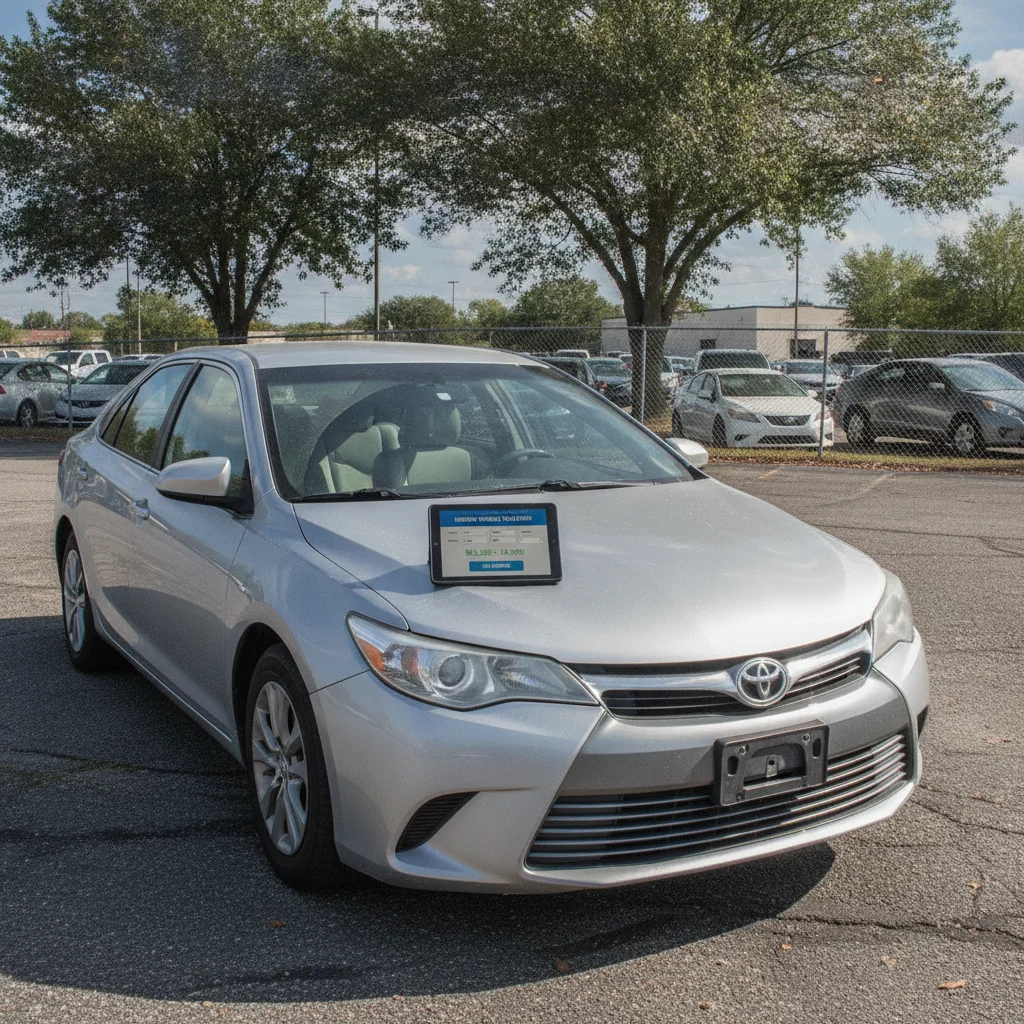
Vehicle age and mileage also affect the lender's assessment of collateral value. Most lenders won't refinance cars older than 7–10 years or with more than 100,000–150,000 miles. Learn how vehicle age and mileage affect refinancing eligibility to see whether your car clears the threshold.
Debt-to-Income Ratio and Employment Stability
Even if your credit looks great, lenders want to confirm you have the income to actually make the payments. Two metrics dominate this part of the review: your debt-to-income ratio (DTI) and the stability of your employment.
Debt-to-Income Ratio (DTI)
DTI measures your total monthly debt obligations — including the proposed refinanced payment — as a percentage of your gross monthly income. Most auto lenders prefer a DTI under 45–50%. If your monthly debt payments already consume 55% of your income before adding a car payment, that's a problem regardless of your credit score.
What counts toward DTI: rent or mortgage, credit card minimum payments, student loans, personal loans, other auto loans, and the proposed refinance payment.
What doesn't count: utilities, groceries, insurance premiums (in most cases), and discretionary expenses.
If your DTI is high, reducing other debt balances — even marginally — before applying can shift the ratio favorably. Alternatively, documenting additional income sources (freelance work, rental income, a second job) can improve the picture if the lender accepts non-traditional income verification.
Employment and Income Stability
Lenders want to see consistent income over time. Self-employed borrowers or those who recently changed jobs may face additional scrutiny. Expect to provide:
- Recent pay stubs (typically the last two)
- W-2s or tax returns for self-employed applicants
- Bank statements if income verification is unclear
Income, DTI, and employment all factor into your rate beyond your score — this article goes deeper on how non-credit factors shape approval decisions.
43%
Average DTI for approved auto loan borrowers
According to Experian's State of the Automotive Finance Market report, the average back-end DTI for approved auto borrowers sits around 43%.
120 pts
Average credit score improvement that unlocks a better rate tier
Moving from the subprime range (below 620) to near-prime (660–699) can cut your auto loan rate by 3–5 percentage points with most lenders.
20%
Average first-year vehicle depreciation
Most new vehicles lose approximately 15–25% of their value in the first year, according to Carfax depreciation data — the primary driver of early negative equity.
2–3%
Typical rate reduction that makes refinancing worthwhile
Financial advisors generally recommend refinancing only when you can reduce your interest rate by at least 2 percentage points to offset fees and extend your borrowing period.
38%
Borrowers who financed through a dealer and later refinanced
A 2023 consumer lending survey found that more than one-third of auto borrowers who originally financed through a dealership later refinanced through a bank or credit union for a lower rate.
Remaining Loan Term and Loan Age
Lenders also look at where you are in your current loan before agreeing to refinance it. Two related factors come into play: how old the loan is, and how much time is left on it.
Loan Age: The Too-New Problem
Most lenders won't refinance a loan that's less than 60–90 days old. The reason is straightforward: if you're already trying to refinance immediately after origination, it raises questions — either the original deal was problematic, or you're experiencing immediate financial strain. Many lenders require at least 6 months of payment history on the existing loan before they'll consider a refinance application.
This is relevant for new car buyers who were pressured into a high-rate dealer-arranged loan and want to refinance quickly. The general advice: wait at least 60–90 days, ideally 6 months, and make every payment on time during that period. Your payment history on the new loan becomes part of the refinance application.
Remaining Term: The Too-Short Problem
On the other end, lenders may decline to refinance loans with very little time remaining. If you have only 12–18 months left on a loan, the administrative cost of processing a refinance often doesn't justify the transaction for the lender. In this scenario, you're also unlikely to save much through refinancing — the interest remaining is small, and any closing costs or fees could offset savings entirely.
The sweet spot for refinancing is typically when you have at least 24 months remaining and have paid off enough principal to have reasonable LTV. Before you apply, run through key questions to evaluate your loan and timing to make sure the math actually works in your favor.

The Lender's Appetite: Institution Type and Market Conditions
Not all lenders evaluate the same factors the same way — and not all lenders even offer refinancing. The institution you approach shapes your odds and your rate as much as your personal profile does.
Banks vs. Credit Unions vs. Online Lenders
Traditional banks tend to have stricter underwriting standards and may require strong credit (680+) to offer competitive rates. Online lenders — such as LightStream, OpenRoad, or RefiJet — often have broader acceptance criteria and faster processing, but they vary widely in rate competitiveness. Credit unions frequently offer the most favorable rates and may extend more flexibility to borrowers with imperfect credit, particularly for existing members.
Refinancing through a credit union works differently — the membership structure, underwriting culture, and rate environment are meaningfully distinct from banks and online lenders.
Market Interest Rates
Your personal qualifications determine the rate you receive relative to the market — but the market determines the baseline. When the Federal Reserve raises benchmark rates, auto loan rates across all lenders rise. Refinancing makes the most financial sense when rates have dropped since your original loan was written, or when your credit has improved enough to overcome a higher-rate environment.
This is why timing matters. A borrower who financed at 9% two years ago and has since improved their credit from 620 to 700 may find a 6.5% refinance rate even in a moderate-rate environment — a meaningful improvement. Another borrower who financed at 4% during a low-rate period won't benefit from refinancing unless their goal is to extend the term (which increases total interest paid).
Rate Shopping Won't Hurt Your Score Much
A common fear among refinance applicants is that comparing rates across multiple lenders will damage their credit score. In practice, FICO treats multiple auto loan inquiries made within a 14–45 day window as a single inquiry. The exact window depends on which FICO version the lender uses. Applying to five lenders over three weeks to compare offers is a smart strategy — not a credit risk.
Extending the Term Can Lower Payments but Raise Total Cost
Some borrowers refinance primarily to lower their monthly payment by stretching the loan term — for example, from 36 months remaining to a new 60-month loan. This works, but it significantly increases the total interest you pay over the life of the loan. Before extending your term, calculate the total interest cost of both scenarios, not just the monthly payment difference. A lower payment that costs you thousands more overall may not be the right trade-off.
What to Have Ready Before You Apply
Preparing your documentation in advance signals to lenders that you're organized and serious, and it speeds up the underwriting process. Here's the complete list of documents lenders typically require for a refinance application.
Getting preapproved before you shop lenders can also give you a concrete rate offer to compare against — without committing to any one institution. And to see how lenders price the rate itself once you're approved, understand the full rate-setting process beyond just your credit tier.
Kelley Blue Book (KBB) Vehicle Valuation
Use KBB to estimate your car's current market value before applying for a refinance. Knowing your vehicle's worth helps you calculate LTV and anticipate where you stand with lenders.
NADA Guides
NADA provides vehicle valuations used by many lenders during the underwriting process. Cross-referencing KBB and NADA gives you a reliable range of what lenders are likely to use.
Auto Refinance Rate Comparison Guide
A structured guide to comparing refinance offers across banks, credit unions, and online lenders — including what to look for beyond the headline rate.
DTI Calculator
Enter your monthly income and debt obligations to calculate your current debt-to-income ratio and see how a refinanced auto payment would affect your DTI before you apply.
Auto Loan Refinance Savings Calculator
Compare your current loan terms with potential refinance offers to estimate monthly savings, total interest savings, and break-even timelines for fees and costs.

All claims are backed by peer-reviewed research. Sources on request.