Key Takeaways
The Down Payment Myth: Bigger Isn't Always Better
If you ask most people how much to put down on a car, you'll hear the same answer: as much as possible. The logic sounds airtight — a bigger down payment means less debt, lower payments, and less interest paid. And in many scenarios, that's true. But "as much as possible" is a rule of thumb, not a financial strategy, and blindly following it can leave you worse off than you realize.
The real question isn't how much can I put down? — it's what's the best use of this money right now? That distinction changes everything. See exactly how down payment size changes your loan costs to understand the mechanics — then come back here to weigh the scenarios where those savings aren't actually worth the trade-off.
This article walks through the specific financial conditions where putting more down costs you more in the long run — and the best practices for making a smarter, situation-specific decision.
When a Larger Down Payment Works Against You
There's no shortage of situations where front-loading your down payment is the wrong move. Here are the most common ones, with the numbers to back them up.
Your Emergency Fund Would Fall Below Three Months of Expenses
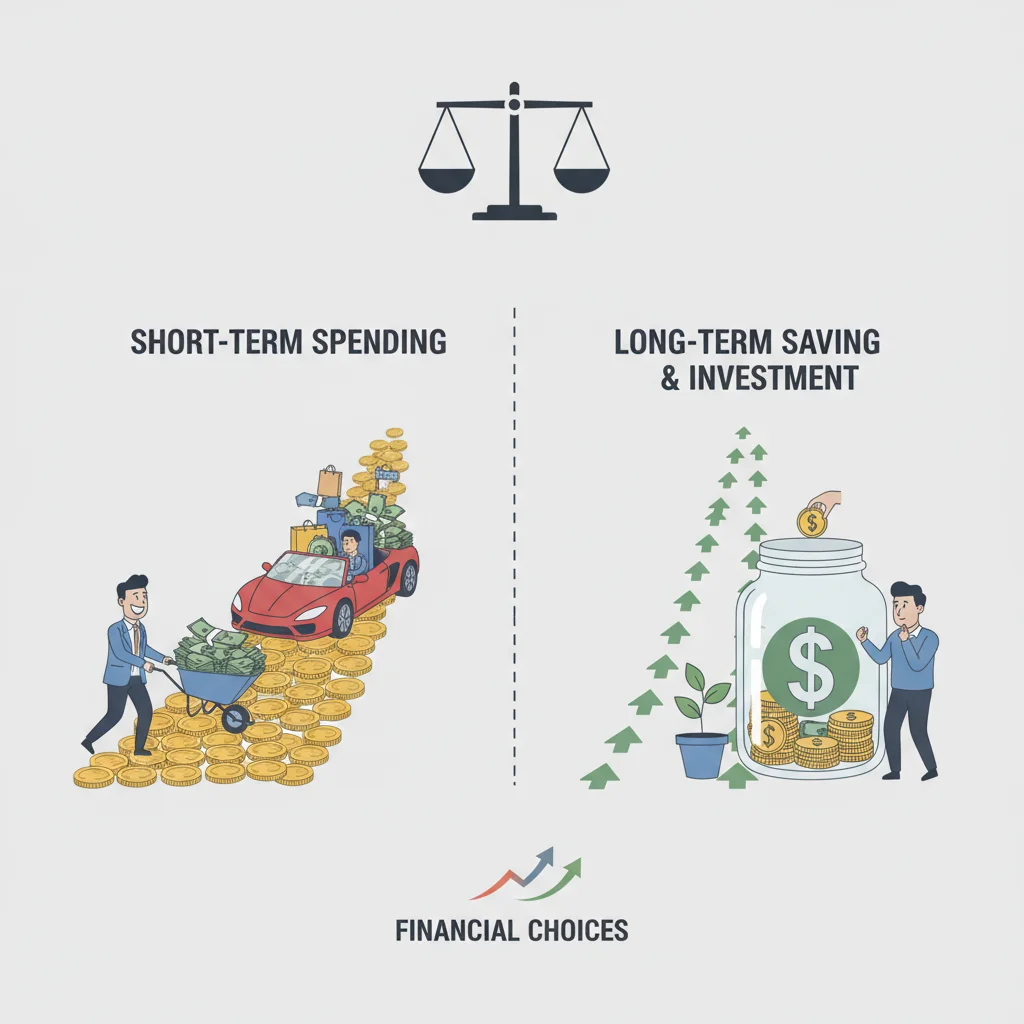
This is the single biggest risk of over-contributing upfront. Say you have $8,000 saved and your monthly expenses run $2,500. Putting $6,000 down on a car leaves you with just $2,000 in liquid savings — less than one month of runway. If your transmission fails the following month, or you face a medical bill, you're now juggling a car loan and high-interest debt.
The car loan, by contrast, is fixed and predictable. Your emergency fund is your defense against the unpredictable. Depleting it to lower a loan balance is trading a known risk for an unknown one — and the unknown one is usually worse.
Your Loan Rate Is Already Low
Interest savings from a larger down payment shrink fast when rates are low. Consider a $30,000 vehicle financed over 60 months at 4.9% APR. Putting down $3,000 (10%) versus $6,000 (20%) saves you roughly $370 in total interest over the life of the loan — about $6 per month. For many buyers, that $3,000 sitting in a high-yield savings account earning 4–5% annually generates comparable or greater returns.
This is the core of the opportunity cost argument. When the cost of borrowing is low and the return on liquid savings is meaningful, tying cash up in a depreciating asset is a net negative. The down payment trade-off between tapping savings and financing more gets into this math in detail.
You Have High-Rate Debt Elsewhere
If you're carrying a credit card balance at 22% APR or a personal loan at 15%, putting $5,000 into a car down payment instead of paying down that debt is an expensive mistake. Every dollar directed toward the car saves you 5–7% in auto loan interest. Every dollar applied to the credit card saves you 22%. The math overwhelmingly favors eliminating high-cost debt first.
You're Buying a Vehicle With Known High Depreciation
Some vehicles — particularly certain luxury cars, electric vehicles in rapidly evolving model segments, and high-volume domestic sedans — can shed 20–30% of their value in the first year alone. Putting a large down payment on such a vehicle doesn't slow that depreciation. You still lose the same dollar amount of equity; you've just front-loaded more of your own money into the loss. Compare how skipping a down payment versus putting 20% down affects total cost across different vehicle depreciation scenarios.
The Best Practices for Right-Sizing Your Down Payment
Rather than chasing a number, follow a framework that reflects your actual financial position. These practices will keep you from over-contributing — or under-contributing — based on your specific situation.
Protect your emergency fund before committing any down payment amount.
A car loan is a structured liability with predictable payments. An unexpected expense — job loss, medical bill, home repair — has no payment plan. Draining savings to reduce auto debt trades a known obligation for exposure to unpredictable, potentially higher-cost emergencies. Most financial planners recommend maintaining at least three to six months of expenses in liquid savings regardless of large purchases.
Calculate the actual interest savings of a larger down payment before committing.
Most buyers assume more down equals significant interest savings, but the real numbers are often surprising. On a $28,000 loan at 5.5% over 60 months, putting $5,600 down versus $2,800 down saves roughly $425 in interest over five years — about $7 per month. When you know the exact figure, you can weigh it against what that $2,800 could do elsewhere.
Pay off high-APR debt before directing extra cash toward an auto down payment.
Debt elimination is guaranteed, tax-free return. Putting $4,000 toward a 21% APR credit card saves you $840 in interest in the first year. Putting that same $4,000 into a 5.5% auto loan down payment saves you roughly $220. Every dollar has an optimal destination, and high-rate debt almost always wins.
Assess the specific vehicle's depreciation curve before deciding how much equity to build upfront.
Down payment creates initial equity, but depreciation erodes it regardless of how much you put down. On a vehicle that drops 25% in year one, a $35,000 purchase is worth roughly $26,250 in 12 months. A large down payment doesn't change that trajectory — it just means more of your own money is inside a falling asset. Vehicles with strong resale values make larger down payments more defensible.
Use down payment strategically when your credit score limits your loan options.
For buyers with credit scores below 660, a larger down payment can unlock meaningfully better interest rates or improve approval odds with prime lenders. This is one situation where the upfront cash genuinely earns its keep, because the rate differential on subprime loans is often 4–8 percentage points — worth thousands over a 60-month term.
Compare your loan rate against current savings and investment yields before finalizing your down payment.
When a high-yield savings account pays 4.5% and your auto loan charges 4.9%, the spread is only 0.4%. That narrow gap, combined with the liquidity premium of accessible cash, often makes keeping more money in savings the smarter choice. When rates flip — savings at 1%, loan at 7% — the calculus changes completely.
Opportunity Cost: The Hidden Price of Locking Cash in a Car
“Liquidity is not a luxury — it's a strategic asset. Tying up cash in a depreciating vehicle isn't the same as building wealth; it's simply shifting risk from one form to another.”
— Jonathan Clements, Personal finance author and former Wall Street Journal columnist
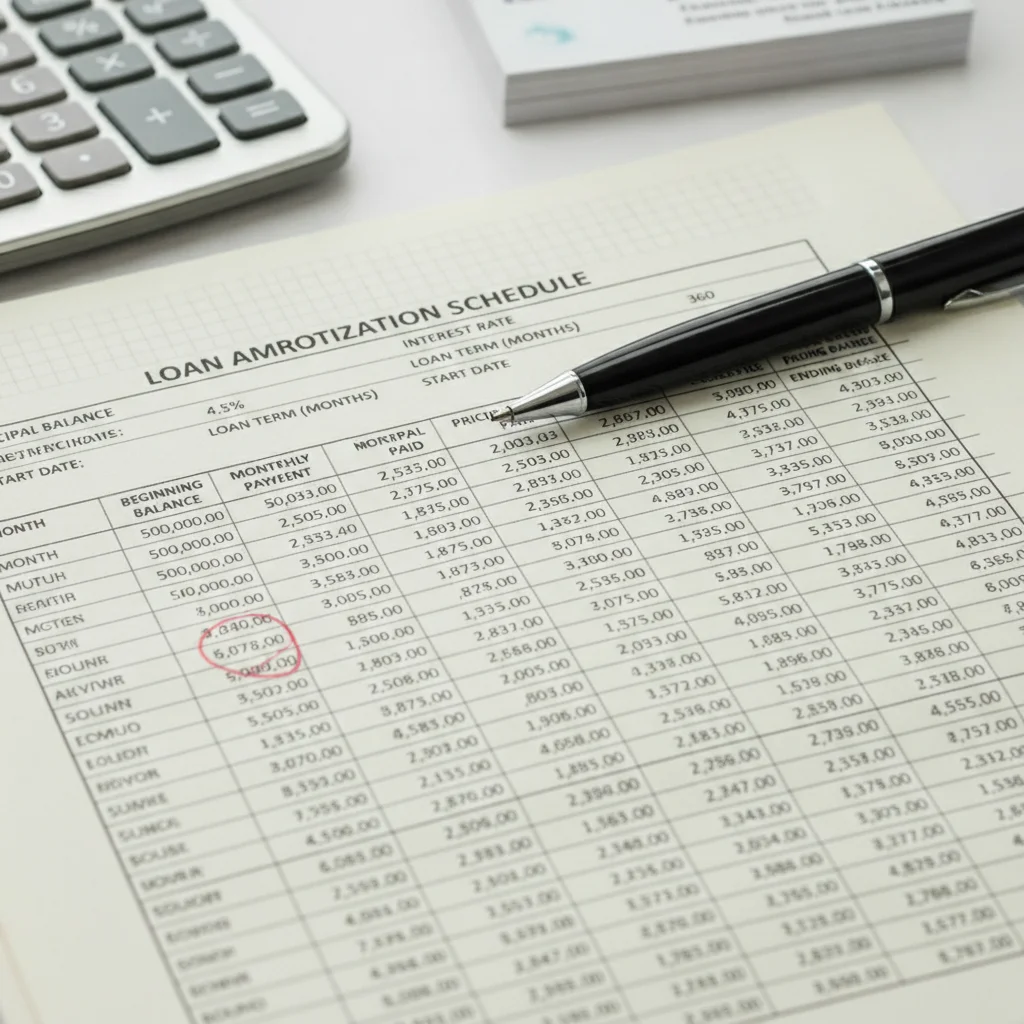
Opportunity cost is the concept most buyers ignore entirely — and it's often the most expensive mistake they make. When you put $10,000 down on a car, that money doesn't just disappear from your account. It converts into illiquid equity in a depreciating asset. You can't spend it, invest it, or access it without either selling the car or taking out a separate loan against it.
47%
Americans without $400 in emergency savings
According to the Federal Reserve's 2023 Report on the Economic Well-Being of U.S. Households, nearly half of adults could not cover a $400 emergency expense without borrowing.
20–30%
Average first-year depreciation on new cars
Industry data from automotive valuation sources consistently show new vehicles lose between 20% and 30% of their purchase price within the first 12 months of ownership.
$2,100
Interest difference between 9% and 12% auto loan
On a $25,000 loan over 60 months, the difference between a 9% and 12% APR translates to approximately $2,100 in additional total interest paid.
Compare that to keeping $10,000 in a high-yield savings account at 4.5% APR. Over five years, that balance grows to roughly $12,462 — before taxes. Against a 5% auto loan, the gap narrows, but the key difference is liquidity. The savings account money is accessible. Car equity is not.
This doesn't mean you should never put money down. It means that large down payments carry a real, measurable cost that most buyers never factor into their decision. See how 10% versus 20% down performs across loan cost and equity timelines if you want to see those numbers side by side.
The 4.5% Rule of Thumb
If your auto loan rate is within 1.5 percentage points of what a high-yield savings account currently pays, the opportunity cost of a large down payment is real and measurable. In that environment, keeping more cash liquid and financing a slightly larger loan amount is often the mathematically smarter move. This guideline shifts whenever the rate environment changes, so check current savings yields before finalizing your contribution.
Credit Score, Approval Odds, and When Down Payment Actually Helps
One scenario where a larger down payment genuinely pays off: when your credit score is limiting your loan options. Lenders use down payment size as a proxy for commitment and risk. A buyer putting 20% down on a vehicle is statistically less likely to default — and lenders price loans accordingly.
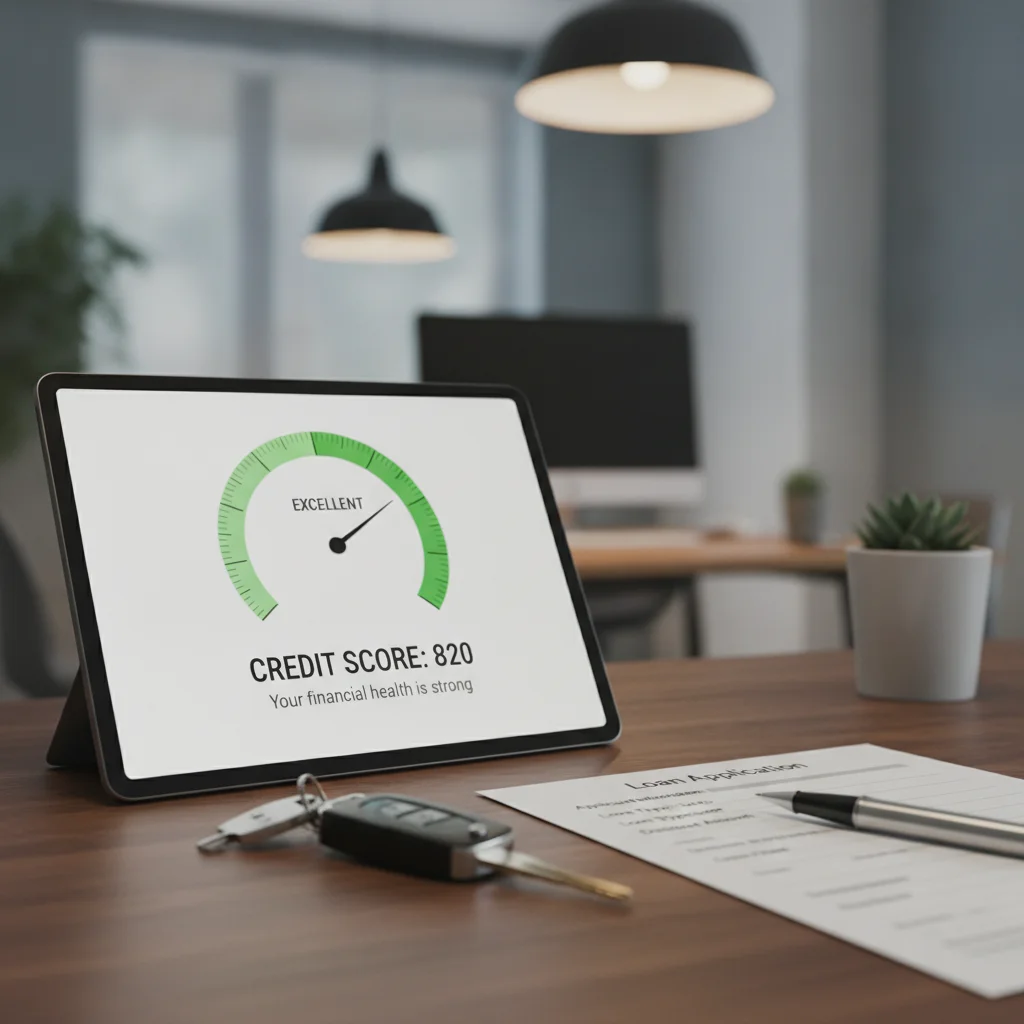
If your credit score is below 620, a larger down payment can meaningfully improve your approval odds and the interest rate you're offered. In some cases, it can be the difference between qualifying for a loan at 12% and qualifying at 9%. On a $25,000 loan over 60 months, that 3-point rate difference costs you approximately $2,100 in additional interest. Here, the down payment pays clear dividends.
But if your credit score is 720 or above, you're already in the tier where lenders are competing for your business. Your approval odds won't move meaningfully with a larger down payment, and the rate difference between putting 10% and 20% down may be negligible or zero. See how a large down payment compensates for a low credit score for a full breakdown of that relationship.
Down Payment Rules Vary by Lender
Some lenders have minimum down payment requirements — typically 10% for new vehicles and up to 20% for used — particularly for buyers with lower credit scores. Others have no minimum at all for qualified borrowers. Always confirm the lender's specific requirements before planning your contribution, as the floor may be set for you regardless of your financial preferences.
Loan-to-Value Ratio Matters More Than Dollar Amount
Lenders think in terms of loan-to-value (LTV) ratio — the loan balance relative to the vehicle's actual market value — rather than the raw dollar amount you put down. A $3,000 down payment on a $15,000 car (80% LTV) is treated very differently than the same $3,000 on a $40,000 car (92.5% LTV). Understanding where your LTV lands helps you evaluate whether more down actually changes your loan terms or approval tier.
The takeaway: use down payment strategically to solve a specific problem — poor credit, high loan-to-value ratio, or a vehicle with aggressive depreciation. Don't use it as a default setting regardless of your situation.
Quick Wins: Actions You Can Take Before Your Next Car Purchase
Before you decide how much to put down, run through these concrete steps. They take less than an hour and can save you thousands.
Building a Down Payment Decision Framework
Instead of anchoring to a fixed percentage, use a simple decision tree to determine what's right for your situation:
- Check your emergency fund first. If putting your intended down payment amount down would leave you with less than three months of expenses, scale back. Build the fund to that floor before committing more to the car.
- Price out your loan rate. Get pre-approved before you step on the lot. Knowing your actual rate lets you calculate real interest savings and compare them against what that cash could earn elsewhere.
- Audit your existing debt. If you carry any debt above 10% APR, that balance should take priority over increasing your car down payment.
- Research depreciation for the specific model. Vehicles that hold value well — certain trucks, SUVs, and Japanese brands with strong resale — make larger down payments more sensible. Fast-depreciating vehicles do not.
- Factor in your credit score tier. Below 660, a larger down payment does real work. Above 720, it offers diminishing returns on approval odds and rate improvement.
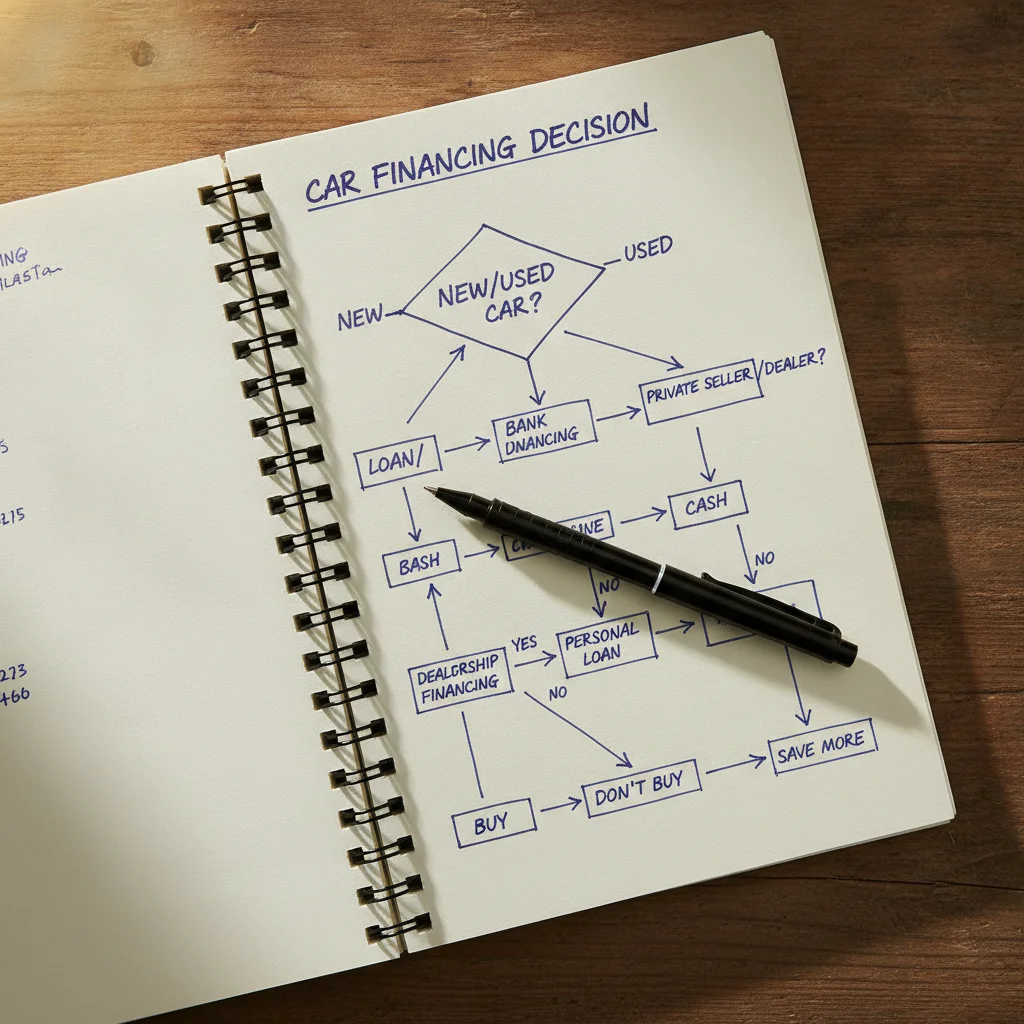
The key financial factors that should inform your down payment decision walks through this framework in greater detail, including how loan term length changes the calculation. And if you're currently short on down payment funds and considering waiting, practical options for boosting your upfront contribution gives you specific, actionable paths forward.
The goal isn't to minimize your down payment — it's to optimize it. For some buyers, that means 20%. For others, it means 5%. The difference lies in your specific numbers, not a universal rule.
Down Payment Rules Vary by Lender
Some lenders have minimum down payment requirements — typically 10% for new vehicles and up to 20% for used — particularly for buyers with lower credit scores. Others have no minimum at all for qualified borrowers. Always confirm the lender's specific requirements before planning your contribution, as the floor may be set for you regardless of your financial preferences.
Loan-to-Value Ratio Matters More Than Dollar Amount
Lenders think in terms of loan-to-value (LTV) ratio — the loan balance relative to the vehicle's actual market value — rather than the raw dollar amount you put down. A $3,000 down payment on a $15,000 car (80% LTV) is treated very differently than the same $3,000 on a $40,000 car (92.5% LTV). Understanding where your LTV lands helps you evaluate whether more down actually changes your loan terms or approval tier.

All claims are backed by peer-reviewed research. Sources on request.