Key Takeaways
Option A
No Down Payment (0% Down)
The low-barrier entry into car ownership.
Best for: Buyers with tight cash reserves who need a vehicle immediately and have stable income to manage a higher monthly payment.
Option B
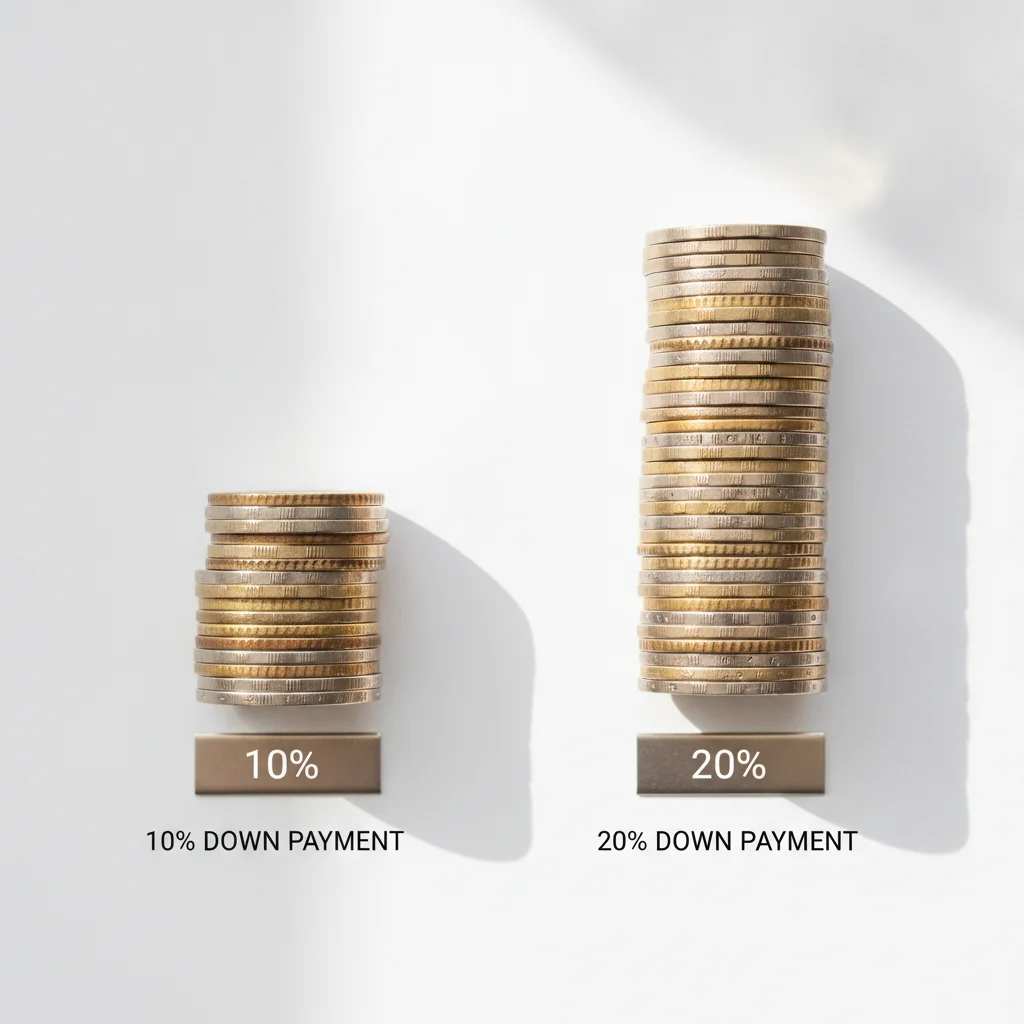
20% Down Payment
The financially disciplined approach that saves money over time.
Best for: Buyers who can delay a purchase long enough to save, want the lowest total cost of financing, and need protection against depreciation.
If you need a car right now and have little savings
No Down Payment (0% Down)
Zero-down financing gets you into a vehicle without depleting an emergency fund. Just be aware of the higher total cost and plan to pay extra toward principal early.
If you can wait 6–12 months and save up
20% Down Payment
The interest savings alone often exceed what that cash would earn in a savings account, making 20% down the better financial move for patient buyers.
If you're buying a new car and worried about depreciation
20% Down Payment
New vehicles lose 15–25% of value in year one. A 20% down payment keeps your loan balance close to actual car value, preventing an underwater situation.
If you have excellent credit and a strong emergency fund
No Down Payment (0% Down)
Top-tier borrowers sometimes qualify for 0% APR promotional financing, making zero-down cost-neutral — keep your cash invested and take the free money.
If you plan to trade in or sell within three years
20% Down Payment
Higher equity from day one means you're less likely to roll negative equity into your next loan, which is one of the most expensive mistakes in car buying.
Setting Up the Real Numbers
To make this comparison concrete, let's use a single scenario and run it two ways. Assume you're buying a new mid-size sedan with a sticker price of $35,000, financing over 60 months, and you qualify for a 7.5% APR — close to the national average for new-car loans as of 2024.
In Scenario A, you put $0 down. You finance the entire $35,000.
In Scenario B, you put $7,000 down (20%). You finance $28,000.
That $7,000 difference in principal seems straightforward, but the real cost gap is wider than most buyers expect once interest, equity, and rate differences enter the picture. Let's break each piece apart.
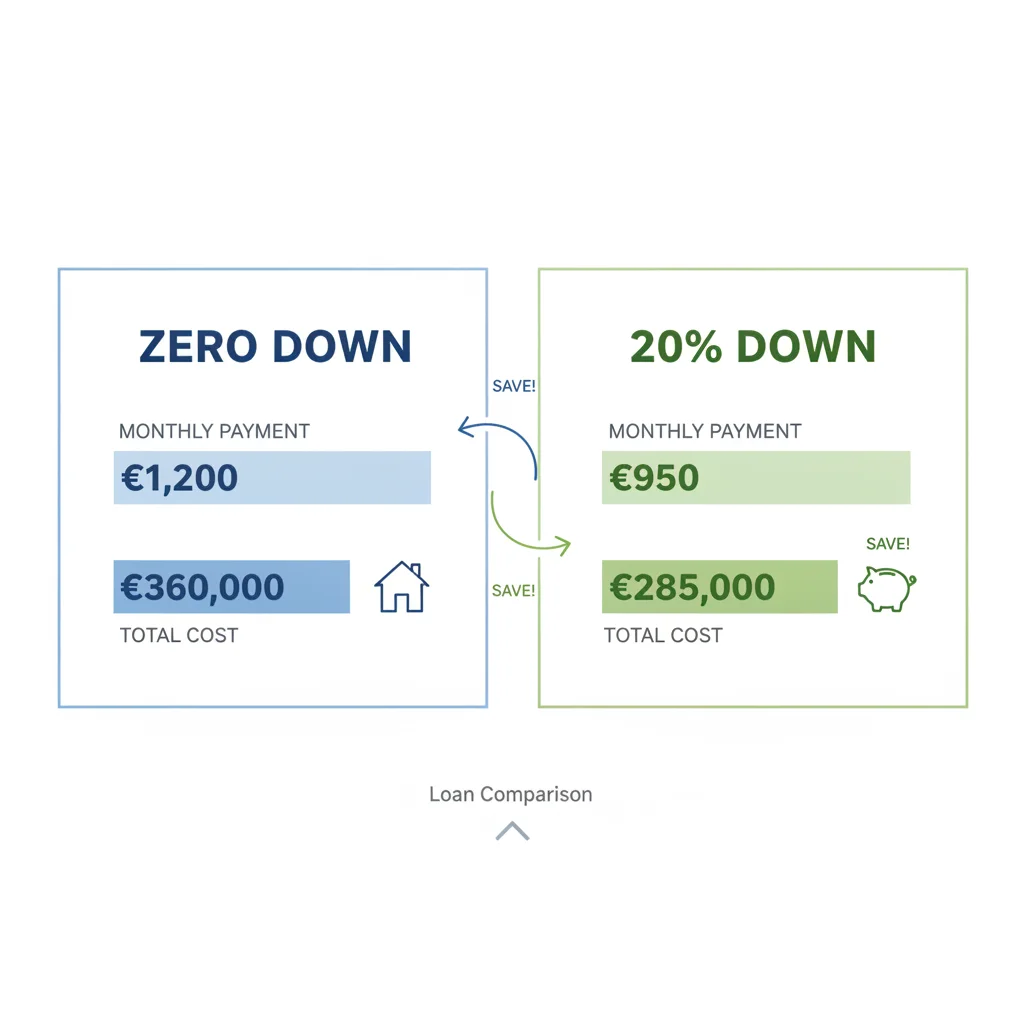
Before diving into the numbers, it's worth noting that down payment size and loan APR are linked. Lenders view borrowers who put more down as lower risk — they're less likely to default on a loan where they already have skin in the game. As a result, a 20% down payment often earns you a better interest rate. For this base comparison, we'll hold the APR constant at 7.5% to isolate the pure principal effect, then show what happens when the rate also improves.
Monthly Payment and Total Interest: Side by Side
Here's how the core math plays out with both scenarios using a standard amortizing loan formula at 7.5% APR over 60 months.
| Criterion | No Down Payment | 20% Down ($7,000) |
|---|---|---|
| Loan Amount | $35,000 | $28,000 |
| Monthly Payment (7.5% / 60 mo) | ~$700/month | ~$561/month |
| Total Interest Paid | ~$6,990 | ~$5,593 |
| Total Out-of-Pocket Cost | ~$41,990 | ~$40,593 |
| Equity at Month 12 | Negative (~–$1,600) | Near break-even |
| Upfront Cash Required | $0 | $7,000 |
| Risk of Going Underwater | High (year 1–2) | Low to none |
| Likely APR Impact | Higher rate risk | Better rate likely |
The monthly payment difference of roughly $139 might not sound dramatic at first. But multiply that by 60 payments and you get a total payment difference of about $8,340. Subtract the $7,000 you put down, and the net cost premium of going zero-down over 60 months is approximately $1,340 — even before accounting for any rate difference.
Now add the rate effect. Borrowers putting 20% down commonly qualify for APRs 0.5–1.0 percentage points lower. If your zero-down loan comes in at 7.5% but your 20%-down loan earns you 6.75%, the total interest paid drops from roughly $3,990 on the $28,000 loan to about $3,568. That's an additional $422 in savings just from the rate improvement — savings the zero-down borrower never sees.
~$1,397
Interest saved by putting 20% down
Based on a $35,000 loan at 7.5% APR over 60 months versus a $28,000 loan at the same rate.
20%
Average new-car depreciation in year one
According to Edmunds and iSeeCars data, new vehicles typically shed 15–25% of value within the first 12 months of ownership.
$139/mo
Monthly payment difference (0% vs 20% down)
Calculated on a $35,000 vehicle at 7.5% APR over 60 months; the gap widens if the 20%-down borrower also earns a lower rate.
12–18 months
Time zero-down borrowers are typically underwater
On a new car purchase with no down payment, most borrowers don't reach positive equity until the second year of the loan.
0.5–1.0%
Typical APR improvement with larger down payment
Lenders often offer better rates to borrowers with lower loan-to-value ratios, rewarding those who put more money down upfront.
For a deeper look at how APR shapes your true borrowing cost, see the Interest & APR hub, which walks through how even a half-point difference compounds over a loan term.
The Depreciation Problem: Why Zero Down Is Riskiest on New Cars
Interest cost is only part of the story. The more dangerous risk of a zero-down loan on a new vehicle is negative equity — owing more than the car is worth. This happens because new cars depreciate fast while loan balances shrink slowly in the early months of an amortizing loan.
Here's what that looks like in practice with our $35,000 car:
- Day 1 after purchase: The car is now a used vehicle. Dealers typically mark used versions of the same model 10–15% below new. Your car may already be worth $29,750–$31,500 while you owe $35,000.
- End of Year 1: Average new-car depreciation is 15–25%. At 20% depreciation, the car is worth $28,000. Your loan balance after 12 payments at 7.5% is approximately $29,600. You're underwater by roughly $1,600.
- End of Year 2: Depreciation slows but continues. Car value might be $24,500. Loan balance is roughly $23,800. You've finally crossed into positive equity — but it took two full years.
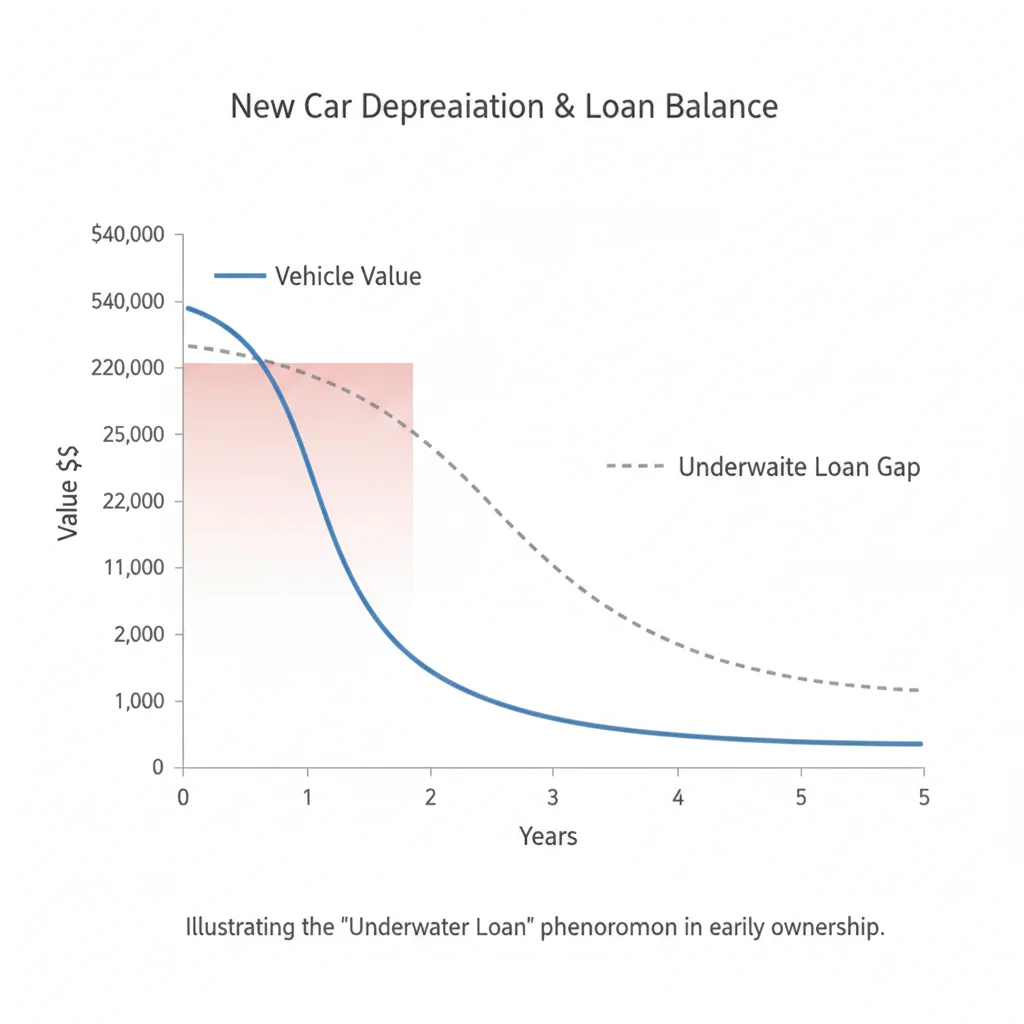
The zero-down borrower spends at least 12 months in a position where selling the car or trading it in would require paying cash out of pocket to close the loan gap. If a major life change forces a sale in that window — job loss, divorce, relocation — the financial damage can be severe.
The 20%-down borrower starts with a $28,000 loan on a car worth $35,000 — a $7,000 equity cushion. Even after year-one depreciation drops the car to $28,000, they're roughly at break-even. By month 18, they're solidly in positive equity territory.
APR and Down Payment Are Linked
Most lenders use loan-to-value (LTV) ratio as a key risk signal. A zero-down loan has an LTV of 100% or more once you factor in taxes and fees — a red flag for lenders. A 20% down payment drops LTV to 80%, often triggering a lower interest rate tier. Even a 0.5% APR reduction on a $28,000 loan saves over $400 over 60 months, on top of the principal savings already baked in.
Gap Insurance: A Zero-Down Must-Have
If you finance with no down payment on a new vehicle, gap insurance isn't optional — it's essential. Gap coverage pays the difference between what you owe and what your car is worth if it's totaled or stolen while you're underwater. Most dealers offer it, but prices vary widely; check with your auto insurer first, as it's often 20–40% cheaper than the dealer's add-on price.
Don't Forget Taxes and Fees
Sales tax, registration, and dealer fees typically add 8–12% to the out-the-door price of a vehicle. Zero-down buyers often roll these costs into the loan, meaning they're financing $38,000–$39,000 on a $35,000 car before a single payment is made. This makes the negative-equity window even larger. Buyers who put 20% down and pay taxes and fees separately avoid this compounding problem entirely.
If you want to understand how rolling negative equity from one car into the next loan creates a compounding debt spiral, the article on zero-down auto loans explains what borrowers are really agreeing to when they skip the down payment entirely.
The Full Cost Comparison Over 60 Months
Let's consolidate all the costs into a single clear picture, using the same 7.5% APR for both scenarios to show the pure principal effect.
- Zero-Down Scenario (finance $35,000 at 7.5% / 60 months)
- Monthly payment: ~$700
- Total paid over loan: ~$41,990
- Total interest paid: ~$6,990
- Equity position at Month 12: Negative (roughly –$1,600)
- 20%-Down Scenario (finance $28,000 at 7.5% / 60 months)
- Monthly payment: ~$561
- Total paid over loan: ~$33,593
- Total out-of-pocket (including $7,000 down): ~$40,593
- Total interest paid: ~$5,593
- Equity position at Month 12: Near break-even or slightly positive
The 20%-down borrower pays $1,397 less in total interest even with the same APR, and their monthly cash flow is $139 lighter every single month. That freed-up cash can go toward an emergency fund, retirement contributions, or paying down the car loan even faster.
See exactly how down payment size changes your loan-to-value ratio and what that means for your total financing cost across different loan terms.
And if you're comparing 20% against a middle-ground option, putting 10% versus 20% down shows where the performance gap really opens up.
When Zero Down Actually Makes Sense
This comparison isn't an argument that zero-down financing is always wrong. There are legitimate scenarios where skipping the down payment is the rational choice.
Scenario 1: You Qualify for 0% APR Promotional Financing
Some manufacturers offer 0% APR deals on certain models during slow sales periods. If you genuinely qualify for 0% — not a deferred-interest trap, but true zero interest — there is no financial cost to borrowing more. In that case, keeping your $7,000 in a high-yield savings account at 5% earns you real money while the car loan costs you nothing.
Scenario 2: Your Emergency Fund Is Thin
Depleting all your savings to make a large down payment is a different kind of financial risk. If a $1,200 car repair or medical bill would wipe you out a month after buying, preserving cash liquidity has real value. The article on tapping savings versus financing more explores how to weigh that liquidity risk against interest cost.
Scenario 3: You're Buying a Used Car at a Deep Discount
If you're buying a two- or three-year-old vehicle already past its steepest depreciation curve, the underwater-loan risk shrinks considerably. A used car bought at $18,000 that's actually worth $19,500 in private-party market gives you built-in equity even without a down payment.
That said, it's worth reading the honest counterargument: why putting more down doesn't always make financial sense before committing to either extreme.
APR and Down Payment Are Linked
Most lenders use loan-to-value (LTV) ratio as a key risk signal. A zero-down loan has an LTV of 100% or more once you factor in taxes and fees — a red flag for lenders. A 20% down payment drops LTV to 80%, often triggering a lower interest rate tier. Even a 0.5% APR reduction on a $28,000 loan saves over $400 over 60 months, on top of the principal savings already baked in.
Gap Insurance: A Zero-Down Must-Have
If you finance with no down payment on a new vehicle, gap insurance isn't optional — it's essential. Gap coverage pays the difference between what you owe and what your car is worth if it's totaled or stolen while you're underwater. Most dealers offer it, but prices vary widely; check with your auto insurer first, as it's often 20–40% cheaper than the dealer's add-on price.
Don't Forget Taxes and Fees
Sales tax, registration, and dealer fees typically add 8–12% to the out-the-door price of a vehicle. Zero-down buyers often roll these costs into the loan, meaning they're financing $38,000–$39,000 on a $35,000 car before a single payment is made. This makes the negative-equity window even larger. Buyers who put 20% down and pay taxes and fees separately avoid this compounding problem entirely.
What This Means for Your Monthly Budget
Beyond the total-cost math, the monthly payment difference has real quality-of-life implications. A $139/month difference over five years is $8,340 — but it's also $139 every single month that either sits in your pocket or goes toward interest depending on which path you chose.
Consider what that $139 monthly surplus could do if you're in the 20%-down camp:
- Extra loan payments: Applying an extra $139/month to principal starting in month one on the $28,000 loan would cut the payoff time by roughly 9 months and save an additional $600+ in interest.
- Emergency fund top-up: If you drew down savings to make the down payment, you could rebuild a $5,000 emergency fund in about 36 months using just that freed-up payment difference.
- Investment contributions: $139/month invested in a broad index fund over 60 months at a historical average 8% return would grow to roughly $10,200.
The relationship between down payment size and monthly payment is direct and predictable — every dollar down reduces what you owe, which reduces the interest that accrues on that balance each month.
For borrowers wondering how loan length interacts with all of this, the Loan Terms Explained hub breaks down what stretching or shortening your loan term actually costs you in interest and monthly obligation.
APR and Down Payment Are Linked
Most lenders use loan-to-value (LTV) ratio as a key risk signal. A zero-down loan has an LTV of 100% or more once you factor in taxes and fees — a red flag for lenders. A 20% down payment drops LTV to 80%, often triggering a lower interest rate tier. Even a 0.5% APR reduction on a $28,000 loan saves over $400 over 60 months, on top of the principal savings already baked in.
Gap Insurance: A Zero-Down Must-Have
If you finance with no down payment on a new vehicle, gap insurance isn't optional — it's essential. Gap coverage pays the difference between what you owe and what your car is worth if it's totaled or stolen while you're underwater. Most dealers offer it, but prices vary widely; check with your auto insurer first, as it's often 20–40% cheaper than the dealer's add-on price.
Don't Forget Taxes and Fees
Sales tax, registration, and dealer fees typically add 8–12% to the out-the-door price of a vehicle. Zero-down buyers often roll these costs into the loan, meaning they're financing $38,000–$39,000 on a $35,000 car before a single payment is made. This makes the negative-equity window even larger. Buyers who put 20% down and pay taxes and fees separately avoid this compounding problem entirely.
One final note: the best down payment isn't always the largest one. It's the one that balances total loan cost, cash reserves, and your actual financial goals. Run your own numbers with a real amortization calculator before committing — and treat the 20% benchmark as a strong default, not an absolute rule.

All claims are backed by peer-reviewed research. Sources on request.