| Standard new car down payment target | 20% of purchase price (Widely cited lender and financial planner guidance) |
| Standard used car down payment target | 10–15% of purchase price (Consumer financial planning benchmarks) |
| Average new car transaction price (U.S.) | ~$48,000 (Kelley Blue Book, 2024) |
| Typical first-year depreciation (new car) | 15–20% of value (Edmunds depreciation research) |
| Average five-year depreciation (new car) | 40–60% of original value (Varies by brand and category) |
| Lender minimum down payment (subprime buyers) | Often 10–20% required (Varies by lender and credit tier) |
Why Down Payment Benchmarks Matter
When you finance a car, the down payment you bring to the table does two things immediately: it reduces the amount you borrow, and it creates a cushion against depreciation. A vehicle can lose 15–20% of its value in the first year alone. If you owe more than the car is worth — a condition called being underwater or upside-down — you're financially exposed the moment you drive off the lot.
Benchmarks give you a concrete target. Rather than guessing what "a reasonable amount" looks like, you can anchor your planning to a percentage range that lenders, financial planners, and seasoned buyers have validated over time. The standard rule of thumb is 20% down on a new car and 10% down on a used car, but that headline number ignores how drastically vehicle prices vary. A 20% down payment on a $20,000 economy sedan is $4,000. The same percentage on a $65,000 pickup truck is $13,000. The mechanics are the same; the cash requirement is not.
This reference breaks down recommended down payment ranges by vehicle price tier — budget, midrange, and luxury — so you can see exactly what you're targeting before you walk into a dealership. For a deeper look at how to build that fund without disrupting your monthly finances, see our guide on saving for a car down payment.
| Standard new car down payment target | 20% of purchase price (Widely cited lender and financial planner guidance) |
| Standard used car down payment target | 10–15% of purchase price (Consumer financial planning benchmarks) |
| Average new car transaction price (U.S.) | ~$48,000 (Kelley Blue Book, 2024) |
| Typical first-year depreciation (new car) | 15–20% of value (Edmunds depreciation research) |
| Average five-year depreciation (new car) | 40–60% of original value (Varies by brand and category) |
| Lender minimum down payment (subprime buyers) | Often 10–20% required (Varies by lender and credit tier) |
Down Payment Benchmarks by Price Tier
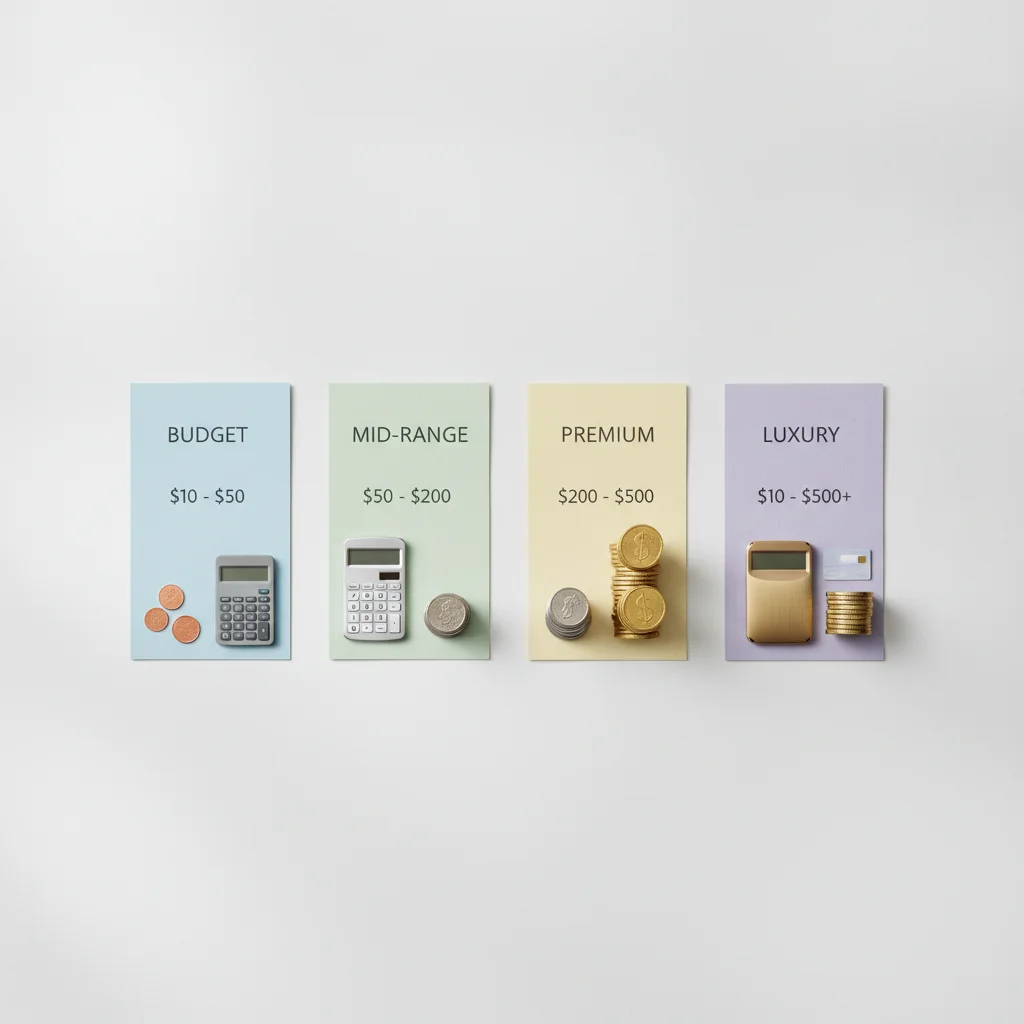
The table below shows recommended down payment ranges at four vehicle price points, split between new and used purchases. Use it as a starting reference — your actual target should account for your credit score, loan term, and monthly budget ceiling.
| Vehicle Price | Tier | New Car (20%) | Used Car (10–15%) | Strong Position (25%+) |
|---|---|---|---|---|
| $15,000–$25,000 | Budget | $3,000–$5,000 | $1,500–$3,750 | $3,750–$6,250 |
| $25,000–$45,000 | Midrange | $5,000–$9,000 | $2,500–$6,750 | $6,250–$11,250 |
| $45,000–$65,000 | Upper Midrange | $9,000–$13,000 | $4,500–$9,750 | $11,250–$16,250 |
| $65,000–$100,000+ | Luxury / Premium | $13,000–$20,000+ | $6,500–$15,000+ | $16,250–$25,000+ |
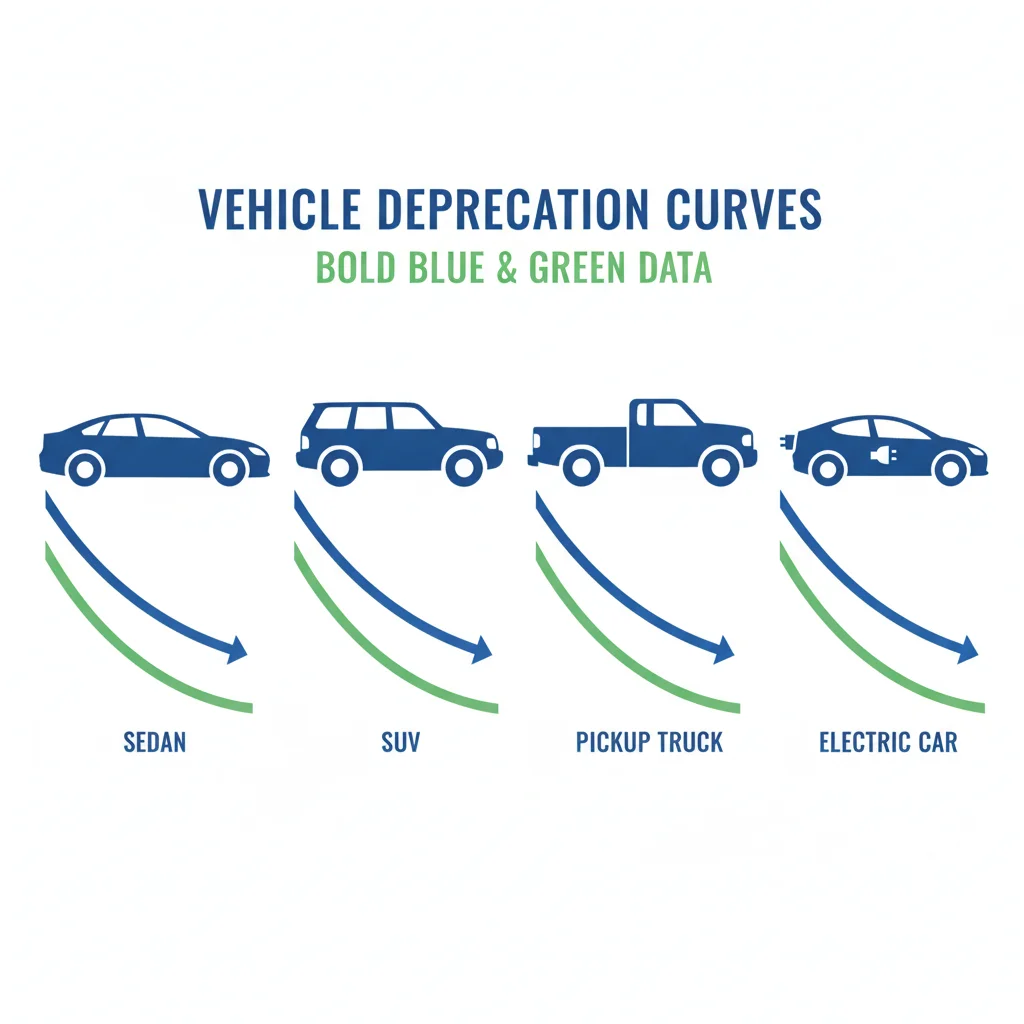
A few things to notice in this table. First, the absolute dollar gap between the minimum and "strong position" columns widens considerably as vehicle price rises. On a $20,000 used car, the difference between 10% and 25% is about $3,000 — meaningful, but manageable. On an $85,000 luxury sedan, that spread can exceed $12,000. Second, for used vehicles, the recommended minimum is lower in percentage terms (10–15%) because depreciation has already done some of the heavy lifting. The original new-car buyer absorbed the steepest part of the depreciation curve, so your equity risk at purchase is lower. For a full breakdown of how depreciation curves differ by vehicle category, see our depreciation rate benchmarks by vehicle category.
20%
Recommended minimum down on a new car
Industry standard cited by consumer finance advisors and major lenders to keep buyers equity-positive from day one.
$1,684+
Interest saved by putting 20% down vs. 0% on a $42,000 loan
Based on a 60-month loan at 7.5% APR — a concrete example of how upfront cash reduces total financing cost.
15–20%
New vehicle value lost in year one
According to Edmunds depreciation data, making a down payment below this threshold leaves buyers underwater immediately.
50–60%
Five-year depreciation on many luxury sedans
Elevated depreciation in the luxury segment is why financial advisors recommend 25–30% down on premium vehicles.
What Each Tier Looks Like in Practice
Budget Vehicles ($15,000–$25,000)
This tier covers economy sedans, compact crossovers, and base-trim pickup trucks. On a new $22,000 compact sedan financed over 60 months at 7% APR, a 20% down payment ($4,400) cuts your monthly payment from roughly $435 (zero down) to about $348. Over five years, that's nearly $5,200 in interest savings combined with lower payment exposure. For a used vehicle in this range — say, a three-year-old compact with 35,000 miles priced at $17,000 — a 10% down payment ($1,700) keeps you in an equity-positive position from day one, assuming a standard 48-month loan.
Midrange Vehicles ($25,000–$45,000)
Midrange covers most family SUVs, midsize trucks, and well-equipped sedans. These vehicles depreciate at moderate rates — typically 40–60% over five years depending on brand and model. A 20% down payment on a $38,000 midsize SUV ($7,600) keeps your loan-to-value ratio healthy even through the steeper first-year drop. If you're financing a used midrange vehicle, target 15% rather than the bare 10% minimum, because popular used models in this tier often carry a slight premium over their depreciated book value — especially in tight inventory markets. For a full framework on computing the right number for your situation, see how to calculate the right down payment.
Upper Midrange Vehicles ($45,000–$65,000)
This tier includes loaded trucks, performance SUVs, and near-luxury sedans. Depreciation risk is more varied here — a well-regarded truck may hold value better than a near-luxury European sedan. As a rule, lean toward the upper end of the 20% benchmark (closer to 22–25%) for vehicles known for faster depreciation. On a $55,000 purchase, 25% down ($13,750) versus 10% down ($5,500) reduces your financed balance by $8,250. At 7% APR over 60 months, that difference saves you approximately $2,200 in interest and reduces monthly payments by roughly $162.
Luxury and Premium Vehicles ($65,000–$100,000+)
Luxury vehicles present the highest depreciation risk. Many luxury sedans lose 50–60% of their value within five years. That means a $90,000 luxury car could be worth $36,000–$45,000 at trade-in time — a steep drop relative to your outstanding loan if you financed with a small down payment. The recommended minimum here rises to 20–25% on a new purchase, and savvy buyers often target 30% if the vehicle is known for aggressive depreciation. For used luxury vehicles, remember that lender loan-to-value limits also tighten: some lenders cap financing at 80–85% of book value on older luxury models, effectively requiring a higher down payment regardless of your preference. If you're considering the used luxury market, our guide on buying used cars covers what to watch for during evaluation.
Lender LTV Limits Can Override Your Preference
Some lenders cap how much they'll finance as a percentage of a vehicle's book value — typically 80–125% LTV, depending on credit tier and vehicle age. If a lender's cap is 90% LTV and your vehicle appraises below the asking price, you may be required to bring a larger down payment than you planned. Always verify the lender's LTV policy before finalizing your down payment target.
Trade-In Equity Counts as a Down Payment
If you're trading in a vehicle with positive equity, that amount is applied directly to your down payment. For example, $5,000 in trade-in equity on a $40,000 purchase effectively gives you a 12.5% down payment before you add any cash. Use a valuation tool to confirm your trade-in value before negotiating so you know exactly what equity you're bringing to the table.
Minimum ≠ Optimal for High-Risk Credit Profiles
Buyers with credit scores below 640 often face higher APRs — sometimes 12–18% or more in subprime tiers. At these rates, putting down only the lender minimum dramatically increases total interest paid. A higher down payment at a high APR returns more savings per dollar than the same payment at a low APR, making the case for a larger upfront sum even stronger when credit is challenged.
How a Bigger Down Payment Changes Your Loan Math
It helps to see the numbers side by side. The example below uses a $42,000 midrange SUV, a 60-month loan term, and a 7.5% APR — roughly the average rate for buyers with good-but-not-excellent credit in a mid-rate environment.
| Down Payment | % of Price | Amount Financed | Monthly Payment | Total Interest Paid |
|---|---|---|---|---|
| $0 | 0% | $42,000 | $840 | $8,420 |
| $4,200 | 10% | $37,800 | $756 | $7,578 |
| $8,400 | 20% | $33,600 | $672 | $6,736 |
| $12,600 | 30% | $29,400 | $588 | $5,894 |
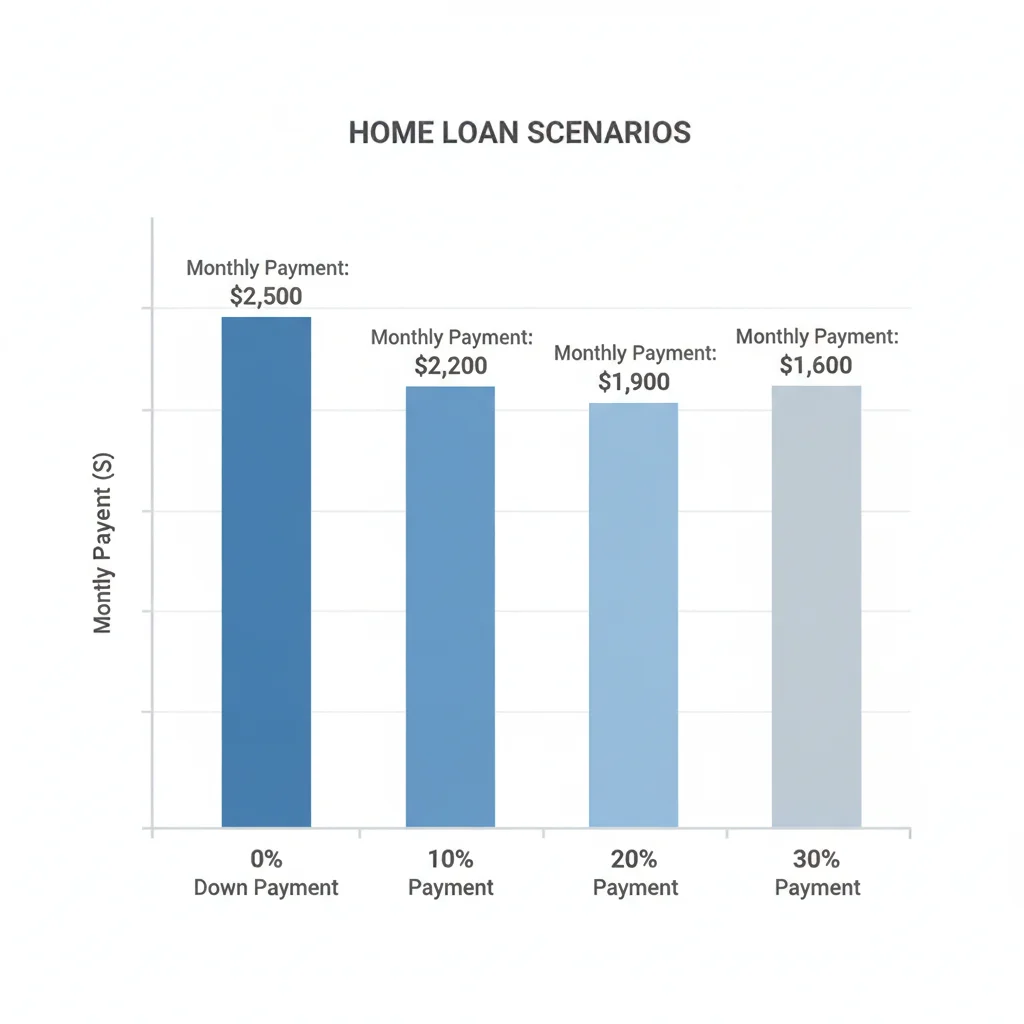
Notice that moving from 0% to 20% down cuts monthly payments by $168 and saves over $1,684 in interest over five years. Moving from 20% to 30% saves an additional $842 in interest and drops the payment by another $84 per month. Each additional dollar up front returns roughly $1.20 in avoided interest costs over a standard 60-month term — a modest but guaranteed return.
What the table doesn't show is the equity benefit. With a 20% down payment, you enter positive equity territory immediately. With zero down, you may be upside-down for 12–18 months on a fast-depreciating vehicle. If the car is totaled during that window, your insurance payout covers the car's market value — not your outstanding loan balance. That gap comes out of your pocket unless you carry GAP insurance.
Before you finalize how much to put down, it's also worth reviewing the broader set of factors covered in things to know before deciding how much to put down on a car — including how your emergency fund size and loan term should influence the decision.
Glossary of Key Terms
If any terms in this reference feel unfamiliar, the definitions below cover the concepts you'll encounter most when researching down payments and auto financing.
Down payment
The cash amount you pay upfront when purchasing a vehicle, reducing the amount you need to borrow. A larger down payment lowers monthly payments and total interest paid.
Loan-to-value ratio (LTV)
The ratio of your loan balance to the vehicle's current market value. An LTV above 100% means you owe more than the car is worth — a state called being upside-down.
Upside-down / underwater
When your outstanding loan balance exceeds the vehicle's current market value. This situation leaves you exposed if the car is totaled or you need to sell before the loan is paid off.
Depreciation
The decline in a vehicle's market value over time. New cars typically lose 15–20% of value in the first year and 40–60% over five years, though rates vary widely by make and model.
GAP insurance
Guaranteed Asset Protection insurance covers the difference between what your auto insurer pays out (market value) and what you still owe on your loan if the vehicle is totaled or stolen.
APR (Annual Percentage Rate)
The true annual cost of borrowing, expressed as a percentage. It includes the base interest rate and any lender fees, making it the most accurate figure for comparing loan offers.
Equity
The portion of the vehicle's value you actually own — calculated as current market value minus remaining loan balance. Positive equity means the car is worth more than you owe.
Trade-in value
The amount a dealer will credit toward your next purchase in exchange for your current vehicle. Trade-in value can effectively act as a down payment on a new loan.
Tools and Next Steps
Knowing the benchmarks is the first step. Applying them to your specific vehicle, loan term, and credit profile is where the real planning begins. The resources below will help you move from reference to decision.
Auto Loan Down Payments: The Complete Breakdown
An end-to-end resource covering down payment strategy, loan math, lender expectations, and common pitfalls. The right starting point if you want the full picture beyond benchmarks.
How to Calculate the Right Down Payment for Any Car
A step-by-step method for computing a personalized down payment target based on vehicle price, your loan term, APR, and financial goals.
Saving for a Car Down Payment Without Derailing Your Budget
Practical strategies for building your down payment fund month by month while keeping your regular expenses and emergency savings intact.
Valuation Tools Hub
Understand how KBB, Edmunds, and other pricing platforms estimate vehicle value — essential for confirming that your down payment target is calibrated to the right purchase price.
Depreciation Rate Benchmarks by Vehicle Category
Sedans, SUVs, trucks, and EVs all depreciate at different rates. Use these benchmarks to understand your equity risk before choosing how much to put down.
Things to Know Before Deciding How Much to Put Down
Key financial factors — from emergency fund size to loan term length — that should shape your down payment decision before you commit to a number.
One final note on timing: down payment benchmarks are not one-size-fits-all, and market conditions affect what's practical. In a high-interest-rate environment, putting more down lowers your financed balance and partially offsets the rate impact. In a low-rate environment, you might reasonably put less down and invest the difference — though most buyers are better served by the guaranteed savings of a larger down payment. For a complete picture of down payment strategy, loan mechanics, and lender expectations in one place, see our auto loan down payments complete breakdown. To understand how pricing tools factor into your target vehicle's value — and therefore your down payment target — explore our valuation tools hub.

All claims are backed by peer-reviewed research. Sources on request.