| Superprime threshold (FICO) | 781–850 (FICO standard auto lending tiers) |
| Prime tier range | 661–780 (FICO standard auto lending tiers) |
| Near-prime tier range | 601–660 (FICO standard auto lending tiers) |
| Subprime tier range | 501–600 (FICO standard auto lending tiers) |
| Deep subprime range | 300–500 (FICO standard auto lending tiers) |
| Typical dealer rate markup | 1–3 percentage points (Consumer Financial Protection Bureau findings) |
| Rate shopping inquiry window | 14–45 days (FICO scoring model rules) |
| Preferred credit utilization ratio | Below 30% (ideally <10%) (FICO scoring factor guidance) |
Why Your Credit Score Is Your First Negotiating Tool
Most buyers think negotiation starts at the dealership. It doesn't. It starts the moment you check your credit score — because that number determines which lenders will talk to you, what rate they'll offer, and how much leverage you actually have when you sit down in the finance office.
Here's what dealers don't advertise: they make money on financing. When you walk in without a preapproval, the dealership's finance manager shops your loan to their network of lenders and marks up the rate — sometimes by 1 to 3 percentage points above what the lender actually quoted. That markup goes straight into dealership profit. A preapproval from your own bank or credit union shuts that game down immediately.
But preapproval odds aren't uniform. A buyer with a 780 FICO score applying through a credit union will get a very different experience than one at 590 applying through an online lender. Understanding where you fall — and what lenders expect at each tier — lets you target the right lenders, set realistic expectations, and show up at the dealership with a number the finance manager has to beat.
| Superprime threshold (FICO) | 781–850 (FICO standard auto lending tiers) |
| Prime tier range | 661–780 (FICO standard auto lending tiers) |
| Near-prime tier range | 601–660 (FICO standard auto lending tiers) |
| Subprime tier range | 501–600 (FICO standard auto lending tiers) |
| Deep subprime range | 300–500 (FICO standard auto lending tiers) |
| Typical dealer rate markup | 1–3 percentage points (Consumer Financial Protection Bureau findings) |
| Rate shopping inquiry window | 14–45 days (FICO scoring model rules) |
| Preferred credit utilization ratio | Below 30% (ideally <10%) (FICO scoring factor guidance) |
This reference guide breaks down every major credit score range, what it signals to lenders, how it affects preapproval likelihood, and what loan terms you can realistically expect. Use it before you apply for anything.
The Five Credit Score Tiers — At a Glance
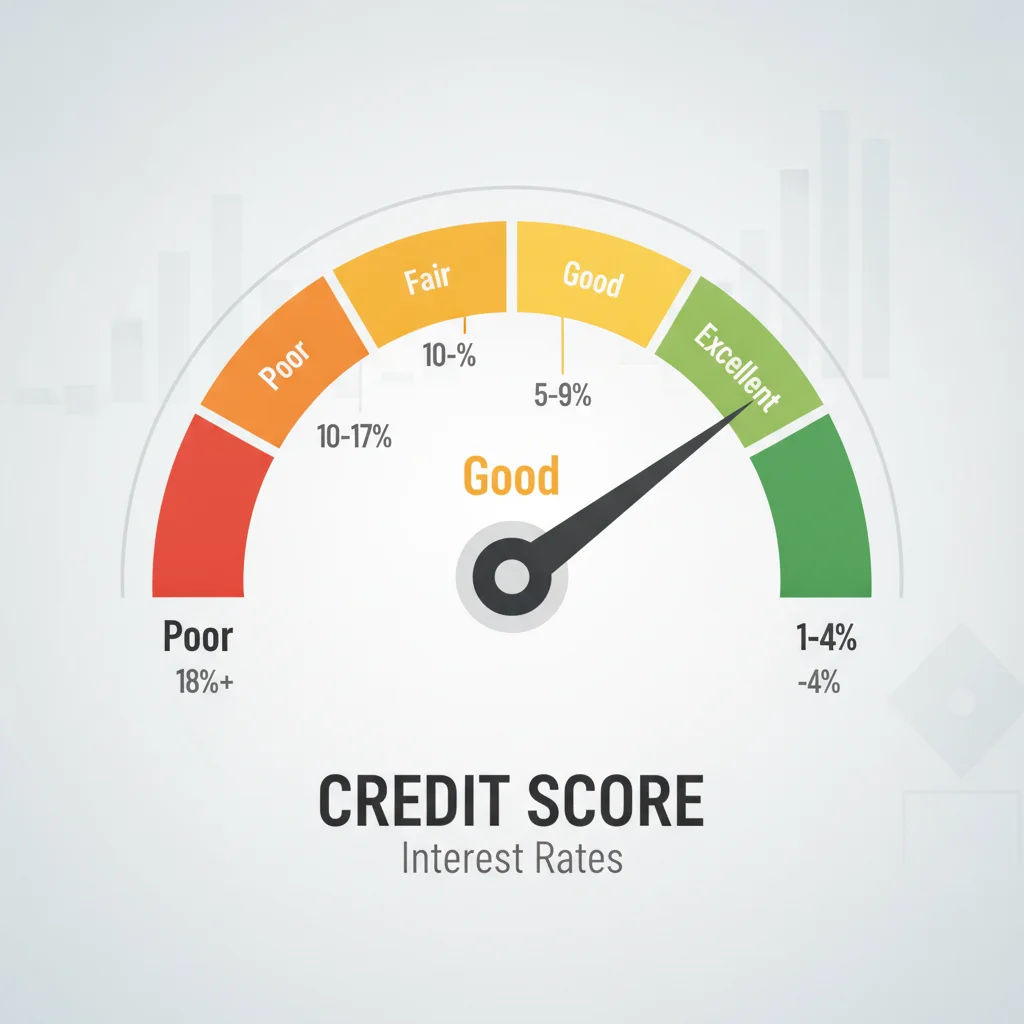
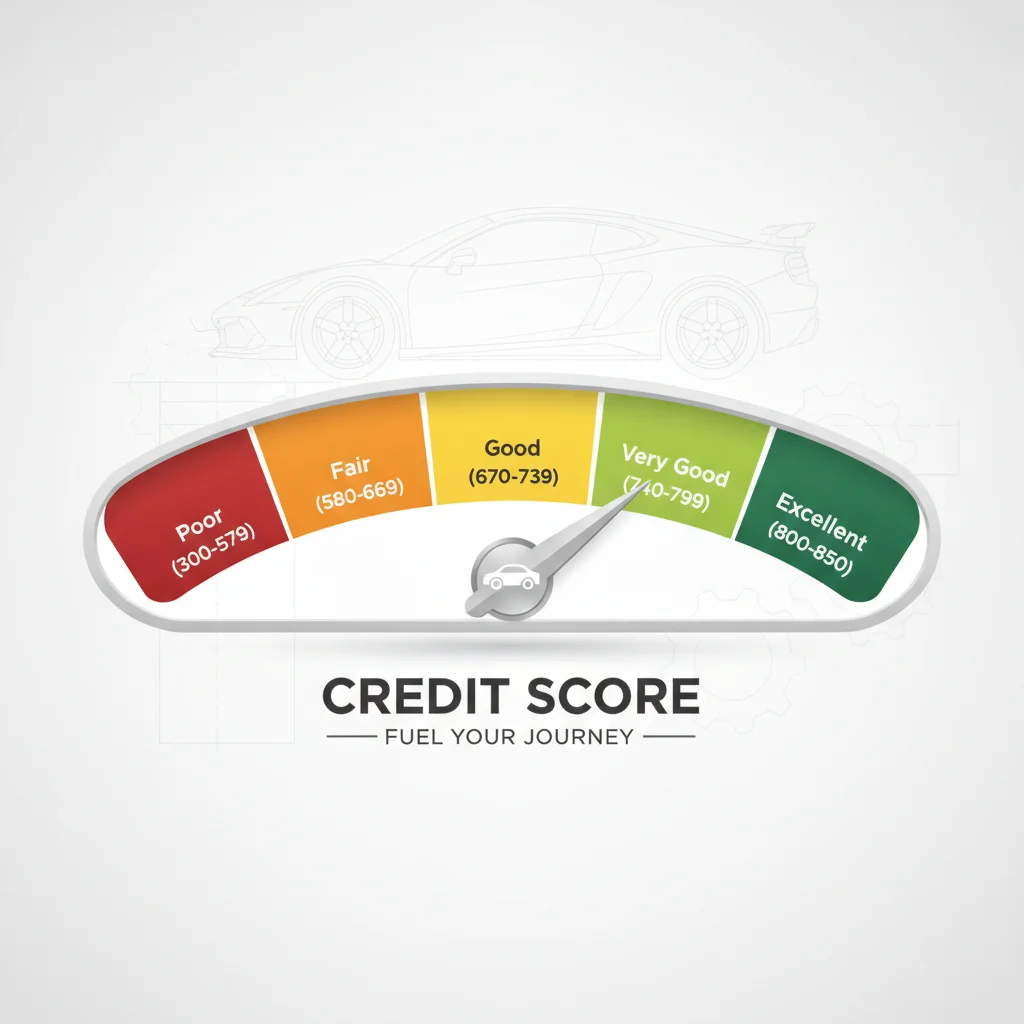
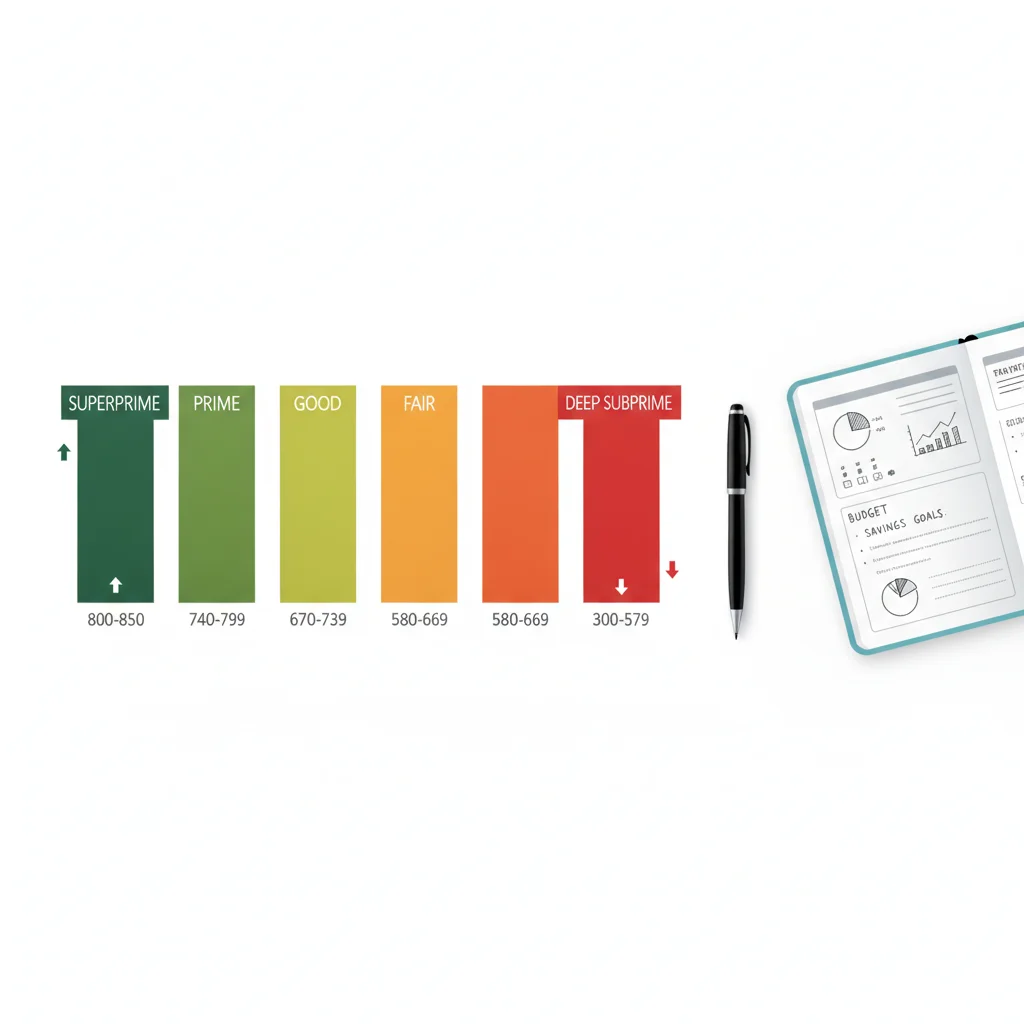
Auto lenders use a tiered system to categorize borrowers by risk. The boundaries shift slightly between lenders — a regional credit union might define "prime" differently than a captive manufacturer lender — but the framework below reflects industry-standard ranges used by the majority of U.S. auto lenders. For a detailed look at how these tiers translate into specific APR ranges, see our auto loan rates by credit score breakdown.
Superprime: 781–850
Lenders compete for this borrower. Approval is near-automatic at virtually every institution, including the most selective banks. Expect the lowest available APRs — often within 0.5% of a lender's advertised floor — and the widest choice of loan terms from 24 to 84 months. If you're here, your only job is to shop at least three lenders and let them bid against each other.
Prime: 661–780
Still strong. Most banks, credit unions, and online lenders will preapprove borrowers in this range without hesitation. Rates are competitive, though you'll pay a modest premium above superprime offers. Longer terms (72–84 months) are generally available but come with noticeably higher total interest costs. The preapproval process is typically fast — often same-day — and conditional approvals are rare.
Near-Prime: 601–660
This is where the market starts to segment. Major banks may approve you but at significantly higher rates; credit unions tend to be more favorable if you have an existing relationship. Some lenders may require a larger down payment (10–15%) or impose loan-to-value caps. Preapprovals still come through, but you'll want to apply to multiple lenders rather than assuming the first offer is competitive. Understanding exactly how lenders define these thresholds can help you decide which institutions to target first.
Subprime: 501–600
Preapproval is possible but not guaranteed. You're now in the territory where most traditional banks decline direct applications, and you'll need to look to credit unions, buy-here-pay-here dealers, or specialized subprime auto lenders. Rates jump sharply — often into double digits — and loan terms may be restricted to 48 or 60 months to limit lender exposure. Expect to put more money down, sometimes 15–20%, and anticipate income verification requirements. For more on navigating this tier, getting preapproved with less-than-perfect credit walks through which lenders specialize here.
Deep Subprime: 300–500
Traditional preapproval through a bank or credit union is unlikely. Financing options exist — primarily through specialty subprime lenders and buy-here-pay-here dealerships — but come with very high APRs, short terms, and often GPS payment-enforcement technology built into the loan agreement. If you're in this range, spending 6–12 months on credit repair before purchasing a vehicle will save you more money than almost any other financial decision you can make. See the full breakdown of what lenders look for at each risk tier to understand exactly where you stand.
FICO Auto Score
A credit score variant built specifically for auto lending decisions. It weights on-time payments and prior auto loan history more heavily than the general-purpose FICO 8 score. Your auto score can differ from your standard score by 10–40 points.
Preapproval
A lender's conditional commitment to loan you a specified amount at a specified rate, based on a review of your credit and income. It is not a guarantee of funding but gives you a real rate to negotiate against at the dealership.
Loan-to-Value (LTV)
The ratio of your loan amount to the vehicle's market value. Lenders cap LTV to limit their risk — lower-credit borrowers typically face more restrictive LTV maximums, requiring larger down payments.
Debt-to-Income Ratio (DTI)
Your total monthly debt obligations divided by your gross monthly income. Most lenders prefer a DTI below 43–50%. A high DTI can result in denial or higher rates even when your credit score is acceptable.
Dealer Rate Markup
The percentage points a dealership adds to the lender's actual wholesale rate before presenting financing to the buyer. This markup is legal, often undisclosed, and is the primary reason getting your own preapproval saves money.
Superprime Borrower
A borrower with a credit score of 781 or above. Lenders view this tier as the lowest risk category, resulting in the most competitive rates, most flexible loan terms, and the fastest approvals.
Buy-Here-Pay-Here (BHPH)
A dealership model where the dealer itself provides the financing rather than a third-party lender. BHPH is a last-resort option for deep subprime borrowers; it typically carries very high interest rates and strict repayment terms.
Hard Inquiry
A credit check that occurs when you formally apply for a loan or line of credit. Hard inquiries slightly lower your score. Multiple auto loan inquiries made within a 14–45 day window are typically counted as a single inquiry under FICO scoring models.
How Each Tier Affects Preapproval Odds and Loan Terms
Preapproval isn't binary. It's not just "approved" or "denied" — it's a spectrum of conditions, rate offers, and term availability that shifts dramatically with your score. Here's what actually changes tier by tier:
$12,000–$18,000
Extra interest paid: subprime vs. superprime
Estimated total interest difference on a $35,000, 60-month loan when comparing typical superprime and subprime APRs.
10–15 pts
APR gap between superprime and subprime
Typical spread in auto loan APRs between the top and bottom borrower credit tiers, based on industry rate data.
20–40 pts
Score improvement from lowering utilization
Reducing credit card utilization below 30% can improve a FICO score by this range within a single billing cycle.
43–50%
DTI threshold most lenders enforce
Lenders typically decline auto loan applications where total monthly debt payments exceed 43–50% of gross monthly income.
3+
Minimum lenders to approach for preapproval
Applying to at least three lenders — bank, credit union, and online — within the rate-shopping window maximizes your competing offers with minimal credit score impact.
Rate sensitivity
The gap between superprime and subprime APRs on a new vehicle loan is often 10–15 percentage points. On a $35,000 loan over 60 months, that gap translates to $200–$300 in additional monthly payments and $12,000–$18,000 in additional total interest. This isn't a rounding error — it's a second car payment for the life of the loan.
Loan-to-value limits
As your score drops, lenders reduce how much of a vehicle's value they'll finance. A superprime borrower may get 110–120% LTV financing (enough to roll in taxes, fees, and even a small negative equity balance). A subprime borrower may be capped at 80–90% LTV, meaning a larger portion of acquisition costs must come from cash down.
Term availability
Longer loan terms (72–84 months) are widely available to prime and superprime borrowers. Subprime lenders frequently cap terms at 48–60 months because longer terms increase default risk. This is counterintuitive to buyers who think extending the term reduces payment — at lower credit tiers, that flexibility isn't on the table. See what credit score ranges actually mean for loan terms to see how this plays out in dollar figures.
Conditional approvals
Below 660, expect conditional preapprovals — approval contingent on a specific vehicle, minimum down payment, or maximum loan amount. These are real approvals, but they constrain your shopping more than a clean preapproval. Know your conditions before you walk into a dealership so you don't fall in love with a vehicle that doesn't fit the lender's criteria.

Understanding everything lenders examine beyond credit score is equally important. Income documentation, debt-to-income ratio, employment history, and the vehicle itself all feed into the final decision. Our guide to everything your lender looks at before issuing a preapproval covers each factor in detail.
FICO Auto Score vs. Your Regular Score
Most free credit monitoring tools display your general-purpose FICO 8 or VantageScore — not the FICO Auto Score 8 or 9 that most auto lenders actually pull. Your auto-specific score can be higher or lower by up to 40 points. If you're near a tier boundary (661, 601, or 501), it's worth purchasing your FICO Auto Score directly from myfico.com before applying so you know exactly which tier you'll land in.
Preapproval Is Not the Same as Final Approval
A preapproval letter reflects your creditworthiness at the moment of application — it still requires the lender to approve the specific vehicle you select. If the vehicle is too old, has excessive mileage, or doesn't meet the lender's LTV requirements, the preapproval may be declined or modified at funding. Always confirm your vehicle qualifies before you sign a purchase agreement.
Captive Lenders Sometimes Beat Outside Rates
Manufacturer-affiliated lenders (like Ford Motor Credit or Toyota Financial Services) periodically offer promotional rates — 0%, 1.9%, or 2.9% APR — on new vehicles, especially at end of model year. These offers are typically restricted to prime and superprime borrowers. If you qualify, a captive rate can beat anything a third-party lender offers. Always compare before assuming your preapproval is the best deal on the table.
Using Your Preapproval as Dealership Leverage
A preapproval letter in hand fundamentally changes the dealership dynamic. Instead of being a captive financing customer, you're a cash buyer with a spending ceiling. That shifts negotiating power in three specific ways:
- You separate purchase price from monthly payment. The most profitable dealer tactic is the four-square, where they blend your trade-in value, purchase price, down payment, and monthly payment into a single negotiation. A preapproval forces them to negotiate the vehicle price on its own merits before financing ever comes up.
- You create a rate floor the finance manager has to beat. When you present your preapproval, the finance office will often try to match or beat it using their captive lenders — sometimes successfully. Either way, you win: you either use your preapproved rate or get a better one the dealer finds for you. You never pay the marked-up rate you'd get without a preapproval.
- You set a hard budget ceiling. A preapproval specifies a maximum loan amount. Dealers can't use payment manipulation to inch you into a vehicle above your ceiling — the loan amount is already decided.
One tactical note: don't reveal your preapproval until you've agreed on the vehicle price. Let the sales process run normally through the price negotiation, then disclose your financing when you move into the finance office. If you mention it too early, some dealers will stop negotiating price and start working the financing angle instead.

Credit score also affects your insurance costs, which is a frequently overlooked part of total vehicle ownership cost. Your score feeds into how insurers assign risk tiers — understanding what your insurance risk tier means is worth reviewing before you finalize your budget.
FICO Auto Score vs. Your Regular Score
Most free credit monitoring tools display your general-purpose FICO 8 or VantageScore — not the FICO Auto Score 8 or 9 that most auto lenders actually pull. Your auto-specific score can be higher or lower by up to 40 points. If you're near a tier boundary (661, 601, or 501), it's worth purchasing your FICO Auto Score directly from myfico.com before applying so you know exactly which tier you'll land in.
Preapproval Is Not the Same as Final Approval
A preapproval letter reflects your creditworthiness at the moment of application — it still requires the lender to approve the specific vehicle you select. If the vehicle is too old, has excessive mileage, or doesn't meet the lender's LTV requirements, the preapproval may be declined or modified at funding. Always confirm your vehicle qualifies before you sign a purchase agreement.
Captive Lenders Sometimes Beat Outside Rates
Manufacturer-affiliated lenders (like Ford Motor Credit or Toyota Financial Services) periodically offer promotional rates — 0%, 1.9%, or 2.9% APR — on new vehicles, especially at end of model year. These offers are typically restricted to prime and superprime borrowers. If you qualify, a captive rate can beat anything a third-party lender offers. Always compare before assuming your preapproval is the best deal on the table.
Steps to Take Before Applying for Preapproval
Your credit score on application day is the score that counts. Here's how to position yourself before you submit anything:
1. Pull all three reports — not just the score
FICO scores are built from your Experian, Equifax, and TransUnion reports, and errors are more common than most people realize. A misreported late payment, an account that should have been closed, or a collection that belongs to someone else can drag your score 20–50 points. Dispute anything inaccurate before applying. The process takes 30–45 days, so start early.
2. Reduce utilization before applying
Credit card utilization — the percentage of your revolving credit limit you're using — is the second most impactful factor in your FICO score after payment history. Getting utilization below 30% (ideally below 10%) can move your score 20–40 points within a single billing cycle. Pay balances down or ask for a credit limit increase, but don't open new cards to achieve it.
3. Avoid new credit applications in the 60 days before applying
New hard inquiries drop your score by a few points each. More importantly, new accounts reduce your average account age, which lenders view negatively. The exception: multiple auto loan inquiries made within a 14–45 day window are typically treated as a single inquiry by FICO scoring models — so rate shopping multiple lenders simultaneously doesn't hurt you the way applying to credit cards does.
4. Know your DTI
Lenders care about debt-to-income ratio as much as credit score at the margins. If your monthly debt obligations (rent, existing loans, credit card minimums) exceed 43–50% of your gross monthly income, some lenders will decline even borrowers with decent scores. Paying down an installment loan or eliminating a credit card balance before applying can improve both your score and your DTI simultaneously.
5. Apply to multiple lenders
At minimum, apply to your primary bank or credit union, one online auto lender (LightStream, Consumers Credit Union, PenFed), and one additional institution. Applications within a short window don't stack as hard inquiries, so there's no credit-score cost to getting three competing offers. If you're in the near-prime or subprime range, strategies for getting preapproved with challenged credit identifies which lenders are most likely to work with your situation.
myFICO Auto Score Report
Purchase your actual FICO Auto Score 8 directly from myFICO.com — the same score the majority of auto lenders pull. Essential if you're near a tier boundary and want to know exactly where you stand before applying.
Annual Credit Report (AnnualCreditReport.com)
Pull your full Experian, Equifax, and TransUnion credit reports for free. Review all three for errors before applying for preapproval — disputes take 30–45 days and can move your score significantly.
Auto Loan Payment Calculator
Model how different APRs and loan terms affect your monthly payment and total interest. Run side-by-side scenarios for superprime vs. subprime rates on the same vehicle price to see the full cost difference.
PenFed Credit Union Auto Loans
PenFed is consistently among the most competitive credit unions for auto loan rates and is open to the general public. A strong benchmark lender to include in any preapproval comparison, especially for prime and near-prime borrowers.
CFPB Auto Loan Shopping Guide
The Consumer Financial Protection Bureau's free resource covering how auto financing works, how to compare offers, and your rights as a borrower — especially useful for first-time buyers navigating the dealer finance process.
Quick-Reference: What to Expect at Each Credit Tier
Use this section as a lookup when you're ready to apply. Each tier summary reflects typical market conditions — individual lenders will vary, and rates shift with the Fed funds rate, so these represent relative positioning rather than absolute rates.
| Tier | Score Range | Preapproval Likelihood | Typical APR Range | Best Lender Types |
|---|---|---|---|---|
| Superprime | 781–850 | Very High (>95%) | Lowest available rates | Any: bank, credit union, online |
| Prime | 661–780 | High (85–95%) | Near-lowest, moderate premium | Credit unions, banks, online lenders |
| Near-Prime | 601–660 | Moderate (60–80%) | Elevated; varies widely | Credit unions; some online lenders |
| Subprime | 501–600 | Lower (30–55%) | High double digits typical | Specialty subprime, credit unions |
| Deep Subprime | 300–500 | Low (<25% traditional) | Very high; BHPH available | Buy-here-pay-here, specialty lenders |
A few caveats worth noting: these ranges reflect FICO Auto Score 8 and FICO Auto Score 9, which are the most widely used models in auto lending. Your general-purpose FICO 8 score — what most free credit monitoring services show you — may differ from your auto-specific score by 10–40 points in either direction. If you're near a tier boundary, ask the lender which scoring model they use. For a comprehensive view of how your credit score directly affects the rates lenders will offer, our hub covers the full picture from approval through refinancing.
FICO Auto Score vs. Your Regular Score
Most free credit monitoring tools display your general-purpose FICO 8 or VantageScore — not the FICO Auto Score 8 or 9 that most auto lenders actually pull. Your auto-specific score can be higher or lower by up to 40 points. If you're near a tier boundary (661, 601, or 501), it's worth purchasing your FICO Auto Score directly from myfico.com before applying so you know exactly which tier you'll land in.
Preapproval Is Not the Same as Final Approval
A preapproval letter reflects your creditworthiness at the moment of application — it still requires the lender to approve the specific vehicle you select. If the vehicle is too old, has excessive mileage, or doesn't meet the lender's LTV requirements, the preapproval may be declined or modified at funding. Always confirm your vehicle qualifies before you sign a purchase agreement.
Captive Lenders Sometimes Beat Outside Rates
Manufacturer-affiliated lenders (like Ford Motor Credit or Toyota Financial Services) periodically offer promotional rates — 0%, 1.9%, or 2.9% APR — on new vehicles, especially at end of model year. These offers are typically restricted to prime and superprime borrowers. If you qualify, a captive rate can beat anything a third-party lender offers. Always compare before assuming your preapproval is the best deal on the table.
Finally, don't overlook the vehicle itself. Lenders treat new and used vehicles differently — used vehicles over a certain age or mileage threshold may trigger lower LTV limits regardless of your credit score. If you're considering a certified pre-owned vehicle, note that CPO programs often carry manufacturer-subsidized financing rates that can compete with or beat what a third-party lender offers — even for buyers in the near-prime tier.

All claims are backed by peer-reviewed research. Sources on request.