
| Deep Subprime New-Car APR Range | 14% – 21%+ (Experian State of the Automotive Finance Market, 2024) |
| Superprime New-Car APR Range | 3.5% – 6% (Experian State of the Automotive Finance Market, 2024) |
| Used-Car Rate Premium vs. New Car | 1–3 percentage points higher (Industry average across lender types) |
| Rate-Shopping Credit Bureau Window | 14–45 days (varies by model) (FICO and VantageScore rate-shopping deduplication policies) |
| Superprime Score Threshold | 720+ (FICO) (Standard lender tier classification) |
| Deep Subprime Score Threshold | Below 580 (FICO) (CFPB and Experian lender tier definitions) |
| Interest Saved: 12% vs. 6% on $30K/60 Months | ~$4,700 (Calculated using standard loan amortization) |
| Prime Tier Score Range | 660–719 (Experian auto lending tier classification) |
Why Your Credit Score Tier Changes Everything About Your Rate
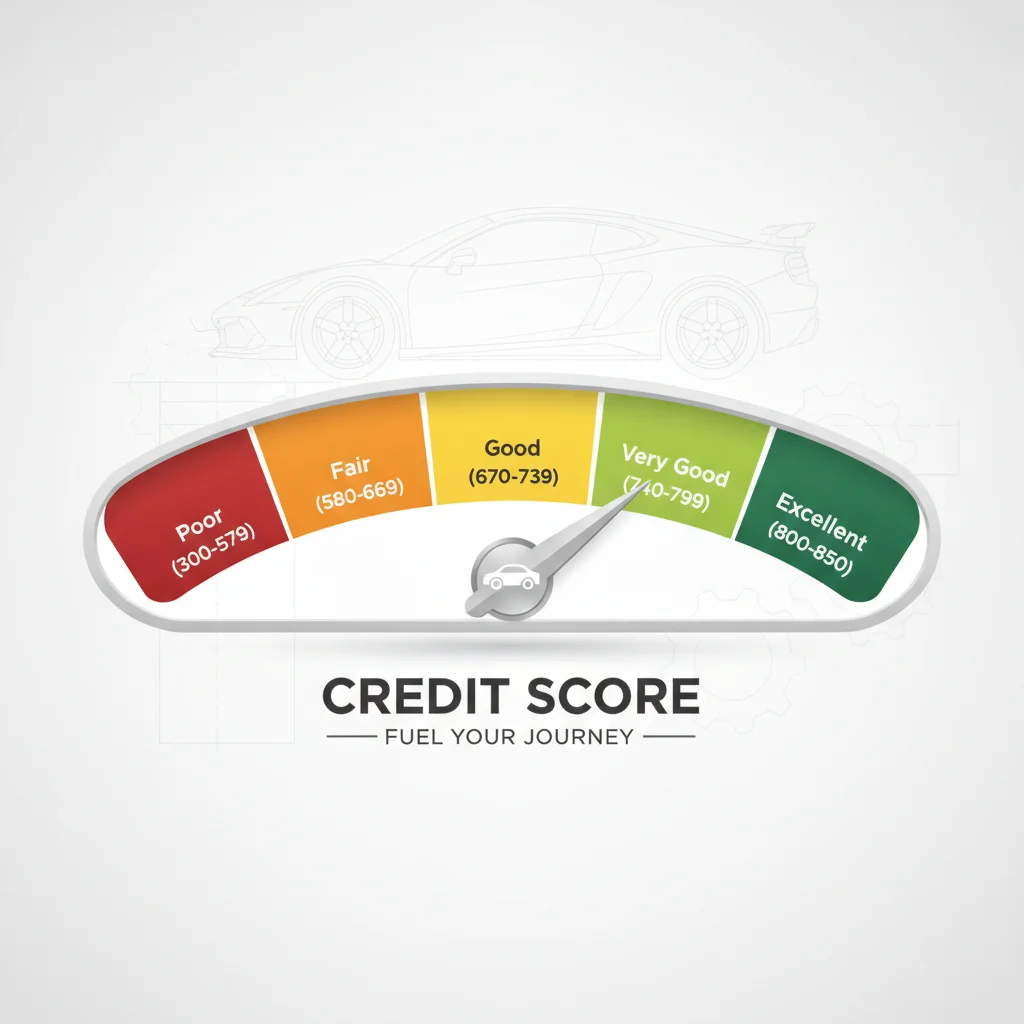
When a lender pulls your credit file, they aren't just looking at a number — they're slotting you into a risk tier that comes with a preset rate range. That tier assignment happens in seconds, and it drives the single biggest variable in what your loan will actually cost.
The difference between a 620 and a 720 credit score isn't academic. On a $30,000, 60-month loan, moving from a subprime rate of 12% APR to a prime rate of 6% APR saves you roughly $4,700 in interest over the life of the loan. That's not a rounding error — that's a meaningful chunk of money.
To understand how lenders categorize borrowers, see the full breakdown of credit score tiers used in auto lending. This article focuses specifically on what each tier looks like in rate terms — the real numbers you should be benchmarking against before you walk into a dealership or submit an online application.
| Deep Subprime New-Car APR Range | 14% – 21%+ (Experian State of the Automotive Finance Market, 2024) |
| Superprime New-Car APR Range | 3.5% – 6% (Experian State of the Automotive Finance Market, 2024) |
| Used-Car Rate Premium vs. New Car | 1–3 percentage points higher (Industry average across lender types) |
| Rate-Shopping Credit Bureau Window | 14–45 days (varies by model) (FICO and VantageScore rate-shopping deduplication policies) |
| Superprime Score Threshold | 720+ (FICO) (Standard lender tier classification) |
| Deep Subprime Score Threshold | Below 580 (FICO) (CFPB and Experian lender tier definitions) |
| Interest Saved: 12% vs. 6% on $30K/60 Months | ~$4,700 (Calculated using standard loan amortization) |
| Prime Tier Score Range | 660–719 (Experian auto lending tier classification) |
Rate Ranges by Credit Score Tier
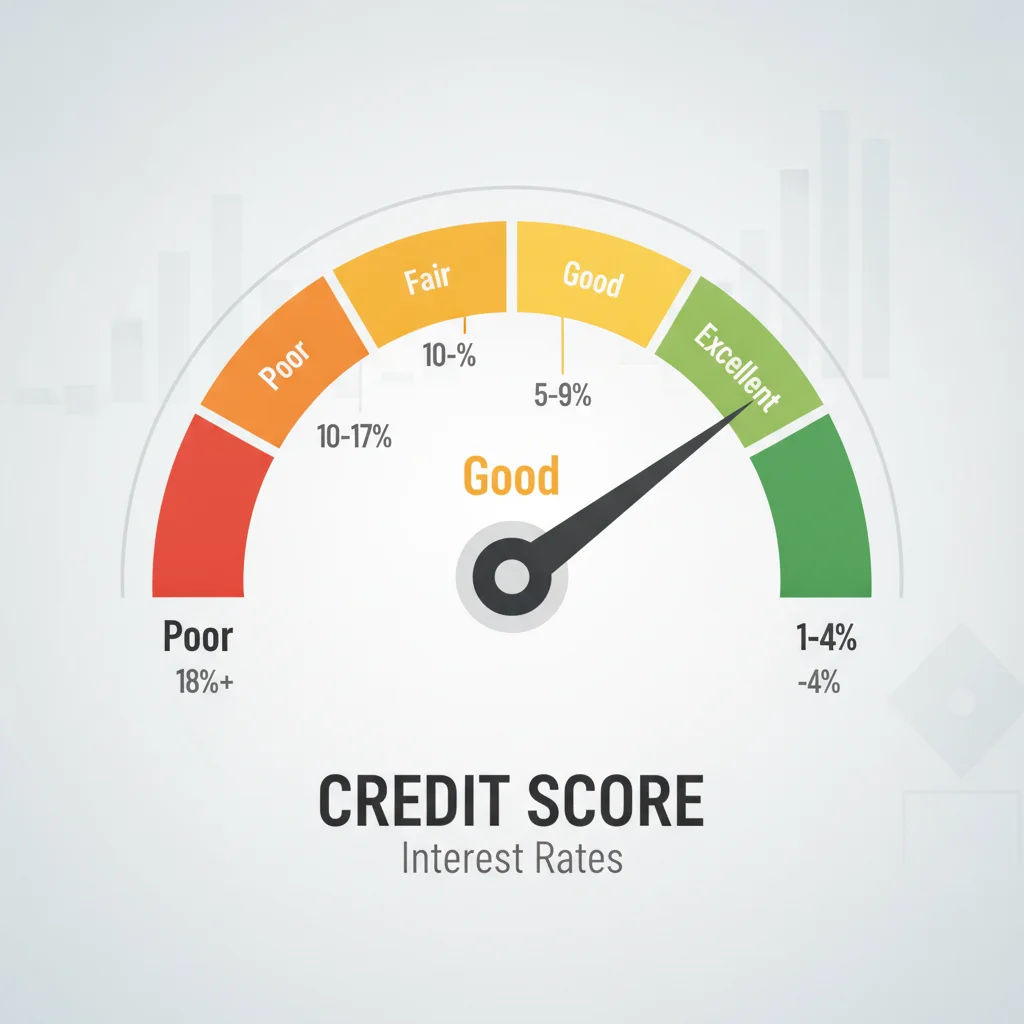
The table below reflects typical new-car APR ranges as of recent market data. Used-car rates generally run 1–3 percentage points higher across all tiers due to increased lender risk on older collateral. These are ranges, not guarantees — your actual rate also depends on loan term, vehicle age, down payment, and lender type.
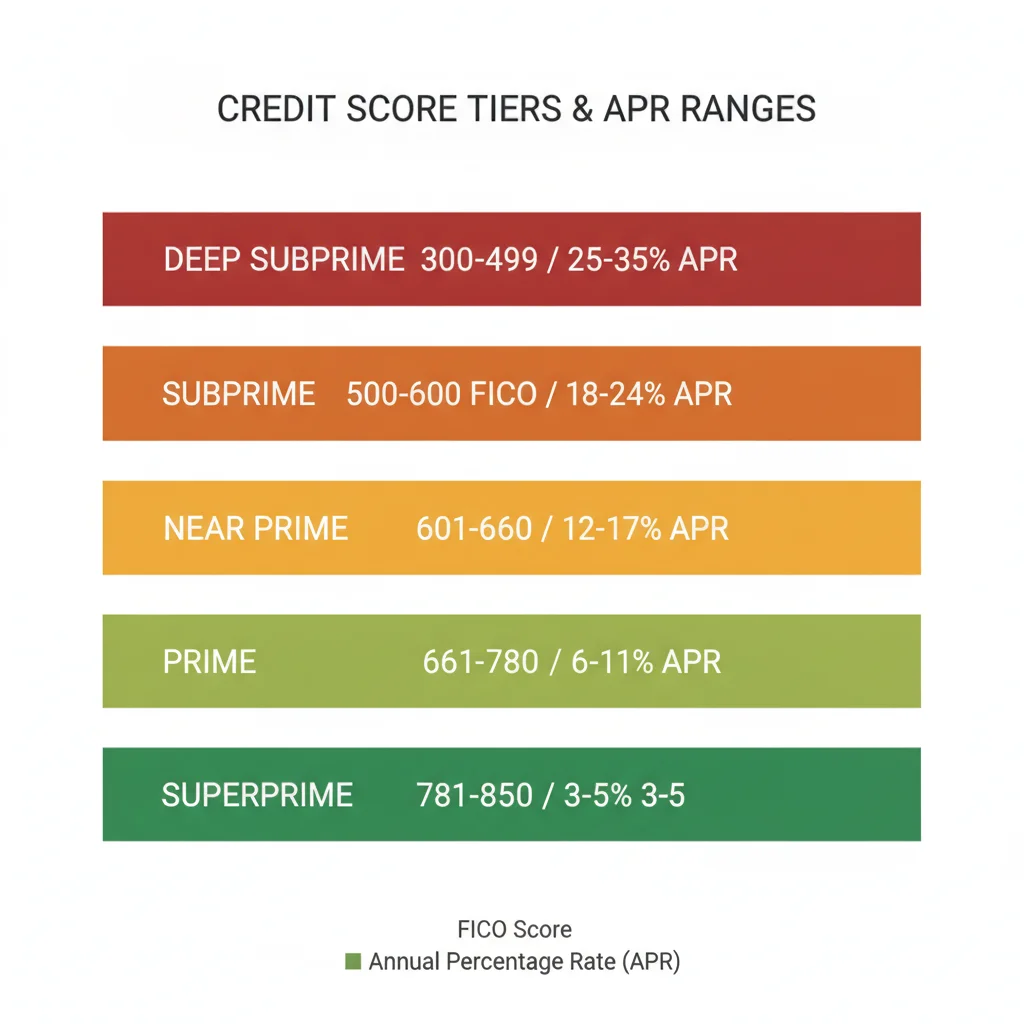
| Credit Tier | Score Range | Typical New-Car APR | Typical Used-Car APR |
|---|---|---|---|
| Deep Subprime | 300–579 | 14% – 21%+ | 18% – 26%+ |
| Subprime | 580–619 | 10% – 15% | 14% – 20% |
| Near Prime | 620–659 | 7% – 11% | 10% – 15% |
| Prime | 660–719 | 5% – 8% | 7% – 11% |
| Superprime | 720–850 | 3.5% – 6% | 5% – 8% |
These ranges reflect offers from a mix of banks, credit unions, and captive lenders (manufacturer finance arms). Your specific offer could fall above or below these bands. Every variable that shapes your rate — term length, down payment, lender type — interacts with your credit score to produce the final number.
$4,700
Interest saved moving from 12% to 6% APR on a $30K loan
Calculated on a 60-month, $30,000 loan — illustrating the real dollar cost of a lower credit tier.
21%+
Top APR deep subprime borrowers can face
According to Experian's State of the Automotive Finance Market report, the highest-risk borrowers regularly see rates exceeding 20% APR.
1–3%
Extra APR premium on used-car loans vs. new
Lenders charge more to finance older vehicles due to higher collateral risk and faster depreciation curves.
65%
Share of auto loans originated by prime/superprime borrowers
Experian 2024 data shows the majority of auto loan volume is captured by borrowers above the 660 threshold.
0%
Promotional APR available to superprime buyers on select models
Manufacturer captive lenders regularly offer 0% APR promotions, but typically require a FICO score of 720 or above to qualify.
Deep Subprime and Subprime (300–619): What Borrowers Actually Face
Borrowers in this range aren't shut out of financing, but the terms are punishing. Deep subprime borrowers (below 580) frequently see APRs starting at 14% and climbing past 20% — sometimes into the mid-20s on used vehicles. A $20,000 used car at 22% APR over 60 months costs you over $13,000 in interest. The car depreciates while you're still paying for the privilege of owning it.
Subprime borrowers (580–619) get somewhat better terms, but not dramatically so. Expect rates in the 10–15% range for new cars, 14–20% on used. The lender is pricing in real default risk, and some will require larger down payments or shorter loan terms to reduce their exposure.
Buy-Here, Pay-Here Rates Are Often Not Regulated the Same Way
Buy-here, pay-here dealers operate under different rules than traditional lenders in many states. Some states cap auto loan APRs; others do not. Rates above 25% are legal in a number of states for dealer-financed loans. Always read the full contract and calculate the total amount financed before signing anything at a BHPH lot.
Manufacturer Promotional Rates Have Fine Print
0% or low-APR offers from manufacturer finance arms (Ford, GM, Toyota, etc.) are real, but they almost always require a minimum credit score — typically 720 or higher — and are tied to specific model years, trims, and inventory. Accepting the promotional rate may also mean forgoing a cash-back rebate. Run both scenarios before deciding.
VantageScore vs. FICO Tier Boundaries May Differ
Most auto lenders use FICO scores, but some use VantageScore — and the two models assign slightly different numerical values to the same credit file. Ask your lender which scoring model they use before assuming your score places you in a specific tier. The differences are usually small but can matter right at a threshold boundary.
A few practical realities at this tier:
- Buy-here, pay-here dealers often target subprime borrowers with rates that exceed 25%. The convenience of one-stop shopping costs you significantly.
- Loan terms may be capped at 48–60 months at this tier. Longer terms help monthly payments but maximize interest paid.
- Vehicle age restrictions are common — many lenders won't finance cars older than 8–10 years for subprime borrowers, limiting used-car options.
For a full accounting of what high-rate borrowing really adds up to, see subprime APRs and their true cost over the loan term. The dollar figures are sobering but useful.
Near Prime and Prime (620–719): Where Rate Jumps Get Meaningful
The 620–659 near-prime band is where things start to shift. Borrowers in this range often qualify for mainstream bank and credit union financing, though rates still carry a meaningful premium over top-tier borrowers. Near-prime APRs on new cars typically land in the 7–11% range — high enough to add thousands to your total cost, low enough to make the loan workable without extreme financial strain.
Crossing into prime territory (660–719) is where you'll notice the biggest practical improvement in offers. Rates drop into the 5–8% range on new cars, and you'll have access to a wider lender pool, including manufacturer incentive financing. Some captive lenders (Toyota Financial, Ford Motor Credit, etc.) reserve their promotional rates — sometimes as low as 0% APR on specific models — for buyers at 700 or above.

At the prime tier, your preapproval odds improve substantially and you'll typically receive multiple competing offers when you shop around. That competition is valuable — use it.
One thing worth knowing: the jump from 659 to 660 can matter more than the jump from 620 to 650. Lenders use cutoff points, not smooth curves. A single-point score improvement can move you across a tier threshold and drop your rate by 1–2 percentage points. Understanding exactly where lenders draw those lines can help you time a purchase strategically.
APR (Annual Percentage Rate)
The annualized cost of borrowing, expressed as a percentage. For auto loans, APR includes the interest rate and any lender fees rolled into the cost, making it a more complete comparison metric than the interest rate alone.
Deep Subprime
A credit tier for borrowers with FICO scores below 580. Lenders classify these borrowers as the highest default risk, resulting in the highest APRs and most restrictive loan terms.
Superprime
The highest credit tier, typically 720 and above. Borrowers at this level qualify for the lowest available rates and have access to the widest range of lenders and loan structures.
Captive Lender
A financing arm owned by a vehicle manufacturer — such as Toyota Financial Services or Ford Motor Credit. Captive lenders sometimes offer below-market promotional rates tied to specific models to drive sales volume.
Tier Threshold
A specific credit score cutoff point where lenders shift a borrower from one risk category to the next. Crossing a threshold can produce a discrete jump in offered APR — not a gradual slide.
Loan Amortization
The process by which loan payments are applied over time — first heavily toward interest, then increasingly toward principal. Understanding amortization reveals why longer terms dramatically increase total interest paid.
Near Prime
A credit tier covering scores from approximately 620 to 659. Borrowers in this range qualify for mainstream financing but pay a meaningful rate premium compared to prime borrowers.
Buy-Here, Pay-Here (BHPH)
A dealership model where the dealer finances the loan directly rather than working with a bank or credit union. BHPH loans frequently carry very high APRs and target subprime and deep subprime borrowers.
Superprime (720–850): Getting the Best Available Rates
Above 720, you're in the category lenders actively want. Competition for your business is real, and it shows in the offers you'll receive. Typical new-car APRs for superprime borrowers run 3.5–6%, with the very top of the range (780+) sometimes qualifying for special manufacturer rates that push below 2% on promotional financing.
Used-car rates for superprime borrowers generally fall in the 5–8% range — which sounds less dramatic than new-car rates, but still represents a fraction of what subprime borrowers pay on the same vehicle.
At this tier, your credit score is no longer the rate-limiting factor. The variables that matter most now are:
- Loan term: A 72-month loan at 5% costs more than a 48-month loan at 5.5%, even though the rate is lower. Run the math on total interest, not just monthly payment.
- Down payment: A larger down payment reduces the principal you're financing, which directly reduces total interest even at low rates.
- Lender type: Credit unions frequently beat bank rates by 0.5–1% even for superprime borrowers. Manufacturer captive lenders can beat everyone with promotional rates on specific models and trims.
Even at this tier, shopping multiple lenders within a 14-day window protects your score while letting you compare real offers. Don't skip this step because you assume your score guarantees a good deal — the spread between lender offers can still be a full percentage point or more.
How to Use This Information Before You Buy
Knowing your tier before you shop changes the negotiation entirely. Here's how to apply this information practically:
- Pull your credit score before applying. Use a free service like your bank's credit card portal or annualcreditreport.com to see where you stand. Know your tier before a lender does.
- Get preapproved from a bank or credit union first. A preapproval gives you a rate baseline. When the dealer's finance office quotes you a rate, you'll know immediately whether it's competitive or padded.
- Compare the total cost, not just the monthly payment. Dealers can manipulate monthly payments by extending the term. Always ask for the total amount paid over the life of the loan.
- If you're near a tier boundary, consider waiting. If your score is 655 and you could realistically push it to 665 in 60–90 days by paying down a balance, the rate savings may outweigh the cost of waiting. See how all the rate factors interact to make that calculation.
- Don't ignore the used-car rate premium. If you're financing a used vehicle, build in 1–3 percentage points above new-car estimates for your tier. The same credit score produces a materially different rate on a 4-year-old vehicle versus a new one.
The full hub on bad credit auto financing covers additional strategies if your score is in the lower tiers — including secured credit building, larger down payment strategies, and co-signer options that can meaningfully change your rate offer.
For borrowers in the prime and superprime range, understanding how score ranges affect loan term availability helps you negotiate not just rate but term structure — which is where a lot of money gets left on the table.
Experian State of the Automotive Finance Market
Experian's quarterly report breaks down auto loan originations, average APRs, and delinquency rates by credit tier. It's the most comprehensive public data source for benchmarking rates.
CFPB Auto Loan Data Explorer
The Consumer Financial Protection Bureau offers an interactive tool to explore auto loan trends by credit score, lender type, and geography — useful for understanding what rates look like in your market.
myFICO Loan Savings Calculator
Plug in your credit score and loan amount to see estimated rate ranges and total interest costs across different FICO score tiers. Helps quantify the dollar value of score improvement before you buy.
AnnualCreditReport.com
The federally mandated source for free credit reports from all three bureaus. Pull your report before applying for any auto loan to check for errors that might be artificially suppressing your score.
Credit Union Locator (NCUA)
Credit unions consistently offer lower auto loan rates than traditional banks, especially for borrowers in the near-prime and prime tiers. The NCUA's locator helps you find federally insured credit unions you're eligible to join.
All claims are backed by peer-reviewed research. Sources on request.