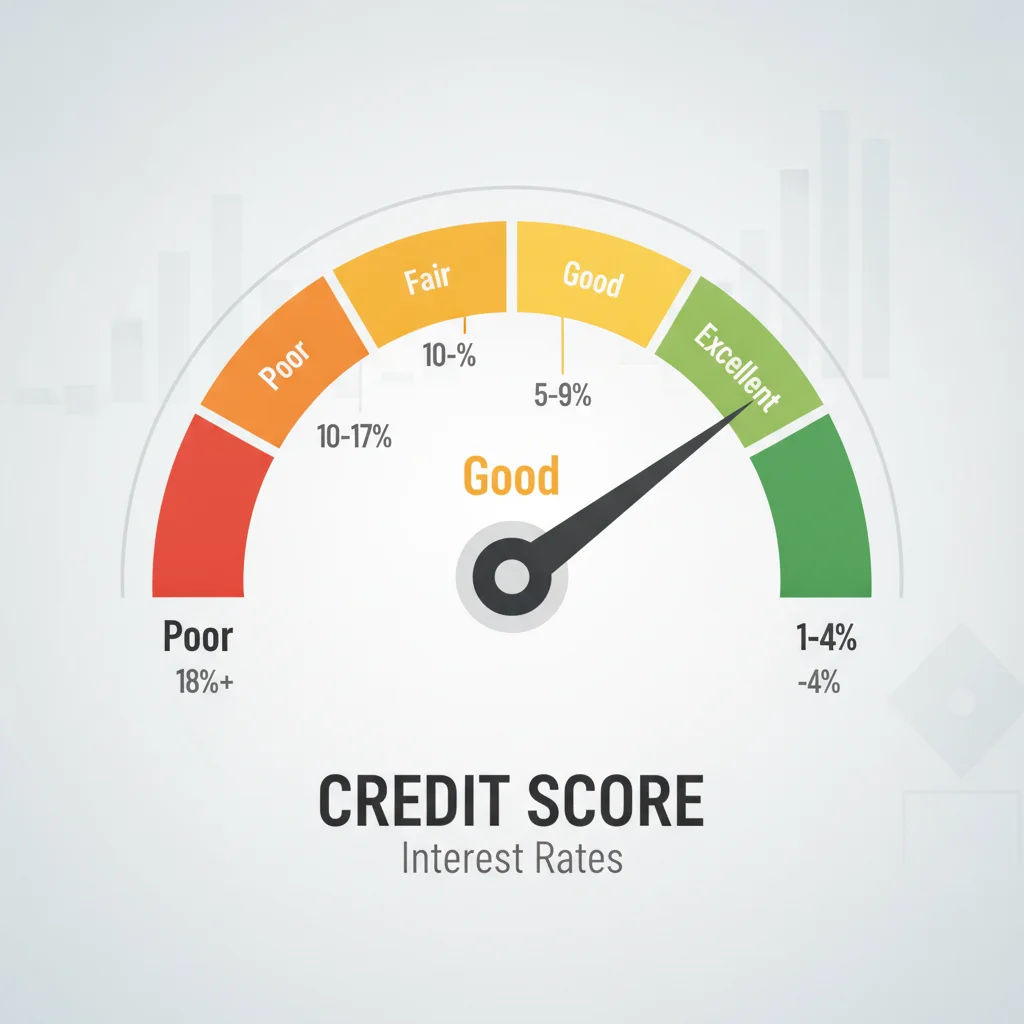
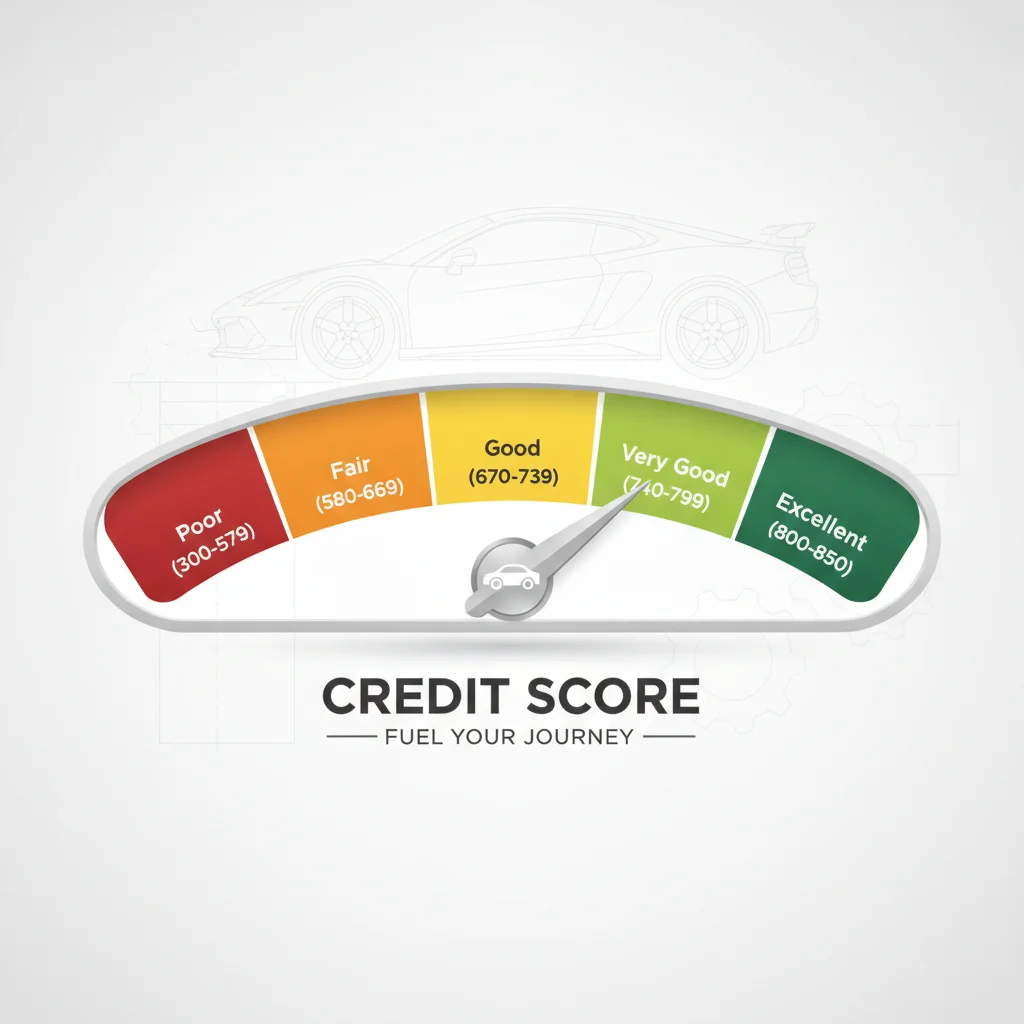
| Deep Subprime Threshold | Below 580 (FICO) (Common industry benchmark; varies by lender) |
| Superprime Threshold | 720 and above (Experian State of the Automotive Finance Market, 2023) |
| Share of Auto Loans to Subprime Borrowers | ~15% of originations (Experian Automotive, Q4 2023) |
| Average New Car Loan APR, Subprime | ~12–17% (Experian State of the Automotive Finance Market, 2023) |
| Average New Car Loan APR, Superprime | ~4–6% (Experian State of the Automotive Finance Market, 2023) |
| Score Model Most Auto Lenders Use | FICO Auto Score (versions 2, 4, or 5) (FICO.com, lender disclosure practices) |
| Typical Preapproval Hard Inquiry Impact | –2 to –5 points, temporary (FICO scoring methodology) |
| Rate Shopping Window (Multiple Inquiries Count as One) | 14–45 days depending on model version (FICO scoring methodology) |
Why Lenders Use Credit Tiers (And Why You Should Care)
When you walk into a dealership or apply online for an auto loan, the lender doesn't see a person — they see a risk tier. That tier, determined almost entirely by your credit score, dictates the interest rate you're offered, the loan terms available to you, and sometimes whether you get approved at all.
Most buyers focus on the sticker price of the car. That's a mistake. A $35,000 vehicle financed at 5.9% over 60 months costs you about $4,578 in interest. Finance that same car at 15.9% — the rate common in the subprime tier — and your interest bill jumps to around $13,000. Same car, same loan term, same dealer. Different tier, wildly different outcome.
The tier system isn't arbitrary. Lenders use statistical models that show borrowers in lower credit bands default at higher rates. That risk gets priced into your rate. Understanding how the tiers work gives you two advantages: you know exactly where you stand before you apply, and you can target specific score improvements that actually move you into a better bracket.
| Deep Subprime Threshold | Below 580 (FICO) (Common industry benchmark; varies by lender) |
| Superprime Threshold | 720 and above (Experian State of the Automotive Finance Market, 2023) |
| Share of Auto Loans to Subprime Borrowers | ~15% of originations (Experian Automotive, Q4 2023) |
| Average New Car Loan APR, Subprime | ~12–17% (Experian State of the Automotive Finance Market, 2023) |
| Average New Car Loan APR, Superprime | ~4–6% (Experian State of the Automotive Finance Market, 2023) |
| Score Model Most Auto Lenders Use | FICO Auto Score (versions 2, 4, or 5) (FICO.com, lender disclosure practices) |
| Typical Preapproval Hard Inquiry Impact | –2 to –5 points, temporary (FICO scoring methodology) |
| Rate Shopping Window (Multiple Inquiries Count as One) | 14–45 days depending on model version (FICO scoring methodology) |
For a deeper look at how rates shift across each tier, see our auto loan rates by credit score breakdown.
The Five Credit Tiers Defined
There is no single universal standard — different lenders draw the lines slightly differently. The ranges below reflect common industry practice based on FICO Score 8 and FICO Auto Score models. Use them as a reliable guide, not a guarantee.
Credit Tier
A risk category assigned to a borrower based on their credit score. Lenders use tiers to standardize underwriting decisions and set interest rates. Common tiers are deep subprime, subprime, near-prime, prime, and superprime.
FICO Auto Score
A specialized credit score model used by most auto lenders that weighs past auto loan payment history more heavily than general FICO models. It exists in multiple versions tied to each of the three major credit bureaus.
APR (Annual Percentage Rate)
The annualized cost of borrowing expressed as a percentage, including interest and certain fees. For auto loans, APR is the number that determines your monthly payment and total interest cost over the loan term.
Deep Subprime
The lowest recognized credit tier, typically applied to borrowers with scores below 580. Lenders in this tier charge the highest rates and impose the strictest loan conditions due to elevated default risk.
Superprime
The highest credit tier, generally scores of 720 and above. Superprime borrowers qualify for the lowest available interest rates, most flexible loan terms, and broadest lender choice.
Credit Utilization
The ratio of your current revolving credit balances to your total revolving credit limits, expressed as a percentage. High utilization (above 30%) negatively impacts credit scores and can push a borrower into a lower tier.
Loan-to-Value Ratio (LTV)
The ratio of the loan amount to the vehicle's market value. Lenders cap LTV more tightly for subprime borrowers to limit their exposure if the borrower defaults and the car must be repossessed and sold.
Captive Finance Company
A lending arm owned by an automaker — such as Ford Motor Credit or Toyota Financial Services — that provides financing exclusively or primarily for that brand's vehicles, often offering manufacturer-subsidized rates.
Deep Subprime: Below 580
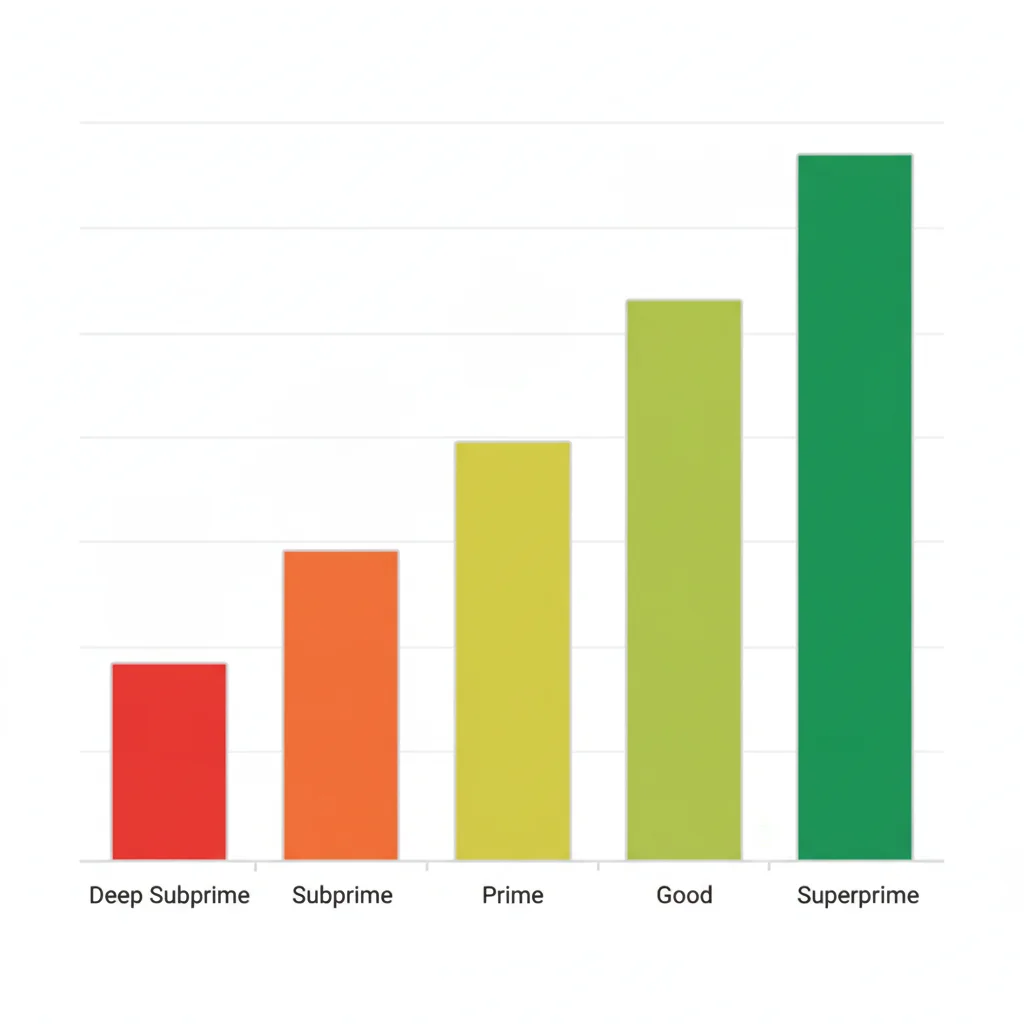
Borrowers in this range have serious derogatory marks: recent bankruptcies, multiple late payments, charge-offs, or collections. Most traditional banks and credit unions won't touch these applications. The lenders who will — typically buy-here-pay-here dealers and specialty finance companies — charge rates that can reach 20% or higher. Down payments of 20–30% are often required, and loan terms are frequently capped at 48 months to limit lender exposure.
Subprime: 580–619
Still considered high-risk, but a broader set of lenders participates here. Expect rates in the 12–18% range at many franchise dealers with access to captive finance arms. Loan-to-value limits get tight — lenders won't finance 110% of a car's value like they might for a prime borrower. If you're in this tier, understand what subprime means on your application before you agree to any terms.
Near-Prime: 620–659
This is the transition zone. You'll get approved at most lenders, but the rates are still punishing — typically 8–12% on a new car. You may face restrictions on older used vehicles or high-mileage units. The good news: a 30–40 point score improvement from here can drop you into the prime tier and cut your rate almost in half.
Prime: 660–719
Prime borrowers are the sweet spot for most mainstream lenders. Rates typically run 5–8% on new vehicles. You have access to manufacturer incentive financing, competitive credit union rates, and real negotiating leverage. The tier jump from near-prime to prime is often the single most valuable credit improvement a car buyer can make.
Superprime: 720 and Above
Superprime borrowers get the best rates on the board — often 0% to 3.9% during manufacturer promotions, and rarely above 5% at any lender. Loan-to-value limits are generous, terms up to 84 months are available (though rarely advisable), and approval is essentially automatic at most institutions.
$17,000+
Extra interest paid: deep subprime vs. superprime
Based on a $30,000, 60-month loan comparing ~20% APR to ~3% APR — illustrative industry-range figures.
15%
Share of new auto loan originations to subprime borrowers
According to Experian's State of the Automotive Finance Market report, Q4 2023.
3x
Higher default rate for deep subprime vs. prime borrowers
Industry loss data cited in CFPB auto lending supervisory reports consistently shows this multiple.
40 points
Score gain that can move a borrower from near-prime to prime
Based on standard tier boundary placement; exact impact varies by starting profile and lender cutoffs.
720
Score threshold most lenders use for best available rate
Experian and Equifax lending data consistently show the top rate tier beginning at or near 720 FICO.
How Crossing a Tier Threshold Changes Your Offer in Real Dollars
Tier boundaries aren't just labels — they're dollar-value thresholds. Here's a concrete illustration using a $30,000 auto loan over 60 months:
| Tier | Score Range | Typical APR | Monthly Payment | Total Interest Paid |
|---|---|---|---|---|
| Deep Subprime | Below 580 | 18–22% | $762–$813 | $15,700–$18,800 |
| Subprime | 580–619 | 12–17% | $667–$742 | $10,000–$14,500 |
| Near-Prime | 620–659 | 8–12% | $608–$667 | $6,500–$10,000 |
| Prime | 660–719 | 5–8% | $566–$608 | $3,900–$6,500 |
| Superprime | 720+ | 2–5% | $527–$566 | $1,600–$3,900 |
The gap between deep subprime and superprime on this single loan is over $17,000 in interest. That's not a rounding error — that's a used car. The jump from subprime to near-prime, which might require just 40 points of score improvement, still saves roughly $4,000–$6,000 over the life of the loan.
For a full breakdown of what poor credit actually costs over time, read the real cost of borrowing with a low credit score.
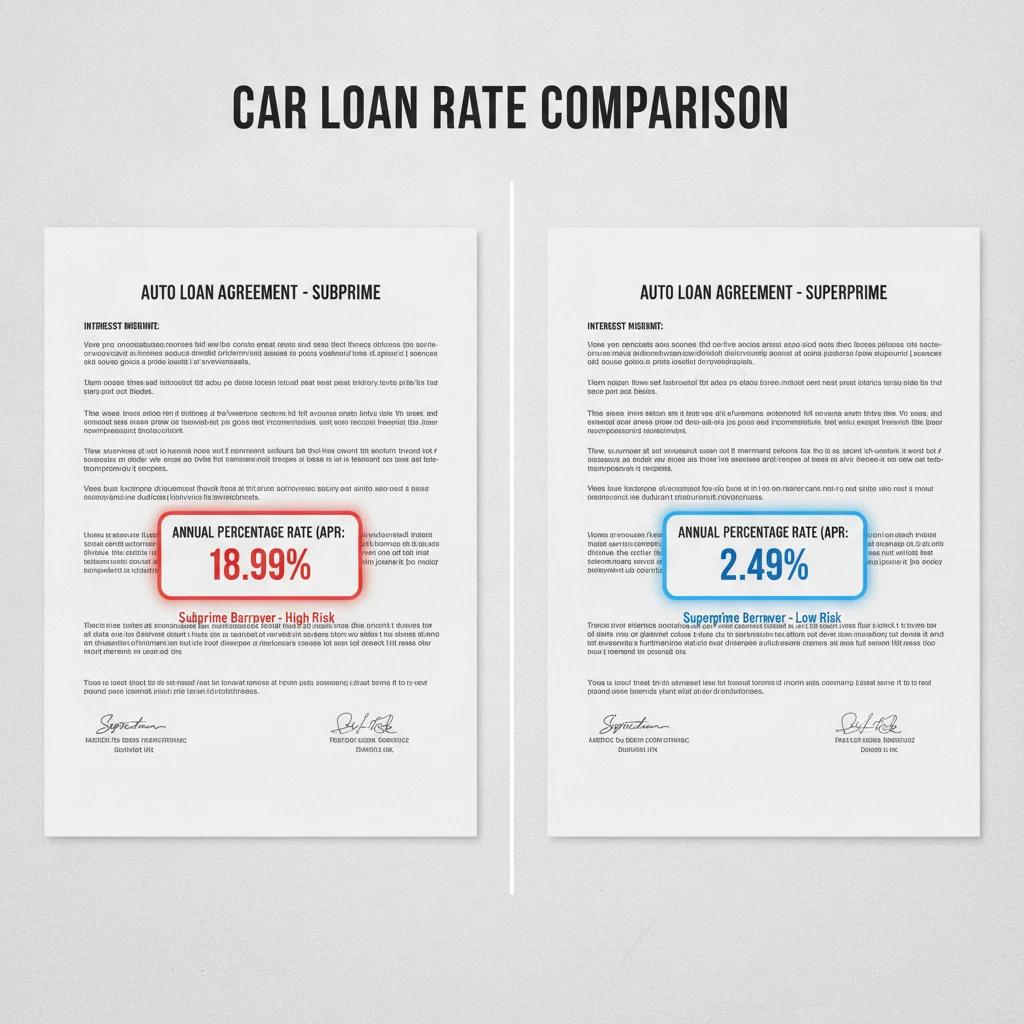
This is also why getting preapproved before you shop matters so much. Preapproval tells you exactly which tier lenders are placing you in before a dealer's finance office gets involved — and it gives you a rate benchmark to negotiate against.
Rate Shopping Won't Hurt Your Score
Many buyers avoid getting multiple loan quotes because they fear hurting their credit score. In practice, FICO treats all auto loan inquiries made within a 14–45 day window (depending on the score version) as a single inquiry. You can — and should — apply to multiple lenders to compare rates without meaningful score damage. Do all your applications within two weeks to stay inside the safe harbor.
Manufacturer Promotional Rates Require Superprime
When you see an ad for 0% or 1.9% financing from an automaker, read the fine print: those rates are almost always reserved for borrowers with scores of 720 or higher, and sometimes 740+. If you're in the prime tier at 680, you likely won't qualify. The dealer's finance office won't always volunteer this information upfront — ask directly which score tier qualifies for the advertised rate.
Your Score Can Differ Across All Three Bureaus
It's common for a borrower's FICO scores to vary by 20–50 points across Equifax, Experian, and TransUnion, because not all creditors report to all three bureaus. Auto lenders typically pull all three and may use the middle score, the lowest, or the one from a specific bureau depending on their policy. Knowing all three before you apply eliminates the guessing game.
Which Score Model Do Lenders Actually Use?
This is where a lot of buyers get tripped up. The score you see on Credit Karma, your bank's app, or Experian's consumer portal is almost certainly not the score an auto lender pulls. Most auto lenders use a FICO Auto Score — a model specifically tuned to predict auto loan default risk. There are multiple versions: FICO Auto Score 2 (used with Experian), 4 (TransUnion), and 5 (Equifax).
These auto-specific scores weight your past auto loan payment history more heavily than generic FICO models. If you've had an auto loan before and paid it on time, your FICO Auto Score may be meaningfully higher than your FICO Score 8. If you've had an auto repossession, it could be significantly lower.
The practical takeaway: don't assume the score you see is the score they'll use. If you're near a tier boundary, pull all three FICO Auto Scores from myfico.com before you apply. A surprise 30-point gap can mean the difference between prime and near-prime rates.
It's also worth knowing that lenders don't all use the same tier cutoffs. Some banks draw subprime at 620, others at 640. Credit unions often have more flexible underwriting and may price near-prime borrowers more favorably than captive finance companies. Shopping multiple lenders isn't just good advice — it's essential when you're near a boundary. See how this plays out in credit score ranges and preapproval odds.
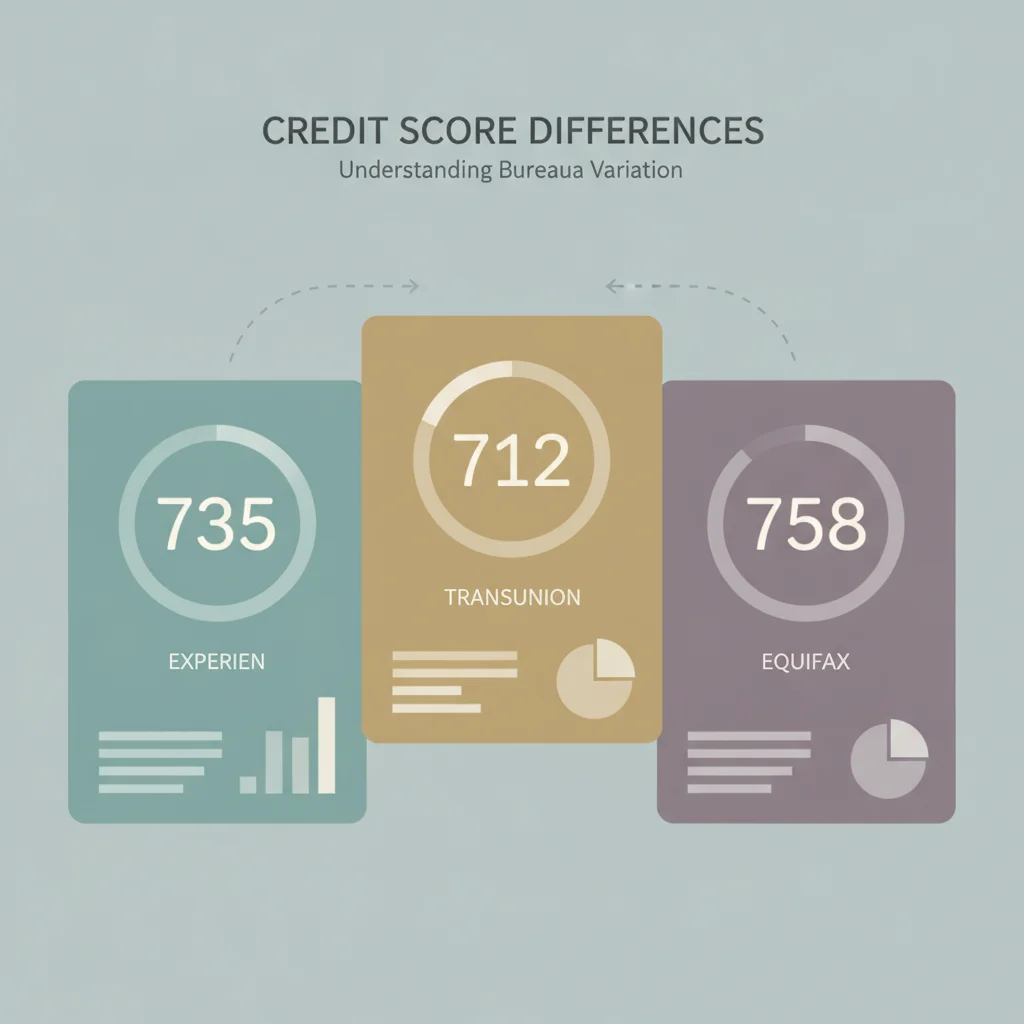
Note that credit tiers in auto lending differ from the risk tier system insurers use. If you want to understand how your credit score affects your car insurance rate — which is a separate scoring system entirely — see our article on what insurers mean by risk tier.
Practical Steps to Move Up a Tier Before You Buy
If your score sits within 30–50 points of a tier boundary, delaying your purchase by 3–6 months to cross that line can be worth thousands of dollars. Here are the highest-leverage moves, ranked by typical score impact:
- Pay down revolving balances. Credit utilization — how much of your available revolving credit you're using — is the fastest variable to change. Getting utilization below 30% has a measurable impact within one billing cycle. Getting it below 10% is even better. If you have a $5,000 credit limit and a $3,000 balance, paying it to $500 is a more efficient use of cash than almost any other action.
- Dispute errors on your credit report. Pull all three reports at annualcreditreport.com. Erroneous late payments, accounts that aren't yours, or incorrect balances dragging your score down are more common than people realize. A successful dispute can remove a derogatory item and shift your score 20–40 points in 30–45 days.
- Don't open new credit accounts in the 6 months before applying. New inquiries and new accounts lower your average account age and trigger short-term score dips. If you're planning to buy a car, go quiet on new credit applications.
- Bring any delinquent accounts current. An account that's 30 or 60 days late is actively scoring against you every month it stays delinquent. Bringing it current doesn't erase the history, but it stops the bleeding immediately.
- Become an authorized user on a well-managed account. If a family member has an old account with high limits and a clean payment history, being added as an authorized user can add positive history to your file quickly — sometimes within one reporting cycle.
None of these are tricks. They're the mechanics of how the scoring models work, used intentionally. If you're in the bad credit loan territory right now, some of these steps combined over 6–12 months can realistically move you from subprime to near-prime — and that's a loan that costs thousands less.

myFICO Score Reports
Pull all three FICO Auto Score versions directly from myfico.com to see the actual scores auto lenders are likely to use — not the generic scores most apps show you.
AnnualCreditReport.com
The only federally authorized source for free credit reports from all three bureaus. Use it to hunt for errors and derogatory marks before a lender does.
CFPB Auto Loan Shopping Guide
The Consumer Financial Protection Bureau's plain-language guide to auto loan shopping covers rate comparison, dealer financing traps, and your rights as a borrower.
Auto Loan Payment Calculator
Plug in different APR scenarios by tier to see exactly how much a rate difference translates to in monthly payments and total interest over your loan term.
Experian Automotive Finance Report
Experian's quarterly report on auto loan originations provides current data on average rates by credit tier, loan terms, and market trends — useful for benchmarking any offer you receive.
For a detailed comparison of what lenders actually see at each score range, the credit score ranges lenders use when evaluating auto loan risk reference is worth bookmarking before you apply anywhere.
All claims are backed by peer-reviewed research. Sources on request.