
Key Takeaways
Auto Loan Preapproval
Auto loan preapproval is a conditional commitment from a lender — a bank, credit union, or online lender — stating that they're willing to lend you a specific amount of money at a specific interest rate to buy a car. It's based on a real review of your credit and financial information, not just a rough estimate. Unlike a prequalification, which is typically a soft inquiry ballpark figure, a preapproval involves a hard credit pull and gives you an actual rate and loan amount you can take to a dealership.
Preapproval offers are typically valid for 30 to 60 days and are conditioned on the financed vehicle meeting the lender's requirements — including age, mileage, and loan-to-value ratio — so the vehicle itself still needs to be approved.
Preapproval vs. Prequalification: Not the Same Thing
This distinction matters more than most buyers realize. Dealers and lenders use these terms loosely, sometimes interchangeably, which causes real confusion — and occasionally costs buyers money.
Prequalification is an informal estimate. A lender looks at a soft snapshot of your credit — sometimes just your self-reported income and a soft pull — and tells you something like, "You'd probably qualify for around $30,000 at roughly 7%." No hard inquiry, no real commitment, no document review. It's a marketing tool that gets you in the door.
Preapproval is an actual lending decision. The lender pulls your credit report with a hard inquiry, reviews your income documentation, calculates your debt-to-income ratio, and issues a conditional commitment: a specific loan amount, a specific interest rate, and specific terms. That's a document you can take to a dealership and use.
Prequalification vs. Preapproval at Dealerships
Some dealerships offer an in-house "prequalification" that's really just a soft pull to estimate your payment range. This is not the same as a bank or credit union preapproval and carries no competitive leverage. Dealers use it to get your financial information and move you toward dealer-arranged financing before you've had a chance to shop outside lenders. Don't mistake their tool for your tool.
Your Financial Situation Must Remain Stable
A preapproval is conditional, not absolute. If you take on significant new debt, miss payments, lose employment, or make a large credit purchase between the date of your preapproval and the date of vehicle purchase, your lender can withdraw or alter the offer. Keep your financial profile stable from the moment you apply until the loan is fully funded.
Preapproval Doesn't Cover Every Vehicle
Lenders have collateral guidelines that limit which vehicles qualify for financing. Common restrictions include maximum vehicle age (often 8–10 years), maximum mileage (often 100,000–120,000 miles), and minimum loan amounts. If the vehicle you choose falls outside these parameters, the lender may decline to fund the loan even if you personally qualify. Always check your lender's vehicle eligibility guidelines before falling for a specific car.
The gap between these two matters at the dealership. A prequalification letter means almost nothing to a finance manager — they know it's not a real offer. A preapproval letter from a reputable lender carries weight because it represents a competing rate they have to beat or lose the financing income on.
When you're preparing to shop, see our step-by-step preapproval walkthrough for exactly what documents you'll need and which lenders to approach first.
What Lenders Actually Look at When They Preapprove You
Understanding what goes into a preapproval decision tells you two things: where you stand before you apply, and where you have room to improve your offer if you don't like the initial terms.

Here are the primary factors lenders evaluate:
- Credit score and credit history: Your FICO auto score (which weights auto loan payment history more heavily than your standard FICO) is the first filter. Most prime lenders want a score above 660; the best rates go to borrowers above 720. Late payments, collections, or high utilization will raise your rate or reduce your loan amount.
- Debt-to-income ratio (DTI): Lenders calculate what percentage of your gross monthly income is already committed to debt payments. Most prefer a DTI under 40–45% including the projected car payment. The lower, the better.
- Income and employment stability: Consistent employment history (typically two or more years with the same employer) and verifiable income — via pay stubs, W-2s, or tax returns — signal reliability to a lender.
- Down payment: A larger down payment reduces the lender's risk. Putting 10–20% down improves approval odds and can meaningfully lower your rate. The down payment hub explains exactly how down payment size affects your loan structure.
- Loan term requested: Shorter terms carry lower rates because lenders face less repayment risk. Requesting a 60-month loan versus an 84-month loan will produce different rate offers from the same lender.
For a complete breakdown of every factor lenders weigh, see everything your lender evaluates before issuing a preapproval.
0.5–1.5%
Average dealer rate markup above buy rate
Consumer Financial Protection Bureau research has documented dealer interest rate markups (dealer reserve) consistently adding cost above what lenders charge dealers directly.
63%
Buyers who finance through the dealership
According to J.D. Power data, the majority of new vehicle buyers use dealer-arranged financing, often without comparing outside lender rates first.
30–45 days
Typical preapproval validity window
Most banks and credit unions issue preapproval offers that remain valid for 30 to 45 days, giving buyers time to shop without reapplying.
3–5 points
Typical credit score impact per hard inquiry
FICO estimates a single hard inquiry reduces most consumers' scores by fewer than 5 points, with the impact fading within months.
$1,000+
Potential interest savings from rate comparison
On a $30,000 auto loan at 60 months, a 2% rate difference (e.g., 7% vs. 9%) saves over $1,800 in total interest paid.
How Preapproval Shifts the Power Dynamics at a Dealership
Here's what I saw repeatedly when I worked in dealership finance: buyers who didn't have outside financing came in completely dependent on us to tell them what their rate would be. We controlled the entire conversation. We could start high, layer in products, and bundle everything into a monthly payment that obscured the true cost of the vehicle.
A buyer who walks in with a preapproval letter changes that entirely. You've already established a rate ceiling. Now the dealer either beats it or loses your financing business. That's leverage — real leverage — and most buyers never use it.
“Most car buyers spend more time researching which color to order than they do comparing financing options. The dealership finance office is where a significant amount of money changes hands — and most buyers have no idea it's happening.”
— Patrice Banks, Automotive industry advocate and founder of Girls Auto Clinic
Practically speaking, preapproval does four things for you at the dealership:
- It separates car price from financing. Without preapproval, dealers negotiate everything together — vehicle price, trade-in, and financing — which makes it nearly impossible to know if you're getting a good deal on any single component. With preapproval, the financing is already settled. You negotiate the car price on its own merits.
- It gives the dealer a number to beat. Dealers earn reserve income when they mark up the interest rate above what the lender charges (the "buy rate"). If your preapproval is at 6.4% and their buy rate on your profile is 5.9%, they might offer you 6.2% to beat yours while still pocketing 0.3% in reserve. You still come out ahead of where you started.
- It signals you've done your homework. Finance managers adjust their approach for buyers who are clearly prepared. The add-on product pitch (extended warranties, GAP insurance, paint protection) tends to be softer when the F&I manager knows you're not financially naive.
- It sets a firm budget ceiling. You know exactly how much you're approved for, which prevents dealers from using payment-focused selling to push you into a more expensive vehicle than you intended to buy.
Present Your Preapproval After Price Negotiation
Never reveal your preapproval in the early stages of the dealership visit. Negotiate the vehicle price to your target number first, then bring out your preapproval letter in the finance office. If you lead with financing, dealers will restructure the deal around monthly payment rather than vehicle price — and you'll lose visibility into what you're actually paying for the car.
Apply to a Credit Union First
Credit unions consistently offer lower auto loan rates than banks or dealer-arranged financing for comparable credit profiles, because they operate as nonprofits focused on member benefit rather than profit margin. If you're not already a member of a credit union, many allow you to join specifically to access their auto loan products. It's often the single highest-return step you can take before applying anywhere else.
To understand exactly how to use your preapproval as an active rate negotiation tool — not just a backup plan — read how preapproval anchors your rate negotiation.
What Preapproval Does — and Doesn't — Commit You To
One of the most common misconceptions I hear from buyers: "I don't want to get preapproved because then I'm locked in." That's not how it works, and that misunderstanding stops people from using one of the most powerful tools available to them.

Here's what preapproval actually obligates you to: nothing. It's an offer from the lender — not a contract. You can walk into a dealership with a preapproval, let the dealer try to beat the rate, take the dealer's financing if it's better, and let your preapproval expire unused. No penalty. No obligation. No impact on your credit beyond the initial inquiry you already took.
What the lender is actually committing to is the willingness to lend — contingent on two conditions that haven't been finalized yet:
- Your financial situation hasn't materially changed (new debt, job loss, large credit utilization increase)
- The vehicle you select meets their lending criteria for age, mileage, and loan-to-value ratio
That second condition is one buyers often overlook. If you get preapproved for $35,000 and then fall in love with a high-mileage 2014 truck at a private seller, your lender may decline to fund that specific loan even though you were preapproved. Lenders have collateral requirements, and the vehicle has to qualify just as you do.
For a full breakdown of this topic, why preapproval doesn't lock you into anything explains exactly what remains open after you receive an offer.
Prequalification vs. Preapproval at Dealerships
Some dealerships offer an in-house "prequalification" that's really just a soft pull to estimate your payment range. This is not the same as a bank or credit union preapproval and carries no competitive leverage. Dealers use it to get your financial information and move you toward dealer-arranged financing before you've had a chance to shop outside lenders. Don't mistake their tool for your tool.
Your Financial Situation Must Remain Stable
A preapproval is conditional, not absolute. If you take on significant new debt, miss payments, lose employment, or make a large credit purchase between the date of your preapproval and the date of vehicle purchase, your lender can withdraw or alter the offer. Keep your financial profile stable from the moment you apply until the loan is fully funded.
Preapproval Doesn't Cover Every Vehicle
Lenders have collateral guidelines that limit which vehicles qualify for financing. Common restrictions include maximum vehicle age (often 8–10 years), maximum mileage (often 100,000–120,000 miles), and minimum loan amounts. If the vehicle you choose falls outside these parameters, the lender may decline to fund the loan even if you personally qualify. Always check your lender's vehicle eligibility guidelines before falling for a specific car.
The Credit Impact: Why Shopping Multiple Lenders Won't Tank Your Score
Fear of credit score damage is the single biggest reason buyers skip preapproval — and it's largely unfounded if you understand how rate shopping is treated by credit bureaus.
Yes, each preapproval application triggers a hard inquiry. A single hard inquiry typically lowers your score by 5 points or fewer and recovers within a few months. That's a small, temporary cost for potentially saving hundreds or thousands in interest over the life of the loan.
More importantly, FICO and VantageScore both have rate-shopping protections built in. Multiple hard inquiries for the same type of loan (auto, in this case) made within a specific window — 14 days under older FICO models, up to 45 days under newer ones — are treated as a single inquiry. The scoring models recognize that smart borrowers comparison-shop, and they don't penalize you for doing so.
The practical takeaway: Apply to three to five lenders within a two-week window. You'll generate competing offers, have real leverage at the dealership, and take only one inquiry's worth of score impact. That's not a cost — it's an investment.
Does getting preapproved for a car loan hurt your credit? covers this in full detail, including which scoring model your lender is likely using.
The Full Preapproval Process: Start to Finish
If you've never gone through the preapproval process before, here's what to expect from application to dealership visit:
Step 1: Check your credit first
Pull your own credit report at AnnualCreditReport.com before applying anywhere. Check for errors — incorrect late payments, accounts that aren't yours, balances that don't match. Dispute anything inaccurate before you apply, because errors that lower your score will also raise your rate.
Step 2: Gather your documents
You'll typically need: government-issued ID, proof of income (recent pay stubs or tax returns if self-employed), proof of residence (a utility bill or lease agreement), and your Social Security number for the credit pull. Having these ready before you apply speeds up the process significantly.
Step 3: Apply to multiple lenders
Start with your own bank or credit union — existing banking relationships often produce better rates. Then apply to two or three online lenders (LightStream, PenFed, Capital One Auto Finance are common options) for comparison. Do all applications within a 14-day window to keep inquiries consolidated.
Step 4: Compare offers on APR, not monthly payment
Lenders will show you a monthly payment figure, but that number is meaningless without knowing the term. Compare offers on annual percentage rate (APR) at the same loan term. A lower payment on a longer term almost always costs more in total interest.
Step 5: Take your best offer to the dealership
Present your preapproval letter in the finance office after you've agreed on the vehicle price. Tell the finance manager you're preapproved at X% and ask if they can beat it. If they can, great. If they can't, you use your letter.
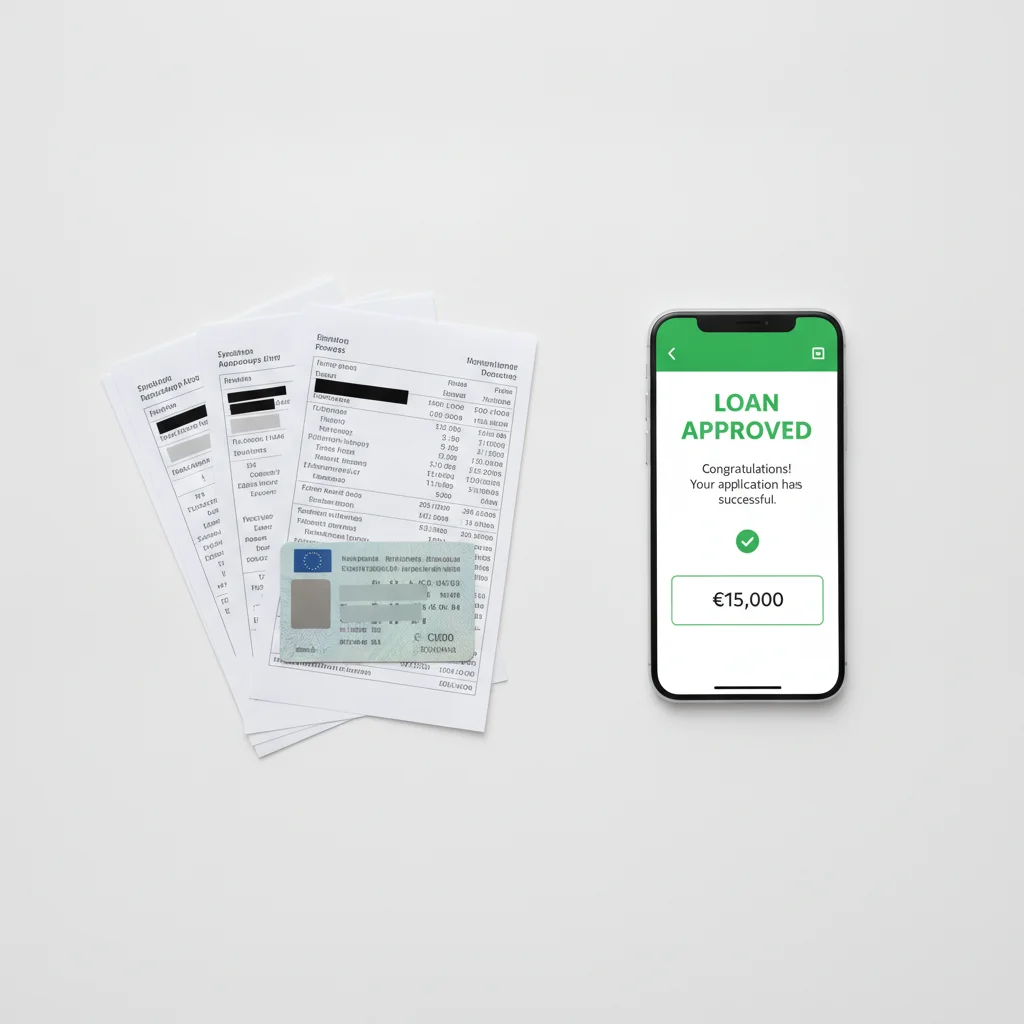
See the complete end-to-end breakdown in the auto loan preapproval process, start to finish.
Present Your Preapproval After Price Negotiation
Never reveal your preapproval in the early stages of the dealership visit. Negotiate the vehicle price to your target number first, then bring out your preapproval letter in the finance office. If you lead with financing, dealers will restructure the deal around monthly payment rather than vehicle price — and you'll lose visibility into what you're actually paying for the car.
Apply to a Credit Union First
Credit unions consistently offer lower auto loan rates than banks or dealer-arranged financing for comparable credit profiles, because they operate as nonprofits focused on member benefit rather than profit margin. If you're not already a member of a credit union, many allow you to join specifically to access their auto loan products. It's often the single highest-return step you can take before applying anywhere else.
When Preapproval Is Especially Critical
Preapproval is always worth getting, but there are specific situations where it's not just helpful — it's essential.
Buying a used or certified pre-owned vehicle
Used car financing is where dealer rate markups tend to be highest, because lenders charge more for older collateral and buyers feel less confident negotiating. A preapproval anchors your rate baseline in a segment where the F&I markup game is played most aggressively. If you're exploring the certified pre-owned market, secure your financing before you start testing vehicles.
Buying from a private seller
Private sellers can't offer dealer financing — so preapproval isn't just advantageous, it's the only way you'll have financing lined up before you find the car you want. Some lenders don't fund private-party transactions, so confirm this before you fall in love with a vehicle on Facebook Marketplace.
When your credit is imperfect
Subprime buyers are the most aggressively rate-marked-up segment at dealerships. If your credit score is below 660, it's even more important to shop lenders directly. Credit unions, in particular, often have more favorable rates for members with imperfect credit than dealer-arranged financing does.
When you're refinancing later
Preapproval isn't only for new purchases. If your current rate is too high, auto loan refinancing follows a similar process — you're essentially getting preapproved for a new loan that replaces the existing one. Understanding how preapproval works now makes that process easier to navigate later.
Prequalification vs. Preapproval at Dealerships
Some dealerships offer an in-house "prequalification" that's really just a soft pull to estimate your payment range. This is not the same as a bank or credit union preapproval and carries no competitive leverage. Dealers use it to get your financial information and move you toward dealer-arranged financing before you've had a chance to shop outside lenders. Don't mistake their tool for your tool.
Your Financial Situation Must Remain Stable
A preapproval is conditional, not absolute. If you take on significant new debt, miss payments, lose employment, or make a large credit purchase between the date of your preapproval and the date of vehicle purchase, your lender can withdraw or alter the offer. Keep your financial profile stable from the moment you apply until the loan is fully funded.
Preapproval Doesn't Cover Every Vehicle
Lenders have collateral guidelines that limit which vehicles qualify for financing. Common restrictions include maximum vehicle age (often 8–10 years), maximum mileage (often 100,000–120,000 miles), and minimum loan amounts. If the vehicle you choose falls outside these parameters, the lender may decline to fund the loan even if you personally qualify. Always check your lender's vehicle eligibility guidelines before falling for a specific car.

All claims are backed by peer-reviewed research. Sources on request.