

Key Takeaways
Auto Loan Refinancing
Auto loan refinancing means replacing your current car loan with a new one — usually from a different lender — that has different terms. The new loan pays off your existing balance, and you start making payments under the new agreement. Most borrowers refinance to secure a lower interest rate, reduce their monthly payment, or both.
Refinancing resets your loan's amortization schedule. This means early payments on the new loan are again weighted toward interest rather than principal, which can increase total interest paid even if the rate is lower — especially if you extend the loan term.
The Mechanics: What Actually Happens When You Refinance
When you refinance an auto loan, you're not modifying your existing agreement — you're closing it and opening an entirely new loan contract. Here's the sequence of events in plain terms:
- You apply to a new lender with your current loan details, income information, and vehicle information.
- The lender evaluates your application — pulling your credit, verifying your income, and assessing the vehicle's current market value.
- If approved, the new lender pays off your old loan directly — you don't receive a check. The payoff amount is whatever principal balance remains on your existing loan.
- Your old loan account closes. The lender reports it as paid in full to the credit bureaus.
- You begin making payments to the new lender under the new terms — a different interest rate, possibly a different loan length, and a new monthly payment amount.
The vehicle itself doesn't change hands, and you don't need to go through a dealership. Most auto refinances today are handled entirely online or by phone, making the process significantly less intimidating than buying a car.
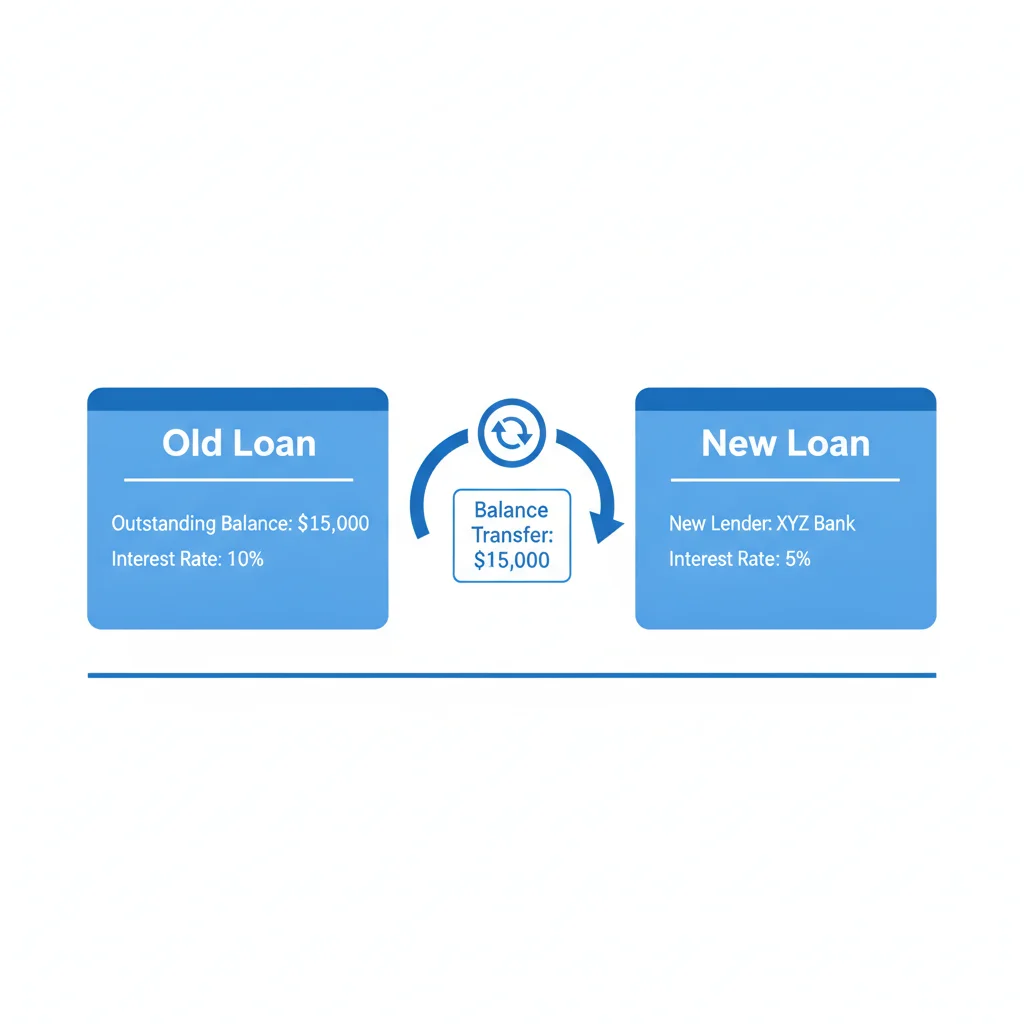
What does change is the cost structure of your debt. Your interest rate, monthly payment, and total amount paid over the life of the loan are all reset. Whether those changes work in your favor depends on the specific numbers — and understanding that math is the foundation of a good refinancing decision.
To understand what lenders actually evaluate during this process, see what lenders look at before approving an auto refinance.
Rate vs. Term: The Two Levers of Refinancing
Every auto loan refinance involves adjusting one or both of two variables: the interest rate and the loan term. Understanding how each lever works — and how they interact — is essential before you agree to any new loan.
43%
Borrowers who could save by refinancing
According to a LendingTree analysis, approximately 43% of auto loan borrowers who refinanced secured a lower interest rate than their original loan.
$1,000–$3,000
Typical lifetime savings from refinancing
RateGenius data indicates the average borrower who refinances an auto loan saves between $1,000 and $3,000 in total interest over the life of the new loan.
2–3 points
Typical credit score drop from a hard inquiry
Most credit scoring models reduce a borrower's score by 2–5 points for a single hard inquiry, with the effect fading within 12 months of consistent payment history.
60–90 days
Minimum time before most lenders will refinance
Industry-standard seasoning requirements mean most lenders want to see at least two to three months of payment history on the existing loan before approving a refinance.
The Interest Rate Lever
A lower interest rate reduces the amount of money you pay to the lender for borrowing. If your credit score has improved significantly since you first financed your car — or if market interest rates have dropped — you may qualify for a meaningfully lower rate. Even a 2–3 percentage point reduction can translate to hundreds of dollars saved over the life of the loan.
For a clear breakdown of how loan length and payment structure interact with rate, the Loan Terms Explained hub is a good place to ground yourself before comparing offers.
The Loan Term Lever
Extending your loan term — say, from 36 months remaining to a new 60-month loan — reduces your monthly payment even without changing the interest rate. This can provide real breathing room if your budget is tight. But there's a trade-off: you'll pay interest for a longer period, which typically increases the total cost of the loan.
Keep Your Term Short When Possible
When comparing refinance offers, aim to keep the remaining loan term similar to what you have now — or shorter. A longer term reduces your monthly payment but increases the total interest you'll pay. If a lower monthly payment is necessary for budget reasons, that's a valid trade-off, but go in with eyes open about the total cost.
Shop Multiple Lenders Before Committing
Credit unions, online lenders, and banks all compete for refinance business. Getting quotes from at least three lenders — and doing so within a two-week window — lets you compare real offers while minimizing the credit score impact of multiple hard inquiries. Don't accept the first offer you receive.
Shortening the loan term works in reverse: your monthly payment increases, but you pay less interest overall and own the car outright sooner. Borrowers who refinance after an income increase sometimes use this strategy deliberately.
Combining Both
The strongest refinancing outcome is securing a lower rate and keeping the term roughly the same (or shorter). This lowers both your monthly payment and your total interest cost simultaneously. That combination is most achievable when your credit profile has improved substantially since your original loan.
Amortization Resets With Every New Loan
When you take out a new loan, the amortization schedule starts over. This means your early payments are again weighted heavily toward interest rather than principal. If you're deep into your current loan — say, past the halfway point — extending to a longer new term can mean you've paid substantial interest twice on the same debt. Run the total-cost numbers, not just the monthly payment.
Update Your Insurance Lienholder Information
After closing your refinance, your new lender becomes the lienholder on the vehicle — meaning they need to be listed on your auto insurance policy as the entity that would receive an insurance payout in the event of a total loss. Call your insurance provider to update this information as soon as your new loan closes. Failing to do so can create complications if you ever need to file a claim.
When Market and Personal Conditions Make Refinancing Worth It
Refinancing isn't always the right move — its value depends on the intersection of your personal financial situation and the broader lending environment. There are two broad categories of triggers to watch for.
Market Conditions
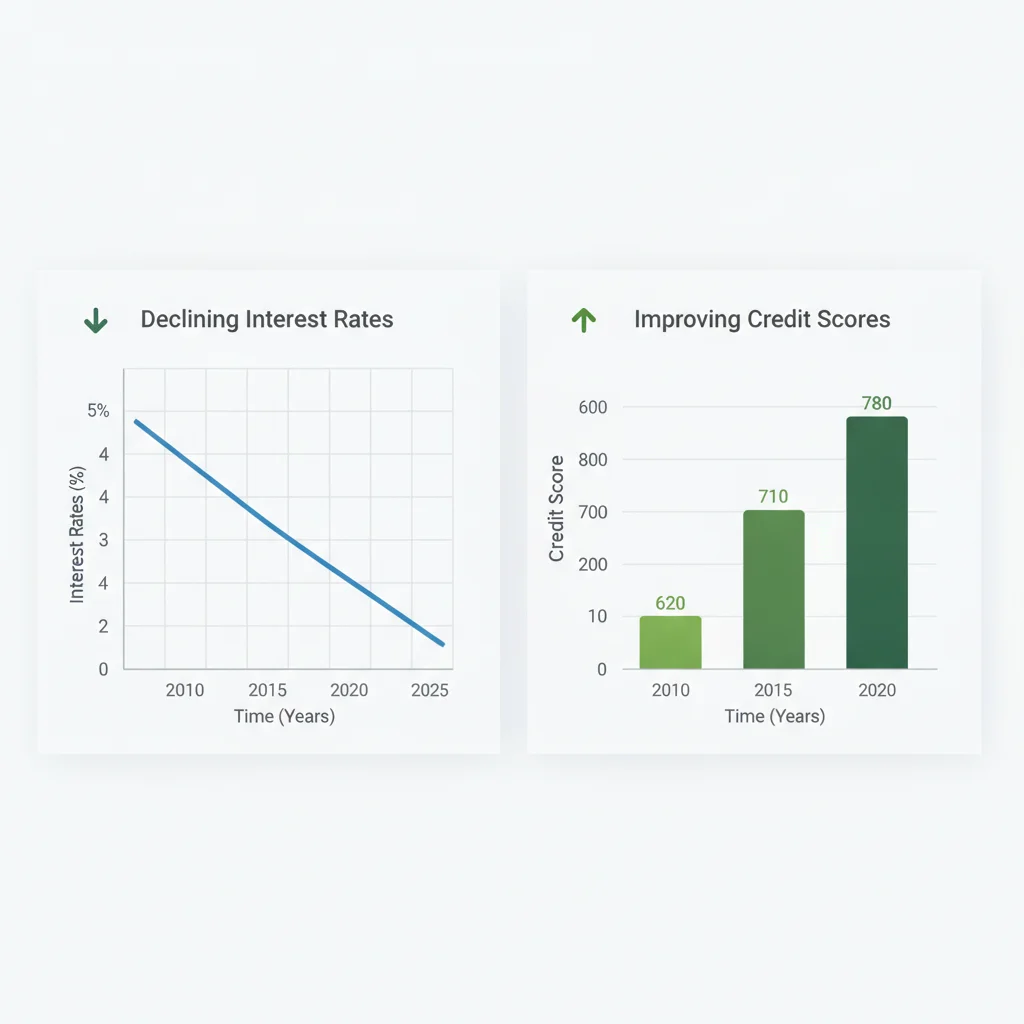
Interest rates are set partly by Federal Reserve policy and partly by individual lender competition. When the Fed lowers benchmark rates, auto loan rates tend to follow — though not immediately and not uniformly. If you financed your car during a high-rate environment and rates have since dropped, refinancing into a lower rate is a straightforward win, assuming your credit profile hasn't deteriorated.
Lender competition also matters. Online lenders and credit unions have expanded the refinancing market significantly. Shopping multiple lenders — not just your original bank — is one of the most reliable ways to find a better rate.
Personal Financial Changes
Your credit score is the most influential personal factor. If you've paid down debt, corrected errors on your credit report, or simply made consistent on-time payments since your original loan, your score may now qualify you for a lower rate tier than when you first financed.
Income changes are another valid trigger. A significant raise may make you more attractive to lenders (lower debt-to-income ratio), while a reduction in income could make a lower monthly payment a financial necessity — even if the total cost increases. The article Income Changes and Auto Loan Refinancing covers both scenarios in detail.
One condition that works against refinancing: being significantly underwater on your loan. If you owe substantially more than the car is worth — a situation called negative equity — most lenders won't approve a refinance, or they'll cap the loan at the vehicle's current value, leaving you to cover the gap.
“The best time to refinance is when the market moves in your favor or your personal credit profile improves — ideally both at once. Borrowers who wait for the 'perfect' moment often miss real savings by acting too late.”
— Melinda Zabritski, Senior Director of Automotive Financial Solutions, Experian
How Lenders Evaluate a Refinance Application
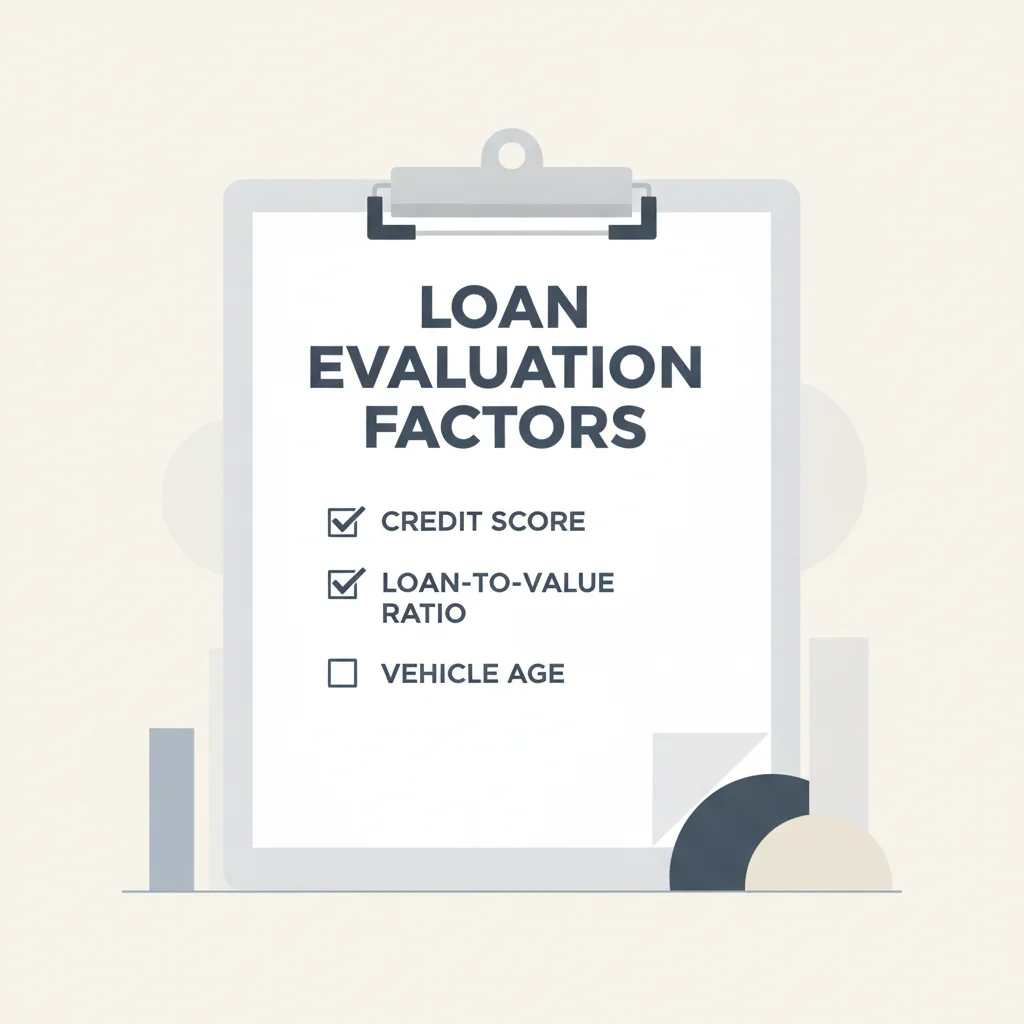
When you apply to refinance, lenders aren't just looking at your credit score. They're running a multi-factor assessment to determine whether you're a low enough risk to lend to — and at what rate. Understanding these factors helps you predict your approval odds and negotiate from a stronger position.
Credit Score and History
Your credit score is the starting point. It determines which rate tier you qualify for, and in some cases whether you qualify at all. But lenders also look at your payment history specifically on the existing auto loan — consistent on-time payments signal that you're a responsible borrower even if your overall score is moderate.
Loan-to-Value Ratio (LTV)
Lenders compare your remaining loan balance to the current market value of the vehicle. A high LTV — meaning you owe close to or more than the car is worth — increases lender risk. Most lenders want an LTV below 125%, and the most competitive rates are offered at lower ratios. As your car depreciates and you pay down principal, your LTV naturally improves over time.
Debt-to-Income Ratio (DTI)
Your total monthly debt obligations divided by your gross monthly income gives lenders a picture of how much financial capacity you have. A lower DTI suggests you can comfortably handle the new payment. Lenders generally prefer a DTI below 50%, though thresholds vary.
Vehicle Age and Mileage
Lenders use the car as collateral, so they care about its condition and resale value. Very old vehicles or those with high mileage may be ineligible for refinancing — or may only qualify with higher rates — because their collateral value is considered too low or too volatile.
If you're curious what a complete, step-by-step refinancing application looks like from start to finish, see Refinancing Your Auto Loan: A Full Walkthrough.
What Changes — and What Doesn't — After You Refinance
Once your refinance closes, several things shift immediately. Others stay exactly the same. Knowing the difference helps you avoid surprises.
What Changes
- Your lender: You now owe money to a different institution. Set up autopay with the new lender to avoid missed payment penalties.
- Your interest rate: Fixed at whatever rate your new loan specifies. Review the loan agreement to confirm the rate — some offers advertised online change slightly after underwriting.
- Your monthly payment: Determined by your new rate, new term, and remaining balance.
- Your loan term: The clock resets. If you had 36 months left and refinanced into a new 48-month loan, you've added a year of payments — even if the monthly amount is lower.
- Where you send payments: Update any automatic payment setups immediately. Sending payments to your old lender after the payoff can create delays and confusion.
What Doesn't Change
- The vehicle: Same car, same title (once transferred to the new lienholder), same insurance.
- Your insurance requirements: Your new lender will require comprehensive and collision coverage just as your old one did. Update the lienholder information on your insurance policy.
- Your obligation: You still owe the money. Refinancing is restructuring debt, not eliminating it.
Amortization Resets With Every New Loan
When you take out a new loan, the amortization schedule starts over. This means your early payments are again weighted heavily toward interest rather than principal. If you're deep into your current loan — say, past the halfway point — extending to a longer new term can mean you've paid substantial interest twice on the same debt. Run the total-cost numbers, not just the monthly payment.
Update Your Insurance Lienholder Information
After closing your refinance, your new lender becomes the lienholder on the vehicle — meaning they need to be listed on your auto insurance policy as the entity that would receive an insurance payout in the event of a total loss. Call your insurance provider to update this information as soon as your new loan closes. Failing to do so can create complications if you ever need to file a claim.
One administrative step many borrowers overlook: confirm in writing with your old lender that the payoff was received and the account is closed. This protects you if any reporting errors appear on your credit report later.
Comparing Refinancing to Related Loan Concepts
Refinancing is sometimes confused with other loan processes that sound similar but work differently. A brief comparison clarifies where each concept fits.
Refinancing vs. Loan Modification
A loan modification changes the terms of your existing loan — the same lender adjusts your rate or term without issuing a new loan. Modifications are relatively rare in auto lending and are typically offered as hardship accommodations. Refinancing, by contrast, involves a completely new loan from a new lender (or occasionally the same lender).
Refinancing vs. Preapproval
Auto loan preapproval happens before you purchase a vehicle — it's a lender's conditional commitment to lend you up to a certain amount at a certain rate, which you use as leverage when negotiating a car purchase. Refinancing happens after you already have a loan and are replacing it. The credit evaluation process is similar, but the purpose and timing are completely different.
Refinancing vs. Trading In
Trading in your vehicle effectively ends your current loan by applying your car's trade-in value to a new vehicle purchase — often with a new loan attached. This is a much larger financial transaction than refinancing. Refinancing keeps the same vehicle and simply restructures the debt associated with it.
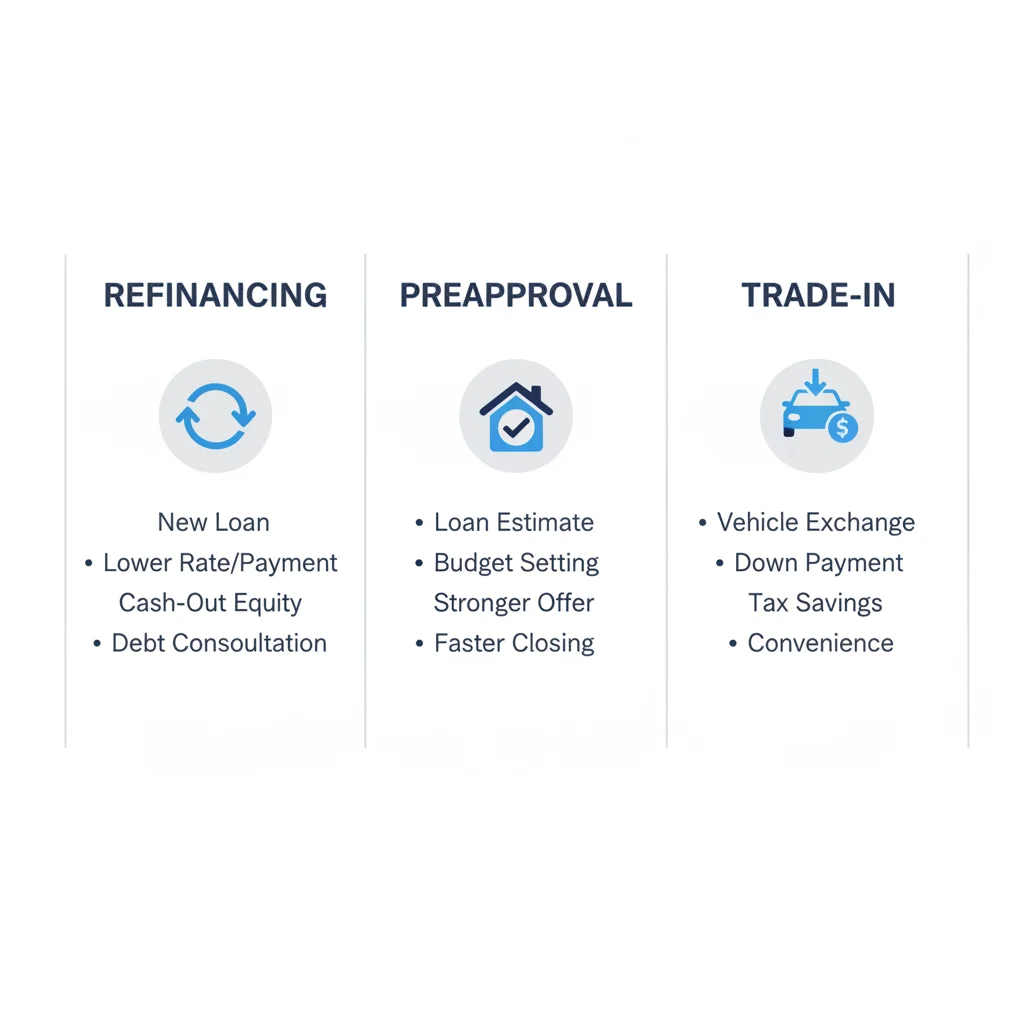
Understanding where refinancing fits within the broader landscape of auto loan preapproval and credit approval helps you approach lenders with a clearer sense of what you're actually asking for — and why.
Keep Your Term Short When Possible
When comparing refinance offers, aim to keep the remaining loan term similar to what you have now — or shorter. A longer term reduces your monthly payment but increases the total interest you'll pay. If a lower monthly payment is necessary for budget reasons, that's a valid trade-off, but go in with eyes open about the total cost.
Shop Multiple Lenders Before Committing
Credit unions, online lenders, and banks all compete for refinance business. Getting quotes from at least three lenders — and doing so within a two-week window — lets you compare real offers while minimizing the credit score impact of multiple hard inquiries. Don't accept the first offer you receive.

All claims are backed by peer-reviewed research. Sources on request.