
Key Takeaways
Always apply for preapproval before you set foot in a dealership — even if you're "just looking." Dealerships track how close buyers are to purchasing, and once they sense you're serious, the finance conversation starts whether you're ready or not.
From my time in the finance office, I saw countless buyers get drawn into rate discussions before they had any competing offer — giving us complete control over their financing cost. A preapproval in hand changes that dynamic entirely.
When comparing preapproval offers, calculate total interest paid over the full loan term — not just the monthly payment. A 0.5% rate difference on a $30,000 loan over 60 months is roughly $450 in real money.
Monthly payment framing obscures the true cost of financing. Total interest paid is the only number that tells you what each offer actually costs you across its lifetime.
Ask each lender explicitly whether they fund private-party purchases before you apply. Not all preapprovals are portable to non-dealer transactions, and discovering this limitation after you've found a great private listing wastes time and credit inquiries.
Private-party purchase eligibility varies significantly by lender. Credit unions are generally the most flexible, while some online lenders restrict preapprovals to licensed dealer purchases only.
If a dealer offers to beat your rate, ask for the full loan disclosure document — not just a verbal quote — before you agree to use their financing. Rate offers sometimes change between the verbal discussion and the final paperwork.
Rate bait-and-switch in the F&I office is a documented pattern. The financing contract you sign is the only number that legally matters; verbal rate promises are not enforceable.
Use your preapproval maximum as a budget ceiling, not a target. Just because you're approved for $40,000 doesn't mean you should spend it. The approval reflects what you can borrow — your actual budget should be based on what your monthly cash flow can comfortably sustain.
Lenders approve based on risk thresholds, not your personal financial goals. Many approved borrowers are stretched thin by loans they technically qualified for but can't comfortably afford long-term.
What Auto Loan Preapproval Actually Means
Preapproval is a conditional commitment from a lender stating that — based on your credit profile and financial information — they are willing to lend you a specific dollar amount at a specific interest rate. It is not a guarantee of funding. The final loan still depends on the vehicle you select meeting the lender's criteria and your financial situation remaining unchanged between application and closing.
Here's why the distinction matters: pre-qualification is a soft, estimate-based screen that uses limited data and does not pull your full credit report. Preapproval involves a hard credit inquiry and a more thorough review of your income, employment, and debt levels. It carries far more weight with dealers because it is a real, documented offer — not a ballpark guess.
When I worked in the finance office at a franchised dealership, I could tell within seconds whether a buyer had done their homework. The ones who walked in with a preapproval letter from their credit union? They were not playing the same game as everyone else. They had already set the ceiling on their financing cost. The question was only whether we could match or beat it — not whether we could dictate the terms entirely.
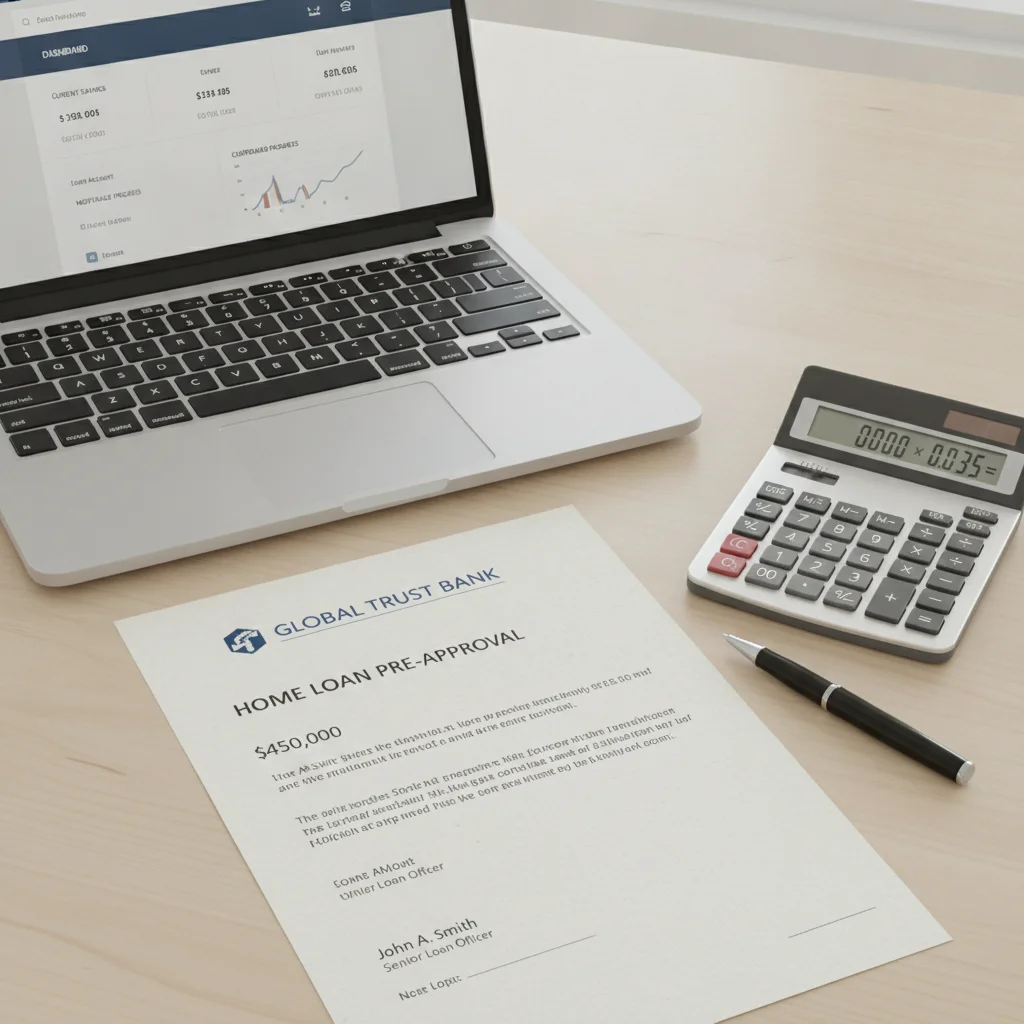
Think of the preapproval letter as your entry ticket into a different negotiation. Without it, you are essentially asking the dealership to play banker and car seller simultaneously — a dual role that benefits them, not you. With it, those two roles are separated, and you control the financing side of the conversation.
How Preapproval Gives You Real Negotiating Leverage
The dealer's finance and insurance (F&I) department makes significant profit on the loans it arranges. When a dealership submits your application to its network of lenders, those lenders send back a buy rate — the actual interest rate you qualify for. The dealer is then permitted to mark that rate up, often by 1–3 percentage points, and pocket the difference as a dealer reserve. You never see the buy rate unless you know to ask — and most buyers don't.
A preapproval from your own bank or credit union bypasses this markup entirely. You arrive with a rate already in hand. The dealer can either beat it — in which case you get an even better deal — or you use your preapproval and the dealer earns nothing on financing. Many dealers will try to beat your rate to recapture that revenue stream, which works in your favor either way.
Always apply for preapproval before you set foot in a dealership — even if you're "just looking." Dealerships track how close buyers are to purchasing, and once they sense you're serious, the finance conversation starts whether you're ready or not.
From my time in the finance office, I saw countless buyers get drawn into rate discussions before they had any competing offer — giving us complete control over their financing cost. A preapproval in hand changes that dynamic entirely.
When comparing preapproval offers, calculate total interest paid over the full loan term — not just the monthly payment. A 0.5% rate difference on a $30,000 loan over 60 months is roughly $450 in real money.
Monthly payment framing obscures the true cost of financing. Total interest paid is the only number that tells you what each offer actually costs you across its lifetime.
Ask each lender explicitly whether they fund private-party purchases before you apply. Not all preapprovals are portable to non-dealer transactions, and discovering this limitation after you've found a great private listing wastes time and credit inquiries.
Private-party purchase eligibility varies significantly by lender. Credit unions are generally the most flexible, while some online lenders restrict preapprovals to licensed dealer purchases only.
If a dealer offers to beat your rate, ask for the full loan disclosure document — not just a verbal quote — before you agree to use their financing. Rate offers sometimes change between the verbal discussion and the final paperwork.
Rate bait-and-switch in the F&I office is a documented pattern. The financing contract you sign is the only number that legally matters; verbal rate promises are not enforceable.
Use your preapproval maximum as a budget ceiling, not a target. Just because you're approved for $40,000 doesn't mean you should spend it. The approval reflects what you can borrow — your actual budget should be based on what your monthly cash flow can comfortably sustain.
Lenders approve based on risk thresholds, not your personal financial goals. Many approved borrowers are stretched thin by loans they technically qualified for but can't comfortably afford long-term.
Preapproval also changes the psychology of the conversation. Dealerships are trained to anchor negotiations around the monthly payment. "What can you afford per month?" is the single most profitable question they ask, because it lets them stretch out loan terms, obscure the true cost of the vehicle, and layer in add-ons without you noticing. When you have a preapproval, you can shut down that conversation immediately: "I have my financing handled. Let's talk about the out-the-door price."
1–3%
Typical dealer rate markup over buy rate
According to the Consumer Financial Protection Bureau, dealers routinely mark up interest rates above lender buy rates, sometimes by as much as 2–3 percentage points.
$5,000+
Additional interest from rate markup on 60-month loan
A 2% rate markup on a $35,000 auto loan over 60 months adds approximately $1,900–$2,200 in extra interest — money that goes directly to the dealership.
14 days
Rate-shopping window for single inquiry treatment
FICO scoring models group all auto loan hard inquiries made within a 14-day period and count them as a single inquiry, per myFICO.com guidelines.
30–60 days
Typical preapproval validity period
Most banks, credit unions, and online lenders issue preapprovals that remain valid for 30 to 60 days from the date of approval.
72%
New car buyers who financed their purchase
According to Experian's State of the Automotive Finance Market report, more than 72% of new vehicle purchases in recent years were financed through some form of loan or lease.
That pivot — from monthly payment to total purchase price — is where buyers win or lose thousands of dollars. Preapproval is what makes that pivot possible.
For a broader look at how this integrates with the car-buying process from start to finish, see The New Car Purchase Process, Start to Finish.
What Lenders Evaluate Before They Say Yes
Understanding what lenders are looking for lets you strengthen your application before you submit it — and avoid surprises. Lenders assess several interconnected factors, not just a single credit score.
Credit Score
Your FICO Auto Score (a specialized version of the FICO model weighted toward auto loan repayment history) is the primary driver of your rate. Scores above 720 typically access the best tiers. Scores between 660–719 still qualify for competitive rates but with some markup. Below 620, you're in subprime territory and the rate landscape changes dramatically.
Debt-to-Income Ratio (DTI)
Most lenders want your total monthly debt obligations — including the proposed car payment — to stay below 40–45% of your gross monthly income. A lower DTI signals that you have capacity to absorb the new payment without stress.
Income and Employment Stability
Lenders want to see consistent, verifiable income. W-2 employees with two or more years at the same employer are viewed most favorably. Self-employed applicants or those with variable income typically need to provide additional documentation — two years of tax returns is standard.
Loan-to-Value Ratio (LTV)
Lenders consider the relationship between the loan amount and the vehicle's value. If you're borrowing more than the car is worth — which happens when negative equity from a trade-in is rolled in — some lenders will decline or adjust your rate upward.
Down Payment
A larger down payment reduces lender risk and often improves your rate tier. Ten percent is a common floor; 20% down typically unlocks the best terms and positions your loan favorably throughout its life.
For an exhaustive breakdown of every factor lenders weigh, see Everything Your Lender Looks at Before Issuing a Preapproval.
Watch Your DTI Before You Apply
If your debt-to-income ratio is already near 40%, applying for a preapproval with the full vehicle payment included could push you over lender thresholds and result in a denial. Calculate your estimated post-purchase DTI before submitting any applications. Paying down a credit card or personal loan balance before applying can make a meaningful difference to both your score and your DTI.
Vehicle Age and Mileage Restrictions Are Real
Many buyers discover mid-negotiation that their preapproval won't cover their chosen vehicle because it's too old or has too many miles. Ask your lender's specific restrictions before you start shopping. Going to the dealership without this information can result in a wasted trip and a deal that falls apart in the finance office.
Do Not Roll Negative Equity Without a Clear Plan
If you're trading in a vehicle worth less than you owe and rolling that negative equity into your new loan, the resulting LTV can disqualify you from your preapproval or trigger a rate adjustment. Understand your trade-in payoff amount and equity position before you apply. Consider paying down the negative equity separately if possible rather than capitalizing it into the new loan.
Where to Apply: Banks, Credit Unions, and Online Lenders
Not all preapproval sources are equal. Each channel has structural advantages and trade-offs that you should understand before choosing where to submit your application.
Your Current Bank
If you have an established checking or savings relationship, your bank may offer a loyalty rate discount and can pull your financial data without extensive paperwork. The downside: large banks often have less competitive auto rates than credit unions, and their underwriting can be more rigid.
Credit Unions
Credit unions are member-owned nonprofits with no shareholder pressure to maximize loan revenue. They consistently offer some of the lowest auto loan rates in the market. Membership is usually easy to obtain — many credit unions have broad eligibility criteria tied to geography, employer, or community groups. If you don't belong to one, it's worth joining before you start shopping.
Online Lenders and Marketplaces
Lenders like LightStream, Consumers Credit Union, and marketplace platforms like LendingTree or AutoPay allow you to get preapproved entirely online, often within minutes. These platforms sometimes let you compare multiple offers through a single application, minimizing hard inquiry impact. Rates can be highly competitive, especially for buyers with strong credit profiles.
Captive Finance Arms (Dealer-Arranged)
Manufacturer financing divisions (Ford Motor Credit, Toyota Financial Services, etc.) offer preapproval through their websites and sometimes provide promotional 0% APR offers on specific models. These deals are real and worth considering — but they are only competitive on the specific vehicles the manufacturer wants to move. Always compare against an independent lender offer before accepting.
Join a Credit Union Before You Apply
If you're not already a credit union member, join one before you start rate shopping. Membership is often free or costs a nominal one-time fee. Credit unions consistently offer lower auto loan rates than banks and are more willing to work with members on borderline applications. The few days it takes to open an account can save you hundreds or thousands over a loan term.
Negotiate Vehicle Price Before Revealing Financing
In the finance office, hold your preapproval letter until after the vehicle price is fully agreed upon in writing. Lead with: 'I have my own financing arranged — let's agree on the out-the-door price first.' This prevents the salesperson from using your financing as a variable to obscure the vehicle's true cost.
Time Your Application to Your Purchase Window
Don't apply for preapproval until you're genuinely prepared to buy within 30–45 days. Starting too early means your preapproval may expire before you find the right vehicle, forcing you to reapply with a new hard inquiry. Match your timeline to the preapproval validity period for the cleanest possible process.
If you're exploring the purchase entirely online, our Online Car Buying hub covers how to align your financing with a fully digital purchase.
The Step-by-Step Preapproval Process
Here is exactly how preapproval works from first action to offer in hand.
Step 1: Check Your Credit Before Anyone Else Does
Pull your own credit reports from AnnualCreditReport.com (free, no hard inquiry) and review them for errors before any lender sees them. Disputing inaccuracies — wrong account statuses, duplicate collections, incorrect balances — can move your score meaningfully before you apply. Give yourself two to four weeks for disputes to resolve if you have time.
Step 2: Determine Your Budget and Target Loan Amount
Know what vehicle price range you're targeting and how much you plan to put down. This tells you the loan amount to request on your preapproval applications. Request slightly more than you need — but don't pad it excessively, as lenders consider the full requested amount in their risk assessment.
Step 3: Gather Your Documents
Standard preapproval documentation includes: government-issued photo ID, Social Security number, proof of income (recent pay stubs, W-2s, or tax returns for self-employed applicants), proof of residence (utility bill or bank statement), and employer contact information. Having these ready before you start prevents delays.
Step 4: Apply to Multiple Lenders Within a Short Window
Apply to three to five lenders within a 14-day period. Credit scoring models (FICO and VantageScore) treat all auto loan inquiries within this window as a single inquiry for scoring purposes, so rate shopping does not meaningfully damage your credit. Do not spread applications out over weeks — cluster them.
Step 5: Compare Offers Carefully
When offers arrive, compare the Annual Percentage Rate (APR), not just the interest rate. APR includes fees and gives you a true apples-to-apples comparison. Also review: loan term options, any origination fees, prepayment penalties (rare in auto loans but worth checking), and the maximum vehicle age or mileage the lender will accept.
Step 6: Accept Your Best Offer and Receive Your Letter
Once you select the best offer, the lender will issue a preapproval letter or certificate. This document specifies the maximum loan amount, the approved rate, and the expiration date. Print it or save it digitally — you will bring it to the dealership.
For a detailed companion walkthrough of this process, Getting Preapproved for a Car Loan Before You Step on the Lot covers the application phase in granular detail.

“The single best thing a car buyer can do before walking into any dealership is to have their own financing arranged. It changes the entire negotiation — the dealer has to compete for your loan business rather than control it.”
— Melinda Zabritski, Senior Director of Automotive Financial Solutions, Experian
Reading Your Preapproval Letter
Most buyers glance at the dollar amount and the rate and consider the document understood. Don't do that. Your preapproval letter contains several terms that directly affect what you can and cannot do with it at the dealership.
Maximum Loan Amount
This is the ceiling — the most the lender will fund. You are not obligated to borrow the full amount. If you find a vehicle priced lower than your preapproval ceiling, you simply borrow less. The rate remains the same (unless your lender uses tiered rates based on loan amount, which is less common in auto lending).
Approved APR
This is your rate as of the application date, based on your current credit profile. It is locked in for the preapproval period. If market rates rise in the following weeks, your preapproval rate is protected. If rates fall, consider re-applying to capture the improvement.
Expiration Date
Most preapprovals expire in 30–60 days. If you haven't found a vehicle before the expiration, you'll need to reapply, which means another hard inquiry. Plan your vehicle search to fit within the preapproval window — and don't start the preapproval process months before you're ready to buy.
Vehicle Restrictions
Lenders often impose restrictions on the vehicles they'll finance under your preapproval: maximum mileage (commonly 100,000–125,000 miles for used cars), maximum vehicle age (often 8–10 model years), and sometimes minimum loan amounts. A lender may decline to fund a $6,000 loan on a 15-year-old vehicle with 140,000 miles even if your preapproval is technically active.
Preapproval Is Not Final Loan Approval
Your preapproval letter is a conditional offer, not a binding commitment to fund. The lender will conduct a final verification once you select a vehicle — confirming that the car's value supports the loan amount and that your financial situation hasn't changed. Do not make any major financial moves (new credit, job changes, large purchases) between preapproval and loan closing. Any shift in your profile can lead to revised terms or outright cancellation of the offer.
Read Every Document Before You Sign
The F&I office is designed to move quickly. Stacks of paperwork are placed in front of you with tabs marked 'sign here.' Do not let the pace pressure you into skipping verification. The rate, term, loan amount, and any add-on products you agreed to should all be reflected accurately in the final contract. If anything differs from what was discussed, stop, ask for the discrepancy to be corrected in writing, and do not sign until it is. A contract error discovered after you've signed is expensive and time-consuming to remedy.
If you're shopping certified pre-owned vehicles, those lender restrictions matter less because CPO programs have age and mileage limits built in. See our Certified Pre-Owned hub to understand how CPO financing typically works.
Preapproval Rates Can Change With the Vehicle
Some lenders tier their rates based on whether you're buying new or used, and on the vehicle's age and mileage. A preapproval issued based on a new vehicle purchase may carry a different rate if you ultimately decide to buy a three-year-old used model. Confirm with your lender how rates are structured before assuming your preapproval rate applies universally.
Manufacturer Financing Offers Require Separate Comparison
Zero-percent and low-APR financing offers from manufacturer captive lenders are sometimes tied to forfeiting a cash rebate. Calculate both scenarios — rebate plus your preapproval rate, versus low-APR with no rebate — to determine which truly costs less over the loan term. The break-even point depends on your loan amount and term length.
State Laws Affect Dealer Rate Markup Practices
Some states have enacted regulations limiting how much a dealer can mark up a lender's buy rate. California, for example, has caps on dealer reserve markups. Understanding your state's consumer finance protections can inform how aggressively you push back on dealer-arranged financing offers.
Using Your Preapproval at the Dealership
This is where preapproval pays off — but only if you use it correctly. Most buyers reveal their preapproval too early or too late. Here's the right sequence.
Negotiate the Vehicle Price First
Do not mention your preapproval until you have agreed on the out-the-door price of the vehicle. Negotiate as if you're paying cash. Once the sales team thinks you have your own financing locked up, they focus entirely on the vehicle price — they can't play the monthly payment game. Get the price in writing before the conversation moves to the finance office.
Reveal Your Preapproval in the Finance Office
When you sit down with the F&I manager, present your preapproval letter and state clearly that you'll be using outside financing unless they can beat your rate. Give them a genuine opportunity to compete. Dealers have access to wholesale rates and sometimes can beat credit union offers, particularly on new vehicles where manufacturer incentives are in play.
Evaluate Any Counter-Offer Carefully
If the dealer offers a lower rate, scrutinize the full terms — not just the rate. Check whether they're extending the loan term to lower your monthly payment while increasing total interest paid. A 6.9% rate on a 48-month term can cost less total interest than a 5.9% rate on a 72-month term, depending on the principal.
Decline Add-On Pressure
With your financing settled, the F&I manager's remaining profit lever is add-ons: extended warranties, GAP insurance, paint protection, tire and wheel coverage, and credit life insurance. These products aren't all worthless, but they are heavily marked up in the dealership context. GAP insurance, for example, is often available through your own insurer for a fraction of the dealer's price. Decline everything initially; add back only what you've researched and decided you genuinely need.

Join a Credit Union Before You Apply
If you're not already a credit union member, join one before you start rate shopping. Membership is often free or costs a nominal one-time fee. Credit unions consistently offer lower auto loan rates than banks and are more willing to work with members on borderline applications. The few days it takes to open an account can save you hundreds or thousands over a loan term.
Negotiate Vehicle Price Before Revealing Financing
In the finance office, hold your preapproval letter until after the vehicle price is fully agreed upon in writing. Lead with: 'I have my own financing arranged — let's agree on the out-the-door price first.' This prevents the salesperson from using your financing as a variable to obscure the vehicle's true cost.
Time Your Application to Your Purchase Window
Don't apply for preapproval until you're genuinely prepared to buy within 30–45 days. Starting too early means your preapproval may expire before you find the right vehicle, forcing you to reapply with a new hard inquiry. Match your timeline to the preapproval validity period for the cleanest possible process.
When Preapproval Doesn't Work Out — and What to Do
Preapproval rejections happen for several reasons, and most of them are addressable. Here's how to diagnose the situation and move forward.
Application Declined
If you're declined across multiple lenders, the most common causes are: a credit score below lender minimums (typically 580–620 for prime lenders), a DTI that's too high, insufficient income documentation, or recent derogatory marks like a late payment or collection. Request the adverse action notice — lenders are legally required to send one — which identifies the specific factors that led to the denial.
From there, the path forward depends on your timeline. If you can wait 3–6 months, paying down revolving balances and avoiding new credit inquiries can measurably improve your score. If you need a vehicle now, credit union direct lending or specialist subprime lenders may still have options, though at higher rates. Our guide on Bad Credit Auto Loans From Start to Funded covers that path in full.
Preapproval Amount Is Too Low
If your preapproval amount doesn't cover the vehicle you want, you have three options: increase your down payment to cover the gap, target a less expensive vehicle, or reapply with a co-borrower whose income can strengthen the application. Adding a co-signer with strong credit can also improve your rate tier — but make sure they understand the obligation they're taking on.
Vehicle Doesn't Meet Lender Criteria
If your chosen vehicle fails the lender's age or mileage requirements, your preapproval letter can't be used for that specific purchase. You'll need to either find a different vehicle or apply to a lender with more flexible collateral requirements — some credit unions and online lenders are more accommodating on older vehicles.
Watch Your DTI Before You Apply
If your debt-to-income ratio is already near 40%, applying for a preapproval with the full vehicle payment included could push you over lender thresholds and result in a denial. Calculate your estimated post-purchase DTI before submitting any applications. Paying down a credit card or personal loan balance before applying can make a meaningful difference to both your score and your DTI.
Vehicle Age and Mileage Restrictions Are Real
Many buyers discover mid-negotiation that their preapproval won't cover their chosen vehicle because it's too old or has too many miles. Ask your lender's specific restrictions before you start shopping. Going to the dealership without this information can result in a wasted trip and a deal that falls apart in the finance office.
Do Not Roll Negative Equity Without a Clear Plan
If you're trading in a vehicle worth less than you owe and rolling that negative equity into your new loan, the resulting LTV can disqualify you from your preapproval or trigger a rate adjustment. Understand your trade-in payoff amount and equity position before you apply. Consider paying down the negative equity separately if possible rather than capitalizing it into the new loan.
Common Mistakes That Kill a Good Preapproval
Even buyers who get preapproved sometimes undermine their own position. Avoid these errors.
Opening New Credit Before Closing
Any new hard inquiry or new account opened between preapproval and loan closing can trigger a re-review of your credit profile. A new credit card, a store card at checkout, even a new phone contract that gets credit-checked — these can lower your score or cause the lender to revise your terms. Keep your credit profile completely static from the moment you apply until your loan is funded.
Making Major Purchases or Changing Employment
Lenders sometimes re-verify income and employment before final funding. Quitting your job, switching from salaried to self-employed, or making a large purchase that shifts your DTI can invalidate the preapproval entirely. Maintain financial stability throughout the process.
Letting the Preapproval Expire
Starting your car search too late — or taking too long to decide — means your preapproval can expire mid-negotiation. If that happens, you're back to reapplying, with another hard inquiry and possibly different terms. Match your timeline: get preapproved when you're genuinely ready to buy within 30–45 days.
Accepting a Worse Rate at the Dealer Without Negotiating
Some buyers arrive with a preapproval, get an offer from the dealer's F&I office, and accept it without using the preapproval as leverage. The whole point of having a preapproval is to create competition. Always present it and explicitly invite the dealer to beat it before making any financing decision.
Not Reading the Final Loan Documents
The loan documents you sign in the F&I office should match the terms discussed. It is not uncommon for rate, term, or fee figures to differ from what was verbally agreed. Read every page before signing. If anything is different from what was offered, stop and ask for a corrected document.
Preapproval Is Not Final Loan Approval
Your preapproval letter is a conditional offer, not a binding commitment to fund. The lender will conduct a final verification once you select a vehicle — confirming that the car's value supports the loan amount and that your financial situation hasn't changed. Do not make any major financial moves (new credit, job changes, large purchases) between preapproval and loan closing. Any shift in your profile can lead to revised terms or outright cancellation of the offer.
Read Every Document Before You Sign
The F&I office is designed to move quickly. Stacks of paperwork are placed in front of you with tabs marked 'sign here.' Do not let the pace pressure you into skipping verification. The rate, term, loan amount, and any add-on products you agreed to should all be reflected accurately in the final contract. If anything differs from what was discussed, stop, ask for the discrepancy to be corrected in writing, and do not sign until it is. A contract error discovered after you've signed is expensive and time-consuming to remedy.

If you're ultimately buying new and financing through the manufacturer, The New Car Purchase Process, Start to Finish details how dealer financing integrates with the broader transaction.
Frequently Asked Questions
- Does getting preapproved hurt my credit score?
- Yes, but minimally. A preapproval requires a hard inquiry, which typically reduces your score by 5 points or fewer. If you apply to multiple lenders within a 14-day window, all inquiries are grouped and treated as a single inquiry by FICO scoring models. The impact is temporary and recovers within a few months of consistent on-time payments.
- Can I get preapproved if I have bad credit?
- Some lenders specialize in subprime auto loans and will issue preapprovals for scores below 620, though the rates will be significantly higher. Credit unions are often the best first call for borderline-credit applicants. Adding a co-signer with strong credit can help. See Bad Credit Auto Loans From Start to Funded for the full process.
- How long does preapproval take?
- Online lenders and credit unions with digital applications can issue decisions in minutes to a few hours. Banks with in-person applications may take one to three business days. The process is faster when your documentation is ready in advance.
- Should I tell the dealer I have a preapproval before we negotiate on price?
- No. Negotiate the vehicle price first, then reveal your preapproval in the finance office. Disclosing it during price negotiation can prompt the salesperson to protect profit elsewhere or rush you through to the F&I office before the deal is finalized.
- Can I use a preapproval for a private-party purchase?
- Some lenders — particularly credit unions — issue preapprovals that can be used for private-party purchases. The lender will still need to verify the vehicle's value against the purchase price and confirm it meets their collateral requirements. Ask specifically about private-party funding when applying.
- What if the dealer beats my preapproval rate?
- Take it. The preapproval did its job — it created competition that benefited you. Just verify that the terms match what was stated, and make sure the loan term hasn't been extended to achieve the lower monthly payment at the cost of more total interest paid.
AnnualCreditReport.com
The only federally authorized source for free credit reports from all three major bureaus. Pull your reports here before applying for preapproval to catch errors and understand your starting position.
CFPB Auto Loan Toolkit
The Consumer Financial Protection Bureau's plain-language resource explaining auto loan terms, dealer financing practices, and your legal rights as a borrower.
Bankrate Auto Loan Calculator
Calculate your estimated monthly payment, total interest paid, and amortization schedule for any loan scenario. Use it to compare the real cost of different rate and term combinations.
NCUA Credit Union Locator
Find federally insured credit unions in your area using the National Credit Union Administration's official search tool — a useful first step toward finding a lower-rate preapproval source.
Getting Preapproved Before You Step on the Lot
Our detailed step-by-step guide to the preapproval application process — covering document gathering, lender comparison, and how to evaluate the offers you receive.
Loan Comparison Template
A simple spreadsheet template for comparing multiple preapproval offers side by side across rate, term, monthly payment, and total interest paid — so you can make a clear, data-driven decision.
For those considering refinancing an existing loan after your purchase — whether because rates have dropped or your credit has improved — our Refinancing Your Auto Loan: A Full Walkthrough covers that process end to end.
Preapproval Rates Can Change With the Vehicle
Some lenders tier their rates based on whether you're buying new or used, and on the vehicle's age and mileage. A preapproval issued based on a new vehicle purchase may carry a different rate if you ultimately decide to buy a three-year-old used model. Confirm with your lender how rates are structured before assuming your preapproval rate applies universally.
Manufacturer Financing Offers Require Separate Comparison
Zero-percent and low-APR financing offers from manufacturer captive lenders are sometimes tied to forfeiting a cash rebate. Calculate both scenarios — rebate plus your preapproval rate, versus low-APR with no rebate — to determine which truly costs less over the loan term. The break-even point depends on your loan amount and term length.
State Laws Affect Dealer Rate Markup Practices
Some states have enacted regulations limiting how much a dealer can mark up a lender's buy rate. California, for example, has caps on dealer reserve markups. Understanding your state's consumer finance protections can inform how aggressively you push back on dealer-arranged financing offers.

All claims are backed by peer-reviewed research. Sources on request.