Key Takeaways
Our Verdict
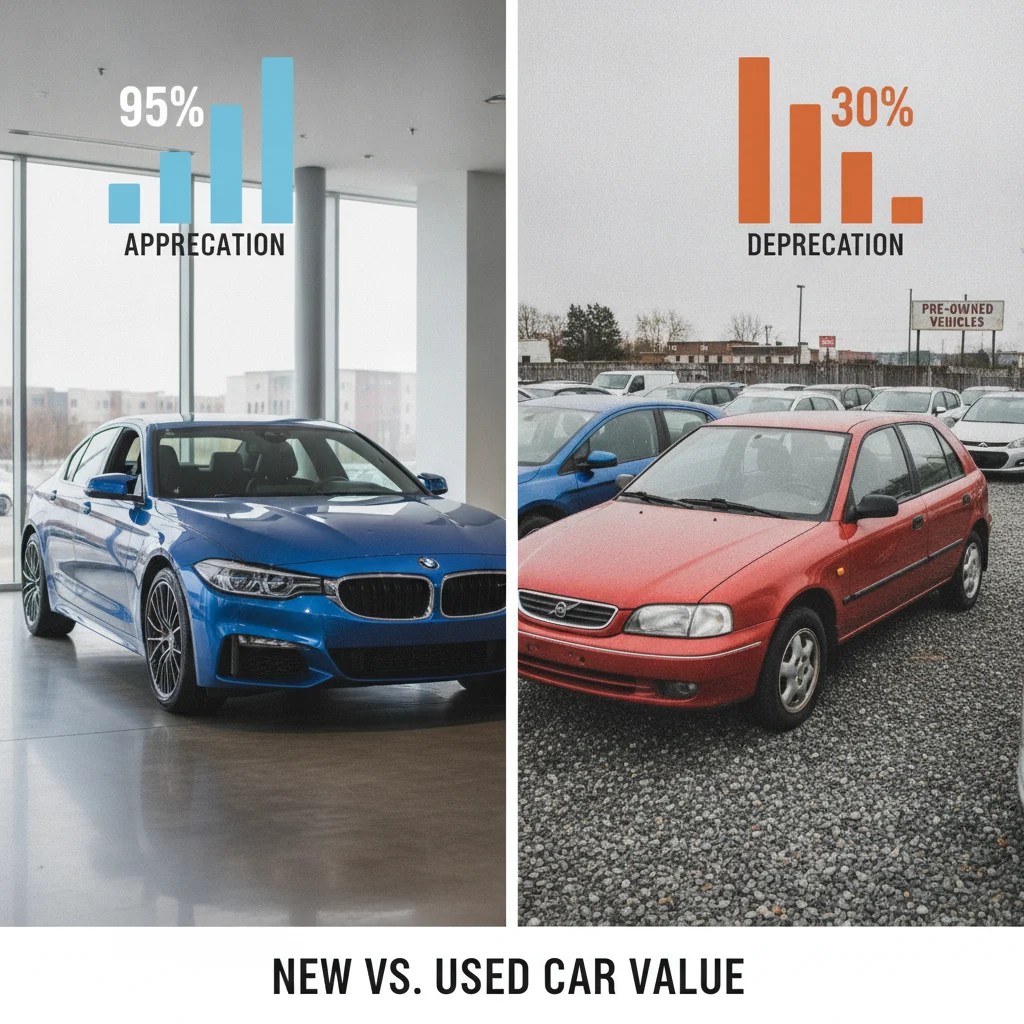
Both new and used car purchases benefit from a meaningful down payment, but the reasons differ. On a new car, you're primarily defending against first-year depreciation that can easily exceed 20%. On a used car, the higher interest rate environment means every dollar down cuts more from your total financing cost. In both cases, keeping your loan-to-value ratio at or below 80% is the clearest way to reduce risk and long-term expense.
| Best for | Recommended |
|---|---|
| Buyers purchasing a brand-new vehicle | 20% down on new car |
| Buyers financing an older or high-mileage used car | 20%+ down on used car |
| Buyers seeking balance of low rate and depreciation protection | CPO vehicle with 10–15% down |
| Buyers with limited cash but strong credit | 10% minimum down, shortest loan term possible |
Why the Down Payment Question Is Different for New vs. Used
The common rule of thumb you've probably heard — put 20% down on a car — was written with a specific kind of buyer in mind. It made sense when most financed vehicles were new, loan terms were shorter, and depreciation curves were more predictable. Today, with used car prices elevated and loan terms stretching to 72 or even 84 months, that blanket figure doesn't tell the whole story.
The real question isn't just "how much should I put down?" It's "how much do I need to put down on this specific type of vehicle to protect myself from financial exposure?" That answer changes depending on whether you're sitting in a new car showroom or scrolling through used listings.
Two core mechanics drive the difference: depreciation risk and lender risk pricing. A new car sheds value fastest right after purchase, so your equity evaporates quickly if your down payment is thin. A used car often comes with a higher interest rate, meaning the financing cost itself is the bigger enemy. Understanding which risk dominates helps you calibrate how much cash to put down — and why.
For deeper context on how your credit score interacts with these rate differences, see how new and used car loan rates respond differently to your credit score.
How Depreciation Changes the Down Payment Math on a New Car
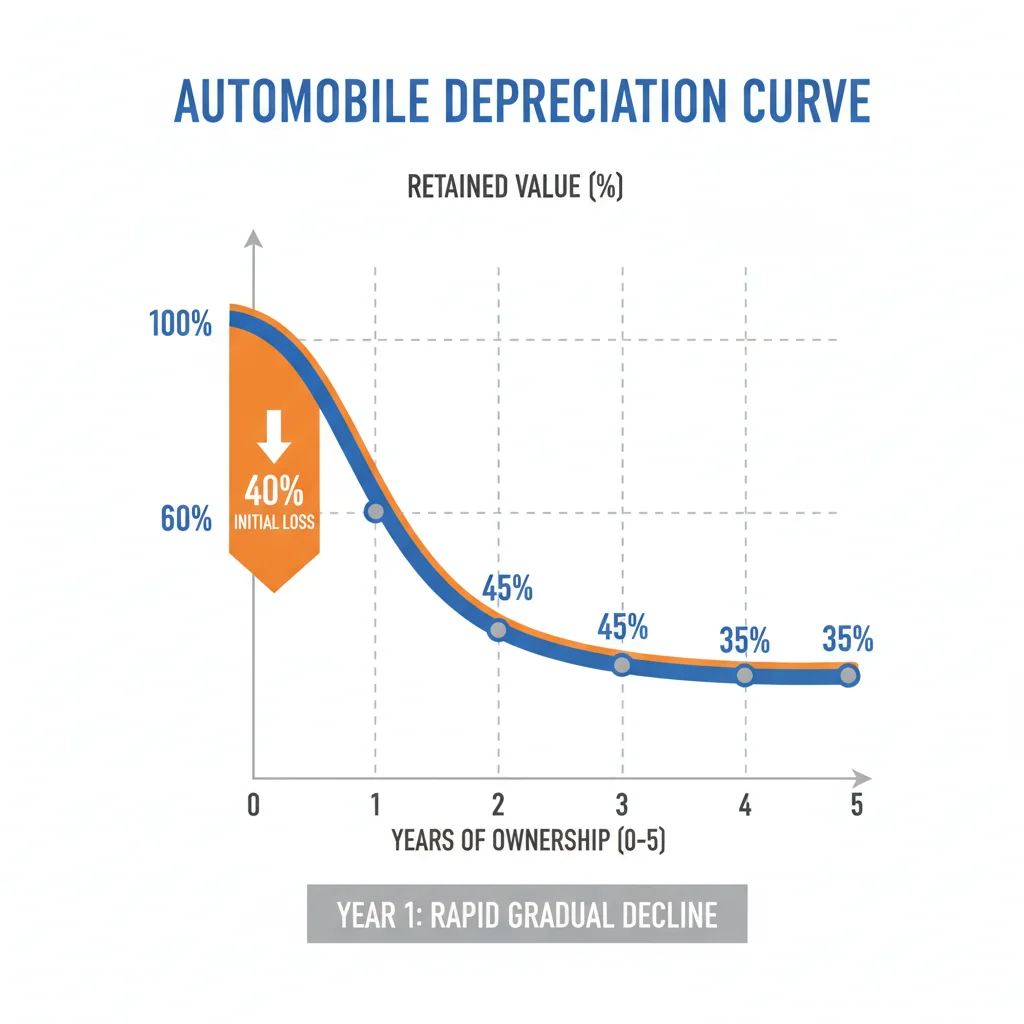
New cars are remarkable in how fast they lose value. The moment a vehicle leaves the dealership lot, it's no longer "new" in any market sense — and buyers immediately discount it. On average, a new car loses roughly 15–20% of its value in the first year, with some models dropping even further depending on brand, segment, and market demand.
Here's why that matters for your down payment: if you finance a $40,000 new car with 10% down ($4,000), you're borrowing $36,000. After twelve months, that car might be worth $32,000–$34,000. You've made payments — say, around $7,200 on a 60-month loan at 6% — but a significant portion of those payments in the early months goes to interest, not principal. Your loan balance might sit around $29,500 after year one. That gives you roughly $2,500–$4,500 of equity — a thin cushion.
Now run the same scenario with 20% down ($8,000): you borrow $32,000, your balance after year one is approximately $25,700, and your equity buffer is $6,000–$8,000. If something goes wrong — a total loss, a job change that forces a sale, or simply needing to trade — you're in a fundamentally different position.
20%
Average new car value lost in year one
Industry data consistently shows new vehicles depreciate approximately 15–20% in their first 12 months of ownership, with some luxury and volume segments at the high end of that range.
2–5%
Rate premium on used vs. new car loans
According to Federal Reserve consumer credit data, used car loan rates have historically run 2–5 percentage points higher than new car loan rates for borrowers with similar credit profiles.
38%
Share of new car buyers with negative equity
Edmunds data has found that in recent years, approximately 38% of new vehicle trade-ins carried negative equity — meaning buyers owed more than the car was worth.
The takeaway: on a new car, the purpose of your down payment is largely depreciation defense. You're buying time for your loan balance to catch up with the car's falling market value. The standard 20% recommendation exists precisely because that's roughly what a new car loses in year one.
To understand the full depreciation comparison between new and used purchases, new car vs. used car depreciation exposure walks through the risk profiles side by side.
How Lender Risk Shifts the Down Payment Logic on a Used Car
Used car loans are priced differently than new car loans — and not in your favor. Lenders see older vehicles as higher-risk collateral because they're harder to value precisely, more likely to need repairs, and depreciate less predictably. That risk premium shows up as a higher interest rate, often 2–5 percentage points above a comparable new car loan.
Consider two $25,000 loans: one for a new car at 5.5% and one for a 3-year-old used car at 8.5%, both on 60-month terms. The new car loan costs roughly $3,680 in total interest. The used car loan costs about $5,820. That $2,140 difference is money you're handing to the lender simply because the vehicle is used.
A larger down payment attacks that problem directly. If you put $5,000 down on the used car instead of the standard $2,500, you're borrowing $20,000 instead of $22,500. At 8.5% over 60 months, you save approximately $930 in interest and reduce your monthly payment by about $46. The savings are real, even if they're not dramatic at first glance.
Negotiate the Price Before Discussing the Down Payment
Dealers sometimes use your stated down payment amount to restructure the deal in their favor — shifting numbers between the price, the trade-in allowance, and the financing terms. Finalize the out-the-door purchase price first, then layer in your down payment and financing discussion separately. This keeps each variable visible and prevents a large down payment from being absorbed into dealer profit rather than lowering your loan balance.
Match Your Down Payment Target to Your Loan Term
The longer your loan term, the slower your principal balance falls — and the longer you're at risk of being underwater. On a 72-month loan, you might not build meaningful equity until year three or four. If you're choosing a longer term to reduce monthly payments, compensate with a larger down payment to keep your LTV in a safe range from day one. On a 48-month loan, a 10% down payment may be adequate; on 72 months, 20% is a much safer floor.
There's a second layer to this: lenders apply loan-to-value (LTV) caps more aggressively on used vehicles. Many lenders won't finance a used car above 100% of its book value (based on Kelley Blue Book, Black Book, or NADA), and some cap at 80–90% of that figure. If a lender values the car you're buying at $18,000 but the asking price is $20,000, you may be required to cover the $2,000 difference — plus any down payment requirement — out of pocket. This is a scenario new car buyers rarely encounter.
How dealers and lenders view your down payment differently is worth reading before you walk into financing discussions — the dealership's interests and the bank's interests are not the same.

Side-by-Side: New Car vs. Used Car Down Payment Comparison
The table below compares the key factors that influence down payment strategy across a new car, a standard used car, and a certified pre-owned (CPO) vehicle. CPO is included because it occupies a meaningful middle ground — lower depreciation risk than a plain used car, often with manufacturer-backed financing rates closer to new.
| New Car | Used Car | CPO Vehicle | |
|---|---|---|---|
| Primary down payment risk | First-year depreciation (15–20%) | Higher interest rate (2–5% premium) | Moderate depreciation, moderate rate |
| Typical lender LTV maximum | 100–110% of MSRP | 80–100% of book value | 90–105% of CPO price |
| Recommended minimum down | 20% of purchase price | 10–20% depending on age/mileage | 10–15% of purchase price |
| Typical interest rate range | 5–7% (good credit) | 7–12% (good credit) | 4–7% (manufacturer financing) |
| Depreciation curve | Steepest in year 1–2 | Already absorbed peak drop | Moderate, partially absorbed |
| Going-underwater risk | High with less than 20% down | Moderate; depends on mileage/age | Low to moderate |
| Lender valuation method | MSRP / invoice price | KBB, NADA, or Black Book | Certified appraisal + book value |
One pattern stands out: the risk type flips. On a new car, depreciation is the primary concern — you're protecting against the car's value falling faster than your loan balance. On a used car, interest cost is the primary concern, because the depreciation has largely already happened but the rate premium is ongoing.
For a detailed breakdown of how CPO pricing and negotiation differ from both new and standard used vehicles, see negotiating a new car vs. a certified pre-owned.
The Loan-to-Value Ratio: The Number That Actually Matters
Percentage-based rules — "put 10%" or "put 20%" — are shortcuts for a more precise concept: the loan-to-value (LTV) ratio. LTV is simply your loan amount divided by the vehicle's market value, expressed as a percentage. A $30,000 loan on a $40,000 car is a 75% LTV. A $36,000 loan on the same car is 90% LTV.
Lenders use LTV to measure collateral risk. The higher your LTV, the less cushion the lender has if they need to repossess and sell the vehicle. That's why high-LTV loans usually carry higher rates, stricter approval requirements, or both.
- Below 80% LTV: Generally the sweet spot. Most lenders are comfortable, and you're unlikely to go underwater quickly.
- 80–90% LTV: Acceptable for buyers with good credit, but a single bad year of depreciation can flip you negative.
- Above 100% LTV: Also called "underwater" or "upside down." Common when rolling negative equity from a previous loan into a new one. Lenders may still approve this with strong credit, but it's a financial hole you're starting from.
On a used car, lenders are more likely to value the vehicle below the purchase price, which can push your effective LTV higher than you expect even if your down payment looks adequate on paper. Always ask the lender how they're valuing the vehicle — and what their maximum LTV is for that make, model, year, and mileage combination.
Don't Confuse the Asking Price with Market Value
On used cars especially, the seller's asking price and the vehicle's actual market value can diverge significantly. If you calculate your down payment as a percentage of the asking price without knowing what the lender will appraise the car at, you may arrive at the table thinking you have 15% down — only to find the lender considers it 5% down because they value the car lower. Always check KBB, NADA, or Black Book before setting your down payment target.
The math behind putting more money down on a car shows exactly how shifting your LTV changes the total interest you pay over the life of a loan — with specific dollar-and-cent examples.
Special Situations: When Used Cars Require Even More Down
Certain used car scenarios push the recommended down payment significantly higher than the standard 10–20% range. Knowing these situations ahead of time lets you plan your cash reserves appropriately.
High-Mileage Vehicles
A car with 80,000–120,000 miles presents elevated collateral risk. Lenders may apply a steeper discount to their internal valuation, or cap the LTV lower. You may need 20–25% down just to get an approval, even with decent credit. The logic: a high-mileage car depreciates faster and has a shorter useful life, so the lender's recovery in a default scenario is lower.
Older Model Years
Many lenders have hard cutoffs — they won't finance vehicles older than 7 or 10 model years, or they'll only finance them at unfavorable terms. If you're buying a 6-year-old car on a 60-month loan, the vehicle will be 11 years old when you pay it off. That age risk can require a larger down payment to offset.
Luxury Used Vehicles
Luxury cars depreciate more steeply than mainstream models. A used luxury vehicle that originally sold for $70,000 might be priced at $38,000 today — but its value may continue dropping faster than average. Lenders know this and may apply tighter LTV caps. Putting 20%+ down is often wise.
Brands with Poor Resale Value
Some brands simply hold value less well. If you're financing a brand with historically poor resale performance, your depreciation risk profile looks more like a new car buyer's, even on a used vehicle. Check residual value data before finalizing your down payment number.
For foundational knowledge on how age, mileage, and condition interact with value, the depreciation basics hub is a useful reference.
Building a Down Payment Strategy That Fits Your Situation
Putting this all together, here's a practical framework for setting your down payment based on the vehicle type and your financial position:
- Start with the LTV target, not the percentage. Aim for 80% LTV or lower. Look up the market value of the specific car you're buying (not just the asking price), calculate 80% of that, and subtract from the purchase price. That's your minimum down payment target.
- Add a depreciation buffer on new cars. New cars drop 15–20% in year one. If you can only hit 80% LTV on day one, consider pushing to 85–90% LTV protection by adding a few thousand more. On a $40,000 car, the difference between 10% and 20% down is $4,000 — which is also roughly what the car loses in value in its first year.
- Prioritize interest savings on used cars. On a used vehicle with an 8–10% rate, every $1,000 extra you put down saves roughly $200–$250 in interest over 60 months. Run the numbers against what that cash would earn if invested. For most buyers, the guaranteed return of debt avoidance wins.
- Account for negative equity from a trade-in. If you owe more on your current car than it's worth, rolling that balance into the new loan immediately worsens your LTV. You may need a larger down payment just to break even, let alone build equity.
- Keep an emergency reserve. Don't drain your savings for a down payment. Keeping 3–6 months of expenses liquid matters more than hitting a perfect LTV number. A slightly thinner down payment on a car is less damaging than no financial cushion when an unexpected expense hits.
Negotiate the Price Before Discussing the Down Payment
Dealers sometimes use your stated down payment amount to restructure the deal in their favor — shifting numbers between the price, the trade-in allowance, and the financing terms. Finalize the out-the-door purchase price first, then layer in your down payment and financing discussion separately. This keeps each variable visible and prevents a large down payment from being absorbed into dealer profit rather than lowering your loan balance.
Match Your Down Payment Target to Your Loan Term
The longer your loan term, the slower your principal balance falls — and the longer you're at risk of being underwater. On a 72-month loan, you might not build meaningful equity until year three or four. If you're choosing a longer term to reduce monthly payments, compensate with a larger down payment to keep your LTV in a safe range from day one. On a 48-month loan, a 10% down payment may be adequate; on 72 months, 20% is a much safer floor.
What to know before purchasing a brand-new vehicle covers additional financial considerations that factor into the total cost of a new car purchase beyond the sticker price.


All claims are backed by peer-reviewed research. Sources on request.