Key Takeaways
Used Car Loan
A used car loan is a type of auto financing specifically for purchasing a pre-owned vehicle. Because used cars carry more uncertainty — higher mileage, unknown maintenance history, faster depreciation — lenders treat them as riskier collateral than new cars. This risk typically translates to higher interest rates, shorter maximum loan terms, and stricter eligibility requirements compared to new car loans.
Lenders use a loan-to-value (LTV) ratio to determine how much they'll lend against a used vehicle's current market value, often capping financing at 100–125% of that value. The vehicle's age, mileage, and book value all factor into underwriting decisions.
Why Used Car Loans Are Structured Differently
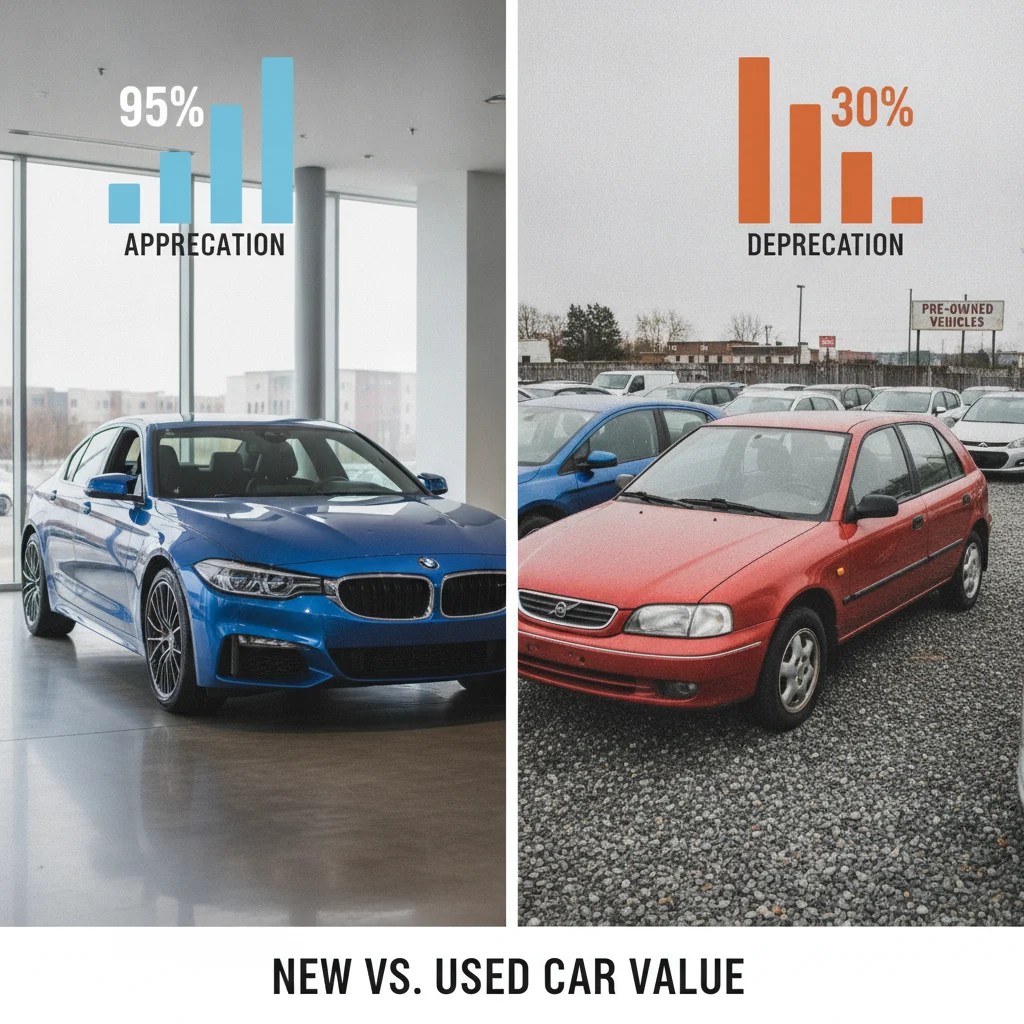
When a lender writes a new car loan, they're financing a known quantity. The vehicle has a manufacturer's invoice price, a factory warranty, and depreciation that follows a reasonably predictable curve. A used car is a different animal. It has a history — some of which may be hidden — and its value can swing based on mileage, accidents, maintenance gaps, and regional demand.
That uncertainty is the core reason used car loans work differently. Lenders price risk. A vehicle that might be worth $14,000 today could be worth $9,000 in two years if hidden mechanical problems surface, flood damage wasn't fully disclosed, or the transmission fails. If a borrower defaults, the lender repossesses and resells that car — and they want to recover their money. A higher interest rate and a shorter loan term both serve that goal: they accelerate principal paydown and limit the lender's exposure window.
This isn't just lender caution for its own sake. It has a direct, measurable impact on what you pay every month and what you pay in total. Understanding the mechanics helps you negotiate from a position of knowledge rather than guessing.
See how loan terms work for borrowers to understand the bigger picture before diving into the specifics of used vehicle financing.
Interest Rates: The Biggest Gap Between New and Used
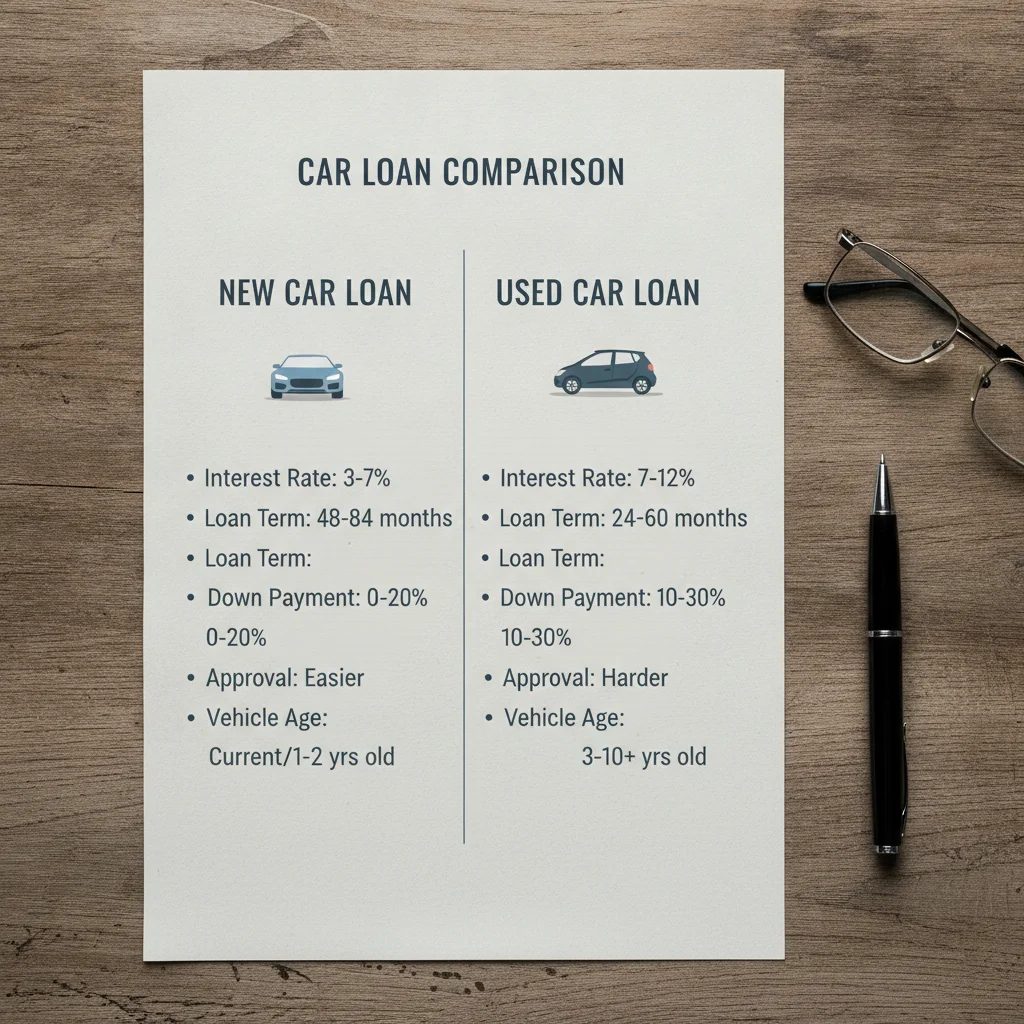
The interest rate difference between new and used car loans is real, consistent, and significant. On average, used car loan rates run 2 to 4 percentage points higher than new car rates for borrowers with identical credit profiles. In periods of elevated benchmark rates, that gap can widen further.
~2–4%
Rate premium on used vs. new car loans
Federal Reserve consumer credit data consistently shows used car loan rates running 2 to 4 percentage points above new car rates for comparable credit profiles.
60 months
Typical maximum term for used cars
Most mainstream lenders cap used car loans at 60 months, versus 72–84 months commonly available for new car purchases.
38%
Used car buyers who finance through dealers
According to Experian's State of the Automotive Finance Market report, a substantial share of used car buyers still rely on dealer-arranged financing despite often less competitive rates.
$2,400+
Extra interest on a $25K loan at 9% vs. 5.5%
On a $25,000 loan over 60 months, the 3.5 percentage point rate difference between a typical new and used car loan adds over $2,400 in total interest paid.
100–125%
Typical LTV cap for used car loans
Most lenders will finance up to 100% of a used vehicle's book value, with some extending to 125% to cover taxes and fees — compared to broader flexibility on new car MSRP.
Here's what that looks like in practice. Say you're financing $25,000 at 5.5% for 60 months on a new car — your monthly payment is about $479, and you pay roughly $3,740 in total interest. Finance the same $25,000 on a used car at 9% for 60 months, and your monthly payment jumps to $519, with total interest climbing to about $6,140. That's over $2,400 more paid for the same loan amount at the same term, just because the vehicle is used.
Your credit score amplifies this difference. Lenders apply tiered rate structures to used car loans that are steeper than those for new cars. A borrower who qualifies for 6% on a new car might see 10–11% on a used car if their score is in the mid-600s. Credit scores don't carry the same weight across loan types — a key point most buyers miss.
“Used vehicle lending is fundamentally about collateral risk. The older the car, the harder it is to predict residual value, so lenders protect themselves with shorter terms and higher rates. Borrowers who understand this can use it to their advantage by choosing vehicles that lenders view more favorably.”
— Melinda Zabritski, Senior Director of Automotive Financial Solutions, Experian
One partial exception: certified pre-owned vehicles. Manufacturer-backed CPO programs — offered through brands like Toyota, Honda, and BMW — sometimes include promotional financing rates that sit closer to new car territory. Even when you finance a CPO vehicle through a bank or credit union rather than a manufacturer, lenders view the inspection-backed warranty as risk mitigation and may offer modestly better terms.
Loan Terms: Shorter Windows, Higher Monthly Payments
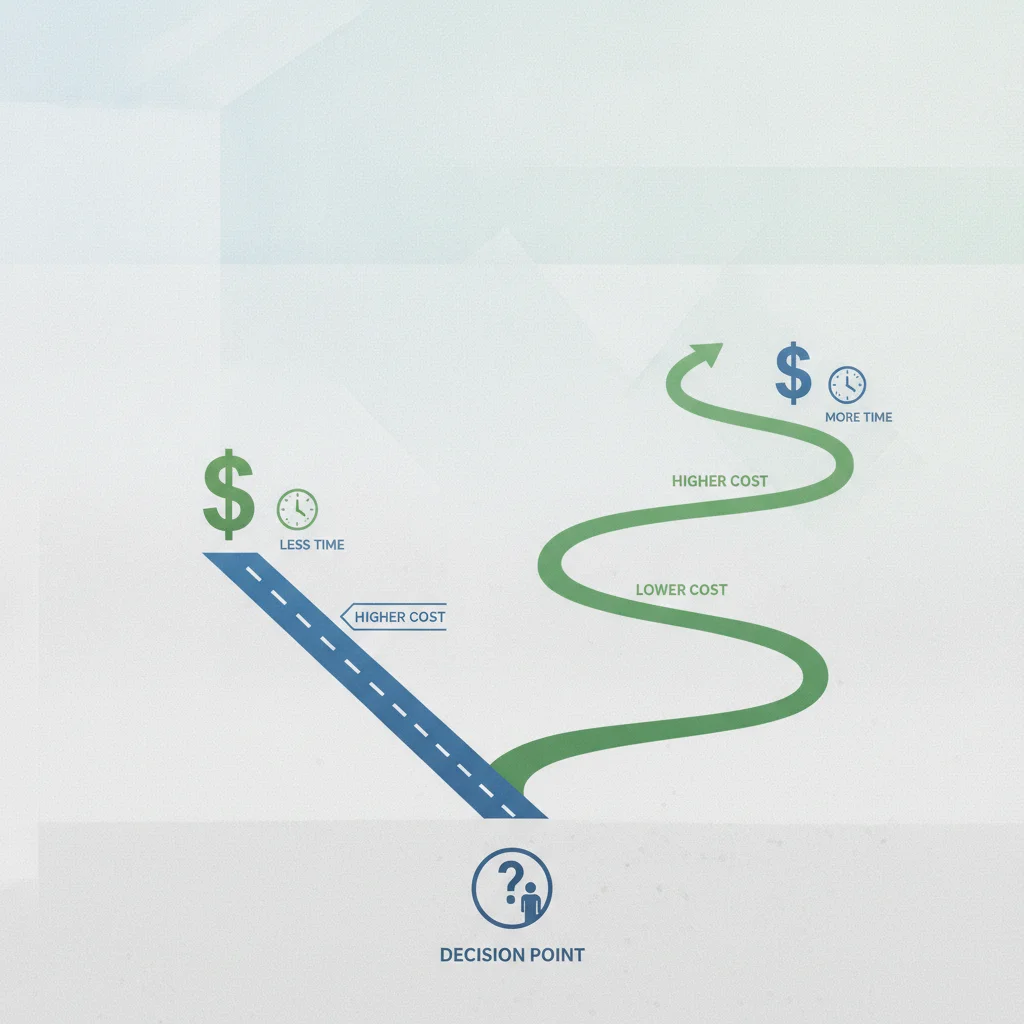
New car buyers routinely see loan offers of 72 or 84 months. Those extended terms lower the monthly payment, which is why dealers often lead with them. Used car buyers typically don't get that option, and when they do, it comes with significant trade-offs.
Most lenders limit used car loan terms based on vehicle age:
- Vehicles 1–3 years old: Terms up to 72 months are common, though not universal.
- Vehicles 4–6 years old: Most lenders cap terms at 60 months.
- Vehicles 7–10 years old: Terms are typically limited to 48 months or less.
- Vehicles over 10 years old or 100,000+ miles: Many mainstream lenders won't finance these at all, or will only offer short personal loan-style terms at steep rates.
The logic is simple: a lender doesn't want to be holding a 72-month loan on a car that's likely to have significant mechanical problems — or depreciate below the loan balance — within a few years. The shorter term protects them by ensuring the loan pays off faster than the car loses value.
Run the Numbers Before You Commit
Before agreeing to any used car loan, calculate the total interest you'll pay — not just the monthly payment. Multiply the monthly payment by the number of months, then subtract the loan principal. That number is what the financing actually costs you. On a high-rate used car loan, it's often eye-opening.
Buy GAP Insurance From Your Insurer, Not the Dealer
If you're putting little money down on a used car, GAP insurance is worth considering — but dealer-sold GAP can cost $600–$900 or more rolled into your loan. Your auto insurer typically offers the same coverage for $20–$40 per year added to your policy. Make the call before you sit down to sign paperwork.
For buyers, a shorter term means a higher monthly payment for the same loan amount. If you're comparing a new car at 72 months to a used car at 48 months, the monthly payment difference can be dramatic — even if the used car's sticker price is lower. Run both scenarios through an amortization calculator before assuming the used car is more affordable on a monthly basis.
Short versus long loan terms involve real trade-offs that go beyond the monthly payment figure. Total interest paid, equity build-up speed, and the risk of going underwater all shift depending on the term you choose.

Loan-to-Value Limits and Collateral Scrutiny
New car financing is often straightforward: the MSRP is a fixed, verifiable number. Used car financing involves an appraisal step — lenders reference valuation guides like Kelley Blue Book, Black Book, or NADA to determine what the vehicle is actually worth, not just what the seller is asking.
This matters because lenders set loan-to-value (LTV) caps. Many lenders will only finance up to 100% of the vehicle's book value, though some allow 110–125% to cover taxes, title, and registration. If you're buying a car priced above book value — which happens in tight used car markets — the lender may not cover the full purchase price, leaving you to make up the gap in cash.
Branded Titles Change Everything
A salvage, rebuilt, or flood-damaged title doesn't just affect the car's resale value — it affects your financing options dramatically. Many lenders will not finance branded-title vehicles at all. Those that will typically require a larger down payment, offer lower LTV ratios, and charge higher rates. Always run a vehicle history report before getting emotionally invested in a specific car.
Rate Shopping Has a Minimal Credit Score Impact
Many buyers hesitate to apply with multiple lenders because they worry about multiple hard inquiries hurting their credit score. In practice, most credit scoring models treat all auto loan inquiries made within a 14–45 day window as a single inquiry. Shop aggressively within that window without fear.
High-mileage vehicles face additional scrutiny. A 2018 pickup truck with 40,000 miles and one owner will appraise very differently than the same year and model with 110,000 miles and a salvage title. Lenders may decline, reduce the loan amount, or require a larger down payment for vehicles with significant mileage or a branded title history.
This is also why a pre-purchase inspection matters financially, not just mechanically. If the car has undisclosed issues that surface after purchase, you're still on the hook for the full loan — even if the car is worth significantly less than you paid. Used car purchase contracts differ from new car contracts in ways that affect your legal protections, which is another reason to understand both sides of the transaction.
Where to Get a Used Car Loan: Lender Comparison
Used car financing comes from several sources, each with distinct advantages and trade-offs:
- Banks and credit unions
- Credit unions consistently offer some of the most competitive used car rates, particularly for members with good credit. Banks are also a strong option. Both allow you to get pre-approved before shopping, which is the most important thing you can do before setting foot on a lot.
- Dealer financing
- Dealers source loans through their network of lender relationships and earn a markup on the rate — called the dealer reserve. This isn't inherently bad; sometimes dealers access rates you can't get directly. But you need a pre-approval benchmark to evaluate any dealer offer honestly. If the dealer beats your pre-approval rate, take it. If not, use your pre-approval.
- Online lenders and auto finance platforms
- Companies like LightStream, MyAutoLoan, and Capital One Auto Finance provide pre-approvals quickly and often have competitive rates for used vehicles. They also typically show clear vehicle age and mileage eligibility requirements upfront.
- Manufacturer CPO financing
- If you're buying a certified pre-owned vehicle from a franchise dealer, check whether the manufacturer has a CPO financing offer. These promotions can be meaningfully better than what a bank will quote for the same vehicle age.
If you have credit challenges, used car financing with bad credit carries additional risks that compound the structural disadvantages already built into used car lending. Going in informed is essential.
How to Get the Best Terms on a Used Car Loan
You have more control over your used car loan terms than many buyers realize. The rate and term a lender offers aren't fixed — they respond to the strength of your application, the vehicle you choose, and how well you've prepared.
- Check and improve your credit score first. Even a 20-point improvement in your score can move you into a lower rate tier. Pay down revolving balances, dispute any errors on your report, and avoid applying for new credit in the 60–90 days before you seek auto financing.
- Get pre-approved from at least two or three lenders. Do this before you shop. Multiple hard inquiries for the same type of loan within a 14–45 day window are typically treated as a single inquiry by credit scoring models, so rate-shopping doesn't compound the credit impact.
- Put more money down. A larger down payment reduces the loan amount, lowers your LTV ratio, and can help you qualify for better terms. It also reduces the risk of going underwater — owing more than the car is worth — which is a genuine concern with used vehicles that depreciate quickly.
- Choose a newer, lower-mileage vehicle. Lenders offer better terms on vehicles with lower mechanical risk. A 3-year-old car with 35,000 miles will qualify for longer terms and potentially better rates than a 7-year-old car with 90,000 miles, even at similar prices.
- Keep the loan term as short as you can afford. The temptation to stretch to 60 or 72 months to lower the payment is understandable, but it costs you significantly in interest on an already higher-rate loan. Matching your loan term to your financial situation is a decision worth working through carefully.
Branded Titles Change Everything
A salvage, rebuilt, or flood-damaged title doesn't just affect the car's resale value — it affects your financing options dramatically. Many lenders will not finance branded-title vehicles at all. Those that will typically require a larger down payment, offer lower LTV ratios, and charge higher rates. Always run a vehicle history report before getting emotionally invested in a specific car.
Rate Shopping Has a Minimal Credit Score Impact
Many buyers hesitate to apply with multiple lenders because they worry about multiple hard inquiries hurting their credit score. In practice, most credit scoring models treat all auto loan inquiries made within a 14–45 day window as a single inquiry. Shop aggressively within that window without fear.
Avoiding Common Used Car Financing Mistakes
The combination of higher rates, shorter terms, and more collateral uncertainty creates several traps that trip up buyers who aren't paying attention.
Focusing only on the monthly payment. A dealer who stretches your loan to 72 months on a high-rate used car loan is doing you no favors. Always calculate the total cost of the loan — principal plus all interest — before agreeing to any terms. A $50/month difference can represent $3,600 over a 72-month term, often dwarfing any savings on the purchase price.
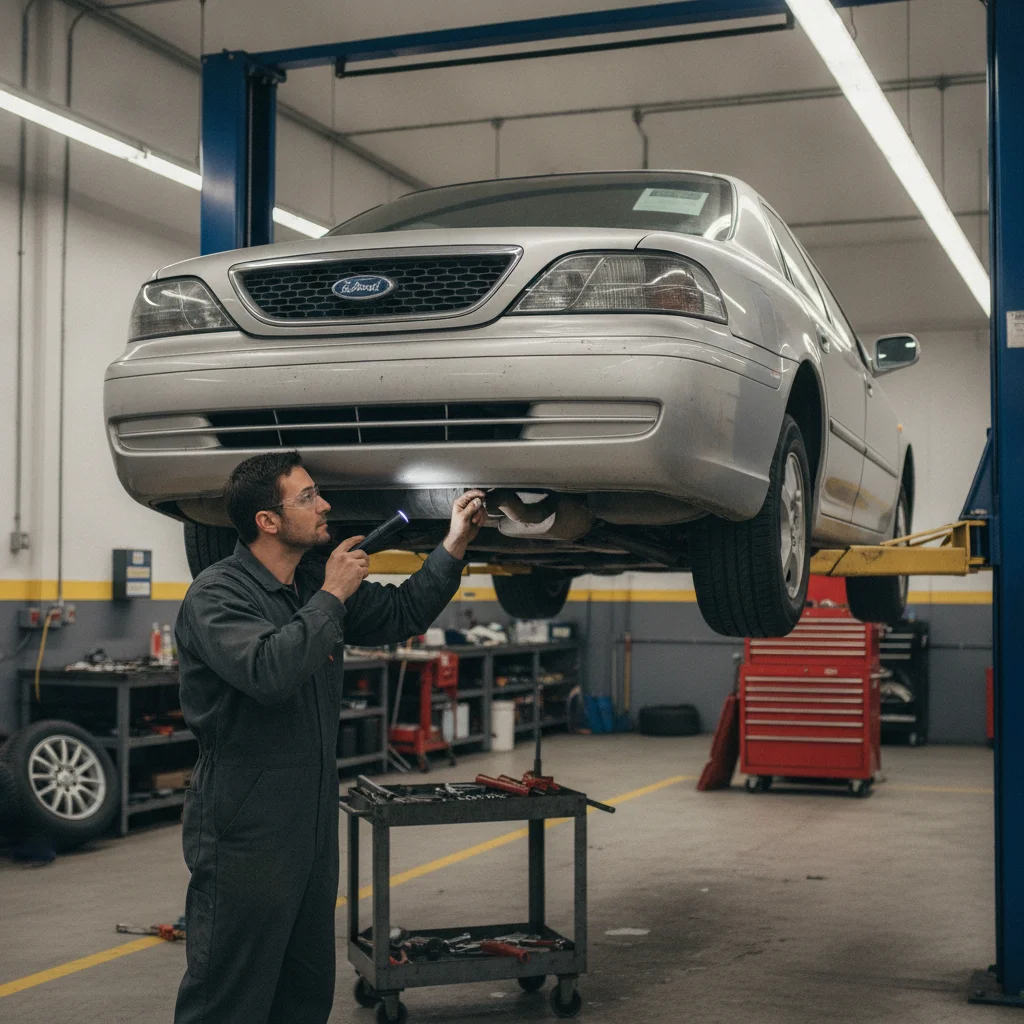
Skipping the vehicle history and inspection. Financing a car with a hidden salvage title, flood damage, or major unreported accident history means you're paying interest on collateral that's worth far less than you think. Run a vehicle history report and get an independent pre-purchase inspection — typically $100–$150 — before signing anything.
Assuming dealer financing is competitive. It sometimes is, but never assume. Walk in with a pre-approval and treat the dealer's financing offer as one option in a competitive process, not the default.
Overlooking add-ons that inflate the loan. Dealers often roll extended warranties, GAP insurance, paint protection, and other products into used car financing. Each addition raises the loan amount, and at higher used car rates, the interest cost on those extras adds up. Price each item separately and decide deliberately whether it's worth it.
Run the Numbers Before You Commit
Before agreeing to any used car loan, calculate the total interest you'll pay — not just the monthly payment. Multiply the monthly payment by the number of months, then subtract the loan principal. That number is what the financing actually costs you. On a high-rate used car loan, it's often eye-opening.
Buy GAP Insurance From Your Insurer, Not the Dealer
If you're putting little money down on a used car, GAP insurance is worth considering — but dealer-sold GAP can cost $600–$900 or more rolled into your loan. Your auto insurer typically offers the same coverage for $20–$40 per year added to your policy. Make the call before you sit down to sign paperwork.
GAP insurance — which covers the difference between what you owe and what the car is worth if it's totaled — can genuinely make sense on a used car loan where you're starting with minimal equity. But buy it from your insurance company, not the dealer. Dealer-sold GAP often costs 2–3 times more than the same product through an insurer.

All claims are backed by peer-reviewed research. Sources on request.