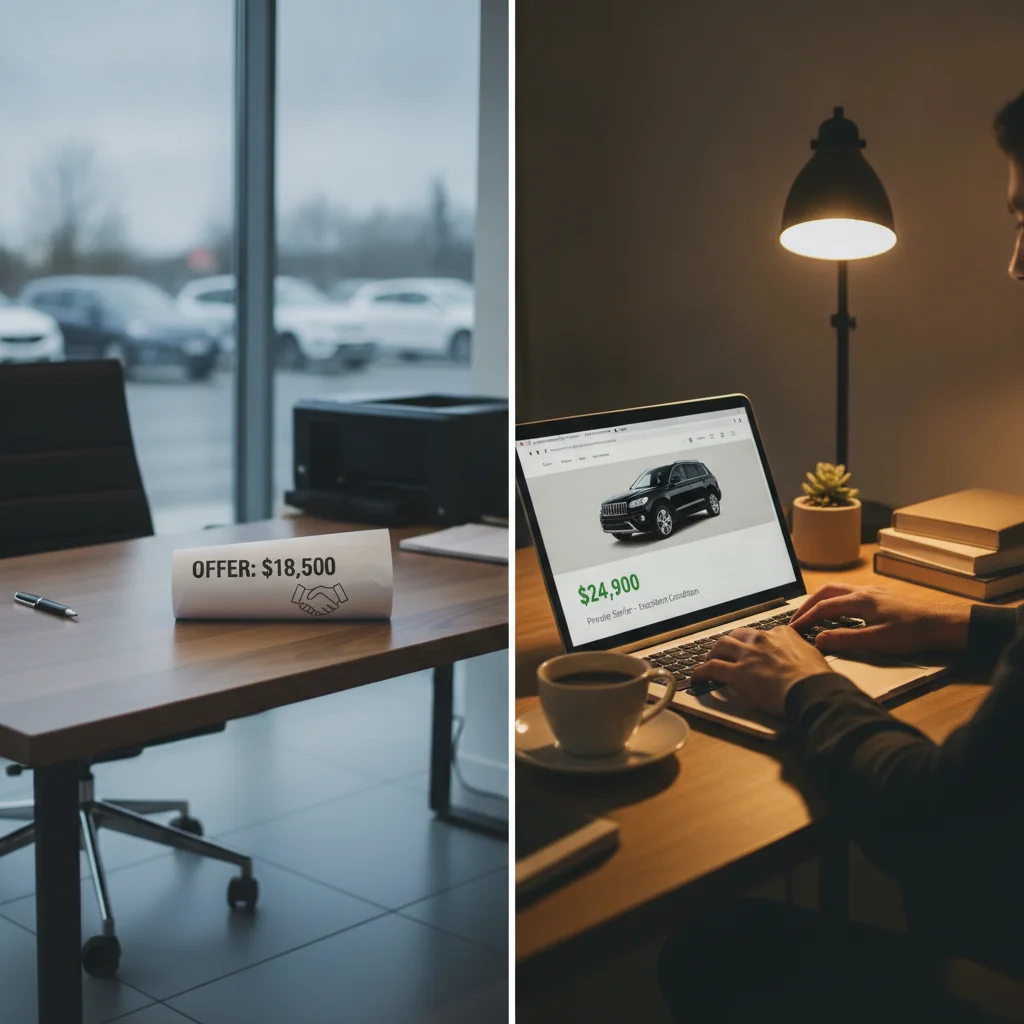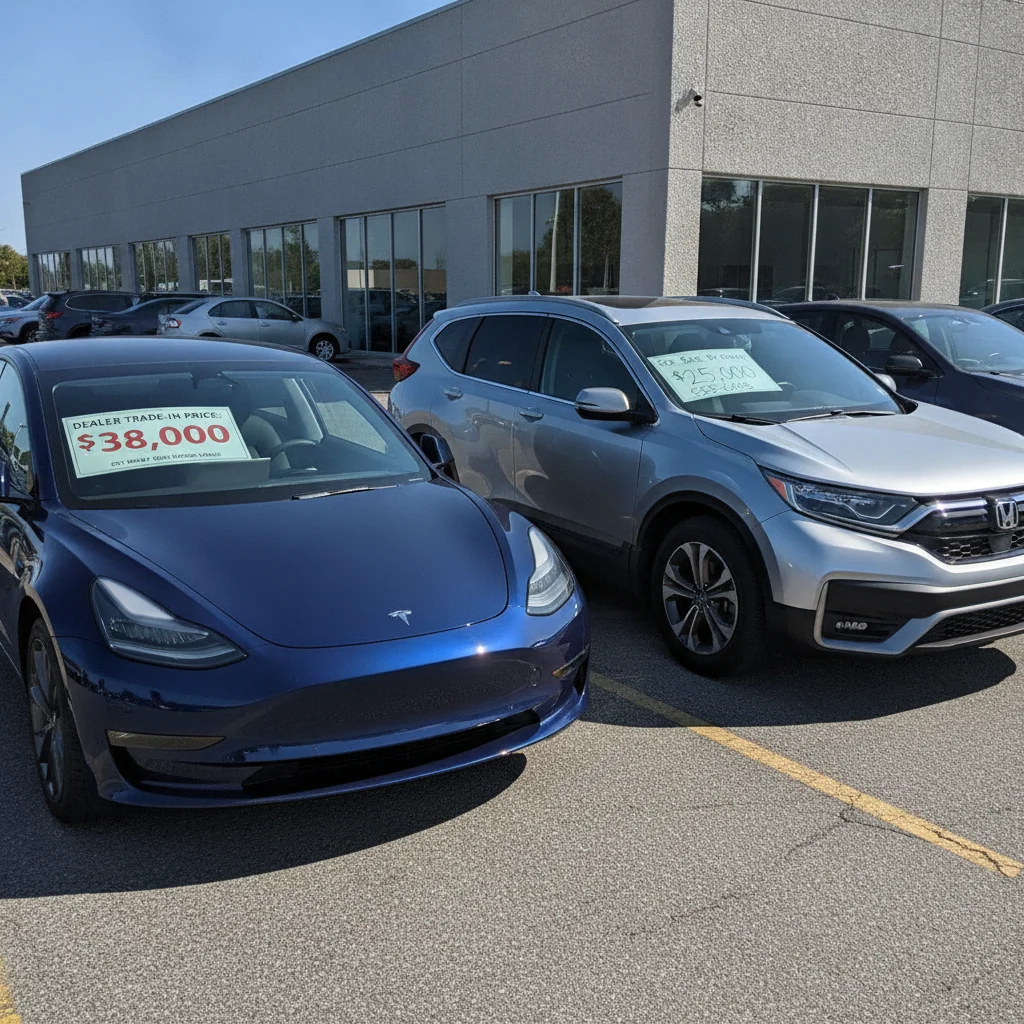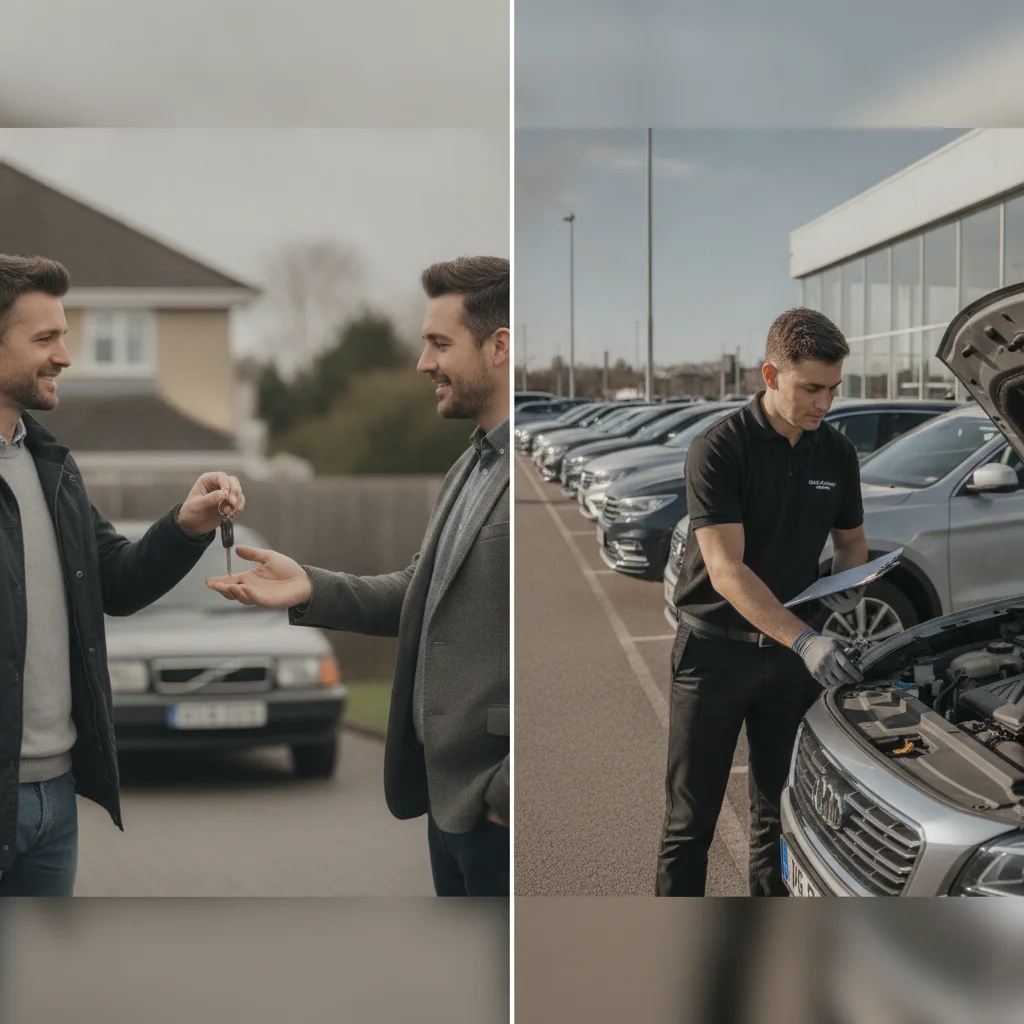
Key Takeaways
Private Party Value
Private party value is the estimated price a used car will sell for in a direct transaction between two individuals — no dealership involved. It reflects what a real buyer is willing to pay when purchasing from another private person, typically through platforms like Craigslist, Facebook Marketplace, or AutoTrader private listings. This number is almost always higher than trade-in value because no middleman needs to build in a profit margin.
Valuation guides like Kelley Blue Book calculate private party value using regional transaction data, vehicle condition ratings, mileage, trim level, and market demand — distinct from the wholesale price dealers use for trade-in appraisals.
The Core Distinction: Who Is the Buyer?
The entire difference between private party value and trade-in value comes down to one question: who is buying your car?
When you sell to a private individual, that person is the end consumer. They are buying the car to drive it, not to resell it for profit. Because there is no resale margin needed, they can — and generally will — pay more than a dealer would.
When you trade in at a dealership, the dealer is an intermediary. They will inspect the vehicle, recondition it, photograph it, list it on their lot, and eventually sell it to a retail buyer at a higher price. Every dollar of that process — detailing, minor repairs, advertising, sales staff time — comes out of what they can afford to pay you. That's why the trade-in offer is structurally lower. It is not necessarily a lowball tactic; it is the arithmetic of a business that needs to turn a profit on every unit.
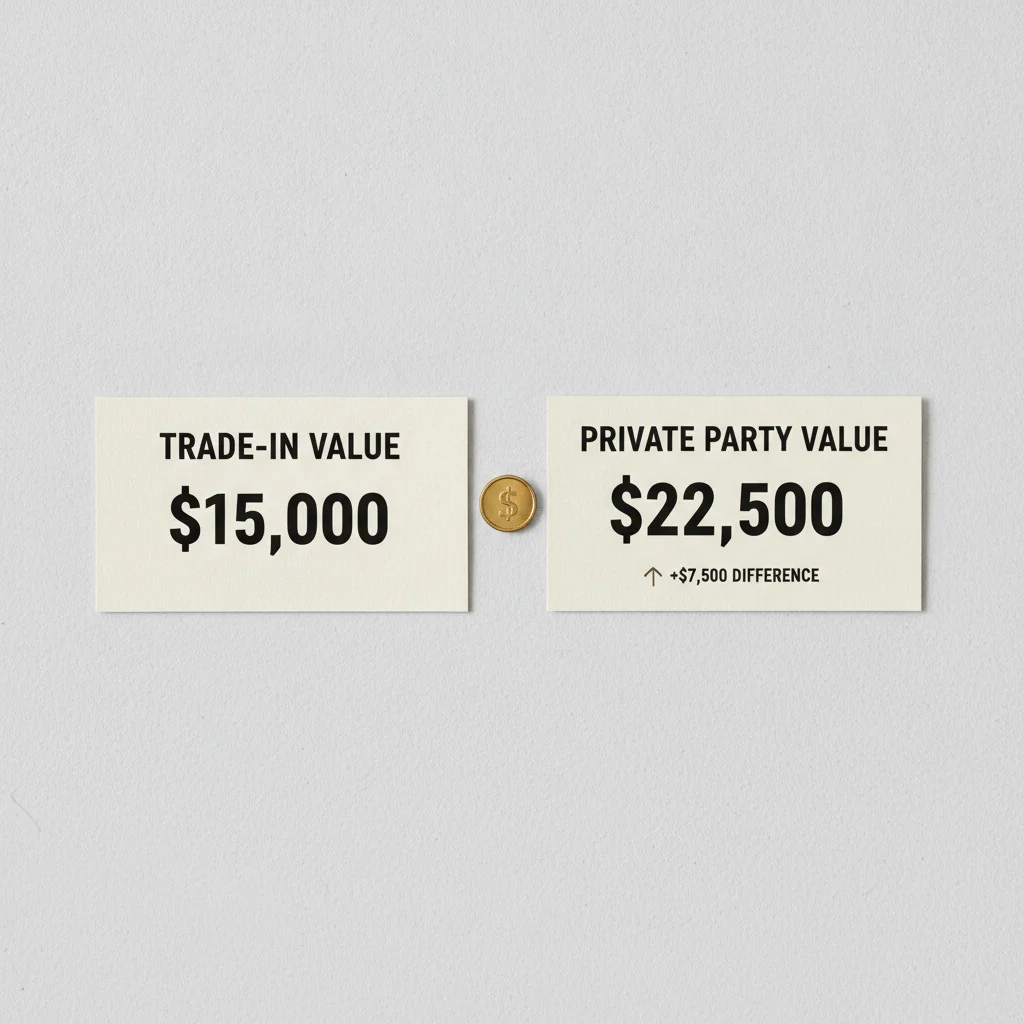
This is why private party value and trade-in value are not interchangeable numbers. They describe the same physical car but from two completely different economic perspectives. Conflating them — or worse, showing up to a private sale listing with a trade-in price in mind — is one of the most common and costly mistakes sellers make.
For a deeper look at the financial mechanics behind dealer appraisals, see Understanding the Difference Between Trade-In Value and Market Value.
How Private Party Value Is Actually Calculated
Valuation tools don't pull numbers from thin air. Here's what actually goes into a private party estimate:
- Recent transaction data: KBB and Edmunds aggregate millions of actual sales records. Private party figures reflect what sellers in your region have realistically completed — not just asking prices.
- Vehicle-specific details: Year, make, model, trim level, and engine type are the starting point. A base trim and a fully loaded version of the same model can differ by $4,000 or more in private party value.
- Mileage: Every tool applies mileage adjustments. The standard benchmark is roughly 12,000–15,000 miles per year. Significantly over or under that average shifts the value up or down.
- Condition rating: This is the most subjective — and most consequential — input. KBB uses four tiers: Excellent, Good, Fair, and Poor. Most privately sold cars realistically fall into Good or Fair. Sellers consistently overrate their own vehicles.
- Geographic market: A four-wheel-drive pickup in Montana commands a different premium than the same truck in Miami. Zip code matters.
- Options and packages: Sunroofs, towing packages, upgraded audio — these add measurable value, especially on trucks and SUVs.
$2,100
Average gap between private party and trade-in value
Kelley Blue Book analysis across multiple vehicle segments shows private party value typically exceeds trade-in value by $1,500–$3,000 on mainstream used vehicles.
5%
Privately sold vehicles that qualify as 'Excellent' condition
Industry estimates suggest fewer than 1 in 20 vehicles sold privately genuinely meet the criteria for Excellent condition rating in KBB or Edmunds tools.
12–15K
Annual miles used as the baseline for mileage adjustments
Most valuation tools use 12,000–15,000 miles per year as the standard benchmark; significant deviation above or below this range directly affects private party value estimates.
30–45 days
Typical private party sale timeline
According to marketplace data from platforms including Facebook Marketplace and AutoTrader, most private vehicle transactions close within 30–45 days when priced accurately for local market conditions.
$5,000+
Gap on high-demand trucks and SUVs
On popular pickup trucks and full-size SUVs, the difference between trade-in and private party value can exceed $5,000 due to strong consumer demand and tight used inventory.
The output from these tools is a range, not a single price. KBB typically shows a low, average, and high figure. Your job as a seller is to honestly determine where your specific vehicle lands within that band — and price it accordingly.
Use the Low End as Your Floor, Not Your Ceiling
When KBB gives you a range of, say, $18,000–$21,000, your instinct may be to list at $21,000. But unless your vehicle genuinely represents the top of the market — immaculate condition, full records, high-demand color — price closer to $19,500–$20,500 and leave negotiating room. Overpriced listings generate low-quality inquiries and stall. A well-priced listing moves faster and often nets more after less wasted time.
Bring Your Private Party Comps to the Dealer
Before walking into a trade-in appraisal, print or screenshot your KBB private party estimate and two or three active Marketplace listings for comparable vehicles. Present these calmly during the negotiation. You don't need to be aggressive — simply stating that you are weighing the private sale option is enough to signal that you have leverage. Dealers respond to informed sellers who have done their homework.
The Condition Rating Problem — and How to Get It Right
Condition rating is where most sellers go wrong, and it directly determines whether your private party estimate is realistic or inflated.
Here's a practical breakdown of what each tier actually means in plain terms:
- Excellent
- Near-showroom quality. No dents, no scratches, no mechanical issues. Full service records. Typically fewer than 5% of private sale vehicles genuinely qualify. If you're asking yourself whether your car qualifies, it probably doesn't.
- Good
- Normal wear and tear, minor cosmetic blemishes, no major mechanical problems. All systems functioning. This is the most realistic rating for the majority of privately sold used cars.
- Fair
- Noticeable wear — some dents, faded paint, interior wear, possible minor mechanical issues. Needs some attention but is drivable and safe. Buyers expect a meaningful discount off Good pricing.
- Poor
- Significant mechanical problems, heavy cosmetic damage, or high mileage with deferred maintenance. Private party sales at this level are difficult. Many sellers in this category are better served by a dealer trade-in or a wholesaler.
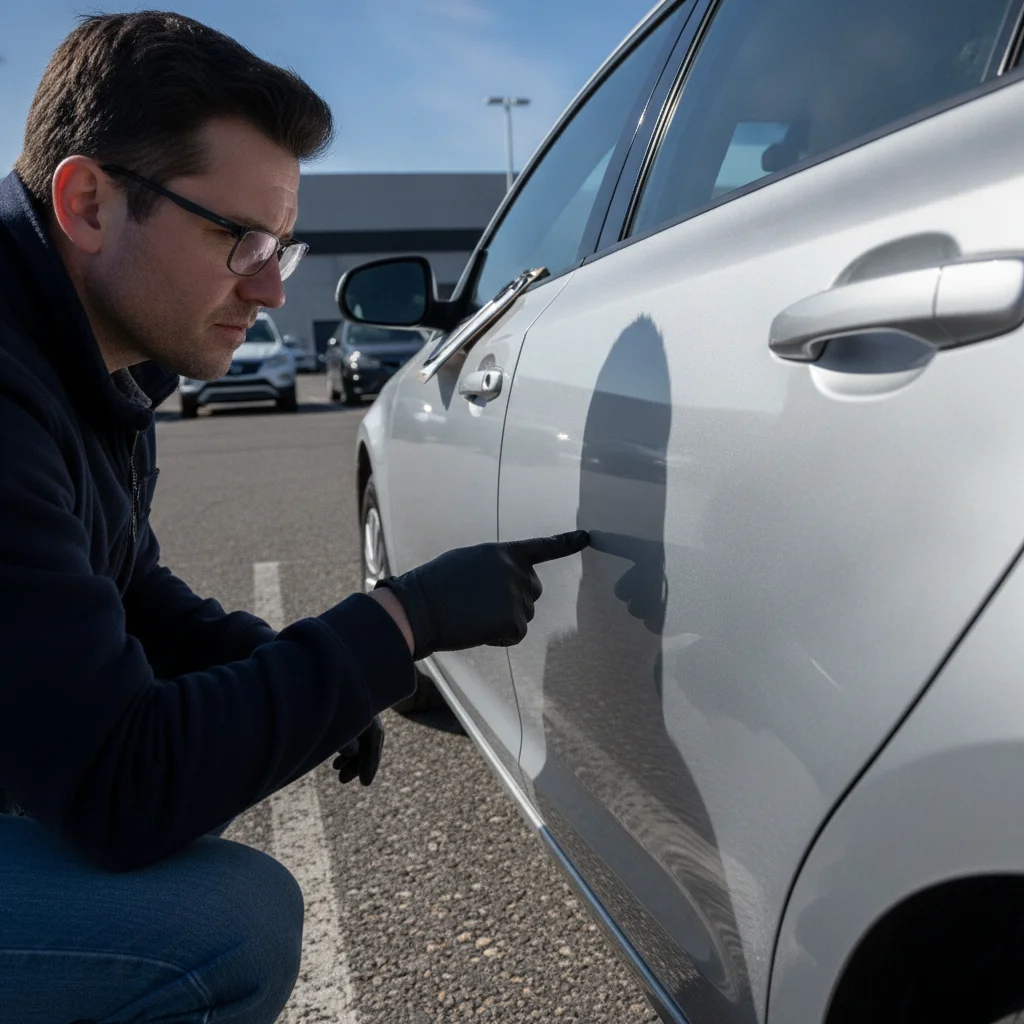
A common mistake: sellers enter Excellent or Good into the tool, get an optimistic number, and list at that price — then wonder why no one calls. Walk around your car as a skeptical buyer would. Look at the paint in full sunlight. Sit in every seat. Start it cold. That honest assessment will save you weeks of wasted time.
Condition Ratings Vary Slightly by Tool
Kelley Blue Book and Edmunds use slightly different criteria for their condition tiers, which is one reason their estimates sometimes diverge. KBB tends to skew slightly higher; Edmunds' True Market Value leans more conservative. Using both and averaging the result generally produces a more realistic market estimate. Neither tool accounts for your specific service records or unique features, so local listing research remains essential.
Accident History Changes the Equation
A vehicle with a Carfax or AutoCheck accident report — even a minor one — can lose 10–25% of its private party value relative to a clean-history equivalent. Private buyers increasingly run their own history reports before viewing a car. Disclosing accident history upfront and pricing accordingly is both ethically correct and strategically smart — it avoids wasted showings and builds buyer trust.
Why the Gap Between Private Party and Trade-In Can Reach Thousands
The spread between private party value and trade-in value is not random. It is driven by several compounding factors:
On a typical five-year-old mainstream sedan, expect the private party value to run $1,500 to $3,000 above trade-in. On a high-demand pickup truck or a popular SUV, that gap can easily reach $4,000 to $6,000. On vehicles with specialized appeal — classic cars, low-production trims, enthusiast models — private buyers may pay premiums that no dealer would ever offer at trade-in.
Conversely, on older, high-mileage, or mechanically questionable vehicles, the gap can shrink because private buyers become more cautious and may demand their own buffer for unknown repair risk. In those cases, the dealer's more systematic (if lower) offer can actually start to look more attractive.
For a detailed financial breakdown of what each channel puts in your pocket after all factors are considered, see Dealer Trade-In vs. Private Party Sale: Which Puts More Money in Your Pocket?.
“The trade-in offer isn't the dealer being dishonest — it's the dealer being a business. The question sellers need to answer is whether their time and effort to capture the private party premium is worth the difference. For most people selling a $20,000 car, an extra $2,500 to $4,000 absolutely justifies the work.”
— Philip Reed, Senior Consumer Advice Editor, Edmunds
Using Private Party Value Strategically — Even If You Plan to Trade In
Knowing your private party value isn't just useful if you're selling on your own. It's a lever in dealer negotiations too.
When you arrive at a dealership with documented private party comps — printed KBB screenshots, active Marketplace listings for identical vehicles — you are armed with the most powerful counter-argument to a lowball appraisal: proof that a willing buyer exists at a higher price.
The implicit message is simple: "I have another option." Dealers know that a seller who is genuinely willing to walk away and post on Facebook Marketplace has real leverage. Many salespeople will find a few hundred extra dollars in their appraisal when they believe you'll act on that alternative.
This doesn't mean you'll close the full gap — you won't. But getting an extra $500–$1,000 out of a trade-in negotiation using private party comps is realistic and common. See Trade-In Strategies for more on negotiating dealer appraisals effectively.
The full convenience-vs-cash analysis — including the hidden time costs of a private sale — is covered in Trading In vs. Selling Privately: Which Gets You More Money?.
Use the Low End as Your Floor, Not Your Ceiling
When KBB gives you a range of, say, $18,000–$21,000, your instinct may be to list at $21,000. But unless your vehicle genuinely represents the top of the market — immaculate condition, full records, high-demand color — price closer to $19,500–$20,500 and leave negotiating room. Overpriced listings generate low-quality inquiries and stall. A well-priced listing moves faster and often nets more after less wasted time.
Bring Your Private Party Comps to the Dealer
Before walking into a trade-in appraisal, print or screenshot your KBB private party estimate and two or three active Marketplace listings for comparable vehicles. Present these calmly during the negotiation. You don't need to be aggressive — simply stating that you are weighing the private sale option is enough to signal that you have leverage. Dealers respond to informed sellers who have done their homework.
How to Build Your Own Accurate Private Party Estimate
Don't rely on a single tool. Here's a practical four-step process:
- Run KBB and Edmunds side by side. Enter identical information in both. If the numbers are materially different, the lower figure is usually the more conservative and realistic baseline. Note both the low and high ends of each range.
- Be honest about condition. Default to Good unless you have a legitimate case for Excellent — full service records, no accidents, genuinely pristine interior and exterior. If there are any known mechanical issues, start at Fair.
- Search active listings in your zip code. On Facebook Marketplace and Craigslist, search for your exact year, make, model, and trim within 50–100 miles. Note asking prices — these represent ceiling, not floor. What sellers are asking is not what they're getting.
- Adjust for local demand signals. If you see 15 similar vehicles listed in your area and most have been up for weeks, supply is outpacing demand — price toward the lower end. If comparable listings are rare, you have room to hold firm.
The result of this process is a realistic range — typically a $1,500–$2,500 spread — from which you can set an asking price with confidence. Most experienced private sellers price $500–$1,000 above their true target to leave negotiating room without going so high that serious buyers skip the listing entirely.
For more on the full pricing picture and where valuation tools fall short, see Private Party Value vs. Trade-In Value: The Difference That Costs Sellers Thousands.
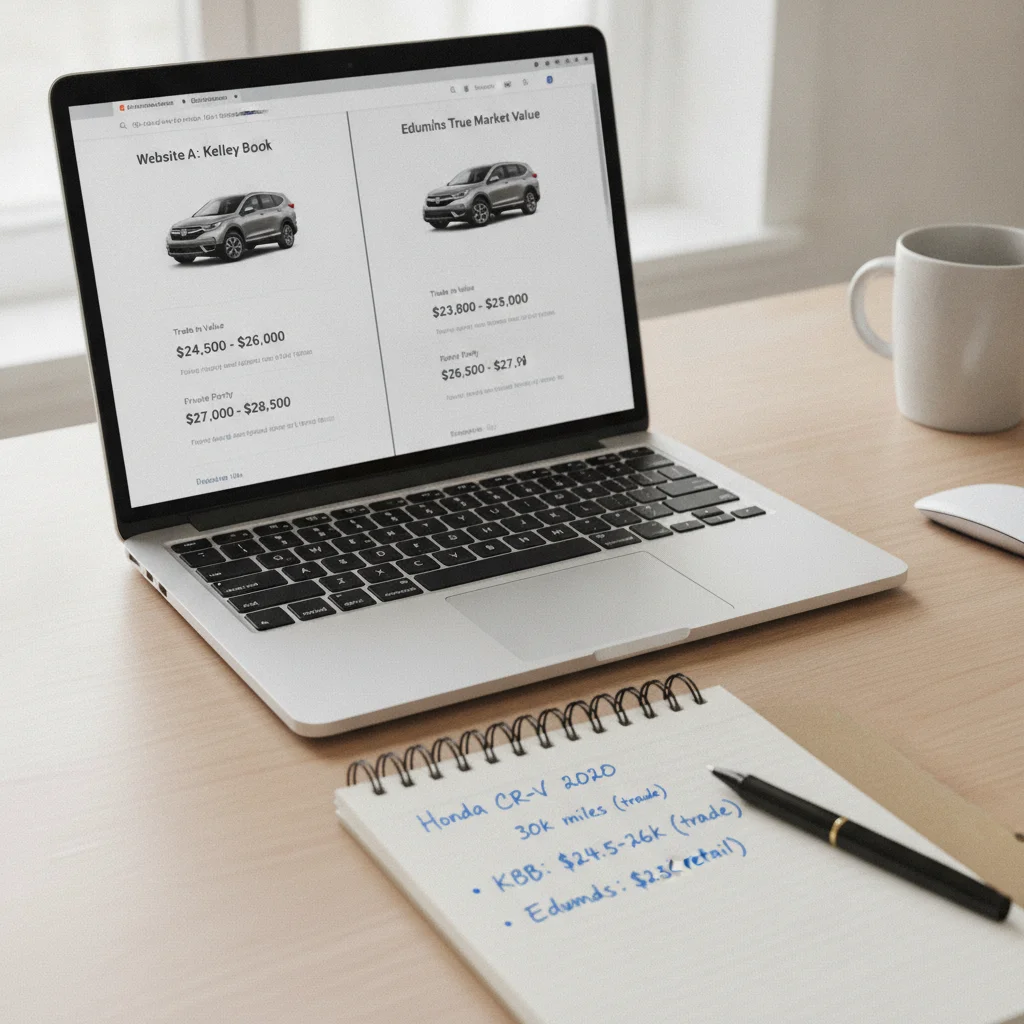
One final point: private party value is a snapshot, not a permanent number. Market conditions shift — gas prices affect SUV demand, new model releases pressure older trims, and seasonal patterns move truck values. Run your estimates fresh when you're actually ready to sell, not six months in advance.

All claims are backed by peer-reviewed research. Sources on request.