Key Takeaways
What 'As-Is' Actually Means — and What It Doesn't
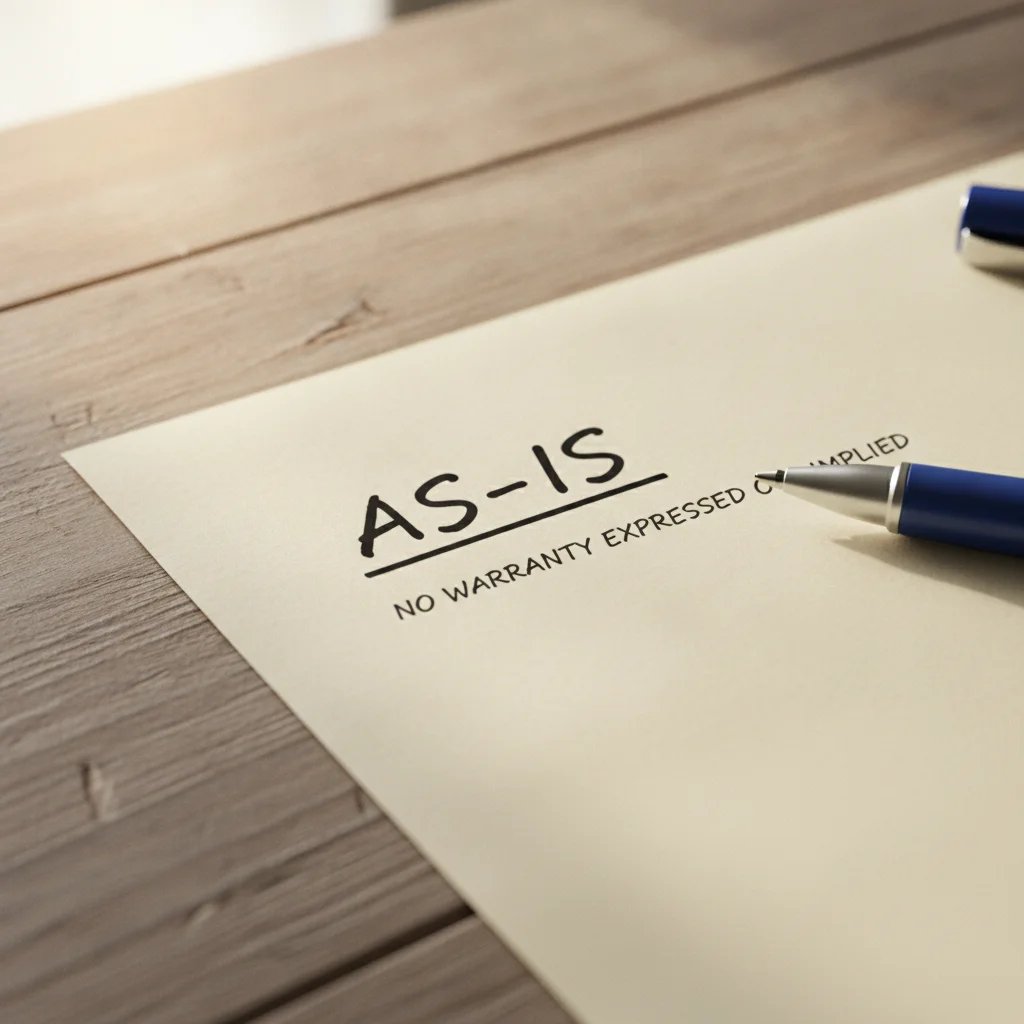
The phrase 'as-is' gets thrown around in private car sales as though it's a magic eraser for seller responsibility. It isn't. What the term actually does, in legal terms, is disclaim implied warranties — the unspoken guarantee that a product is fit for its ordinary purpose. When a buyer signs an as-is agreement, they're accepting the vehicle in its current condition and agreeing they can't sue you later because the transmission failed or the A/C never worked.
That's meaningful protection. But it has a hard ceiling. An as-is clause cannot:
- Excuse active fraud or intentional misrepresentation
- Override your federal odometer disclosure obligations
- Erase your duty to disclose title brands required by your state
- Protect you if you knew about a safety defect and said nothing
Think of as-is as a shield against unknown problems — the stuff that surprises both of you after the sale. It is not a license to hide what you already know. For a detailed side-by-side comparison of your seller options, see As-Is Sales vs. Warranty Disclosures: Choosing the Right Seller Stance.
The Myths Sellers Believe — Corrected
The following misconceptions are common enough that they cost sellers real money — either in legal fees defending a bad transaction or in unnecessary concessions made out of misplaced fear. Here's what the law actually says.
Myth
Writing 'as-is' on the bill of sale means I have zero liability after the sale closes.
Fact
As-is language eliminates implied warranty claims but provides no protection against fraud, misrepresentation, or mandatory disclosure violations.
This is the most dangerous myth in private car sales. Sellers walk away thinking the two words 'as-is' are a legal force field. They're not. What as-is does is tell a court that the buyer accepted the vehicle without any promise that it was in good working order — which defeats warranty-based claims.
What it cannot do is immunize a seller who told the buyer the engine was recently rebuilt when it wasn't, or who knew the car had a flood title but said nothing. Courts in every state have upheld fraud claims against sellers despite as-is contract language, because fraud is a separate cause of action that exists independent of contract terms. The contract can disclaim warranties; it cannot disclaim honesty. To understand what you're legally required to tell buyers in your specific state, see What to Disclose to a Private Buyer — Even When It Hurts Your Sale.
Myth
I don't have to disclose defects I didn't fix — if the buyer wanted to know, they should have asked.
Fact
In most states, sellers have an affirmative duty to disclose known material defects, whether or not the buyer asks.
The 'buyer beware' doctrine is older than the automobile, and it has been substantially eroded in most U.S. states over the past 40 years. Many states now impose an affirmative duty to disclose on sellers — meaning you're required to volunteer information about known material defects, not just answer questions honestly.
A 'material' defect is one that would affect a reasonable buyer's decision to purchase or the price they'd pay. A broken rear defroster probably isn't material. A cracked engine block, chronic transmission slippage, or a history of flood damage almost certainly is. If you knew about it and said nothing, 'they didn't ask' is unlikely to be a winning defense. The specific threshold varies by state, which is why reviewing state-specific seller disclosure laws before you list is worth your time.
Myth
Odometer disclosure is just a formality — if the mileage is accurate, the paperwork doesn't really matter.
Fact
Federal law requires a written odometer disclosure statement on every qualifying sale, and errors — even innocent ones — can trigger serious penalties.
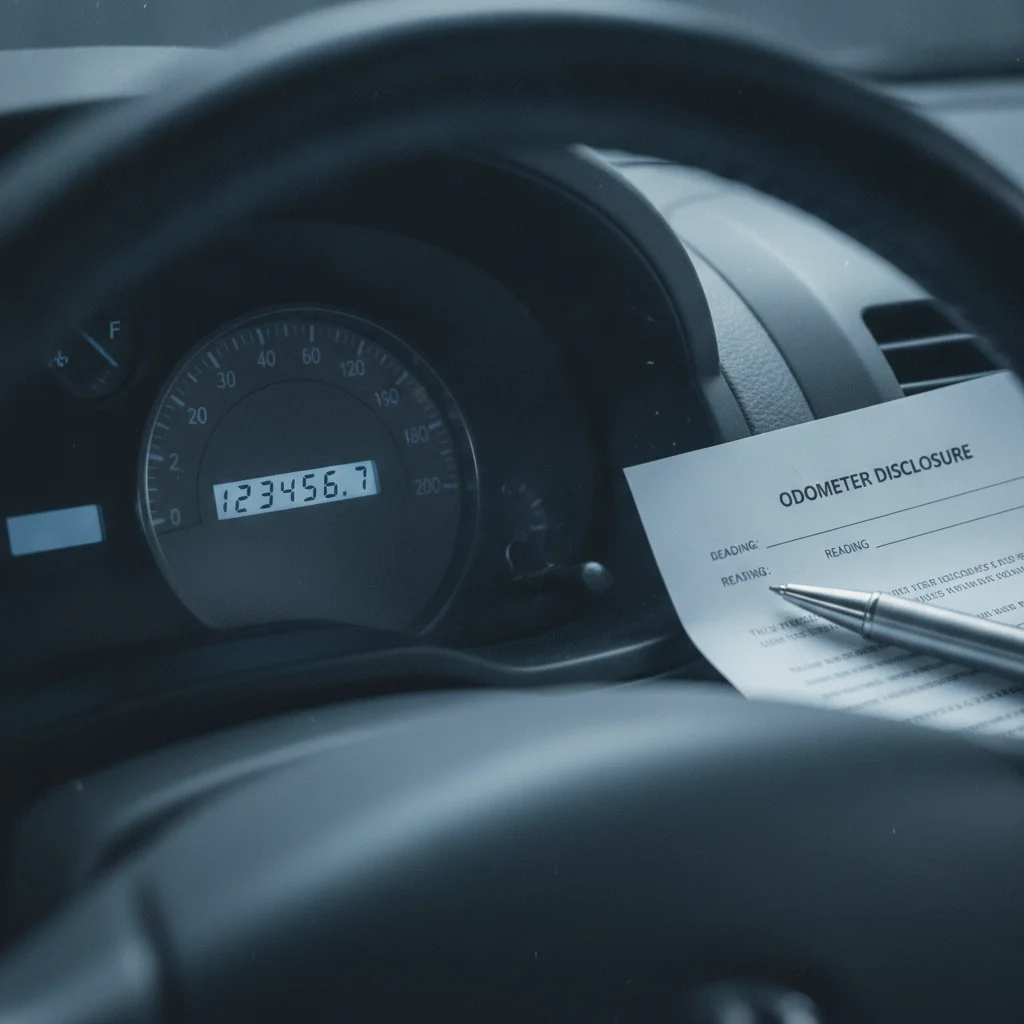
The Truth in Mileage Act (49 U.S.C. § 32705) mandates a written odometer disclosure for vehicles under ten model years old. This isn't a state-by-state rule — it applies nationwide. The disclosure must be on the title itself or on a separate form, signed by both seller and buyer.
Getting this wrong, even unintentionally, can expose you to civil liability. Getting it wrong intentionally — or signing a disclosure you know to be false — is a federal offense carrying penalties up to $10,000 per violation and the possibility of treble damages (three times the buyer's actual loss). 'I wrote the number I thought was right' is not a defense if the actual odometer reading was clearly different. Complete the form accurately, keep a copy, and don't let the buyer fill it in for you. Details on exactly how to handle this correctly are in our odometer fraud and disclosure guide.
Myth
If the car passed inspection before I sold it, I can't be held responsible for anything that breaks afterward.
Fact
A passed inspection protects you from claims about the items inspected at that moment — it is not a blanket release of all future liability.
A state inspection or a pre-sale mechanic's report documents the vehicle's condition at a specific point in time. It's useful evidence — it shows you weren't hiding a visible problem. But it doesn't cover conditions that existed but weren't detectable, defects that emerged between inspection and sale, or issues outside the scope of what was inspected.
More importantly, an inspection report doesn't override your disclosure obligations for things you knew about personally. If the car passed inspection but you knew the head gasket was seeping, the inspection report doesn't give you cover for failing to disclose that. Use inspection records as supporting documentation alongside a complete written disclosure — not as a substitute for one. For context on what buyers look for and expect during a private transaction, the as-is vs. implied warranty paperwork guide is worth reading from the buyer's perspective.
Myth
Selling privately means I don't have to worry about lemon law — that only applies to dealers.
Fact
Lemon laws generally do apply only to dealers, but if your car was previously a lemon law buyback, you must disclose that title brand as a private seller.
You're right that lemon law warranty protections — the ones that allow buyers to force a repurchase — typically only apply to new car sales by licensed dealers. A private seller doesn't owe a buyer a lemon law remedy if the car turns out to be a dud.
But here's the catch: if you're selling a vehicle that was previously repurchased under a lemon law claim, that car likely carries a lemon law buyback title brand. In most states, that brand must be disclosed and is printed on the title. Selling a lemon law buyback without disclosing it — even as-is — is fraud. Check your title carefully before listing any vehicle you purchased used, especially if you bought it from an auction or a dealer selling off-lease returns.
Myth
A verbal agreement to sell as-is is just as good as a written one.
Fact
Verbal as-is agreements are nearly impossible to enforce and leave you exposed if the buyer later disputes the terms.
In most states, oral contracts for vehicle sales are technically enforceable, but practically speaking they're a nightmare to prove. If a buyer tells a judge 'the seller said the car was in great shape' and you say 'we agreed it was as-is,' the court has to decide who to believe — and there's no document to settle the question.
Written as-is language, signed by the buyer, is the only version that holds up reliably. The same applies to any specific representations you make: mileage claims, repair history, accident history. If it matters, put it in writing. A proper bill of sale and disclosure package takes less than 30 minutes to prepare and can save you thousands in legal fees.
The Disclosures You Cannot Skip
Even in a clean as-is private sale, certain disclosures are mandatory — and skipping them exposes you to civil liability or federal penalties regardless of what your bill of sale says.
Federal Odometer Disclosure
Every seller of a motor vehicle must complete a written odometer disclosure statement. This isn't optional; it's required under the federal Truth in Mileage Act for vehicles under ten model years old. The penalty for willful violation can reach $10,000 per offense plus treble damages. The disclosure must match the actual odometer reading. If the odometer is broken or you suspect it's been rolled back, you must state that in writing. See Odometer Fraud: Federal Law, Disclosure Forms, and Your Liability as a Seller for exactly what the form requires and how to complete it correctly.
Title Branding
If the vehicle carries a salvage, rebuilt, flood, or lemon law title brand, that fact must be disclosed — in writing, before the sale. Many states require you to hand the buyer a copy of the branded title, not just mention it verbally. Concealing a salvage brand is fraud in every state, and an as-is clause provides zero protection against a fraud claim.
Known Safety Defects
This is where sellers get into the most trouble. If you know the brake lines are corroding, the airbags are defective, or the frame has been compromised, silence isn't protection — it's concealment. Courts have consistently found that sellers who knew about safety-relevant defects and said nothing committed fraudulent misrepresentation, as-is language notwithstanding. For a full rundown of what you're required to tell buyers in your state, review Seller Disclosure Laws: What You're Legally Obligated to Tell Buyers.

Don't Rely on 'Buyer Beware' as a Legal Strategy
The old caveat emptor doctrine has been significantly narrowed by state consumer protection laws. In many states, a private seller who fails to disclose a known material defect can face liability under the state's consumer fraud or deceptive practices statute — which may include attorney's fees and punitive damages, not just the cost of repairs. Check your state's specific rules before assuming silence is safe.
Verbal Disclosures Are Nearly Worthless
If you disclosed something verbally but didn't put it in writing, count on the buyer not remembering it the way you do. Any disclosure that matters — defects, accidents, title brands, known repairs — needs a buyer signature and a date. Without written evidence, you're one aggrieved buyer away from a credibility contest in front of a judge.
How to Protect Yourself Properly
The goal isn't to scare you out of a private sale. Most transactions go fine. The goal is to make sure you're actually protected — not just assuming you are because you wrote 'as-is' on a piece of paper.
Use a Written Disclosure Statement
Before the sale, give the buyer a written list of every known defect, prior accident, repair history, and anything else material to the vehicle's condition. Have them sign it. Keep a copy. This single document is your strongest legal defense if a buyer later claims you hid something. Even if your state doesn't legally require it, a signed disclosure statement is evidence that you told the buyer what you knew.
Get the Bill of Sale Right
Your bill of sale should explicitly include 'sold as-is, where-is, with no warranties express or implied.' It should also reference the odometer disclosure, any disclosure statement, and confirm the buyer inspected or had the opportunity to inspect the vehicle. For help with the paperwork side of a private transaction, see Paperwork & Contracts.
Encourage a Pre-Purchase Inspection
Offering — and documenting — that you invited the buyer to get an independent inspection does two things. First, it demonstrates good faith. Second, if the buyer declines and later complains about a mechanical issue, that refusal weakens their case considerably. Put the offer in writing, even if it's just a text message or email.
Be Especially Careful With Structural Damage
Frame damage is one of the most litigated areas in private car sales. It doesn't always appear on the title, but that doesn't mean you're off the hook if you know about it. If your car has had structural repairs, disclose them. Full stop. Selling a Car With Frame Damage: Disclosure Rules and Title Implications before you list the vehicle.

Concealing Known Defects Is Fraud — Period
No as-is clause, bill of sale language, or verbal agreement can protect a seller who knowingly concealed a material defect. Courts treat deliberate concealment as fraud, which is a separate legal claim that operates outside the contract terms entirely. If you know about a significant problem with the vehicle — mechanical, structural, or title-related — disclose it in writing before the sale closes. The short-term discomfort of disclosure is far cheaper than defending a fraud lawsuit.
Document Everything in Writing
Verbal agreements are nearly impossible to prove. Every material statement you make about the car — its condition, its history, what repairs were done — should be in writing and signed by both parties. If a buyer asks 'does it burn oil?' and you say 'a little,' write that down on the disclosure form. The more specific your written record, the less room there is for a 'he said, she said' dispute later.
$10,000
Maximum federal penalty per odometer violation
Under the federal Truth in Mileage Act (49 U.S.C. § 32705), willful odometer fraud can result in fines up to $10,000 per offense plus treble damages.
3x
Treble damages multiplier in odometer fraud cases
Federal law allows courts to award three times the buyer's actual damages in proven odometer fraud cases, making accurate disclosure critical for sellers.
~40%
Used vehicles sold without implied warranty protections
According to FTC data on used vehicle sales, a large share of used cars are sold without any implied warranty — highlighting why buyers increasingly scrutinize as-is disclosures.
What Happens If a Buyer Sues You Anyway
Even when you've done everything right, an unhappy buyer can file a small claims action or pursue you in civil court. Understanding what they'd need to prove helps you see why thorough documentation matters.
To win a fraud or misrepresentation claim against you, a buyer typically must prove:
- You made a false statement of material fact (not just an opinion)
- You knew the statement was false at the time
- They relied on that statement in deciding to buy
- They suffered measurable damages as a result
An as-is clause directly attacks element four by establishing the buyer accepted the vehicle's condition. Your signed disclosure form attacks elements one and two by showing what you told them and when. A declined inspection offer further undermines element three — if they didn't rely on your representations and had the chance to verify independently, their reliance argument is thin.
If you're concerned about your ongoing exposure after a private sale, it's worth understanding how liability coverage works — particularly whether your personal auto policy covers any post-sale disputes (most don't, but it's worth confirming).
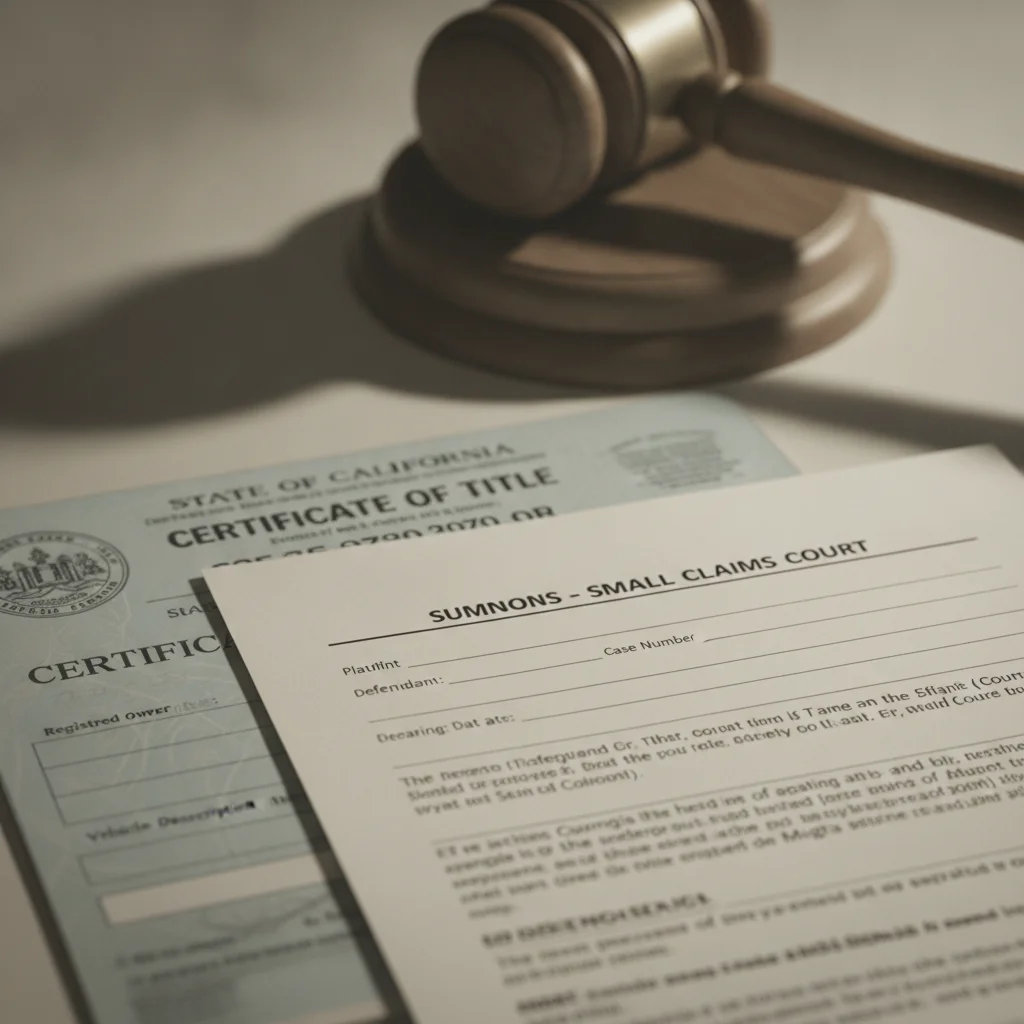
The bottom line: as-is is a legitimate and effective way to sell a used vehicle privately. But it only works as protection when you pair it with honest disclosure. The sellers who end up in court aren't the ones who disclosed too much — they're the ones who disclosed too little.
For the buyer's-eye view of what as-is really means — including what rights they waive and how to protect themselves — see As-Is Sales: What That Label Means Legally and Financially. Understanding both sides of the transaction makes you a sharper negotiator and a better-protected seller.

All claims are backed by peer-reviewed research. Sources on request.