
| Federal odometer law applies to | Vehicles under 10 model years old, under 16,000 lbs. (Federal Motor Vehicle Information and Cost Savings Act) |
| Penalty for odometer fraud | Up to $10,000 per violation (civil); criminal charges possible (49 U.S.C. § 32710) |
| Title brands that must be disclosed | Salvage, rebuilt, flood, lemon law buyback, odometer rollback (Required in all 50 states) |
| Does as-is protect sellers from fraud? | No — known concealment is still actionable despite as-is language (Consistent across most state court decisions) |
| Recall database to check before selling | NHTSA recalls database at recalls.nhtsa.gov (National Highway Traffic Safety Administration) |
| Disclosure document format | Written, signed by both parties — verbal disclosures rarely provable (Best practice recommendation) |
| States with explicit private seller fraud statutes | CA, NY, TX, FL, IL (and others via general consumer fraud law) (State consumer protection statutes) |
| Buyer remedy for undisclosed defects | Rescission, compensatory damages, or punitive damages (Varies by state) |
Why Seller Disclosure Laws Exist — and Why They Matter to You
When you sell a car privately, you might assume that once the money changes hands, you're done. But disclosure law doesn't work that way. Every state in the U.S. imposes some legal obligation on sellers to share known material information about a vehicle — and the consequences of staying silent can follow you long after the sale closes.
Disclosure laws exist because buyers and sellers don't have equal information. You've owned the car. You know its history. The buyer is largely taking your word for it. State and federal law try to level that imbalance by requiring sellers to volunteer specific facts — not just answer questions honestly.
This reference guide breaks down what you're legally required to disclose, how requirements vary by state, and what happens when sellers get it wrong. Whether you're selling a clean-title commuter or a rebuilt salvage vehicle, this is your starting checklist.
| Federal odometer law applies to | Vehicles under 10 model years old, under 16,000 lbs. (Federal Motor Vehicle Information and Cost Savings Act) |
| Penalty for odometer fraud | Up to $10,000 per violation (civil); criminal charges possible (49 U.S.C. § 32710) |
| Title brands that must be disclosed | Salvage, rebuilt, flood, lemon law buyback, odometer rollback (Required in all 50 states) |
| Does as-is protect sellers from fraud? | No — known concealment is still actionable despite as-is language (Consistent across most state court decisions) |
| Recall database to check before selling | NHTSA recalls database at recalls.nhtsa.gov (National Highway Traffic Safety Administration) |
| Disclosure document format | Written, signed by both parties — verbal disclosures rarely provable (Best practice recommendation) |
| States with explicit private seller fraud statutes | CA, NY, TX, FL, IL (and others via general consumer fraud law) (State consumer protection statutes) |
| Buyer remedy for undisclosed defects | Rescission, compensatory damages, or punitive damages (Varies by state) |
For a deeper look at how disclosure intersects with as-is sales language, see our guide on what sellers are still liable for in as-is deals.
Federal Disclosure Requirements That Apply in Every State
Before you get to state-level rules, there are two federal requirements that apply universally to private vehicle sales in the U.S. Ignoring either one is a federal offense, not just a civil dispute.
Odometer Disclosure
Under the Motor Vehicle Information and Cost Savings Act (commonly called the Federal Odometer Act), any seller transferring a vehicle must complete a written odometer disclosure statement at the time of sale. This applies to most vehicles under 16,000 lbs. that are fewer than 10 model years old.
The statement must include:
- The odometer reading at the time of transfer
- Whether the seller has reason to believe the odometer reading is inaccurate or has been rolled back
- A certification that the reading reflects actual mileage, or an explanation if it doesn't
In many states, this disclosure is printed directly on the title itself. In others, a separate federal odometer statement must accompany the title. Either way, skipping it or falsifying the mileage opens you up to federal fraud liability — civil penalties up to $10,000 per violation and potential criminal charges. Our dedicated article on odometer fraud, disclosure forms, and seller liability covers this in full detail.

Known Safety Defects and Open Recalls
Federal law doesn't currently require private sellers to complete open recalls before a sale, but the Federal Trade Commission (FTC) has increasingly focused on disclosure of known safety defects. While dealers face stricter rules (they cannot sell cars with open safety recalls), private sellers are in a grayer zone — but knowingly concealing a safety defect that causes harm can still create civil liability under most states' fraud statutes.
Best practice: check the National Highway Traffic Safety Administration (NHTSA) recall database before listing your car and disclose any open recalls in writing to the buyer.
State-by-State Disclosure Requirements: What the Law Actually Requires
State disclosure laws for private vehicle sales fall into a few broad categories. Most states don't require a formal seller's disclosure form the way real estate transactions do — but nearly all impose liability through consumer fraud statutes, lemon law provisions, or title-brand requirements. Here's how the landscape breaks down.
All 50
States require title brand disclosure
Every U.S. state mandates that salvage, rebuilt, flood, and other title brands appear on the vehicle title — concealing them constitutes fraud.
$10,000
Max civil penalty per odometer fraud violation
Under 49 U.S.C. § 32710, each instance of odometer fraud exposes sellers to up to $10,000 in civil damages, plus attorney's fees.
~1 in 6
Used vehicles have a hidden title brand
According to Carfax data, approximately 1 in 6 used vehicles has a significant title issue that buyers may not discover without a history report.
10 years
Federal odometer law age threshold
The Federal Odometer Act applies to vehicles under 10 model years old — sellers of older vehicles still face state-level disclosure obligations.
3x
Potential damages multiplier in some states
Several state consumer fraud statutes allow courts to treble (triple) actual damages in cases of willful concealment or misrepresentation by sellers.
Title Brand Disclosure — Required in All 50 States
Every state requires that the vehicle title accurately reflect the car's legal history. If a vehicle has been branded — meaning it received a salvage, rebuilt, flood, lemon law buyback, or junk designation — that brand must appear on the title. Selling a vehicle without disclosing its title brand is fraud in every jurisdiction.
Key title brands you must disclose:
- Salvage title: Vehicle was declared a total loss by an insurance company
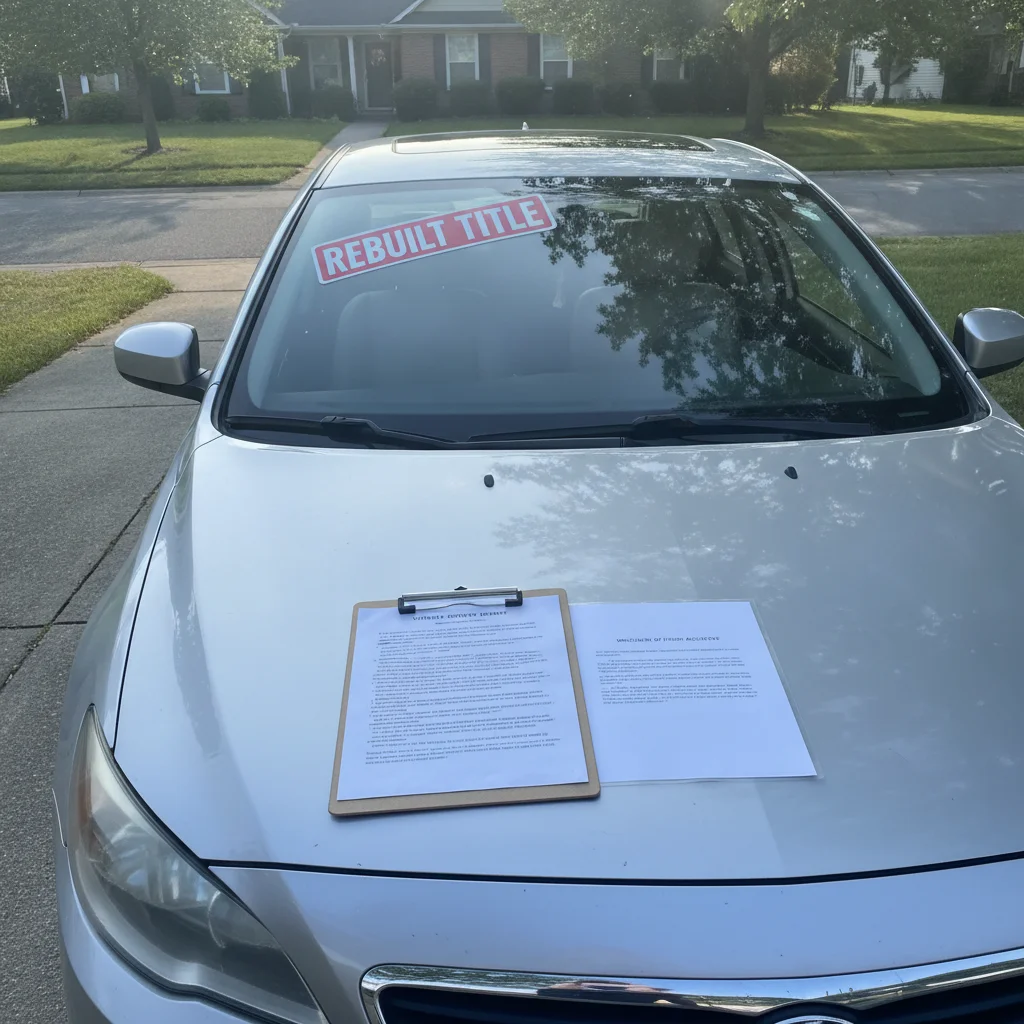
- Rebuilt/reconstructed title: Salvage vehicle that has been repaired and inspected
- Flood/water damage: Vehicle suffered significant water intrusion
- Lemon law buyback: Manufacturer repurchased the vehicle under state lemon law
- Odometer rollback: Mileage has been tampered with
If you're selling a rebuilt title vehicle, disclosure obligations go beyond just handing over the title. Many states require explicit written notice to the buyer before the transaction. See what sellers of rebuilt title vehicles must disclose for state-specific requirements.

States With Explicit Private Seller Disclosure Statutes
A handful of states go further and impose affirmative disclosure duties on private sellers beyond what the title itself communicates. These include:
| State | Key Requirement | Notable Detail |
|---|---|---|
| California | Disclosure of known defects affecting safety or value | Implied warranty of merchantability applies even in private sales if seller misrepresents condition |
| New York | Odometer + title brand disclosure mandatory | Fraudulent concealment of defects actionable under General Business Law §349 |
| Texas | Known material defects must be disclosed | Deceptive Trade Practices Act applies to private sellers who knowingly misrepresent |
| Florida | Flood damage and title brand disclosure required | Statute specifically addresses undisclosed flood vehicles |
| Illinois | Odometer and title brand disclosure required | Consumer Fraud Act covers private seller misrepresentation |
Even in states without explicit private seller disclosure statutes, sellers who knowingly conceal defects can face civil liability under general fraud or misrepresentation doctrine. The absence of a specific law doesn't create a safe harbor.
Material defect
A condition or problem that a reasonable buyer would consider significant in deciding whether to purchase the vehicle or what price to pay. Examples include frame damage, flood history, or chronic mechanical failure.
Title brand
A permanent designation placed on a vehicle title to indicate a significant event in its history — such as salvage, flood damage, or a lemon law buyback. Brands travel with the title and must be disclosed.
Rescission
A legal remedy that unwinds a transaction, restoring both parties to their original positions. In a car sale context, the buyer returns the vehicle and the seller refunds the purchase price.
Odometer disclosure statement
A federally required written certification from the seller stating the vehicle's mileage at the time of sale and affirming whether the reading is accurate. In many states it is printed on the title itself.
Salvage title
A title brand indicating that an insurance company declared the vehicle a total loss after a collision, flood, theft, or other incident. Vehicles with salvage titles cannot legally be driven until inspected, repaired, and re-titled as rebuilt.
Rebuilt/reconstructed title
A title issued to a formerly salvage vehicle that has been repaired and passed a state inspection. The rebuilt brand remains on the title permanently and must be disclosed to all future buyers.
Consumer fraud statute
A state law that prohibits deceptive or unfair trade practices in consumer transactions. Many states apply these statutes to private vehicle sales, giving buyers the right to sue for damages, attorney's fees, and sometimes punitive damages.
Lemon law buyback
A vehicle that was repurchased by the manufacturer under a state lemon law because it had a defect that could not be repaired after a reasonable number of attempts. These vehicles receive a permanent title brand.
The "Known Defect" Standard
Most state laws use a "known material defect" standard — meaning you're obligated to disclose defects you actually know about that a reasonable buyer would consider significant. You're generally not required to inspect the car yourself or uncover hidden problems you weren't aware of. But once you know something, silence becomes a legal liability.
Common known defects courts have found sellers obligated to disclose include:
- Major accident damage, even if repaired
- Chronic mechanical failures (transmission, engine, electrical)
- Frame damage
- Flood or water intrusion history
- Prior use as a rental, taxi, or fleet vehicle (in some states)
- Known safety issues affecting brakes, steering, or suspension
Read our full guide on what to disclose to a private buyer even when it hurts your sale for a complete breakdown of what courts have required sellers to volunteer.
How to Document Your Disclosures Properly
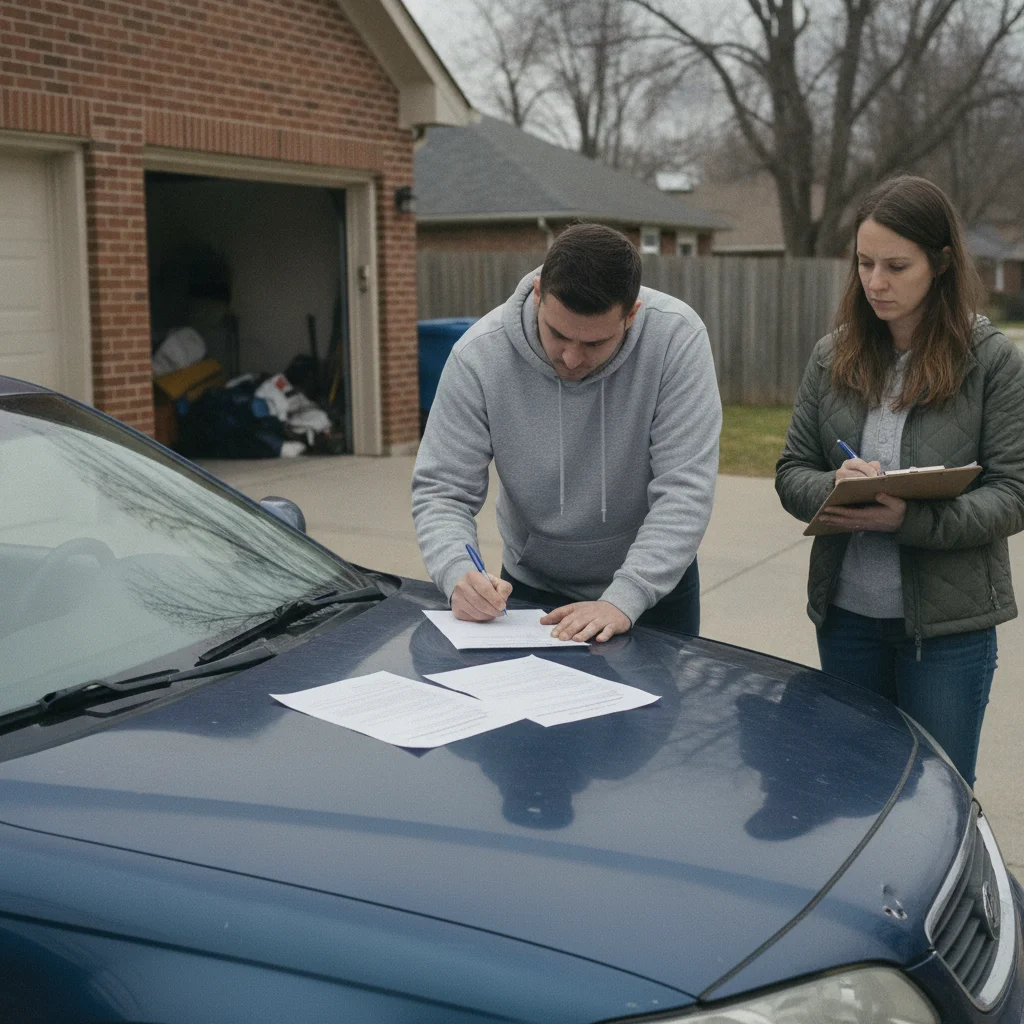
Knowing what to disclose is only half the job. How you disclose matters enormously if a dispute arises later. Verbal disclosures are nearly impossible to prove — a written record is your legal protection.
What a Good Disclosure Statement Includes
Whether your state requires a formal form or not, create your own written disclosure document that covers:
- Accident history: Date, nature, and extent of any collision damage you're aware of
- Title status: Confirm the title is clean, or identify any brands
- Odometer reading: The exact mileage at time of sale, with federal certification language
- Known mechanical issues: Any systems that don't function properly or have a history of failure
- Major repairs: Any significant work done, especially frame, engine, or transmission
- Flood or water damage: Any instance of water intrusion, even if repaired
- Open recalls: List any recalls the buyer can check against NHTSA records
Have both parties sign and date the document. Keep a copy for yourself. If you're communicating disclosures via email or text before the in-person sale, preserve those records too — courts have accepted text message threads as evidence of disclosure.
State DMV Websites Vary Widely
Each state's DMV website is the authoritative source for required disclosure forms and title transfer procedures. Some states provide downloadable odometer disclosure forms; others print the disclosure directly on the title. Before completing your sale, confirm your state's current requirements at your DMV website or motor vehicle agency — requirements do change, and third-party summaries can be outdated.
Disclosures Made Before the Sale Carry More Weight
Courts consistently give more weight to disclosures made before a buyer commits to the purchase than those slipped into a bill of sale at signing. Provide your written disclosure statement during the test drive or inspection phase, not at the point of payment. This gives the buyer a genuine opportunity to consider the information — which is what disclosure law is designed to ensure.
Service Records as Supporting Documentation
Providing your service records isn't legally required in most states, but it strongly supports your position that you disclosed what you knew. A buyer who receives your maintenance history and later claims they were surprised by an issue has a much weaker case. It also makes your car easier to sell — buyers pay more for documented history.
For guidance on navigating the full paperwork process, visit our private party sales hub for checklists and templates.
What Happens When Sellers Don't Disclose — Legal Consequences
The risk of non-disclosure is real, and buyers are increasingly savvy about their legal options. Here's what a seller who concealed material information can face:
Rescission of the Sale
In most states, a buyer who proves fraudulent concealment can demand the sale be rescinded — essentially unwound. You give the money back; they return the car. If the car has depreciated or been damaged in the interim, courts sometimes award the difference in value on top.
Civil Fraud Liability
Beyond rescission, sellers found liable for fraud can face compensatory damages (repair costs, diminished value, consequential losses) and in egregious cases, punitive damages — which can multiply the base award substantially. Consumer fraud statutes in states like California, Texas, and New York also provide for attorney's fees, which dramatically increases the financial exposure of being on the wrong side of a disclosure dispute.
Criminal Exposure
Odometer fraud, title fraud, and VIN tampering are federal crimes. State consumer fraud and motor vehicle statutes also carry criminal penalties in many jurisdictions. While criminal prosecution of private sellers is relatively rare, it does happen in cases involving deliberate title washing, odometer rollback, or organized fraud schemes.

As-Is Language Doesn't Protect You From Fraud Claims
Many sellers believe that writing "sold as-is" on the bill of sale eliminates all liability. It doesn't. As-is language protects sellers from claims about defects they didn't know about — it does not shield sellers who knowingly concealed a material defect. Courts are consistent on this point. If you knew the transmission was failing and said nothing, an as-is clause won't save you.
This is one of the most misunderstood aspects of private car sales. Our article The Truth About As-Is Sales and What Sellers Are Still Liable For explains exactly where seller liability ends — and where it doesn't. You can also compare your options in As-Is Sales vs. Warranty Disclosures.
State DMV Websites Vary Widely
Each state's DMV website is the authoritative source for required disclosure forms and title transfer procedures. Some states provide downloadable odometer disclosure forms; others print the disclosure directly on the title. Before completing your sale, confirm your state's current requirements at your DMV website or motor vehicle agency — requirements do change, and third-party summaries can be outdated.
Disclosures Made Before the Sale Carry More Weight
Courts consistently give more weight to disclosures made before a buyer commits to the purchase than those slipped into a bill of sale at signing. Provide your written disclosure statement during the test drive or inspection phase, not at the point of payment. This gives the buyer a genuine opportunity to consider the information — which is what disclosure law is designed to ensure.
For additional context on how disclosure intersects with buyer rights and paperwork obligations, browse our Paperwork & Contracts hub.
Your Pre-Sale Disclosure Checklist
Use this checklist before listing your vehicle to confirm you've covered your legal obligations. This isn't a substitute for legal advice specific to your state, but it covers the baseline that applies across most U.S. jurisdictions.
- Run an NHTSA recall check at recalls.nhtsa.gov and document any open recalls
- Pull a vehicle history report (Carfax or AutoCheck) so you know what third-party records show — and aren't caught off-guard by what the buyer finds
- Verify your title status — confirm there are no liens, and check for any title brands at your state DMV
- Complete the odometer disclosure — either on the title or on a separate federal form, depending on your state
- Draft a written disclosure statement listing all known defects, accident history, and major repairs
- Gather service records and make copies available to the buyer
- Have the buyer sign the disclosure statement and retain your copy
- Disclose in writing any title brands, including rebuilt, salvage, flood, or lemon law status

Selling your car with clean documentation and honest disclosure isn't just good ethics — it's the lowest-risk path legally and financially. Buyers who feel they were treated fairly don't file complaints; buyers who feel deceived frequently do.
If you're unsure whether your state requires specific forms or additional disclosures, contact your state's Department of Motor Vehicles or a local consumer law attorney before completing the sale.
NHTSA Recalls Database
Check your vehicle's VIN for open safety recalls before listing it for sale. Free, official, and updated in real time by the National Highway Traffic Safety Administration.
Carfax Vehicle History Report
Pull a full vehicle history report to see what title brands, accident records, and ownership history third-party databases show on your car — so buyers can't claim surprise.
Federal Odometer Disclosure Statement (Form HS-7)
The official NHTSA guidance on federal odometer disclosure requirements, including who must comply, what the statement must include, and how to complete it correctly.
Your State DMV Website
Each state's motor vehicle agency publishes current requirements for title transfer, required disclosure forms, and title brand procedures. Always verify your state's rules directly before completing a private sale.
Private Party Bill of Sale Template
A downloadable bill of sale template that includes space for odometer disclosure, known defects, title status, and buyer/seller signatures — covering your basic documentation needs in one document.

All claims are backed by peer-reviewed research. Sources on request.