Key Takeaways
Why Market Conditions Trump Classic Negotiating Scripts
Most car-buying advice reads like it was written in 2005. Walk in with a target price, anchor low, and be ready to walk out. That framework still has merit—but it assumes a baseline of normal inventory and stable credit markets. When those conditions shift, the script breaks down fast.
I spent years working in dealership finance offices, and I can tell you with certainty: the single biggest factor determining how much a salesperson will move on price isn't your negotiating skill. It's how many of that exact vehicle are sitting on competing lots within 50 miles. Everything else is secondary.
That doesn't mean preparation is pointless. It means your preparation has to start with a market read, not a script. Before you rehearse your counteroffer, you need to answer three questions: What does inventory look like for this specific vehicle? What is demand doing right now? And what are interest rates forcing buyers to focus on?
The answers to those three questions will tell you more about your real leverage than any negotiating playbook. This article breaks down how each factor works, how they interact, and how you adjust your tactics accordingly. For a deeper look at the conditions that put structural power in your hands, see what shifts power toward the buyer.

Reading Inventory: The Most Honest Signal on the Lot
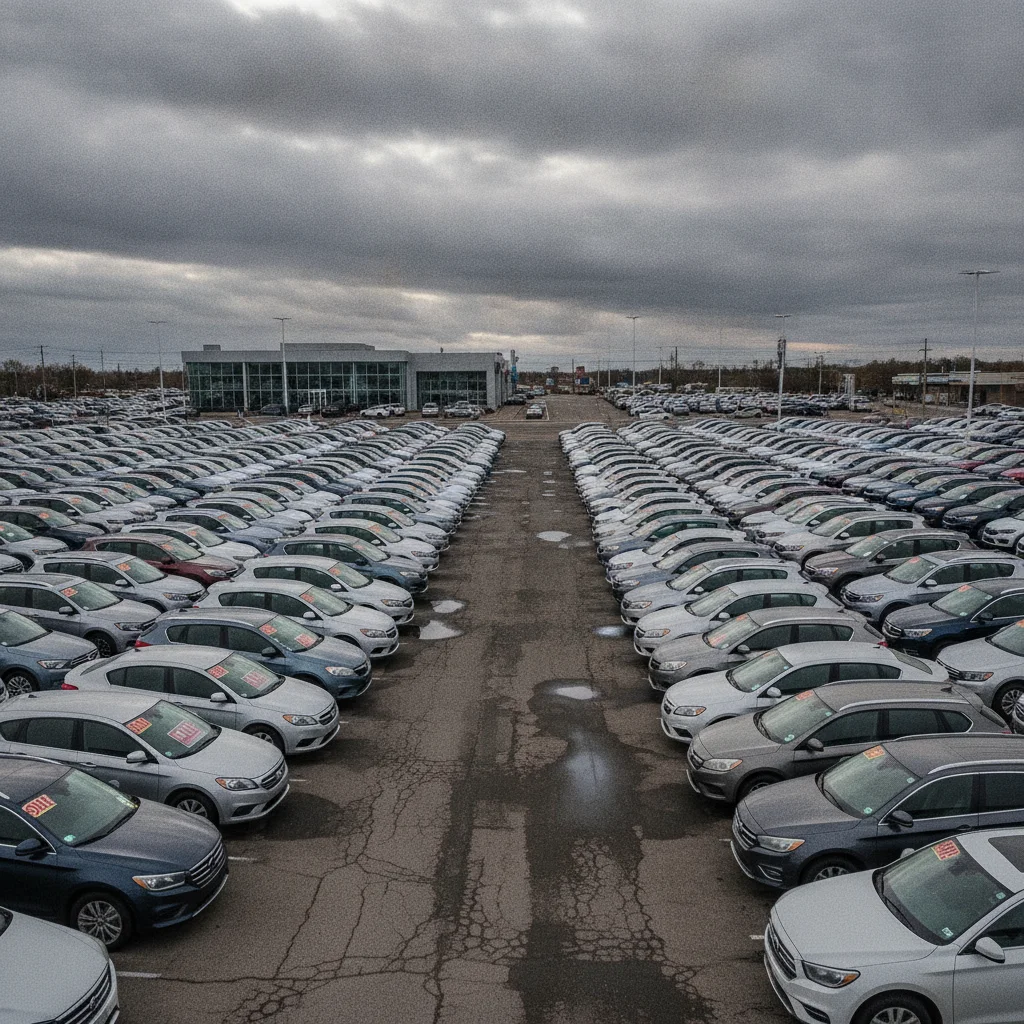
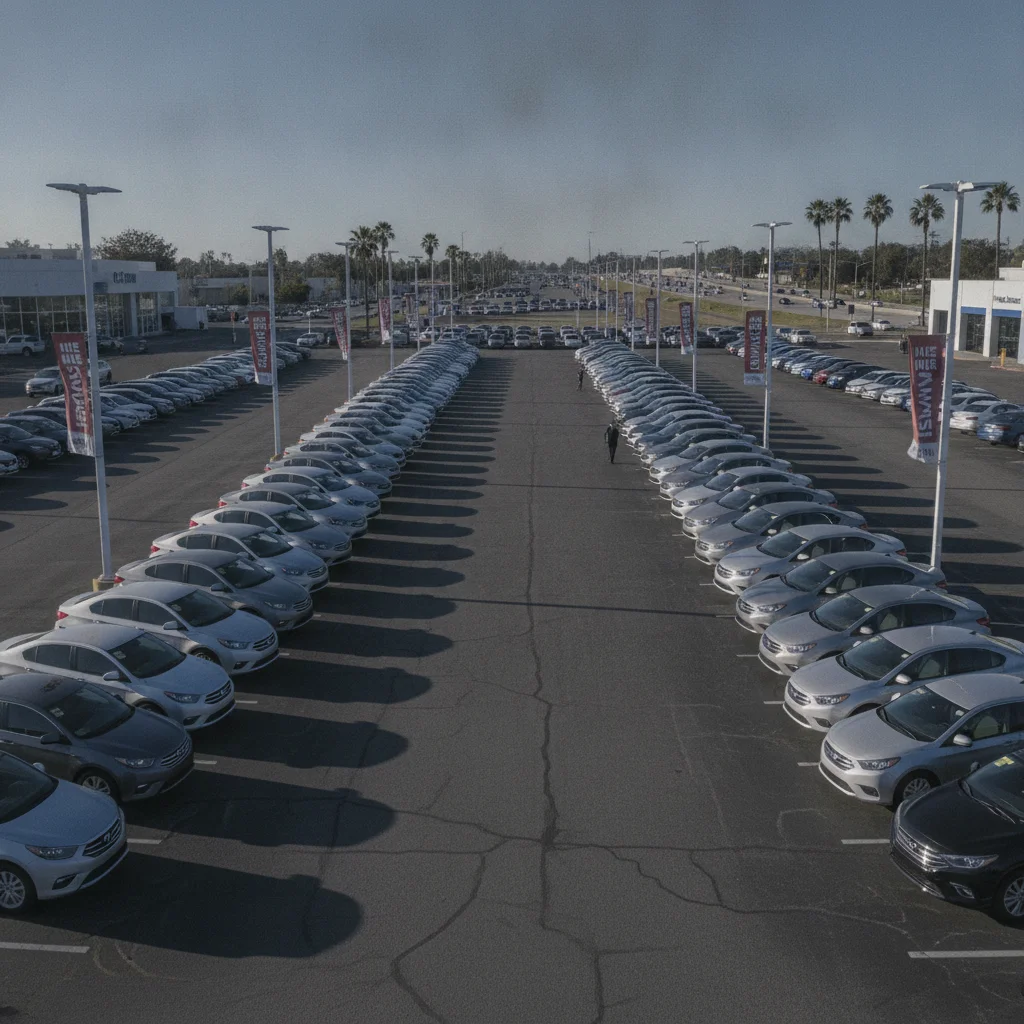
Inventory is the foundation of negotiating power. When a dealer has 90 units of a particular model and regional demand is absorbing 30 a month, that's a three-month supply. Dealers are comfortable around 60 days. At 90 days, they start feeling pressure. At 120 days, they're actively looking for ways to move metal.
The inverse is just as true and just as important. When a hot model is selling faster than it arrives—a common scenario during supply chain disruptions or high-demand model launches—dealers have zero reason to negotiate on price. They may even charge market adjustments above MSRP. Those aren't scams, exactly. They're just supply and demand, and complaining about them won't change your situation.
74 days
Average new vehicle days-on-lot when discounts peak
iSeeCars research shows that vehicles sitting 60+ days see the sharpest price reductions, averaging 4–6% below original asking price.
1–3%
Typical dealer financing markup above buy rate
Consumer Financial Protection Bureau (CFPB) research has documented that dealer reserve markups commonly range from 1 to 3 percentage points above the lender's approved rate.
$1,500+
Interest saved by matching credit union rate vs. dealer rate
On a $32,000 loan over 60 months, a 1.5-percentage-point rate difference compounds to more than $1,500 in total interest paid over the loan term.
43%
Buyers who negotiate financing terms at the dealership
According to a J.D. Power financing satisfaction study, fewer than half of buyers attempt to negotiate their financing rate, leaving significant money on the table.
60 days
Inventory threshold where dealer price flexibility begins
Industry convention places 60 days of supply as the inflection point where dealers shift from holding price to actively incentivizing sales.
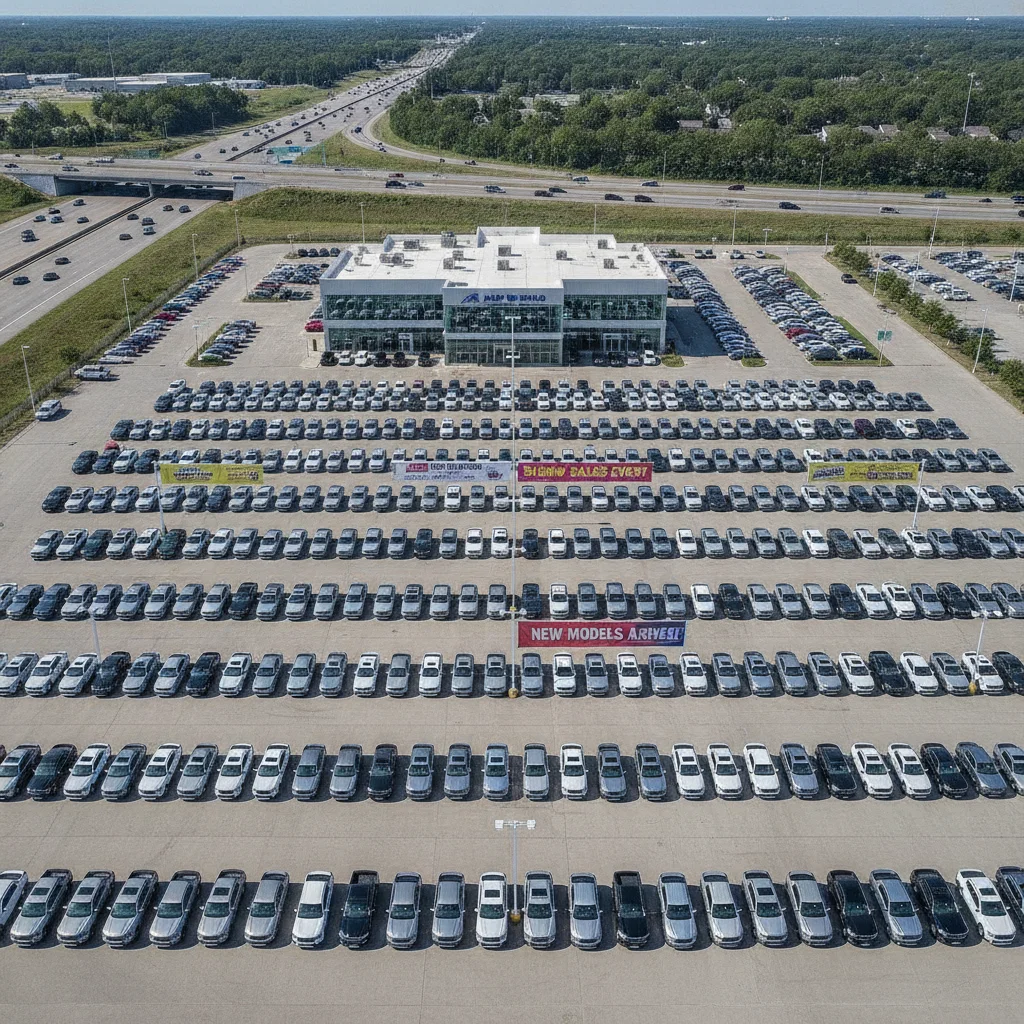
How do you check inventory without relying on a salesperson to tell you? Start with manufacturer websites, which often show regional dealer stock. Then check third-party aggregators like Cars.com, CarGurus, and Autotrader—search your ZIP code and expand the radius to 150 miles. Count how many of your target vehicle are listed, and at what prices. If you're seeing consistent discounts below MSRP across multiple dealers, supply is loose. If you're seeing identical prices or markups, supply is tight.
Days-to-turn data—how quickly a specific model sells once it lands on a lot—is tracked by services like iSeeCars and CarGurus's Price Trends tool. A model turning in under 20 days is hot. One sitting 60+ days is getting stale, and the dealer knows it.
For a structured breakdown of how to interpret these signals before your first dealer visit, what dealer inventory levels signal about the right time to buy walks through the process in detail.
Use the 150-Mile Search Rule
Expand your inventory search to 150 miles from your ZIP code, not just local dealers. Regional supply differences can be dramatic — a model that's scarce locally may be sitting unsold 100 miles away. Dealers routinely arrange transfers or delivery, and the savings can easily justify a day trip.
Demand Dynamics: Segment Matters as Much as the Overall Market
"The car market is tough right now" is almost always an oversimplification. The market for full-size trucks in Texas in January is not the same as the market for compact SUVs in the Northeast in May. Demand is fragmented by segment, geography, and season—and smart buyers exploit those gaps.
When fuel prices spike, demand for large trucks and SUVs softens while compact cars and hybrids tighten. When fuel drops, the reverse happens. This plays out over weeks, not months, and a dealer sitting on eight large pickups during a gas price spike will deal in ways they simply won't six months later.
“The best time to buy a car is when the dealer needs to sell it more than you need to buy it. Everything else — your scripts, your tactics, your research — is in service of finding that moment.”
— James Bragg, Founder of Fighting Chance, automotive consumer advocacy and car-buying research service
Seasonality adds another layer. Convertibles and sports cars move in spring and summer; four-wheel drive vehicles spike in fall before winter weather hits. If you're buying a Jeep in July, you'll have more room than if you wait until October. Timing isn't just about end-of-month sales quotas—it's about segment demand cycles. The best times of year to negotiate the lowest car price maps these cycles with specific months and models.
Geographic demand matters too. A truck with a diesel engine commands a premium in rural areas and is a much softer sell in urban markets. If you live in the city, sourcing from a rural dealer 200 miles out can save you real money—as long as you factor in transport cost or a day trip for delivery.
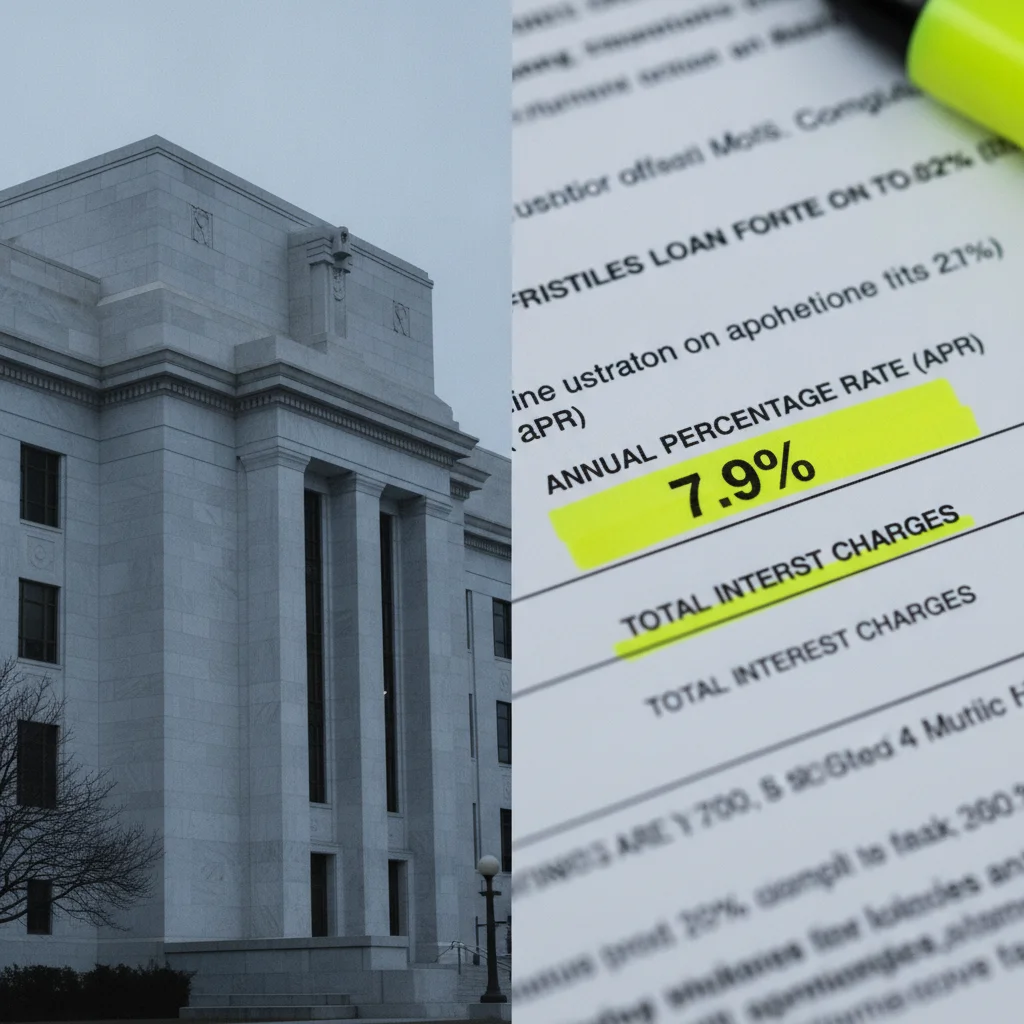
Interest Rates: How the Fed's Moves Change Your Negotiating Table
When rates are low—say, 3–4% for a 60-month loan on a new vehicle—monthly payments are manageable at almost any reasonable price point, so negotiation concentrates on the purchase price. Buyers feel less payment pressure, so they can afford to grind on sticker.
When rates climb to 7–9%, as they did during 2023–2024, the calculus flips. A $2,000 reduction in purchase price saves you about $35/month on a 60-month loan. But a 1-point improvement in your interest rate on a $35,000 loan saves you roughly $17/month—and compounds over the life of the loan to over $1,000 in total interest. Suddenly, the rate matters more than the price in absolute dollar terms.
Always secure a lender pre-approval before entering a dealership finance office.
Without your own rate benchmark, you have no way to evaluate whether a dealer's financing offer is competitive or inflated. Dealers mark up rates above what lenders actually approved them for — a practice called dealer reserve — and they rely on buyers not knowing their true rate floor.
Treat the interest rate and the purchase price as two completely separate negotiations.
Dealers prefer to blend price and financing into a single monthly payment discussion, because it obscures how each component is working. Agreeing on price first — and documenting it — before discussing financing prevents the finance office from adjusting one to offset gains in the other.
Use days-of-supply data for your target vehicle as your opening leverage statement.
Inventory pressure is the most powerful factor in dealer flexibility, and citing it signals that you've done real homework — which changes how a salesperson engages with you. Vague references to 'doing your research' are ignored; a specific days-of-supply number is not.
In a low-inventory market, redirect negotiation energy to add-ons, fees, and trade-in value.
When a vehicle is selling at or above MSRP, fighting on sticker price is a losing battle and risks losing the car entirely. The real margin in tight markets lives in documentation fees, dealer-installed accessories, and protection packages — all of which are negotiable regardless of market conditions.
Research manufacturer rate-buydown programs independently of the dealer.
Automakers frequently offer below-market financing directly through captive finance companies (e.g., Ford Motor Credit, Toyota Financial Services), but these programs are only available on specific models and trim levels, and dealers don't always surface them voluntarily — especially if a marked-up third-party loan earns them more.
Establish your trade-in value independently before stepping onto any lot.
Dealers appraise trade-ins knowing what they paid for wholesale and what they can retail it for — information you don't naturally have. Getting independent offers from Carmax, Carvana, or CarGurus Instant Cash Offer before the dealer appraises your vehicle gives you a floor price you can cite or accept if the dealer's offer falls short.
This is exactly why finance offices love high-rate environments. They can offer you a discounted vehicle price—something that feels like a win—while making it up in the financing markup. Dealers routinely buy rates from lenders at one number and sell them to you at a higher number, pocketing the spread. This is called dealer reserve, and it's legal in most states. In a high-rate environment, that spread can be 1–3 percentage points.
Your defense: always secure a pre-approval from your own bank or credit union before you walk into a dealership. That gives you a rate benchmark the dealer has to beat, not just claim to beat. It also signals that you're a financially prepared buyer—which shortens the negotiation cycle significantly.
Dealer Reserve Is Legal, But Regulated
Dealer financing markups — sometimes called dealer reserve — are permitted by law in most U.S. states, but the CFPB has pushed for greater disclosure. Some lenders cap the markup dealers can charge; others do not. Your best defense is always a competing pre-approval, which gives you a documented rate floor that the dealer must beat or match to earn your financing business.
Manufacturer Incentives Vary by Region
Automaker cash back and rate programs are frequently region-specific — an offer available in the Midwest may not apply on the coasts, and vice versa. Always check the manufacturer's website using your actual ZIP code, not a general national search, to confirm which programs you qualify for before citing them in negotiation.
Adjusting Your Tactics Based on the Environment You're Actually In
The best negotiators don't have one approach. They read the conditions and adjust. Here's how that looks in practice across three distinct market environments:
Buyer's Market (High Inventory, Soft Demand, Moderate Rates)
This is your best environment. Dealers have aging inventory, floor plan costs accumulating daily, and salespeople behind on monthly units. You have maximum leverage on purchase price. Use competing quotes aggressively. Ask about dealer cash incentives and customer rebates—both of which should come off the negotiated price, not replace negotiating. Don't accept the first counteroffer. A well-prepared buyer in this environment should reliably land 3–8% below MSRP on new vehicles, sometimes more on slow-moving models.
Seller's Market (Low Inventory, High Demand, Any Rate Environment)
Negotiating sticker price in this environment is largely futile. Redirect your energy. Focus on add-on packages the dealer is trying to bundle in—nitrogen tire fills, paint sealants, window etch—all of which carry 80–90% margins and are pure profit for the dealer. These are negotiable even when price isn't. Also negotiate hard on your trade-in. In a high-demand market, your used vehicle is worth more, and dealers are actively looking for clean used inventory to resell. Dealer trade-in appraisals deserve just as much attention as the purchase price in this environment.
High-Rate Environment (Any Inventory Level)
Lead with your pre-approval. Make the dealer compete for your financing business rather than treating it as a given. Ask for the buy rate—the actual rate the lender approved—and compare it to what the dealer is quoting you. Push for rate buydowns using manufacturer incentive programs, which can offer 0%–2.9% financing on select models even when market rates are high. These programs are real but aren't always volunteered upfront.
Used Cars: Market Conditions Hit Differently
Everything above applies to new cars with some modification. In the used market, conditions are even more localized and volatile. Used vehicle prices are driven by wholesale auction prices—a number that shifts weekly based on off-lease volume, rental fleet liquidations, and even weather events that destroy regional inventory.
During the COVID supply crunch, used car prices rose 40–50% in 18 months because new car inventory collapsed and demand shifted to used. That's an extreme case, but smaller versions of the same dynamic happen routinely. When a popular new model has a long waitlist, the used version of that model gets bid up.
For used vehicles specifically, the Manheim Used Vehicle Value Index—published monthly—gives you a macro read on wholesale price trends. When wholesale prices are falling, retail prices follow within 30–60 days, and you can use that trend as leverage: "I know auction prices on this model are down 8% from three months ago. I expect that reflected here." Dealers will respect that you've done the homework.
For a tactical breakdown specific to used car deals, negotiating a used car price: tactics that actually hold up covers comparable-based pricing and when walking away is the right move.
Putting It Together: Your Pre-Negotiation Market Checklist
Before you walk into any dealership—new or used—you should be able to answer the following questions. If you can't, your preparation isn't complete.
- Days of supply for your target vehicle: Check CarGurus or iSeeCars. Under 30 days means you have limited price leverage. Over 60 days means you have meaningful room.
- How many competing listings exist within 150 miles: More competition means more options and more leverage. Screenshot the lowest prices to use as anchors.
- Current market rate for your credit tier: Pull your credit score and check Bankrate or the CFPB's auto loan rate data to know what a competitive rate looks like for your tier.
- Your pre-approved rate from a bank or credit union: Non-negotiable preparation step. Do this before visiting any lot.
- Manufacturer incentives currently in play: Check the automaker's website directly—not a dealer's interpretation of it. Cash back offers and rate buydowns are specific and date-limited.
- Your trade-in's current market value: Use at least two sources—Kelley Blue Book and Carmax's online offer—to establish a floor before letting a dealer appraise it. For context on how dealer appraisals work, see dealer trade-in appraisals.
- Seasonal and timing considerations: Are you near end of month? End of quarter? Is this a slow-moving model segment given current fuel prices and season?
Armed with this data, you walk in knowing your position—not guessing at it. That's the difference between a buyer who gets taken and a buyer who gets a deal.

All claims are backed by peer-reviewed research. Sources on request.