Key Takeaways
Why a Loan Balance Doesn't Stop the Sale
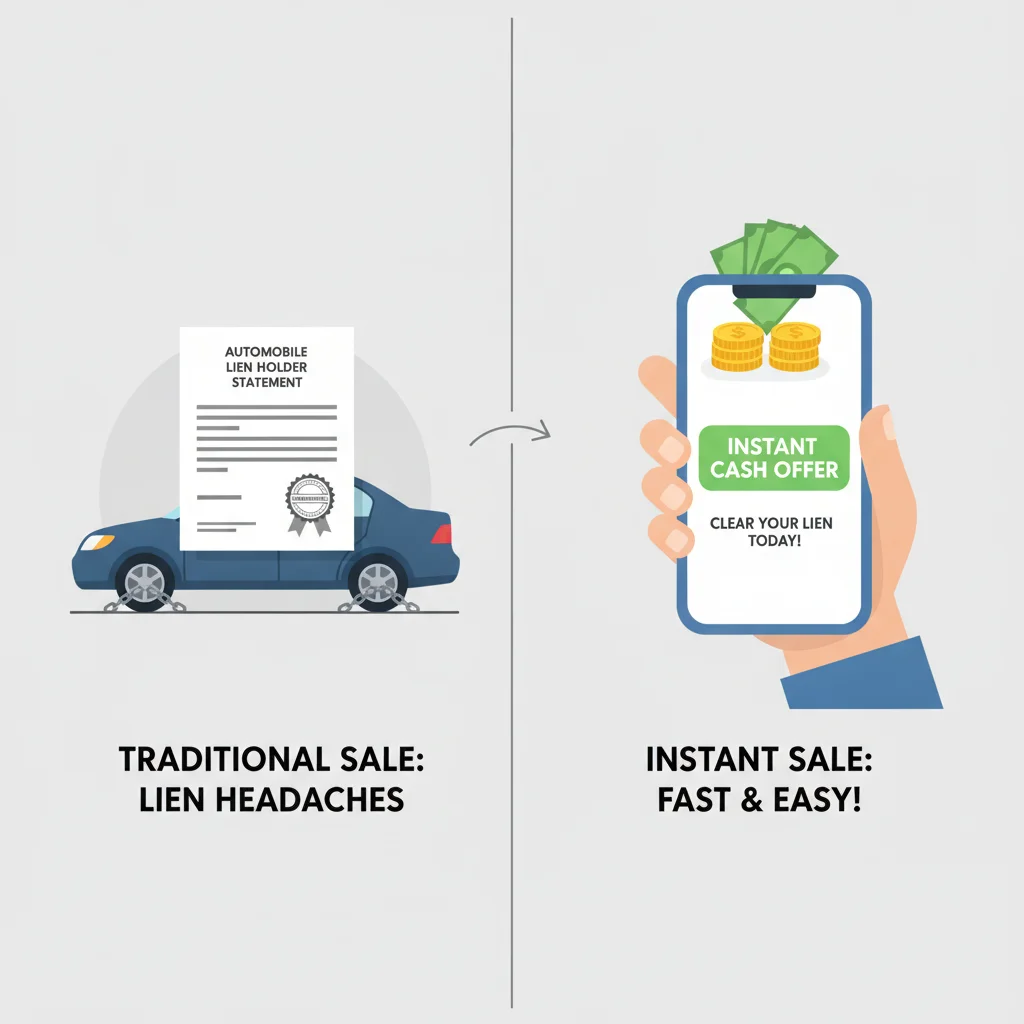
A lot of sellers freeze when they realize their name is on a loan and their lender's name is on the title. The assumption is that you must pay off the car before you can sell it. That assumption is wrong — and it costs people money every time it stops them from acting at the right moment in the market.
Instant offer platforms like Carvana, CarMax, Vroom, and Shift deal with financed vehicles constantly. In fact, the majority of cars they purchase still carry a lien. These companies have dedicated payoff teams and established relationships with major auto lenders. They have done this thousands of times. What's new for you is routine for them.
That said, routine doesn't mean risk-free. The payoff process introduces timing variables, equity calculations, and lender-specific quirks that can trip up an unprepared seller. Understanding how the mechanics work — before you accept an offer — is the difference between a clean transaction and a frustrating one that drags on for weeks.
For a broader look at how these services operate behind the scenes, see how instant offer platforms actually work. This guide focuses specifically on the loan payoff piece and what you need to do, step by step.
Understanding Your Equity Position Before You Start
Before you enter your VIN into any platform, you need to know one number: your loan payoff amount. This is not the same as your current balance. The payoff amount includes any accrued interest through the projected payoff date, and sometimes a small prepayment processing fee depending on your lender and loan terms.
Call your lender directly or log into your online account and request a 10-day payoff quote. Ask for it in writing. This gives you a fixed number valid for ten days — enough time to collect offers and make a decision without the quote expiring on you mid-process.
Once you have that number, the math is simple:
- Positive equity: The instant offer exceeds your payoff amount. The platform pays off your lender and sends you the remainder. This is the best-case scenario.
- Negative equity (underwater): Your payoff amount exceeds the offer. You owe the difference. The platform still handles the payoff coordination, but you'll need to cover the gap — either with cash at closing or, in some cases, by rolling it into a new auto loan if you're buying a replacement vehicle through the same platform.
Negative equity doesn't make selling a bad decision. If the car is costing you more in depreciation, maintenance, or insurance than the gap is worth, selling at a modest loss can be the financially smarter move. But you need to know that number going in, not after you've already accepted an offer.
If you're considering waiting for the balance to drop before selling, how long to wait after paying off your loan before listing breaks down whether the timing calculus actually works in your favor.

What to Have Ready Before Submitting Your Vehicle
Getting your paperwork and information organized upfront prevents the most common delays in financed-car transactions. Here's what you'll need before you start collecting offers:
What you will need
Lender online account or phone payoff line
Used to request and receive your official 10-day payoff quote in writing.
At least three instant offer platform accounts
Collecting competing offers from Carvana, CarMax, and at least one other platform gives you real leverage and a market baseline.
Personal check or debit card (for negative equity gap)
Required if your payoff amount exceeds the platform's offer; most platforms require the gap to be settled at or before closing.
Secure document scanner or smartphone scanning app
Used to upload loan statements, payoff quotes, and ID documents to platform verification portals.
Spreadsheet or comparison document
Track offers, expiration dates, and equity calculations side by side so you can make a clean apples-to-apples comparison.
Step-by-Step: Selling Your Financed Car Through an Instant Offer Platform
The process below reflects how major platforms handle financed vehicles as of current standard practice. Individual platforms may vary on timing and logistics, so always confirm specifics in the platform's purchase agreement before signing.
Request Your Official Payoff Quote
Log into your lender's portal or call their payoff department and request a 10-day written payoff quote. Confirm whether your loan has any prepayment penalty — most modern auto loans don't, but some older contracts or specialty lenders still include them. Save the quote as a PDF or take a screenshot with the quote date clearly visible.
Collect Offers From Multiple Platforms
Submit your vehicle information — VIN, mileage, condition, trim, and any known issues — to at least three platforms simultaneously. Most instant offers are valid for 7 days, so running them in parallel ensures the quotes are comparable. Do not accept the first offer you receive without checking competitors.
Negotiating with an instant offer platform explains the specific leverage points available to you during this phase — it's worth reading before you commit to any offer.
Calculate Your Net Proceeds for Each Offer
For each offer you receive, subtract your payoff quote from the offer amount:
- Offer – Payoff Amount = Net to You
If the result is negative, that's your out-of-pocket gap. If it's positive, that's your check at closing. Compare net proceeds across platforms — not just gross offer amounts. A platform offering $500 more but with a $600 documentation or processing fee still nets you less.
Accept the Best Offer and Disclose the Loan
Once you've selected the strongest offer, accept it through the platform's portal. During this step, you'll be asked to confirm whether there's an outstanding loan. Enter your lender's name, your account number, and the payoff amount you were quoted. The platform uses this to initiate the payoff coordination process with your lender.
Complete Identity and Title Verification
Upload your government-issued ID and any documents the platform requests. If your lender holds the physical title (common when a loan is active), the platform will contact your lender directly to arrange a title transfer. You don't need to have the title in hand — but you do need to confirm with your lender that they have the title on file and will release it upon payoff receipt.
Schedule the Vehicle Inspection and Handoff
Most platforms require an in-person inspection before finalizing the transaction — either at a physical location or via a home pickup service. During the inspection, the platform verifies the condition details you reported match the actual vehicle. Discrepancies — undisclosed accident damage, misrepresented mileage, or missing features — can result in an adjusted (lower) offer. Disclose everything accurately upfront to avoid a last-minute renegotiation.
Sign the Purchase Agreement and Confirm Payoff Terms
Read the purchase agreement before signing — specifically the section covering lien payoff timing and your liability if the payoff wire is delayed. Most agreements state clearly that the platform is responsible for sending payoff funds within a defined window. Note that date. Also confirm how and when you'll receive your net proceeds: ACH transfer, check by mail, or same-day payment at a physical location varies by platform.
Verify Payoff Receipt With Your Lender
Don't assume the transaction is complete once the platform has your car. Approximately 10–12 business days after the transaction date, call your lender directly and ask them to confirm receipt of the payoff wire. Request written confirmation of the lien release. Keep this document permanently — it's proof the loan is closed and will be critical if any title or credit reporting issues arise later.
Negative Equity Requires Cash at Closing
If your payoff amount exceeds the platform's offer, you must cover the difference yourself — most platforms will not complete the transaction until the gap is settled. This is not something you can delay or negotiate away after accepting the offer. Know your equity position before you accept anything, and have the funds ready if you're underwater.
Offer Expiration Dates Are Real Deadlines
Most instant offers expire in 7 days and are non-renewable at the same price. If your vehicle depreciates or market conditions shift during that window, the platform may re-evaluate at a lower number. Schedule the inspection and signing as quickly as possible once you've chosen a platform — don't let the clock run out on a good offer.
Stack Offers Before Committing to Any Platform
The biggest mistake sellers make is treating the first instant offer as the market rate. Run your vehicle through at least three platforms before accepting anything. Offer spreads of $1,000–$3,000 on the same vehicle are common, and the highest offer isn't always from the platform you'd expect. See <a href="/selling-your-car/sale-channels/instant-offer-platforms/selling-to-an-instant-offer-platform-the-complete-end-to-end-guide">the complete end-to-end guide to selling through instant offer platforms</a> for a full framework.
Time Your Payoff Quote to Your Offer Window
A payoff quote is only valid for a fixed number of days — typically 10 to 30. Request yours the same week you plan to collect and compare offers, not two weeks before. If your quote expires before you've completed the transaction, you'll need to request a new one, and the updated figure may be slightly higher due to additional accrued interest.
Understand What 'Convenience' Costs You
Instant offer platforms typically offer 10–20% below what a motivated private-party buyer would pay. For a financed car seller, that gap is sometimes worth it — no title coordination headaches, no waiting for a buyer, no handling a stranger's payment. But go in knowing the cost. <a href="/selling-your-car/sale-channels/instant-offer-platforms/how-instant-offer-platforms-make-money-on-your-car">How instant offer platforms make money on your car</a> explains exactly where that margin goes.
Platform-by-Platform Payoff Coordination: What to Expect
Not all instant offer platforms handle lien payoffs at the same speed or with the same level of transparency. Here's what distinguishes the major players:
| Platform | Payoff Sent To Lender | Title Transfer Timeline | Negative Equity Handling |
|---|---|---|---|
| Carvana | Within 5–10 business days of pickup | 3–6 weeks after payoff clears | Accepts check or rolls into new purchase loan |
| CarMax | At or within 3 business days of sale | 2–4 weeks after payoff clears | Must cover gap by check or card at closing |
| Vroom | 7–14 business days post-transaction | Can run longer; document delays reported | ACH transfer or personal check required |
| Shift | Varies; typically within 10 business days | Region-dependent | Must be settled before vehicle is released |
The numbers above are general benchmarks — your lender's processing time adds to the platform's timeline. Credit unions, in particular, can take longer to process incoming payoffs than large national banks. Factor that in if your loan is held by a smaller institution.
For a deeper comparison of these platforms across payout amounts, speed, and overall seller experience, see instant offer platforms ranked by payout, speed, and seller experience.
You Remain Liable Until the Lien Is Released
Accepting an offer and handing over the keys does not end your financial or legal connection to the vehicle. Your name remains on the loan until the platform's payoff wire is received and processed by your lender — a window that can range from days to several weeks. During this period, keep your insurance active and follow up directly with your lender to confirm receipt. Do not cancel your insurance policy the day you hand over the vehicle.
Protecting Yourself After the Sale Is Done
Your liability on the vehicle doesn't end the moment you hand over the keys. It ends when the lender confirms receipt of the payoff funds and the lien is released. Until that happens, you are still legally and financially connected to that car.
Here's how to protect yourself during that gap:
- Keep your insurance active until the lender confirms payoff receipt. If the platform has an accident with the vehicle before the payoff is sent, an uninsured gap could expose you to complications depending on your state.
- Get the purchase agreement in writing and hold onto it. If a dispute arises about the payoff amount or timing, this is your primary documentation.
- Follow up with your lender directly — don't just trust the platform's tracking. Call your lender 10–12 business days after the transaction date and confirm they received the payoff wire. Ask for a written lien release confirmation.
- Check your credit report about 45 days after the sale. The loan should appear as paid and closed. If it doesn't, contact your lender immediately — a reporting error here can ding your credit score unnecessarily.
Selling a financed car privately involves even more moving parts on the title side. If you've ever wondered how that works by comparison, selling a car with a lien: how to handle an outstanding loan walks through the private-party lien release process in detail.
Instant offer platforms make the financed-car sale genuinely easier than a private transaction — but easier isn't the same as effortless. The sellers who come out ahead are the ones who know their payoff number, understand their equity position, verify the platform's payoff timeline before committing, and follow up with their lender to confirm the transaction is fully closed. Do those four things and you'll have nothing to worry about.
To understand why the offers you received landed where they did — and what the platform does with your car next — how instant offer platforms make money on your car is worth reading before your next sale.

All claims are backed by peer-reviewed research. Sources on request.