Key Takeaways
Why Payoff Timing and Listing Timing Are Two Different Things
A lot of sellers conflate two separate decisions: when to pay off the loan, and when to list the car. They assume the right move is to pay it off first and then list right away — or to wait until the dust settles. But those two decisions run on different clocks, and mixing them up is one of the most common reasons sellers undercut themselves.
Paying off the loan does one important thing: it removes your lender from the transaction. No more coordinating a payoff quote. No more waiting on the lienholder to release the title. That's a real operational advantage. But your lender has nothing to do with what the market will pay for your car. A 2021 pickup truck with 60,000 miles is worth what the market says it's worth — paid off or not.
Where timing does matter for value is on the market side: seasonality, regional inventory, mileage thresholds, and how quickly depreciation is eating at your specific make and model. Those are the variables that move your final sale price, and they don't care about your loan balance.
If you're still weighing whether early payoff even makes sense before you sell, see our breakdown on paying off your car early vs. investing the extra money. That context matters before you rush to pay down principal just to list faster.
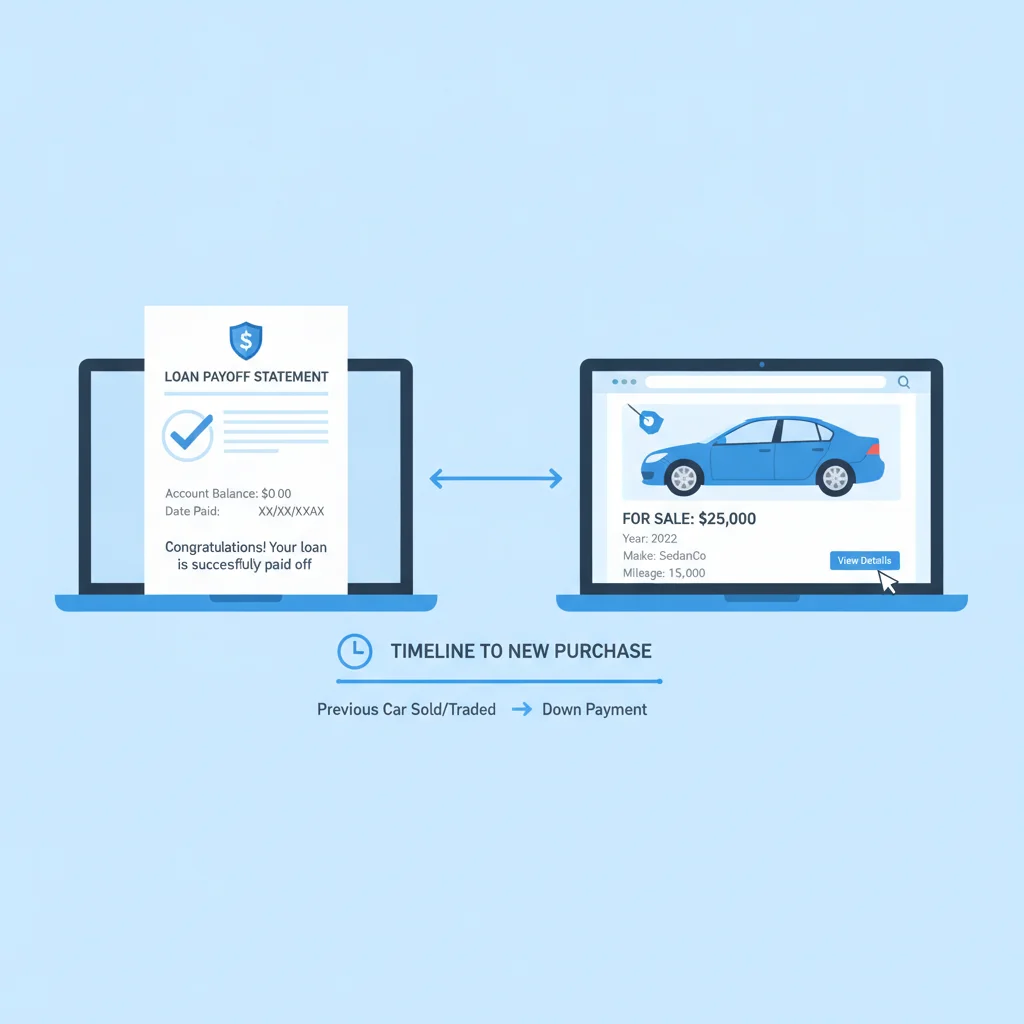
The goal of this guide is to help you sequence both decisions — the payoff and the listing — so they reinforce each other instead of working against you.
What Happens Immediately After You Make That Final Payment
The moment your final payment clears, a few things kick into motion that you need to track carefully. Understanding this window keeps you from listing before you're actually ready — and from waiting longer than necessary.
Confirm your payoff amount and make the final payment
Call or log into your lender's portal and request a 10-day payoff quote — not your current balance. The payoff quote includes any accrued interest to date and gives you the exact amount needed to zero out the loan. Pay it via certified funds or electronic transfer for the fastest processing. Personal checks can delay title release by 10 or more days while the lender waits for clearance.
Track the lien release and title transfer
After your payment clears, the lender has a legal obligation — typically 10–30 days depending on your state — to release the lien. For electronic titles (eTitles), the release goes directly to your state DMV and a new physical title is mailed to you. For paper titles held by the lender, they mail the title directly to you with the lien notation removed or signed off. Call your lender 10 days after payment clears to confirm the release was processed.
Verify the title is clean and accurate when it arrives
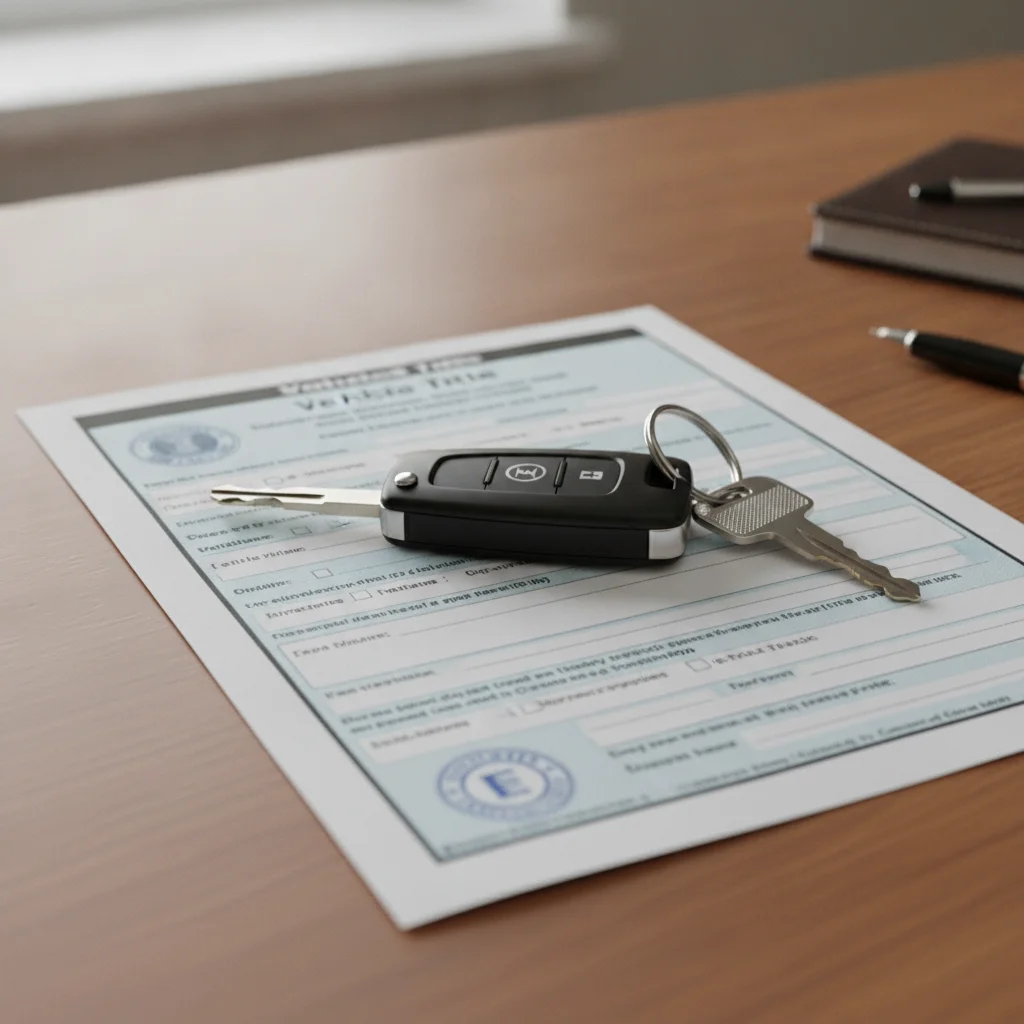
The moment the title arrives, inspect it carefully. Check: your name is spelled correctly, the VIN matches your car exactly, the lender's lien is not listed (or is signed off with a release), and the odometer reading field is complete if required in your state. Any error needs to be corrected before you list — a buyer's lender or DMV will catch it during the transfer, and it will kill the deal.
Run a current market valuation
With title in hand, pull current valuations from at least two sources: Kelley Blue Book private party value and a live search of comparable listings on a major marketplace (CarGurus, Autotrader, or Facebook Marketplace). Look at listings for your exact year, trim, mileage range, and color in your region — not national averages. Price accordingly, not aspirationally. Also run one instant offer to establish your floor.
Check seasonal and regional demand before setting your go-live date
Cross-reference your vehicle type against seasonal demand patterns. If your title arrives in a slow month for your vehicle type and waiting 4–6 weeks would put you in a stronger demand window, calculate whether the expected price gain outpaces the depreciation you'll accumulate during that wait. As a rough rule: most vehicles depreciate $50–$150 per month at lower mileage; that number accelerates as the vehicle ages. A $500 seasonal premium may not justify a 90-day wait.
Prepare the vehicle and listing materials
Detail the car inside and out — or pay for a professional detail if the vehicle warrants it. A $150 detail on a $15,000 car is almost always a positive ROI. Photograph in good natural light with a clean background. Gather all service records, the owner's manual, both key fobs, and any remaining warranty documentation. Write a listing description that leads with the most important buyer concerns: clean title, accident history, service history, recent maintenance, and reason for selling.
List and respond fast
Publish your listing across at least two channels: one high-traffic marketplace (Facebook Marketplace or Craigslist for quick local reach) and one vehicle-specific platform (CarGurus or Autotrader for buyers doing more serious research). Respond to inquiries within 2 hours when possible — response speed is directly correlated with close rate. Serious buyers are often running multiple threads simultaneously and will commit to whoever responds fastest and most professionally.
Once you have a clean title in hand, you're operationally free to list. But 'free to list' and 'best time to list' are still different things. The section below covers how to line up that title timeline with the market window that gets you the most money.
Reading the Market: When to Actually Pull the Trigger
Here's where most sellers leave money behind. They get the title, feel good about being debt-free, and list the car without checking whether the market is actually paying well right now for their specific vehicle. That's a fixable mistake.
Seasonality
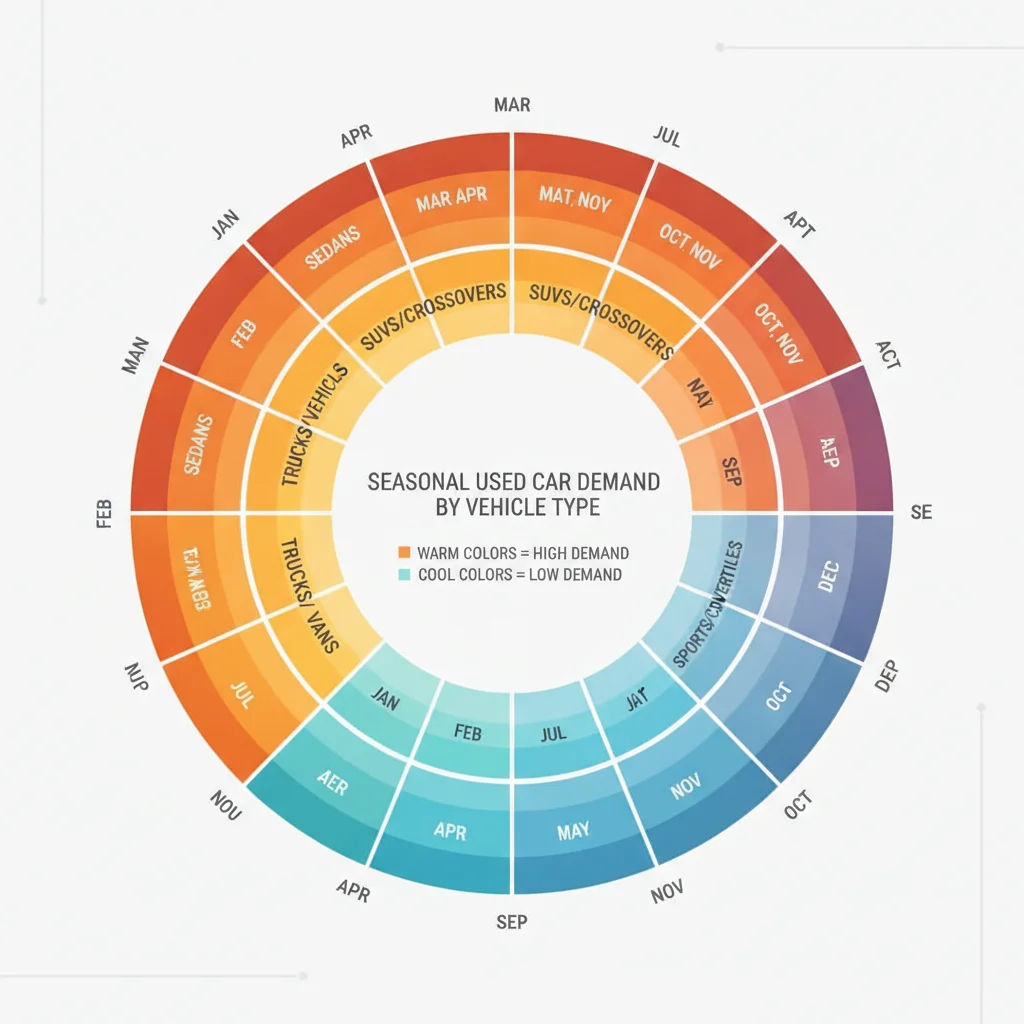
The used car market has real seasonal patterns. Convertibles, sports cars, and motorcycles command stronger prices in spring and early summer. Trucks and SUVs tend to move well year-round but often peak just before winter in northern markets when buyers want 4WD capability. Sedans and fuel-efficient commuters see spikes when gas prices rise, regardless of season.
If your title arrives in November and you own a convertible, consider whether holding 90 days to list in February or March would net you more — but run that math against depreciation first. Our guide on the real cost of waiting too long to list your car walks through exactly how that depreciation math works against you.
Mileage Thresholds
Buyers use round-number mileage as mental anchors. A car at 48,000 miles commands a noticeably different price than the same car at 52,000 miles, even though the mechanical difference is negligible. If you're sitting close to a threshold — 50k, 75k, 100k — and your title arrives before you cross it, list immediately. Every mile you drive while waiting costs you disproportionately more than the mile itself is worth.
Local Inventory Levels
Pull up listings for your specific make, model, year, and trim in your metro area right now. If there are 3 comparable vehicles listed, you're in a seller's market for that vehicle. If there are 30, you're competing hard and pricing needs to be sharper. This check takes five minutes and tells you more than any general market commentary.
Instant Offers as a Baseline
Run your vehicle through one or two instant offer platforms the same week your title arrives. These aren't always the best offers, but they give you a real floor. If the private-party market isn't outpacing the instant offer by at least $800–$1,500 for your vehicle type, the time and friction of private listing may not be worth it. Note that if you hadn't yet paid off the loan, the process works differently — see selling a car with a loan balance through an instant offer platform for how that coordination works.
Don't Hold Too Long Chasing a Perfect Window
Every week you wait after the title arrives, the car is depreciating and accumulating miles. A 60-day wait to hit a slightly better seasonal window can easily cost you more in depreciation than you gain in seasonal premium. Run the math on your specific vehicle before deciding to hold.
Overpricing Poisons the Listing
Listings that sit for more than 3–4 weeks start accumulating 'days on market' data that buyers use as a red flag. A listing that's been sitting at $18,500 for six weeks will attract lower offers than a fresh listing at $17,500, even though the car is identical. Price right from day one.
What to Do While You're Waiting on the Title
The 2–6 week window between final payment and title-in-hand isn't dead time. Use it to get everything else in order so the moment the title arrives, you can list within 48 hours if the market timing is right.
Kelley Blue Book (KBB)
Provides private-party, trade-in, and dealer retail valuations for your specific vehicle to anchor your pricing.
CarGurus or Autotrader
Shows live comparable listings in your region so you can price against real competition, not just guide values.
Vehicle History Report (Carfax or AutoCheck)
Provides accident, ownership, and service history that buyers will want to see before making an offer.
Professional Detailing Service
Restores the vehicle's presentation quality to maximize first-impression value with buyers.
Instant Offer Platform (CarMax, Carvana, or Vroom)
Establishes a quick floor value for your vehicle so you know the minimum you should accept before going private-party.
State DMV Website
Confirms current title transfer requirements, processing times, and whether your state uses eTitles.
One thing that often gets overlooked: once the lender is out of the picture, your insurance situation changes. You may be carrying coverage levels that were required by the lender — comprehensive and collision minimums, gap coverage — that you can now revisit. See lowering your coverage after paying off a car loan for a clear breakdown of what you can legitimately drop and what's worth keeping.
Use the Wait Time Productively
The 2–6 weeks between payoff and title arrival is free preparation time. Get the car detailed, gather your service records, research comps, and draft your listing. When the title hits your mailbox, you can go live within 48 hours — right when the market window may be best.
Clean Title = Faster Sale
Explicitly stating 'clean title in hand, no lien' in your listing headline is a legitimate competitive advantage. Many buyers have been burned by lien coordination delays in past sales and will prioritize your listing over comparable vehicles still carrying loan balances.
Mileage Matters More Than You Think
If you're within 1,000 miles of a major threshold (50k, 75k, 100k), minimize driving until the car sells. Crossing a threshold during the listing period can force you to reprice, and it signals to buyers that the car sat on the market — both of which reduce your leverage.
Also use this window to pull your car's history report, gather any service records you have, and photograph the vehicle while it's still clean and detailed. Listings with complete records and high-quality photos close faster and at higher prices — that's not opinion, it's consistent across every major platform's own data.

If you've been on the fence about whether your loan terms even justified early payoff in the first place, this is a good moment to review that logic — particularly signs your auto loan terms make early payoff less worthwhile covers prepayment penalties and other contract quirks that sometimes make early payoff a net negative.
For broader context on the full range of early payoff strategies, the Early Payoff Tips hub has practical methods worth reviewing before you make a final decision on sequencing.
Never Sign the Title Before Payment Clears
A signed, undated title is essentially a blank check for your vehicle. Never sign the title until the buyer's payment has fully cleared — cash in hand, or a wire transfer confirmed by your bank. Cashier's checks can be counterfeited. If a buyer pressures you to sign before funds clear, walk away from the deal entirely.
Verify Lien Release Before You List
Listing your car before the lien is officially released can create serious legal complications if a buyer conducts a title search and discovers an active lien — even if you know it's been paid. Wait until you have the physical title or written lien release documentation in hand before publishing any listing.
Troubleshooting Common Delays and Pitfalls
Even with a clean payoff, things can go sideways between final payment and listing day. Here's what to watch for and how to handle each situation without losing momentum — or money.
Title Hasn't Arrived After 6 Weeks
Contact your lender directly and ask for a lien release letter. This document can sometimes substitute for the physical title in private sales if the buyer is paying cash — though you'll need to verify your state's specific requirements. Many states allow sales to proceed with a lien release letter plus a bill of sale while the physical title is in transit.
Title Shows Up with Errors
Lender name still listed as lienholder, wrong VIN, misspelled name — these happen. Don't try to sell with an incorrect title. Take it straight to your DMV with the payoff documentation and request a corrected title. This usually adds 1–2 weeks but saves you from a transaction falling apart at the last minute.
You're Upside Down Even After Payoff
This is rare but happens with high-depreciation vehicles or buyers who financed close to MSRP. If comparable listings are selling for less than what you need to net, you have three options: hold and wait for market recovery (risky — see the depreciation math), reduce your price expectation, or explore whether trading into a new vehicle gives you better effective value through dealer pricing leverage. There's no perfect answer here, but holding indefinitely is rarely the right call.
Market Dropped While You Were Waiting
If you tracked your market value at payoff and it's dropped meaningfully by the time the title arrived, don't panic and don't chase the old number. Reprice based on current comps, not what you hoped to get. Overpriced listings sit, accumulate days-on-market stigma, and ultimately sell for less than a correctly priced listing would have on day one.
Finally, if you're still considering whether refinancing might be a better play than selling outright, the When to Refinance hub covers the signals that indicate a refinance makes more sense than a sale — useful context if your situation is still fluid.

All claims are backed by peer-reviewed research. Sources on request.