Key Takeaways
Instant Offer Platform
An instant offer platform is a company — like CarMax, Carvana, or Vroom — that uses algorithms and market data to generate an immediate cash offer for your used vehicle. You submit your car's details online or in person, receive an offer (usually within minutes), and can complete the sale without listing it, negotiating with strangers, or waiting for a buyer. The speed and simplicity come at a price: the platform builds its profit margin directly into the offer it gives you.
These platforms operate on a retail remarketing model, acquiring vehicles at wholesale-adjacent prices and reselling them at retail. Their offer algorithms factor in current auction data, regional demand signals, days-to-sell projections, and reconditioning cost estimates.
The Business Model Nobody Explains to You
When you get an instant offer for your car, the platform makes it feel like a favor. Type in your VIN, answer a few questions, get a number in 90 seconds. What the marketing never explains is that the number you receive is engineered to leave significant profit on the table — for them.
Here's the core model: these companies are wholesale buyers who resell at retail. They pay you less than your car is worth on the open market, spend money recondditioning it, and then list it on their lot or website at a markup. The difference between what they pay you and what they sell it for — minus reconditioning, transport, and holding costs — is their gross profit per unit.
That margin has to come from somewhere, and it comes from your offer. This isn't a criticism; it's simply how the business works. The question is whether you understand the tradeoff before you accept.
For a deeper look at how individual platforms compare on payout, see the instant offer platforms ranked by payout and seller experience — it shows exactly where each service falls short and where it shines.
How the Offer Algorithm Is Built Against You
Every major instant offer platform uses a proprietary pricing algorithm. The inputs vary, but the structural bias is the same: the algorithm is designed to produce offers that are competitive enough to win your car, but conservative enough to protect the platform's margin.
Here's what typically feeds into the model:
- Wholesale auction data: Platforms like Manheim and ADESA provide real-time price data for vehicles sold at dealer-only auctions. The platform knows exactly what your car would fetch at auction this week.
- Regional retail demand: A pickup truck in Texas commands different numbers than the same truck in Manhattan. The algorithm adjusts based on ZIP code-level demand signals.
- Days-to-sell projections: If your car typically sits on a lot for 60+ days, the algorithm discounts for holding cost. Fast-selling models get better offers.
- Reconditioning cost estimates: Every platform budgets for detailing, mechanical inspection, and potential repairs. This estimate is often built conservatively — meaning they assume more work than your car may actually need.
- Inventory position: If the platform already has 40 of your vehicle in stock in your region, they'll offer less. If they're short, the offer improves.
“These platforms have done something impressive: they've made sellers feel like they're winning by making the process easy. But ease and value are not the same thing. The offer is engineered to be just attractive enough that you don't walk away — not to reflect what your car is actually worth in the market.”
— Desmond Kimathi, Former dealership finance manager and auto industry consumer advocate
The reconditioning buffer is the most commonly underappreciated factor. A platform may budget $800–$1,200 in reconditioning costs for a vehicle that ultimately needs $200 of work. They keep the difference. It's not fraud — it's margin engineering.
Offers Reflect Wholesale Logic, Not Retail Value
The price an instant offer platform quotes you is closer to a wholesale auction price than a retail market value. The platform's algorithm is calibrated to what it costs them to acquire, recondition, and resell — not to what Kelley Blue Book or Edmunds shows as a consumer-to-consumer transaction price. Keep that distinction in mind when evaluating whether an offer is 'good.'
Hold Periods Matter More Than They Seem
Most platforms hold their offer for 7 days from the quote date. This window is your leverage window — use it to get competing bids and, in some cases, present a better competing offer back to your preferred platform. Some will match or come close. The hold period is not just a consumer convenience; it's also a useful negotiating tool.
Platform Offers Are Not Appraisals
A common seller mistake is treating an instant offer as an appraisal of what their car is worth. It is not. It is a conditional bid that reflects what one buyer — with specific margin requirements and inventory needs — is willing to pay at that moment. Your car's actual market value may be meaningfully higher, particularly in a private sale context.
Where the Real Money Comes From: Secondary Revenue Streams
The buy-low, sell-high spread is just the start. Mature instant offer platforms have built layered revenue models that significantly boost their take on every transaction.
Retail Financing
When the platform resells your car to the next buyer, they often offer financing through their own credit arm or a lending partner. They earn a reserve — a percentage of the interest rate spread — on every financed deal. Carvana, for instance, has its own financing arm (Bridgecrest) and captures this margin directly.
Extended Warranties and Add-Ons
The F&I (finance and insurance) product stack that dealerships have relied on for decades has moved online. Instant offer platforms present service contracts, GAP coverage, and protection packages at the point of resale. Margins on these products are enormous — often 50%–80% of the retail price.
Dealer Wholesale Auctions
Not every car an instant offer platform buys gets retailed directly to consumers. Vehicles outside their core sweet spot — too old, too high mileage, or too specialized — get liquidated through dealer auctions. The platform still makes money here, just less per unit, and clears inventory risk in the process.
Inspection-Stage Adjustments
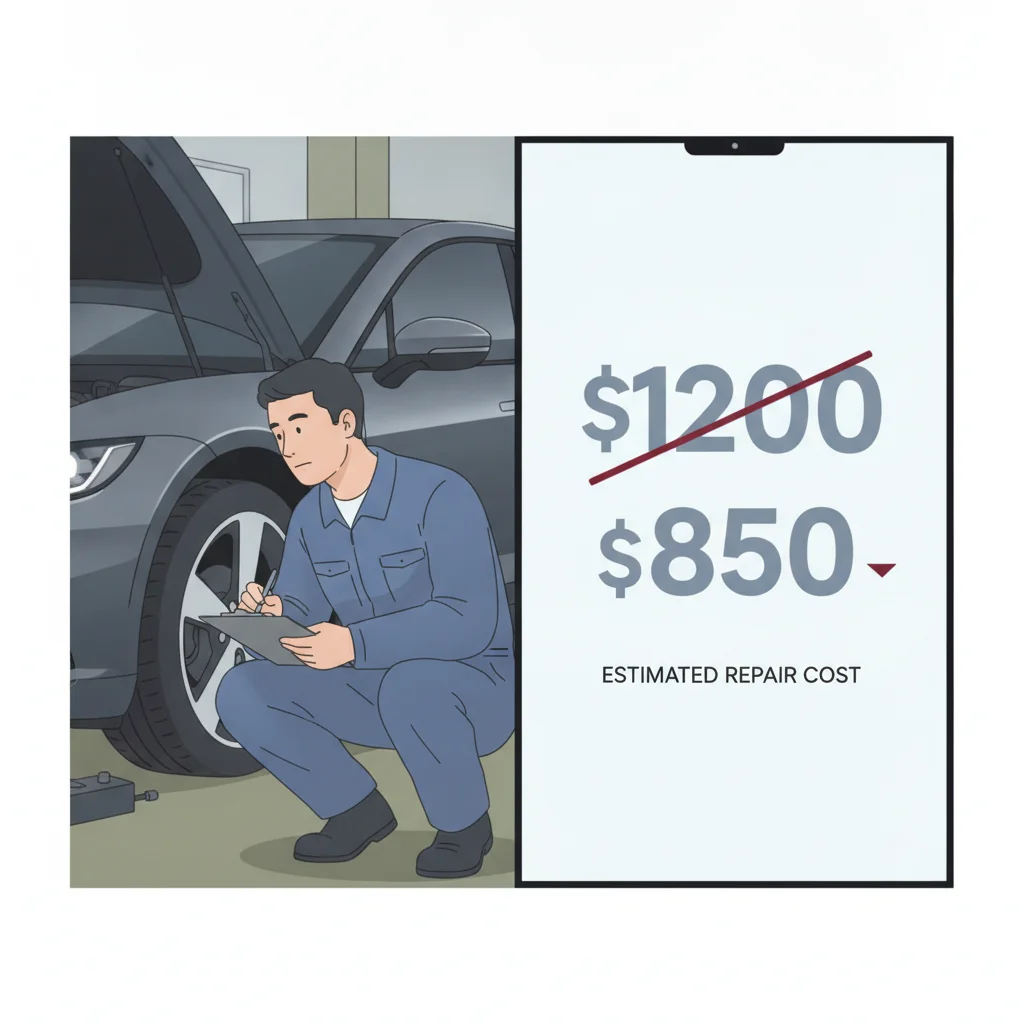
This is one sellers find most frustrating. The online quote is conditional on the car matching the details you provided. At physical inspection, a platform inspector may cite undisclosed damage, prior accidents not reflected in the initial report, or wear items like tires and brakes. These adjustments can reduce your final offer by $200–$1,500 depending on what they find — or claim to find.
Always Get Offers From at Least Three Platforms
There is no single 'market rate' for your car across instant offer platforms — each one prices to its own inventory position and margin target. Spending an extra 30 minutes submitting to CarMax, Carvana, and a local dealer group can realistically add $1,000–$2,500 to your outcome. Always treat the first offer as a data point, not a destination.
Photograph Everything Before the Inspection
Inspection-stage adjustments are how platforms recover margin they couldn't build into the initial offer. Document every panel, the interior, tires, and undercarriage before your appointment. If an adjuster cites damage that doesn't match your photos, challenge it directly — some platforms will reverse deductions when presented with timestamped evidence.
If you're still paying off your vehicle, platforms also coordinate lien payoff — a process with its own nuances. The guide to selling a car with a loan balance covers exactly what to watch for in that payoff coordination process.
The Convenience Premium: Quantifying What You're Paying
Let's put numbers on this. Consider a 2021 Honda CR-V with 38,000 miles in good condition. At the time of writing, a comparable vehicle retails in the $26,000–$28,000 range in most markets. Here's how the money flows:
| Channel | Likely Net to Seller | Estimated Time to Complete |
|---|---|---|
| Private party sale | $25,500–$27,000 | 2–4 weeks |
| CarMax / Carvana offer | $22,500–$24,500 | 1–3 days |
| Dealer trade-in (buying a new car) | $21,000–$23,500 | Same day |
| Wholesale auction equivalent | $19,500–$21,000 | Variable |
The convenience premium — the gap between a platform offer and a private sale — is roughly $2,000–$3,000 on a vehicle in this price range. That's real money. Whether it's worth it depends entirely on how much you value your time, your risk tolerance for dealing with private buyers, and how quickly you need the cash.
$1,500–$3,000
Typical platform gross profit per retail unit
Industry analysts and former platform insiders consistently cite this range as the target gross profit margin on vehicles resold through major instant offer platforms.
10%–20%
Average discount vs. private sale price
iSeeCars and Edmunds research consistently shows instant offer platform payouts averaging 10%–20% below comparable private party transaction prices.
$2,300
Typical spread across competing platform offers
Consumer finance researchers and seller anecdote data suggest the gap between the highest and lowest competing offer on the same vehicle commonly exceeds $2,000.
7 days
Standard offer hold period at major platforms
CarMax, Carvana, and Vroom all hold their offers for approximately 7 days, giving sellers a window to shop competing bids without pressure.
50%–80%
Gross margin on extended warranties sold at resale
F&I product margins are well-documented in dealer financial statements; platform resale operations capture similar margins on service contracts and protection products.
What this table also shows: dealer trade-ins aren't as far behind instant offer platforms as many sellers assume, especially when a dealer is hungry for your specific vehicle. If you're buying a new car simultaneously, the trade-in scenario can be competitive. Compare all options before committing.
How Platforms Decide Your Offer Is 'Fair'
The word "fair" gets used a lot in instant offer marketing. "Fair market value," "no-haggle fair price," "transparent offer." It's worth deconstructing what it actually means in this context.
An offer is fair to the platform if it allows them to acquire, recondition, and resell your vehicle at their target gross profit — typically $1,500–$3,000 per unit at retail, sometimes more. The offer is fair to you only if it meets or exceeds your next best alternative. These are not the same thing.
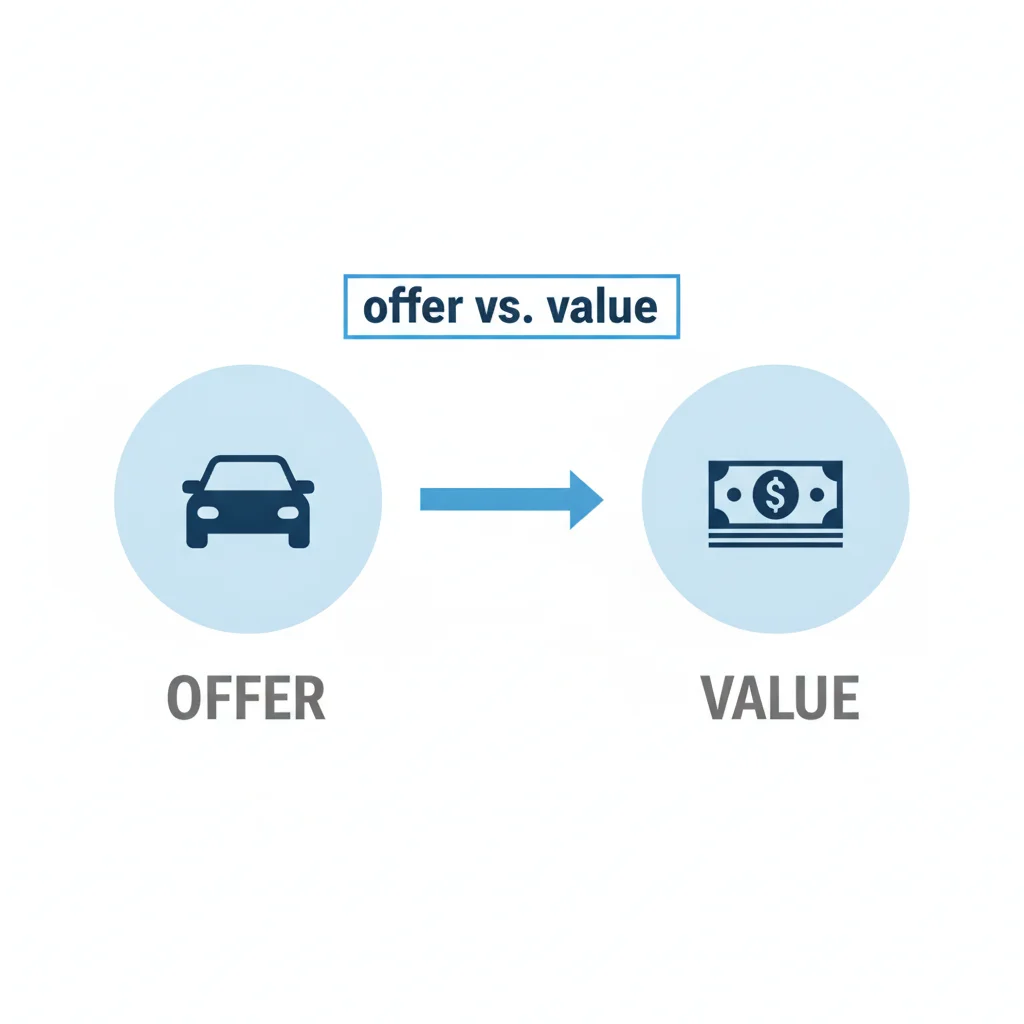
The word "instant" is doing heavy lifting too. You're not getting an instant appraisal of what your car is worth — you're getting an instant offer of what the platform is willing to pay. Those are fundamentally different numbers.
Understanding the gap between an "offer" and "value" is the central insight in what instant cash offer services are really offering you. It reframes how to use these tools strategically rather than as a default endpoint.
Using This Knowledge to Get a Better Outcome
Understanding the business model isn't just academic — it directly informs how to play the process smarter.
Get multiple offers, always
The single most impactful action you can take is submitting to three to five platforms simultaneously. CarMax, Carvana, Vroom, Peddle, and local dealer groups all have competing interests. A spread of $1,500–$2,000 between highest and lowest offer is common on the same vehicle. The highest offer isn't necessarily the best deal either — check hold period lengths and any deduction history at inspection.
Document your car's condition obsessively
Inspection-stage adjustments are where platform margins get padded at your expense. Photograph everything — every panel, the interior, under the hood, the tires — before the physical inspection. If an adjuster claims damage you believe wasn't there or was already disclosed, you have documentation to dispute it. Some platforms will walk back adjustments when challenged with evidence.
Know your floor before you start
Check your car's value on multiple reference tools: Kelley Blue Book Instant Cash Offer, Edmunds True Market Value, and recent sold listings on Facebook Marketplace and Autotrader. Build a realistic sense of private-party value in your zip code. That number becomes your floor. If no platform exceeds it after adjustments, private sale may be worth the effort.
Time your sale strategically
Platform offer algorithms respond to inventory levels and seasonal demand. Spring and summer tend to produce stronger offers on convertibles and outdoor-activity vehicles. Year-end produces better offers on luxury vehicles as dealers clear inventory. If your timeline allows flexibility, understanding demand cycles can add a few hundred dollars to your outcome.

Always Get Offers From at Least Three Platforms
There is no single 'market rate' for your car across instant offer platforms — each one prices to its own inventory position and margin target. Spending an extra 30 minutes submitting to CarMax, Carvana, and a local dealer group can realistically add $1,000–$2,500 to your outcome. Always treat the first offer as a data point, not a destination.
Photograph Everything Before the Inspection
Inspection-stage adjustments are how platforms recover margin they couldn't build into the initial offer. Document every panel, the interior, tires, and undercarriage before your appointment. If an adjuster cites damage that doesn't match your photos, challenge it directly — some platforms will reverse deductions when presented with timestamped evidence.
For a full walkthrough of the end-to-end process — from getting your first offer to handing over the title — the complete guide to selling to an instant offer platform covers every stage in detail.
Consider the private market as your benchmark, not your backup
Many sellers treat private sale as a fallback if platforms disappoint. Flip that thinking. Start by listing on private party sale channels to get real buyer feedback on price. If offers come in and you don't love the process, pivot to the instant offer that's closest to your private-market data point. You'll negotiate from a position of actual information rather than platform-framed expectations.
When Instant Offer Platforms Are the Right Call
This article isn't an argument against using instant offer platforms. For the right seller, in the right situation, they're genuinely useful tools. The key is choosing them consciously — not by default because the marketing made it feel frictionless.
Instant offer platforms make clear sense when:
- Your car has high mileage, mechanical issues, or cosmetic damage that would make private sale slow and unpredictable
- You need cash in hand within 48–72 hours and private sale timelines don't fit your situation
- You're relocating and can't manage a private sale process from a distance
- The vehicle is unusual enough that buyer demand in your local private market is genuinely thin
- Your time has real dollar value and spending 10–20 hours on a private sale to net $1,500 more doesn't pencil out
They make less sense when you have a clean, in-demand vehicle in a liquid market, a few weeks of flexibility, and the patience to field buyer inquiries. In that scenario, the $2,000–$3,000 you leave on the table is a high price for convenience you didn't need.
Offers Reflect Wholesale Logic, Not Retail Value
The price an instant offer platform quotes you is closer to a wholesale auction price than a retail market value. The platform's algorithm is calibrated to what it costs them to acquire, recondition, and resell — not to what Kelley Blue Book or Edmunds shows as a consumer-to-consumer transaction price. Keep that distinction in mind when evaluating whether an offer is 'good.'
Hold Periods Matter More Than They Seem
Most platforms hold their offer for 7 days from the quote date. This window is your leverage window — use it to get competing bids and, in some cases, present a better competing offer back to your preferred platform. Some will match or come close. The hold period is not just a consumer convenience; it's also a useful negotiating tool.
Platform Offers Are Not Appraisals
A common seller mistake is treating an instant offer as an appraisal of what their car is worth. It is not. It is a conditional bid that reflects what one buyer — with specific margin requirements and inventory needs — is willing to pay at that moment. Your car's actual market value may be meaningfully higher, particularly in a private sale context.
Whatever you decide, go in with open eyes. The platforms are well-built, the process is genuinely easy, and the people running them are good at their jobs. They're just good at their jobs in a way that benefits them — and understanding that is what makes you a smarter seller.

All claims are backed by peer-reviewed research. Sources on request.