Key Takeaways
Why a Lien Complicates a Car Sale
When you finance a car, your lender — whether a bank, credit union, or dealership's financing arm — becomes a lienholder on the vehicle's title. That means the lender has a legal claim on the car until you've repaid the loan in full. The physical title (or the electronic title record in states that use e-titles) reflects that claim. You can't hand clean, clear ownership to a buyer until the lien is removed.
This doesn't mean you're stuck keeping the car until the loan is paid off on its own schedule. It means you need a plan. Thousands of sellers successfully close deals on financed cars every month — they just have to take a few extra steps compared to someone selling a car they own outright.
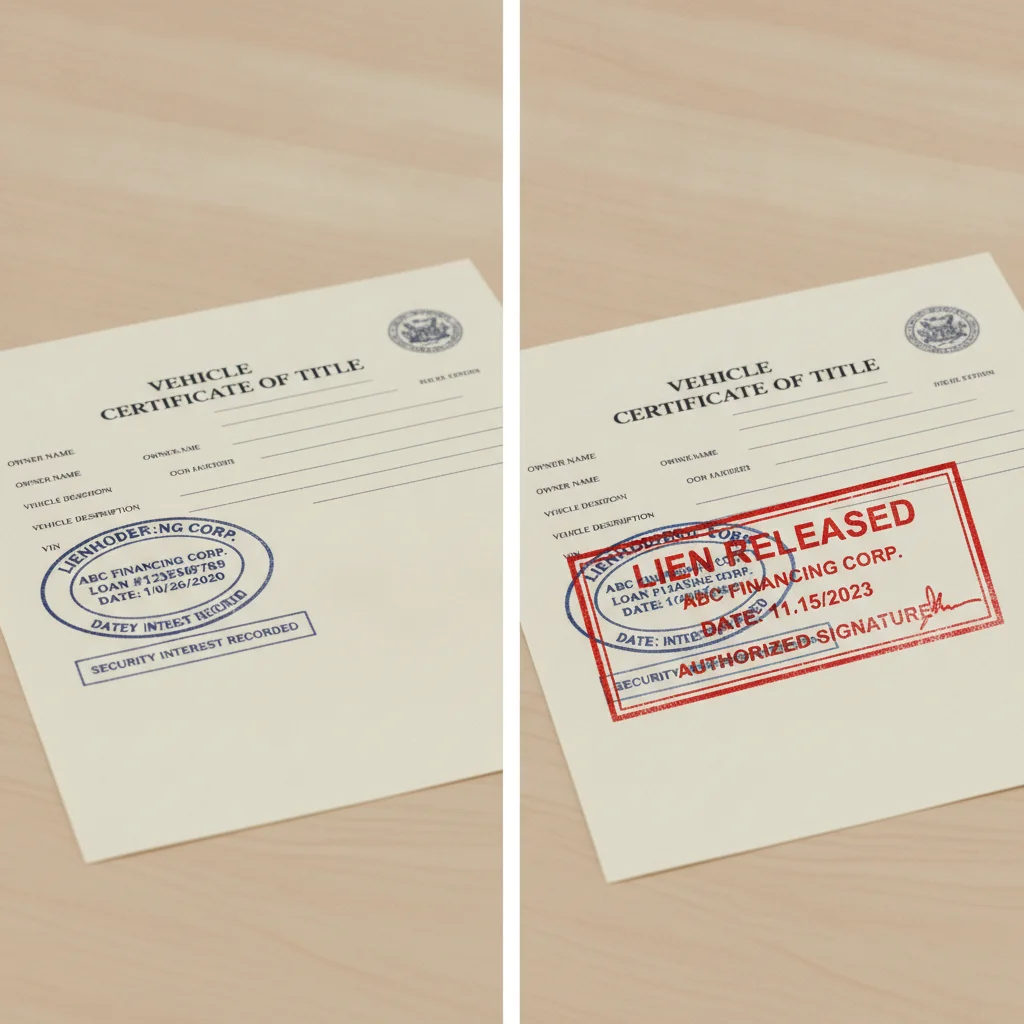
The core problem is timing: the buyer needs the title to register the car, but you can't get a clean title until the lender is paid off, and the lender typically won't get paid until the sale closes. You'll need to sequence these events carefully — or use one of the structured methods below that handle it for you.
It's also worth understanding the difference between your current balance and your payoff amount. Your current balance is what you owe as of today. Your payoff amount is the exact figure required to fully satisfy the loan as of a specific future date, including any accrued interest through that date. Always request a formal payoff quote from your lender — not just a balance statement — before committing to a sale price.
What You Need Before You Start
Before you list the car or agree to any price, gather the documents and information that will drive every subsequent step. Being prepared here prevents delays that can spook buyers or cause a deal to fall through.
What you will need
Once you have these items in hand, you'll have a complete picture of your financial position relative to the car. If the car's market value exceeds the payoff amount, you have positive equity and the sale is straightforward. If the payoff amount exceeds the car's value, you're underwater (also called being upside-down), and you'll need to cover the difference out of pocket or through other financing. Knowing this before you list prevents surprises at the closing table.
Lender Payoff Quote
Documents the exact amount needed to satisfy your loan as of a specific date — the foundation of every financial calculation in this sale.
Vehicle Title (or E-Title Confirmation)
The legal document of ownership that must be signed over to the buyer once the lien is cleared.
Bill of Sale
Creates a written record of the transaction including price, date, and both parties' information — protects both seller and buyer.
Cashier's Check or Wire Transfer Instructions
Certified funds ensure the payoff reaches the lender without risk of a bounced payment delaying the lien release.
State DMV Seller's Disclosure Form
Documents required disclosures about the vehicle's condition, history, and odometer reading as required by your state.
Auto Escrow Service
Holds buyer funds securely until the lien is confirmed released, protecting both parties in higher-value or higher-risk transactions.
Vehicle History Report (Carfax or AutoCheck)
Confirms title status, accident history, and odometer records — useful for building buyer confidence and justifying your asking price.
Three Paths for Selling a Liened Vehicle
There's no single right way to sell a car with an outstanding loan. The best method depends on your equity position, your buyer type, and how quickly you need the transaction to close. Here's an honest breakdown of each option.
Path 1: Pay Off the Loan Before the Sale
If you have the funds available — from savings, a personal loan, or another source — you can pay off the lien entirely before listing the car. Once the loan is satisfied, your lender will release the lien and either send you a clean title or update the electronic title record with your state's DMV. The sale then proceeds exactly like any other private sale.
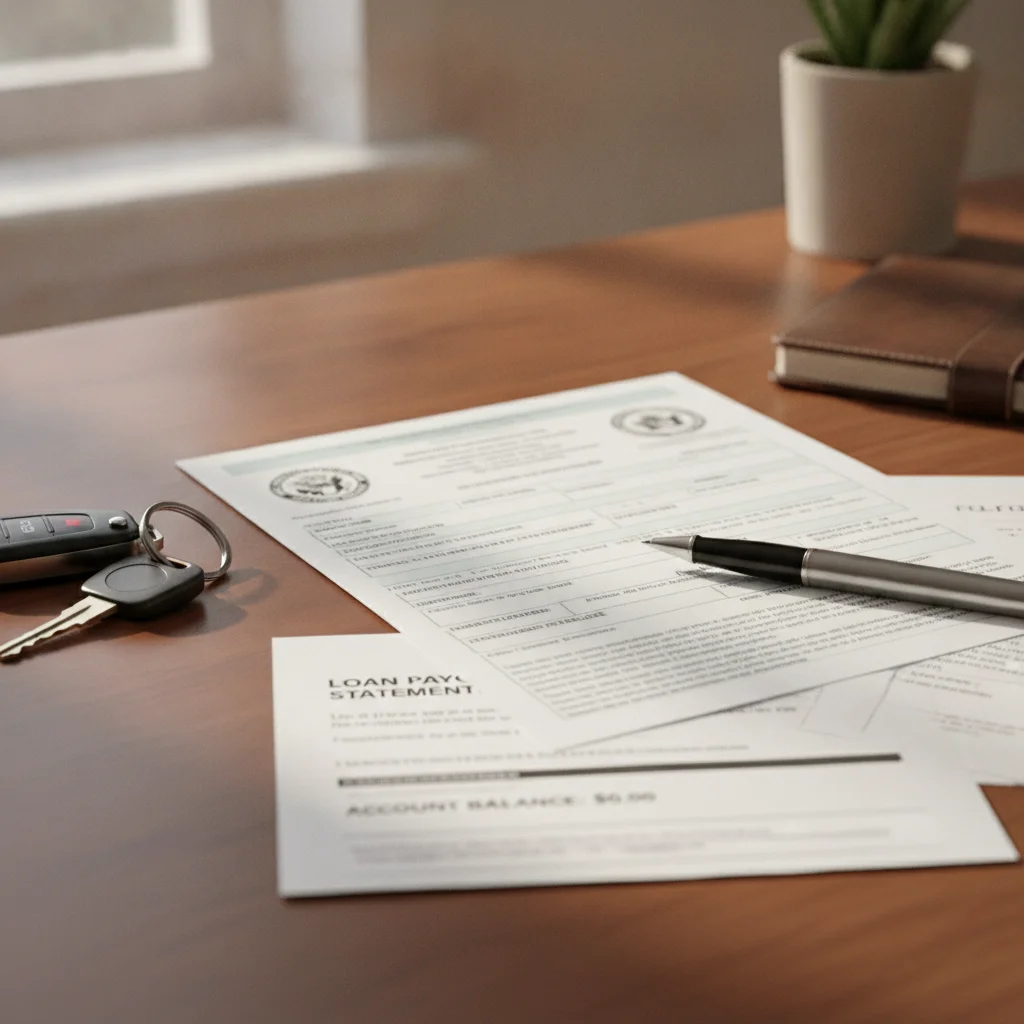
This path is the cleanest for the buyer and easiest to manage, but it requires having liquid funds you won't recover until the car sells. See our guide to confirming your loan is fully paid off to make sure you get the lien release documents — not just a zero-balance statement — before you proceed.
Path 2: Coordinate Payoff at Closing (Private Sale)
This is the most common approach for private sellers who don't have funds to pre-pay the loan. The buyer pays the lender directly for the payoff amount, and any remaining equity goes to you — or you pay the shortfall if you're underwater. This takes careful coordination and trust-building with the buyer. We cover the mechanics in detail in the step-by-step section below.
For a deeper look at how this plays out specifically in private transactions, our article on selling a financed car to a private buyer walks through common scenarios and complications.
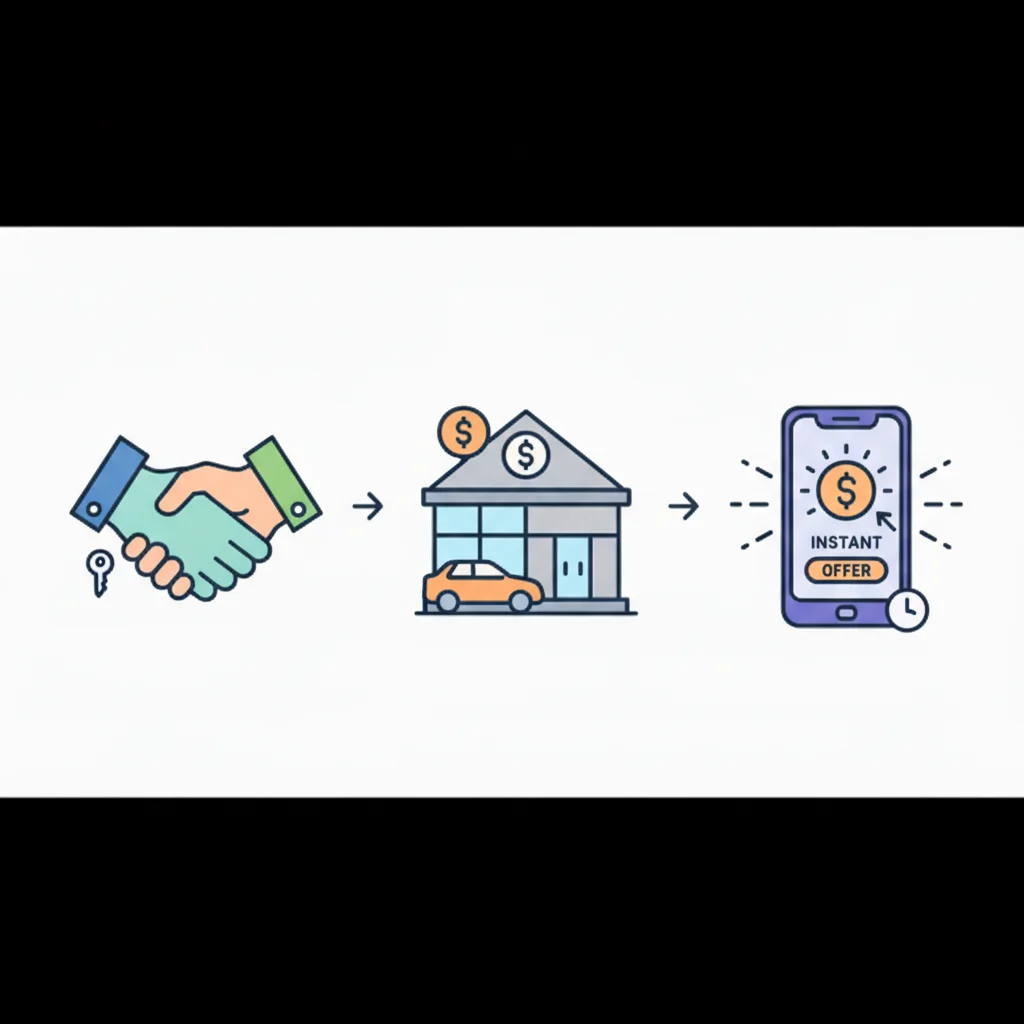
Path 3: Sell to a Dealership or Instant Offer Platform
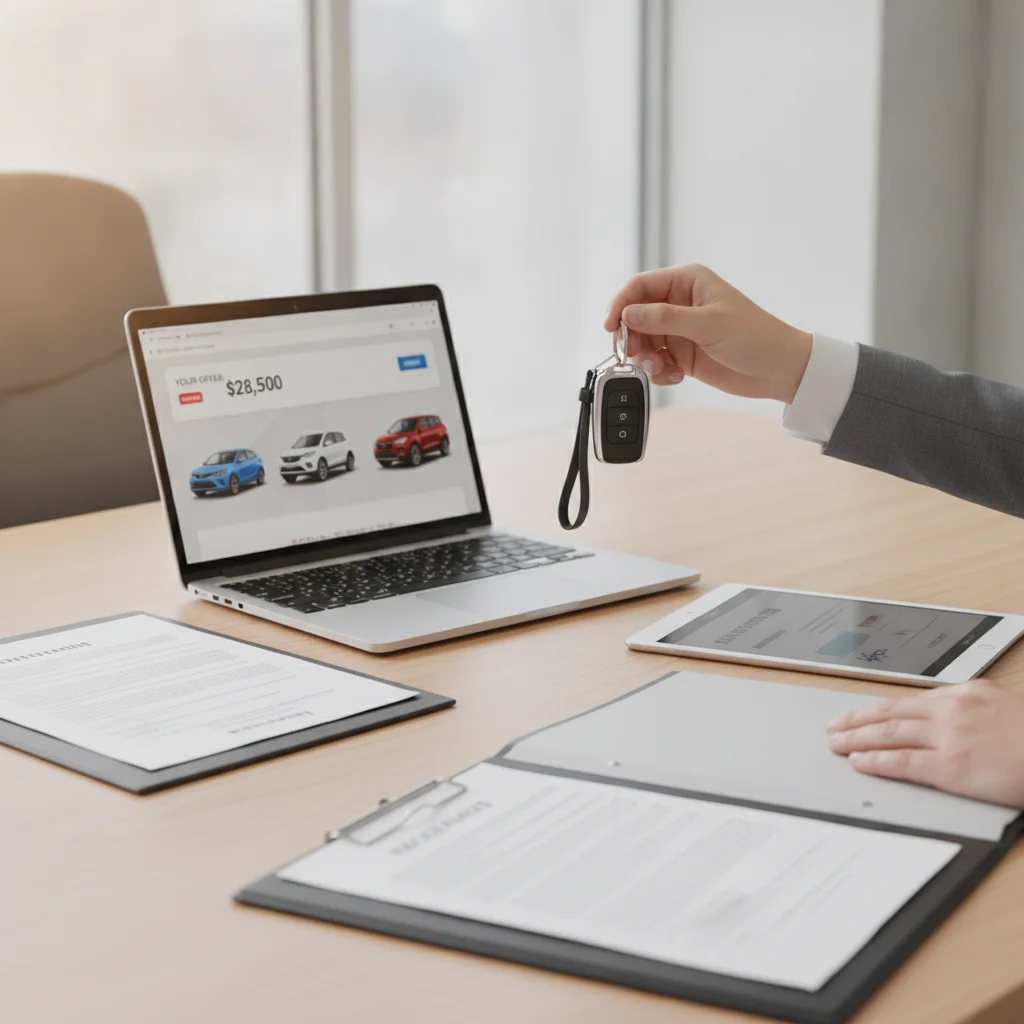
Dealerships and instant offer platforms (like CarMax, Carvana, or similar services) buy financed cars routinely. They have established processes for paying off liens directly and will handle most of the paperwork. This is the lowest-friction option, though you typically receive less than you would through a private sale.
If this route interests you, read our breakdown of how payoff coordination works with instant offer platforms before you accept any offer.
Step-by-Step: Selling a Liened Car in a Private Sale
The steps below cover the most complex scenario — a private sale with lien payoff at closing. If you're selling to a dealer or instant offer platform, skip to Step 6, since the platform will handle Steps 3–5 on your behalf.
Request a Formal Payoff Quote From Your Lender
Call your lender or log into your account portal and request an official payoff quote — not just your current balance. Specify the date you expect the sale to close (or request a 30-day payoff quote to give yourself a buffer). The lender will provide a figure that's valid through a specific date, including interest that will accrue through that date.
Ask the lender to confirm:
- The exact payoff amount valid through your target date
- The mailing address or wire instructions for the payoff funds
- How long after payoff they will release the lien
- Whether they'll issue a lien release letter before mailing or updating the physical title
Set Your Sale Price Based on Equity, Not Just Market Value
Use the payoff quote to determine your equity position. Subtract the payoff amount from the car's realistic market value (use current listings on similar vehicles as your benchmark).
- Positive equity: The car is worth more than the payoff. The buyer pays the full price, the lender gets the payoff amount, and you pocket the difference.
- Negative equity (underwater): The payoff exceeds the car's value. You'll need to cover the gap yourself. Factor this into your asking price negotiations honestly — trying to hide the shortfall will cause problems at closing.
If you're underwater and can't cover the difference in cash, consider whether a personal loan to bridge the gap makes sense, or whether selling to a dealer (who may have more flexibility on the transaction structure) is a better fit.
Disclose the Lien to the Buyer Upfront
Tell the buyer about the outstanding loan before they agree to purchase. Springing it on them at closing is a deal-killer and may expose you to fraud claims in some states. Most buyers who understand car financing won't be alarmed by a lien — it's extremely common — as long as you have a clear plan for satisfying it.
Explain which closing method you're proposing (see Step 4) and provide the buyer with a copy of your payoff quote so they can verify the numbers independently.
Choose and Execute a Closing Method
There are two reliable structures for a private sale with a lien:
Method A: Buyer Pays Lender Directly
- The buyer sends the payoff amount directly to your lender (via cashier's check or wire transfer payable to the lender).
- If there's remaining equity, the buyer pays the difference to you separately.
- You sign the title over to the buyer (or complete a title assignment form in e-title states).
- The lender confirms payoff and releases the lien.
- The buyer uses the lien release to complete their title transfer at the DMV.
Method B: Close Through a Third Party (Escrow or DMV)
In some states, you can conduct the transaction at the DMV branch or through an auto escrow service. The funds are held in escrow until the lien is confirmed paid, at which point the title transfers and the funds are released. This method costs more (escrow fees apply) but provides the strongest protection for both parties, especially for high-value vehicles or buyers and sellers who don't know each other.
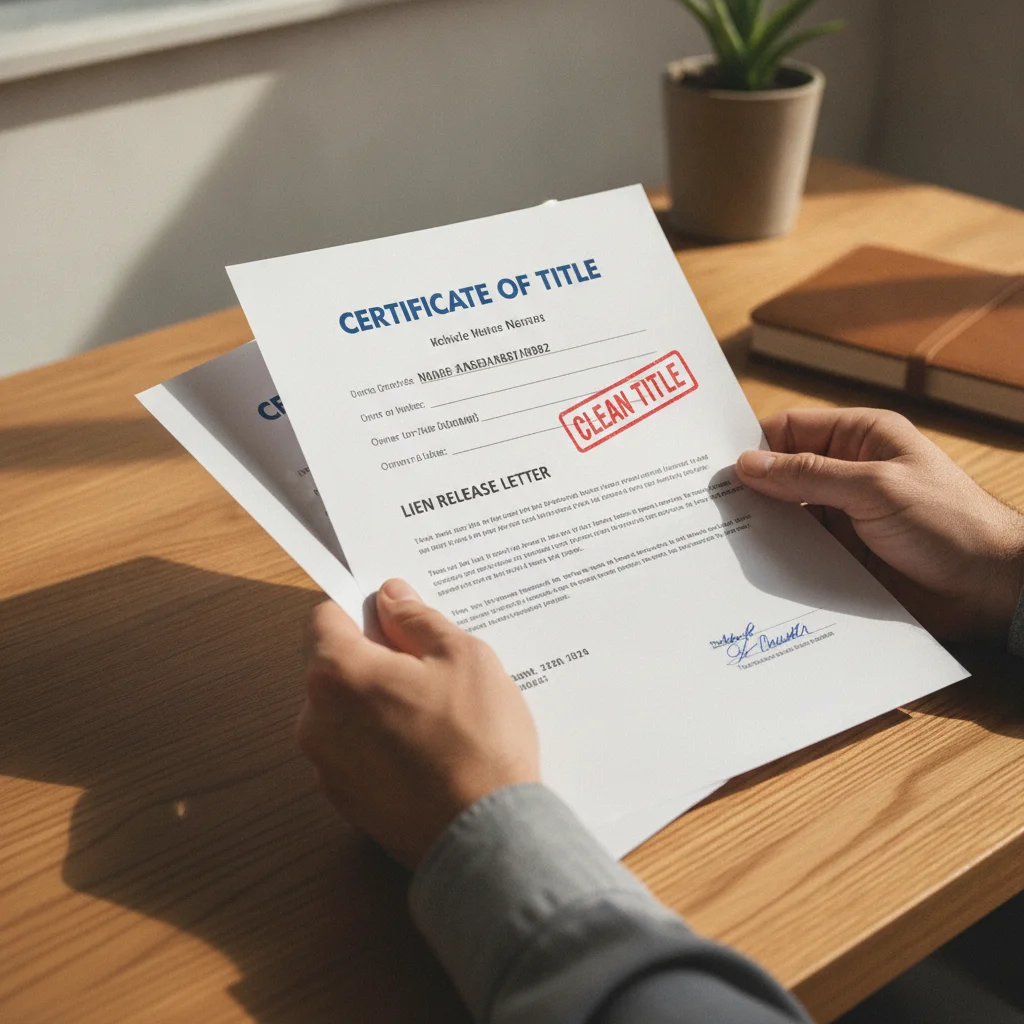
Obtain the Lien Release and Assign the Title
Once the lender confirms receipt of the payoff funds, they will release the lien. Depending on your state and lender, this may mean:
- They mail a paper title to you (or directly to the buyer) with the lien stamp removed or the lienholder section left blank
- They send a separate lien release letter you can use alongside the existing title
- They update the electronic title record at the state DMV directly
If you receive a paper title, sign it exactly as your name appears on the title — no abbreviations, no initials if the title uses your full name. Complete the odometer disclosure section accurately. In most states you'll also fill in the buyer's name, the sale date, and the sale price.
Provide the buyer with the signed title (or lien release letter in e-title states), the bill of sale, and any other state-required transfer documents.
File a Notice of Transfer With Your State DMV
Immediately after signing over the title, file a Notice of Transfer (sometimes called a Release of Liability) with your state DMV. This document officially informs the state that you are no longer the owner of the vehicle as of the sale date.
In most states this can be done online through the DMV's website within minutes. Some states require a mailed form. Either way, keep a dated copy of the submission confirmation.
This step is what protects you if the buyer drives recklessly, gets a speeding ticket, or fails to register the car for months. Without a filed Notice of Transfer, you may remain the owner of record — and legally on the hook — until the buyer completes their registration.
State-by-State Disclosure and Title Rules
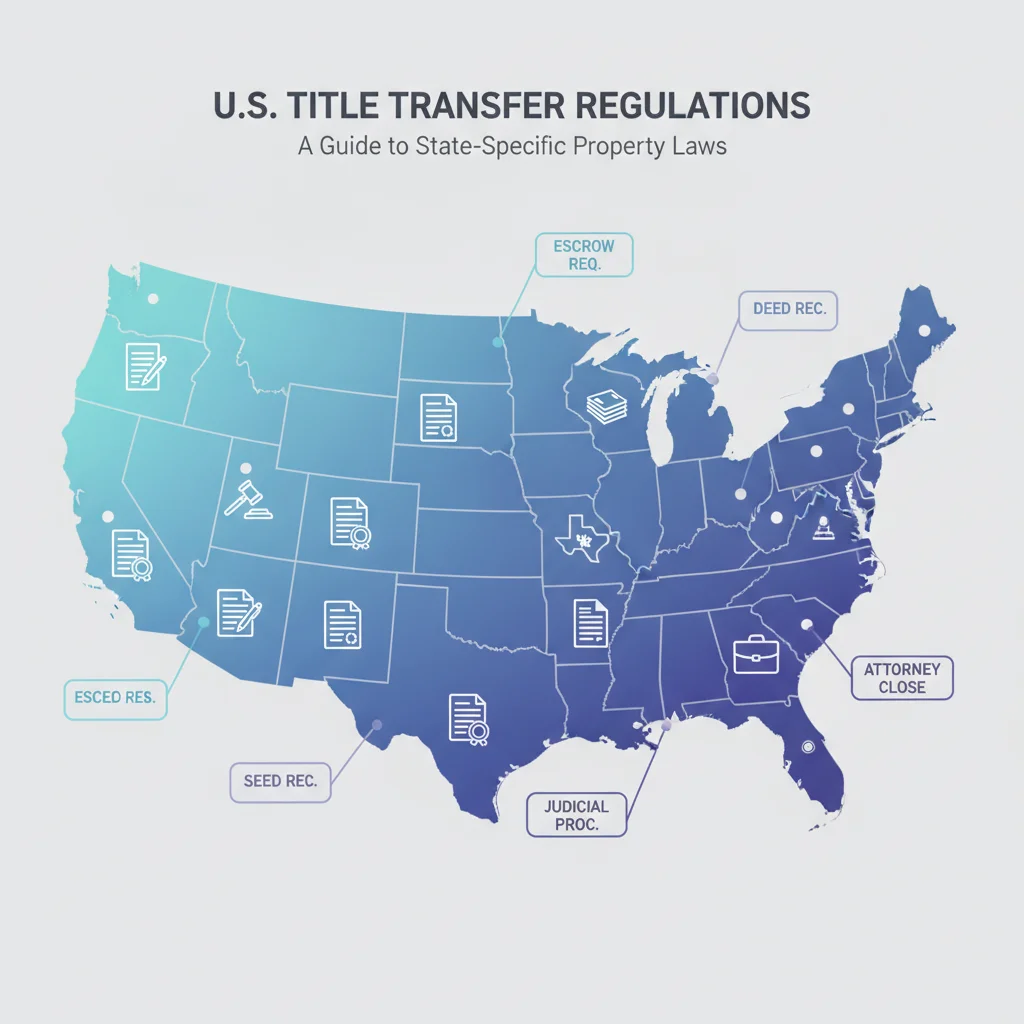
Title transfer rules and seller disclosure requirements aren't uniform across the country. What's standard practice in one state may be legally required — or handled entirely differently — in another. Here's what to watch for.
Electronic Titles vs. Paper Titles
Many states have moved to electronic title systems, meaning there's no physical document to hand over at closing. Instead, the lender notifies the state DMV electronically when the lien is released, and the title record is updated in the state database. The buyer then applies for a new title in their name through the DMV. If you're in an e-title state, make sure you understand what documentation substitutes for a physical title at the point of sale — typically a lien release letter and a bill of sale.
Seller Disclosure Requirements
Most states require sellers to disclose known material defects that affect the vehicle's safety or value. Some states go further, requiring written disclosure of accident history, odometer readings (federal law mandates odometer disclosure on vehicles under 10 years old), and any branded or salvage title history. Check your state DMV's website for the specific disclosure form required in your state — many have a standard seller's disclosure form you must complete.
Title Transfer Timelines
States typically give buyers a window — often 10 to 30 days — to transfer the title into their name after purchase. As a seller, you should understand that until the buyer completes this step, the car may still show up in DMV records as yours. To protect yourself, file a Notice of Transfer (or its equivalent in your state) with the DMV immediately after the sale. This document notifies the state that you are no longer the owner and limits your liability for anything that happens with the vehicle after the sale date.
Failing to take this step can create serious headaches — including toll violations, parking tickets, and even liability in accidents — showing up in your name long after you've handed over the keys. Our article on what happens when you skip the title transfer explains exactly what's at risk.
Lien Release Timing by Lender
After you pay off the loan, lenders have varying timelines for releasing the lien. Many release within 5 to 10 business days, but some can take 3 to 4 weeks. If you're coordinating payoff at closing and the buyer needs to register the car quickly, discuss lender timelines upfront. Some lenders will provide a lien release letter within a few business days even if the physical title update takes longer — and that letter is typically sufficient for the buyer to begin the registration process.
After the Sale: Confirm the Lien Is Gone
Closing the deal isn't quite the finish line. Take these final actions to protect yourself and confirm the transaction is truly complete.
First, verify with your lender that the payoff was received and the loan is officially closed. Don't rely on a confirmation email alone — call and ask them to confirm in writing that the account balance is zero and the lien has been released. Our guide on confirming your auto loan is fully paid off covers exactly what to request and how to follow up if the lender is slow to respond.
Second, file your Notice of Transfer with your state DMV if you haven't already. Keep a copy of the dated, signed bill of sale in your records for at least three years. If a dispute arises about ownership, your liability, or the condition of the car at time of sale, this document is your primary protection.
Third, cancel your auto insurance on the vehicle — but only after the title has been transferred and you've filed the Notice of Transfer. Canceling insurance before the transfer is complete leaves you exposed if something happens with the car before the paperwork clears.
Don't Cancel Insurance Too Soon
Cancel your auto insurance on the vehicle only after the title has been transferred into the buyer's name and you've filed your Notice of Transfer with the DMV. Canceling earlier creates a gap in coverage during which you could still be held liable if the car is involved in an incident before the paperwork clears.
Finally, keep an eye on your credit report over the following 30 to 60 days. The paid-off loan should appear as "closed" and with a zero balance. If the lien doesn't show as satisfied, or if any unusual activity appears related to the vehicle, contact your lender and the credit bureaus promptly. A properly completed sale, with all paperwork filed, should leave no loose ends on your credit file or your DMV record.
For additional guidance on completing a clean, legally valid title handover once the lien is cleared, see our detailed walkthrough on how to transfer a car title correctly in a private sale.
Keep All Sale Documents for Three Years
After the sale is complete, store the bill of sale, your copy of the signed title, the lien release letter, and your DMV Notice of Transfer confirmation in a secure location for at least three years. These documents are your defense against any future dispute about ownership, liability, or the vehicle's condition at time of sale.
Lender Timelines Vary — Ask Early
Some lenders release liens within 5 business days of payoff; others take 3 to 4 weeks. If your buyer needs to register the car quickly — for insurance or work purposes — ask your lender upfront about their lien release timeline. Request a lien release letter as a faster interim solution while the official title update processes.

All claims are backed by peer-reviewed research. Sources on request.