Key Takeaways
Summary
24 items · 45–90 minutes
Why Preparation Changes the Number You See
Instant-offer tools — Carvana, CarMax, Vroom, Peddle, and the dealer-powered equivalents — make selling a car feel frictionless. Enter a VIN, answer a dozen questions, get a dollar amount. Simple. What the platforms don't advertise is that the algorithm is only as accurate as what you feed it.
Every field you fill out is a pricing input. Mileage, condition grade, accident history, trim level, optional packages — these aren't just administrative details. They map directly to the depreciation model running behind the interface. Enter "good" when your car honestly qualifies for "excellent," and you leave money on the table. Enter "excellent" when it doesn't, and you create a gap between your online quote and the in-person inspection that gives the buyer grounds to revise the offer downward — sometimes dramatically.
I spent years on the dealership side watching buyers show up with inflated expectations because they'd misread a condition rubric or forgotten about a loan payoff they hadn't accounted for. The platform offer becomes a ceiling; the revised offer at pickup becomes the actual number. The way to close that gap is to get your ducks in a row before you ever type in your VIN.
This checklist walks you through exactly that process. Work through it in order — the early steps inform the later ones. By the time you submit, you'll know what your car is worth, what will be visible at inspection, and what documentation protects your position if the buyer tries to chip away at the quote.
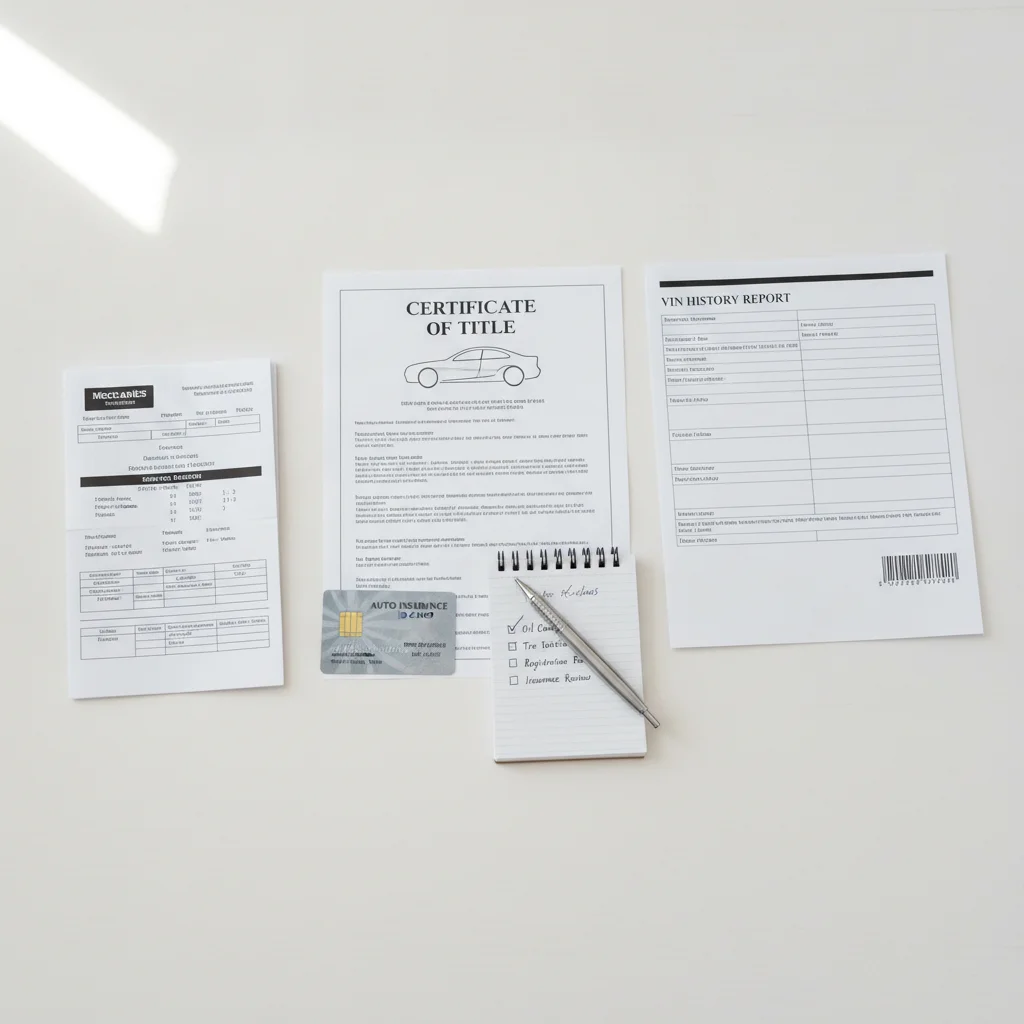
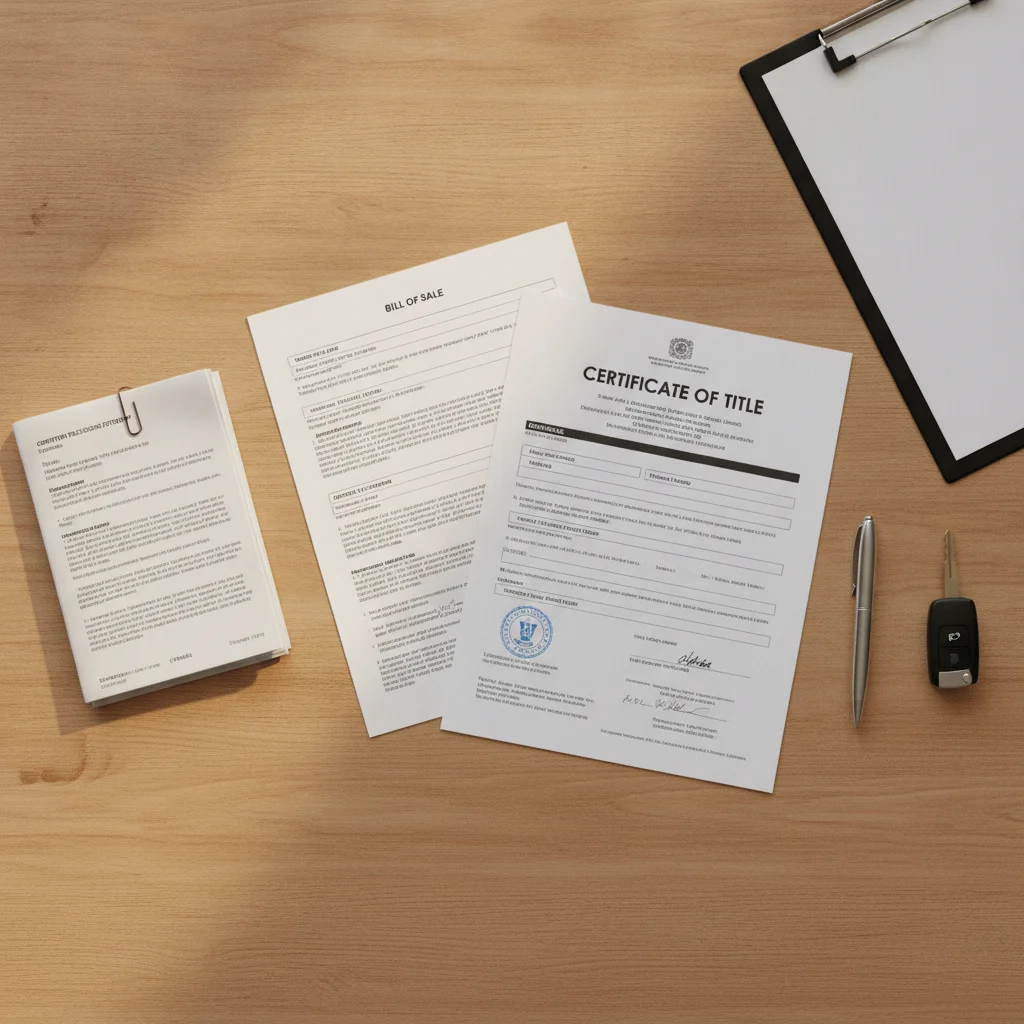
For a broader look at the documents you'll eventually need to transfer ownership, see every document you need before listing your car for sale. That article covers title, bill of sale, and transfer requirements — all of which become relevant once you accept an offer.
Tools and Resources You'll Need
Before you start, pull these together. Some are free, some require a small fee — all of them are worth it relative to the dollars at stake.
Carfax or AutoCheck
Pull your own vehicle history report before platforms do — know the accident record, title status, and odometer history you'll be disclosing against.
NHTSA Recall Lookup (nhtsa.gov)
Check for open safety recalls by VIN — unrepaired recalls can reduce offers or complicate the transaction.
KBB Instant Cash Offer / Edmunds Appraisal Tool
Establish an independent valuation baseline before submitting to any instant-offer platform so you can judge whether offers are competitive.
VIN Decoder (free tools at vincheck.info or your automaker's site)
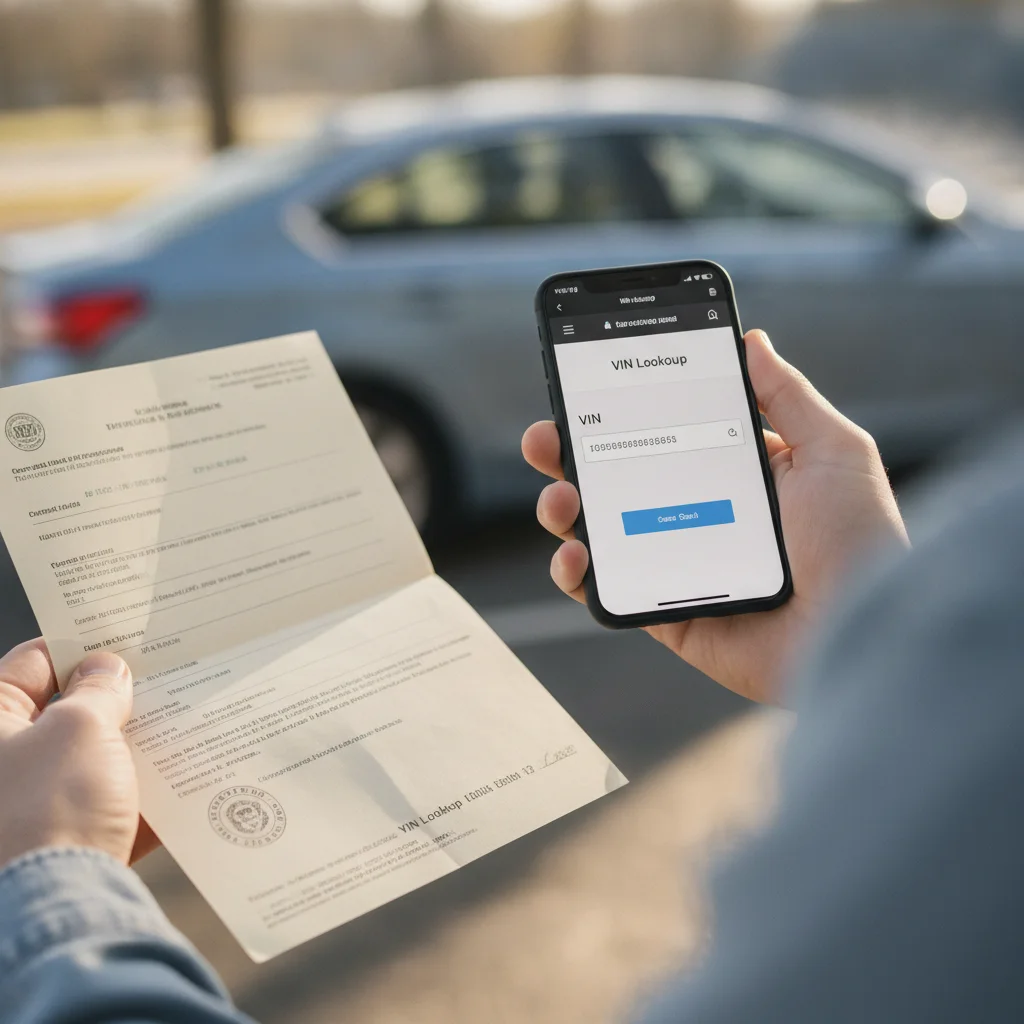
Confirm exact trim level and factory options from the VIN string — critical for accurate platform inputs.
Lender Payoff Portal or Customer Service Line
Obtain a written 10-day payoff quote so you know your net proceeds from any offer before accepting.
Tire Tread Depth Gauge
Measure remaining tread on all four tires accurately — a $5 tool that supports your condition grade selection.
Smartphone Camera with Timestamp
Document exterior and interior condition with dated photos that serve as evidence if an inspector's assessment differs from your submission.
Physical Folder or Cloud Storage for Documents
Organize title, service records, warranty paperwork, and receipts so they're ready to present at inspection or upload to platforms that request supporting documentation.
The Pre-Submission Checklist
Work through each group below before opening the offer platform. Groups are ordered by dependency — vehicle identity data must be confirmed before condition can be accurately graded, and condition must be graded before you can benchmark your offer against market comparables.
Vehicle Identity Verification
Title and Loan Status
Accident and History Review
Condition Assessment
Documentation Assembly
Market Benchmarking
"Guaranteed" Offers Have Conditions
Every instant-offer platform's guarantee is conditional on your vehicle matching the condition you described. If an inspector finds damage, mechanical issues, or history discrepancies you didn't disclose, the platform has contractual grounds to revise the offer. In practice, revisions of $500–$2,500 are common when sellers select a condition grade higher than what the car actually merits. This checklist exists to prevent that gap.
Submitting Incomplete Loan Information Delays Closing
If you have an outstanding auto loan and submit without a current payoff figure, the transaction will stall at closing while the platform verifies the payoff amount with your lender. This can cause your offer to expire before the deal closes. Get the payoff quote in writing before you submit — not after you accept.
One thing worth noting on condition grades: every platform defines "good," "very good," and "excellent" slightly differently. Read the platform's own rubric — not a generic definition — before selecting a grade. A car with a single door ding may qualify as "good" on one platform and "fair" on another. The rubric definitions are usually buried in the FAQ; find them before you answer the condition question.
If you're also considering a private sale alongside instant offers, the pre-listing checklist for private sales covers how to pull comparable active listings in your zip code — a step that's equally useful here as a sanity check on your instant offer.
What Happens When the Inspector Shows Up
Most instant-offer platforms describe their quote as "guaranteed" — but that word has an asterisk. The offer is guaranteed subject to the condition of the vehicle matching what you described. The in-person inspection exists specifically to close the gap between your self-reported inputs and what an experienced appraiser sees in 20 minutes.
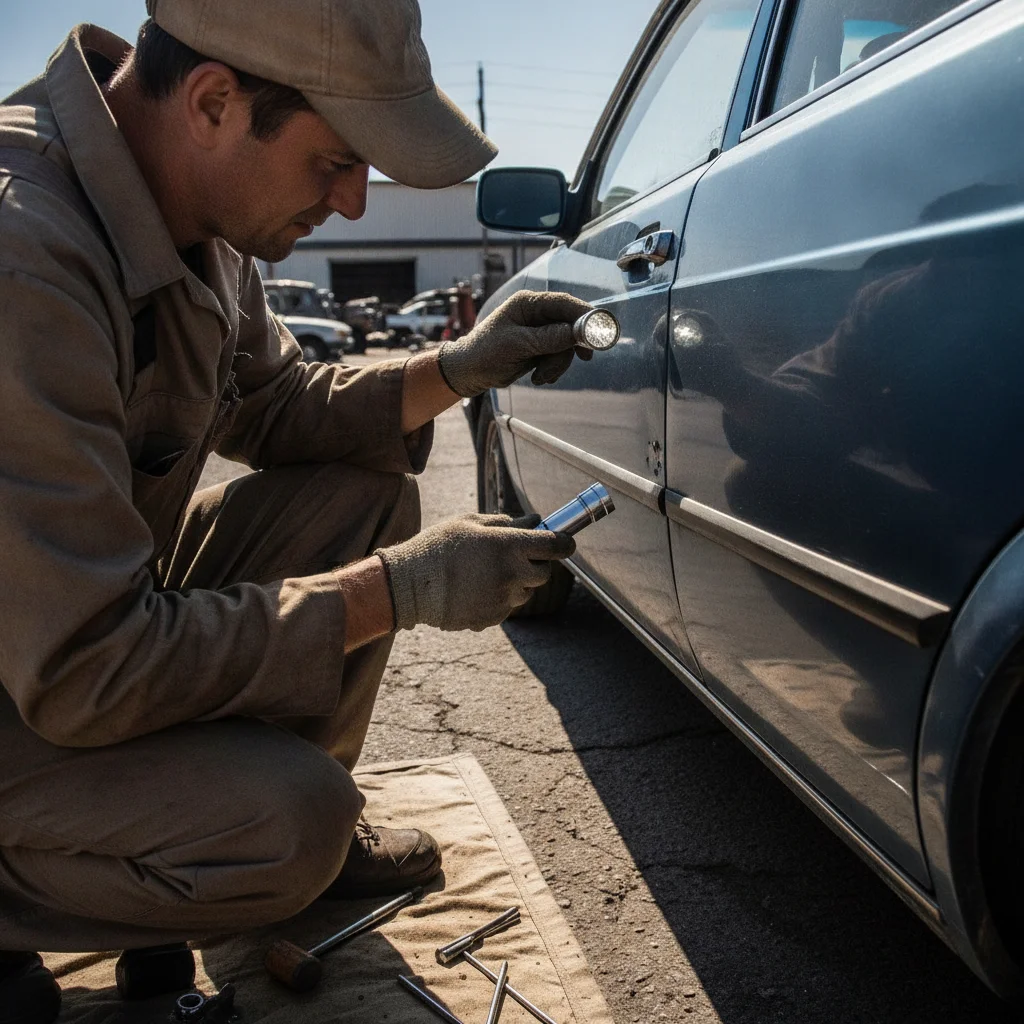
Here's what inspectors are trained to find:
- Paint thickness variations that suggest repainted panels, even if the damage predates your ownership and wasn't in a reported accident
- Frame or unibody irregularities caught with a straightedge or alignment check
- Mechanical sounds during a short test drive — transmission shudder, brake pulsation, suspension clunks
- Interior odors that photos don't capture: smoke, mildew, pet
- Tire tread depth and uneven wear patterns that signal alignment or suspension issues
None of these are deal-killers on their own, but each one is a line item the buyer will use to justify a price reduction. Your checklist preparation doesn't prevent inspection findings — it ensures that what the inspector finds matches what you already disclosed, which removes the psychological leverage of "surprise." When you've already documented the door ding and priced it into your condition grade, there's nothing to renegotiate.
Non-Disclosure Is Not a Gray Area
Knowingly misrepresenting your vehicle's accident history, title status, or mechanical condition to an instant-offer platform is fraud. Most platforms run a VIN history check and conduct an in-person inspection specifically to verify your disclosures. If significant discrepancies are found after you've accepted an offer and scheduled a pickup, the platform can rescind the transaction entirely — and in some states, sellers face civil liability. Disclose everything; if something reduces your offer, that reduction reflects the car's actual market value.
Rebuilt and Salvage Titles Are a Hard Stop on Most Platforms
Carvana, CarMax, and most major instant-offer services will not purchase vehicles with salvage, rebuilt, or flood titles through their standard offer flow. If your title carries one of these designations, attempting to sell through an instant-offer platform without disclosure is not just a bad strategy — it's illegal misrepresentation. Your realistic channels are specialized salvage buyers, dealers who handle non-clean titles, or private-party sales with full disclosure. Know your title status before you waste time submitting.
The documentation you've assembled — service records, photos, warranty paperwork — is also your strongest asset at this moment. A well-organized paper trail can support a higher appraisal by demonstrating that maintenance was performed on schedule and that the car was cared for. Handing an inspector a folder of service records changes the dynamic; it signals you're a serious, informed seller.
Getting Multiple Offers Before You Commit
No single instant-offer platform has a monopoly on fair pricing. Each one runs its own algorithm, sources inventory for different markets, and has different retail margins baked in. The spread between the lowest and highest offer on the same vehicle can run $1,000 to $3,000 — sometimes more on trucks and SUVs in high-demand markets.
The right move is to submit to at least three platforms simultaneously, using the same condition grade and mileage across all of them. Offers from most platforms are valid for 7 days; a few extend to 30. Use that window to compare, not to stall.
Here's a simple comparison framework:
| Platform | Offer Amount | Offer Expiry | Pickup / Drop-off | Payoff Handled? |
|---|---|---|---|---|
| Platform A | $___ | ___ days | Home / Branch | Yes / No |
| Platform B | $___ | ___ days | Home / Branch | Yes / No |
| Platform C | $___ | ___ days | Home / Branch | Yes / No |
The "Payoff Handled?" column matters if you have a loan. Some platforms pay the lender directly and cut you the equity difference; others pay you and expect you to handle payoff yourself. The mechanics affect your net proceeds and your timeline.
For sellers who want a comprehensive view of how to position themselves across every sale channel — not just instant offers — the full pre-sale checklist for instant offer platforms covers channel selection, timing strategy, and closing logistics in detail.

One more calibration step: use the offer you receive to cross-check your own valuation research. If Kelley Blue Book's instant cash offer and Edmunds' appraisal tool are both in a similar range, and a platform comes back significantly below, that's a signal — not necessarily a reason to walk away, but a reason to understand why. Geographic demand, the platform's current inventory levels, and their retail reconditioning costs all factor in. Sometimes the low offer reflects their business model, not your car's actual value.
For a deeper look at how to accurately document and input your car's condition before running any valuation, best practices for documenting your car's condition walks through the honest self-assessment process step by step.

All claims are backed by peer-reviewed research. Sources on request.