Key Takeaways
Summary
22 items · 45–90 minutes
Why Documentation Moves the Needle at Appraisal Time
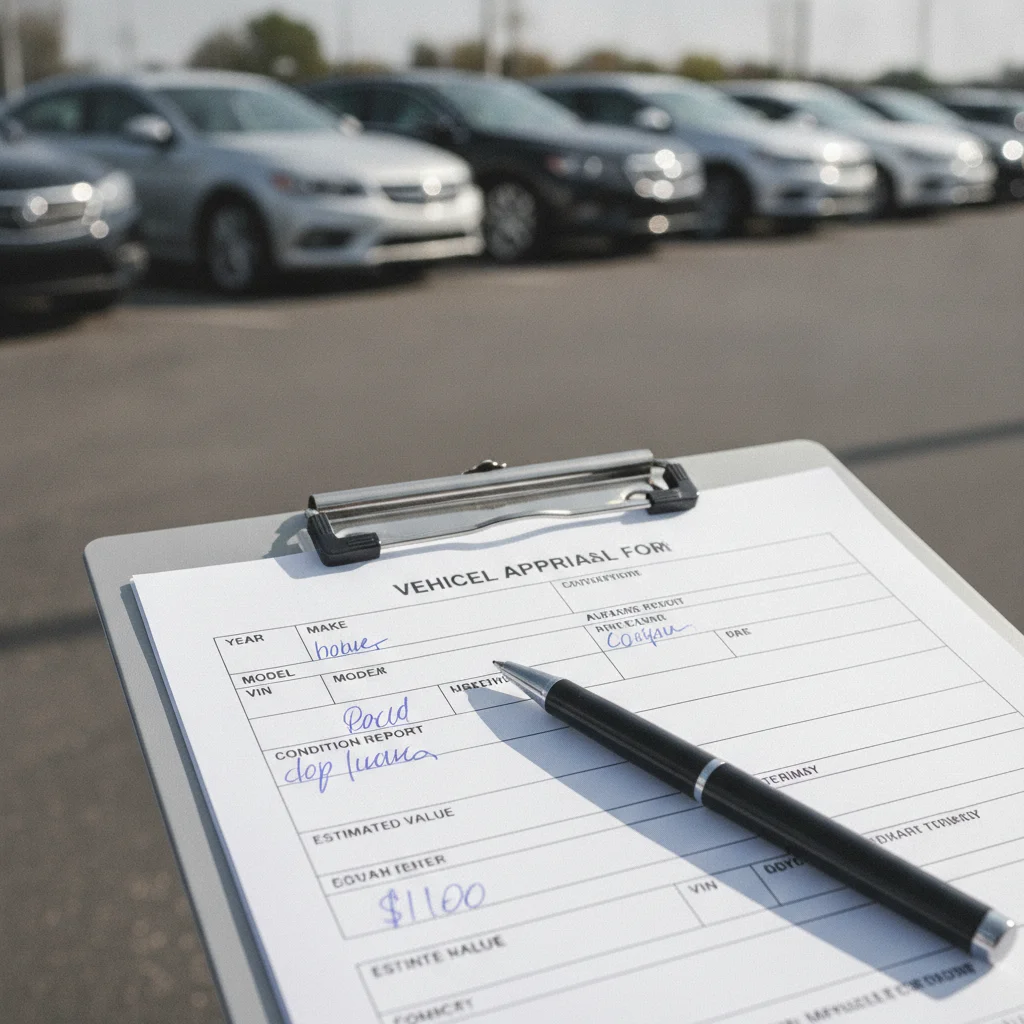
Here's something most buyers never realize: a dealer's appraiser is not just evaluating the car — they're evaluating the risk of buying that car. Every unknown in your vehicle's history is priced as a liability. A car with no service records, no title history, and no receipts for recent work is a black box, and appraisers discount black boxes heavily to protect the dealership's reconditioning budget.
When you walk in with organized documentation, you're not just handing over paperwork. You're systematically eliminating each risk the appraiser would otherwise price against you. A complete oil-change history says the engine wasn't abused. A receipt for a new timing belt says that expensive repair isn't coming on their dime. A clean title with no lien says the transaction won't get complicated. Each document you produce is a deduction subtracted from their mental list of what could go wrong.
I spent years on the finance side of dealerships watching appraisers walk in from the lot and low-ball trades on cars that were genuinely well-maintained — simply because the seller had nothing to show for it. The appraiser's job is to protect margin. Give them a reason not to and they'll often take it, because it speeds up reconditioning decisions and simplifies the deal.
The checklist below covers every document worth gathering before your appraisal, grouped by what it proves and how much weight it carries. Work through it methodically. The 60–90 minutes you spend organizing this paperwork is almost certainly the highest-ROI hour you'll put into your trade-in.
Before you dive in, also consider pairing this process with a physical prep session — prepping your car before the appraisal covers the cosmetic and mechanical side that documentation alone can't address.

What to Gather: The Complete Documentation Checklist
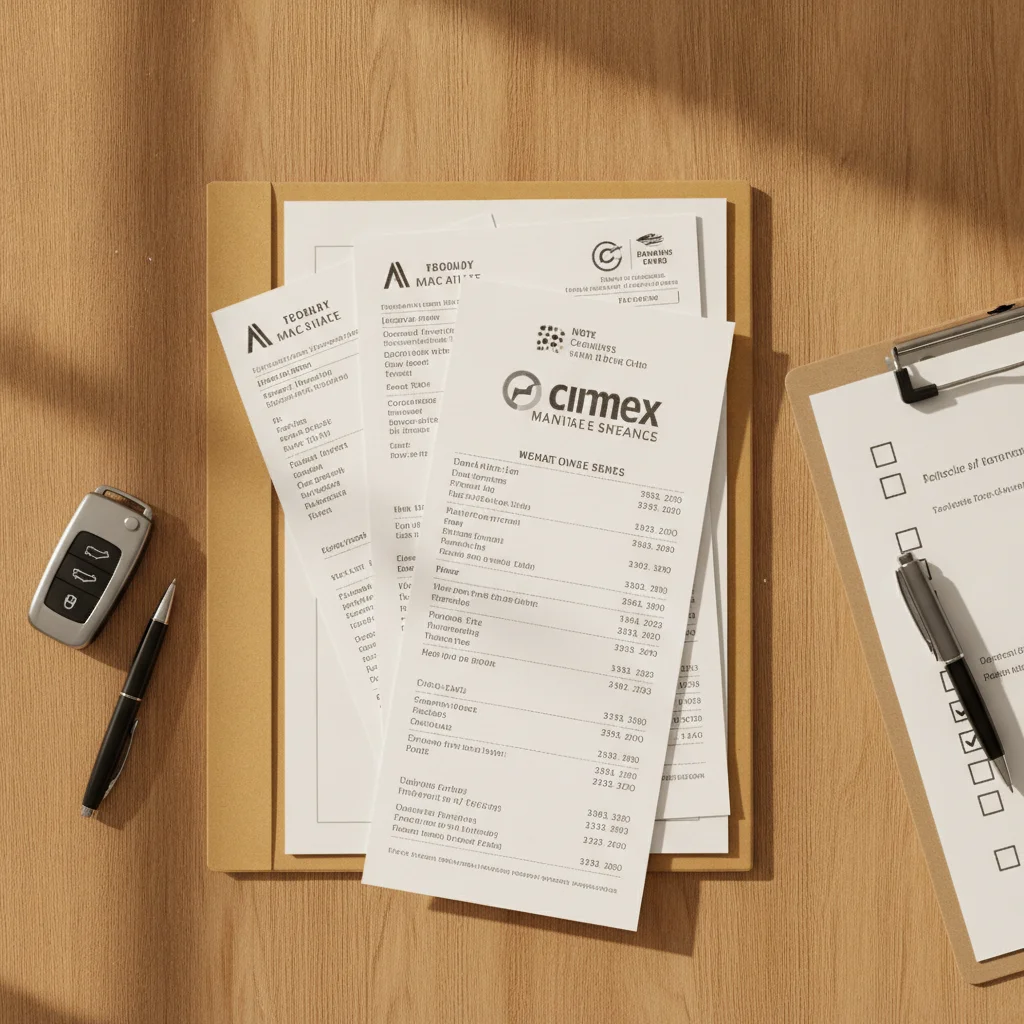
Work through each group below and collect physical copies or clear photos stored in a folder on your phone. When you arrive at the dealership, hand these to the appraiser before they go to the lot — not after the offer is on the table. Timing matters: a document introduced after the offer is made feels like a negotiating tactic; the same document presented upfront feels like transparency.
Maintenance & Service History
Recent Repairs & Replacements
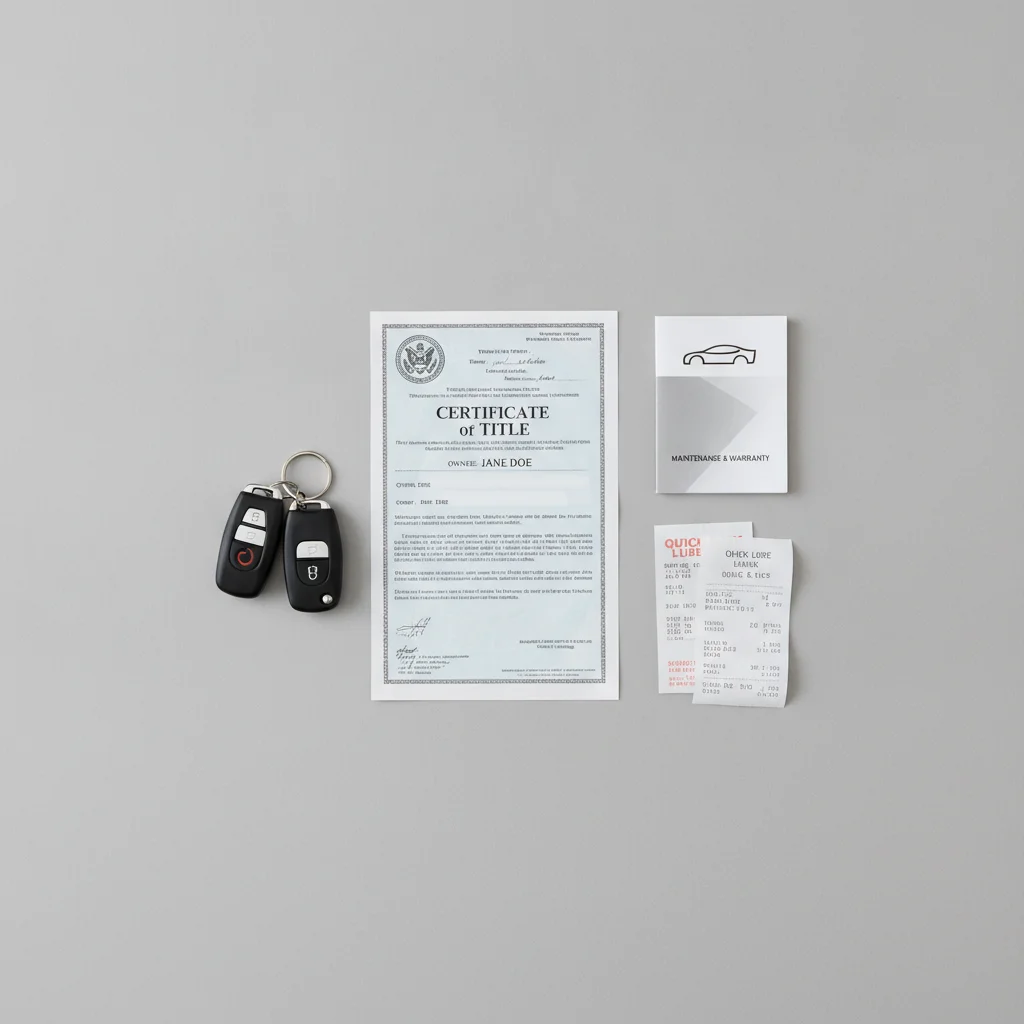
Title & Ownership Documents
Warranty & Factory Documentation
Presentation & Organization
Don't Hand Over Documents After the Offer
Presenting documentation after a dealer has already written up your trade-in offer puts you in a weaker position. At that point, the appraiser has committed to a number and your paperwork reads as an attempt to renegotiate. Instead, hand your folder to the appraiser before they inspect the vehicle — ideally while they're still at the desk. That's when documents shape the valuation framework, not after it's already set.
Aftermarket Modifications Rarely Add Value
Custom wheels, aftermarket audio systems, performance exhausts, and lowering kits almost never increase a trade-in offer at a franchised dealer. In most cases they reduce it, because the dealer must return the car to stock to appeal to the widest retail audience. Don't invest in mods hoping to recover the cost at trade-in — it won't happen.
A Salvage or Rebuilt Title Changes Everything
If your vehicle has a salvage, rebuilt, or flood title, no amount of documentation will bring the offer to clean-title levels. Dealers typically offer 20–40% less for branded-title vehicles because retail buyers and lenders treat them very differently. Know your title status before you walk in — surprises at the appraisal desk hurt your negotiating position significantly.
For a closer look at what dealers do with your documentation once the appraisal is written up, see how to read a trade-in appraisal sheet — it explains every line item and where the numbers are padded.
Tools and Resources You'll Need
Most of what you need is already in your glove box, garage filing cabinet, or accessible online. A few items require a quick phone call or a login to a service account. None of this requires professional help.
Carfax or AutoCheck
Pull your own vehicle history report before the appraisal to see exactly what the dealer will see — including any accident flags, lien records, or title issues.
Dealership Service Department
Request a printed or emailed service history for any work performed at a franchised dealer, often going back seven or more years.
National Chain Service App (Jiffy Lube, Valvoline, Firestone, etc.)
Log in to your account or call the location to retrieve a complete digital history of oil changes and routine services.
Parts Store Account (AutoZone, O'Reilly, NAPA)
Access purchase history tied to your account or phone number to document DIY maintenance with parts receipts.
Lender Payoff Portal or Phone Line
Obtain a written payoff quote if you carry an outstanding loan — dealers need this to calculate equity and complete the transaction.
Physical or Digital Document Folder
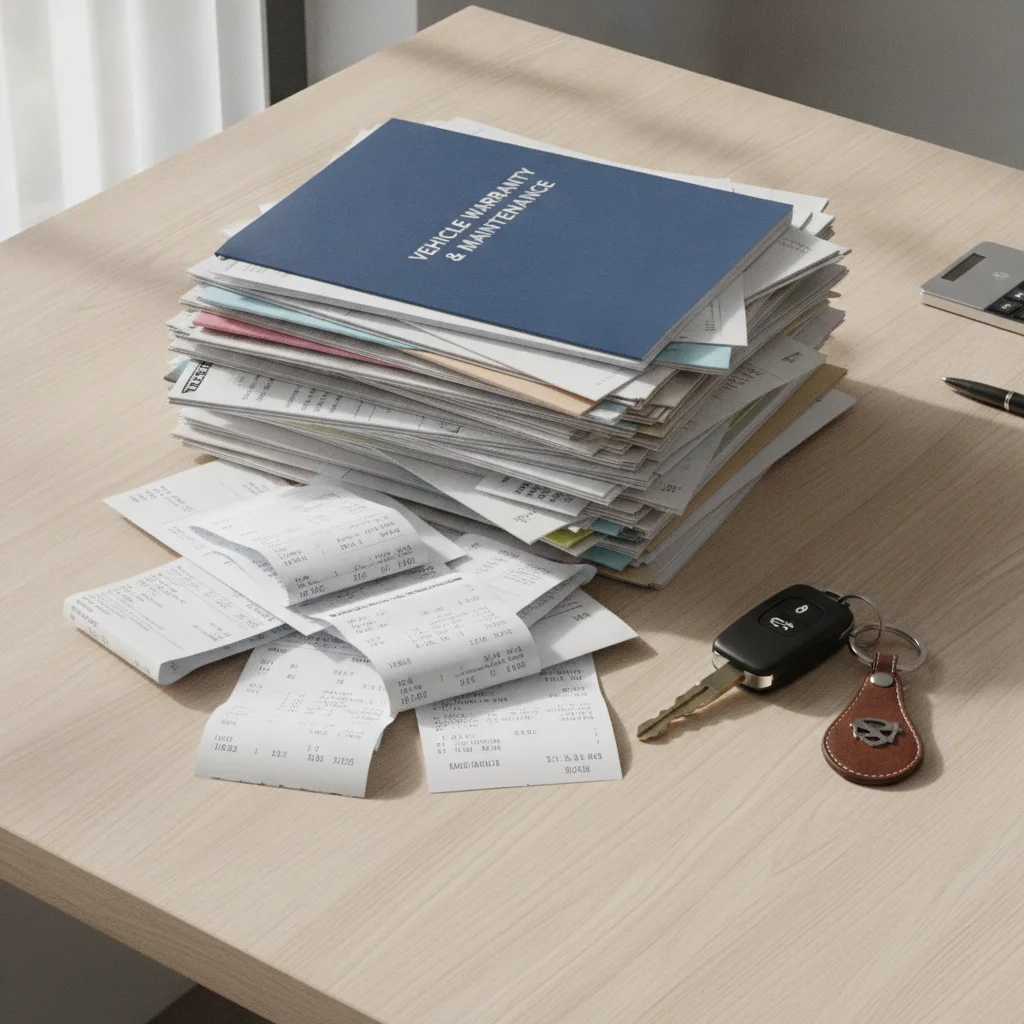
Organize all receipts, records, and warranty documents in a single labeled folder to present to the appraiser in a professional, easy-to-review format.
Manufacturer Owner's Portal (e.g., MyChevrolet, MyFord, Toyota Owners)
Download your vehicle's service history and confirm remaining warranty coverage and any open recalls directly from the manufacturer.
How to Present Your Documents for Maximum Impact
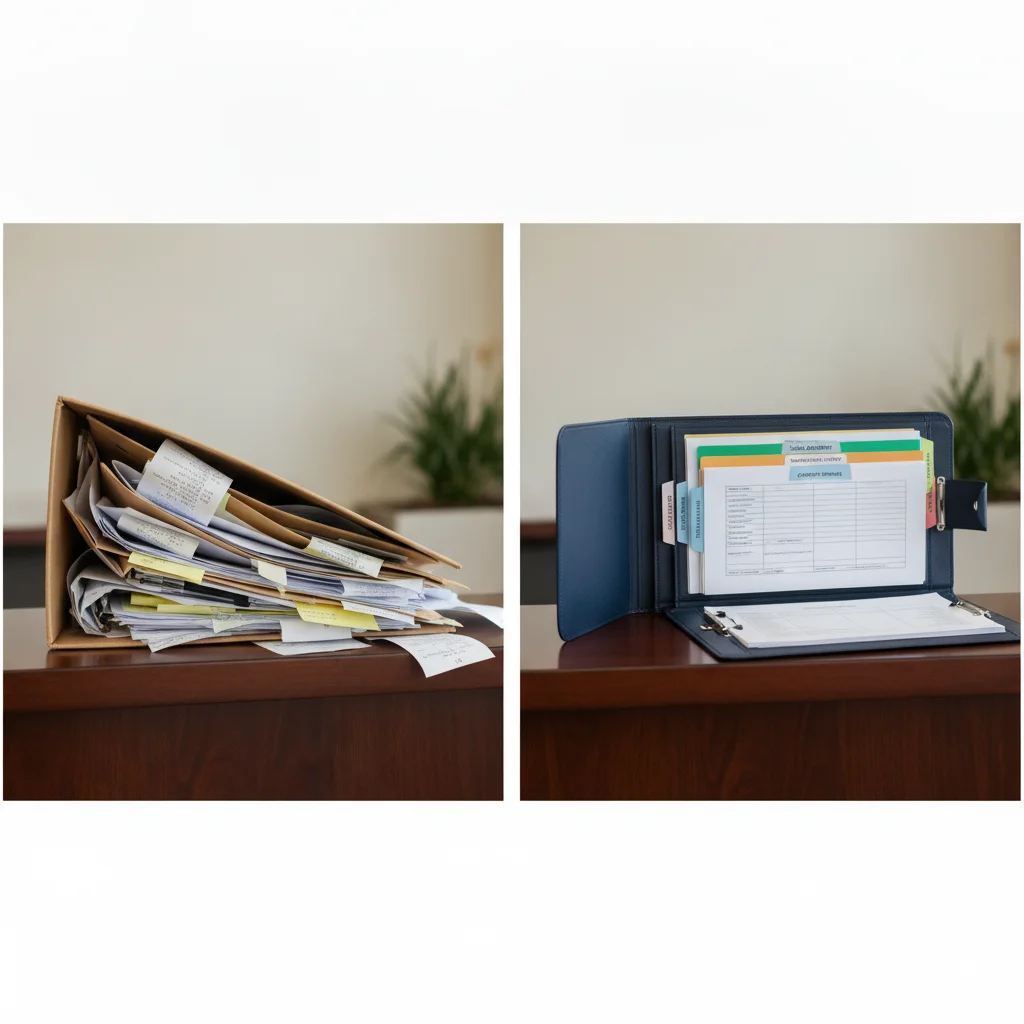
Gathering the paperwork is step one. Presenting it effectively is step two, and most sellers skip this entirely. A crumpled stack of receipts handed to an appraiser as an afterthought reads as disorganized. A labeled folder with a brief summary sheet reads as the work of someone who knows what their car is worth and can prove it.
Create a simple cover sheet
One page. List the major maintenance milestones: oil changes through , timing belt replaced at miles, new tires installed , brakes replaced at miles. This is the TL;DR version that a busy appraiser will actually read before going to the lot. It primes them to see your car as maintained, not as a question mark.
Organize documents in reverse chronological order
Most recent work first. Appraisers care most about what the car needs now and in the near term. A new set of tires installed three months ago matters far more to their reconditioning estimate than an oil change from four years ago.
Flag items that directly offset reconditioning costs
If you replaced the brakes last year, put a sticky note on that receipt: "Pads and rotors replaced — 0 reconditioning needed." You're doing their math for them. Appraisers have a mental checklist of what every car needs before it hits the lot. Cross items off that list explicitly and you reduce their padding budget line by line.
Bring the second set of keys
This is a small thing that carries outsized weight. A missing key on a modern vehicle costs $200–$500 to replace. Appraisers know this and will dock it. Show up with both keys and you've just saved yourself that deduction with zero preparation cost.
Never Misrepresent Your Vehicle's History
Omitting a known accident, concealing a mechanical issue, or presenting altered documentation is fraud. Beyond the legal exposure, dealers run Carfax and AutoCheck on every trade and conduct physical inspections — discrepancies will surface. A seller who is caught misrepresenting their vehicle's condition will see their offer slashed and their credibility destroyed for that entire transaction. Disclose proactively and let your documentation speak for itself.
Extended Warranties: Confirm Transferability Before You Arrive
Not all extended warranties or service contracts transfer to a new owner. Some are tied to the original purchaser and have no value to the dealer. Call your warranty provider before the appraisal and get written confirmation of transferability and any remaining term. A transferable warranty with significant coverage remaining is a genuine value-add the dealer can market — an untransferable one is not.
If your service history has gaps — a period where you handled oil changes yourself, or records from a shop that closed — don't hide it. Acknowledge it upfront and explain it. "I did my own oil changes for two years; here's the receipt for the oil and filter I bought" is credible. Silence followed by an appraiser discovering a gap is not.
For a deeper look at how records affect perceived value when you have them — and how to recover them when you don't — see how service records affect perceived value.
And if you're comparing this process to what you'd need for a private-party sale instead, the documentation requirements differ significantly — dealers absorb title transfer complexity that private buyers cannot.
Recovering Documents You Don't Have
Missing records are common. Dealers know this and exploit it. But most records are recoverable with a few phone calls, and the effort is worth it.
Dealership service departments
If you had any work done at a franchised dealer — even just oil changes — call their service department and ask for a complete history printout. Most dealers retain records for at least seven years and are happy to print them. This takes one phone call and five minutes at the counter.
Quick-lube and chain service shops
Jiffy Lube, Valvoline, Firestone, Pep Boys, and most national chains maintain digital records tied to your license plate or VIN. Log into their apps or call the location you used most often. Many will email you a full history.
AutoZone, O'Reilly, and parts stores
If you did your own maintenance, parts stores often retain purchase histories tied to your account or phone number. A printed history of oil, filters, brakes, and belts purchased for your VIN is credible supporting evidence even without a shop invoice.
Your insurance company
If your car was in an accident and repaired, your insurer has records of the claim and repair authorization. This won't help your offer directly — accident history hurts value — but it lets you proactively disclose clean repairs rather than having the appraiser discover them via Carfax and assume the worst.
Carfax or AutoCheck
Pull your own vehicle history report before the appraisal. Know what the dealer will see. If there's an accident flag, a lien record, or a title issue, you need to address it proactively rather than be blindsided. See what a full vehicle paper trail should contain for a breakdown of what these reports include and what's missing from them.
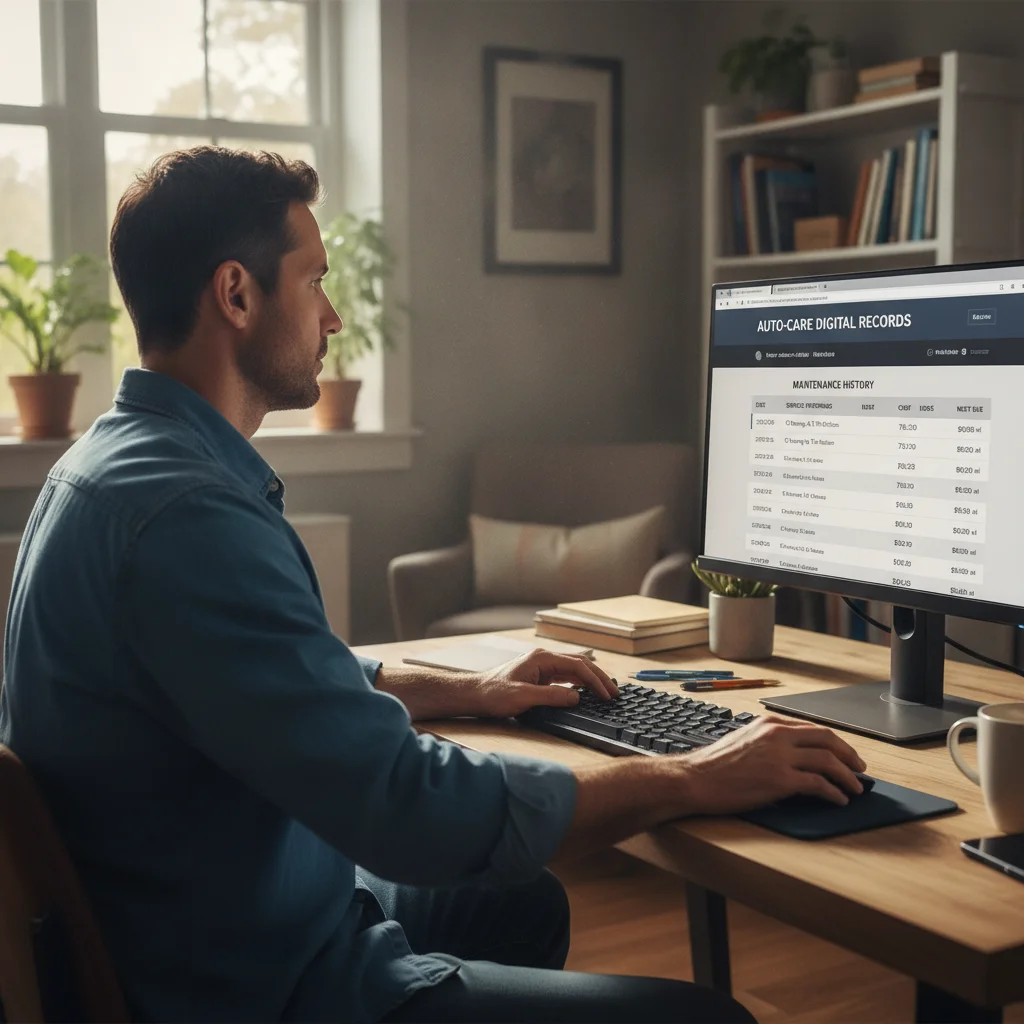
The long-term habit here is simple: store every receipt in a dedicated folder — physical or digital — from day one of ownership. Keeping organized service records pays off materially at resale, and it costs nothing beyond the discipline to do it consistently.
What Not to Bother With — and What Actually Moves the Needle
Not all documentation carries equal weight. Appraisers are focused on reconditioning cost and auction risk. Some paperwork you might think is valuable simply isn't relevant to those calculations.
Low impact — don't spend time chasing these
- Dealer add-on receipts — Rustproofing, paint sealant, and fabric protection add-ons rarely add appraiser value. The market doesn't price them in.
- Car wash records — Irrelevant. The car will be detailed before resale regardless.
- Accessory receipts for aftermarket audio or wheels — Aftermarket mods often hurt value with mainstream buyers. Don't lead with them.
High impact — prioritize these above everything else
- Full oil change and scheduled maintenance history — The most powerful single document set you can produce. Proves the engine and drivetrain were cared for.
- Recent major repairs — New tires, brakes, timing belt, water pump, battery. Each eliminates a line item from the reconditioning estimate.
- Remaining factory or extended warranty — Transferable coverage is a direct value-add the dealer can market to the retail buyer.
- Clean title in your name — No liens, no salvage, no rebuilt designation. Clean title means no complications and no haircut.
- Original window sticker (Monroney label) — Establishes original MSRP and factory options, which helps appraisers verify trim level and optional equipment.
A focused look at which documents carry the most weight with dealers covers this prioritization in more depth, including how appraisers treat missing window stickers versus missing service records.
The bottom line: your goal is to make the appraiser's job easier and their risk assessment lower. Every document you provide that eliminates uncertainty is worth real dollars. Every gap you leave is an invitation to pad the reconditioning estimate and reduce your offer. Control what you can control — which is almost entirely the paperwork you walk in with.

All claims are backed by peer-reviewed research. Sources on request.