Key Takeaways
Trade-In Disposition Pipeline
After you hand over the keys, a dealer runs your old car through a fast evaluation to decide its best use. The car may be reconditioned and resold on their own lot, wholesaled to another dealer, or sent to a regional auto auction. Which path it takes depends on the vehicle's age, condition, mileage, and how well it fits that dealership's inventory needs. Understanding this pipeline reveals exactly why dealers offer what they do — and where you can push back.
Dealers use real-time market tools such as vAuto and DealerSocket to price trade-ins against live auction data and regional retail demand, often within minutes of your appraisal.
The First 24 Hours: What Happens Right After You Hand Over the Keys
The moment you drive off in your new vehicle, the clock starts ticking on your old one. Dealers don't let trade-ins sit idle — holding costs run $25 to $50 per day per vehicle when you factor in lot space, insurance, and interest on floor-plan financing. Speed is money, and that urgency shapes the offer you received before you ever signed anything.
Within hours of acquisition, a used-car manager or appraiser runs the VIN through software like vAuto or Kelley Blue Book's dealer platform. This pulls live auction transaction data — not the retail estimates consumers see online — along with regional supply and demand signals. The appraiser is essentially asking: what would this car bring at auction next Tuesday, and can we do better than that by retailing it ourselves?

That comparison produces a number called the Adjusted Market Value or Auction Representation Value, depending on the platform. Your trade-in offer is almost always anchored slightly above this floor — just enough for the dealer to cover reconditioning and still clear a profit, whether they retail or wholesale the car.
Auction Values Are the Real Benchmark
When a dealer appraises your car, they're not working from KBB or Edmunds retail values — they're working from live wholesale auction transaction data. Retail values already embed reconditioning costs, dealer overhead, and profit margin. Wholesale values strip all of that out. The gap between those two numbers is the dealer's operating runway, and your offer sits somewhere within it.
Seasonal Timing Is Regional, Not Universal
Seasonal demand patterns vary significantly by geography. Trucks command premiums year-round in rural and mountain markets where they're work vehicles, not seasonal purchases. AWD demand spikes are more pronounced in northern states than in the Sun Belt. Research what's selling near you — not just national averages — for the most accurate picture of your trade-in's timing value.
Negative Equity Doesn't Reset With a Trade
Many buyers assume trading in a car with negative equity gives them a fresh start on the new loan. It doesn't. The negative equity is simply added to the new vehicle's financed amount, meaning you're immediately underwater on the replacement car. Before rolling negative equity into a new deal, calculate the total interest cost over the loan term — the number is usually sobering.
This is the core reason trade-in offers feel low: they're not based on what someone will pay for the car in retail condition. They're based on what the car would bring as-is at a wholesale auction, minus the dealer's cushion. The difference between trade-in value and private sale price can easily run $1,500 to $4,000 on a mid-range vehicle.
The Three Paths: Retail Lot, Wholesale, or Auction
Every trade-in lands on one of three tracks. Knowing which track your car ends up on — and why — is the key to understanding your offer and negotiating smarter next time.
Path 1: Retail Reconditioning (The Best Outcome for the Dealer)
If your car is under roughly 80,000 miles, less than six to eight years old, free of major mechanical issues, and in demand in that dealer's local market, it may go through their reconditioning shop. That means a mechanical inspection, any necessary repairs, detailing, and sometimes a certified pre-owned certification if it qualifies. The dealer then lists it on their used-car lot at a retail markup — typically 10% to 20% above what they paid you.
Here's the catch: every dollar spent on reconditioning comes out of your offer. A dealer who estimates $800 in reconditioning and $400 in detailing subtracts that $1,200 from what they're willing to pay you before any negotiation begins. So a well-maintained car with recent service records and zero deferred maintenance genuinely does command a higher offer — not as a nicety, but as a direct function of lower reconditioning costs.
Gather Service Records Before the Appraisal
A folder of dated, stamped service receipts — oil changes, brake jobs, tire replacements — is one of the cheapest and most effective ways to reduce a dealer's reconditioning estimate. It shifts the burden of proof: instead of the appraiser assuming unknown deferred maintenance, they're working with documented evidence that the car has been cared for. Even printed records from a quick-lube chain carry weight.
Use Online Instant Offers as a Hard Floor
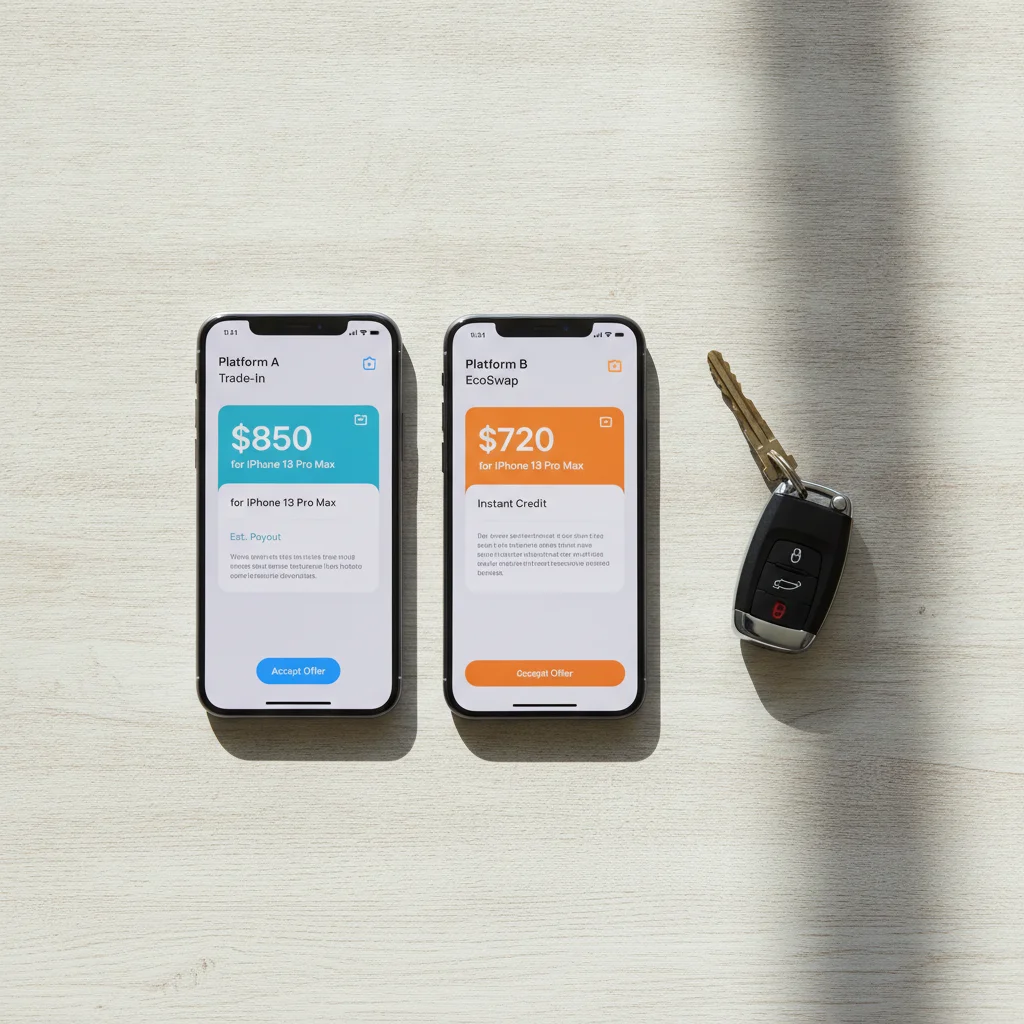
Carvana, CarMax, and similar platforms issue binding written offers valid for seven days. Print them out or screenshot them and bring them to your appraisal. A dealer who knows you have a $17,200 check waiting at CarMax will have a very different conversation than one who thinks you have no alternative. These offers cost you nothing and shift the negotiation immediately in your favor.
Path 2: Wholesale to Another Dealer
If the car doesn't fit the accepting dealer's franchise or inventory mix — think a pickup truck landed at a luxury import store — they'll often wholesale it directly to a dealer who specializes in that segment. This transaction happens dealer-to-dealer, often through a digital marketplace like OVE.com or TradeRev (now part of KAR Global). The accepting dealer sells it quickly at a modest markup over what they paid you, taking a thin profit without the hassle of reconditioning or retailing.
Wholesaling is faster and lower risk for the dealer, but it means your car was never worth retailing to them in the first place. Different dealers have wildly different inventory needs — which is exactly why shopping your trade to three or four stores can move it from a wholesale candidate at one dealer to a retail prospect at another, netting you hundreds or thousands more.
Path 3: Physical or Online Auction
Older vehicles, high-mileage units, cars with salvage or flood history, and any trade-in that fails to sell on the dealer's lot within 60 days typically end up at auction. Major auction houses like Manheim and ADESA run weekly lanes — physical and digital — where dealers, wholesalers, and used-car operations bid competitively. Auction prices represent true wholesale floor values, and they fluctuate week to week based on supply, fuel prices, and seasonal demand.

When a dealer offers you $7,500 on a car and it sells at Manheim for $8,200 two weeks later, they made a thin margin after fees. When it brings $6,900, they absorbed a loss — and that risk is exactly what they're pricing into your offer upfront.
~35%
Trade-ins retailed on the accepting dealer's lot
Industry estimates suggest only about one-third of trade-ins are resold directly by the dealership that accepted them; the rest are wholesaled or auctioned.
$25–$50
Daily holding cost per used vehicle on a dealer lot
Dealer holding costs — including floor-plan interest, insurance, and lot overhead — create pressure to move trade-ins quickly, directly influencing appraisal offers.
$1,500–$4,000
Typical gap between trade-in value and private sale price
Based on analysis of mid-range vehicles by consumer auto finance researchers; the gap widens on higher-value and well-maintained vehicles.
60 days
Typical maximum retail holding period before auction
Most dealers move unsold used inventory to auction after 45–60 days on lot to limit depreciation and holding cost losses.
$500–$2,000
Potential offer increase from shopping to the right franchise
Matching your trade-in to a dealer who retails your vehicle type can shift it from a wholesale candidate to a retail unit, meaningfully raising the offer.
How Reconditioning Costs Directly Eat Your Offer
Reconditioning is the single biggest line item dealers use to justify a low trade-in number. Here's a realistic breakdown of what dealers typically budget per vehicle before they'll commit to retailing it:
| Service | Typical Dealer Cost |
|---|---|
| Full detail (interior + exterior) | $150 – $400 |
| Mechanical inspection and minor repairs | $200 – $600 |
| Tires (if worn below 4/32") | $400 – $800 per set |
| Brakes (if needed) | $200 – $500 per axle |
| Paint correction or minor dent repair | $300 – $900 |
| CPO certification (if applicable) | $300 – $700 |
A car that needs new tires, two brake jobs, and a paint touch-up could easily carry $2,000 in projected reconditioning costs — all deducted before the appraiser writes your offer number. This is why the prep work you do before the appraisal matters. You don't have to fix everything, but addressing the most visible and obvious issues narrows the dealer's reconditioning estimate and tightens the gap between their cost and your offer.
“Every trade-in appraisal is really a rapid calculation of risk. The appraiser is estimating what the car will bring at auction or on the lot, subtracting every dollar of uncertainty, and then offering you the remainder minus their margin. The cleaner and more documented your car is, the less uncertainty they price in — and the more you get.”
— Ed Williamson, Former used car director at a multi-franchise dealer group, published automotive retail analyst
Timing the Trade: When Seasonal Demand Works in Your Favor
Auction prices — and therefore trade-in offers — are not static. They follow predictable seasonal patterns that savvy sellers can use to their advantage.
- Trucks and SUVs: Demand peaks in late winter through spring as buyers prepare for towing, camping, and summer road trips. Trade in a truck between February and April and you'll typically see offers run $500 to $1,500 higher than in August or September.
- Convertibles and sports cars: Late winter and early spring is also the sweet spot here, when buyers start thinking about warm weather driving before the market is flooded with supply.
- Economy cars and commuter vehicles: These track more closely with gas prices. When fuel spikes, compact sedans and hybrids become suddenly more valuable — trade timing can matter significantly if you watch the pump.
- AWD and 4WD vehicles: Late fall, right before winter sets in, is when regional demand ticks up in northern states and mountain markets.
The key insight is simple: dealers offer what they expect to clear at retail or auction in the near term. When demand for your vehicle type is high, their projected clearing price is higher, and they can afford to offer you more while still protecting their margin.
Auction Values Are the Real Benchmark
When a dealer appraises your car, they're not working from KBB or Edmunds retail values — they're working from live wholesale auction transaction data. Retail values already embed reconditioning costs, dealer overhead, and profit margin. Wholesale values strip all of that out. The gap between those two numbers is the dealer's operating runway, and your offer sits somewhere within it.
Seasonal Timing Is Regional, Not Universal
Seasonal demand patterns vary significantly by geography. Trucks command premiums year-round in rural and mountain markets where they're work vehicles, not seasonal purchases. AWD demand spikes are more pronounced in northern states than in the Sun Belt. Research what's selling near you — not just national averages — for the most accurate picture of your trade-in's timing value.
Negative Equity Doesn't Reset With a Trade
Many buyers assume trading in a car with negative equity gives them a fresh start on the new loan. It doesn't. The negative equity is simply added to the new vehicle's financed amount, meaning you're immediately underwater on the replacement car. Before rolling negative equity into a new deal, calculate the total interest cost over the loan term — the number is usually sobering.
Tactics to Protect Yourself From a Lowball Offer
Understanding the pipeline is useful. Using that knowledge to get a better number is the point. Here's what actually works:
1. Get Competing Offers Before You Walk Into the Dealership
Carmax, Carvana, and Vroom all make instant online offers that are valid for seven days. Pull two or three of these before your dealer appraisal. They represent real money — you can walk into any of those locations and get a check. Use them as a documented floor, not a negotiating bluff. Dealers know these platforms and will generally match or beat a legitimate offer rather than lose a new car sale.
2. Shop Your Trade to Franchises That Specialize in Your Vehicle Type
A Chevrolet dealer appraising a BMW 3 Series is going to send it to auction or wholesale. A BMW franchise appraising the same car might retail it themselves — and offer you $1,000 to $2,000 more as a result. This is the core principle behind why offers vary so widely from dealer to dealer. Match your trade to the brand that retails it best.
3. Bring Documentation That Reduces Reconditioning Uncertainty
Service records, recent tire receipts, a current alignment printout — anything that demonstrates the car has been maintained reduces the appraiser's risk estimate and tightens their reconditioning budget. A dealer who can verify new brakes last month doesn't need to budget $400 for brakes in their offer calculation.
4. Negotiate the Trade Separately From the New Car
Agree on the out-the-door price of the new vehicle first. Then introduce the trade. This prevents dealers from using the trade as a shell game — artificially inflating the trade offer while padding the new car price, or vice versa. Two separate negotiations give you clean numbers on both sides of the deal. See also: the full cost-benefit breakdown of trading in vs. selling privately.
5. Know When to Walk Away and Sell Privately
If the dealer's best offer is more than $1,500 to $2,000 below your competing quotes, consider whether a private sale makes financial sense. The effort is real — you'll handle listings, test drives, and payment logistics — but the gap is often worth it on higher-value vehicles. The math shifts in favor of the trade-in on older, lower-value cars where the spread narrows and the hassle factor grows.
Gather Service Records Before the Appraisal
A folder of dated, stamped service receipts — oil changes, brake jobs, tire replacements — is one of the cheapest and most effective ways to reduce a dealer's reconditioning estimate. It shifts the burden of proof: instead of the appraiser assuming unknown deferred maintenance, they're working with documented evidence that the car has been cared for. Even printed records from a quick-lube chain carry weight.
Use Online Instant Offers as a Hard Floor
Carvana, CarMax, and similar platforms issue binding written offers valid for seven days. Print them out or screenshot them and bring them to your appraisal. A dealer who knows you have a $17,200 check waiting at CarMax will have a very different conversation than one who thinks you have no alternative. These offers cost you nothing and shift the negotiation immediately in your favor.
What If You Have Negative Equity?
Negative equity — owing more on your car loan than the vehicle is worth — complicates the trade-in significantly. If you owe $18,000 on a car the dealer appraises at $14,500, you have $3,500 in negative equity. That balance doesn't disappear. Most dealers will roll it into your new car loan, which means you're financing your old car's deficit on top of the new vehicle's price.
This is one of the most financially damaging patterns in car buying. Rolling $3,500 of negative equity into a new 72-month loan at 7% adds over $700 in total interest to the debt — plus you start the new loan already underwater. If your situation involves a lease, the mechanics are different but equally consequential: see how lease trade-ins handle residual values and equity before making any moves.
Auction Values Are the Real Benchmark
When a dealer appraises your car, they're not working from KBB or Edmunds retail values — they're working from live wholesale auction transaction data. Retail values already embed reconditioning costs, dealer overhead, and profit margin. Wholesale values strip all of that out. The gap between those two numbers is the dealer's operating runway, and your offer sits somewhere within it.
Seasonal Timing Is Regional, Not Universal
Seasonal demand patterns vary significantly by geography. Trucks command premiums year-round in rural and mountain markets where they're work vehicles, not seasonal purchases. AWD demand spikes are more pronounced in northern states than in the Sun Belt. Research what's selling near you — not just national averages — for the most accurate picture of your trade-in's timing value.
Negative Equity Doesn't Reset With a Trade
Many buyers assume trading in a car with negative equity gives them a fresh start on the new loan. It doesn't. The negative equity is simply added to the new vehicle's financed amount, meaning you're immediately underwater on the replacement car. Before rolling negative equity into a new deal, calculate the total interest cost over the loan term — the number is usually sobering.
The honest answer if you're deeply underwater: it's often better to keep the car until you've built equity, or to pay down the loan before trading. Rolling large negative equity balances into new loans is how buyers end up perpetually upside-down and paying too much for every car they own.
The Bottom Line on the Trade-In Pipeline
Your old car isn't just handed to the next buyer on the lot. It moves through a structured evaluation process where every scratch, every service gap, and every market data point shapes what the dealer believes they can clear on resale — and therefore what they'll offer you. The auction floor is the baseline. Reconditioning costs are the deduction. Dealer margin is the target. Your offer is what's left.
Once you understand that math, the negotiating posture becomes obvious: document your maintenance, get competing quotes, shop to the right franchise, and separate the trade negotiation from the new car deal. These four steps alone can close a meaningful portion of the gap between a first offer and a fair one.
For a deeper look at how to prepare your vehicle before you ever pull into the appraisal bay, read the pre-appraisal prep guide. And if you're still weighing whether to trade or sell privately, the trade-in strategy hub covers the full range of options and tradeoffs in one place.

All claims are backed by peer-reviewed research. Sources on request.