

Key Takeaways
Start here
How a Lease Trade-In Actually Works
Next
Checking Whether You Have Equity in Your Lease
Then
Early Termination: Costs and Consequences
Watch out for
The Dealership Playbook — and How to Counter It
Take action
Step-by-Step: How to Trade In a Leased Car
Explore options
Alternatives to Trading In Your Lease
How a Lease Trade-In Actually Works
When you trade in a car you own outright, the mechanic is simple: the dealer gives you a number, you accept or negotiate, and the money offsets your next purchase. A leased car adds a critical layer because you are not the owner — the leasing company (usually a captive finance arm like Toyota Financial Services or BMW Financial Services) holds the title.
To trade in a leased vehicle, someone has to buy out the lease first. Here's the sequence:
- The dealer gets a payoff quote from your leasing company. This is the buyout amount — the residual value plus any remaining payments, fees, and sometimes a purchase option fee.
- The dealer or a third party pays that amount to the leasing company to acquire the title.
- The difference between the market value and the payoff amount determines whether you have equity or negative equity going into the deal.
That's the core transaction. Every other complexity — early termination fees, mileage penalties, disposition fees — layers on top of this foundation.
Residual Value
The price the leasing company set at contract signing for what the vehicle would be worth at lease end. This is the number you compare against today's market value to figure out your equity position.
Buyout Amount
The total amount required to pay off a lease early or at its end — includes the residual value, any remaining payments, fees, and sometimes a purchase option fee. This is what a dealer or third-party buyer must pay the leasing company to take ownership of the vehicle.
Positive Equity
When your vehicle's current market value is higher than the buyout amount. This is money that should work in your favor — reducing the cost of your next vehicle or being paid out to you directly.
Negative Equity
When the buyout amount is higher than the vehicle's current market value. You're effectively paying to get out of the lease, and that shortfall needs to come from somewhere in the deal structure.
Early Termination Fee
A penalty charged by the leasing company when you exit a lease before the agreed-upon end date. The fee structure varies by lender but can run from a few hundred to several thousand dollars.
Disposition Fee
A charge the leasing company applies when you return the vehicle at lease end without leasing or buying another vehicle from the same brand. Typically $300–$400, and usually waived if you stay with the brand.
Captive Lender
A financing company owned by or affiliated with an automaker — like Honda Financial Services or Ford Motor Credit. They write and manage leases for their parent brand and set the rules for how trade-ins and buyouts work.
Third-Party Buyer
A company (Carmax, Carvana, Vroom) or private buyer that purchases your vehicle outside of the dealership trade-in process. They often pay more than dealers but require a separate transaction.
Before you walk into any dealership, understand that this process is more transparent than most dealers would like it to be. You have every right to call your leasing company directly, get a payoff quote, and compare it to what dealers are saying. That one step alone puts you in a significantly stronger negotiating position.
For context on the broader trade-in process, this overview for first-time sellers covers the mechanics that apply to any vehicle type.
Checking Whether You Have Equity in Your Lease
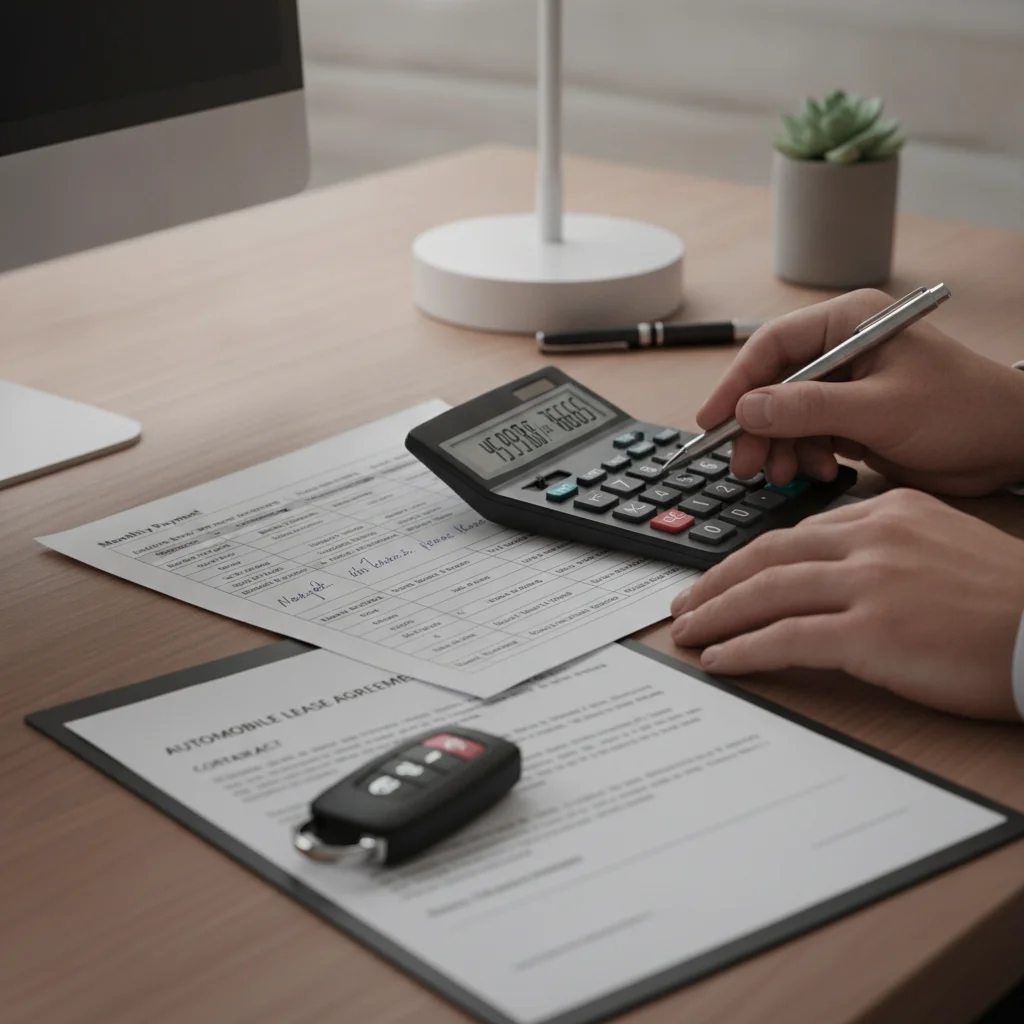
Lease equity is one of the most misunderstood concepts in car finance. Let's be direct: the used car market has been unusually strong, which means a large number of leaseholders currently have positive equity — often significant positive equity — without realizing it.
The Equity Formula
It comes down to one comparison:
| Variable | Where to Get It |
|---|---|
| Residual value (what the lease says the car is worth) | Your original lease contract |
| Current market value (what the car actually sells for today) | Carmax, Carvana, KBB, or a dealer appraisal |
If market value > residual value, you have positive equity. That equity belongs to you and should be applied toward your next vehicle or paid out to you in cash.
If market value < residual value, you have negative equity. This doesn't automatically disqualify you from trading in, but it means you'll need to cover the shortfall. Trading in with negative equity is a separate decision tree worth reading before you proceed.
How to Get an Accurate Market Value
- Submit your vehicle to Carmax, Carvana, and Vroom for competing offers — these are real, binding bids you can use as leverage.
- Pull the KBB Instant Cash Offer for a data-anchored baseline.
- Look at similar listings in your zip code on AutoTrader or Cars.com — what are dealers actually asking for this trim, mileage, and color?
Get Your Equity Check Before You Shop
Run your lease equity calculation before you set foot on a lot or even browse inventory online. Once you fall in love with a specific new car, your ability to negotiate the trade-in objectively disappears. Knowing your numbers cold gives you the discipline to walk away from a deal that doesn't respect your equity position.
Use Competing Offers as Leverage
A written offer from Carmax or Carvana is one of the most powerful tools you can bring into a dealership. Dealers know those companies move volume and appraise competitively. Showing you have a real alternative bid forces the dealer to either match it or lose the trade — and often the entire deal.
One thing dealers rarely volunteer: your lease equity check should happen before you start shopping for a replacement vehicle. Once you're emotionally committed to a new car, your ability to walk away from a bad equity deal drops dramatically.
Early Termination: Costs and Consequences
If you're within the last two to three months of a lease, the calculus is straightforward — you're close enough to the end that most early termination penalties don't apply, and you might as well drive it out. The more complicated scenario is terminating a lease six months to two years early, which is where most people get burned.
What Early Termination Typically Costs
Your lease contract will specify the early termination formula. Common structures include:
- Remaining payments: You owe every payment left on the lease.
- Depreciation shortfall: If the car depreciated faster than the lease projected, the leasing company charges the difference.
- Early termination fee: A flat penalty — commonly $200–$500 — layered on top of everything else.
- Disposition fee waiver loss: At normal lease end, if you lease another vehicle from the same brand, the disposition fee (typically $300–$400) is often waived. Early termination removes that benefit.
Never Roll Negative Equity Into a Long Loan Term
If you owe more on your lease buyout than the car is worth, dealers will often offer to "roll" that shortfall into your new 72- or 84-month loan. This means you start your next vehicle immediately underwater, paying interest on a debt that has nothing to do with the new car's value. It's one of the fastest ways to end up in a cycle of perpetual negative equity.
Watch for Payoff Quote Discrepancies
If the dealer's payoff figure is even $200 more than the number your leasing company gave you, ask for an itemized explanation in writing before signing. Small discrepancies in payoff amounts are a common place for dealers to build margin — especially on high-equity vehicles where the numbers are already large and harder to track.
The Hidden Fee You Should Always Check
Some leases — particularly from certain luxury captive lenders — calculate early termination using a precomputed interest method that front-loads the leasing company's profit. In these cases, terminating early can cost significantly more than the remaining payments alone would suggest. Read the fine print in Section 17–20 of your standard lease agreement (MVSLA), which covers early termination calculations specifically.
When a dealer offers to "take over your lease," what they're actually doing is paying off that termination amount — and they're building that cost into the deal structure. You need to know the exact payoff figure so you can verify whether their math adds up.
For a detailed comparison with a financed trade-in, see trading in a car with existing financing — the payoff dynamics are similar, but the ownership structure differs in important ways.
The Dealership Playbook — and How to Counter It
I spent years working in dealership finance offices. Here are the tactics I watched managers use specifically on lease trade-ins — and how to neutralize each one.
Tactic 1: Presenting Only the Monthly Payment
The dealer quotes you a "great" monthly payment on the new vehicle without ever breaking down how your lease equity was applied. You walk away thinking you got a good deal, not realizing $3,000 of your equity quietly disappeared into dealer profit.
Counter: Demand a complete worksheet showing (a) the dealer's payoff amount to your leasing company, (b) the appraised value of your trade, and (c) how the difference was applied. Every legitimate dealer can produce this. If they won't, leave.
Tactic 2: Inflating the Payoff Amount
Some dealers quote you a payoff figure that's higher than the actual amount your leasing company requires. The difference goes to the dealer. This is especially common when the dealer knows the vehicle has market value significantly above residual.
Counter: Call your leasing company yourself before visiting any dealership. Get the payoff quote in writing — valid for 10 days is standard. Compare it to what the dealer claims the payoff is. Any discrepancy needs an explanation.
Tactic 3: Bundling Everything Into One "Number"
The dealer presents your trade-in, your new car purchase, and your financing all as one blended monthly payment. This obscures whether each component is fair.
Counter: Negotiate each piece separately. Start with the trade-in value, agree on that number, then move to the purchase price of the new vehicle, then discuss financing. Keeping these negotiations clean and sequential is the single most effective thing you can do to protect your position.

Tactic 4: The "We'll Handle the Lease Return" Promise
A dealer tells you not to worry about the lease return, that they'll take care of everything. Sometimes that's genuine. Other times, it means they're rolling your disposition fee, wear-and-tear charges, and mileage overage into the back end of your new deal without itemizing it.
Counter: Before signing, confirm in writing which fees the dealer is absorbing and which you're paying. Get the lease company's confirmation that the payoff has been received and the account is closed before your new deal funds.
Understanding what dealers do with trade-ins after the deal closes also helps you understand why they're so motivated to control this process.
Step-by-Step: How to Trade In a Leased Car
Here is the exact sequence I'd walk any buyer through before they stepped onto a lot.
- Pull your lease contract. Find the residual value, remaining payment schedule, and early termination clause. If you don't have a copy, your leasing company can email one.
- Call your leasing company for a payoff quote. Ask for the "buyout amount if paid by ." Get it in writing — email or fax.
- Get at least three independent market value offers. Submit your vehicle to Carmax, Carvana, and one more third-party buyer. Note: some captive leases restrict third-party sales — confirm with your lender whether you're allowed to sell to a non-dealer buyer.
- Calculate your equity position. Market value minus payoff amount equals your equity (positive or negative). If it's positive, that's leverage. If it's negative, decide how much you're willing to absorb and build that into your budget.
- Shop the new vehicle price independently. Use TrueCar, Edmunds, or manufacturer incentive pages to establish a fair price before combining anything with your trade discussion.
- Negotiate the trade-in first, then the new car price. Once the dealer has acknowledged your payoff figure and offered an appraisal, hold that number firm before discussing the purchase.
- Review the worksheet line by line. Confirm that the trade equity is applied correctly, that there are no mystery fees, and that the payoff figure matches what you got from the leasing company.
- Confirm lease payoff with your leasing company directly. After the deal closes, call to verify the payoff check has been received and your lease account shows as paid in full.
Captive Lender Restrictions Vary Widely
Some manufacturer-affiliated leasing companies — particularly certain European luxury brands — prohibit selling the leased vehicle to a third-party buyer without first offering it back to an authorized dealer. Always check your specific lease agreement or call your leasing company before assuming you can take a Carmax offer. Violating this clause can create title complications that delay or void the transaction.
Your Lease Payoff Quote Has an Expiration Date
Payoff quotes from leasing companies are typically valid for 10 days. After that, the number recalculates based on remaining payments. If you're in active dealer negotiations, make sure your quote is still current before signing — otherwise the dealer may claim the payoff increased and adjust the deal structure accordingly.
Before you finalize anything, run through the full trade-in negotiation checklist — it covers the verification steps that protect you in the final hours of any deal.
Carvana Instant Offer
Submit your leased vehicle's details for a binding online offer in minutes. Use this as a market-value benchmark and negotiating tool with any dealership.
Kelley Blue Book Instant Cash Offer
KBB's appraisal tool provides a data-backed offer redeemable at participating dealers. Useful for establishing a defensible floor price for your lease trade-in.
Trade-In Terminology Glossary
A quick-reference guide covering ACV, residual value, equity gap, and every other term you'll encounter during lease trade-in negotiations.
Lease Agreement Early Termination Calculator
Enter your remaining payments and residual to estimate your early termination cost before calling your leasing company for a formal quote.
Alternatives to Trading In Your Lease
A dealer trade-in is not always your best option. Here are the three most realistic alternatives and when each makes sense.
Option 1: Sell the Vehicle to a Third-Party Buyer
Carmax, Carvana, and similar buyers will often offer more than a franchise dealer will because they're competing for inventory aggressively. If your lease company permits third-party sales (most do, though some luxury captives restrict this), you can sell the car, pocket any equity above the payoff, and then shop for your next vehicle separately — and more freely.
The trade-off: this requires two separate transactions, which takes more time and coordination. But if your positive equity is meaningful — say, $3,000 or more — the extra effort is usually worth it.
Option 2: Buy Out the Lease Yourself
If your car has significant positive equity and you want to own it outright, exercising your purchase option at the residual price locks in that equity without a dealer intermediary. You finance the buyout through your own bank or credit union, which often offers a better rate than dealer-arranged financing, then sell or keep the vehicle as you choose.
This is particularly attractive if you love the car and don't want to deal with the new-car market at all right now.
Option 3: Lease-End Return (Do Nothing)
If your lease ends within 60 days and you have minimal positive equity, the simplest move is often to return the vehicle normally, pay any legitimate end-of-lease fees, and then shop for a new vehicle with a clean slate and no emotional attachment to a trade-in deal. This gives you the most negotiating freedom on the next car.
Captive Lender Restrictions Vary Widely
Some manufacturer-affiliated leasing companies — particularly certain European luxury brands — prohibit selling the leased vehicle to a third-party buyer without first offering it back to an authorized dealer. Always check your specific lease agreement or call your leasing company before assuming you can take a Carmax offer. Violating this clause can create title complications that delay or void the transaction.
Your Lease Payoff Quote Has an Expiration Date
Payoff quotes from leasing companies are typically valid for 10 days. After that, the number recalculates based on remaining payments. If you're in active dealer negotiations, make sure your quote is still current before signing — otherwise the dealer may claim the payoff increased and adjust the deal structure accordingly.
Whatever path you choose, familiarize yourself with the key terminology that drives these conversations. Trade-in terminology you need to know — including ACV, residual, and equity gap — will make sure you're not lost when the finance manager starts talking fast.
If you're heading into the dealer to buy a new car at the same time, understanding how new car purchases work in parallel with your lease trade-in gives you a complete picture of every lever being pulled in that transaction.

All claims are backed by peer-reviewed research. Sources on request.