Key Takeaways
Why Financing Complicates the Trade-In Process
A standard trade-in is simple: you hand over the car, the dealer hands over a credit. But when there's an active loan on that car, a third party — your lender — is involved in every step. The title isn't fully yours yet. The lender holds a lien, and that lien has to be satisfied before ownership can transfer cleanly to the dealer.
The dollar gap between what the car is worth and what you still owe is what drives everything. Dealers will quote you a trade-in allowance (what they'll credit you), but that number is meaningless unless you also know your payoff. Those two numbers together determine whether the trade-in actually helps you or quietly hurts you.
The good news: dealers handle financed trade-ins every day. The process is routine for them. The risk for you isn't that it's complicated — it's that the complexity gives dealers more room to obscure what's happening. Your job is to know the numbers cold before any conversation starts.
If you're considering a private sale instead of a dealership trade-in, the process is different. Selling a Car With an Outstanding Loan walks through how that works, including how to transfer the title with a lien still attached.
What you will need
This guide focuses specifically on dealer trade-ins. Once you have your prerequisites in order, follow the steps below in sequence — each one builds on the last.
Loan payoff statement from your lender
Establishes the exact dollar amount needed to satisfy your loan and release the lien on your title.
Kelley Blue Book or Edmunds instant cash offer
Provides a data-backed market value estimate for your trade-in before you walk into the dealership.
CarMax or Carvana appraisal
Generates a written, time-stamped offer you can use as a negotiating floor with the dealer.
Vehicle history report (Carfax or AutoCheck)
Shows dealers there are no hidden accidents or title issues that could be used to justify a lower offer.
Maintenance records
Documenting consistent upkeep can support a higher trade-in valuation during dealer negotiation.
Step-by-Step: Trading In Your Financed Car Without Getting Burned
Request your exact loan payoff amount
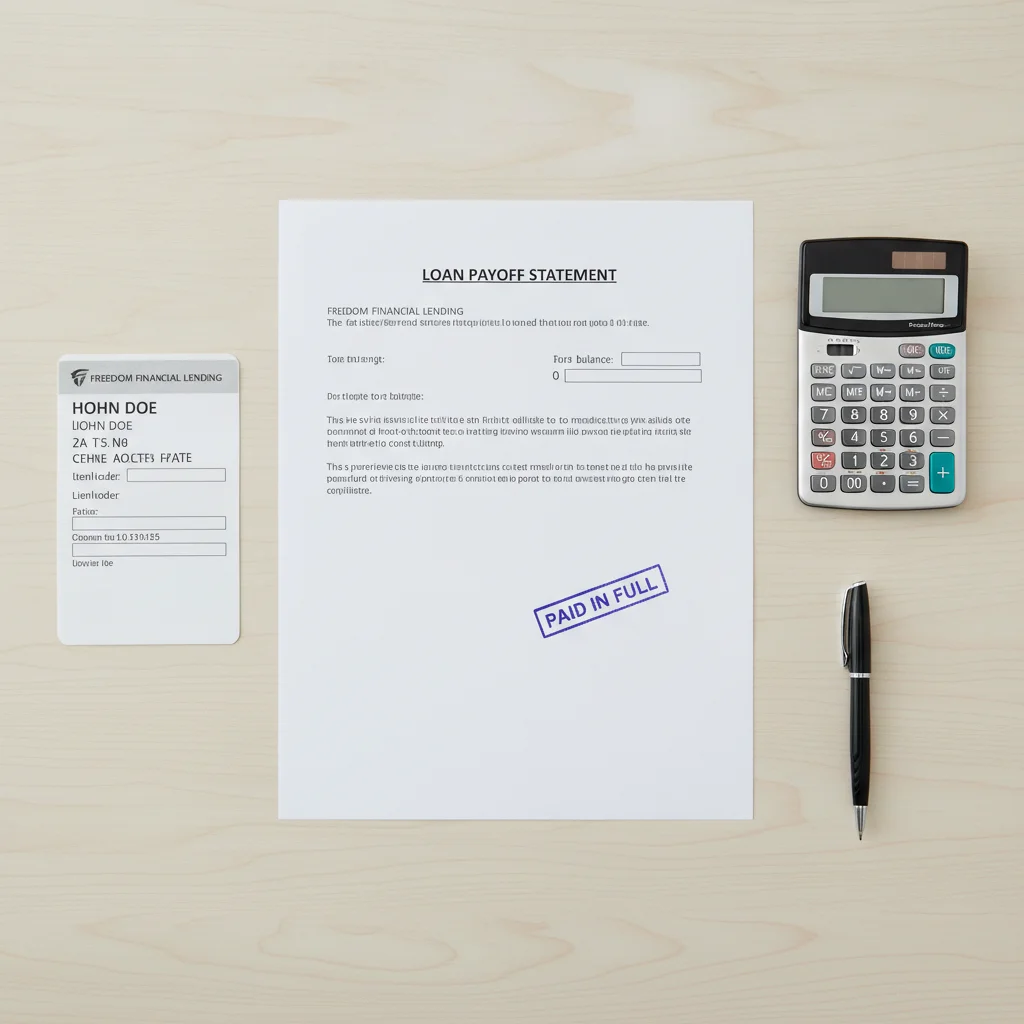
Call your lender — don't estimate from your last statement. Ask specifically for the 10-day payoff amount, which is the dollar figure required to fully satisfy your loan as of a specific future date. This number accounts for accruing daily interest and is different from your current balance.
Get this figure in writing or via your lender's online portal. Most lenders can email or mail a formal payoff letter. Note the payoff expiration date — if the dealer takes longer than that to fund the payoff, interest will continue accruing and the figure will change.
Calculate your equity position before you go anywhere
Subtract your payoff amount from the market value of your car. The result tells you everything:
- Positive equity: Your car is worth more than you owe. That difference is cash you can apply toward your next vehicle.
- Zero equity: Your car's value exactly equals the payoff. You walk away clean with nothing to apply.
- Negative equity: You owe more than the car is worth. This gap must be covered — either by you, out of pocket, or by rolling it into your new loan.
Use Kelley Blue Book's trade-in range and Edmunds' True Market Value as reference points. Pull both — they often differ by $500–$1,500, and knowing the spread helps you set realistic expectations. For a deeper look at the negative equity scenario, see Trading In a Car with Negative Equity before you proceed.
Collect competing trade-in offers
Before setting foot in a dealership, get at least one written appraisal from a third-party buyer. CarMax and Carvana both provide written offers that are typically valid for 7 days. These serve as your price floor — any dealer who wants your business has to at least match that number.
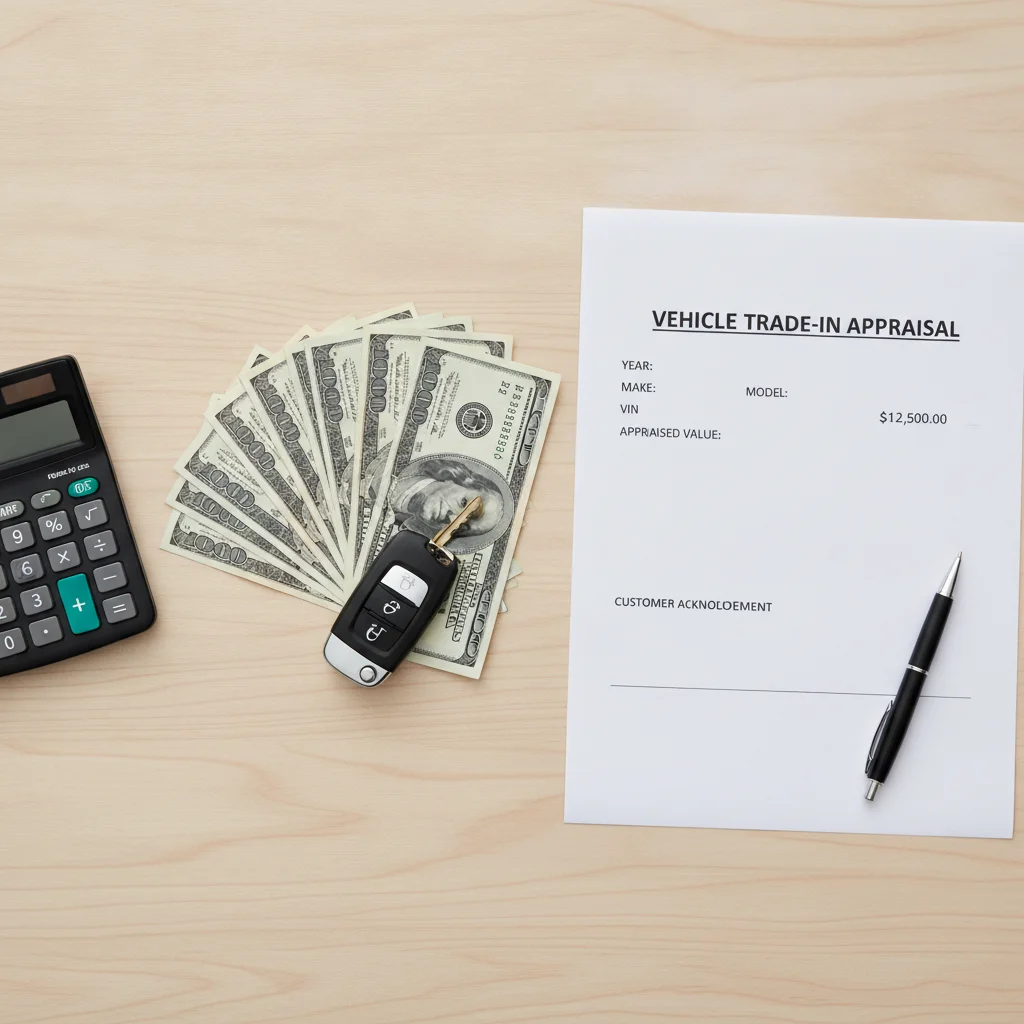
This step is non-negotiable if you want negotiating leverage. A dealer who knows you have a $14,200 offer from CarMax in your pocket cannot credibly open with $12,500 and expect you to accept it.
[in_content_images:0]Separate the trade-in negotiation from the new car deal
This is where most buyers lose money. When you negotiate both transactions together, the dealer can use the complexity to obscure how much you're actually getting for each. They'll talk in terms of monthly payments, not actual trade-in value or vehicle price. That framing works in their favor, not yours.
Negotiate your trade-in value as a standalone transaction first. Get a number in writing. Then, and only then, move to the new vehicle price. If a dealer refuses to separate them, that's a significant red flag. See Separating Your Trade-In from the New Car Deal for exactly how to hold that line during negotiation.
Verify how and when the dealer will pay off your loan
Once you've agreed on trade-in value, the dealer takes responsibility for paying off your existing lender. But the mechanics matter. Ask the finance manager these questions directly:
- When will your lender receive the payoff check?
- Is the payoff sent via check or wire transfer?
- What happens if the payoff amount has changed by the time they send it?
Some dealers send payoff checks within 3–5 business days. Others drag it out two to three weeks, during which interest continues accruing on your old loan and you may still be responsible for any shortfall. Get the payoff timeline documented in the deal paperwork — not just a verbal promise.
Review the final deal sheet for equity treatment
Before signing, locate the line items that show how your trade equity (or deficit) is being handled. If you have positive equity, it should appear as a credit reducing your new purchase price or down payment. If you have negative equity, it will appear as an addition to your new loan amount.
Confirm the numbers match what you calculated and negotiated. Specifically check:
- Trade-in allowance (the value the dealer is giving you)
- Payoff amount (what they're sending to your lender)
- Net trade equity (trade-in allowance minus payoff — this is the real number that matters)
- New loan amount (should reflect the net trade equity adjustment)
For context on how trade equity compares to a straight cash down payment in terms of reducing your financed amount, see Down Payment vs. Trade-In Value.
Once the paperwork is signed and the deal closes, your remaining obligation is straightforward: monitor your old loan account for 2–3 weeks to confirm the dealer's payoff has been received and applied. If you're still seeing a balance after that window, contact both the dealer and your lender immediately — don't wait for a missed payment to surface on your credit report.
Watch for delayed payoff confirmation
Dealers sometimes delay sending payoff funds, especially toward month-end when cashflow is tight. If you miss a payment on your old loan because the dealer hasn't funded it yet, the late payment may still appear on your credit report. Keep making your regular payments until you see a zero balance confirmed by your lender.
For the broader playbook on negotiating trade-in value when you're also buying a new vehicle, see Negotiating Trade-In Value on a New Car Purchase. That guide covers the full sequence — trade-in negotiation, new car pricing, and financing — in a single workflow.
Sell and buy in any order you choose
You don't have to trade in at the dealership where you're buying. Sell your current car to CarMax or Carvana for cash, then walk into a new car negotiation without a trade-in at all. This gives you cleaner negotiations and often more total money, particularly if your current car's retail value is strong.
Troubleshooting Common Problems
Even when you've done everything right, things can go sideways. Here are the most common issues and how to handle them:
- The dealer's payoff is lower than your actual payoff
- This happens when dealers use the balance on your statement rather than requesting a formal payoff quote. If the shortfall is small (under $200), many dealers will absorb it. If it's larger, you'll be responsible for the difference. This is why you get the payoff amount yourself and confirm it matches what's in the paperwork.
- The dealer takes more than 2 weeks to send the payoff
- Your loan keeps accruing interest. Contact the dealer's finance department first. If they stall, escalate to your lender and document every communication. In most states, dealers are required to pay off trade-in loans within a specific window — check your state's motor vehicle dealer statutes.
- You're offered a trade-in allowance lower than your CarMax offer
- Show the written offer and ask the dealer to match or beat it. If they won't, sell to CarMax instead and use that cash as a down payment. You're not obligated to trade in at the same dealership where you're buying. See the Trade-In Strategies hub for more on when selling outright makes more sense than trading in.
- The dealer wants to bundle everything into one monthly payment discussion
- Decline firmly. See Step 4 above and the companion article on keeping the trade-in negotiation separate. Monthly payment framing is the single most effective dealer tool for hiding an unfavorable deal inside an acceptable payment.
Never accept a verbal payoff promise
Whatever the finance manager tells you verbally about how your old loan will be handled means nothing if it isn't in the deal documents. Before you sign the purchase agreement, locate the trade-in payoff line and confirm it matches your lender's payoff quote exactly. Any gap between those numbers is your financial exposure, not the dealer's.
If your trade-in involves a lease rather than a conventional loan, the mechanics are different — residual values and lease-end provisions change the math significantly. See Trading In a Leased Car for that scenario.

All claims are backed by peer-reviewed research. Sources on request.