Key Takeaways
Trade-In Value
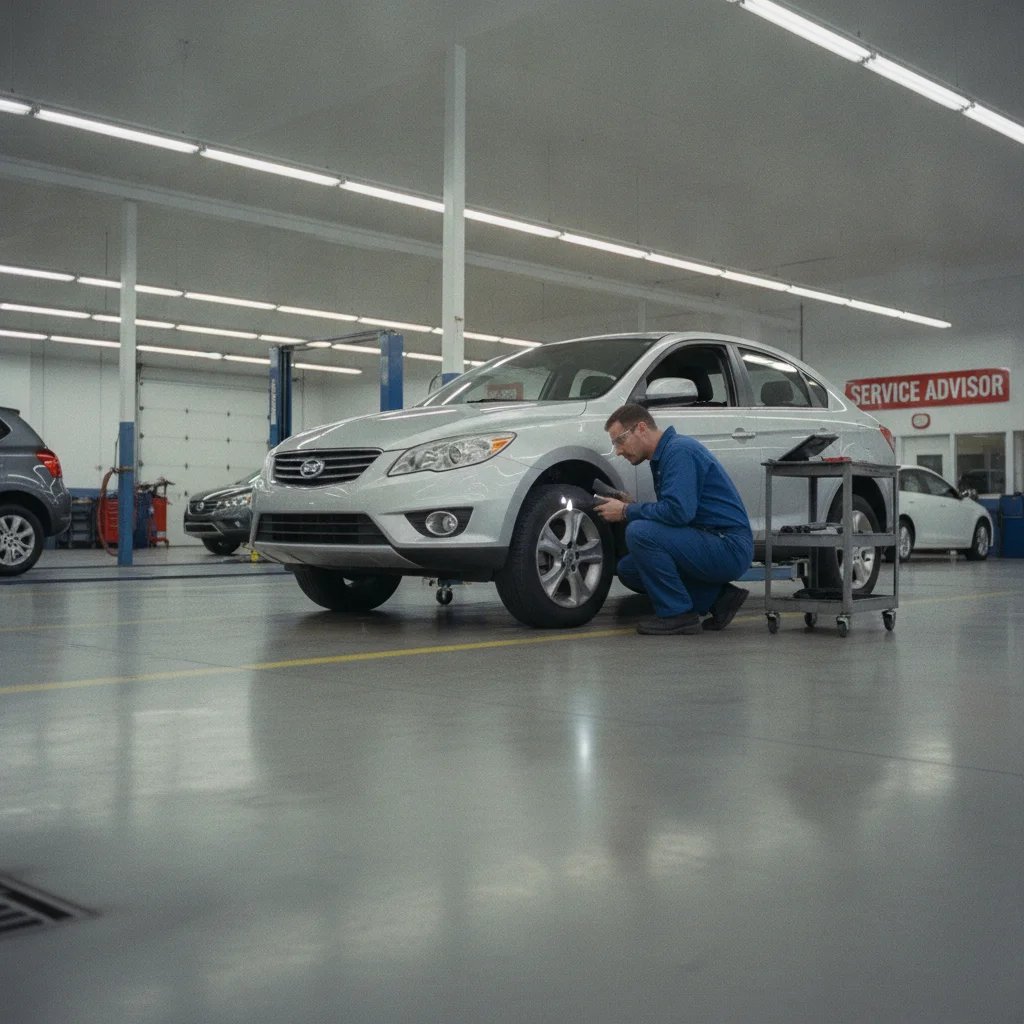
Trade-in value is the dollar amount a dealership is willing to credit you toward a new or used vehicle purchase in exchange for your current car. It is almost always lower than what you could get selling privately, because the dealer needs to recondition the vehicle and resell it at a profit. The figure is not arbitrary — dealers use a combination of industry pricing guides, local auction data, and in-person inspection to arrive at an offer.
Dealers typically reference Black Book wholesale auction data alongside Manheim Market Report (MMR) values when setting internal appraisal floors, tools that are not publicly available — which is why consumer-facing guides like KBB and Edmunds show higher numbers than what you'll often be offered.
Why Dealers and Consumers Almost Never Agree on a Number
Walk into any dealership having checked Kelley Blue Book the night before, and you're likely to leave the appraisal office confused and a little frustrated. The appraiser hands you a number that's $2,000 — sometimes $4,000 — below what KBB told you your car was worth. You're not being lied to, exactly. You're just looking at two entirely different markets.
Consumer valuation tools estimate what a vehicle sells for at retail, adjusted for condition. Dealers buy at wholesale. That gap — the spread between what a dealer pays for a car and what they sell it for — is where reconditioning costs, lot overhead, and profit margin live. When a dealer appraises your trade, they're not thinking about what it's worth to you. They're running a calculation about what it will cost them to get it ready for their lot and how quickly it's likely to sell.
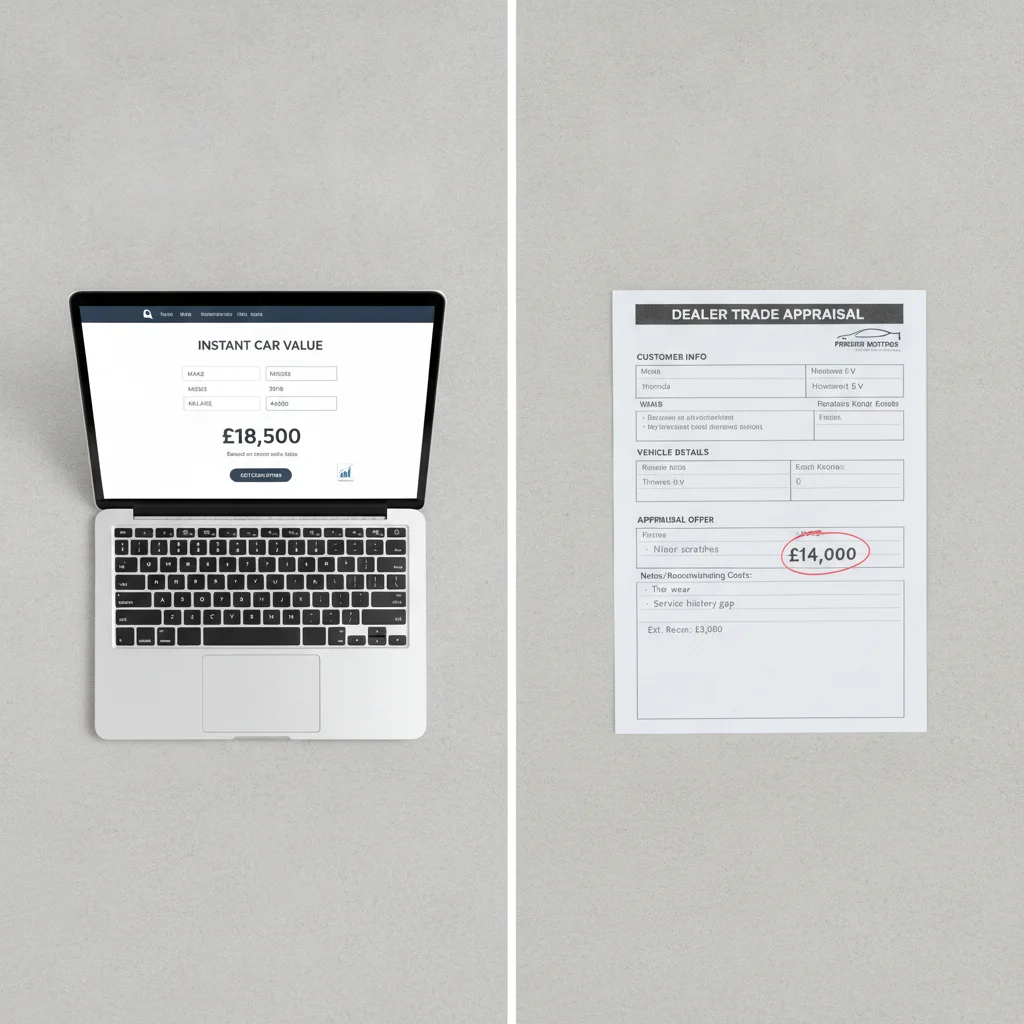
Understanding this distinction doesn't mean accepting a lowball offer. It means you stop negotiating against a fantasy number and start negotiating against actual market data. The goal of this article is to show you exactly what goes into the number you'll be handed — and how to build your own defensible range before you ever get there.
For a deeper look at exactly how the appraisal process unfolds from the dealer's side, see how dealer trade-in appraisals actually work.
The Four Factors That Actually Move Your Trade-In Number
Dealers aren't guessing when they appraise your car. They're running through a mental checklist — and the same variables carry weight every single time.
1. Condition
This is the most visible factor and the one buyers most consistently overestimate on their own vehicle. Dealers use standardized condition grades: Rough, Average, Clean, and Outstanding (or similar tiers depending on the guide). Most privately owned vehicles land in Average, not Clean — even if they've been well maintained. A single door ding, worn interior surfaces, or tires with less than 4/32" tread can push your appraisal down a tier, and each tier can mean $500 to $1,500 on a mid-market vehicle.
2. Mileage
The national average is roughly 12,000 to 15,000 miles per year. Every 10,000 miles above the expected average for the vehicle's age typically reduces value by $500 to $1,000 depending on the segment. High-mileage luxury vehicles take an especially hard hit because buyers expect them to have expensive deferred maintenance.
3. Regional Demand
A lifted pickup truck is worth more in Texas than in Manhattan. A convertible moves faster in Southern California than in Minnesota. Dealers buy for their specific market, which is why the same vehicle can appraise for meaningfully different amounts at dealerships 50 miles apart. This is also why national online tools sometimes miss the mark — they're averaging across markets that don't reflect local buyer preferences.
4. Days-to-Turn
This is the metric buyers almost never think about. Dealers track how many days it takes to sell a specific make, model, and trim on their lot. A vehicle that turns in 20 days gets a more aggressive appraisal than one that sits for 60. If your vehicle isn't popular in that dealer's inventory mix, they'll discount the offer to account for carrying costs and risk — even if the car is in excellent condition.
“The single biggest mistake sellers make is treating the trade-in as an afterthought. Your vehicle is an asset. Research it with the same rigor you'd bring to the new car you're buying.”
— Ivan Drury, Director of Insights, Edmunds
How to Build Your Own Valuation Range Before You Go
One number from one source is an opinion. Three numbers from three sources is a range you can negotiate within. Here's how to build that range systematically.
$1,000–$3,000
Typical gap between KBB trade-in value and dealer offer
Analysis by Edmunds consistently shows dealer trade-in offers running below consumer-guide estimates, reflecting the wholesale-to-retail spread.
20%
Average first-year depreciation for a new vehicle
According to Carfax and NADA data, most new vehicles lose between 15–25% of their purchase price within the first 12 months of ownership.
7 days
How long most instant cash offers remain valid
CarMax, Carvana, and Vroom typically guarantee their offers for seven days, giving buyers a usable negotiating window at the dealership.
3+
Number of valuations needed for a reliable range
Consumer advocacy groups and auto finance experts recommend getting a minimum of three independent estimates before entering a trade-in negotiation.
Step 1: Run Your VIN Through KBB and Edmunds
Start with Kelley Blue Book's Trade-In Range tool and Edmunds' True Market Value for trade-ins. Both will ask for your mileage and walk you through a condition assessment. Be honest — dealers will find every defect during their inspection, and inflating your condition self-assessment just sets you up for disappointment. These tools will give you a retail-leaning trade-in range that represents the top of what you could realistically expect from a motivated buyer.
The valuation tools hub has a direct comparison of how KBB, Edmunds, and other platforms calculate their estimates — worth reviewing before you run your numbers.
Step 2: Get an Instant Cash Offer
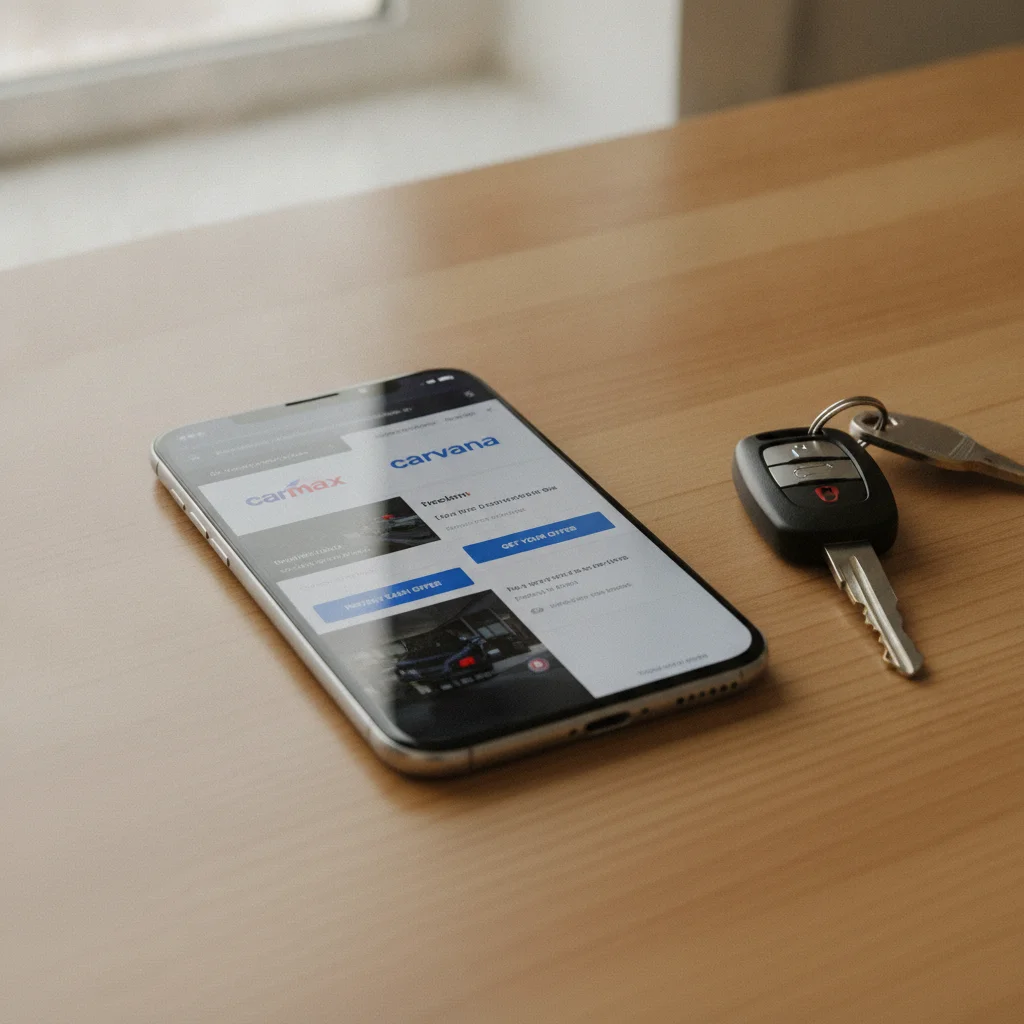
Services like CarMax, Carvana, and Vroom will give you a binding cash offer — typically valid for seven days — after you enter your vehicle information online or drop it off for a quick inspection. These aren't lowball offers designed to waste your time; they're real bids you can take to the dealership as competing offers. Dealers know these services exist and will often match or beat a CarMax offer to keep the deal in-house.
Step 3: Check Local Listings for Comparable Vehicles
Search Autotrader, Cars.com, and local Facebook Marketplace for your exact make, model, trim, year, and approximate mileage. What private sellers are asking for similar vehicles tells you the retail ceiling. Subtract 10-15% from that figure — representing dealer reconditioning and margin — and you'll have a rough sense of what a dealer can afford to pay for your car and still turn a profit.
Step 4: Combine Into a Realistic Range
Your bottom number should be close to the instant cash offer. Your top number should be the KBB/Edmunds trade-in estimate for a Clean-condition vehicle. Negotiate from the top, and know your walk-away point is anything below the instant cash offer — because you can literally walk away and sell to CarMax instead.
Get Your Instant Offers Before You Go Shopping
Run your car through CarMax, Carvana, and Vroom before you set foot in a dealership. Print or screenshot each offer with the expiration date visible. Walking in with a real competing bid in hand immediately changes the dynamic — the dealer knows you have an alternative and that lowballing you will cost them the sale.
Time Your Detail for Maximum Impact
Schedule your interior detail one to two days before the appraisal, not weeks in advance. A freshly detailed car signals recent care and makes a measurably better first impression on the appraiser. Focus on odor elimination, carpet cleaning, and leather or vinyl conditioning — these are the areas that drive the steepest condition deductions.
Common Dealer Tactics Around Trade-In Valuation
I spent years in dealership finance offices. The tactics below aren't secret — but they work because most buyers don't recognize them until after the deal is signed.
Bundling the Trade with the New Car Price
The most common move: a sales manager offers you a generous trade-in number while simultaneously padding the new car price or reducing your discount. When you look at any one number in isolation, it looks good. When you add up the whole deal, you paid more than you should have. Always negotiate the price of the new vehicle to a firm number before introducing your trade. Once the purchase price is locked, bring in the trade and negotiate it separately.
The step-by-step approach to negotiating trade-in value walks you through exactly how to keep these conversations separate without the dealer resetting the table.
The "We're Over Allowance" Line
You'll hear a manager say they're giving you "more than the car is worth" as a favor to earn your business. What they're rarely mentioning is that this "generous" allowance is being offset somewhere else — often in the financing rate or add-on products in the F&I office. Don't let emotional framing replace actual math.
Condition Downgrades During Appraisal
An appraiser who grades your vehicle as Rough instead of Average can justify a $1,500 lower offer. Sometimes this is legitimate. Sometimes it's a tactic. If a dealer downgrades your condition, ask them to walk you through the specific defects that drove the grade. Many buyers accept the lower number because they don't want to seem difficult — but asking a clear factual question is entirely reasonable and often results in the grade being revised.
Black Book vs. KBB: Why They Diverge
Black Book, the primary data source dealers use internally, updates its wholesale values weekly based on actual auction transactions. Kelley Blue Book updates less frequently and weights retail sales data more heavily. This structural difference is the core reason dealer offers consistently run below KBB estimates — they're not measuring the same market.
Negative Equity Changes the Calculus
If you owe more on your current vehicle than it's worth — a situation called being "underwater" — a trade-in can complicate your new purchase significantly. Dealers will often roll the negative equity into your new loan, which increases your monthly payment and total interest paid. Knowing your payoff balance before the appraisal is just as important as knowing your vehicle's value.
Low-Ball, Then Raise Just Before You Walk
A classic closing tactic: start with a number you'll refuse, let you get frustrated and prepare to leave, then come back with a revised offer that's "the best they can do." The revised number was the real starting offer all along. By making you feel like you won something, they've reset your emotional reference point away from your actual target number. Know your range in advance and don't let the drama of the process move your anchor point.
What Depreciation Is Really Doing to Your Offer
Depreciation is the single biggest force shaping your trade-in value, and it doesn't move in a straight line. A new vehicle typically loses 15-25% of its value in the first year alone. By years three through five, the rate slows — but the absolute dollar loss can still be significant depending on the segment.
Dealers price depreciation into their offers more aggressively than any consumer guide will show you, because they're accounting for the time and cost required to resell the vehicle. A car that book-value at $18,000 might be offered at $14,500 because the dealer knows they'll spend $800 on reconditioning, needs a $1,500 gross profit, and has factored in the risk that it takes 45 days to sell.
For a complete breakdown of how depreciation curves affect trade-in offers by vehicle age, see what dealer trade-in values are really telling you about depreciation.
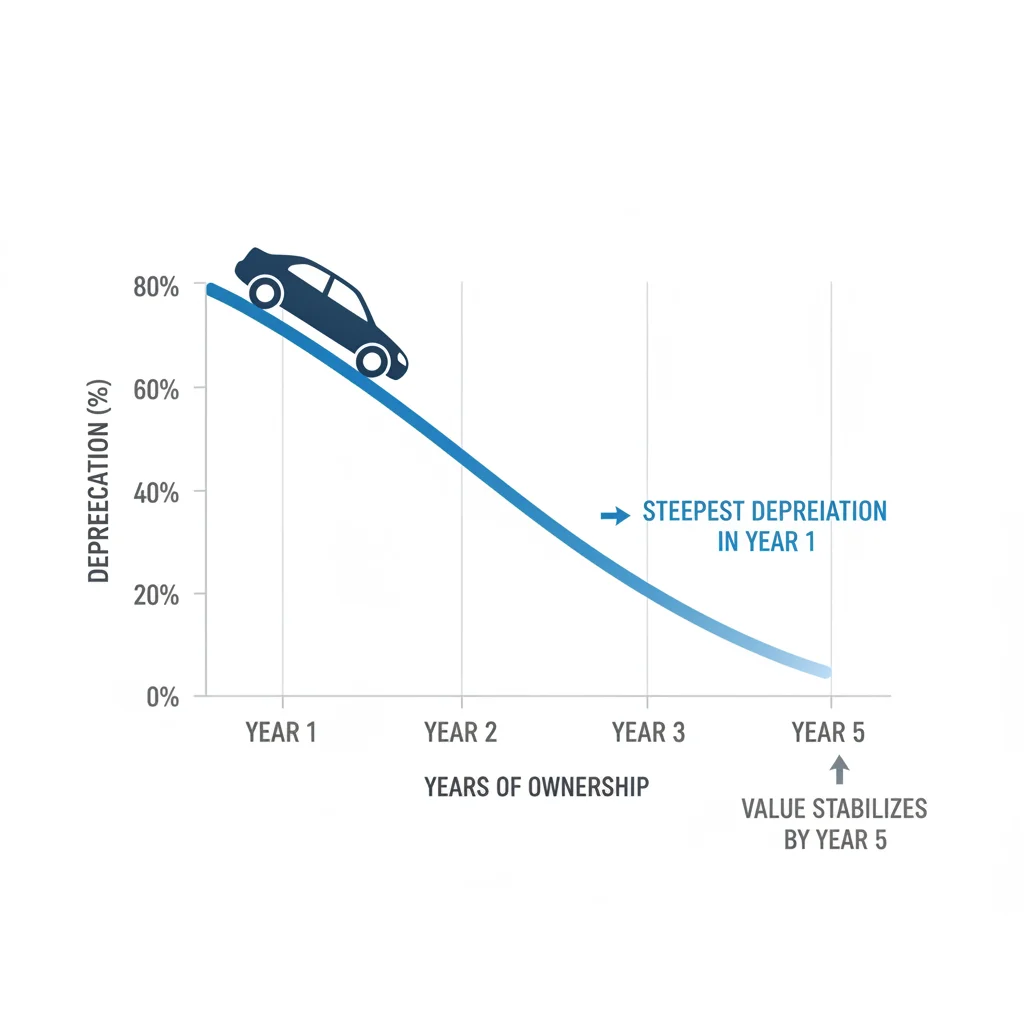
Knowing your vehicle's depreciation trajectory also helps you time your trade strategically. Vehicles between 2 and 4 years old, with less than 50,000 miles, in popular segments (compact SUVs, full-size trucks) tend to hold value well and generate the most competitive dealer offers. If you're approaching a mileage threshold — say 60,000 miles — trading before you hit it may produce a noticeably better offer than waiting until after.
Prepping Your Car to Maximize the Appraisal
Dealers adjust offers based on what they see during the inspection. Some preparation steps genuinely improve what they see; others are a waste of time and money. Here's how to spend your effort wisely before the appraisal.
Worth Doing
- Detail the interior thoroughly. Pet hair, stains, and odors are condition deductions that cost dealers real money to fix. A professional detail runs $100–$200 and can return far more in appraisal value.
- Fix small cosmetic issues if the cost is under $200. A cracked taillight lens, a missing trim piece, or a burned-out headlight signals deferred maintenance. These are cheap fixes that pay back more than they cost.
- Gather all documentation. Service records, the original window sticker, and both sets of keys tell appraisers the vehicle was well maintained. Missing keys alone can result in a $200–$400 deduction.
- Inflate tires to the correct PSI. An appraiser who spots uneven wear or low pressure will start asking about alignment and suspension — opening doors to larger deductions.
Not Worth Doing
- Mechanical repairs above $500. Dealers buy parts and labor at cost. You'll almost never recoup a significant repair dollar-for-dollar in trade-in value.
- New tires. Unless the current tires are dangerously worn, replacing them before a trade rarely adds equivalent value to the offer.
- Touch-up paint on body damage. Amateur paint work often makes the damage look worse, not better, to a trained appraiser.
For a full pre-appraisal checklist, see what to do before you drive to the dealership.
Get Your Instant Offers Before You Go Shopping
Run your car through CarMax, Carvana, and Vroom before you set foot in a dealership. Print or screenshot each offer with the expiration date visible. Walking in with a real competing bid in hand immediately changes the dynamic — the dealer knows you have an alternative and that lowballing you will cost them the sale.
Time Your Detail for Maximum Impact
Schedule your interior detail one to two days before the appraisal, not weeks in advance. A freshly detailed car signals recent care and makes a measurably better first impression on the appraiser. Focus on odor elimination, carpet cleaning, and leather or vinyl conditioning — these are the areas that drive the steepest condition deductions.
Evaluating the Offer You Actually Receive
When the appraiser comes back with a number, don't respond immediately. Take the paper, look at the figure, and compare it silently against the range you built before you walked in. Is it above your instant cash offer floor? Is it within $500-$1,000 of your KBB/Edmunds midpoint? If yes, you're likely in a fair range and the only question is whether you can push it slightly higher.
If the offer is more than $1,500 below your floor, ask the appraiser to walk you through the condition grade and the specific deductions applied. This question alone sometimes results in a revised offer. If the explanation is reasonable — say, the tires genuinely need replacement and they've deducted accordingly — you have better information to decide whether to prep the car differently, shop it to another dealer, or accept the offer as-is.
You can also present your instant cash offer from CarMax or Carvana directly and ask whether they can match it. Many dealers will — especially if you're also buying a vehicle from them, since they earn gross profit on the new car sale, the financing, and the F&I products regardless of what they pay for your trade.
For a complete framework for deciding whether a specific offer is fair given your vehicle and market, see evaluating trade-in offers: a framework for knowing what's fair.
Black Book vs. KBB: Why They Diverge
Black Book, the primary data source dealers use internally, updates its wholesale values weekly based on actual auction transactions. Kelley Blue Book updates less frequently and weights retail sales data more heavily. This structural difference is the core reason dealer offers consistently run below KBB estimates — they're not measuring the same market.
Negative Equity Changes the Calculus
If you owe more on your current vehicle than it's worth — a situation called being "underwater" — a trade-in can complicate your new purchase significantly. Dealers will often roll the negative equity into your new loan, which increases your monthly payment and total interest paid. Knowing your payoff balance before the appraisal is just as important as knowing your vehicle's value.
The broader dealer trade-ins hub covers everything from appraisal mechanics to negotiation tactics if you want to go deeper on any part of this process.

All claims are backed by peer-reviewed research. Sources on request.