Key Takeaways
Regional Price Differences
Regional price differences refer to the gap in market value for the same vehicle depending on where it is being bought or sold. A pickup truck, four-wheel-drive SUV, or diesel workhorse that commands top dollar in Montana or Wyoming may sit unsold at that same price in coastal California or Florida. These differences are driven by local demand patterns, fuel costs, climate, infrastructure, and the types of vehicles that buyers in a given area actually need and use.
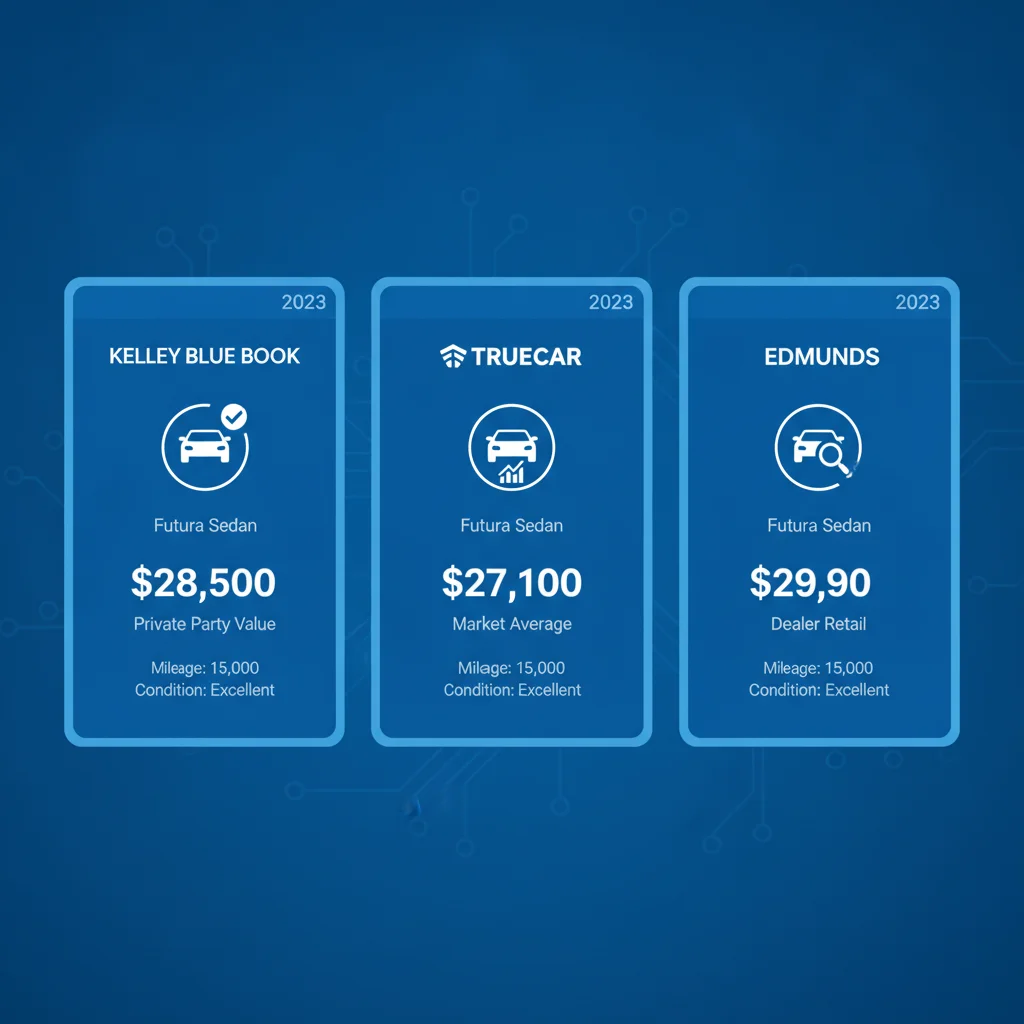
Valuation tools like Kelley Blue Book and Black Book incorporate ZIP-code-level transaction data to generate regional adjustments, but the methodology and weighting differ — which is why two tools can show a $1,500 spread on the same vehicle in the same city.
The Same Car, Two Very Different Price Tags
Here's a scenario that plays out every week across the country: a seller in suburban Houston lists a 2019 Ram 1500 4x4 with 55,000 miles for $28,500. It sits for three weeks with modest interest. Meanwhile, a nearly identical truck in Bozeman, Montana moves in four days at $32,200. Same year, same trim, similar mileage. The difference isn't the truck — it's the market.
Regional price differences are one of the least-understood levers in vehicle valuation, and sellers who ignore them consistently leave money on the table. This isn't about gaming the system. It's about understanding that vehicle value is not a fixed number — it's a function of local supply, local demand, and what buyers in a specific geography are willing and able to pay.
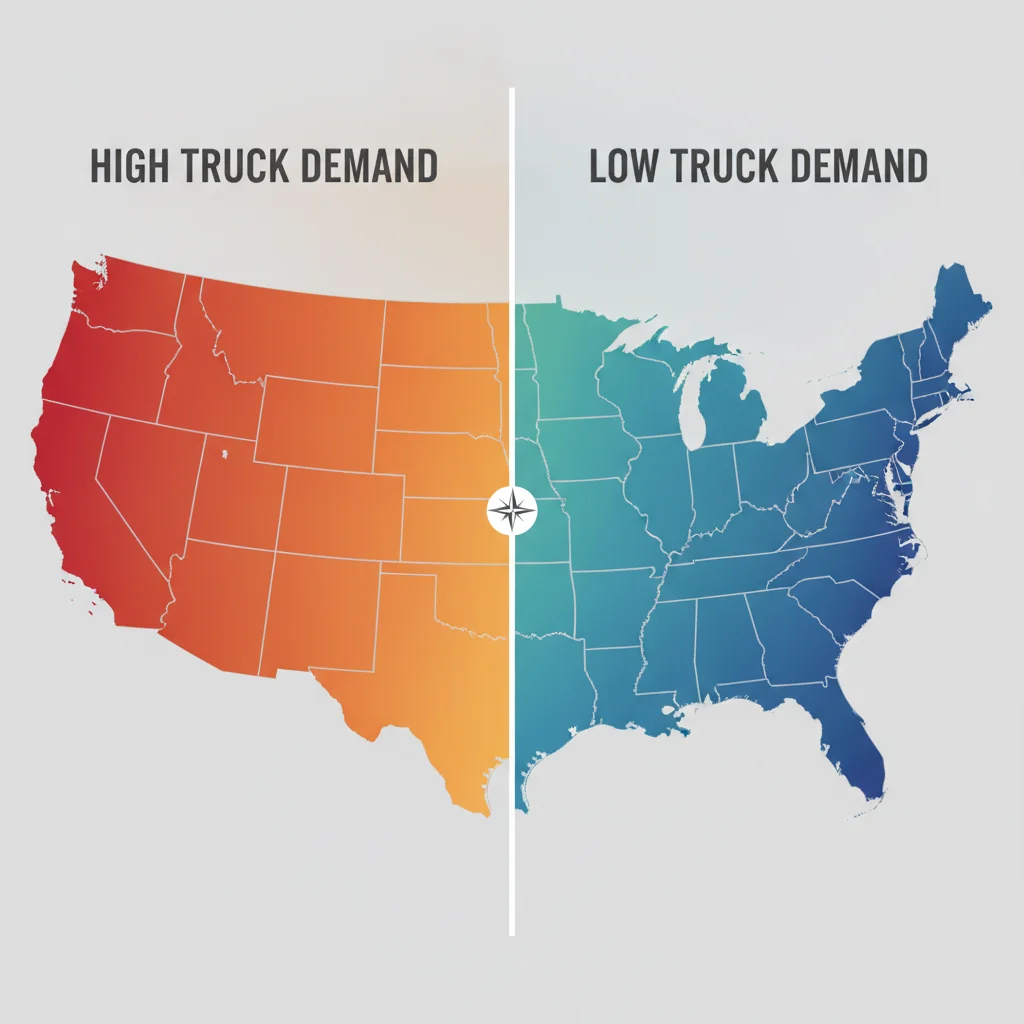
This explainer breaks down why these regional gaps exist, which vehicle types are most affected, how the major valuation tools account for them (or fail to), and how you can use this knowledge to make smarter decisions whether you're selling, buying, or trading in.
What Actually Drives Geographic Demand
Regional price differences aren't random. They follow predictable patterns rooted in how people actually use vehicles in different parts of the country.
Climate and Terrain
Four-wheel drive isn't a luxury in Wyoming — it's a practical requirement for six months of the year. Buyers in mountain states and the northern Plains are willing to pay a premium for 4WD or AWD because they use it constantly. The same feature in coastal Southern California or Florida is a much harder sell. Terrain shapes demand in ways that no algorithm fully captures.
Occupation and Land Use
Agricultural regions generate strong, consistent demand for diesel pickups with towing capacity. Contractors, ranchers, and farmers aren't buying trucks as a lifestyle statement — they need them to work. That functional demand creates upward pricing pressure in rural markets that simply doesn't exist at the same scale in dense urban areas.
Local Inventory and Competition
Markets with fewer dealerships and less inventory create scarcity premiums. A buyer in a rural county who wants a specific configuration may face limited local options, while a buyer in a major metro has five competing dealers within 20 miles. Less competition among sellers means higher prices for sellers.
Fuel Costs and Vehicle Efficiency Preferences
States with consistently high gas prices — California historically leads here — push buyers toward hybrids and fuel-efficient vehicles. That shifts demand away from large trucks and toward smaller crossovers, compressing truck values in those markets while inflating hybrid premiums.
“Dealers in strong truck markets aren't being generous — they're being rational. They know what they can sell it for next week, and that number is different from what a coastal dealer can get. The market sets the price, and the market is local.”
— Tom Kontos, Former Chief Economist, KAR Auction Services
Understanding these forces matters because valuation tools are measuring the result of these demand patterns, not explaining them. If you only look at a national average, you're missing the story.
Which Vehicle Types Show the Biggest Regional Swings
Not every vehicle type is equally affected. Regional demand gaps are most pronounced for vehicles with specific functional characteristics tied to geography.
$3,000–$6,000
Typical regional premium for 4WD pickup trucks
Based on cross-market comparisons between rural Mountain West listings and coastal California/Florida markets for comparable year, trim, and mileage.
$800–$1,500
Average cross-country vehicle shipping cost
Industry average for enclosed or open-carrier transport across the continental US, per uShip and Montway Auto Transport published rate ranges.
Weekly
Black Book data refresh frequency
Black Book updates its wholesale valuations from auction data weekly, making it one of the most current tools for tracking real market movement.
60+ days
Listing age that signals overpricing in local market
A vehicle sitting on the market for more than 60 days in your region typically indicates the asking price exceeds what local buyers are willing to pay.
ZIP-code level
Geographic granularity of KBB regional adjustments
Kelley Blue Book incorporates ZIP-code-level retail transaction data to adjust valuations, though its refresh cycle can lag real market shifts by several weeks.
- Full-size 4WD pickup trucks: The single category with the largest regional price spreads. A 4x4 Ram or F-150 in Montana, Wyoming, or rural Texas routinely commands $3,000–$6,000 more than the same truck in Miami or Los Angeles.
- Diesel engines: Diesel pickups carry premiums in agricultural regions and among buyers who tow heavy loads regularly. In markets where diesel demand is lower, the premium shrinks or disappears — and fuel availability can actually be a deterrent.
- AWD crossovers and SUVs: Demand spikes in the Mountain West, Pacific Northwest, and upper Midwest. In the Sun Belt, buyers often see AWD as unnecessary and aren't willing to pay for it.
- Convertibles and sports cars: Values tend to be stronger in warmer, drier climates. A Mustang GT convertible in Phoenix will attract more motivated buyers than the same car in Seattle.
- Compact hybrids and EVs: Premium urban markets — especially California — generate the strongest demand for fuel-efficient vehicles, supporting higher prices than rural or Southern markets where EV infrastructure is thinner.
For mainstream sedans and common family crossovers, regional spreads are narrower — typically $500–$1,500 — because demand is more nationally uniform.
Regional Data Lags Are Real
Valuation tools update on cycles ranging from weekly (Black Book) to monthly or longer (some KBB categories). During periods of rapid market shifts — like post-pandemic inventory shortages or sudden fuel price spikes — the tools can be significantly behind actual transaction prices. Live listings from CarGurus, Facebook Marketplace, and AutoTrader reflect real-time asking prices and are often the most current signal available to sellers.
Trim Level Matters More in Regional Markets
Regional demand premiums are not uniform across a model's trim lineup. In work-truck markets, the premium concentrates on mid-range and high-capacity trims with towing packages, not base models. A base-spec F-150 won't carry the same Montana premium as an FX4 or Lariat 4x4. If you're evaluating regional value, make sure you're comparing the same trim configuration — not just the same model name. <a href="/buying-a-car/new-vs-used-cars/buying-new-cars/trim-levels-explained-why-the-same-car-can-cost-10000-more">Trim levels can affect value by $10,000 or more</a>, so precision here matters.
How Valuation Tools Handle Regional Data — and Where They Fall Short
The major valuation resources all claim to account for regional differences, but they do it differently, and the gaps between them matter to sellers making real pricing decisions.
Kelley Blue Book (KBB)
KBB pulls from retail transaction data and adjusts by ZIP code. Enter a 90210 ZIP and you'll often get a different number than a rural Montana ZIP for the same vehicle. KBB skews toward retail prices — what dealers are actually selling vehicles for — which makes it useful as a ceiling reference for private party sellers. Its data refresh cycle is slower, though, meaning it can lag a shifting market by several weeks.
Black Book
Black Book aggregates wholesale auction data and updates weekly. It's the tool dealers often use internally to assess what they can acquire a vehicle for at auction. Because it captures auction transactions across the country, it tends to reflect real market movement faster than KBB. However, it's a wholesale reference — not what a private party buyer will pay you — so use it as a floor, not a target.
NADA Guides
NADA is the traditional dealer-facing standard, especially for trade-in valuations. It incorporates regional adjustments but historically skews conservative on private party values. It's most useful as a cross-check rather than a primary pricing tool for individual sellers.
CarGurus and Market Listings Data
For the most current regional picture, active listing data from CarGurus or similar platforms shows you what real sellers are asking in real-time — and how long those listings have been sitting. A vehicle listed at $30,000 that's been on the market for 60 days in your city is telling you something KBB won't.
The clearest picture comes from layering multiple tools. Start with KBB for a retail ceiling, check Black Book for wholesale floor, then look at 10–15 active comparable listings in your specific market. That triangle gives you a defensible price range backed by real data.
For a deeper look at why these tools diverge, see why your car's valuation differs across every tool you check.

Run Your VIN Through Two ZIP Codes
Before pricing your vehicle for sale, run it through KBB twice — once with your actual ZIP code and once with a ZIP code from a region where your vehicle type is in high demand (e.g., a Montana or Wyoming ZIP for a 4WD truck). The spread between the two outputs tells you whether there's a meaningful arbitrage opportunity worth pursuing through a broader listing strategy or cross-state private party sale.
Pair Regional and Seasonal Timing for Maximum Value
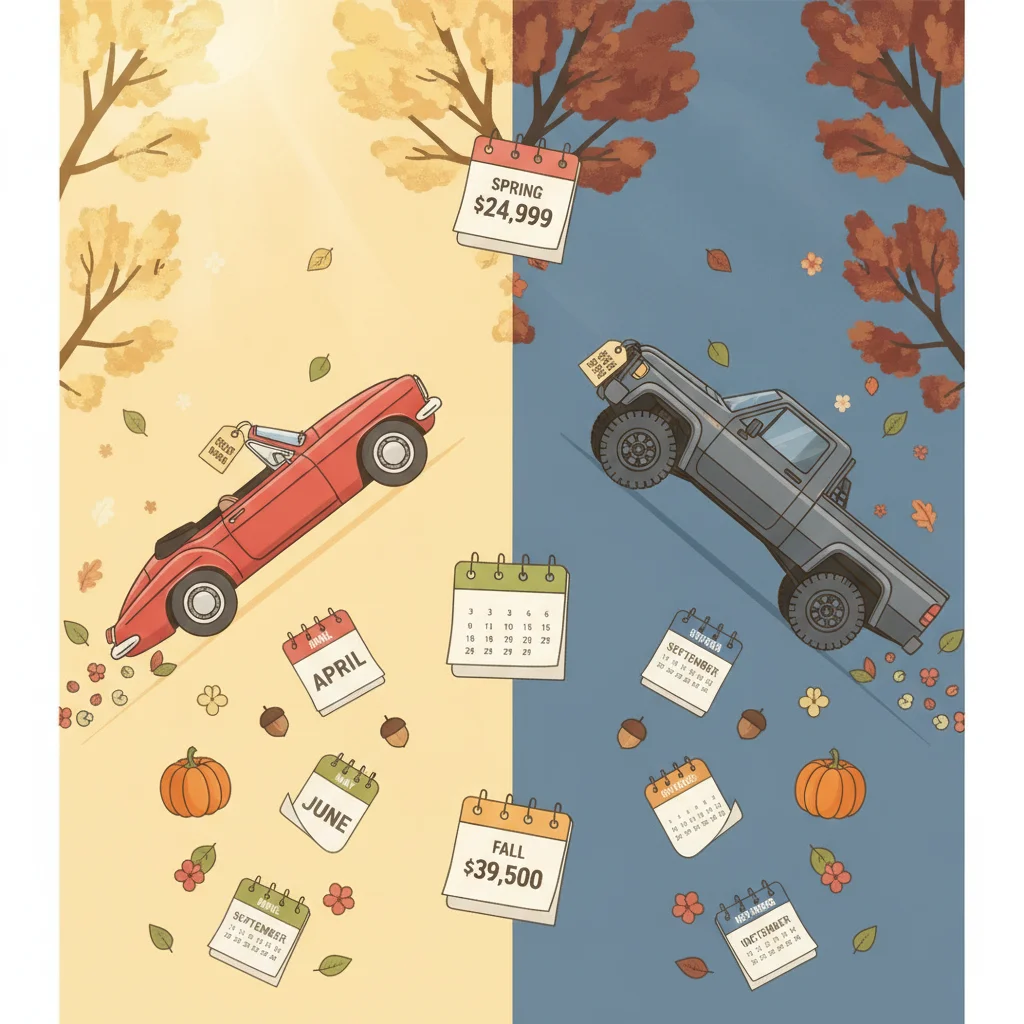
Regional demand premiums don't operate in isolation. A 4WD truck in Montana is worth even more in October than in April. A convertible in Arizona peaks in early spring. If your vehicle type benefits from both geographic and seasonal demand, timing your listing to capture both effects simultaneously can add thousands to your final price. See <a href="/selling-your-car/pricing-your-car/market-timing/why-the-month-you-list-your-car-changes-what-buyers-will-pay">how the month you list affects buyer willingness to pay</a> for specific timing guidance.
Get Dealer Appraisals Across Market Types
If you're trading in, don't limit yourself to the closest dealer. Get appraisals from two or three dealers with different local customer profiles. A dealer whose lot is heavy on trucks will often pay more for your 4WD truck than a dealer who primarily sells economy cars. The ten minutes it takes to get an additional appraisal can easily be worth $1,000 or more in your trade-in offer.
How to Use Regional Pricing to Your Advantage as a Seller
Once you understand that your vehicle may be worth more in a different market, the next question is practical: what do you actually do with that information?
Step 1: Identify Your Vehicle's Demand Profile
Is your vehicle one that benefits from regional demand? Run a quick diagnostic: Is it a 4WD truck, diesel, AWD SUV, or convertible? If yes, it's worth checking demand in regions where that feature has functional value. If it's a mid-size sedan or front-wheel-drive crossover, the regional arbitrage opportunity is smaller.
Step 2: Check Comparable Listings in High-Demand Markets
Use CarGurus or Facebook Marketplace and search for your vehicle's year, make, model, trim, and mileage in a market you suspect has stronger demand — rural Mountain West for 4WD trucks, the Pacific Northwest for AWD crossovers, the Sun Belt for convertibles. Look at both asking prices and days on market. A vehicle that's moving quickly at a higher price in another market is confirming real demand.
Step 3: Decide Between Local Sale and Cross-Market Private Party
Selling privately to a buyer in another state is legal and increasingly straightforward thanks to online marketplaces. You'll need to provide a clean title and bill of sale. The buyer pays shipping or drives to pick it up. For a $3,000–$5,000 premium, many sellers and buyers find this worth the logistics.
Be transparent about condition and history. Use a service like CARFAX or AutoCheck to provide documentation. Serious cross-state buyers will expect it, and it protects you legally.
Step 4: Use Regional Data in Trade-In Negotiations
If you're trading in at a dealer, regional comps can be a negotiating lever. If you can demonstrate that identical vehicles are selling for $2,500 more at dealers in a nearby region, you have a basis for pushing back on a low appraisal. Dealers in high-demand areas for your vehicle type will often pay more — worth getting an appraisal from a dealer whose inventory profile matches your vehicle.
For more context on how dealer appraisals work, understanding dealer trade-in appraisals gives you a solid foundation before you walk in.
Also worth noting: regional price differences interact with seasonal demand. A 4WD truck in Montana is worth more in October than in April — the geographic premium and the seasonal premium can stack. See how seasonal demand inflates or deflates your car's value for the timing side of this equation.
What Regional Pricing Means for Buyers
Regional price differences cut both ways. If you're buying, understanding geography can work in your favor.
If you live in a market where a specific vehicle type is in high demand, consider expanding your search radius. A buyer in Denver looking for a 4WD truck might find better pricing in the Midwest or Southeast, where demand pressure is lower. Shipping costs typically run $800–$1,500 for cross-country transport, and a $2,000 pricing gap still puts money in your pocket after logistics.
Conversely, if you're buying a hybrid or EV and you're outside California, you'll often find stronger pricing in your local market than California-sourced vehicles — demand is lower, so sellers are more negotiable. Just account for any state-specific incentives or rebates that may have affected how the vehicle was originally purchased and titled.
For buyers evaluating new vehicle pricing across markets, the relationship between invoice price, MSRP, and market value becomes especially relevant. Understanding the difference between invoice price and market value will help you benchmark what a fair deal looks like in your region.
One more consideration for buyers: ownership costs vary significantly by state, so a lower purchase price in another market can be partially offset by higher registration fees, inspection requirements, or taxes after you bring the vehicle home.

The Bottom Line on Regional Value
Vehicle value is not a fixed number printed in a guidebook. It's a live function of who wants your vehicle, where they are, and how many competing options they have. Regional price differences are real, measurable, and exploitable — if you know where to look.
For sellers, the practical takeaway is straightforward: if you have a vehicle with geographic demand characteristics — 4WD, diesel, AWD, convertible — spend 20 minutes checking comparable listings in high-demand markets before you price anything. That research may reveal several thousand dollars of untapped value.
For buyers, regional pricing is a reminder that the lowest price isn't always at your nearest dealership. Expanding your geographic search, even with shipping costs factored in, can meaningfully improve what you pay.
And for anyone relying on a single valuation tool: cross-check your number. KBB, Black Book, and live listing data tell different parts of the same story. The seller or buyer who reads all three chapters makes better decisions than the one who stops at the first page.
Timing your sale around market conditions adds another dimension to this strategy — pairing regional demand with the right month on the calendar is how experienced sellers maximize their final number.
Run Your VIN Through Two ZIP Codes
Before pricing your vehicle for sale, run it through KBB twice — once with your actual ZIP code and once with a ZIP code from a region where your vehicle type is in high demand (e.g., a Montana or Wyoming ZIP for a 4WD truck). The spread between the two outputs tells you whether there's a meaningful arbitrage opportunity worth pursuing through a broader listing strategy or cross-state private party sale.
Pair Regional and Seasonal Timing for Maximum Value
Regional demand premiums don't operate in isolation. A 4WD truck in Montana is worth even more in October than in April. A convertible in Arizona peaks in early spring. If your vehicle type benefits from both geographic and seasonal demand, timing your listing to capture both effects simultaneously can add thousands to your final price. See <a href="/selling-your-car/pricing-your-car/market-timing/why-the-month-you-list-your-car-changes-what-buyers-will-pay">how the month you list affects buyer willingness to pay</a> for specific timing guidance.
Get Dealer Appraisals Across Market Types
If you're trading in, don't limit yourself to the closest dealer. Get appraisals from two or three dealers with different local customer profiles. A dealer whose lot is heavy on trucks will often pay more for your 4WD truck than a dealer who primarily sells economy cars. The ten minutes it takes to get an additional appraisal can easily be worth $1,000 or more in your trade-in offer.

All claims are backed by peer-reviewed research. Sources on request.