Key Takeaways
Our Verdict
No single state is cheapest across every cost category — what looks like a low-tax paradise on one metric often recovers those dollars on another. The biggest lifetime savings come from understanding which fees your state imposes annually versus at purchase, and planning your ownership horizon accordingly. Buyers in high-property-tax states who plan to hold a car long-term face compounding costs that buyers in flat-fee states simply don't.
| Best for | Recommended |
|---|---|
| Buyers prioritizing lowest upfront purchase cost | States with no or low sales tax (e.g., Montana, Oregon, New Hampshire) |
| Long-term owners wanting predictable annual fees | Flat-fee registration states (e.g., Texas, Florida) |
| EV buyers seeking to minimize ownership surcharges | States without EV-specific road-use fees and with tax credits (e.g., Colorado, New York) |
| High-mileage drivers in value-based fee states | Holding vehicles longer as depreciation reduces the annual tax base |
The Hidden Cost Gap No One Warns You About
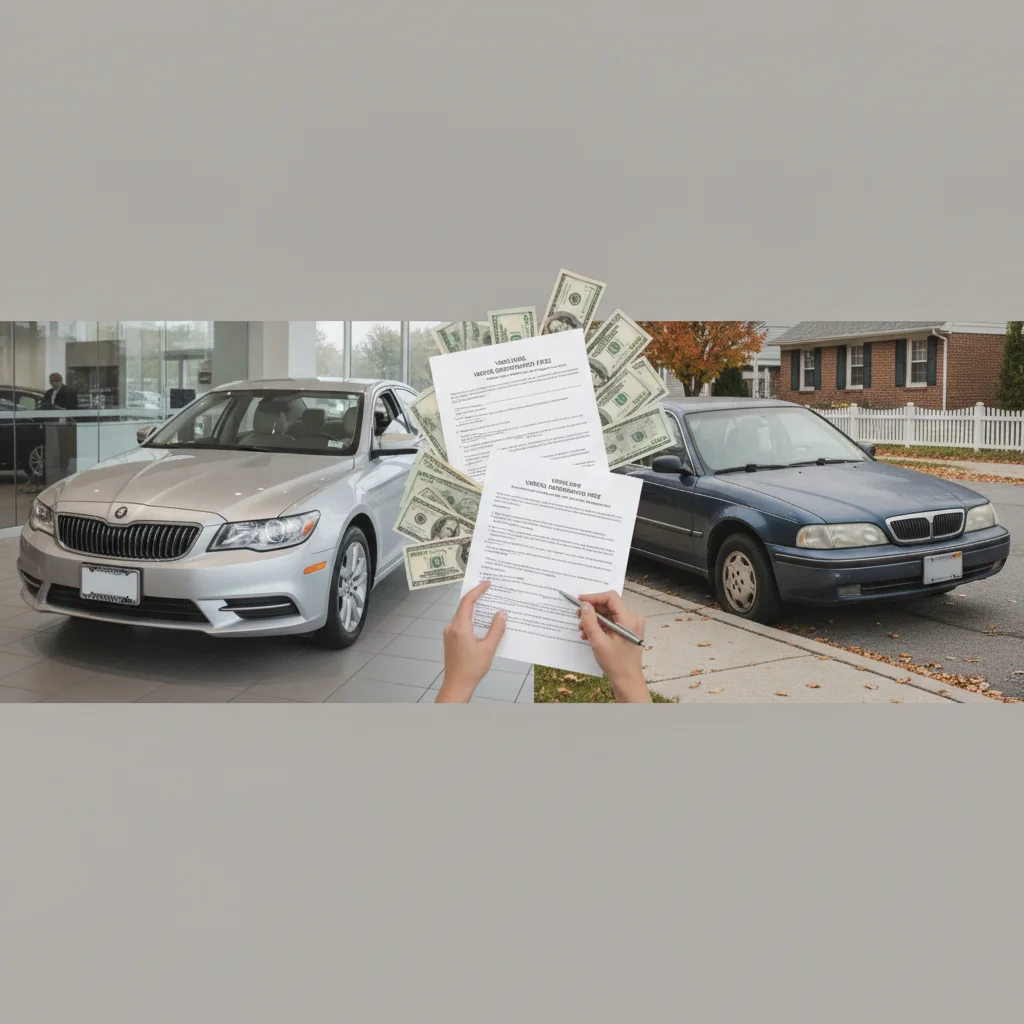
Imagine two neighbors who both buy the exact same car — same make, model, trim, and color — on the same day from the same manufacturer. One lives in Virginia; the other in Oregon. Over five years, the Virginia owner will spend thousands of dollars more in government-mandated fees and taxes, through no fault of their own shopping habits. The car is identical. The bill is not.
This isn't a tax loophole or a dealership trick. It's simply how American vehicle ownership works. Every state sets its own rules for sales taxes, annual registration fees, title fees, and personal property taxes on vehicles. The variation between states is enormous — and for most buyers, almost entirely invisible until the bill arrives.
As someone who has worked with car owners across many states, I can tell you that these costs are consistently underestimated. People obsess over sticker price and APR, then get blindsided by a $900 annual registration renewal they didn't see coming. Understanding this landscape before you buy — or before you relocate — can save you real money. See our state-by-state tax and fee reference for a quick-lookup breakdown of what each state actually charges.
Sales Tax: The First Big Variable
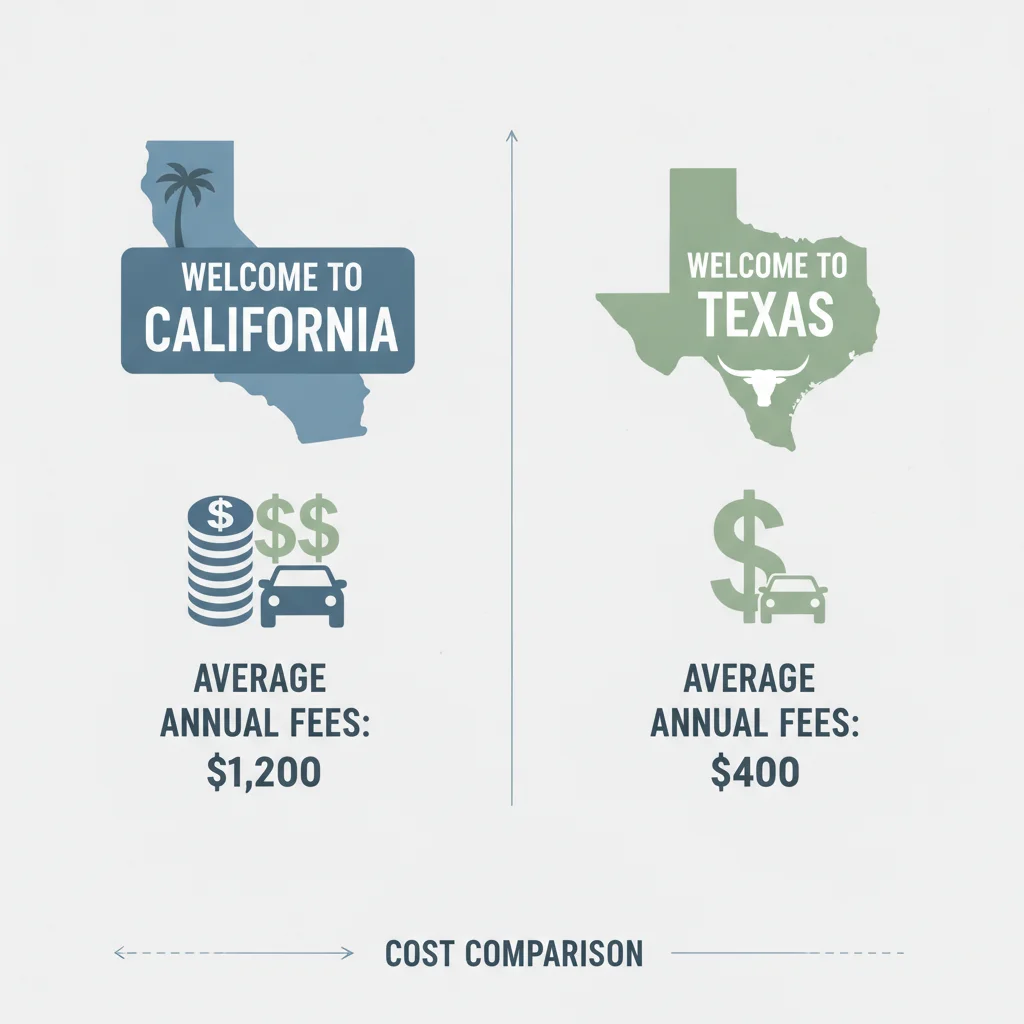
Most people know sales tax exists on car purchases. Fewer realize just how large that variable can be. Five states — Montana, Oregon, New Hampshire, Delaware, and Alaska — charge no state sales tax at all on vehicle purchases. Meanwhile, states like California (7.25% base, often higher with local add-ons), Nevada (up to 8.375%), and Tennessee (7%) take a substantial cut the moment you sign the paperwork.
On a $40,000 vehicle, the difference between buying in a 0% state versus an 8% state is $3,200 — before a single registration fee is paid. That's not a rounding error; that's a car payment.
$3,200+
Sales tax gap on a $40,000 car
The difference between buying in a 0% sales tax state versus an 8% state on a $40,000 vehicle purchase.
30+
States with EV-specific annual fees
As of 2024, more than 30 states charge electric vehicle owners annual surcharges to offset lost fuel tax revenue.
$6,000+
7-year fee gap between high and low-cost states
A practical state-by-state calculation on a $42,000 SUV shows government fee differences exceeding $6,000 over seven years.
~12
States with annual vehicle property tax
Roughly a dozen U.S. states levy annual personal property taxes on vehicles based on current assessed market value.
Here's where it gets complicated: the tax doesn't always follow the sale. Most states require you to pay the destination state's sales tax when you register the car, regardless of where you bought it. So driving to Oregon to avoid California's tax usually doesn't work — California will collect when you bring the car home. For a full picture of how this plays out when crossing state lines to purchase, see our guide on out-of-state purchase tax traps.
Some states also tax trade-in value differently. In states that offer a trade-in credit, you only pay sales tax on the difference between the new car's price and your trade-in value. Others tax the full purchase price regardless. On a $12,000 trade-in applied to a $40,000 car, that single policy difference can cost or save nearly $1,000.
Don't Assume Out-of-State Purchases Save on Tax
Buying a car in a no-sales-tax state like Oregon or Montana won't shield you from tax if you register in a taxing state — and most states will require you to pay the difference on registration. Some buyers have faced double-taxation headaches by not understanding this in advance. Always confirm your home state's policy before planning a purchase trip across state lines.
Beware of Registering in the Wrong State
Attempting to register a vehicle in a lower-cost state to avoid your home state's fees — when you actually live and primarily use the vehicle elsewhere — is considered registration fraud in most states. Penalties can include back taxes, fines, and forced re-registration. Always register where the vehicle is primarily garaged.
Annual Registration Fees: Flat, Weight-Based, or Value-Based?
Sales tax is a one-time hit. Annual registration fees come back every year you own the car. And the structure of those fees varies in three fundamentally different ways across states.
Flat-Fee States
States like Texas and Florida charge relatively flat registration fees that don't change much based on the car's value or age. In Texas, passenger car registration runs around $51.75 per year statewide, plus local fees. Predictable. Easy to budget. The car can depreciate to near zero and your registration bill barely moves.
Weight-Based Fee States
Some states — including California and Washington — base a portion of registration on the vehicle's weight. Heavier vehicles (trucks, large SUVs) pay more than compact cars. This is reasonably stable over time because weight doesn't change, but it can make owning a half-ton pickup meaningfully more expensive than owning a sedan.
Value-Based Fee States
This is where the real drama happens. States like Virginia, Missouri, and Colorado tie annual registration fees — or annual personal property taxes — to the vehicle's current market value. In year one on a $45,000 truck, you might owe $900 or more in fees. Ten years later, when the truck is worth $10,000, that same bill might be $200. The fee shrinks as the car depreciates.
This structure means buying new in a value-based state is significantly more expensive in the early years. The cumulative cost of registration over a full ownership period tells a very different story depending on whether you buy new or used and whether you're in a value-based state.
| Flat-Fee State (e.g., Texas) | Weight-Based State (e.g., California) | Value-Based State (e.g., Virginia) | |
|---|---|---|---|
| Fee structure | Fixed annual amount | Based on vehicle weight | Based on current market value |
| Year 1 cost on $45,000 vehicle | ~$70–$100 | ~$200–$350 | ~$900–$1,500+ |
| Year 7 cost on same vehicle | ~$70–$100 | ~$200–$350 (unchanged) | ~$150–$300 (depreciation reduces base) |
| Predictability | Very high | High | Low in early years |
| Best for new car buyers | Yes — no value penalty | Moderate — weight fixed | No — high early costs |
| Best for used car buyers | Yes — always flat | Moderate | Better — lower value base |
| 7-year total estimate | ~$500–$700 | ~$1,400–$2,450 | ~$3,000–$5,500 (declining) |
Personal Property Tax on Vehicles: The Annual Bill Many Buyers Forget
Personal property tax on vehicles is one of the most misunderstood ownership costs in America — primarily because most states don't charge it at all, so buyers relocating from those states are genuinely blindsided.
About a dozen states levy annual personal property taxes on vehicles, assessed against current market value. Virginia is perhaps the most well-known example. Depending on your locality, you might pay 3.5%–4.5% of the vehicle's assessed value every single year. On a new $50,000 SUV, that's $1,750–$2,250 in year one alone — in addition to normal registration fees.

Connecticut, Missouri, North Carolina (as a vehicle property tax at the county level), and several other states have similar structures. The assessment process typically uses valuation tools like NADA or a state-specific guide to determine current market value. Understanding how your car is valued is therefore directly tied to your annual tax liability — which is why resources like vehicle valuation tools matter beyond just the selling context.
The practical takeaway: if you're relocating to a state with personal property tax and you drive a newer, high-value vehicle, budget for this expense immediately. It won't show up in any dealership disclosure, and it arrives as a local government bill that can genuinely shock first-time residents.
Check Your County Rate, Not Just State Rate
When estimating ownership costs, always look up the combined state plus local fee total — not just the statewide published base rate. County and municipal add-ons can add 10%–30% to the state's published number. Most state DMV websites publish a fee estimator that includes local surcharges by ZIP code.
Budget for Year-One Fees Separately
In value-based fee states, your first registration year is often your most expensive. Build a separate line item for it in your purchase budget — don't absorb it into your monthly payment planning. Knowing it's coming prevents it from disrupting your cash flow right after a major purchase.
EV Owners: A Different Set of Fee Disparities
Electric vehicle owners face a layer of ownership cost complexity that gas-car drivers mostly avoid. Because EVs don't buy gasoline, they contribute nothing to state fuel tax revenues — the primary funding mechanism for road maintenance in most states. States have responded in wildly inconsistent ways.
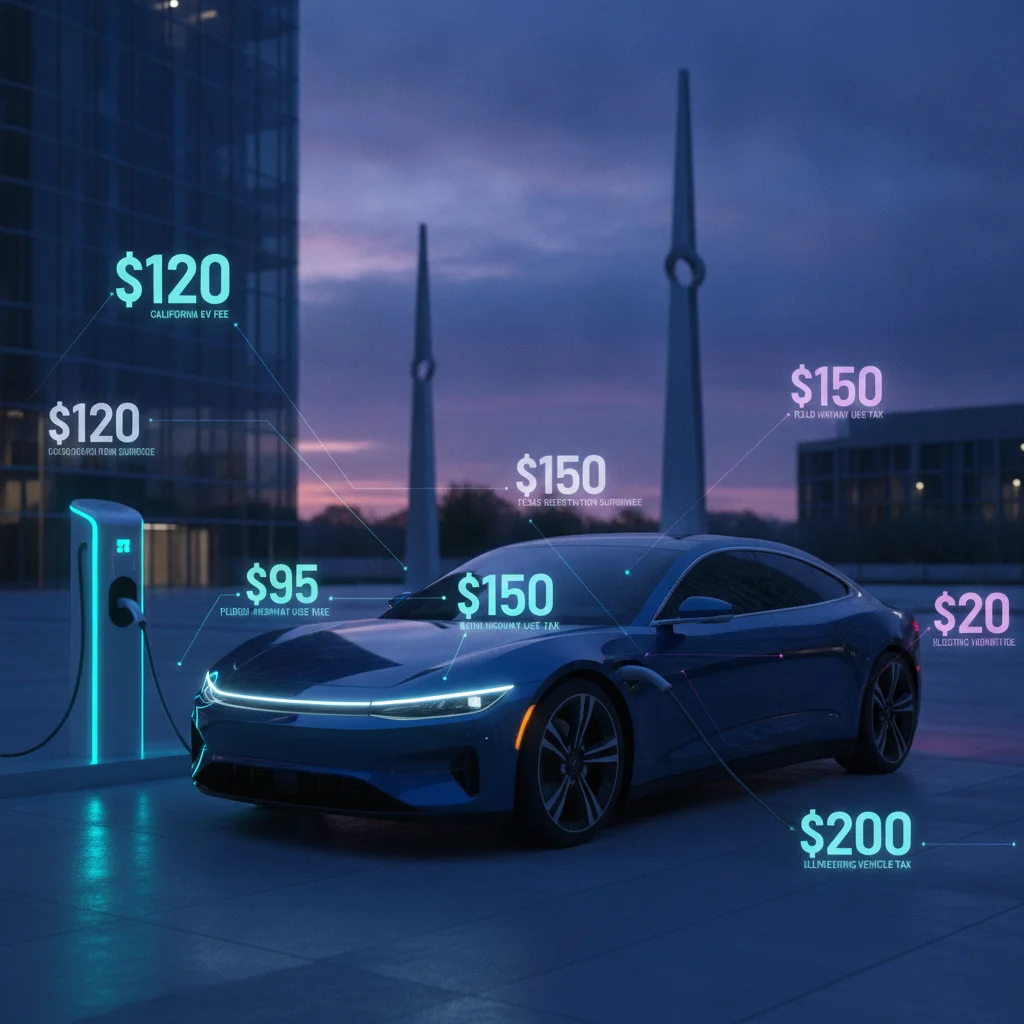
As of 2024, more than 30 states charge EV-specific annual fees ranging from a modest $50 in some states to $225 or more in others (Wyoming charges $200+, Georgia $211.43). Some states — like Illinois — charge tiered fees based on vehicle weight or type. Others charge nothing extra at all.
Beyond the annual surcharge, EV buyers also navigate wildly different state incentive landscapes. Colorado offers a $5,000 state tax credit on top of the federal credit. Other states offer nothing. When you net out the surcharges against the incentives, the true cost picture for an EV owner in Colorado versus, say, Wyoming, is dramatically different — even for the same vehicle. The EV insurance cost differences by state add another layer to this calculation, as coverage premiums and repair costs also vary geographically.
This patchwork of EV fees is still evolving. Several states are actively revising their fee structures as EV adoption grows, so if you're buying an EV today, treat current fee levels as a floor, not a ceiling, for planning purposes.
Title Fees, Inspection Requirements, and Other Costs That Add Up
Beyond the big three — sales tax, registration, and property tax — several smaller but consistent fees can separate two otherwise identical ownership situations.
Title Fees
Title fees are generally a one-time cost at purchase, but they vary from around $10 in Arizona to over $100 in other states. On a car you plan to sell in two years, this is a minor consideration. On a vehicle you'll hold for a decade, it gets absorbed over time. But if you're buying and selling frequently, title fees in high-cost states accumulate.
Emissions and Safety Inspections
About 30 states require periodic vehicle inspections — either emissions testing, safety inspections, or both. Programs like California's Smog Check or New York's biennial inspection create recurring costs that simply don't exist for owners in states without mandated inspections. The cost per test is usually $20–$75, but failing an inspection and needing repairs to pass can turn a routine renewal into a several-hundred-dollar event.
Local Add-Ons
Many states allow counties or municipalities to tack on their own fees to the base state registration. Los Angeles County adds fees above California's base rate. Similar structures exist in Colorado, Texas, and elsewhere. When comparing state-to-state, always look at total local + state fees, not just the state-published base rate.
If you're purchasing a car online and having it shipped across state lines, these variations become particularly relevant from day one — the state rules affecting online car purchases covers how these fee obligations apply even when the transaction happens digitally.
Check Your County Rate, Not Just State Rate
When estimating ownership costs, always look up the combined state plus local fee total — not just the statewide published base rate. County and municipal add-ons can add 10%–30% to the state's published number. Most state DMV websites publish a fee estimator that includes local surcharges by ZIP code.
Budget for Year-One Fees Separately
In value-based fee states, your first registration year is often your most expensive. Build a separate line item for it in your purchase budget — don't absorb it into your monthly payment planning. Knowing it's coming prevents it from disrupting your cash flow right after a major purchase.
How Regional Market Dynamics Compound the Fee Differences
Here's a wrinkle most buyers don't anticipate: the states with the highest ownership fees often also have higher vehicle prices in the first place. Demand drives local pricing, and high-demand markets in high-cost states can mean paying more for the car itself before a single government fee is applied.
The reverse is also true. In lower-cost, lower-demand markets, the combination of a cheaper purchase price and lower annual fees creates a compounding advantage. Regional price differences can swing the actual transaction price of identical vehicles by $2,000–$5,000 depending on local supply and demand — and that price difference, in a sales-tax state, then generates its own tax liability.
Think of it this way: if the same truck costs $4,000 more in a high-demand metro market, and that market also charges 8% sales tax, you're paying an extra $320 in tax just because of where you're buying. Add annual property tax based on higher assessed value, and the regional premium compounds year over year.
For buyers who have flexibility in where they register a vehicle — those who split time between states, maintain a second residence, or are actively relocating — understanding these dynamics before committing to a registration address is genuinely worth the research time. The difference between registering in one state versus another can easily exceed $5,000 over a five-year ownership period on a mid-priced vehicle.

Building a True Ownership Cost Estimate by State
Given all these variables, how do you actually build an apples-to-apples cost comparison between states? Here's a practical framework I'd use with any buyer who came into my shop asking about this.
- Start with the purchase price: Get the out-the-door price, including dealer fees, in your state. This is your tax base.
- Calculate sales tax on the full purchase price (minus trade-in credit, if your state allows it). Use the state + local combined rate, not just the state base rate.
- Add title and initial registration fees: These are one-time costs at purchase.
- Project annual registration fees for years 1–7: If your state uses value-based fees, you'll need a depreciation schedule. Use the vehicle's projected trade-in value each year as the tax base.
- Add annual personal property tax, if applicable: Same depreciation-schedule approach.
- Add any EV surcharges or inspection costs annually.
- Total all seven years and compare.
When you do this exercise for, say, a $42,000 SUV in Virginia versus Texas, the seven-year government cost difference can exceed $6,000 — purely from fee and tax structure, before insurance or maintenance enters the picture.
For buyers considering a new versus used purchase in one of these value-based states, the calculation is equally revealing. A three-year-old version of the same vehicle may have already passed through the steepest part of the depreciation curve, dramatically reducing your early-year tax exposure. That's a real financial advantage that doesn't show up in the sticker price comparison. See how registration fees accumulate differently for new versus used buyers over a typical ownership window.
Don't Assume Out-of-State Purchases Save on Tax
Buying a car in a no-sales-tax state like Oregon or Montana won't shield you from tax if you register in a taxing state — and most states will require you to pay the difference on registration. Some buyers have faced double-taxation headaches by not understanding this in advance. Always confirm your home state's policy before planning a purchase trip across state lines.
Beware of Registering in the Wrong State
Attempting to register a vehicle in a lower-cost state to avoid your home state's fees — when you actually live and primarily use the vehicle elsewhere — is considered registration fraud in most states. Penalties can include back taxes, fines, and forced re-registration. Always register where the vehicle is primarily garaged.

All claims are backed by peer-reviewed research. Sources on request.