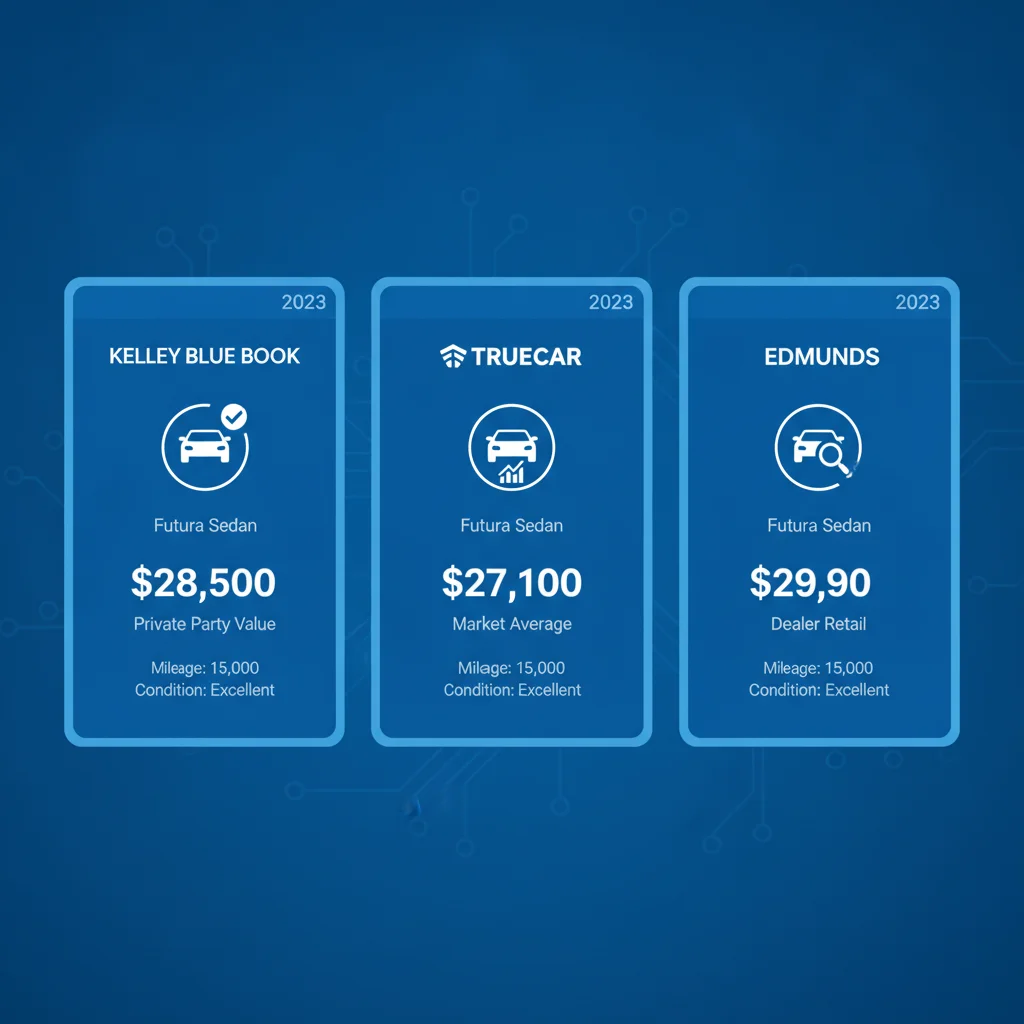
Key Takeaways
Why Condition Grading Is Where Most Sellers Go Wrong
Every major valuation tool — Kelley Blue Book, Edmunds, NADA Guides — asks you to select a condition grade before spitting out a number. The problem is that these grades are self-reported, and self-reported grades are almost always inflated. Studies of private party listings consistently show that sellers cluster around Good and Excellent, even when a neutral inspector would grade the same vehicles Fair or below.
This isn't dishonesty — it's cognitive bias. You've lived with the car, you know it runs well, and you've mentally discounted the dings you stopped noticing two years ago. The result is an asking price built on an optimistic input, which leads to a listing that sits unsold for weeks while buyers — who are looking at the same tools with fresh eyes — move on.
Understanding what each grade actually means, and applying it honestly, is the single highest-leverage move you can make before you list. This guide walks you through the condition criteria used by the major tools, shows you how to grade your car without self-deception, and explains how to translate an honest grade into a realistic asking price.

If you've already noticed that different platforms are giving you different numbers even before condition grading, check out why valuation tools disagree with each other — the methodology gaps matter too.
What Each Condition Grade Actually Means
The four most common grades — Excellent (or Outstanding), Very Good (or Good), Good (or Fair), and Fair (or Poor) — map to specific, observable criteria. Here's how the major platforms define them:
| Grade | KBB Label | Edmunds Label | NADA Label | Realistic Real-World Incidence |
|---|---|---|---|---|
| Top | Excellent | Outstanding | Clean | ~3–5% of vehicles |
| Upper-Mid | Very Good | Clean | Average | ~15–20% |
| Mid | Good | Average | Rough | ~50–60% |
| Lower | Fair | Rough | — | ~20–30% |
Notice that NADA doesn't even have a grade below Rough that applies to typical retail sales — vehicles below that threshold are treated as salvage or wholesale inventory. Also note the labeling mismatch: KBB's Good is roughly equivalent to Edmunds' Average. If you type 'Good' on KBB and 'Good' on Edmunds assuming they're the same grade, you're actually comparing apples and oranges.
The Hallmarks of Each Grade
- Excellent / Outstanding / Clean: No paintwork issues, no mechanical faults, no interior wear beyond minimal seat compression, complete service history, no accident record. This is basically a certified pre-owned condition vehicle.
- Very Good / Clean / Average (upper): Minor paint chips or light scratches that polish out, fully functioning all systems, interior free of stains or tears, one or fewer prior owners. Some light wear is acceptable.
- Good / Average / Average (lower): Noticeable but not disfiguring exterior blemishes, all mechanical systems functional but possibly with minor issues, interior shows normal use with minor stains or wear. This is where most well-maintained, daily-driven cars actually land.
- Fair / Rough: Visible dents or rust, cracked interior panels, a check engine light or known mechanical issue, salvage or rebuilt title, or significant accident history. Still drivable and sellable, but priced accordingly.
The honest truth: if your car has any combination of two or more items from the Fair list, don't round up.
Tools and Preparation You'll Need
Before you run a single valuation, gather the following. Rushing this step is where sellers waste their own time.
What you will need
Kelley Blue Book (kbb.com)
Generates private-party, trade-in, and dealer retail values based on condition grade, ZIP code, and mileage.
Edmunds True Market Value (edmunds.com)
Provides TMV estimates based on actual transaction data, with condition tiers that differ from KBB's labeling.
NADA Guides (nadaguides.com)
Widely used by dealers and lenders; particularly useful for trucks, RVs, and older vehicles where KBB data thins out.
Vehicle History Report (Carfax or AutoCheck)
Confirms accident history, title status, and number of owners — critical inputs that affect condition grading.
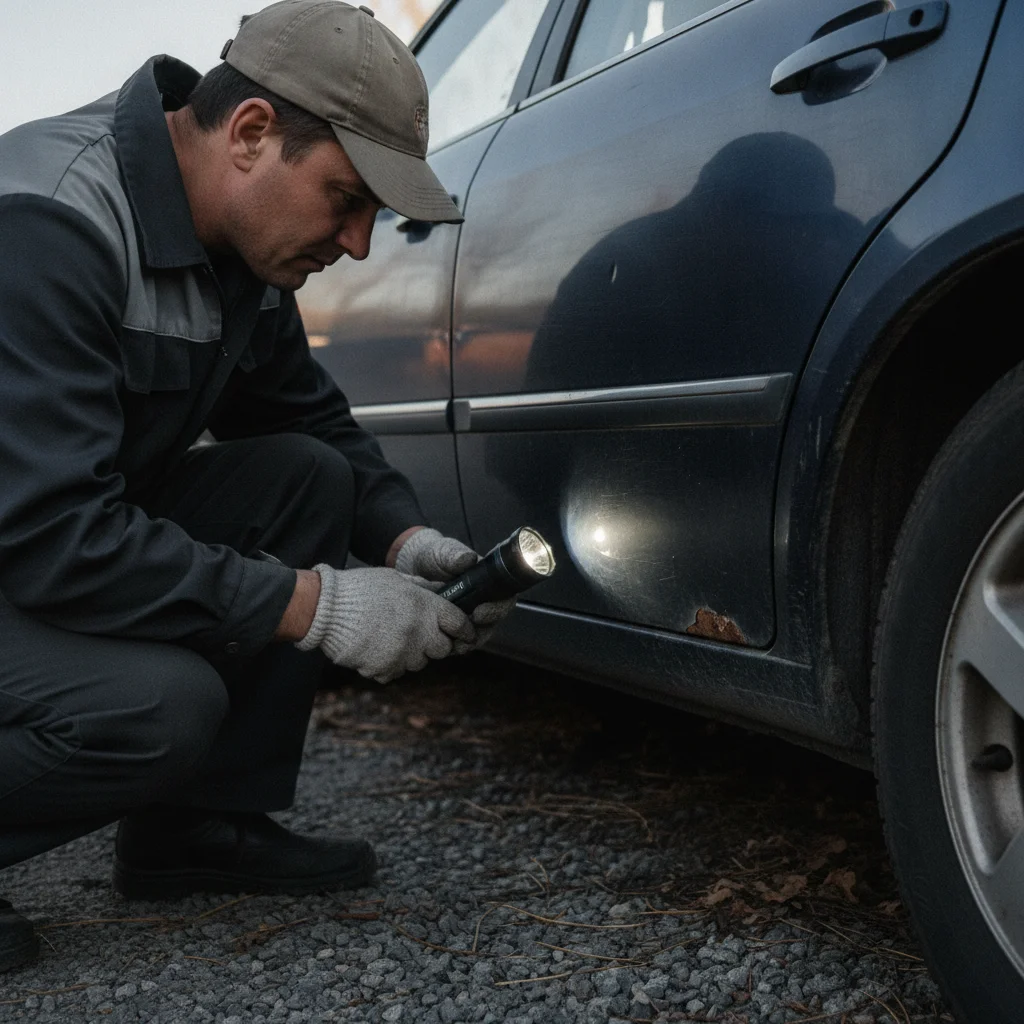
Flashlight or work light
Needed to inspect underneath door sills, under the hood, and inside the wheel wells for rust or hidden damage.
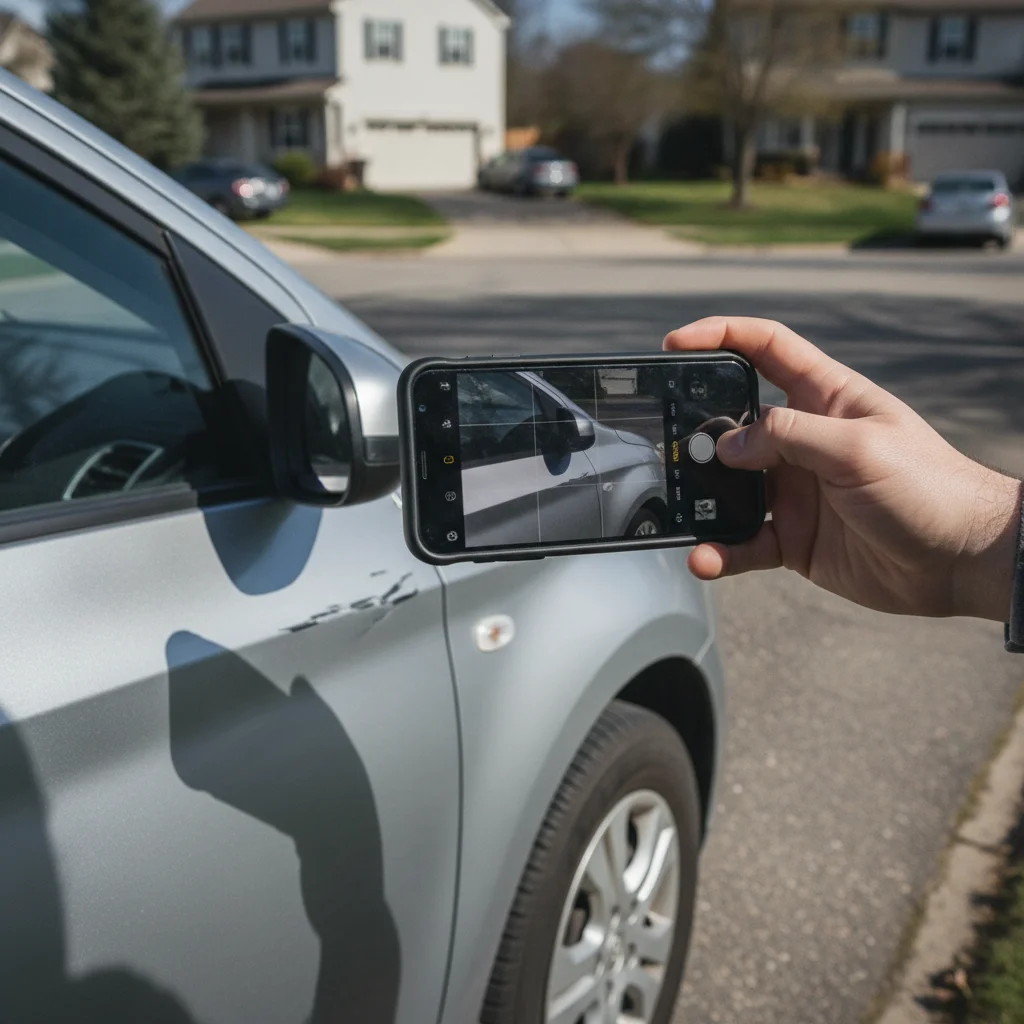
Smartphone with camera
Documents all defects and condition evidence with dated photos to support your grade and listing.
OBD-II scanner
Reads any stored or pending engine fault codes so you know whether a check engine light is imminent.
Once you have your documentation in hand, you're ready to walk the car systematically. For a more detailed pre-valuation documentation process, see best practices for documenting your car's condition before you start entering numbers anywhere.
Step-by-Step: Grade Your Car and Adjust the Estimate
Work through the following steps in order. Each one feeds directly into your final adjusted price. Don't skip the cross-check step — it's where sellers typically catch the self-inflation bias before it costs them time on market.
Pull the vehicle history report first
Before you walk around the car, pull a Carfax or AutoCheck report using the VIN. Accident history, title branding (salvage, rebuilt, lemon law buyback), and ownership count are automatic grade modifiers — they can cap the condition grade regardless of how good the car looks physically.
- Any structural accident: Drop at least one full grade from what you'd otherwise select.
- Salvage or rebuilt title: Move to Fair regardless of cosmetic condition. These vehicles carry a permanent value discount of 20–40%.
- 3+ owners in under 5 years: A yellow flag that buyers will notice. Don't offset it by grading high.
Inspect the exterior under direct sunlight
Interior lighting hides paint flaws. Take the car outside on a sunny day and walk it slowly, starting at the front bumper and moving clockwise. Look for:
- Paint chips, scratches, or scuffs deeper than the clear coat
- Dents — even minor ones visible from an angle
- Panel gaps that are uneven (a sign of prior body work)
- Rust at the wheel arches, rocker panels, or lower door edges
- Cracked or faded headlight lenses
- Windshield chips or cracks
Photograph every defect with your phone. Count them. A car with eight minor chips and two dents is not Excellent — it's solidly Good at best, possibly Fair depending on severity.
Assess the interior honestly
Open every door and inspect: seats, carpets, headliner, dashboard, door panels, and the trunk or cargo area. Criteria that drop your grade:
- Stains on seats or carpets that aren't fully removable
- Tears, burns, or cracked leather
- Broken trim pieces or rattling door panels
- Non-functioning features (seat heaters, power windows, infotainment)
- Persistent odors — smoke, pet, or mildew are significant deductions
A professional detail can address light staining and odors, but it won't fix structural damage. If detailing would bring your interior up a grade, it may be worth the $150–$300 investment before valuation — see which detailing steps deliver real ROI.
Check the mechanical condition
You don't need to be a mechanic to assess the basics. Work through this checklist:
- Start the engine cold. Unusual noises, rough idle, or hard starts matter.
- Check all warning lights. Any illuminated warning light — not just check engine — is a Fair indicator.
- Inspect fluid levels and color. Brown coolant or milky oil suggests serious problems.
- Look under the car for active leaks on clean pavement.
- Check tire tread depth. Tires under 4/32" remaining should be disclosed.
- Test all electronics: AC, heat, all power features, backup camera, and any infotainment connectivity.
If you have an OBD-II scanner, plug it in. A pending fault code means a check engine light is coming — that's not a Good grade vehicle.
Run the valuation on all three platforms using your honest grade
Now enter your vehicle into KBB, Edmunds, and NADA. Use the same condition grade on each — and remember the labeling mismatch from earlier:
- If your honest assessment is mid-tier: Select Good on KBB, Average on Edmunds, and Average on NADA.
- If your honest assessment is upper-mid: Select Very Good on KBB, Clean on Edmunds, and Average (upper) on NADA.
Record the private-party value from each platform. If one result is more than 15% higher or lower than the other two, flag it as an outlier and set it aside. Use the remaining figures to establish your baseline range.
Apply adjustments for mileage deviation and known issues
Valuation tools use average annual mileage benchmarks — typically 12,000–15,000 miles per year. If your mileage deviates significantly, adjust:
- Under the benchmark by 20%+: Add 2–4% to the mid-point estimate.
- Over the benchmark by 20%+: Subtract 3–5% from the mid-point estimate.
For known mechanical issues that you're disclosing rather than fixing, subtract the estimated repair cost from the private-party value — but only the cost of the repair itself, not the buyer's inconvenience premium. Buyers negotiating against known issues will typically deduct 1.5–2× the repair cost; if you deduct the actual cost first, you reduce the negotiation gap.
Set your listing price with a negotiation buffer
Take the average of your two most reliable platform estimates (after applying mileage and issue adjustments). This is your honest floor — the minimum you should accept from a serious buyer.
Set your listing price 5–8% above the floor to leave room for negotiation without pricing yourself out of the market. For example:
- Honest floor: $14,200
- Listing price at 6% buffer: $15,050 (round to $15,000 for cleaner optics)
Do not list at the top of the estimate range and call it a starting point. Buyers cross-referencing the same tools — which most serious buyers do — will immediately see the gap and discount your credibility as a seller.
Don't Round Up 'Just to See'
Some sellers enter a higher grade 'just to see what comes up,' intending to adjust later — and then anchor to that higher number emotionally. Run your valuation at your honest grade first. If you want to see the Excellent estimate for reference, look at it second, and treat it as market ceiling data, not your price.
Accident History Caps Your Grade Regardless of Appearance
A car that was in a significant collision but repaired to a visually clean standard still carries the history. Buyers running a Carfax will find it, and if your grade and price don't reflect it, you'll lose the sale at the worst possible moment — after a buyer has invested time in a test drive and pre-purchase inspection.
Grade for the Buyer, Not Yourself
A useful mental trick: imagine you're a buyer who has never seen this car before and is considering spending $15,000 on it. Would you grade it Excellent? If any hesitation exists, you have your answer. Buyers who show up and find a car that doesn't match its listed grade walk away — and they tell others.
Recent Repairs Can Justify a Small Premium
If you've completed significant maintenance in the last 12 months — new tires, brake pads, battery, timing belt — you can add $200–$500 to your private-party floor and call it out with receipts in your listing. Documented repairs reduce buyer anxiety and support your price better than any grade selection.
How Much Does One Grade Affect the Dollar Value?
The monetary gap between grades isn't fixed — it scales with the vehicle's value and age. Here are realistic ranges based on typical mid-market vehicles:
| Vehicle Value Range | Gap: Excellent → Very Good | Gap: Very Good → Good | Gap: Good → Fair |
|---|---|---|---|
| $5,000–$10,000 | $300–$600 | $400–$700 | $500–$900 |
| $10,000–$20,000 | $600–$1,200 | $700–$1,400 | $900–$1,800 |
| $20,000–$35,000 | $1,000–$2,000 | $1,200–$2,500 | $1,500–$3,000 |
Those are not trivial numbers. A seller who grades a $22,000 car as Very Good when it's realistically Good might be pricing $1,200–$2,500 above what the market will bear. That's the difference between a listing that sells in a week and one that drags for two months before the seller finally drops the price — often by more than the original gap.
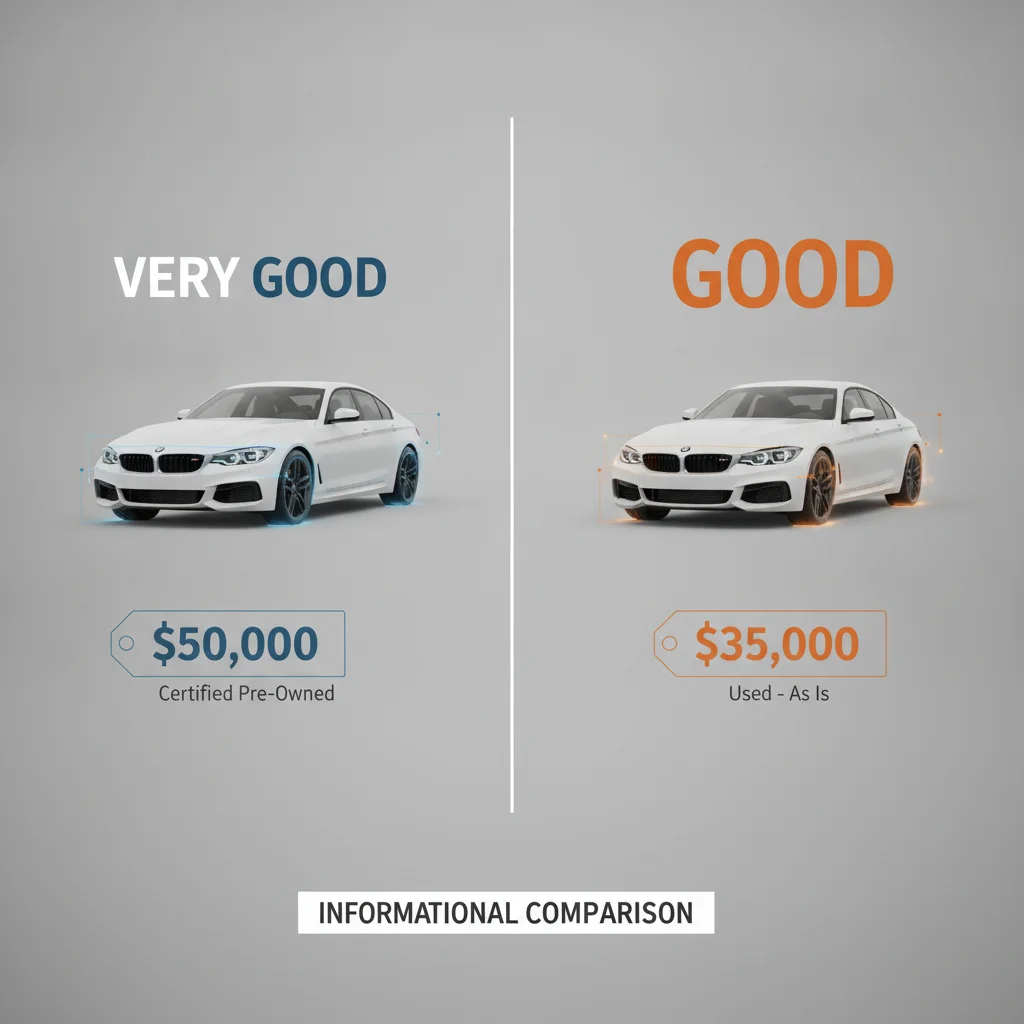
If after honest grading your estimate comes in lower than you expected, don't panic. Read what to do when the valuation is lower than you expected before you adjust your strategy.
Overpricing Costs More Than You Think
A car priced above market doesn't just sit — it actively loses perceived value over time. Buyers see days-on-market data on most platforms. A listing that's been up for 45 days at $16,000 will generate lower offers than a fresh listing at $15,200. Price accurately from day one rather than chasing the market down after weeks of silence.
Turning an Honest Grade Into a Competitive Asking Price
Once you have an honest grade and at least three platform estimates, here's how to translate those numbers into an actual listing price:
- Drop the outlier. If one platform is significantly higher or lower than the other two, set it aside. It's likely capturing a different market segment or using stale sales data.
- Average the remaining two. This is your baseline private-party value at the condition grade you selected.
- Apply a negotiation buffer of 5–8%. Buyers expect to negotiate. Set your asking price 5–8% above your target floor, not above the estimate ceiling.
- Sanity-check against live listings. Search your year/make/model/trim on Craigslist, Facebook Marketplace, and AutoTrader within 100 miles. If comparable listings are clustering below your number, that's the real market — respect it.
If your vehicle has meaningful recent repairs or upgrades — new tires, fresh timing belt, new brakes — you can add $200–$500 to the private-party value and call it out explicitly in your listing. Buyers discount claims they can't verify, so attach receipts.
Before you list, it's also worth reviewing why sellers overprice their cars and what valuation tools have to do with it to make sure you're not falling into the most common pricing trap. And if you're weighing whether detailing or minor repairs are worth doing before you list, see what detailing and repair investments pay off.
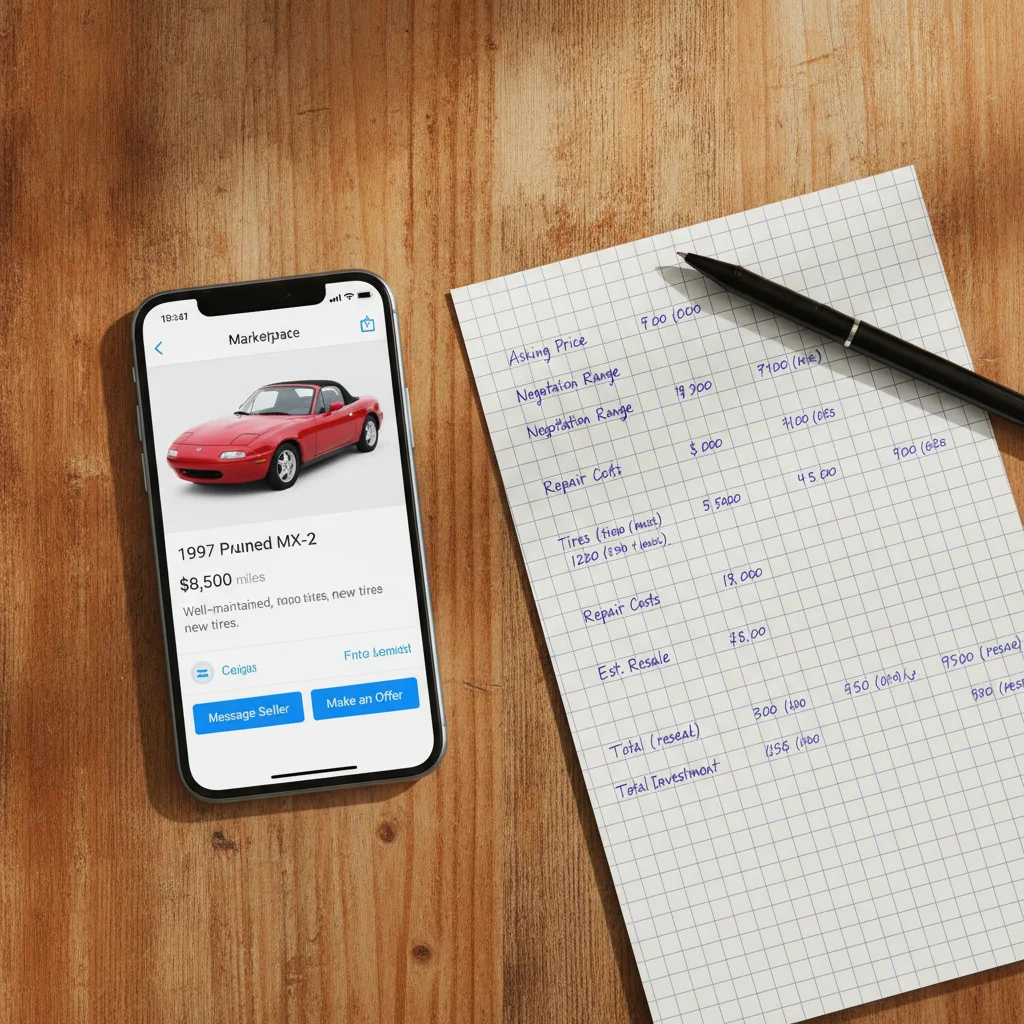
Buyers shopping the used market — especially those who've read up on how to buy a used car — are running the same valuation tools you are. Price against honest data and you attract serious buyers fast. Price against wishful data and you train the market to ignore your listing.

All claims are backed by peer-reviewed research. Sources on request.