
Key Takeaways
Why Wholesale Auction Data Matters to Private Sellers
Most private sellers price their car by pulling up KBB or Edmunds, picking a number somewhere in the middle of the range, and hoping for the best. That approach isn't wrong, but it's incomplete. Those retail estimators are backward-looking — they reflect what cars have been selling for, not where the market is heading in the next four to eight weeks.
Wholesale auction markets are different. Dealers buying and selling cars through lanes at Manheim, ADESA, and OVE are making bets with their own money on what they think retail demand will look like when that car hits their lot. When wholesale prices trend up, it almost always means retail demand is strengthening. When wholesale prices sag, retail softness is typically right behind it. As a private seller, monitoring that signal before you set your asking price is one of the most concrete advantages you can build into your sale.
Dealers price trade-ins using wholesale auction data, not retail comps — which is why their first offer almost always lands below what you see on retail valuation sites. Turning that knowledge around to your benefit as a seller is exactly what this guide covers.
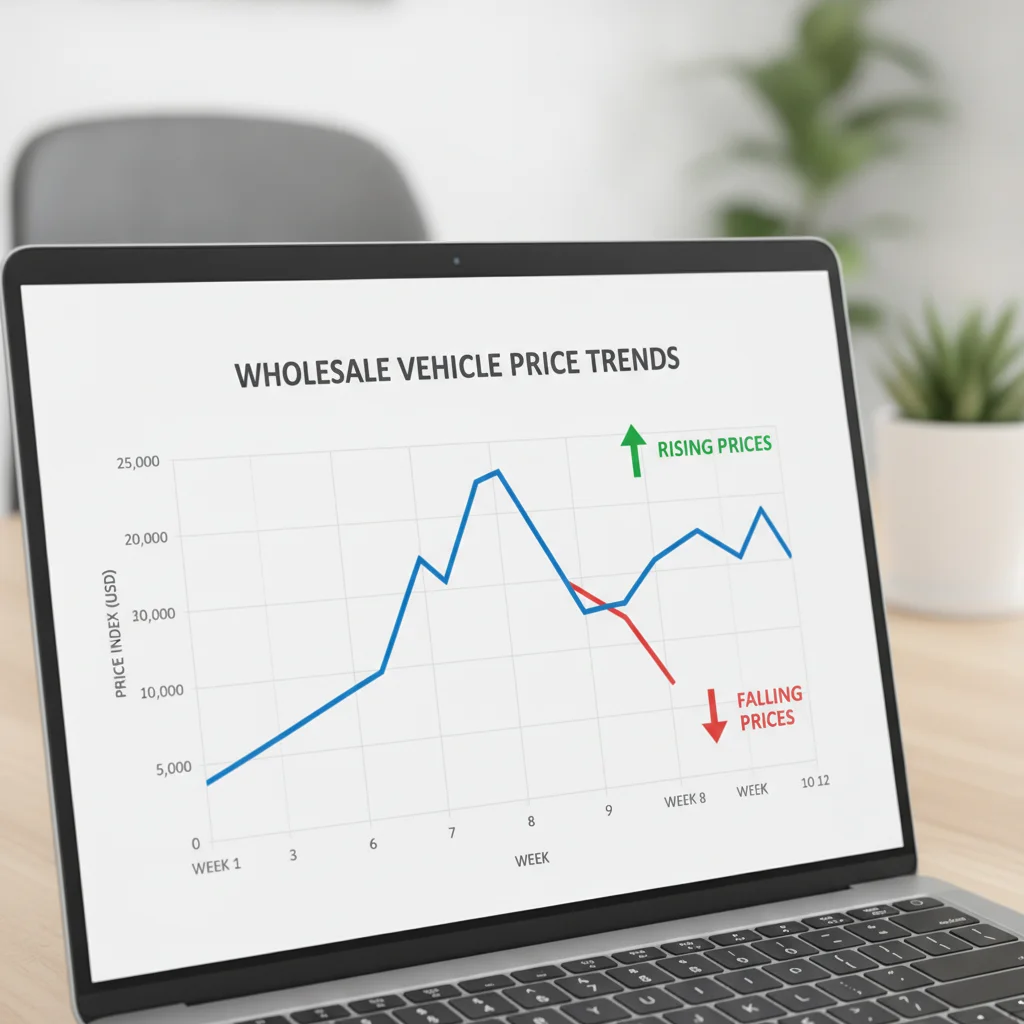
The core tool you need to understand is the Manheim Market Report (MMR). It tracks the average wholesale transaction price for nearly every make, model, trim, and mileage band sold through Manheim's physical and digital lanes. It updates weekly, sometimes more frequently during volatile stretches. It's the closest thing the used car industry has to a real-time price ticker.
What You'll Need Before You Start
Reading auction trends doesn't require a dealer license, but it does require a few specific tools and a baseline understanding of what you're looking at. Get these in place before you start pulling data.
What you will need
Manheim Market Report (MMR) via CarEdge or iSeeCars
Provides weekly wholesale transaction averages by make, model, trim, and mileage — the core data source for tracking trend direction.
NADA Guides (J.D. Power)
Offers wholesale and retail value estimates used by lenders and dealers, useful as a secondary cross-check against MMR data.
Facebook Marketplace or AutoTrader
Shows active private-party retail listings in your region so you can benchmark your wholesale-derived price against real competition.
CarMax or Carvana Instant Offer
Establishes a firm floor price — the guaranteed wholesale-adjacent offer you can fall back on if the private market doesn't cooperate.
Simple spreadsheet (Google Sheets or Excel)
Tracks weekly MMR readings for your vehicle so you can identify multi-week trend direction rather than reacting to a single data point.
How to Read and Apply Wholesale Trends: Step by Step
Work through these steps in order. Each one builds on the last. Skipping ahead to pricing without first understanding trend direction is a common mistake that costs sellers money.
Pull Your Vehicle's Current MMR Baseline
Go to CarEdge (carEdge.com) or iSeeCars and search for your specific vehicle. Enter the year, make, model, trim level, and the closest mileage band to your actual odometer reading. The number you're looking for is labeled Manheim Market Report or MMR — it represents the average price that vehicle sold for at wholesale auction in recent transactions.
Write down this number along with today's date. This is your baseline. Don't act on it yet — a single data point tells you where the market is, not where it's going.
Track MMR Weekly for Three to Four Weeks
Return to the same lookup tool once a week for the next three to four weeks and log the MMR figure each time. Put it in a simple spreadsheet: date in column A, MMR value in column B. After three readings, you'll have a trend direction.
- Three consecutive weeks higher: The market is rising. This is a strong signal to list soon — you're in a favorable window.
- Three consecutive weeks flat (within $100 either way): The market is stable. Timing is less critical; focus on condition and presentation.
- Three consecutive weeks lower: The market is softening. List quickly at a competitive price rather than waiting for a rebound.
This three-week minimum is important. A single week's movement can be noise — a slow auction lane, a regional storm that reduced attendance, or a batch of high-mileage units that skewed the average. Trend confirmation requires multiple data points.
Check Regional Retail Comps
Open Facebook Marketplace, AutoTrader, or Cars.com and search for your vehicle within 150 miles of your location. Filter to private-party listings only (exclude dealer listings for this step). Note the lowest five asking prices and the median asking price among vehicles with similar mileage and condition.
This gives you the retail ceiling — the highest price the market is realistically supporting right now in your area. Your MMR baseline is the floor. Your asking price should live somewhere between the two, depending on your vehicle's condition and how quickly you need to sell.
Get an Instant Offer to Establish Your Floor
Before you list, get a firm offer from at least one instant-offer service — CarMax, Carvana, or Vroom. Submit your vehicle details honestly and record the offer amount. This number is your guaranteed exit price: the minimum you should accept under any circumstances before walking away from a private sale.
Instant-offer prices are typically 5% to 15% below strong private-party retail, but they're real money, available immediately, with no negotiation and no strangers at your door. Knowing your floor makes you a more confident negotiator when private buyers low-ball you.
Calculate Your Target Asking Price
With your MMR baseline, trend direction, regional retail comps, and instant-offer floor in hand, set your asking price using this framework:
- Start with current MMR for your vehicle.
- Add 12%–18% depending on condition: use 12% for average condition, 15% for clean with service records, 18% for exceptional examples with recent major maintenance.
- Compare that number to your regional retail comps median. If it's within 5% of the median, you're well-positioned. If it's significantly higher, revisit your condition assessment.
- Apply a trend adjustment: add 2%–3% if MMR has risen three or more consecutive weeks; subtract 3%–5% if MMR has fallen three or more consecutive weeks.
- Confirm the final number is above your instant-offer floor. If it's not, skip the private listing and take the instant offer.
Round to a natural price point (e.g., $18,750 rather than $18,812) — it reads better in listings and doesn't affect negotiations meaningfully.
Time Your Listing to the Calendar
Identify the seasonal demand window for your vehicle type (see the section below on category-specific cycles). Post your listing at the beginning of that window, not at the peak — by peak, inventory has usually caught up with demand and you're competing with more sellers.
Within the week, Thursday and Friday listings consistently generate more weekend inquiries than Monday or Tuesday posts. Within the day, listings posted between 6 p.m. and 9 p.m. local time tend to catch commuters browsing in the evening. These are small edges, but they're real ones.
Seasonal Patterns and Category-Specific Cycles
Wholesale data doesn't move uniformly across all vehicle types, and the calendar matters more than most sellers realize. Understanding which segments you're in — and when they peak — is the difference between listing at the right moment and sitting on a stale listing for six weeks.
Trucks and SUVs
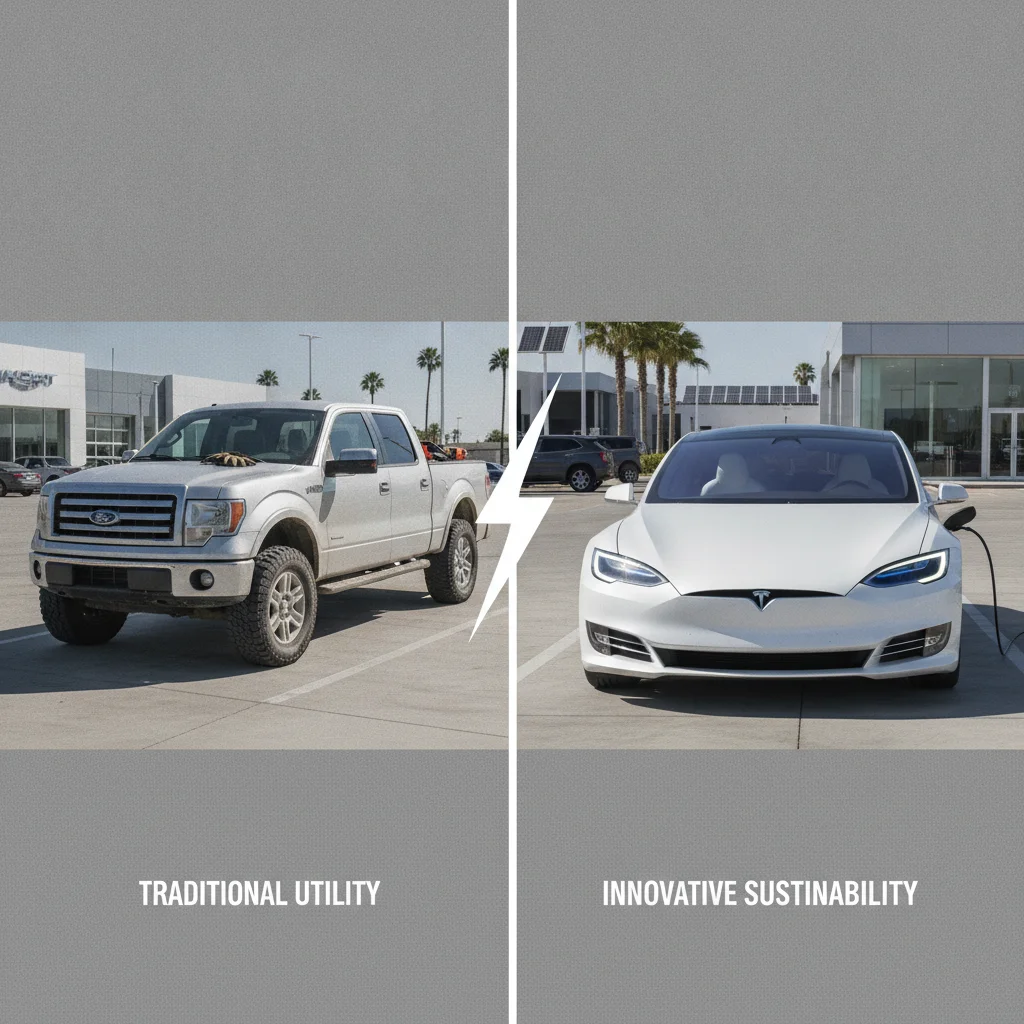
Full-size trucks and body-on-frame SUVs tend to see their strongest wholesale demand from January through April, driven by contractors and fleet buyers refreshing after the fiscal year. A second, smaller bump often appears in August and September as dealers stock up ahead of the model year changeover. If you're selling a truck and you list in mid-December, you're leaving the peak behind by about six weeks.
Economy Sedans and Compacts
Tax refund season — roughly late January through mid-April — is historically the busiest period for sub-$15,000 retail and the wholesale market that feeds it. Wholesale lanes fill with buyers who need affordable front-line inventory quickly. Prices respond accordingly. If your car fits this profile, late January is your window.
Convertibles and Sports Cars
Spring is the obvious answer here, but the wholesale signal often leads retail demand by three to four weeks. If you're watching Manheim MMR for your convertible and you see it climbing in late February, don't wait until the weather breaks to list. Dealers are already buying. Your retail buyer is close behind.
Electric Vehicles
EV wholesale pricing has been unusually volatile since late 2022, driven by rapid model refreshes, battery range improvements, and shifting federal incentive structures. For EVs especially, watching the weekly MMR trend — not just a point-in-time number — is critical. A single week's data can be misleading. Look for three or more consecutive weeks of directional movement before you conclude the trend is real.
Fuel prices, unemployment, and consumer confidence all move the used car market — and for EVs in particular, those macro signals interact with EV-specific policy changes in ways that make timing especially important.
EV Wholesale Prices Can Move Fast
Electric vehicle wholesale values have swung 15% to 25% within a single quarter due to new model releases, federal incentive changes, and rapid depreciation on early adoption models. For EVs, treat any MMR data older than two weeks as potentially stale. Check it fresh before you finalize your price, and be prepared to move quickly if the trend turns.
Translating Wholesale Trends Into Your Listing Price
Once you have a read on trend direction and your vehicle's wholesale baseline, the question becomes: how do you translate that into a retail asking price? Here's the framework I use.
The Wholesale-to-Retail Spread
For most late-model used vehicles, dealers operate on a retail markup of 10% to 20% above their wholesale acquisition cost — sometimes more on low-supply vehicles, sometimes less on aged inventory. That spread exists to cover reconditioning, lot costs, advertising, and profit margin. As a private seller, you don't have those overhead costs, which means you can undercut the dealer's retail price while still netting more than you'd get from a trade-in or instant-offer service.
A practical starting point: take the current MMR for your vehicle, add 12% to 15%, and compare that number against active private-party listings in your ZIP code. If your number is below the market median, you have room to go higher. If it's above, you'll likely need to justify the premium through condition, service records, or low mileage.
Adjusting for Trend Direction
- Rising wholesale trend (3+ weeks up): Price toward the top of the private-party range. Retail demand is strengthening and buyers are less likely to walk away from a fair deal.
- Flat trend: Price at the midpoint of comparable listings. This is a neutral market — condition and presentation matter more than timing.
- Declining trend (3+ weeks down): Price just below the midpoint and plan to move quickly. Waiting for a rebound that may not come is a costly gamble. Consider whether an instant-offer platform like CarMax or Carvana makes more sense than a private listing.
Understand how KBB, Edmunds, and other tools estimate your car's worth — and use them as a sanity check against your wholesale-derived number, not as your primary source.
Price Drops Signal Weakness to Buyers
Every time you drop your asking price, buyers who saved your listing get a notification — and it tells them you're motivated to sell. Set your price correctly from the start using wholesale trend data so you don't have to chase the market down. One well-researched price is more effective than three optimistic ones.
Service Records Add Real Wholesale-Grade Value
Dealers pay a premium at auction for vehicles with documented maintenance history because reconditioning costs are predictable. The same logic applies to private buyers — a folder of service records reduces perceived risk and gives you credibility when holding firm on price. Gather them before you list.
If you're still weighing whether to sell privately or through a dealer channel, the broader market timing guide for car sellers walks through the full picture — seasonal cycles, economic indicators, and tactical windows across all sale types.
A Declining Wholesale Trend Means Act Now
If MMR for your vehicle has dropped three or more consecutive weeks, waiting is almost certainly going to cost you money. Retail prices follow wholesale down, usually within 30 to 60 days. Every week you hold while wholesale is sliding is a week your ceiling drops. Price to sell quickly, accept a reasonable offer, and don't gamble on a reversal that may not come.
Common Mistakes That Undercut Your Asking Price
Even sellers who do the research tend to make a few predictable errors when it comes time to post the listing. Here's what to watch for.
Anchoring to Sentimental Value
What you paid for the car, what you spent on modifications, and how well you maintained it are all real numbers to you — but buyers don't share that reference point. The wholesale market is indifferent to your history with the vehicle. If MMR says $18,400 and retail comps are clustered around $20,500 to $21,000, that's your pricing universe. Listing at $23,500 because you put new tires on it six months ago will cost you weeks of dead air on your listing.
Using a Single Data Point Instead of a Trend
Pulling MMR once and using it as a fixed anchor is like checking the weather radar one time and deciding whether to carry an umbrella all week. Wholesale markets move. Check the trend weekly and update your price if the market moves meaningfully before you close a deal.
Ignoring Regional Variation
National MMR averages are useful, but the market for a diesel pickup in rural Montana is not the same as the market for that same truck in suburban Atlanta. Manheim's regional breakdowns and local auction lane results — when you can access them — tell a more precise story. Supplement national data with active listings within 100 miles of your ZIP code.
Listing Too Late in a Rising Market
By the time a wholesale trend shows up clearly in retail estimators, the peak buying window is often two to four weeks behind you. Dealers have already stocked up. Retail buyers are actively shopping and prices are near their ceiling, but inventory is catching up. The sellers who captured maximum value listed when wholesale was rising — not after retail tools caught up.
High lot inventory gives buyers room to negotiate — and the same logic applies in reverse when you're selling. Understanding inventory conditions from the buyer's side helps you anticipate how much resistance you'll meet on price.
For a deeper look at how vehicles move through the wholesale pipeline before reaching retail buyers, Auction-Bought Cars: What Dealers Know That Retail Buyers Don't covers the full dealer playbook. Reading it from a seller's perspective is genuinely useful.
When you're ready to list, the private party sales hub covers everything from writing your listing to handling negotiations and closing the deal safely.


All claims are backed by peer-reviewed research. Sources on request.