Key Takeaways
Auction-Bought Cars
An auction-bought car is a used vehicle that a dealer purchased at a wholesale auto auction — a closed marketplace not open to the general public — before reselling it on their retail lot. These cars come from trade-ins, lease returns, repossessions, rental fleets, and even other dealers. The price a dealer paid at auction (the wholesale price) is almost always significantly lower than what they charge retail buyers.
The two dominant wholesale auction networks in the U.S. are Manheim and ADESA, which together process millions of vehicles per year. Dealers use real-time auction data from these networks to benchmark trade-in offers — a practice explained further in resources covering wholesale vs. retail pricing.
The Wholesale Pipeline Most Buyers Never See
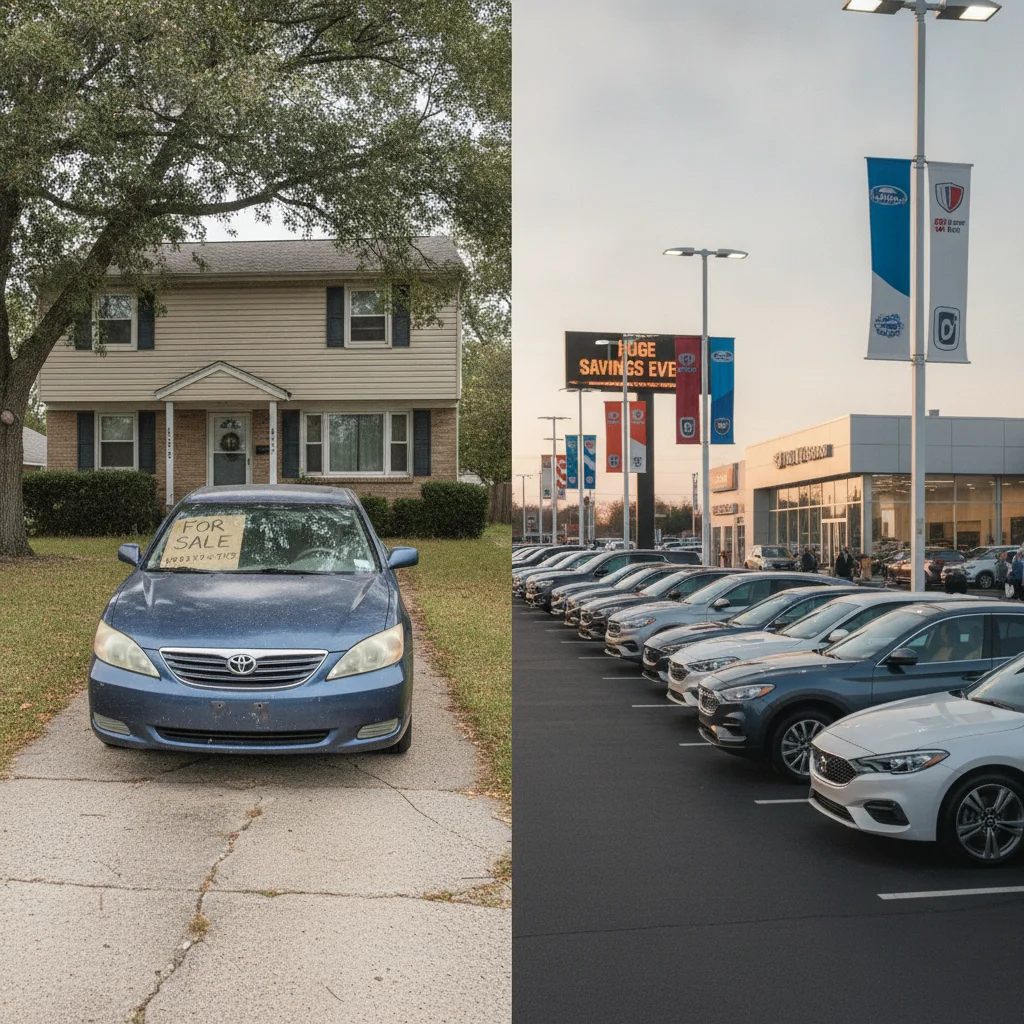
When you walk onto a used car lot and start looking at the inventory, you're seeing the end of a supply chain that began — for most of those vehicles — at a wholesale auction. The dealer didn't buy those cars from the previous owner at the same price they're asking you to pay. They bought them cheap at auction, then marked them up for retail sale.
This isn't a secret, but dealers have little incentive to explain it. Understanding the mechanics of the wholesale auction pipeline changes how you evaluate every used car on a lot — especially the ones with vague histories, spotty Carfax reports, or prices that feel inflated relative to similar vehicles sold privately.
Buying from a private seller vs. a dealership involves fundamentally different risk profiles, and a big part of that difference comes down to how dealers source their inventory. The auction pipeline is the mechanism that explains why dealers know something about a car's value that you don't — and why that knowledge asymmetry costs buyers real money.
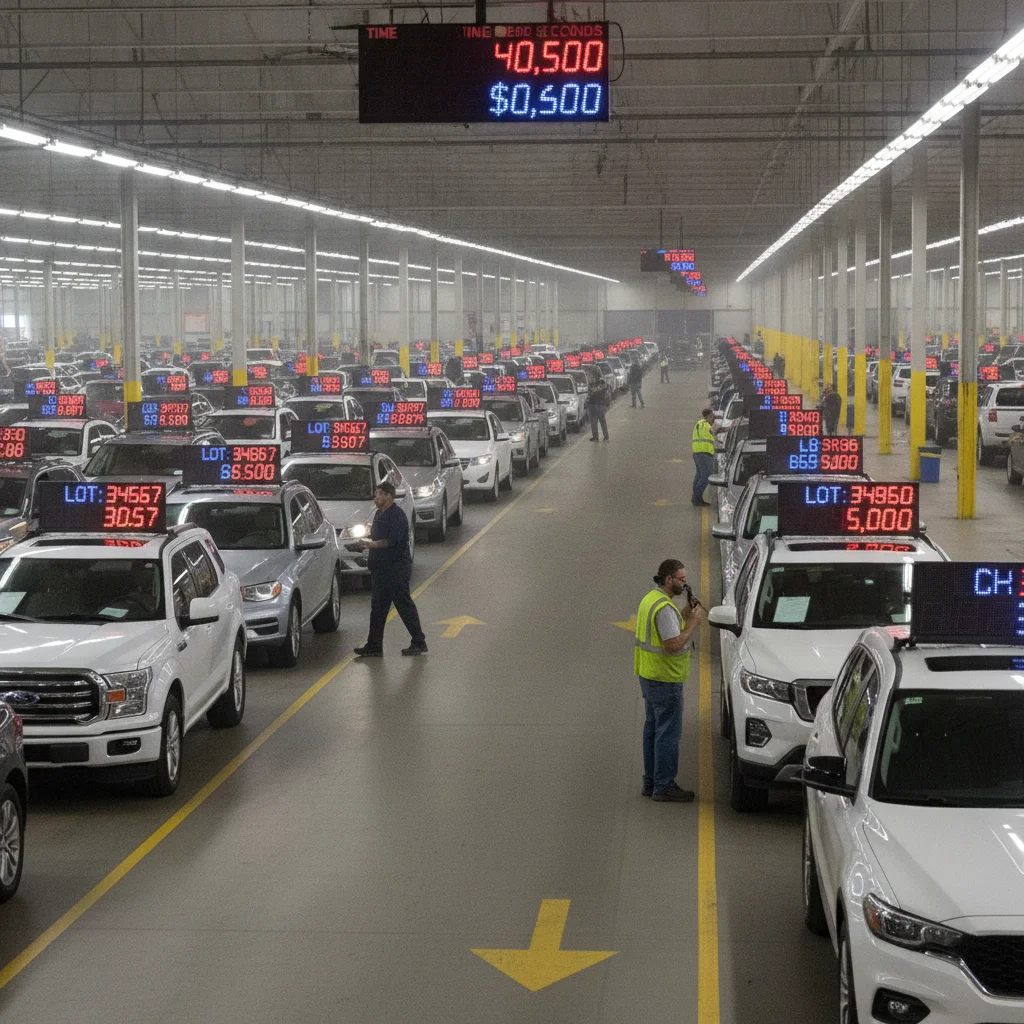
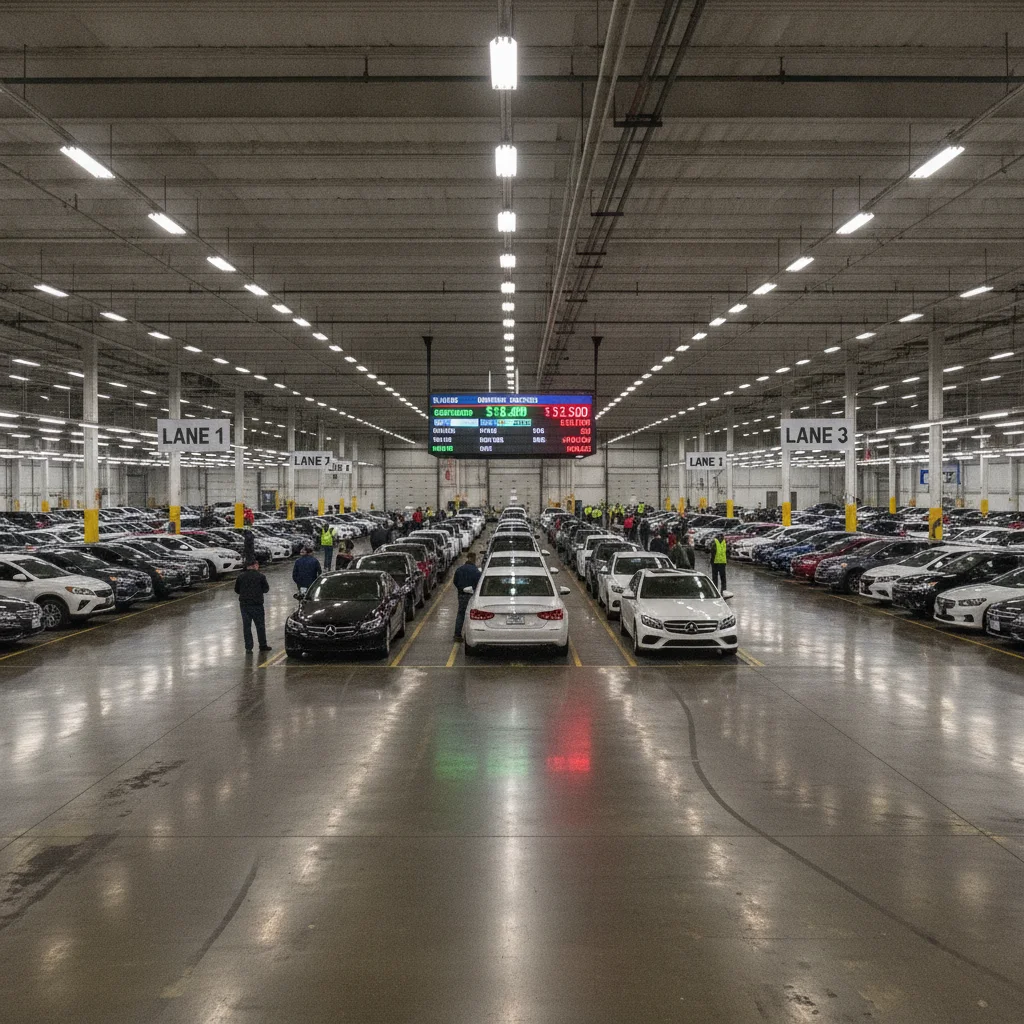
Wholesale auctions are closed markets. To participate, you need a dealer license. Major operators like Manheim and ADESA run physical and online auction lanes where dealers bid on vehicles by the hundreds — sometimes in under 60 seconds per car. That speed matters. A dealer at auction has roughly one minute to make a buying decision on a car they may have only seen driven through a lane. They're working fast, working from incomplete information, and working from experience-built pattern recognition. Some of what they miss ends up on your lot.
Where Auction Cars Come From
Not all auction inventory is equal, and the source of a vehicle tells you a lot about what you're likely to find when you inspect it. Here are the main supply streams that feed wholesale auctions:
Off-Lease Returns
When a lease ends, the manufacturer or captive finance company (think Ford Motor Credit, Honda Financial Services) sends those vehicles to auction. These are often well-maintained, lower-mileage cars — but they've been driven by people who knew they didn't own the vehicle. That can mean deferred minor maintenance and wear patterns you'd expect from a car driven to the mileage maximum rather than carefully babied.
Rental Fleet Liquidations
Rental companies like Enterprise and Hertz cycle out vehicles on a regular schedule — typically after 12 to 18 months and 20,000 to 40,000 miles. These cars have usually received oil changes and basic service on schedule, but they've been driven hard by strangers who had no investment in the car's condition. Expect above-average interior wear, potential powertrain stress from hard driving, and a VIN that Carfax or AutoCheck will usually flag as former rental.
Repossessions
Banks and credit unions repossess vehicles when borrowers default, then send them straight to auction. Repo cars are the highest-risk category in the auction pipeline. You have no ownership history from the lender. The previous owner may have stopped maintaining the vehicle well before the repo. And in some cases, angry ex-owners have deliberately damaged vehicles before surrendering them. These cars tend to be priced attractively — for a reason.
Dealer Trade-Ins Wholesale Out
When you trade in a car at a dealership, the dealer first decides whether to put it on their own lot. Older vehicles, high-mileage units, or cars with condition issues that the dealer doesn't want to recondition often get wholesaled out at auction rather than retailed. This means auction lots contain a disproportionate share of cars that a professional dealer decided weren't worth the effort to sell to retail buyers themselves.
Certified Pre-Owned Doesn't Rule Out Auction History
A CPO designation means the car passed a manufacturer-specific multi-point inspection and comes with an extended warranty. It does not mean the car came directly from a dealership trade-in. Many CPO vehicles were purchased at auction first, then inspected and certified afterward. CPO status improves your protection against post-sale mechanical issues, but it doesn't eliminate the need for your own due diligence on the car's history.
Online Dealer Platforms and Auction Sourcing
Digital-first used car retailers like Carvana and Vroom source a significant portion of their inventory from wholesale auctions, similar to traditional dealers. Their inspections and return policies provide more transparency than many traditional dealers, but the underlying sourcing model is the same. <a href="/buying-a-car/car-buying-process/online-car-buying/online-dealerships-vs-traditional-dealerships-what-you-actually-give-up-and-gain">Compare online and traditional dealer buying experiences</a> before assuming one channel carries less risk than the other.
Dealer-to-Dealer and Closed Auction Transfers
Dealers also move inventory between themselves through closed dealer auctions and direct wholesale transactions. A car that sat unsold in Ohio might get shipped to a dealer in Texas. By the time you buy it, it may have had two or three dealer owners without a single retail transaction on its record.
The Wholesale-to-Retail Spread: Where the Money Is
Here's the number that matters most: the gap between what a dealer paid for a car at auction and what they're asking you to pay is the dealer's margin, before they add financing profit, add-ons, or documentation fees.
9M+
Vehicles sold at Manheim auctions annually
Manheim, the largest wholesale auto auction network in the U.S., processes over 9 million vehicles per year according to company data.
$3,700
Average dealer gross profit on used vehicles
According to NADA Industry Analysis, the average front-end gross profit per used vehicle retailed at franchised dealers was approximately $3,700 in recent years.
40%
Used dealer inventory sourced from auctions
Industry estimates suggest roughly 40% of used vehicles on franchise dealer lots were acquired through wholesale auction channels rather than direct trade-ins.
$150
Typical pre-purchase inspection cost
An independent mechanic inspection at a third-party shop typically costs between $100 and $200 — a fraction of the cost of an undisclosed repair discovered after purchase.
1 in 5
Used cars with unreported accident damage
Carfax research has found that approximately 1 in 5 used vehicles has accident damage that was never reported to insurance or reflected in vehicle history reports.
On a $20,000 retail-priced used car, a dealer might have paid $15,000 to $17,000 at auction, then spent $500 to $1,500 on reconditioning — detailing, minor repairs, a fresh set of wiper blades. Their cost basis is probably $16,000 to $18,500. The difference between that and your purchase price is negotiable, within limits.
Understanding this structure is why negotiating strategies most buyers ignore can actually move the needle. Knowing that a dealer has room to maneuver — rather than believing the sticker represents some fixed cost — lets you make offers with confidence.
The challenge is that you rarely know exactly what a dealer paid. Wholesale auction data is proprietary. You can get close using MMR (Manheim Market Report) values if you have access, or by using tools like Carfax Instant Market Value and Kelley Blue Book's trade-in estimates as rough proxies for wholesale floors. If the retail price is near or below those benchmarks, the dealer is either running thin margins or there's something about the car that explains the price.
Ask for the Auction Condition Report
Dealers who buy at major auctions receive a standardized condition report for each vehicle, graded on a 1–5 scale across multiple categories. Ask for this document before you negotiate. If a dealer "doesn't have it" for a car they bought just weeks ago, that's a red flag worth noting. The report won't catch everything, but it reveals what the dealer knew — and when they knew it.
Don't Skip the Cold Start
Always arrange to see a used car before it's been warmed up for your visit. A cold start reveals oil pressure warning lamps, rough idle, smoke from the exhaust, and engine noises that disappear once a car reaches operating temperature. Dealers routinely warm cars up before test drives — arrive early and ask to start the vehicle yourself from cold.
What Dealers Know at Auction (and What They Don't)
This is the part retail buyers consistently underestimate. A dealer bidding at auction is working from:
- A condition report — a graded inspection completed by an auction employee, rating items like paint, glass, tires, and interior on a standardized scale. These are not comprehensive mechanical inspections.
- A Carfax or AutoCheck report — which captures reported history but misses plenty. Accidents handled out-of-pocket, maintenance done at non-reporting shops, and odometer irregularities that predate electronic tracking all create gaps.
- A brief lane inspection — often just watching the car roll through, maybe with a quick listen to the engine and a glance at the interior.
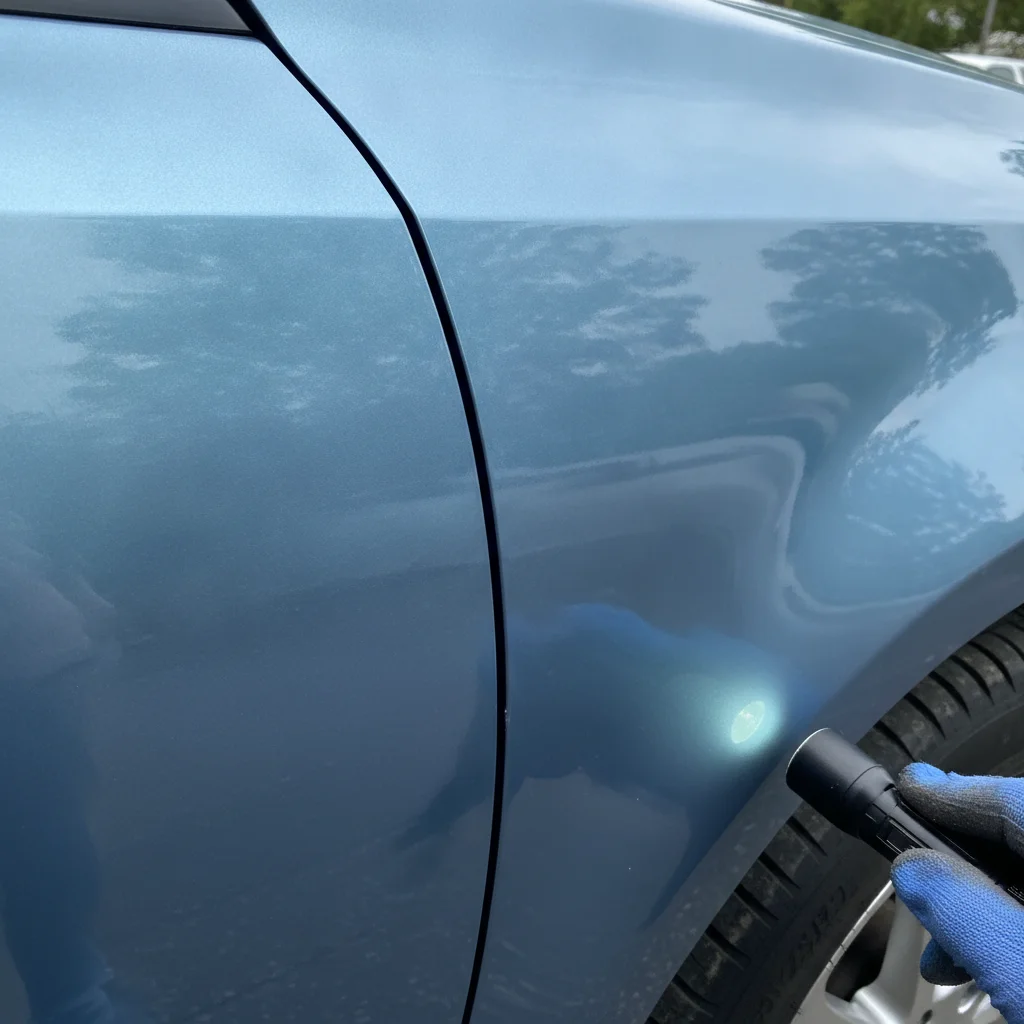
- Their own pattern recognition — experienced buyers spot red flags fast: inconsistent panel gaps suggesting a repaint, overspray on trim pieces, mismatched tire brands that suggest an accident repair rather than normal rotation.
What they often don't know: the full mechanical history, any deferred maintenance, whether warning lights were temporarily cleared before auction, or exactly how the car was driven. They're making an educated bet at speed. Some bets pay off. Some don't.
When that car ends up on their lot and you're standing next to it, the dealer may genuinely not know much more than what was in that condition report. Or they may know more and choose not to volunteer it. That's why your own due diligence can't be optional — especially for what to inspect and what questions to ask when buying from a dealer specifically.
Red Flags That Suggest a Rough Auction History
You won't always be told a car came from auction, though you can ask directly. What you can do is look for indicators that the vehicle's past is more complicated than the clean Carfax suggests:
Inconsistent Panel Gaps and Paint Variation
Run your eye along the side of the car in natural light. Panel gaps should be uniform. A larger gap on one side of a door or hood suggests a replacement panel — meaning a collision repair that may or may not have been reported. Paint that's slightly different in shade between panels (hold a white card up as a reference color) suggests a repaint, which is almost always accident-related.
Overspray on Trim, Seals, and Emblems
Look for paint where it shouldn't be: along door seals, on plastic trim pieces, at the base of emblems. Overspray is a telltale sign of a body shop repaint that wasn't masked carefully. It means the car had bodywork done.
New Components Mixed with Worn Ones
A brand-new quarter panel or hood on a car with otherwise weathered paint and worn door handles is suspicious. Parts replaced as-needed due to normal wear are replaced together. Parts replaced due to a collision often create mismatches.
Carfax Gaps or Jumps
A vehicle history report that shows no service records for 18 months, then suddenly appears at a dealer auction, signals something. Look for ownership gaps, state-to-state transfers (odometer fraud is more common in multi-state chains), and auction sale entries that show up multiple times. A car that's been through auction two or three times in a short period didn't sell for a reason.
Cleared Warning Lights
An OBD-II scanner (available for $30 to $40, or check-engine codes readable at any auto parts store) will tell you whether there are active fault codes. But it won't catch codes that were recently cleared. If a car was prepared for auction, the seller may have cleared trouble codes knowing they'd return. Ask the dealer if they've pulled codes, and watch the dash carefully during a cold start and during the test drive.
“The car that looks clean on paper and presentable on the lot may have been through three dealers and two auctions before you saw it. The Carfax tells you what got reported. The inspection tells you what's actually there.”
— Dean Merritt, Used car buying specialist and vehicle valuation expert
How to Protect Yourself When Buying an Auction-Sourced Car
The risks of an auction-history car are manageable if you do the work upfront. Here's a practical sequence:
- Pull the VIN history report yourself. Don't rely on the dealer's printout — run your own Carfax or AutoCheck directly so you see the unfiltered version. Look for auction sale entries, ownership count, title brands (salvage, flood, lemon law buyback), and reported accidents.
- Ask the dealer directly about auction purchase. They're not legally required to disclose it in most states, but asking puts them on record. Ask: "Was this vehicle purchased at a wholesale auction? Which one? What was the condition grade?" Note how they respond.
- Request the auction condition report. Reputable dealers will have it. It won't tell you everything, but it gives you the baseline grade the car received from the auction inspector — and it tells you the dealer had access to that information.
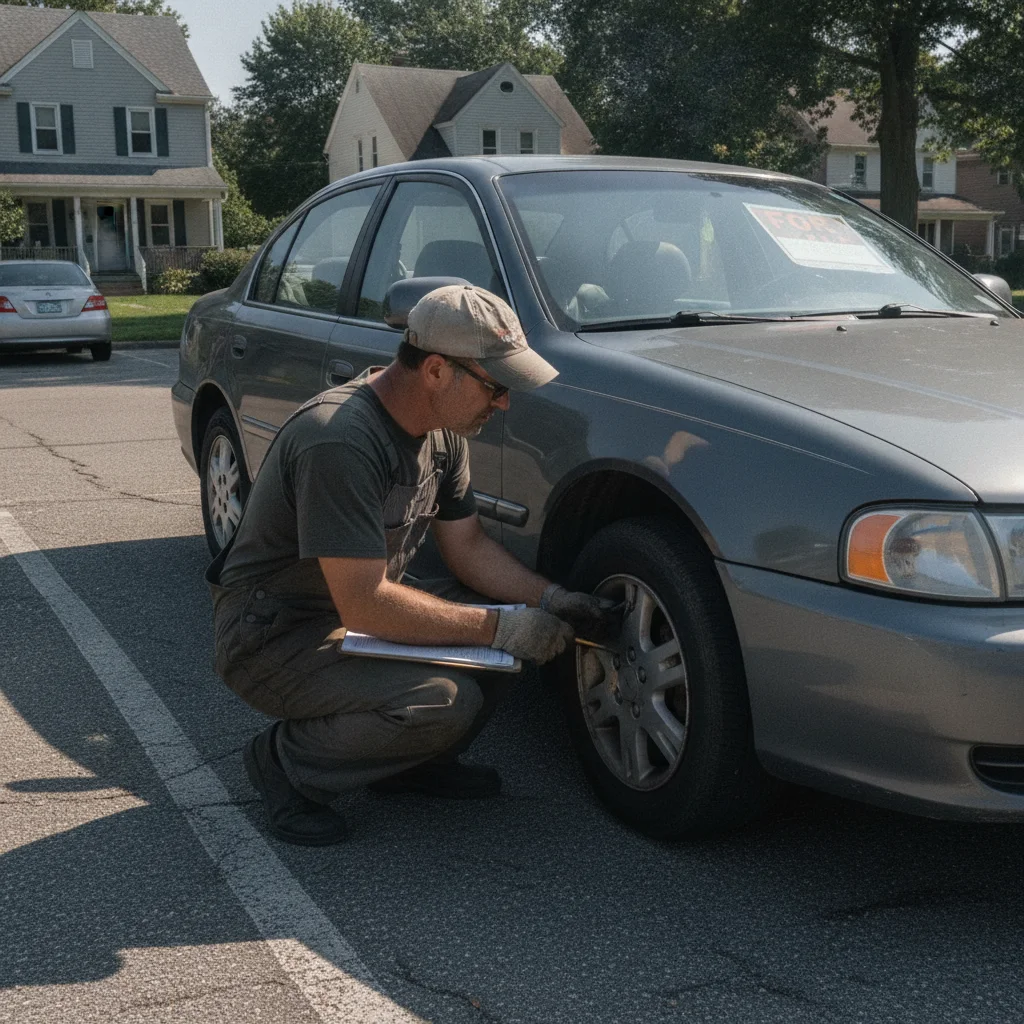
- Get an independent pre-purchase inspection. This is non-negotiable for any used car, but especially for auction-sourced inventory. Budget $100 to $200 for a mechanic you choose — not one the dealer recommends — to put the car on a lift and inspect it systematically. The cost is trivial compared to the risk of buying a car with a $3,000 hidden transmission problem.
- Negotiate from wholesale benchmarks. If you can get close to the wholesale price the dealer paid (use Manheim Market Report proxies, KBB trade-in value, or wholesale ranges from Black Book), you know your floor. A fair retail deal includes reconditioning costs and a reasonable margin. An inflated retail deal just means the dealer wins more.
Dealers prefer you don't know how much room exists in used car pricing. The auction pipeline is a key reason that room exists at all.
Ask for the Auction Condition Report
Dealers who buy at major auctions receive a standardized condition report for each vehicle, graded on a 1–5 scale across multiple categories. Ask for this document before you negotiate. If a dealer "doesn't have it" for a car they bought just weeks ago, that's a red flag worth noting. The report won't catch everything, but it reveals what the dealer knew — and when they knew it.
Don't Skip the Cold Start
Always arrange to see a used car before it's been warmed up for your visit. A cold start reveals oil pressure warning lamps, rough idle, smoke from the exhaust, and engine noises that disappear once a car reaches operating temperature. Dealers routinely warm cars up before test drives — arrive early and ask to start the vehicle yourself from cold.
Auction Cars Aren't Always a Bad Deal
It would be wrong to characterize every auction-sourced used car as a risk. Many are perfectly solid vehicles that ended up at auction for unremarkable reasons — a lease expired, a rental company rotated its fleet, or a dealer had too many of the same model. The auction pipeline exists because it's an efficient market for moving used inventory, and efficiency generally produces fair prices.
The problem isn't the auction history itself. It's the information gap it creates. A private seller who owned a car for six years can tell you exactly where it was serviced, how it was driven, and what repairs it needed. A dealer who bought it at auction 30 days ago can't — and often won't admit the limits of what they know.
For context on how dealer sourcing compares to buying directly from a private seller, see the full comparison of private seller vs. dealership buying. That comparison makes clear that neither channel is universally better — both have trade-offs, and understanding those trade-offs is what makes you a smarter buyer.
The dealers who buy well at auction profit from knowing things retail buyers don't. Your job is to close that information gap enough that you're not the one absorbing all the risk when a car's hidden problems surface 60 days after you drive it off the lot.
Used car pricing is also shaped heavily by what dealers pay for trade-ins using wholesale auction benchmarks. Understanding that dynamic gives you leverage not just when buying, but when negotiating your trade-in value at the same time.

All claims are backed by peer-reviewed research. Sources on request.