Key Takeaways
Auction Market vs. Retail Market
The auction market is the wholesale channel where dealers buy and sell vehicles among themselves — prices here are lower because buyers are professionals reselling for profit. The retail market is where dealers sell cars directly to consumers at higher prices that include reconditioning, overhead, and profit margin. When a dealer appraises your trade-in, they're pricing it against auction comps, not the retail listings you find on consumer sites like CarGurus or AutoTrader.
Wholesale auction values are tracked by indices such as Manheim and Black Book, which dealers subscribe to. These figures reflect actual transaction prices at physical and online auctions and typically run $2,000–$5,000 below retail for common segments.
Two Prices for the Same Car: Why They're So Different
Walk onto any used car lot and you'll see a 2021 Honda Accord EX with 42,000 miles listed at $26,995. Drive that same car to the dealer's service bay for a trade-in appraisal, and you might walk out with an offer of $21,500. Same car. Same mileage. Same trim. Nearly $5,500 apart.
That gap isn't random — it's structural. It's the spread between two entirely different markets: the retail market, where dealers sell to consumers, and the wholesale auction market, where dealers buy and sell among themselves. Understanding which market your trade-in is being priced against is the single most useful piece of knowledge you can have before stepping into a dealership.
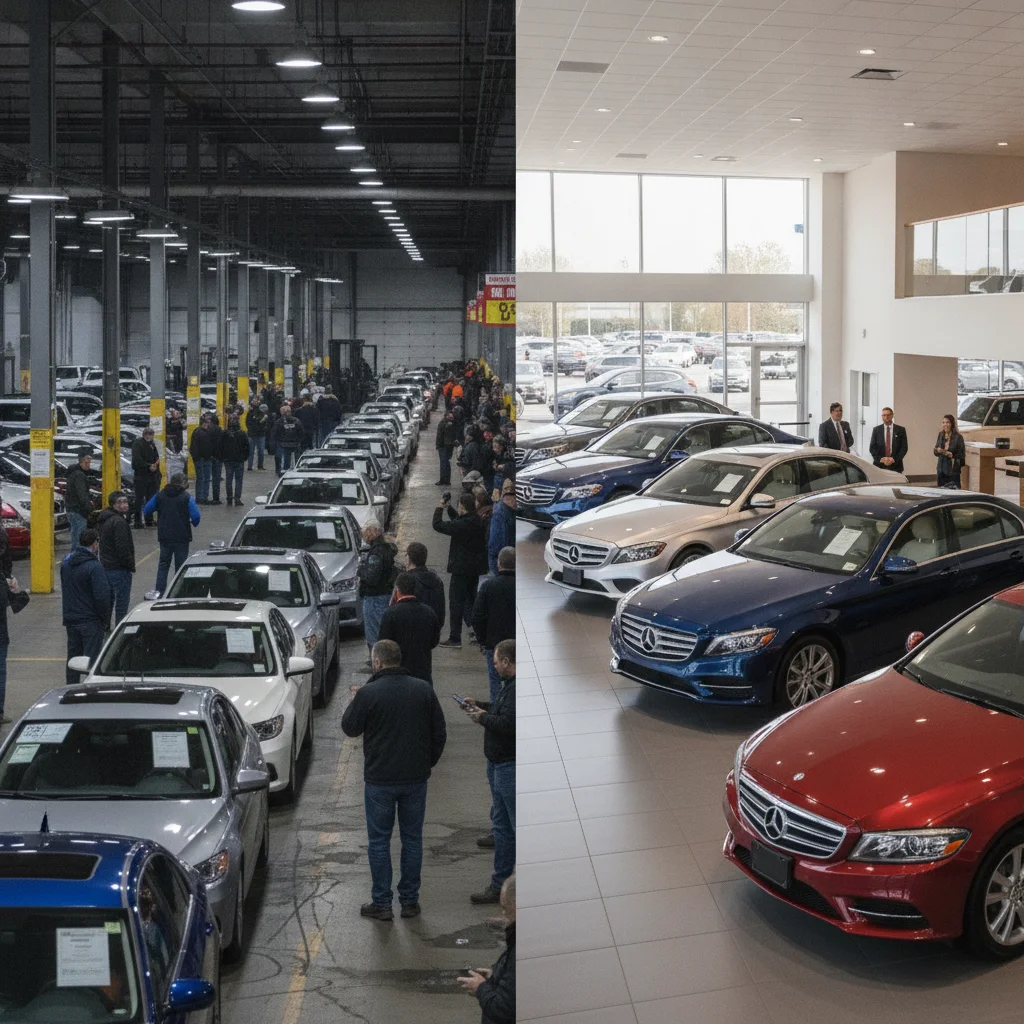
Most car owners show up armed with retail data — Kelley Blue Book private-party value, CarGurus listings, Autotrader comps. Dealers know this. What dealers also know is that none of those numbers apply to how they value your car. They're using a completely different data set, from a market you probably haven't looked at. That information asymmetry is where money changes hands — usually yours.
How the Wholesale Auction Market Actually Works
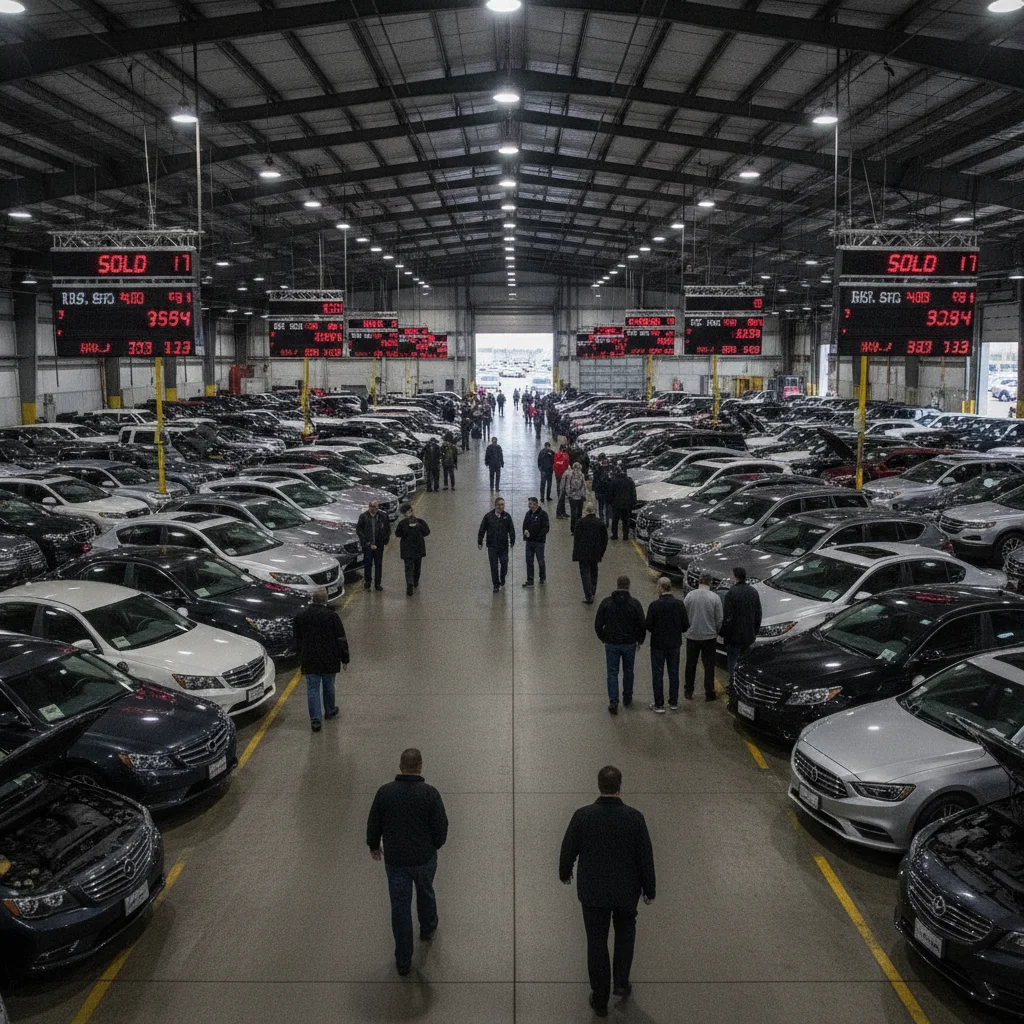
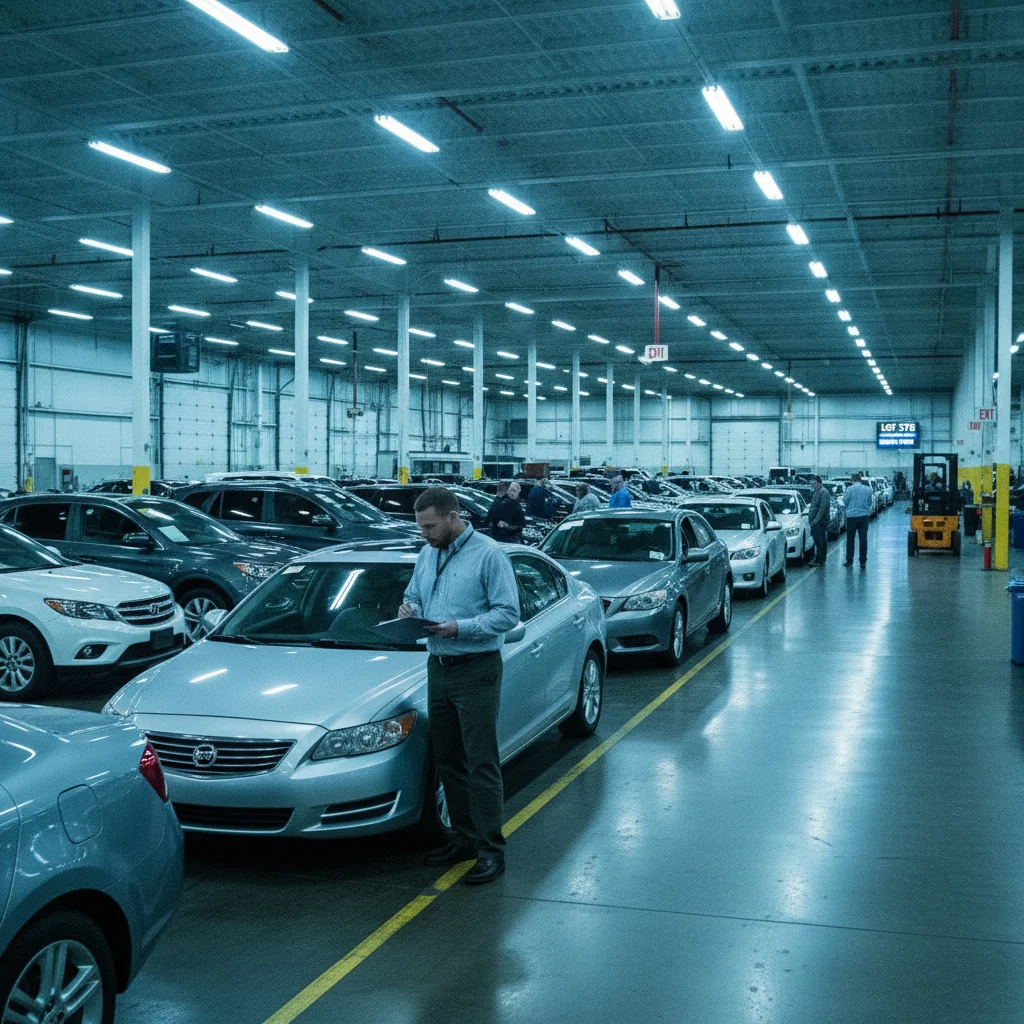
The wholesale auction market is a dealer-only ecosystem. Physical auction houses like Manheim and ADESA run weekly lanes where thousands of vehicles cross the block. Online platforms like Manheim Express, TradeRev, and OVE (Open to Everyone) have added digital volume on top. The common thread: only licensed dealers can buy and sell.
When a dealer takes in your trade-in, they have a mental (or literal) auction sheet open. They're asking: What would this car bring at the Manheim sale next Tuesday? That estimate becomes the ceiling on what they'll offer you. They need room below that ceiling to cover:
- Auction and transportation fees: $300–$600 per vehicle to run a car through a physical lane
- Reconditioning costs: Everything from a detail and oil change to new tires and brake work — easily $800–$2,500 on a used car
- Floorplan interest: Dealers borrow money to hold inventory; every day on the lot costs them interest
- Retail prep and marketing: Photos, listings, lot costs, sales commissions
- Profit margin: A dealer targeting 8–12% gross on a used car needs room to get there
Add those up on a $21,500 auction-value car and you can see why $26,995 is the retail ask — and why anything above $21,500 trade-in offer cuts into what the dealer considers their working margin.
8M+
Vehicles sold annually through Manheim auctions
Manheim, the largest wholesale auto auction network in the US, processes over 8 million vehicles per year, making it the primary price-setting mechanism for dealer trade-in appraisals.
$2,000–$5,000
Typical wholesale-to-retail spread per vehicle
Industry data and dealer margin analysis consistently show a $2,000–$5,000 gap between what dealers pay at wholesale auction and what they charge retail buyers for mid-market used vehicles.
$1,500–$4,000
Private sale premium over dealer trade-in
Sellers who list vehicles privately on platforms like Facebook Marketplace typically net $1,500–$4,000 more than a dealer trade-in offer on vehicles priced under $30,000.
20–30%
Value loss for cars with structural repair history
Vehicles with disclosed frame or structural repairs at auction can lose 20–30% of their clean-title wholesale value due to buyer risk aversion and financing complications.
The key reference tools dealers use include the Manheim Market Report, Black Book, and Galves. These are subscription services that aggregate actual transaction data from recent auctions, broken down by trim level, mileage band, and condition grade. They're updated weekly or even daily for high-volume segments. When a dealer tells you "the market just isn't there for your car," they're citing one of these tools — and you currently have no way to verify or dispute that claim without access to the same data.
You can close that gap partially. NADA's trade-in value and KBB's trade-in range both pull from wholesale-influenced data. They won't match the dealer's screen exactly, but they'll tell you if the offer you're getting is on the floor or somewhere reasonable. See how to read wholesale auction trends before you set your asking price or walk into a negotiation.
The Condition Grade: Where Most Trade-In Value Gets Lost
Auction prices aren't a single number — they're a matrix. Condition grades are the rows. At Manheim, the scale runs from 1 to 5, where 5 is essentially new and 1 is a parts car. A grade-4 car (clean, minor wear) can command $1,200–$2,000 more than a grade-3 car (average wear, some issues) in the same make/model/trim/mileage bucket.
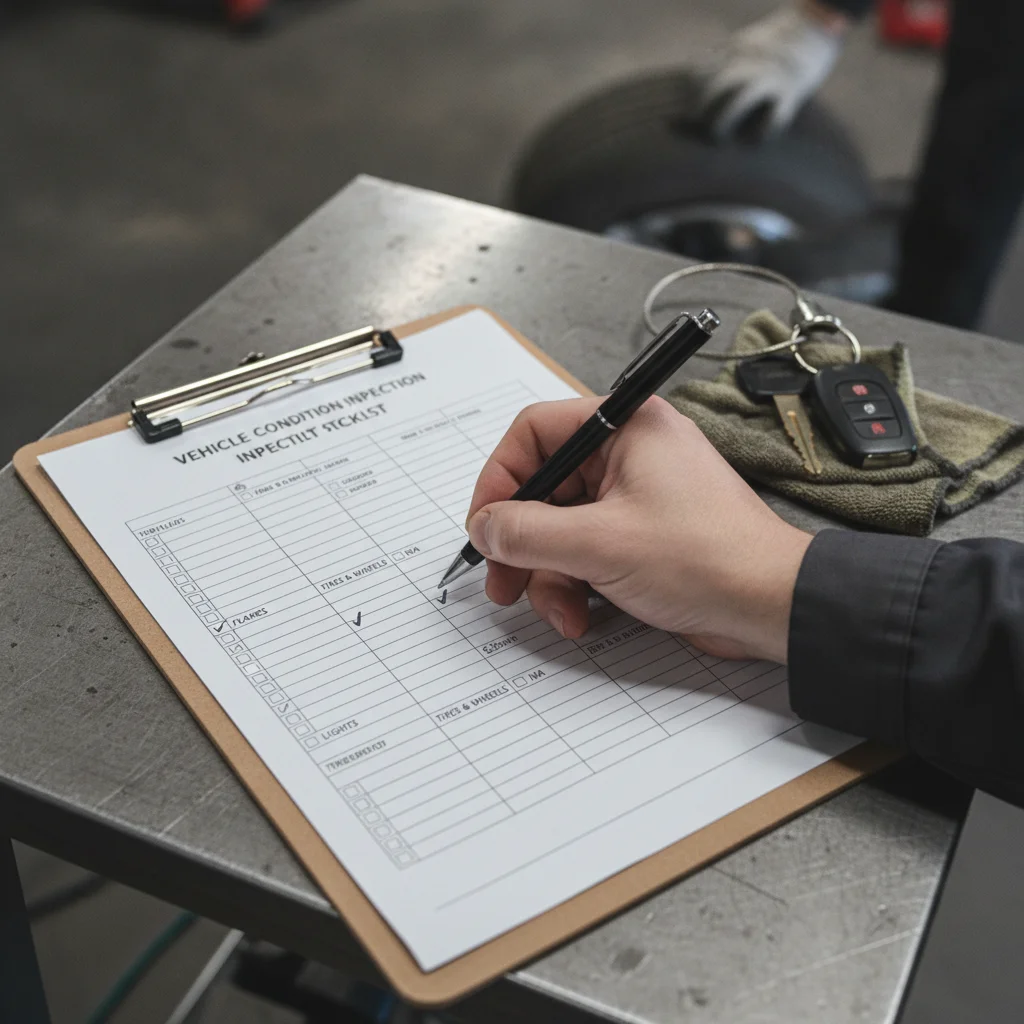
Dealers appraise your trade-in at the condition they realistically expect to sell it — which almost always means they're grading conservatively, because auction buyers grade conservatively. Any deferred maintenance becomes a deduction. Any cosmetic flaw becomes a deduction. An undisclosed accident on Carfax? That's not just a deduction — it's a category shift. A car with a structural repair history can lose 20–30% of its clean-title auction value.
Detail Your Car Before the Appraisal
A clean, well-presented car grades higher at auction — and in a dealer's appraisal bay. Spend $150–$250 on a professional detail, gather your service records, and fix any cheap cosmetic issues (burned-out lights, cracked trim clips) before the appraisal. You won't fool a seasoned appraiser, but a well-maintained presentation can push a grade-3 condition estimate toward a 3.5 or 4, which is worth real dollars.
Here's the practical takeaway: the condition grade your dealer assigns is one of the few levers you can actually move before the appraisal happens. Arriving with a freshly detailed car, service records in hand, and new wiper blades won't change your car's fundamental worth — but it signals to the appraiser that the car has been maintained, which directly influences the condition grade they assign. A one-grade improvement is worth real money.
To understand how all these factors interact in the dealer's actual math, see the hidden math behind your trade-in offer.
Market Days Supply: The Variable Dealers Use That You Don't Know About
Even a well-maintained, low-mileage car can get a lowball offer if there are too many of them in the dealer's local market. Market days supply is a metric dealers track that tells them how many days of inventory exist for a given vehicle in their region, based on current sales pace.
If the market has a 90-day supply of gray Honda CR-Vs in your area, your dealer is going to be conservative because they know that car might sit. If it's a 25-day supply — meaning there's strong demand and limited inventory — they'll pay closer to auction book. This variable is invisible to most sellers but is baked into every wholesale appraisal system.
Market Days Supply Varies by Region
A truck that's scarce in the Pacific Northwest might be oversupplied in the Southeast. Dealers pull market days supply data specific to their DMA (Designated Market Area), which means the same vehicle can get meaningfully different offers at dealerships 200 miles apart. If you're near a market boundary, it may be worth getting appraisals from dealers in different metro areas.
Auction Data Tools Available to Consumers
While full Manheim Market Reports require a dealer subscription, consumers can access Black Book's consumer-facing tool and NADA's trade-in range for approximate wholesale benchmarks. These won't match the dealer's screen line-for-line, but they give you a defensible reference point for negotiation. Knowing your car's NADA trade-in value going in is far better than having no wholesale context at all.
The practical implication: vehicle timing matters. Convertibles sell at auction for more in spring than in November. Trucks and SUVs spike when fuel prices drop and in regions with harsh winters. Dealers track these cycles and price accordingly. You can play the same game by being aware of seasonal trends and market saturation for your specific vehicle before you decide to trade in.
This is also why dealers systematically undervalue trade-ins — it's not purely a negotiation tactic. It reflects genuine risk assessment built into their pricing model.
How to Use This Knowledge at the Negotiating Table
Understanding the auction-to-retail spread doesn't just explain low offers — it gives you a concrete negotiation framework. Here's how to apply it:
- Get your wholesale floor first. Check NADA trade-in and KBB trade-in range before visiting any dealer. These approximate the wholesale band. Anything below NADA's lower range is a signal the dealer is buying at a steep discount.
- Get competing written offers. Visit CarMax, Carvana, or Vroom and get their best offer in writing. These companies operate at or near wholesale — sometimes slightly above — because they run high volume and have efficient reconditioning. A CarMax offer of $22,000 on a car a dealer offers you $19,500 for is a conversation starter, not just a fallback option.
- Separate the trade from the new car deal. Dealers like to blend the numbers — a higher trade value offset by a higher new car price is a wash. Negotiate the purchase price of your new car first, then bring in the trade. This forces the appraised value to stand on its own.
- Ask for the data. You can directly ask the appraiser: "What's this car showing at Manheim?" Some will tell you, some won't. If they show you the screen, look at the condition grade they assigned and the comparable transactions. The grade is the most negotiable element.
- Know your walkaway number. Private party sales on vehicles under $30,000 typically yield $1,500–$4,000 more than a dealer trade-in. If the dealer's number is more than $2,000 below your realistic private-party price, you may be better served listing on Facebook Marketplace or Craigslist and handling the transaction yourself.
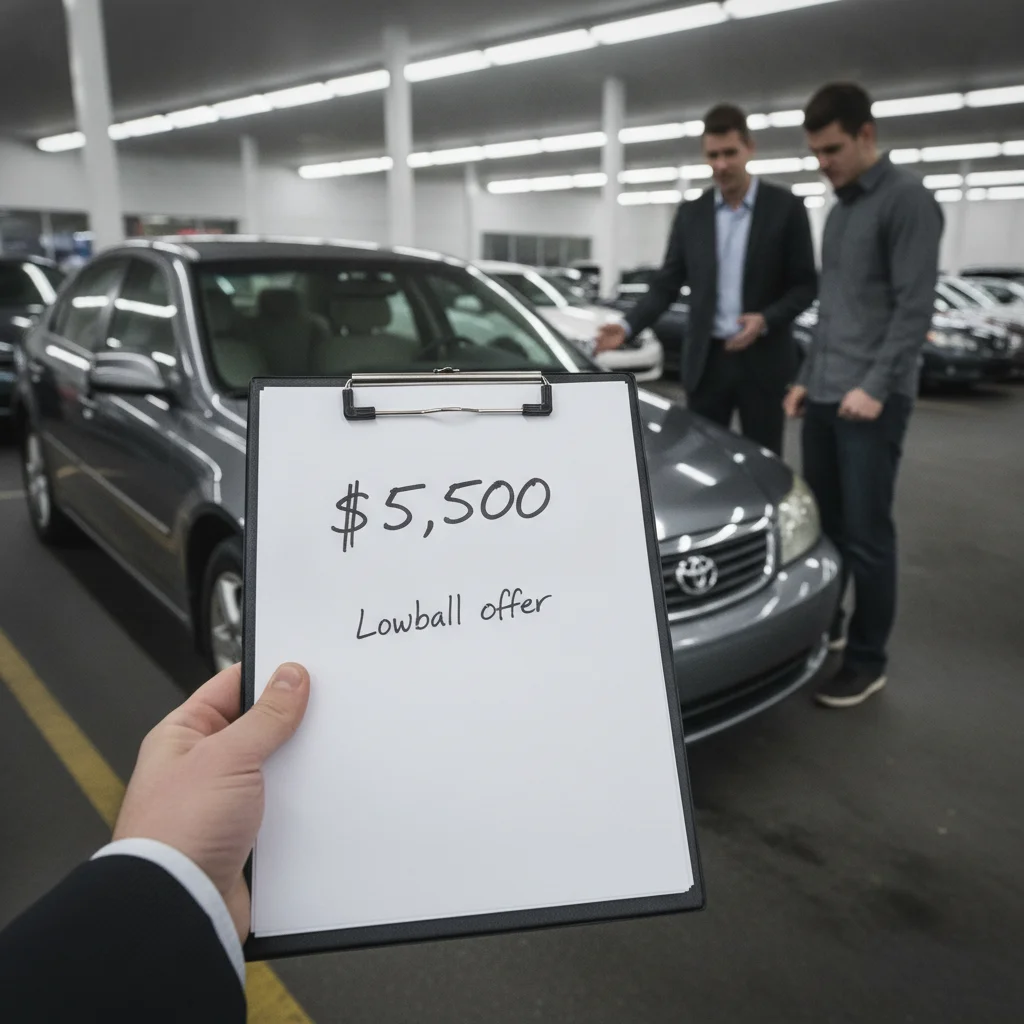
For a deeper look at the mechanics of why first offers are almost never the best offer, see why dealers almost always lowball the first offer and what you can do to counter effectively.
“The single biggest mistake sellers make is walking into a trade-in negotiation armed with retail data. The dealer isn't looking at CarGurus — they're looking at what that car brought at the Manheim lane last week. When you understand that, you stop being surprised and start negotiating from a position of knowledge.”
— Charlie Vogelheim, Veteran automotive analyst and former editor, Kelley Blue Book
When a Trade-In Still Makes Sense (Even at Wholesale Prices)
Not every situation calls for the private-party hustle. A trade-in at wholesale can still be the right financial move depending on your circumstances:
- Sales tax offset: In most US states, your trade-in value is deducted from the purchase price before sales tax is calculated. On a $35,000 new car with a $20,000 trade-in, you're taxed on $15,000 instead of $35,000. At a 7% tax rate, that's $1,400 in savings. That can close a significant portion of the private-party premium.
- Speed and simplicity: A dealer handles the title, lien payoff, and paperwork in hours. A private sale can take weeks of listings, test drives, payment negotiations, and DMV visits.
- High-mileage or high-condition-risk vehicles: If your car needs $3,000 in deferred maintenance, a private buyer is going to discover that during inspection and discount accordingly — or walk. A dealer prices that risk into the trade-in offer and absorbs it. You avoid the hassle of a deal falling apart.
- Negative equity situations: If you owe more than the car is worth, a trade-in rolls the negative equity into the new loan. That's not ideal long-term, but it's a clean exit from a depreciating asset when managed carefully.
The key is to treat the trade-in offer as a starting point, not a final number, and to understand exactly what market it's based on. When you walk in knowing the difference between auction value and retail value — and knowing your car's realistic condition grade — you're negotiating on equal footing instead of being surprised by a number that seems to come out of nowhere.
For tactics on navigating the full dealer conversation, the dealer negotiation hub covers every stage of the process, from first contact to signing. And if you want to maximize your position before you ever walk through the dealership door, the trade-in strategies hub is where to start.

All claims are backed by peer-reviewed research. Sources on request.