Key Takeaways
Reliability-Driven Depreciation
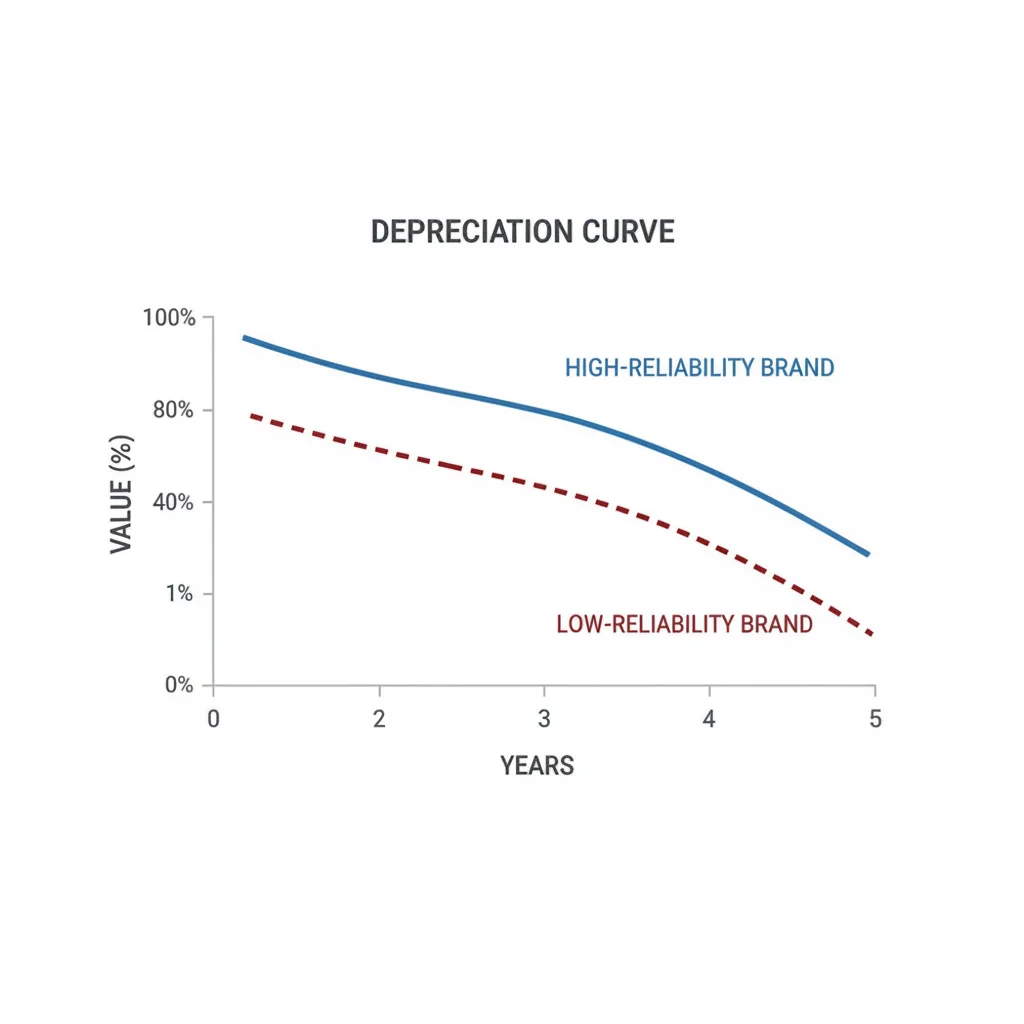
Reliability-driven depreciation describes the phenomenon where a vehicle's resale value holds up better over time because buyers and lessors trust its brand or model to last. Cars from brands with strong reliability reputations—like Toyota and Honda—lose value more slowly because demand for them stays high in the used-car market. In contrast, vehicles from brands with weaker reliability records tend to shed value faster, since buyers require a larger discount to absorb the perceived risk of ownership costs.
Lenders and leasing companies quantify this effect through residual value projections, which are expressed as a percentage of MSRP at a given mileage and term. Brands with high J.D. Power dependability scores and low long-term cost-of-ownership data consistently receive higher residual values from captive finance arms.
Why Brand Reputation Is a Financial Variable, Not Just a Feeling
When most people think about a car's reliability reputation, they think about avoiding breakdowns. That's understandable—but there's an equally important financial dimension that most buyers and sellers overlook: reliability reputation is one of the most powerful forces shaping how quickly a vehicle loses its value.
Depreciation is the gap between what you paid for a car and what you can sell it for later. Most cars lose roughly 20% of their value in the first year alone, but the rate at which that loss continues varies enormously by brand—and reliability is a core driver of that variation. A Toyota RAV4 and a Nissan Pathfinder might share a similar segment and price point, but their five-year depreciation curves can diverge by tens of thousands of dollars.
This isn't arbitrary. It reflects the collective judgment of millions of used-car buyers, dealers, and lenders who all ask the same question: How much risk am I taking on by owning this vehicle? Reliability reputation is how the market answers that question in dollar terms.
Understanding this connection gives you a meaningful edge whether you're pricing a car you're selling, evaluating a used car to buy, or simply trying to calculate the true cost of owning a new vehicle. See our depreciation basics hub for a full breakdown of how vehicles lose value over time.
How Reliability Reputation Gets Priced Into the Market
Reliability reputation doesn't work in abstract—it translates into concrete market mechanics through several channels that operate simultaneously.
Used-Car Demand Curves
The used-car market is a supply-and-demand system. When a model has a strong reliability track record, more buyers want it—and they're willing to pay more to get it. Higher demand for a given supply of used vehicles means sellers hold more pricing power. This is why a three-year-old Toyota Camry often sells for more than a three-year-old Volkswagen Passat of similar mileage and condition, even if both cars have been equally well-maintained.
Dealer Wholesale Pricing
When you trade in a vehicle or sell it at auction, dealers set their bids based on how quickly and at what price they expect to resell it. Reliable brands move faster on dealer lots, which means lower carrying costs and less price-cutting to close a sale. Dealers pay more at auction for vehicles they expect to turn quickly at strong prices—and that translates directly to better trade-in offers for you.
Lender and Leasing Residual Values
This is where brand reliability gets its most rigorous financial expression. Leasing companies must predict what a vehicle will be worth at the end of a lease term—typically 24 to 36 months. They express this as a residual value percentage of MSRP. A Toyota Tacoma might carry a 60% residual at 36 months and 36,000 miles, while a comparable truck from a brand with weaker reliability data might carry only 48%. That 12-point gap is the finance industry's direct translation of reliability risk into dollars.
45–50%
Toyota Camry 5-year value retention
According to iSeeCars and Edmunds long-term depreciation data, the Camry consistently retains nearly half its original value after five years.
60%
Toyota Tacoma typical 36-month residual
Captive finance companies routinely assign the Tacoma a residual value around 60% of MSRP at 36 months and 36,000 miles, one of the highest in any segment.
$5,500
Potential 5-year resale gap by brand
On a $30,000 midsize sedan purchase, choosing a reliable brand over an average one can translate to $4,000–$5,500 more in resale value at the five-year mark.
7+ years
Time for reliability improvements to shift resale values
Hyundai and Kia's quality improvements began in the mid-2010s, but meaningful resale value gains didn't fully materialize until the early-to-mid 2020s, illustrating the lag between quality data and buyer perception.
15–20 pts
Depreciation gap vs. segment peers at 3 years
Compact SUVs from brands with below-average reliability scores can depreciate 15–20 percentage points faster than the Toyota RAV4 or Honda CR-V over a 36-month period, per iSeeCars annual depreciation reports.
These three channels reinforce each other. High residuals attract more lease customers, keeping late-model used-car supply controlled and prices higher. Higher used-car prices make buyers more willing to pay a premium for new models, which further reinforces the brand's value reputation. It's a self-strengthening cycle that favors historically reliable brands.
For a deeper look at how lease residuals function as a depreciation signal, see how lease programs reveal depreciation trends.
The Depreciation Gap: By the Numbers
Abstract concepts become actionable when you can see them in dollar terms. Here's how reliability reputation plays out across real segments using typical five-year depreciation data.
Midsize Sedans
A Toyota Camry purchased at $30,000 typically retains around 45–50% of its value after five years—meaning a resale price around $13,500–$15,000. A comparably priced sedan from a brand with below-average reliability scores might retain only 30–35% of its value over the same period, leaving the owner with roughly $9,000–$10,500. That's a $4,000–$5,500 gap on a single vehicle, over five years.
Compact SUVs
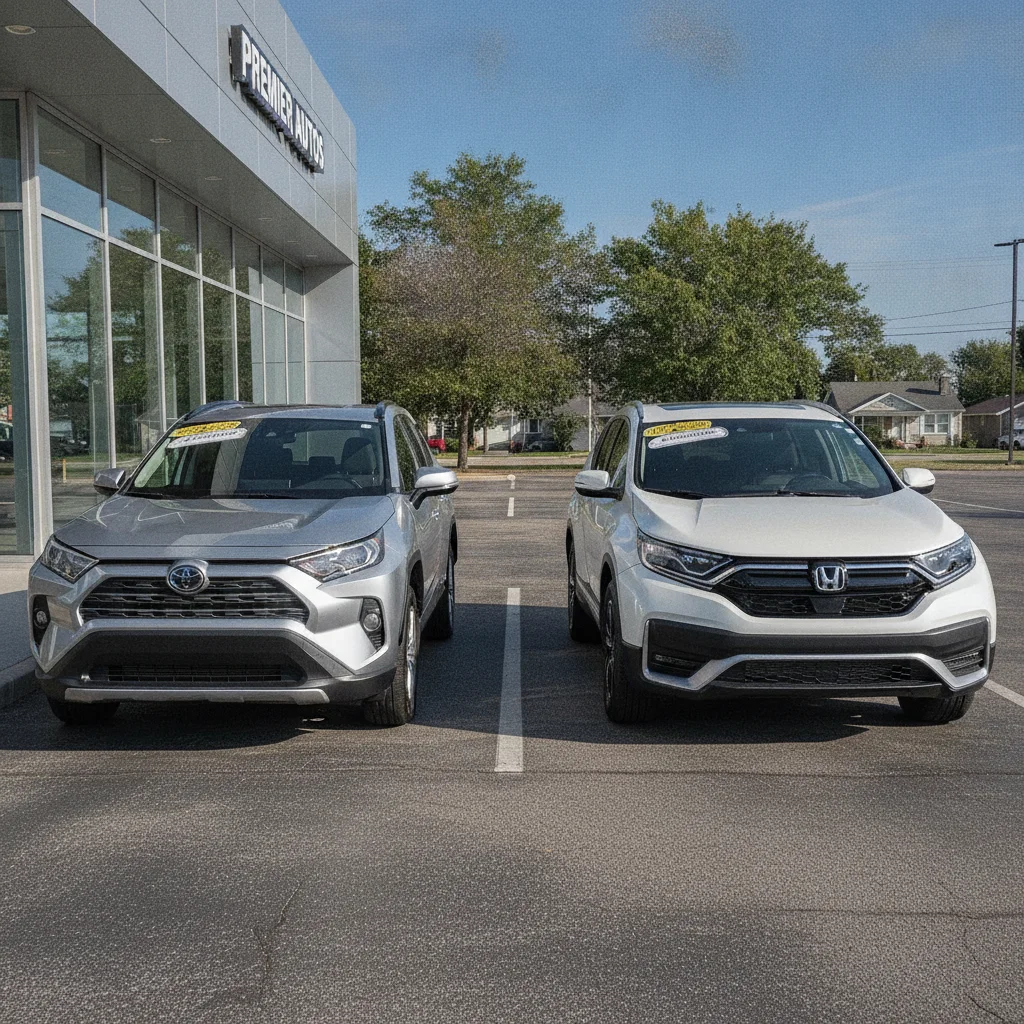
The compact SUV segment illustrates this even more starkly. The Honda CR-V and Toyota RAV4 consistently place among the top compact SUVs for retained value. Vehicles in the same segment from brands with spotty reliability histories can depreciate 15–20 percentage points faster over three years, even when they offer more features or lower initial pricing.
Trucks and Commercial Vehicles
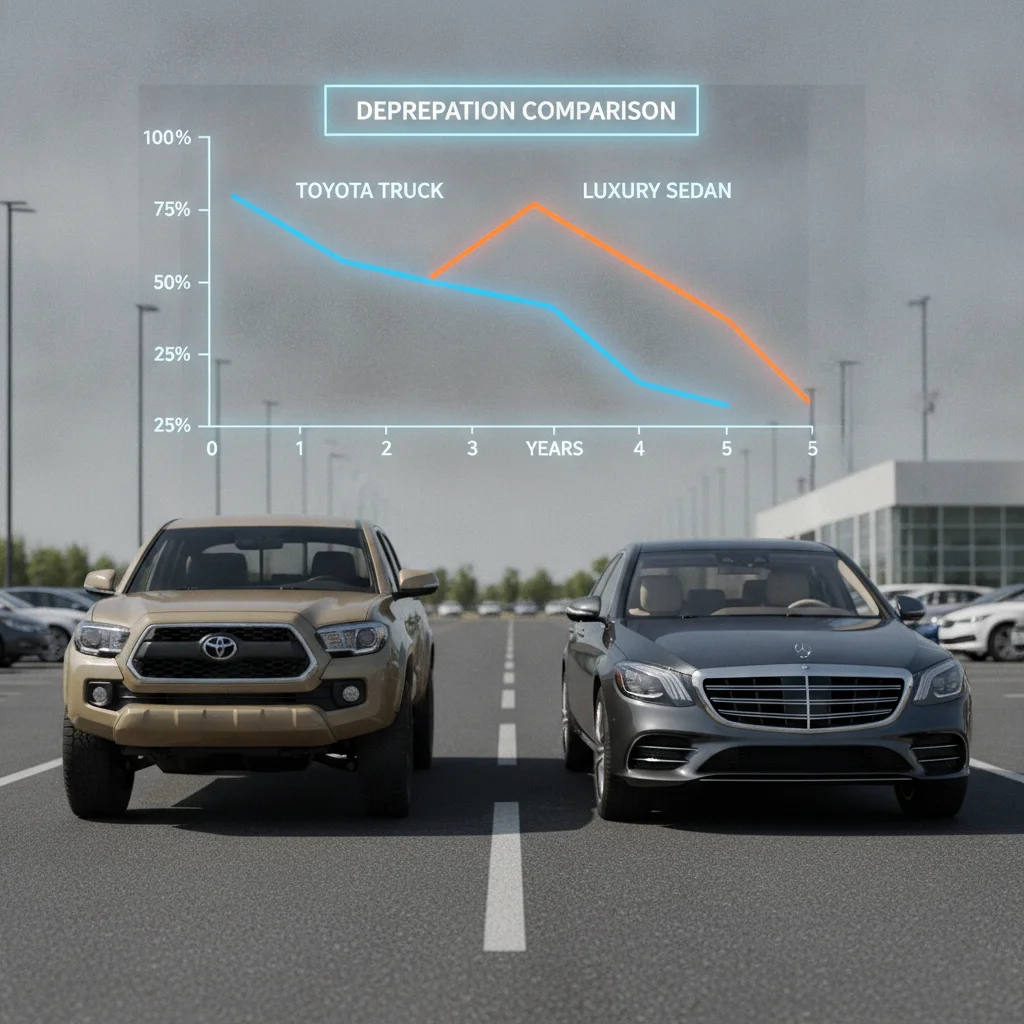
Full-size trucks present an interesting case. The Toyota Tacoma in the midsize truck segment famously defies conventional depreciation curves—some model years actually appreciate in value for the first few years in strong markets. This is directly tied to its decades-long reliability reputation and cult-like owner loyalty, which keeps used demand exceptionally high.
Trucks Are a Special Case
Full-size and midsize trucks often defy standard depreciation rules because their utility value remains high regardless of age or mileage. However, reliability reputation still differentiates within the truck segment—the Toyota Tacoma's legendary resale performance versus other midsize trucks is a direct product of reliability perception. Don't assume all trucks depreciate slowly; brand and model still matter.
Reliability Reputation Lags Actual Quality
Buyer perception of a brand's reliability typically trails actual quality improvements by three to seven years. This creates a window of opportunity: vehicles from brands that have genuinely improved quality but haven't yet fully recovered their reputation may offer above-average reliability at below-average prices. Verify with current model-year reliability data rather than relying solely on historical brand perception.
The takeaway isn't that you should only buy Toyota or Honda. It's that you need to price reliability reputation into your total ownership cost calculation before you sign any deal. A car that costs $3,000 more upfront but depreciates $5,000 less over four years is the better financial choice—and reliability reputation is a key input into that math.
For more on how different brands and segments compare on depreciation speed, read our article slow depreciators vs. fast depreciators.
Which Brands Consistently Outperform—and Why
Reliability reputation isn't randomly distributed. A handful of brands have earned sustained outperformance on resale through consistent engineering discipline, quality control, and parts availability. Understanding why they outperform helps you evaluate whether a brand's reputation is durable or fragile.
“A brand's reliability record is essentially a decades-long warranty in the eyes of the used-car market. Buyers don't just purchase a car—they purchase their expectation of what owning it will cost them.”
— Phong Ly, CEO of iSeeCars, a vehicle data and analytics company
Chronically Strong Performers
- Toyota: Consistently ranks at or near the top of J.D. Power Vehicle Dependability Studies and Consumer Reports reliability surveys. Its reputation is backed by data spanning multiple decades and millions of vehicles across diverse markets and climates.
- Honda: Strong across most segments, particularly in sedans and compact SUVs. Honda's reliability is reinforced by an active enthusiast community that keeps older models in service, sustaining used-car demand even at high mileage.
- Lexus: Toyota's luxury arm inherits much of its parent's engineering discipline while adding premium materials. Lexus regularly leads luxury segment reliability rankings, which helps it defy the luxury depreciation trap that snares many competitors.
- Mazda: An underappreciated performer. Mazda has quietly built a strong reliability record while maintaining premium interior quality, resulting in above-average resale values relative to its segment and price point.
Brands in Transition
- Hyundai and Kia: Both have made dramatic quality improvements over the past decade and are now scoring competitively in reliability surveys. Their resale values have improved meaningfully, though they haven't yet fully closed the gap with Toyota and Honda—reflecting how slowly buyer perception catches up to actual quality data.
- Genesis: Hyundai's luxury offshoot scores well on initial quality but lacks the long-term reliability dataset that Lexus has built. Residual values are improving but remain below Lexus levels.
Chronically Weak Performers
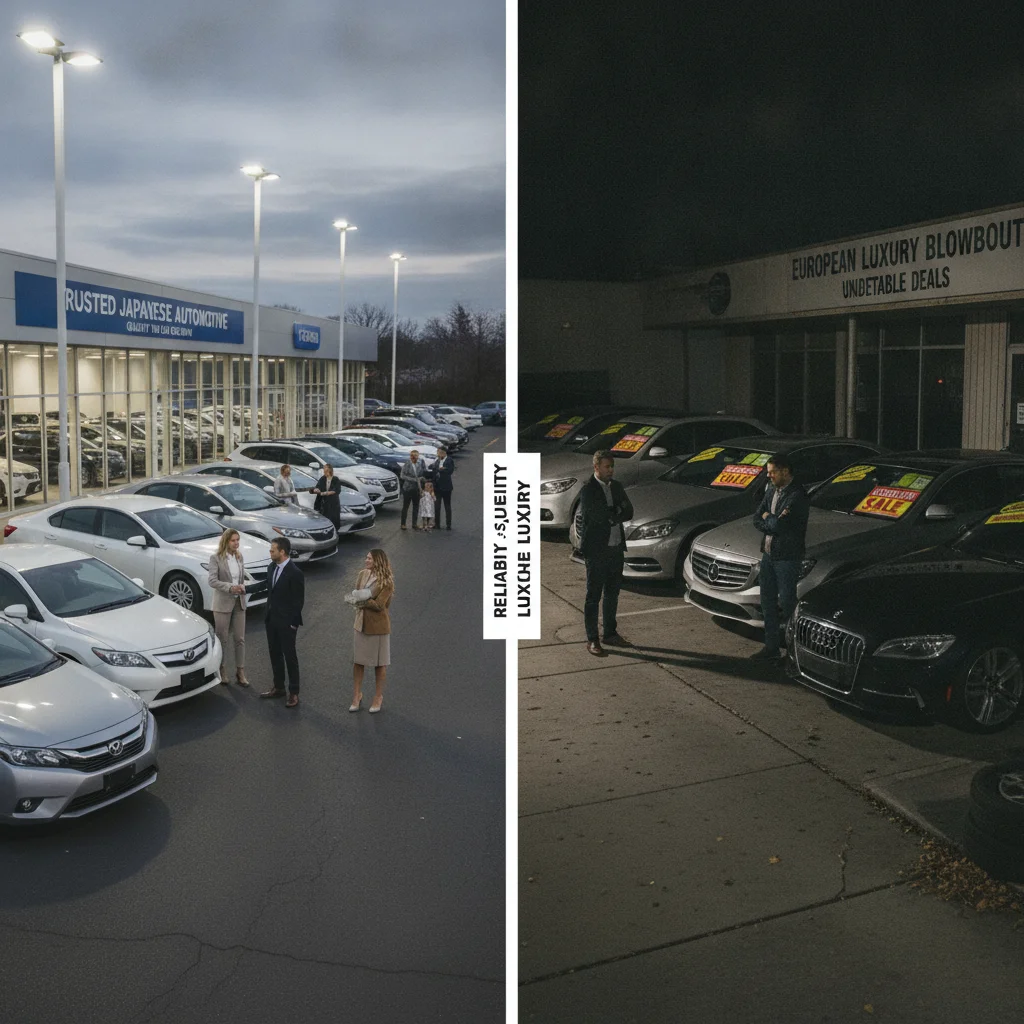
Rather than singling out specific brands, it's more useful to identify the patterns associated with poor resale performance: high initial feature content that creates complex, expensive repair points; aggressive leasing strategies that flood the used market with off-lease volume; and reliability scores that lag segment averages across multiple survey cycles. Luxury European brands frequently display this pattern—strong initial appeal, high complexity, elevated repair costs, and steep depreciation curves to match.
Check Model-Level Data Before Assuming Brand Average
Don't rely on brand reputation alone when evaluating a specific vehicle's depreciation outlook. Look up the exact model and generation in Consumer Reports or J.D. Power's VDS, since model-level reliability can differ significantly from the brand average. A single outstanding model from a middling brand can hold value as well as the reliable brand's average—if the data supports it.
Use Residual Values as a Shortcut
If you want a quick proxy for how the finance industry views a vehicle's reliability and future value, look up its lease residual value as a percentage of MSRP. Higher residuals (above 55% at 36 months) signal strong market confidence in the vehicle's retained value. You don't need to be leasing—this data is publicly available and acts as a reliable depreciation forecast.
What This Means for Sellers: Setting Realistic, Data-Backed Expectations
If you're selling a vehicle, understanding where your brand sits in the reliability reputation hierarchy is the first step toward pricing it correctly—and avoiding the two costly mistakes most sellers make: overpricing (sitting on the market too long, eventually capitulating to a lower offer) and underpricing (leaving money on the table out of impatience or misinformation).
Step 1: Anchor to Your Brand's Depreciation Curve, Not Just Comparable Listings
Most sellers start by looking at listings for similar vehicles on the market. That's useful, but incomplete. Listings reflect asking prices, not transaction prices, and they don't tell you why comparable vehicles are priced where they are. Layering in brand-level depreciation data—available from sources like iSeeCars, Edmunds True Market Value, or CarGurus price analysis—gives you a more complete picture of where your vehicle should realistically transact.
Step 2: Identify Your Position on the Reliability Spectrum
Use J.D. Power dependability data and Consumer Reports reliability surveys to understand whether your brand is a strong, average, or weak performer. This tells you whether your vehicle will price at a premium to, in line with, or at a discount to segment averages in the used market.
Step 3: Account for Model-Specific Deviations
Brand averages mask model-level variation. A particular nameplate from an otherwise average brand may have an outstanding long-term reliability record, and vice versa. Check model-specific reliability data before assuming your vehicle prices exactly in line with the brand average.
Step 4: Time Your Sale Thoughtfully
Reliability reputation interacts with age and mileage in non-linear ways. Highly reliable vehicles hold value well into high mileage because buyers trust they'll keep running—but there's still a point at which age-related wear begins to override reputation benefits. For most reliable-brand vehicles, the optimal sale window is three to five years and under 60,000 miles, when you can still capture a meaningful portion of the reliability premium before wear concerns start compressing prices.
Armed with this framework, you're also better positioned to negotiate from the buyer's side. See how to put depreciation data to work as a negotiating tool in our article using depreciation data to negotiate a better car price.
The Used-Car Buyer's Angle: Exploiting the Reliability Premium Intelligently
For used-car buyers, reliability reputation creates both an opportunity and a trap. The opportunity: buying a reliably depreciated vehicle that still has many useful miles ahead of it. The trap: overpaying for a reliable-brand vehicle when the reputation premium exceeds the actual risk reduction you're getting.
The Sweet Spot for Used Buyers
The best used-car value from a reliable brand typically appears at the two-to-four-year mark, when the steepest initial depreciation has already occurred but the vehicle's most reliable years remain ahead of it. At this point, you're letting the first buyer absorb the largest portion of depreciation while inheriting a vehicle with low wear and a long expected lifespan.
When the Premium Is Worth Paying
Paying above-average prices for a reliable-brand used vehicle makes sense when: (1) your total cost of ownership calculation still beats alternatives after accounting for the higher purchase price; (2) you plan to keep the vehicle long enough to fully benefit from lower maintenance and repair costs; and (3) your financing terms don't extend so far that you're paying interest on a car that's depreciating faster than your loan balance.
When the Premium Isn't Worth It
If you're buying a certified pre-owned vehicle with a comprehensive warranty, the reliability premium matters less—because the warranty is doing the work that reliability reputation normally does. In that scenario, an equally-warranted vehicle from a brand with a weaker reputation may offer better value per dollar spent. Explore more on the used car buying process to align your strategy with your budget and risk tolerance.

Also worth noting: reliability reputation affects long-term depreciation rate differently at different vehicle ages. Understanding that curve—not just the brand halo—is what separates a savvy used-car buyer from one who's simply paying for a badge.

All claims are backed by peer-reviewed research. Sources on request.